Transportation
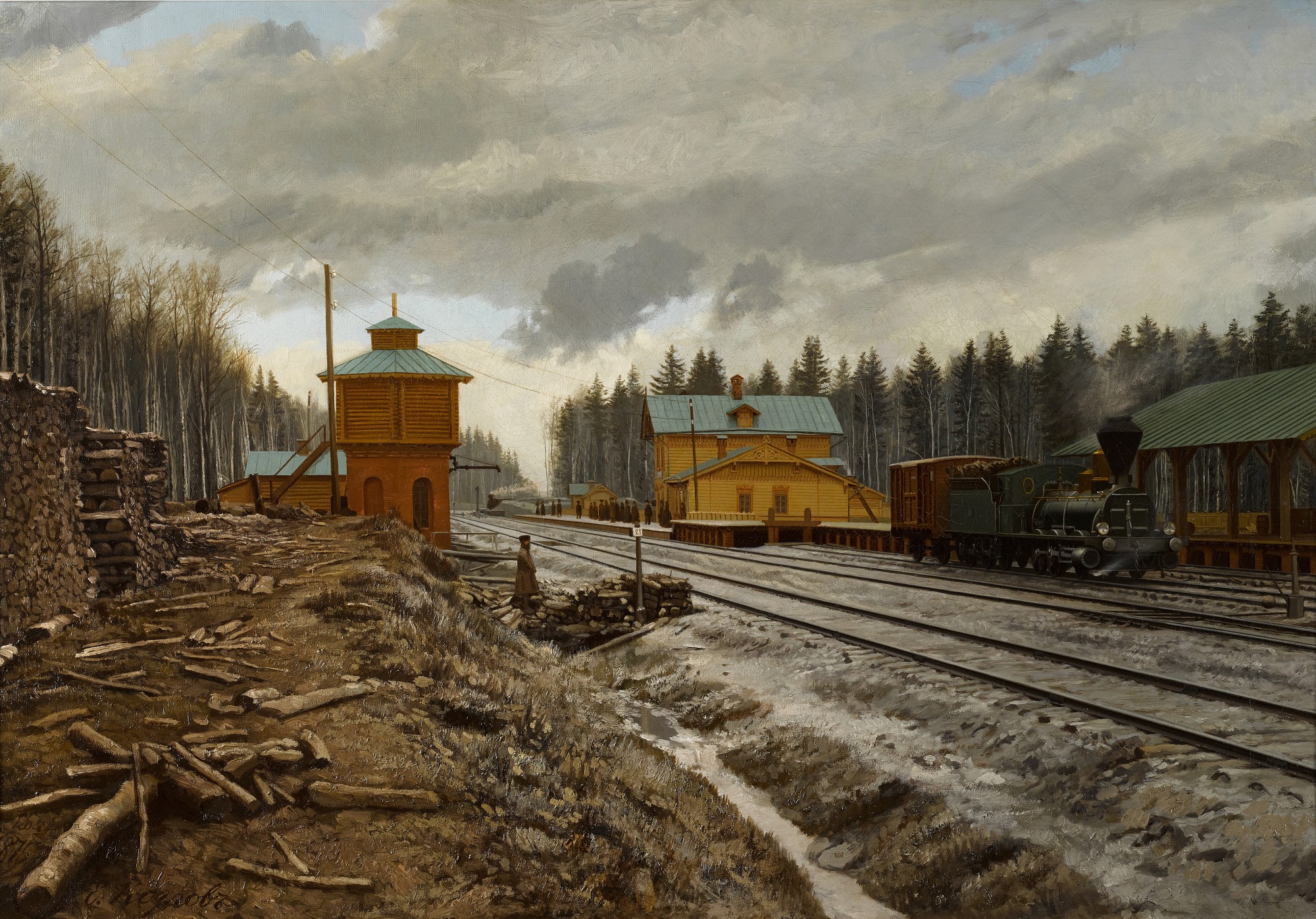
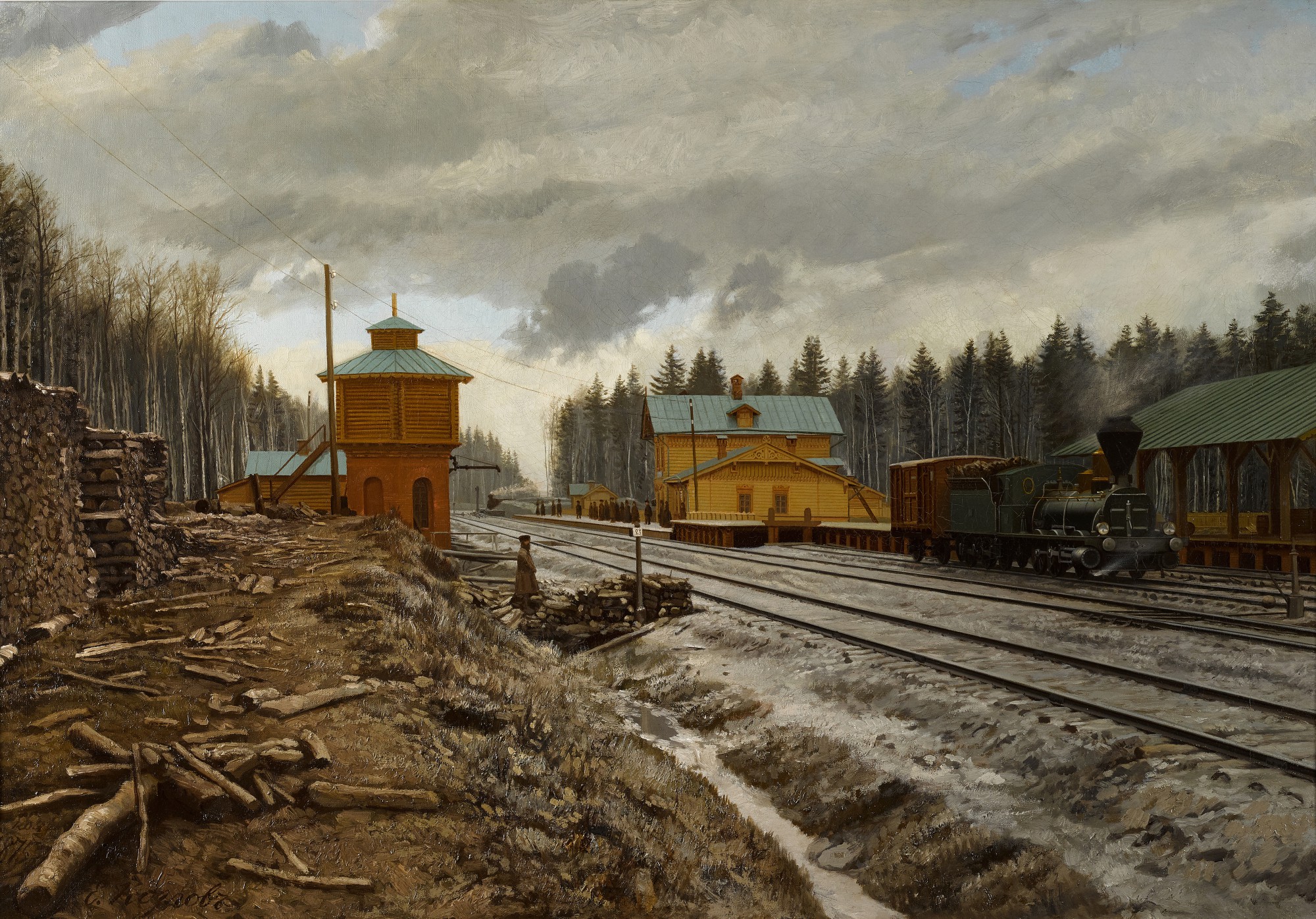
E.Kozlov
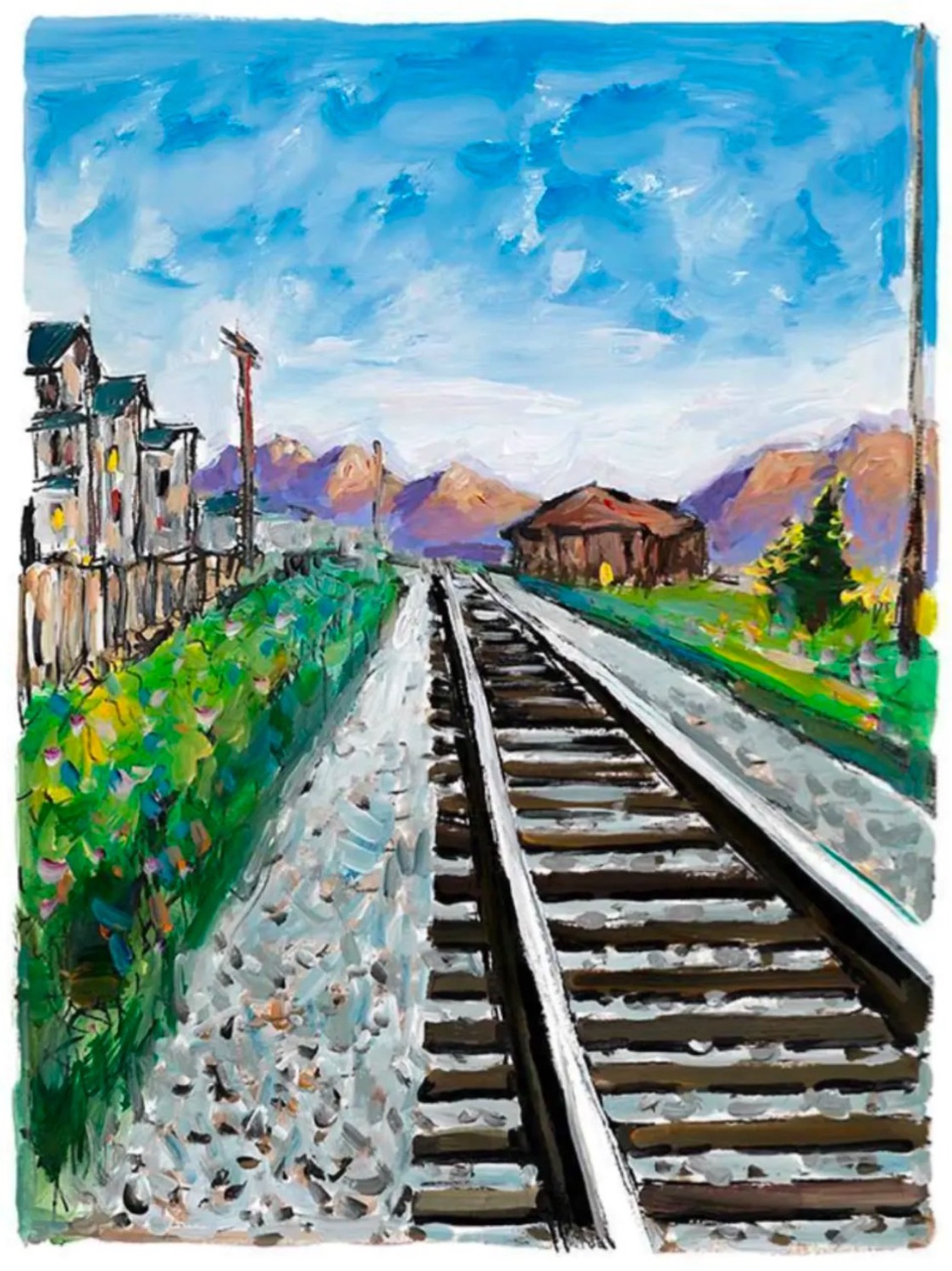
Train Station

The Art of Going Somewhere Else
There is something primal about the urge to depict movement. Long before the steam engine or the automobile, artists were obsessed with the idea of passage, of bodies and objects crossing distance, of the strange emotional charge that gathers around departure and arrival. But it was the industrial revolution that truly cracked the subject open, flooding the visual imagination with new machines, new speeds, new social arrangements, and a whole new category of human anxiety. Transportation did not simply give artists new subject matter.
It gave them a new way of thinking about time itself. The railways arrived first, and their cultural shock was immense. By the 1840s, J.M.
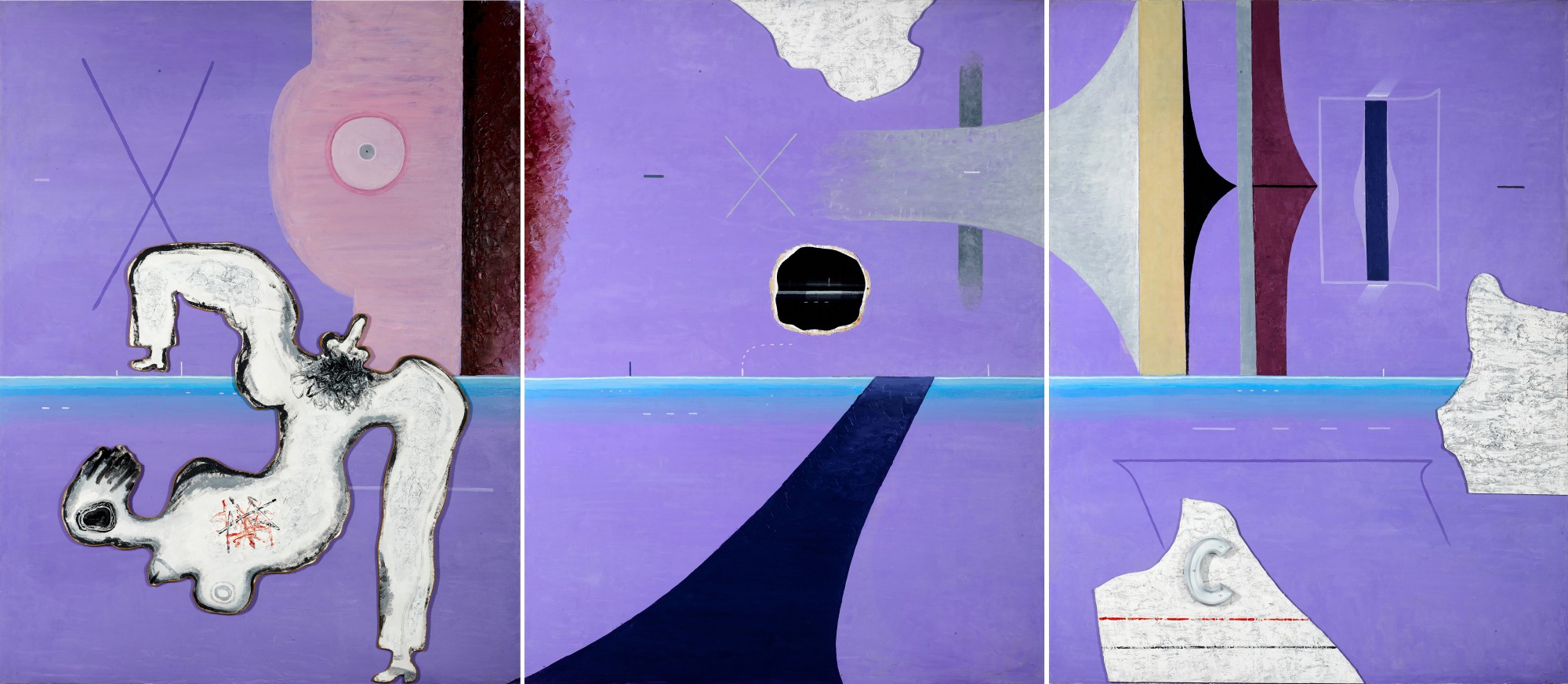
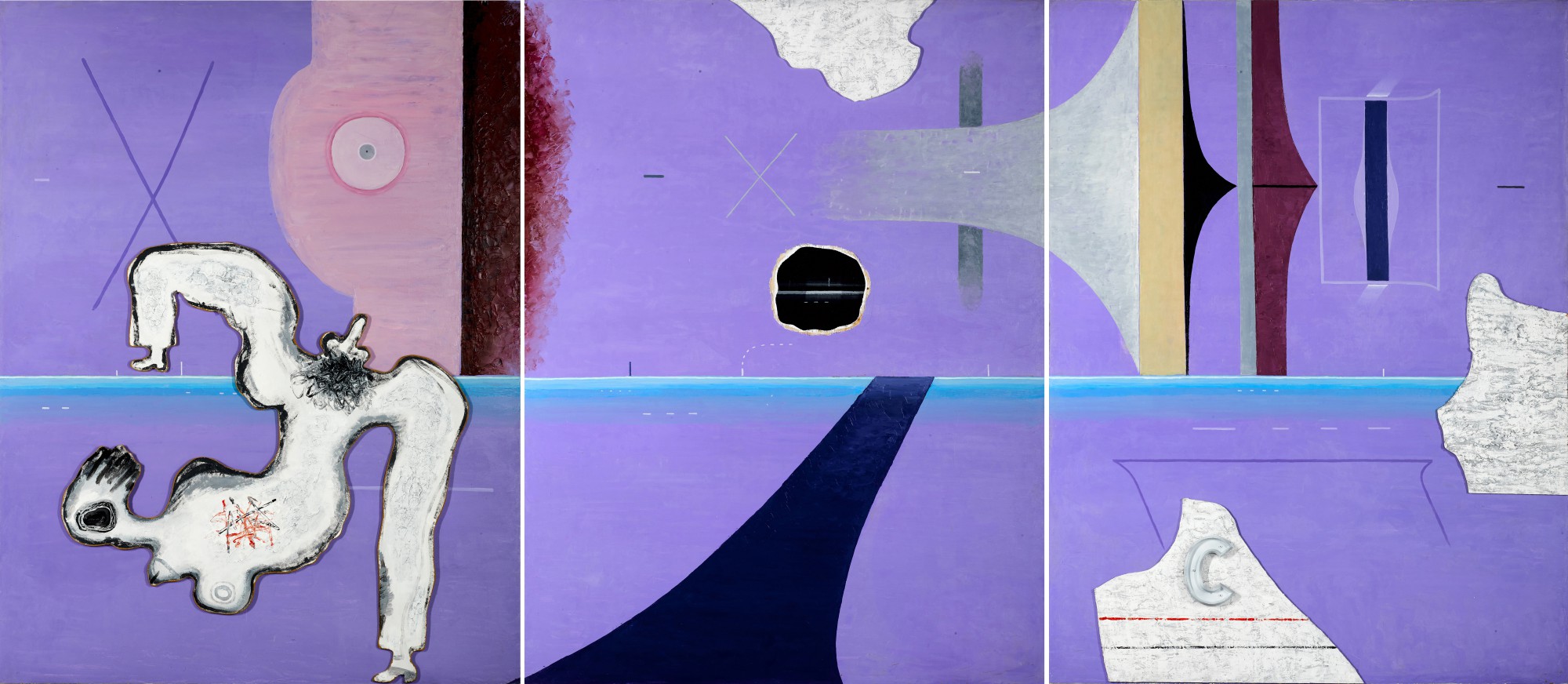
Vladimir Yankilevsky
Take a Train V
W. Turner was already reckoning with the psychological force of the locomotive in Rain, Steam and Speed, a painting that treats the Great Western Railway not as infrastructure but as a kind of sublime violence. The Impressionists would follow, drawn to the stations and their theatrical vapors. Claude Monet painted the Gare Saint Lazare multiple times between 1876 and 1877, transfixed by the way steam diffused light and made the solid world provisional.
The train station became, for a generation of artists, what the cathedral had been for an earlier one: a site of awe, congregation, and transformation. The graphic tradition in transportation imagery runs just as deep. Honoré Daumier, that great chronicler of Parisian social life, turned the railway carriage into a stage for class comedy and human absurdity throughout the mid nineteenth century. His lithographs of third class passengers, crushed together with their bundles and their exhaustion, are simultaneously funny and heartbreaking.
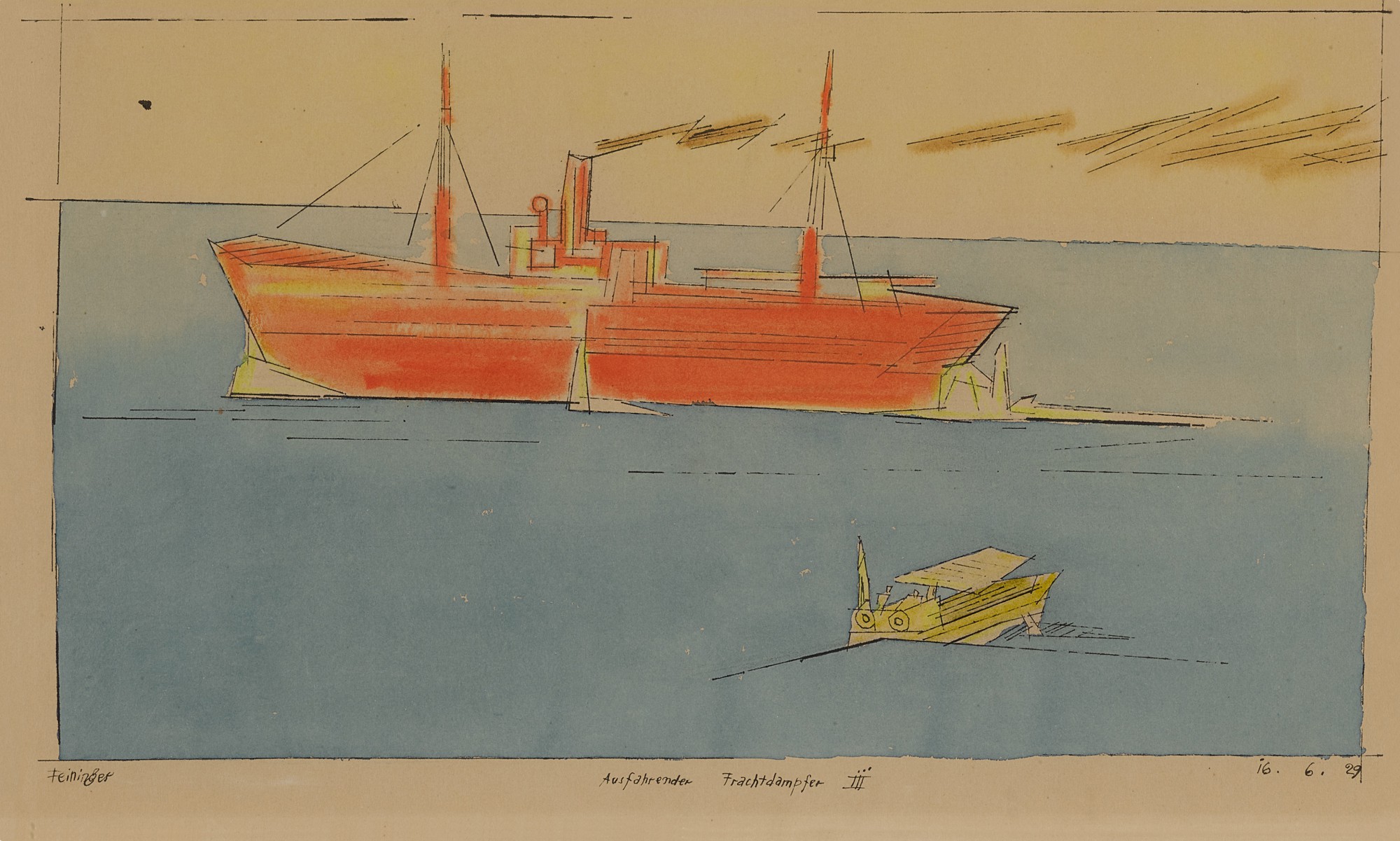
Lyonel Feininger
Ausfahrender Frachtdampfer III
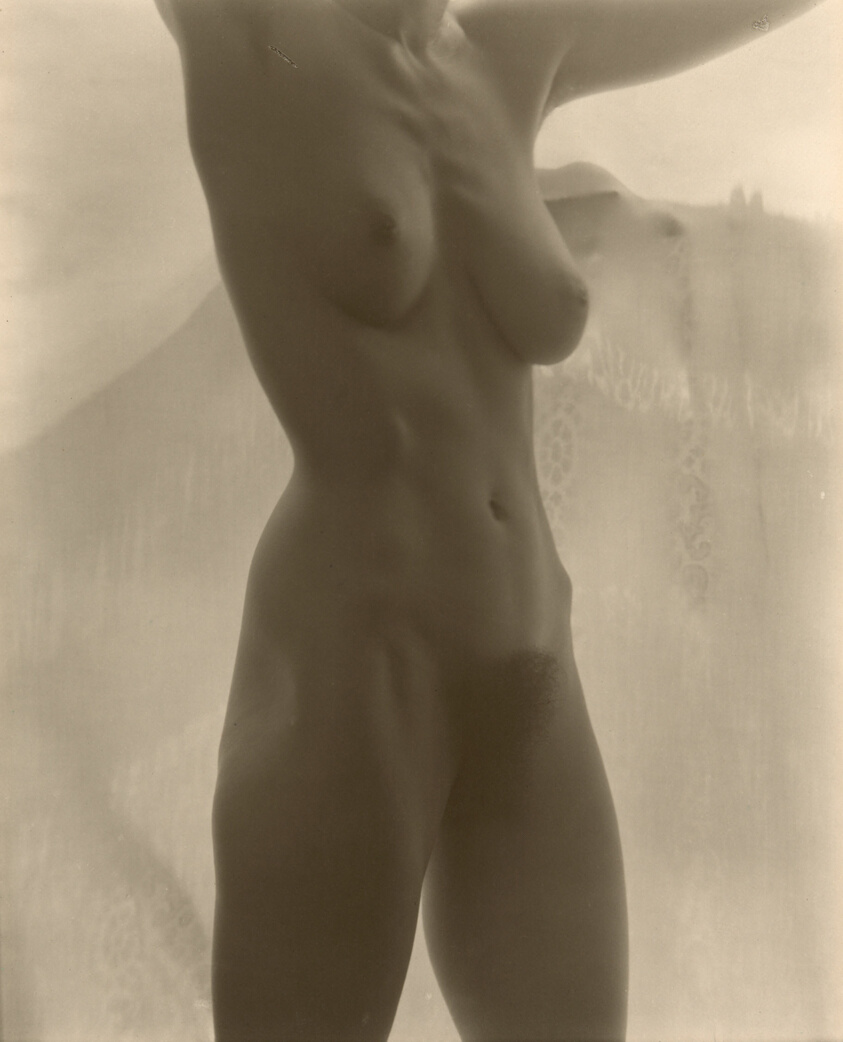
Daumier understood that the train did not erase social hierarchy, it merely compressed it into a rolling box. The work on The Collection bearing his name sits firmly within that tradition of using the vehicle as a social lens, a way of reading who we are by watching how we travel together. At the turn of the twentieth century, photography began to stake its own claim on the subject. Alfred Stieglitz, whose work appears on The Collection, made one of the defining images of modern urban life in 1893 with The Terminal, a quiet study of a horse drawn streetcar in the snow.
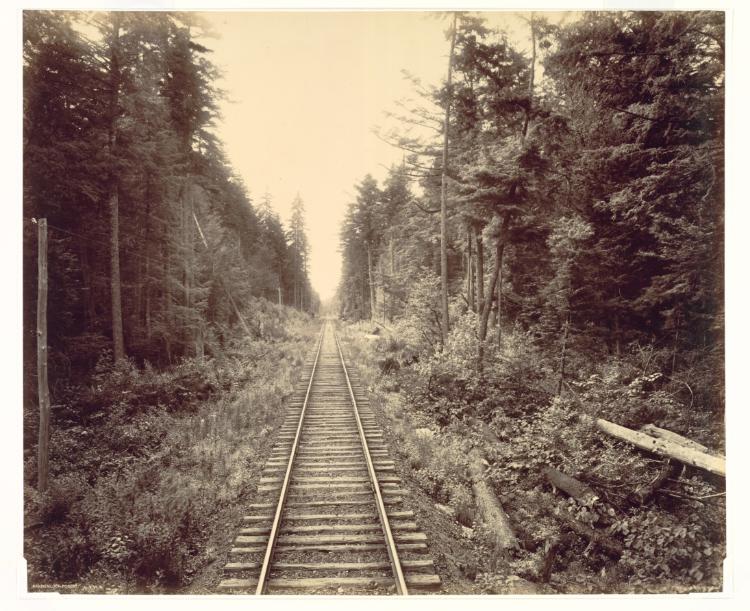
It was a transitional moment: the old animal economy of the city was already giving way to mechanical transit, and Stieglitz caught that threshold with his characteristic sensitivity to atmosphere and social texture. A decade later, his image of steerage passengers aboard an ocean liner became something else entirely, a meditation on migration, class, and the brutal sorting mechanisms of human movement across borders. William H. Rau, also represented here, worked the same photographic terrain from a more promotional angle, producing sumptuous large format images for the Pennsylvania Railroad in the 1890s that were simultaneously documentary and aspirational.
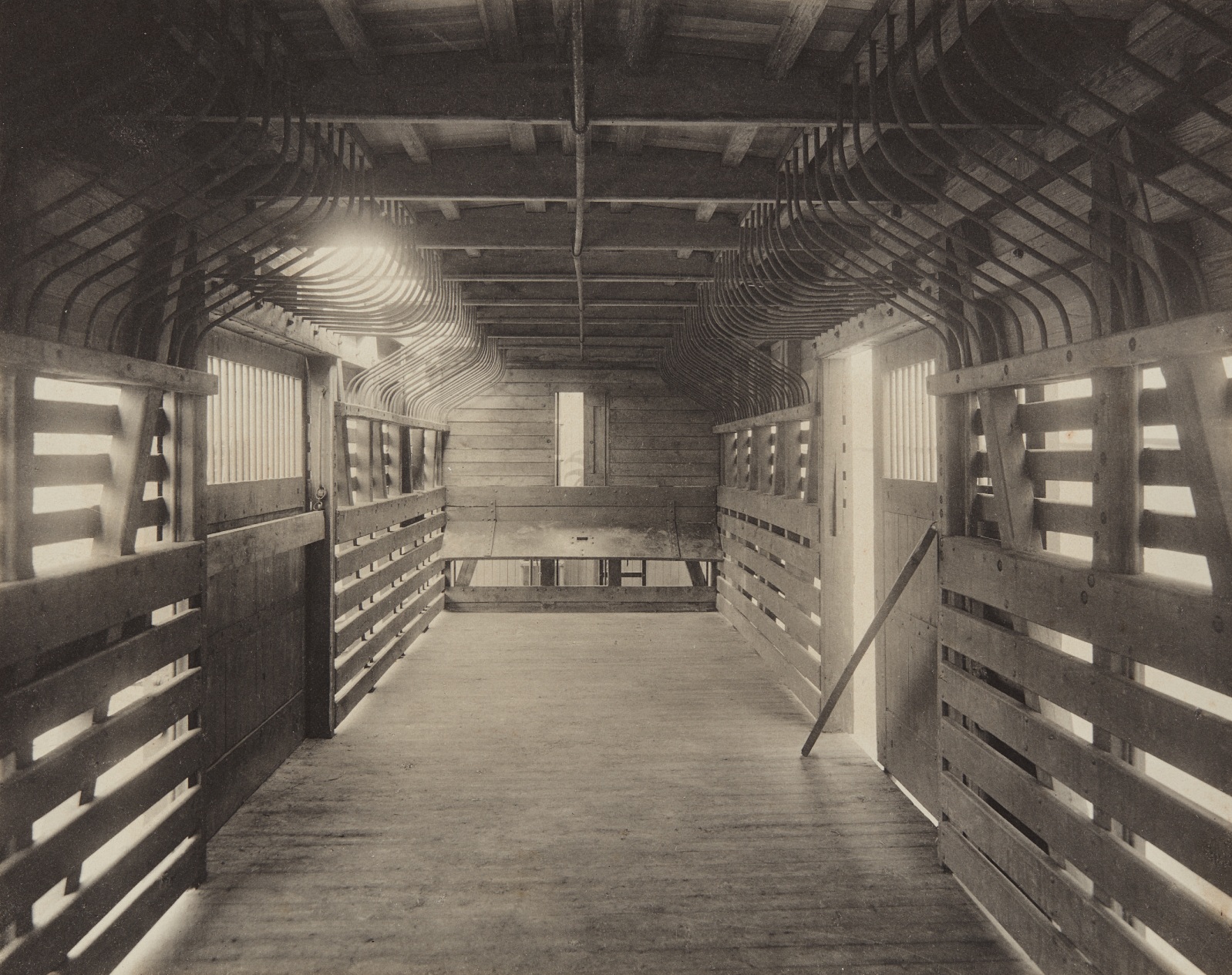
William H. Rau
Interior of a Railroad Car on the Pennsylvania Line
Both men understood that transportation was never just about getting from one place to another. The Futurists, arriving around 1909 with Marinetti's famous manifesto, made velocity itself into an aesthetic religion. Speed was not merely a feature of modern life, it was its deepest truth. Umberto Boccioni and Giacomo Balla painted automobiles and trains as pure force, dissolving solid form into vectors of energy.
Lyonel Feininger, whose work is well represented on The Collection, came at this moment from a more lyrical angle. His locomotives are not machines of conquest but almost totemic presences, rendered in shards of crystalline light that owe something to Cubism and something to his background as a caricaturist. His trains seem to carry spiritual weight, moving through a world that is fracturing around them. Ansel Adams brought a different kind of reverence to the American landscape through which transportation moved.
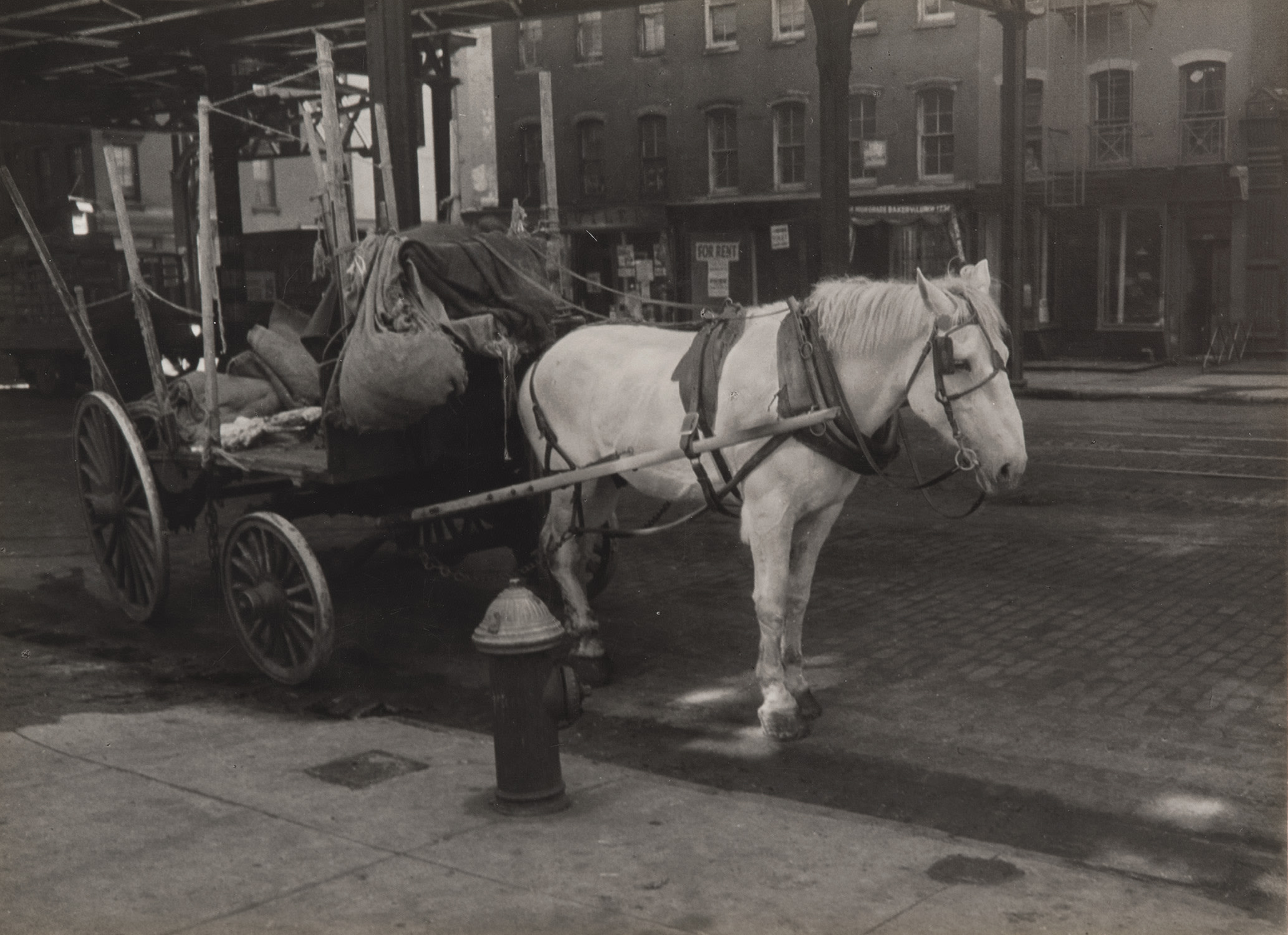
Ansel Adams
Horse and Cart Under the El, New York City
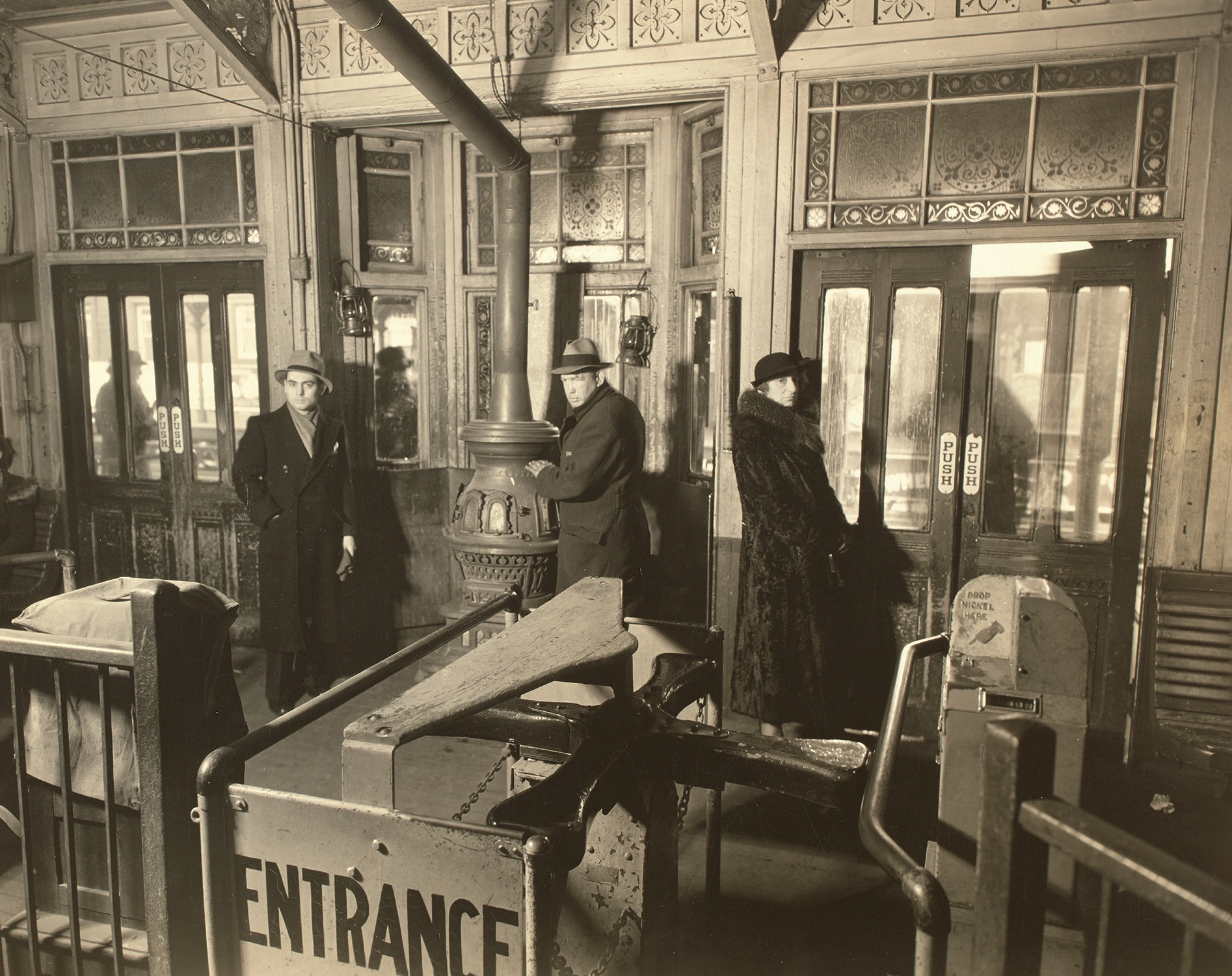
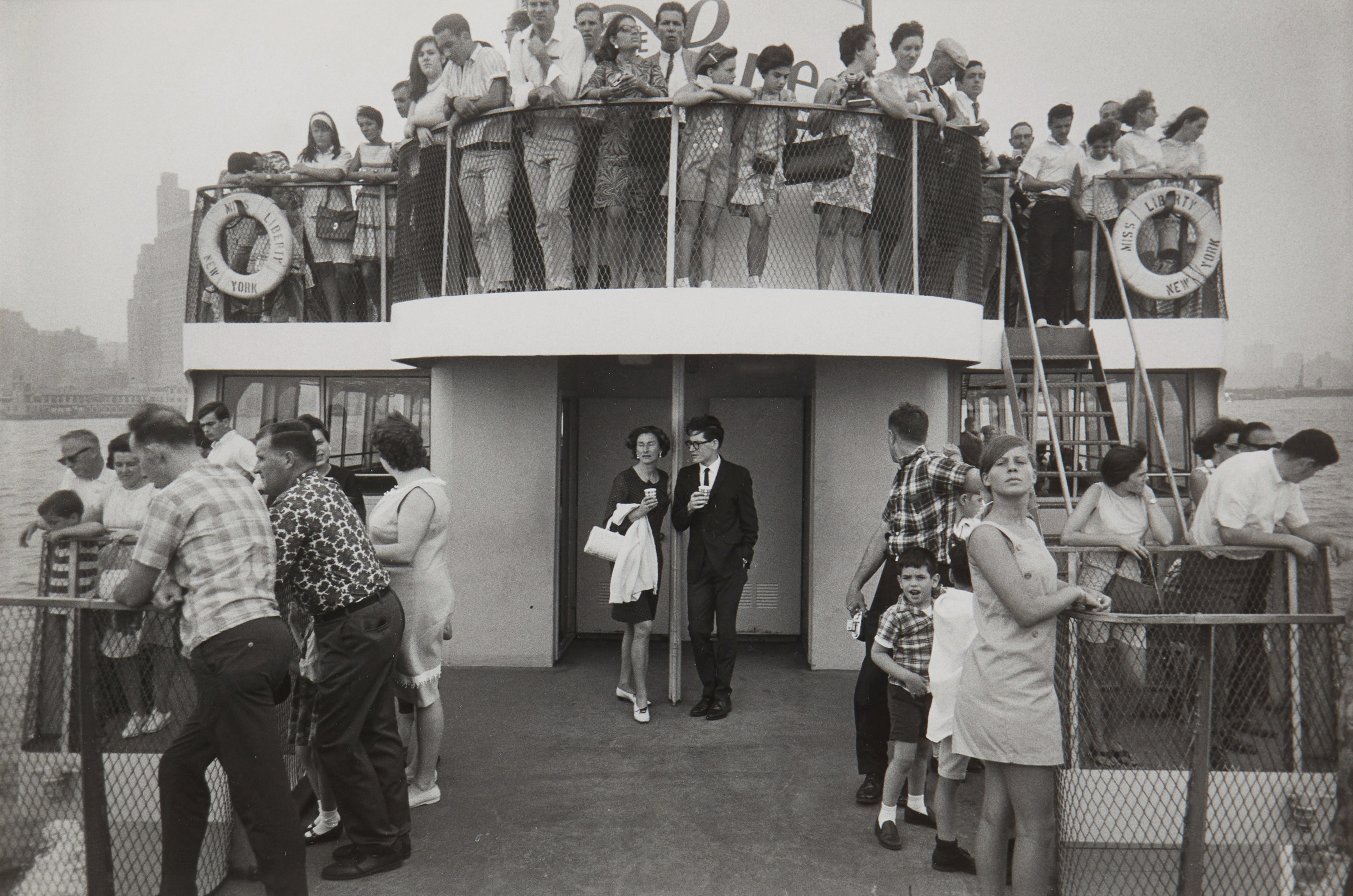
His photographs of the American West engage constantly with the infrastructure of human passage, the roads and bridges and clearings that mark our presence in terrain that exceeds us. Berenice Abbott, who also has work on The Collection, pursued this in a more urban register, documenting New York in the 1930s as a city whose identity was inseparable from its systems of motion, its elevated trains, its bridges, its perpetual churn. Garry Winogrand, working two decades later, brought an edgier, more democratic eye to the street, treating the sidewalk and the traffic as a single continuous theater of American desire. By mid century, transportation had become thoroughly entangled with ideas of freedom, identity, and the postwar promise of mobility as a birthright.
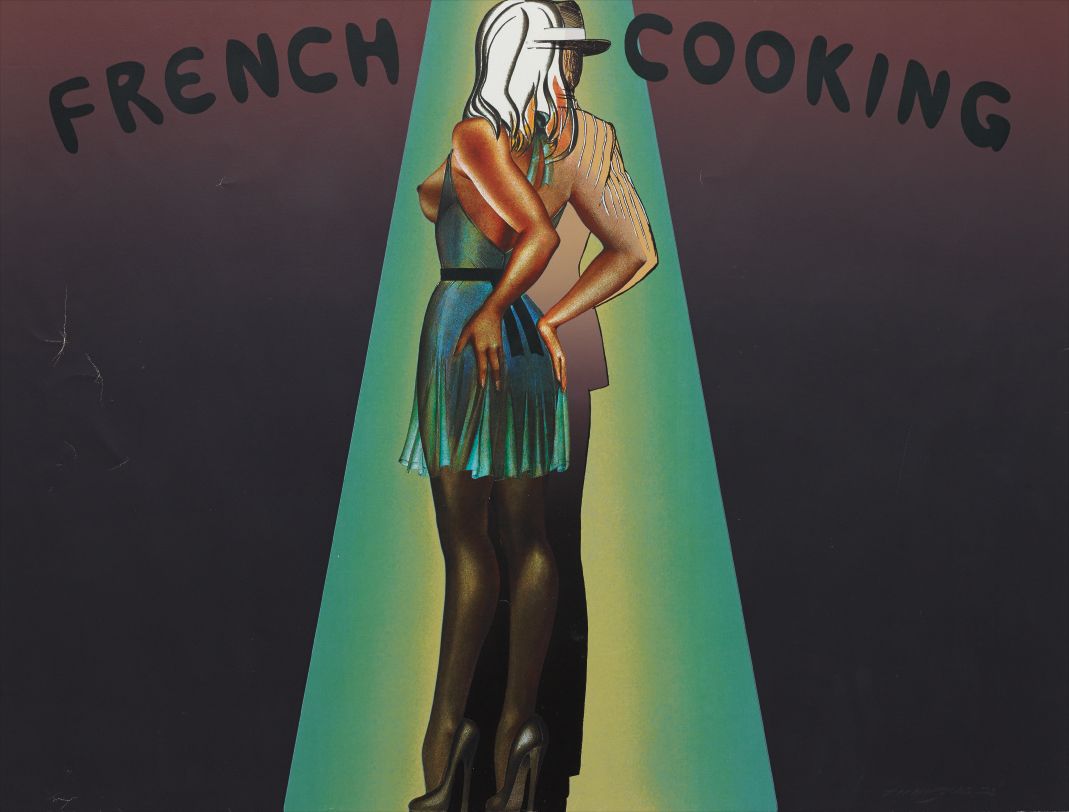
Bruce Davidson's subway photographs from the 1980s turned the New York underground into a portrait of a city at its most exposed, most vulnerable, most alive. Jean Dufy, brother to the more famous Raoul, painted trains and ports with a lighter touch, his watercolors capturing the festive energy of departure without the existential weight his contemporaries often brought to the subject. Allen Jones, whose work appears in The Collection, engaged with the automobile as a symbol loaded with desire, aggression, and the coded language of mid century consumer culture. The aluminum model of the Union Pacific Streamliner from around 1935 that appears on The Collection is, in its own way, as resonant as any painting or print in this company.
The streamlined aesthetic of that period was a complete philosophy: the idea that the future would be frictionless, aerodynamic, purged of all resistance. It was beautiful and deeply ideological at the same time, a design language that promised prosperity while disguising the immense power structures that built and ran those gleaming machines. Objects like this are exactly what serious collectors should be paying attention to, because they carry cultural meaning in their very form, without a single brushstroke. What all of these works share, across their different media and centuries, is an understanding that transportation is never neutral.
Every vehicle is a social object. Every journey is structured by who can afford it, who is permitted it, who is forced into it. The artists who have engaged most honestly with this theme know that the road, the rail, the ship, and the sky are not just settings but arguments, shaped by the values of the societies that built them. That is what makes transportation such a perpetually rich subject for art, and such a rewarding one to collect.