Ottoman
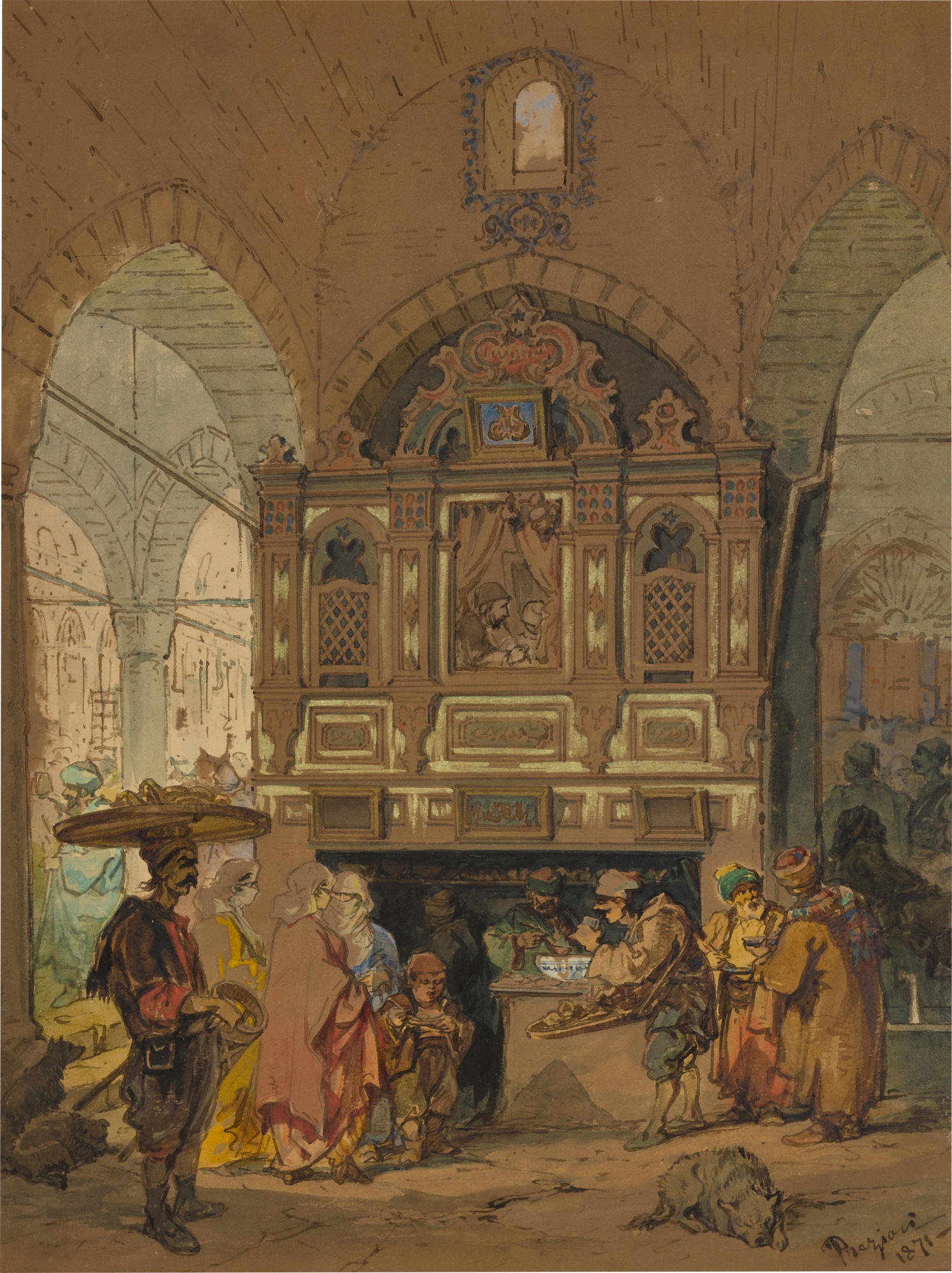
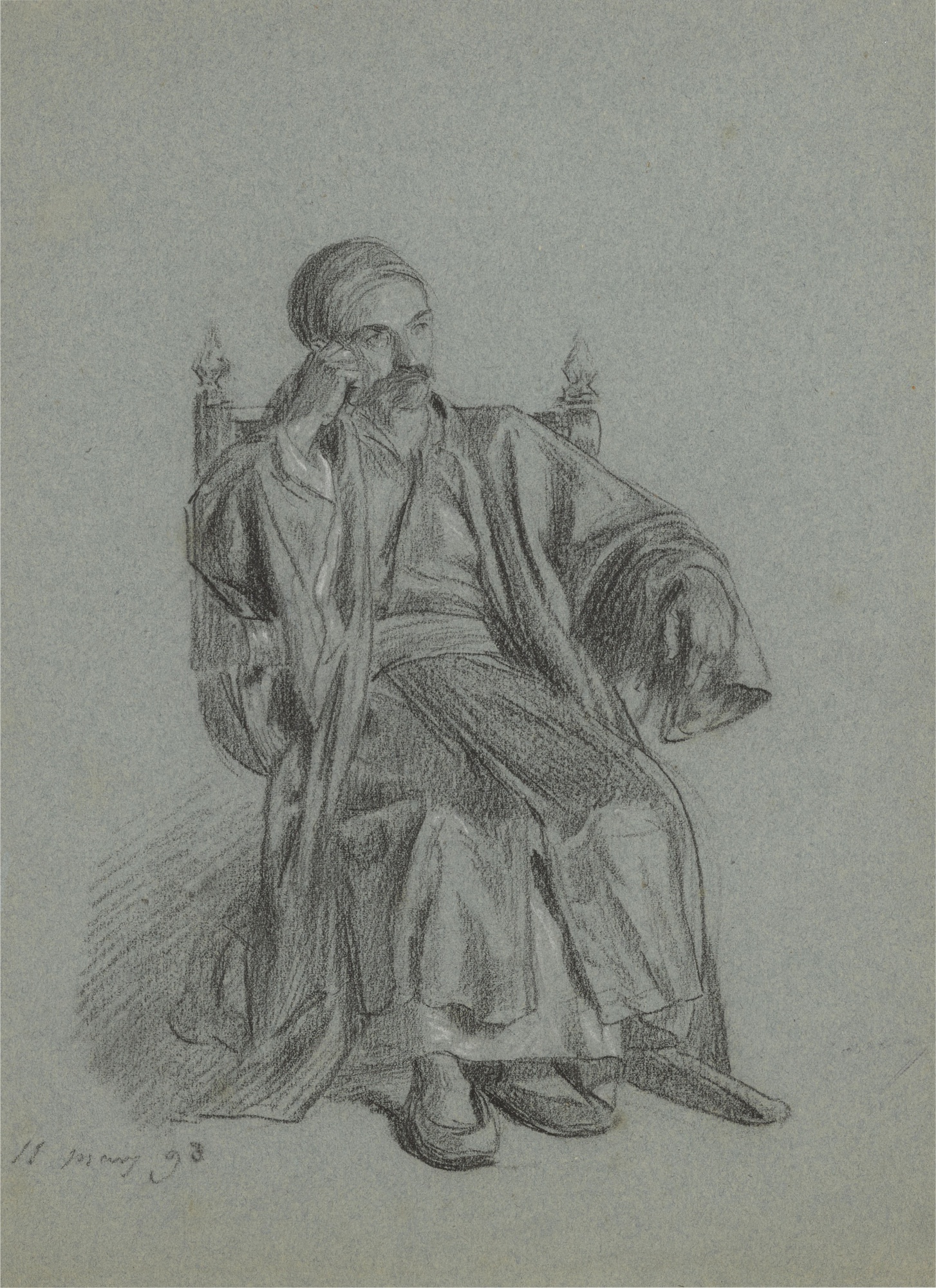
Count Amadeo Preziosi
The Grand Bazaar in Constantinople
The Ottoman Gaze Is Looking Back
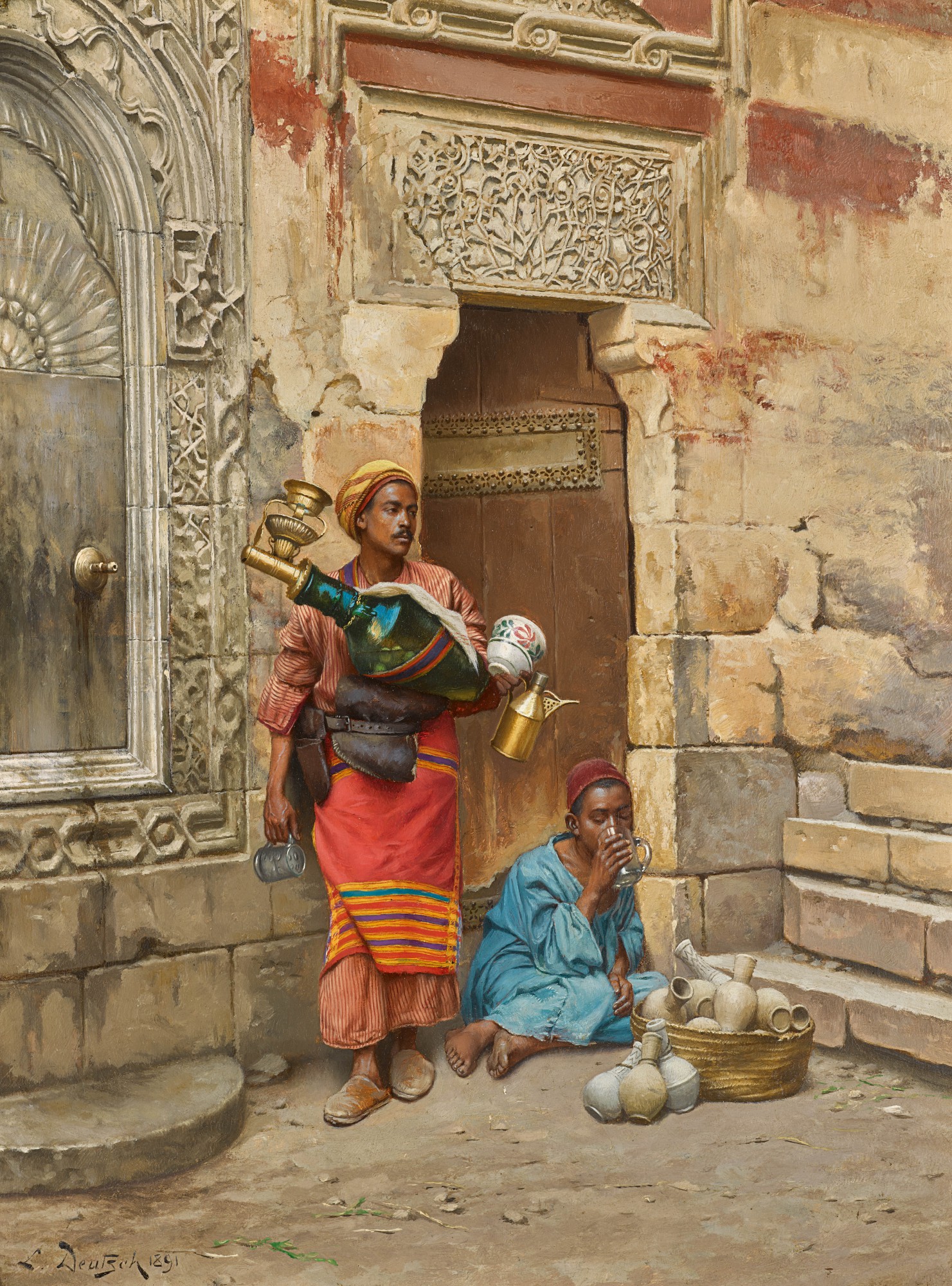
When Sotheby's brought Ludwig Deutsch's orientalist interiors to auction a few years ago, the bidding told a story that no catalogue note could contain. Deutsch, the Viennese painter who spent decades perfecting the tessellated tilework and inlaid woodwork of Cairo interiors, had long been a known quantity among specialist collectors. But the room that day signaled something broader: that the visual culture of the Ottoman world, as interpreted by both European painters and indigenous artists alike, had moved from niche enthusiasm into serious collecting territory. The prices were not merely strong.
They were a statement about where cultural appetite was heading. The Ottoman style as a collecting category refuses easy definition, which is part of what makes it so alive right now. It encompasses the orientalist tradition of European painters who traveled to Istanbul, Cairo, and beyond, the work of Ottoman court painters trained in Paris who returned to document their own society, and the decorative visual languages that passed between empires and continents for centuries. What unites the category is not geography or ethnicity but a particular quality of attention: an absorption in light, surface, textile, and ceremony that produced some of the most visually ravishing painting of the nineteenth century.
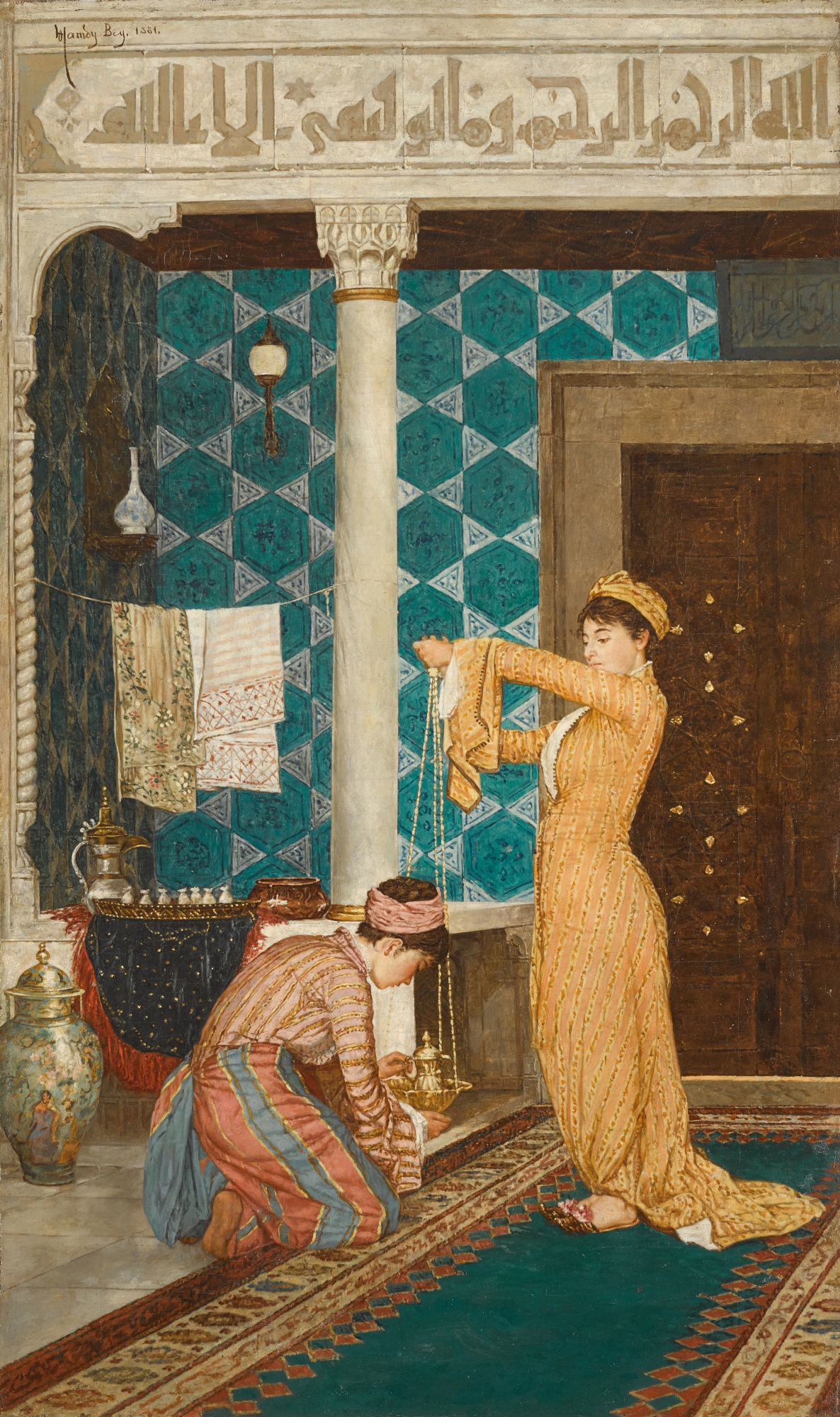
Osman Hamdy Bey
Preparing coffee
Collectors who come for the beauty tend to stay for the complexity. The artist whose reputation has arguably risen most dramatically in recent decades is Osman Hamdy Bey, the Istanbul born painter who studied in Paris under Gustave Boulanger and Jean Léon Gérôme before returning to found the first modern art institution in Turkey. His 1906 painting The Tortoise Trainer set a record at Sotheby's in 2004 when it sold for over three and a half million dollars, a figure that shocked even seasoned observers at the time. Hamdy Bey is represented on The Collection, and his presence here feels appropriate: he is the figure who most forcefully complicates the usual narrative of Ottoman imagery as purely a European projection.
He was looking at his own world, with all the irony and self consciousness that implied. Count Amadeo Preziosi occupies a different but equally fascinating position in this conversation. The Maltese born artist settled in Istanbul in the 1840s and spent the rest of his life documenting the city's streets, bazaars, and domestic interiors with the precision of a naturalist and the warmth of someone who had genuinely made the place his home. His watercolors circulated widely as albums and prints, shaping how Western audiences visualized Ottoman life across the second half of the nineteenth century.
Count Amadeo Preziosi
The Grand Bazaar in Constantinople
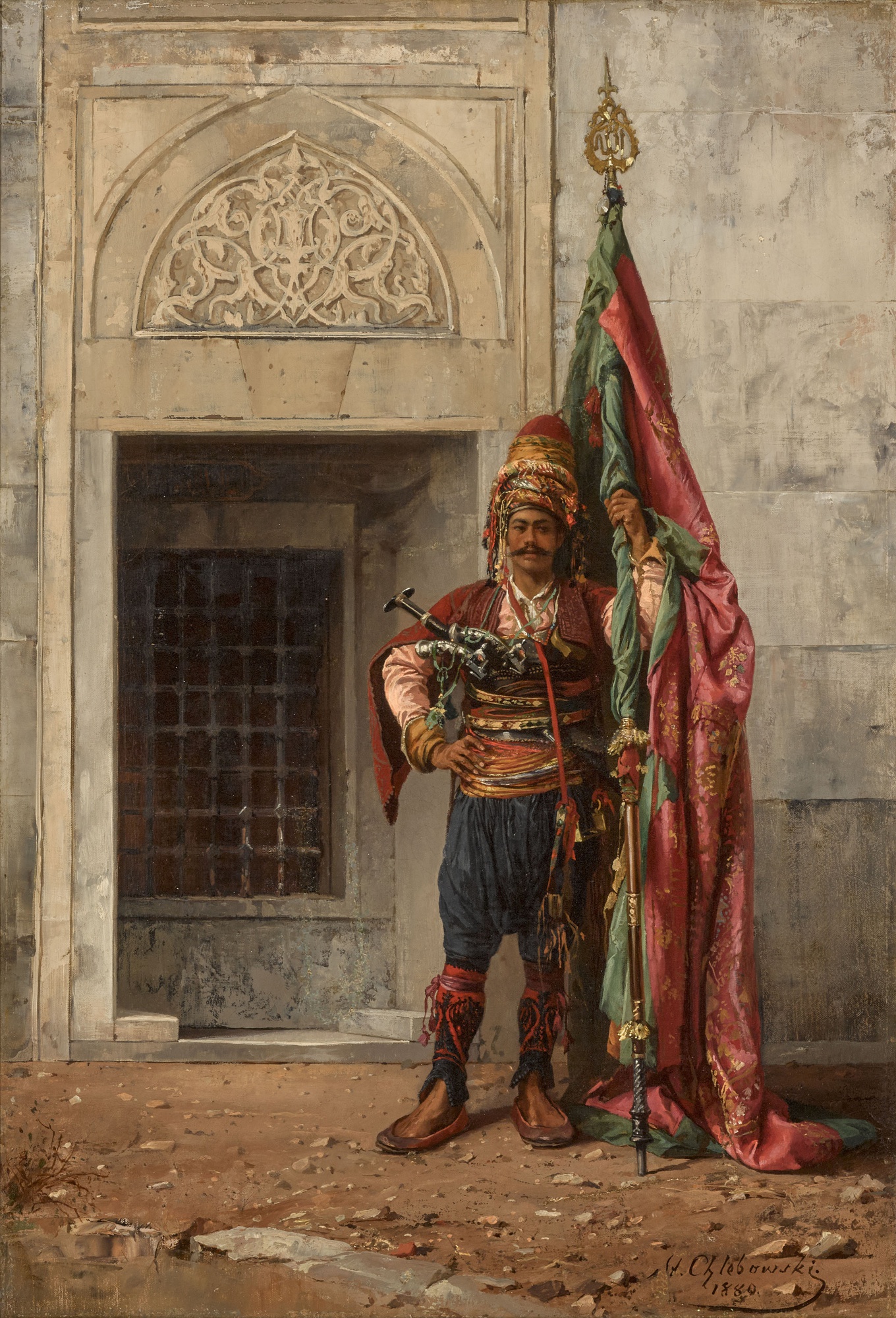
Stanislaus von Chlebowski, who served as court painter to Sultan Abdülaziz during the 1860s, worked in a different register entirely, producing grand historical canvases that were as much about Ottoman self representation as European fantasy. These are figures who, when shown together, reveal just how layered the Ottoman visual field really was. Museum programming has begun to catch up with this complexity. The Pera Museum in Istanbul has been doing essential work for years, building a collection of Orientalist painting that insists on the Ottoman side of the exchange rather than treating the tradition as purely a Western export.
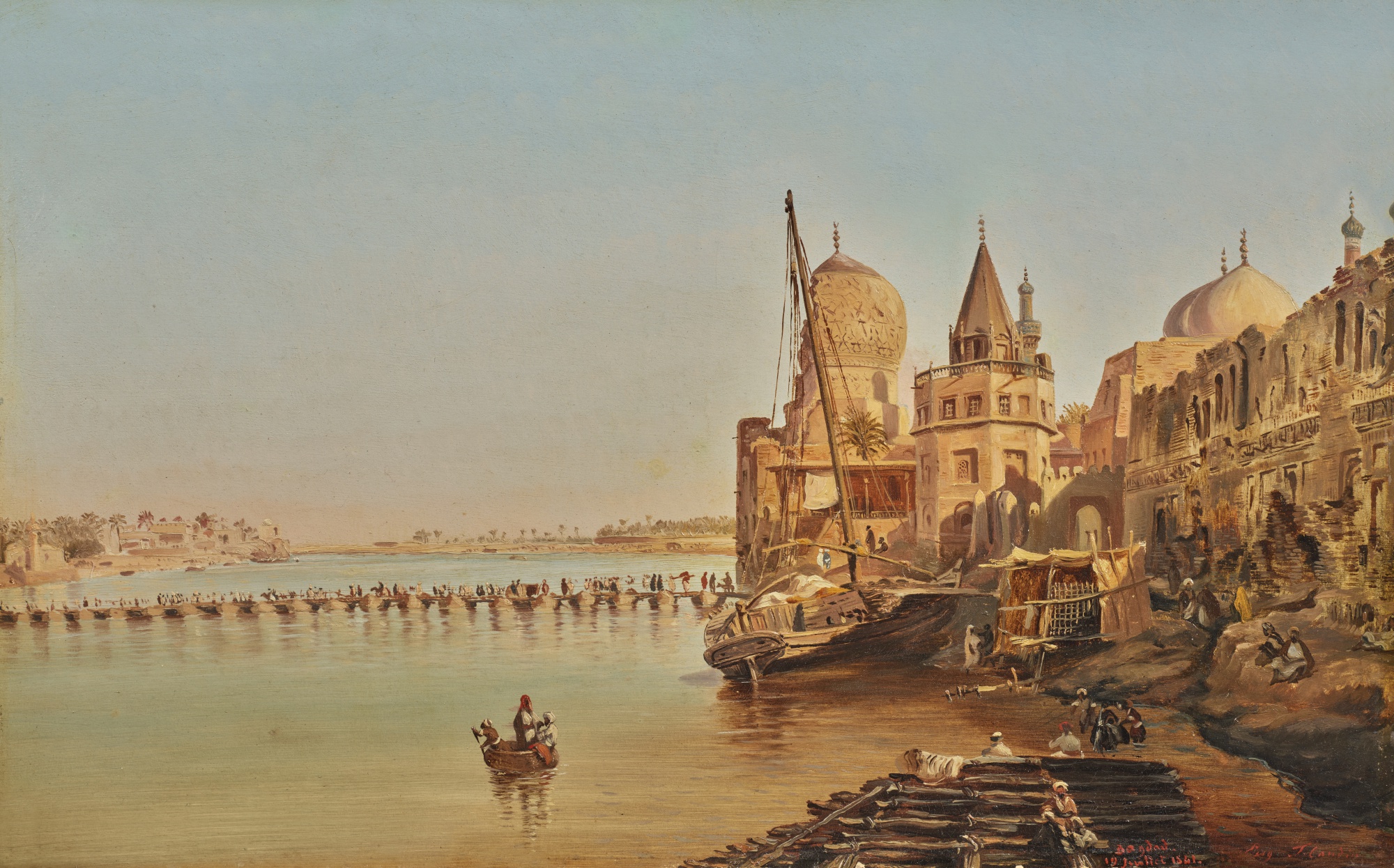
Their shows have brought figures like Preziosi and Eugène Flandin, the French painter and archaeologist whose work on The Collection captures the archaeological romance of the period, into dialogue with Ottoman miniature traditions and twentieth century Turkish modernism. The Louvre Abu Dhabi has also positioned itself as a serious institutional voice here, with acquisitions and loans that reframe the genre within a broader Islamic art continuum rather than the narrower Orientalism debate that dominated the 1990s and early 2000s. That debate, shaped so powerfully by Edward Said's 1978 text and the critical writing that followed it, produced necessary corrections but also some overcorrections that are now being gently unwound. Curators like Emily Weeks, whose scholarly work on Orientalist painting has been precise and generative, and writers associated with publications like the Burlington Magazine and the Journal of the Walters Art Museum have helped move the conversation beyond the simple oppressor or victim framework.
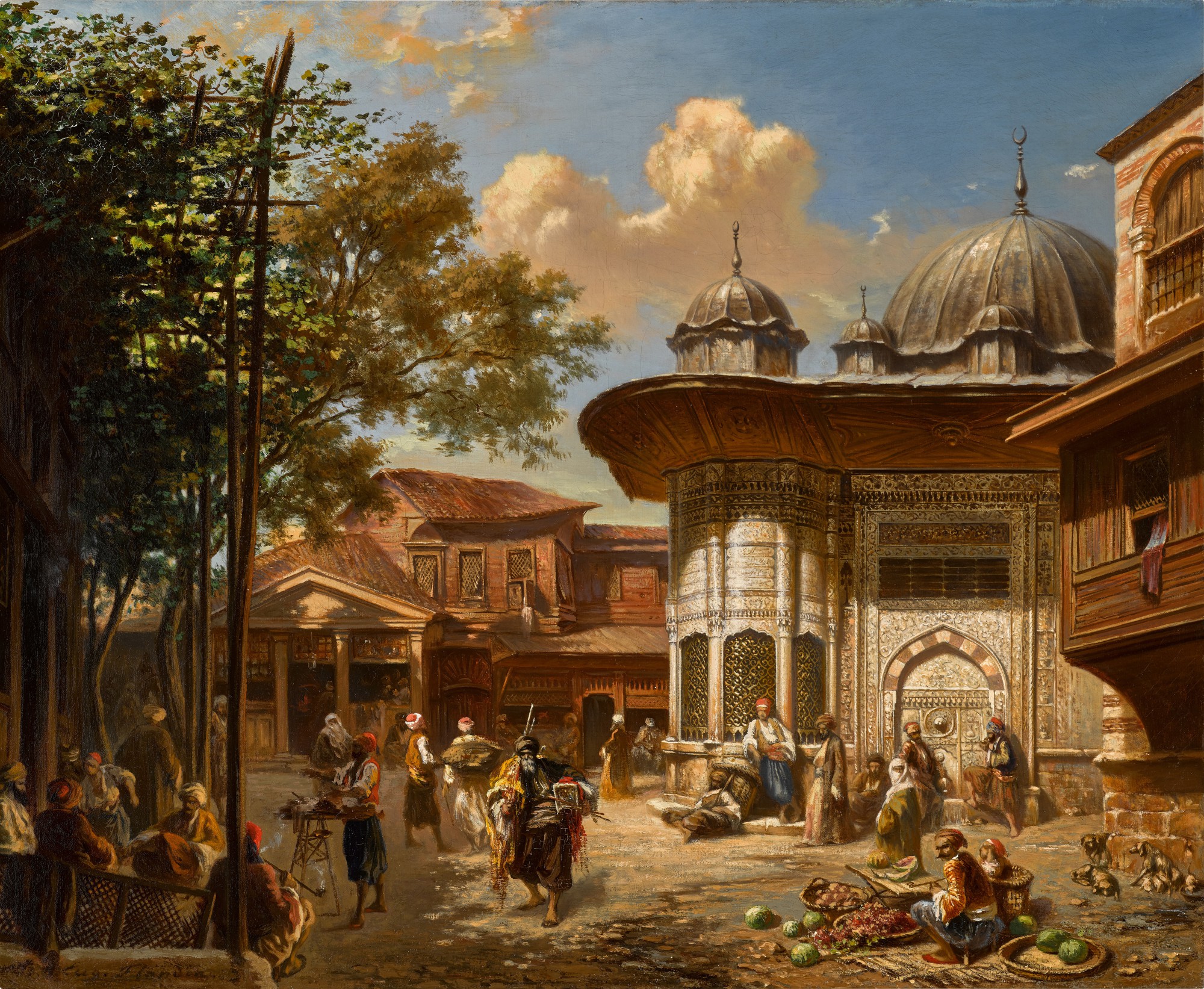
Eugène Flandin
The Fountain of Ahmet III, Constantinople
The more interesting questions now are about circulation, about how images moved between cultures, who commissioned them, who consumed them, and what visual pleasures they offered that cannot be reduced to ideology alone. Alexandre Bida, the French illustrator and painter whose orientalist drawings brought a genuine ethnographic seriousness to the genre, and photographers like Frank M. Good, whose albumen prints gave a documentary texture to Ottoman subjects, are being read within this more textured critical frame. The market continues to reward quality and rarity above all else.
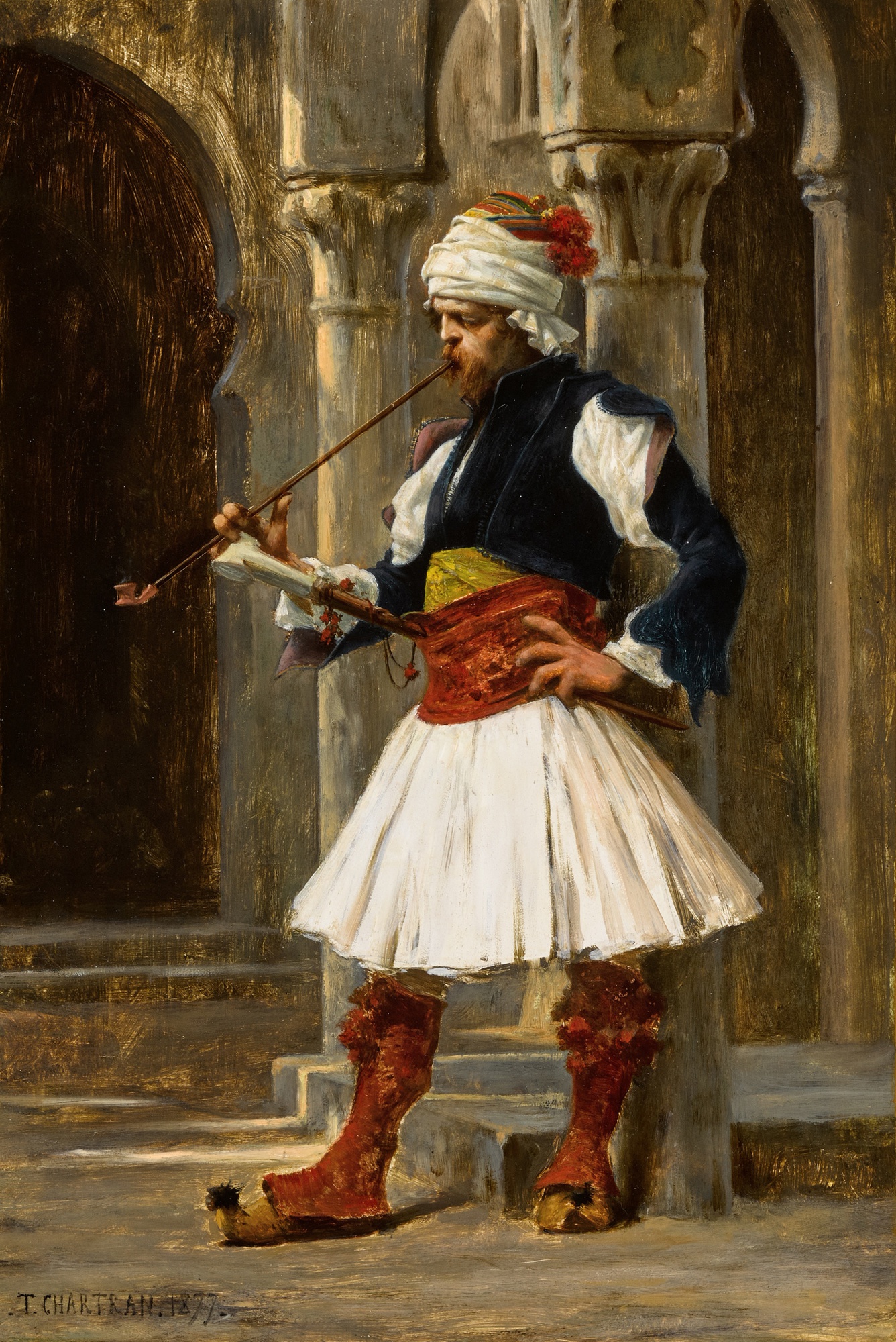
Works by Théobald Chartran, the French academician who brought his portrait skills to bear on North African and Near Eastern subjects, and by Flandin tend to appear at the middle tier of major sales, performing solidly but not spectacularly. The genuinely exceptional results cluster around artists who managed to fuse technical virtuosity with something that feels like interiority: Deutsch at his best, Hamdy Bey always, and the anonymous masters whose carpets, tilework designs, and lacquered objects are increasingly crossing from the decorative arts departments into fine art territory. The Unknown makers represented so generously on The Collection are, in that sense, not marginal at all. They are the foundation on which the entire visual culture rests.
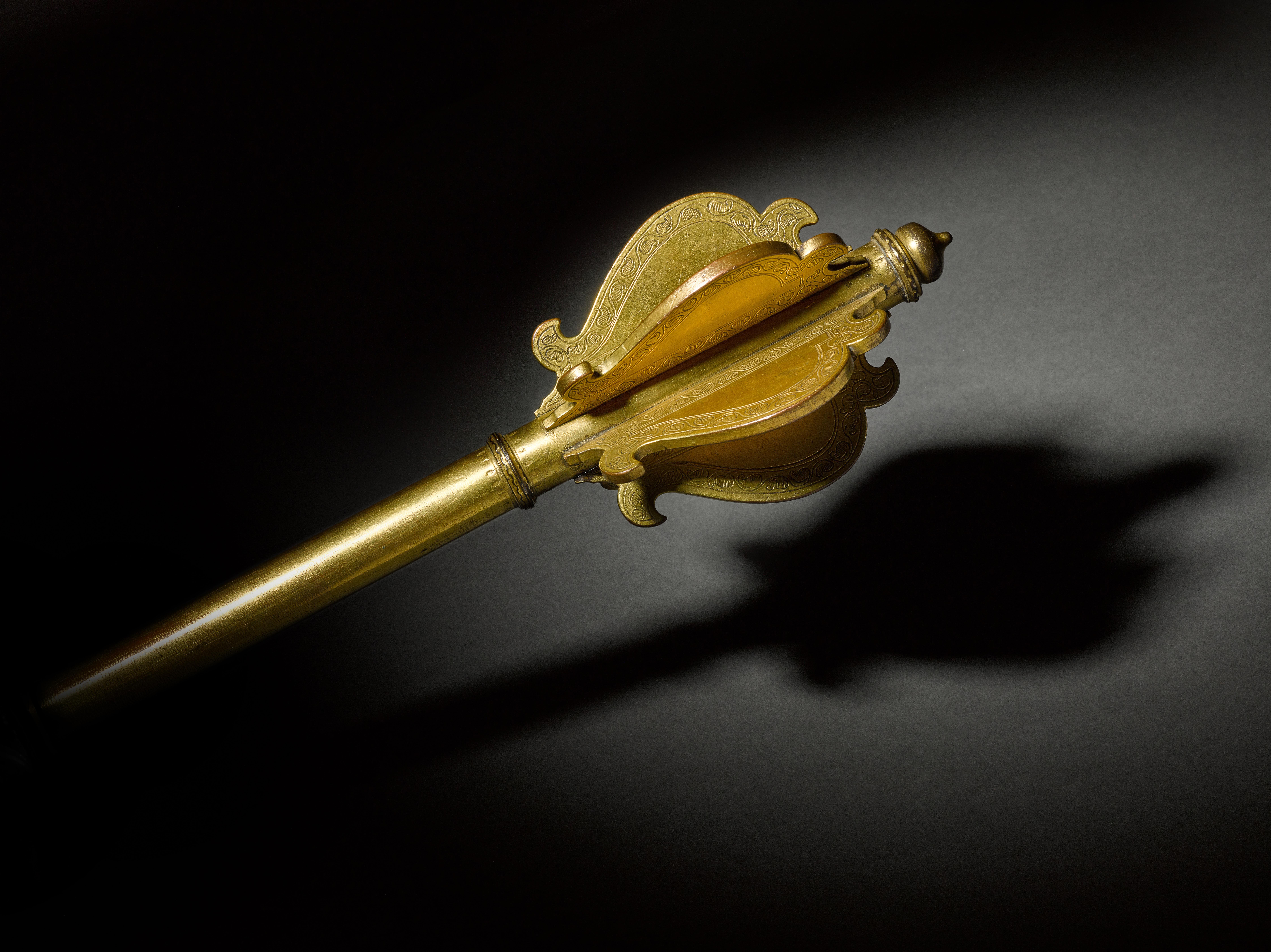
Unknown
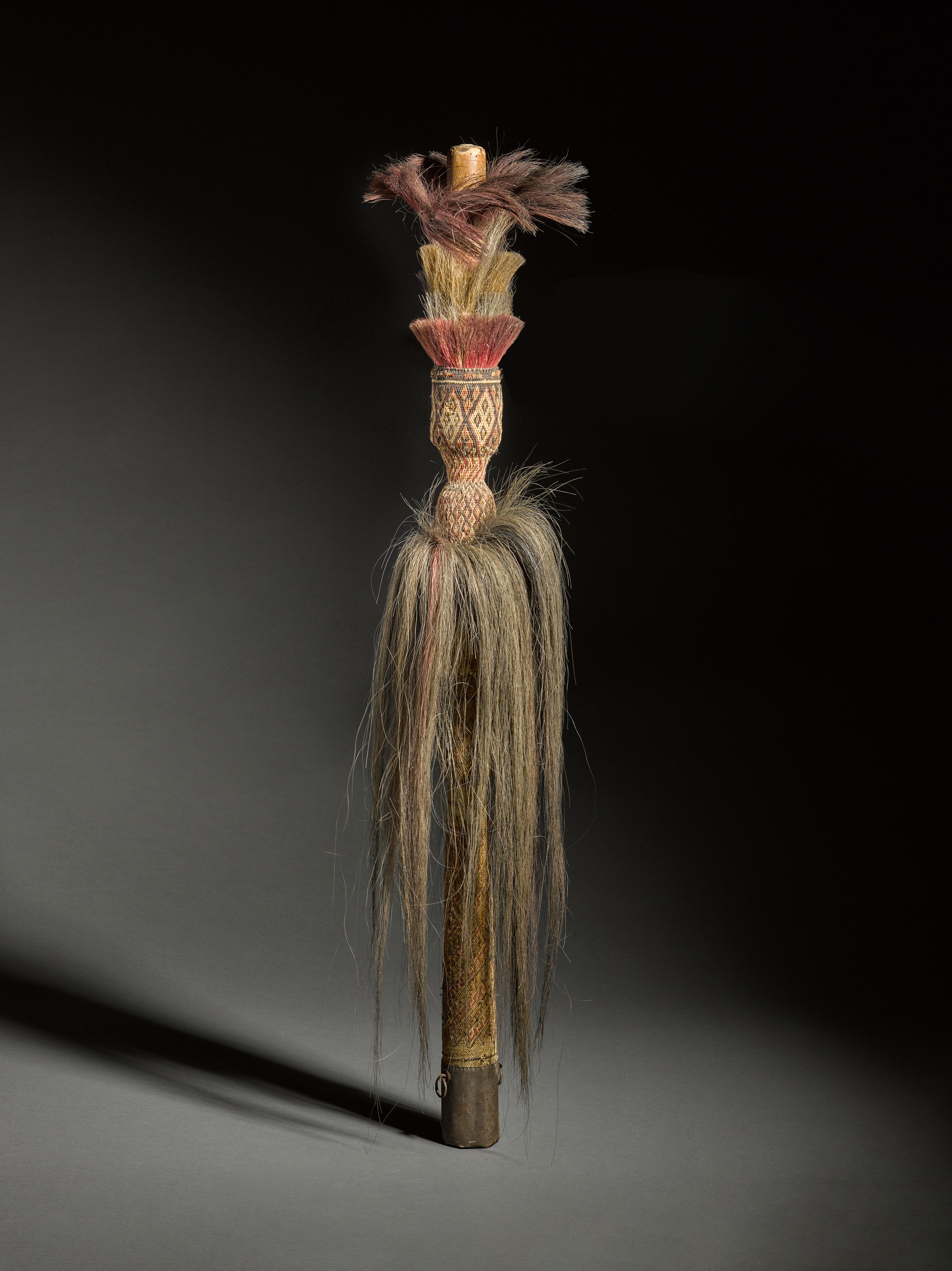
A Rare Ottoman Tombak Flanged Mace, Turkey, 17th or 18th Century
What feels alive right now is the appetite for artists who destabilize the European gaze rather than simply exemplifying it. What feels settled is the academic rehabilitation of the genre as a whole: nobody serious is arguing anymore that beauty disqualifies a work from ethical consideration. What surprises are coming almost certainly involve the market for Ottoman photography and for works on paper that have historically been undervalued relative to oil on canvas. Collectors paying attention to those corners now are likely to look prescient in ten years.
The Ottoman visual world is not being rediscovered so much as it is finally being seen whole, and that is a different and much more interesting thing.