Light-Based Art
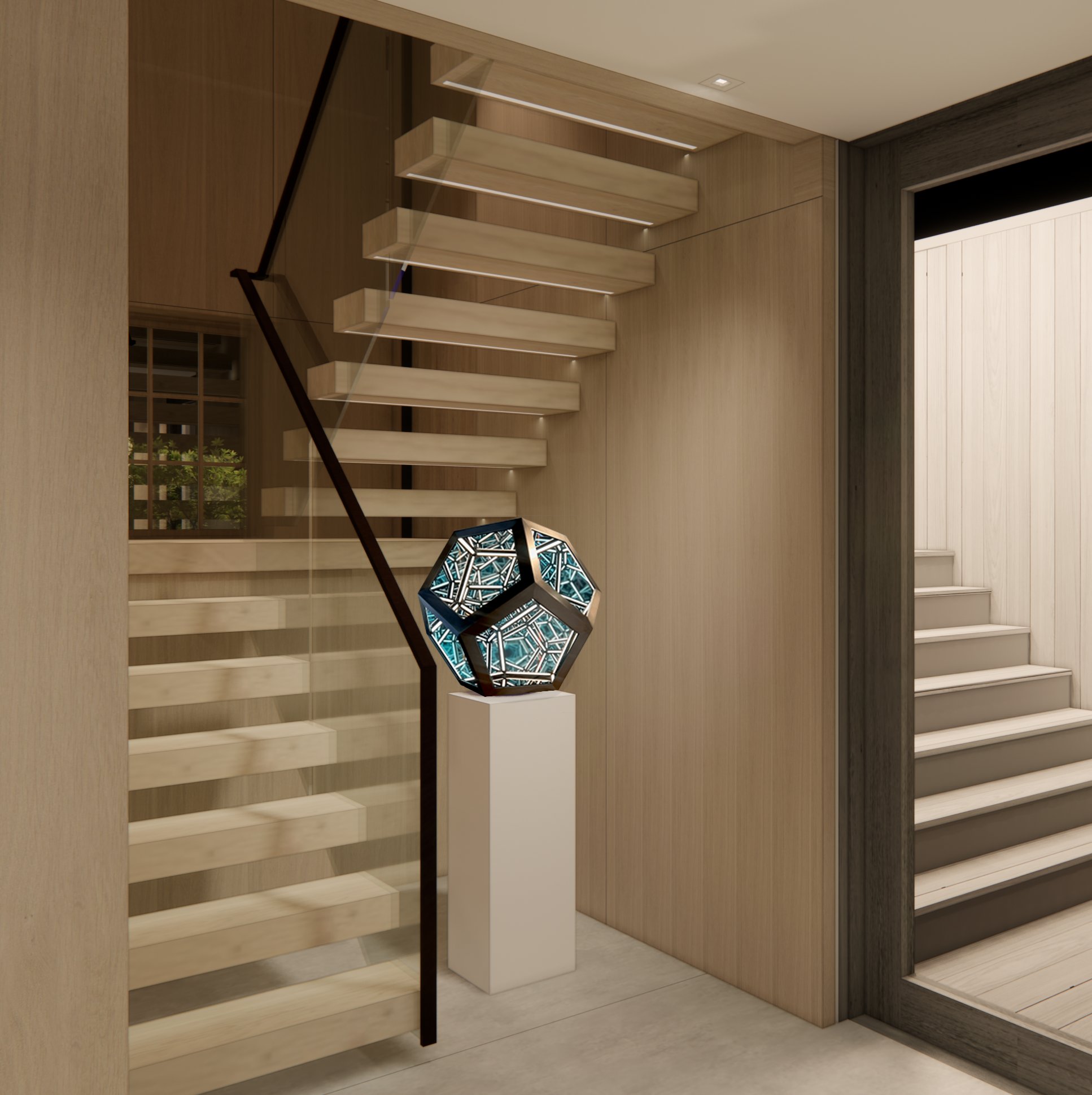
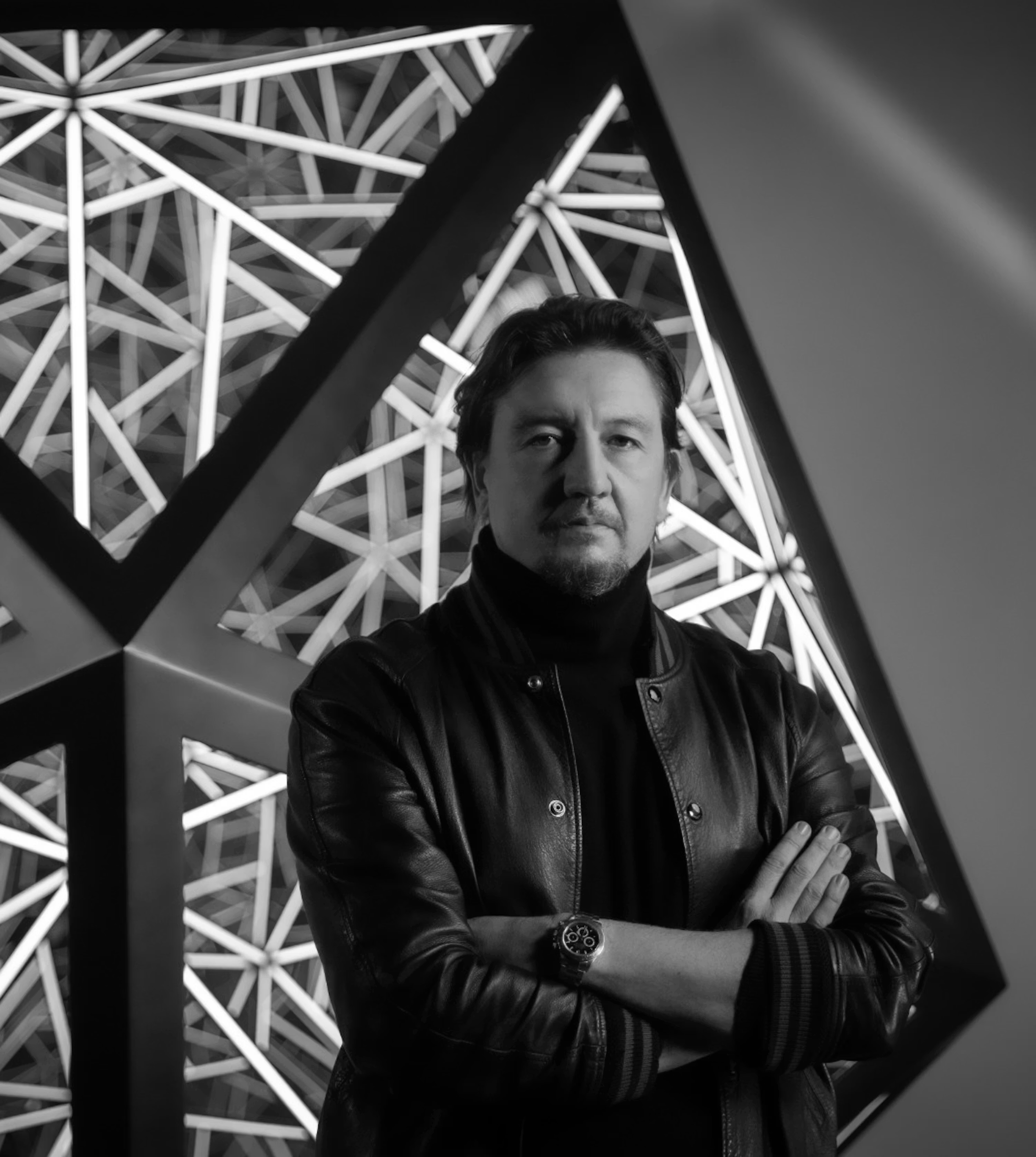
Anthony James
Dodecahedron (Solar Black), 2025

Light Itself Has Become the Medium
When Anthony James's mirrored, neon lit spheres sold at auction in recent years for figures well beyond their estimates, it confirmed something collectors had been quietly sensing for a while: light based work had moved decisively from the margins of the contemporary market to its confident center. The result was not merely a data point. It was a signal that a generation of buyers had grown entirely comfortable with the idea that luminosity, frequency, and glow could constitute a serious long term investment, not just a spectacular object to photograph at an opening. The story of light as a primary artistic material has deep roots, but the critical energy surrounding it right now feels genuinely new.
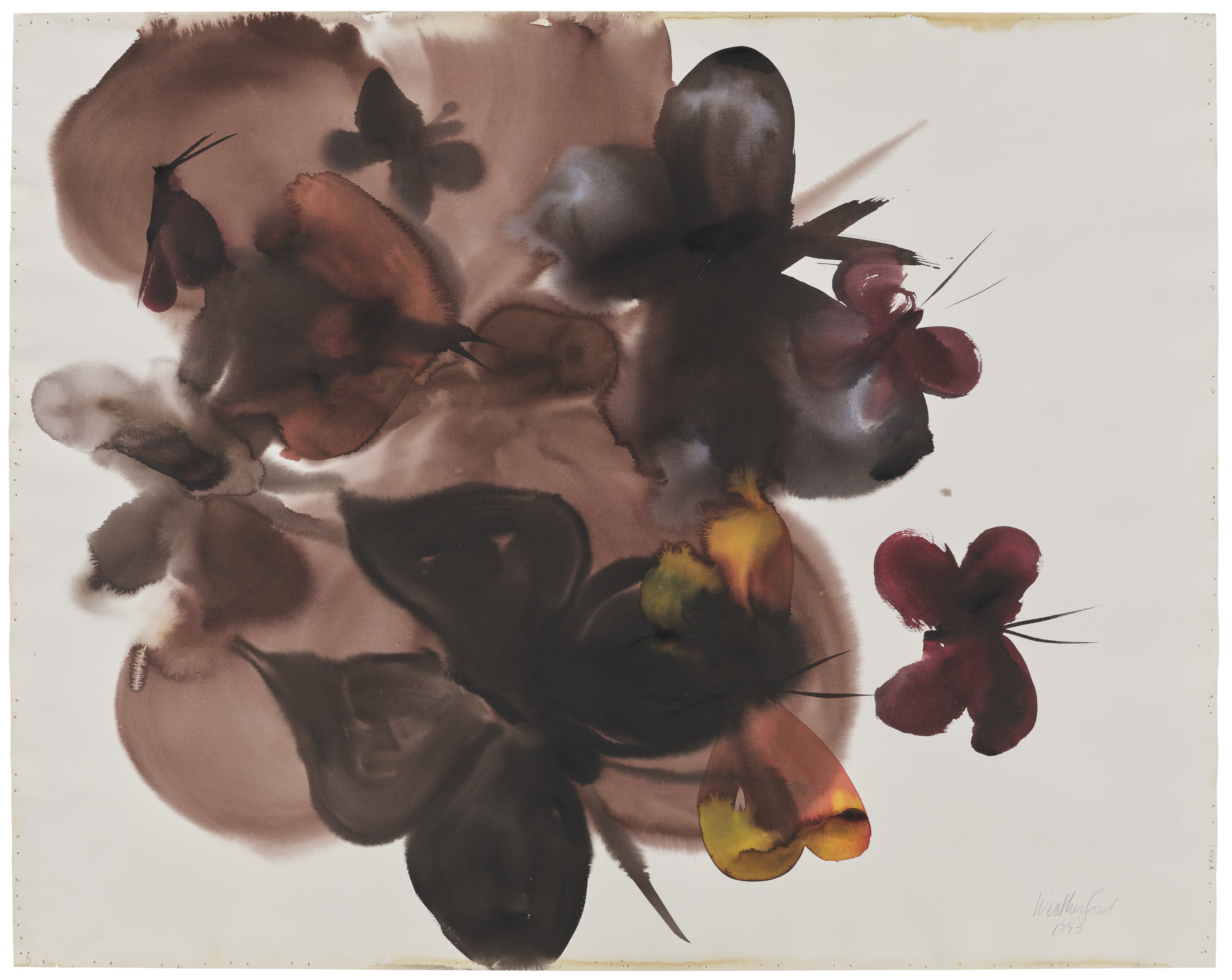
The Arte Povera artists and the California Light and Space movement of the 1960s and 70s established the conceptual foundations, with figures like James Turrell, Robert Irwin, and Dan Flavin demonstrating that light could restructure perception itself rather than simply illuminate a surface. What is different today is the sheer diversity of approaches gathering under this umbrella, from neon to LED to projection mapping to the quiet luminescence of painted fluorescence. The field has expanded in every direction simultaneously. Mary Weatherford's large scale paintings, which she threads with neon tubes, sit at a fascinating intersection of the painterly and the electrical.
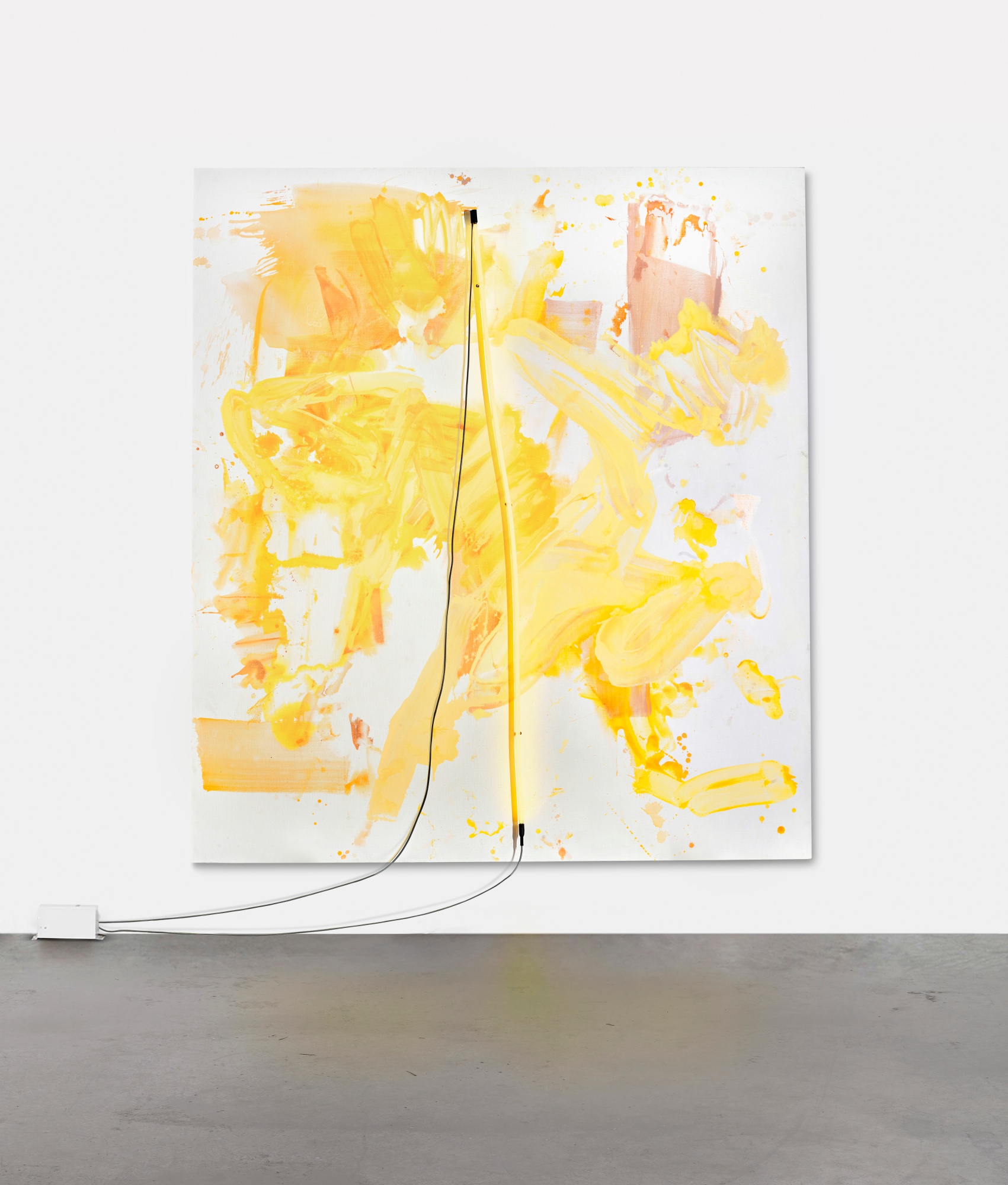
Mary Weatherford
yellow on yellow, 2017
Her work refuses easy categorization, which is precisely why it has attracted such sustained institutional interest. Weatherford's retrospective presentations at venues like the Hammer Museum in Los Angeles have prompted serious critical reappraisal of where painting ends and light based practice begins. Her canvases feel handmade and industrial at once, the neon buzzing against fields of broad gestural color in a way that feels genuinely unresolved and alive rather than settled. Chris Levine operates in a different register entirely.
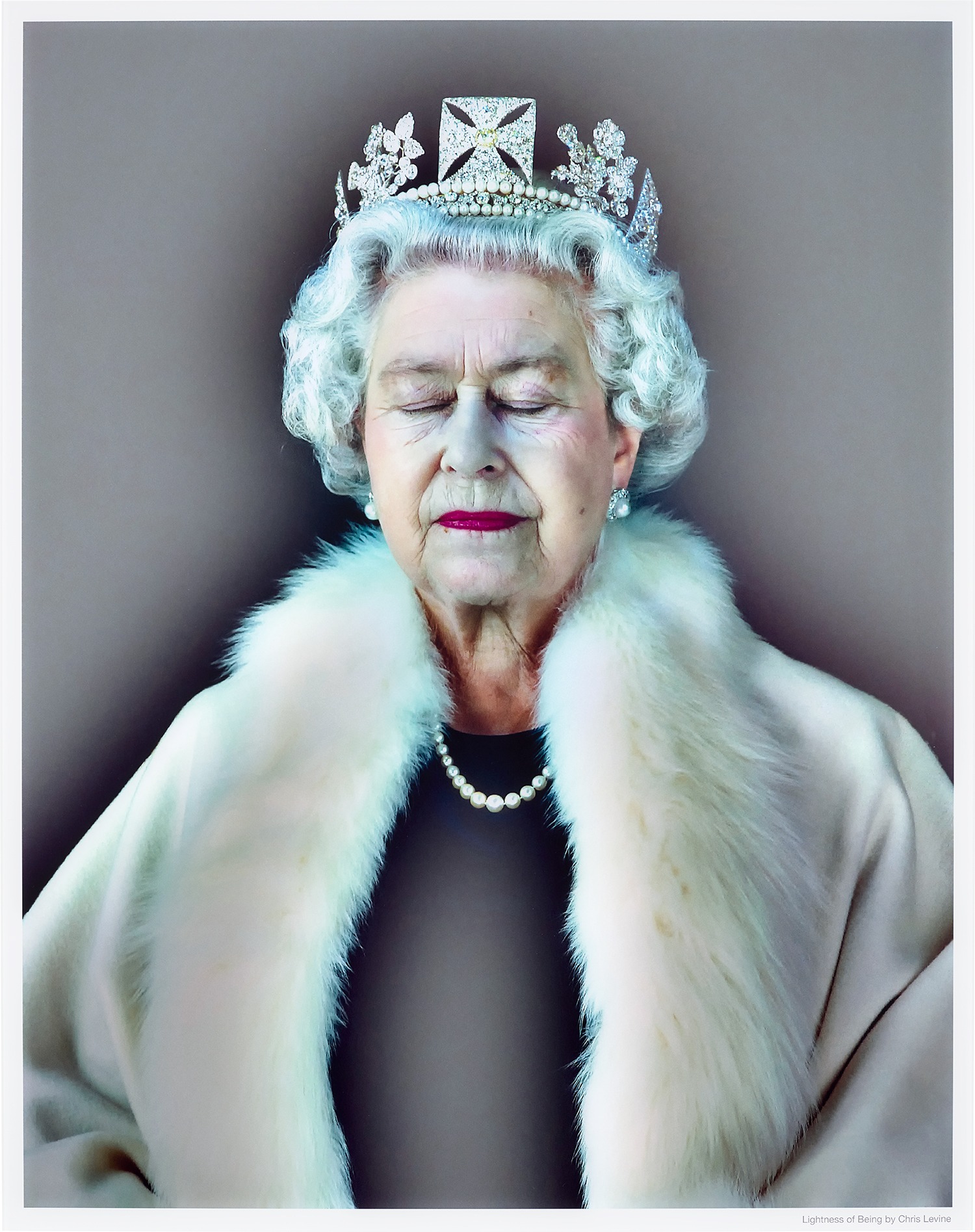
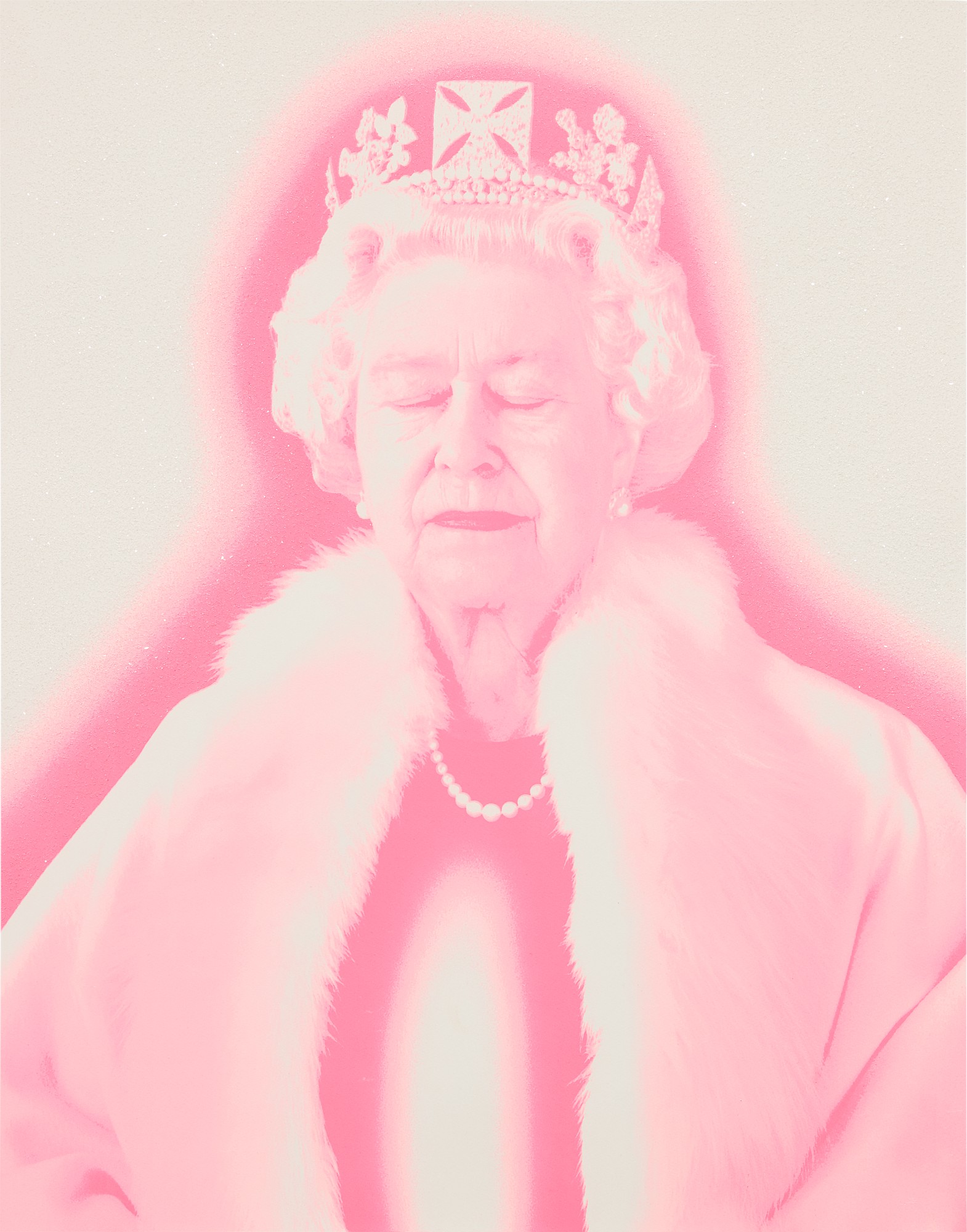
The British artist is perhaps best known internationally for his portrait of Queen Elizabeth II, a work made using a process in which the subject was photographed with eyes closed during a moment of stillness between official portrait sessions. That image, titled Equanimity, became one of the most reproduced portraits of the late monarch and introduced a broad public to the idea that light itself could be a portraitist's tool. Levine's holographic and lenticular works push the experience of portraiture into something closer to meditation, collapsing the boundary between the observed and the felt. The market for his work has strengthened considerably in the years since Equanimity entered public consciousness, and his presence on The Collection reflects genuine collecting momentum.
Anthony James
Dodecahedron (Solar Black), 2025
At auction, the results across light based practices have told a consistent story of appetite outpacing supply. Works by Turrell, when they appear, command prices that reflect both their rarity and their ability to command an entire room, sometimes an entire building. But the more interesting story is what has happened one tier down, where artists like Anthony James have seen their secondary market mature in real time. James works primarily with geometric forms, mirrors, and colored light to produce objects that feel simultaneously ancient and spacecraft cool.
His works have appeared at major fairs and in dedicated booth presentations that function more like immersive installations than conventional displays, a strategy that has proven highly effective in building collector loyalty and broadening his audience beyond the traditional contemporary circuit. Museum and institutional collecting in this space has accelerated meaningfully. The Los Angeles County Museum of Art, which has long had a strong commitment to Light and Space work, continues to add to its holdings in ways that validate younger practitioners. The Tate Modern in London has made significant acquisitions of light based work that sit outside its Arte Povera and Minimalist holdings, pointing toward a more expansive institutional definition of what the category contains.

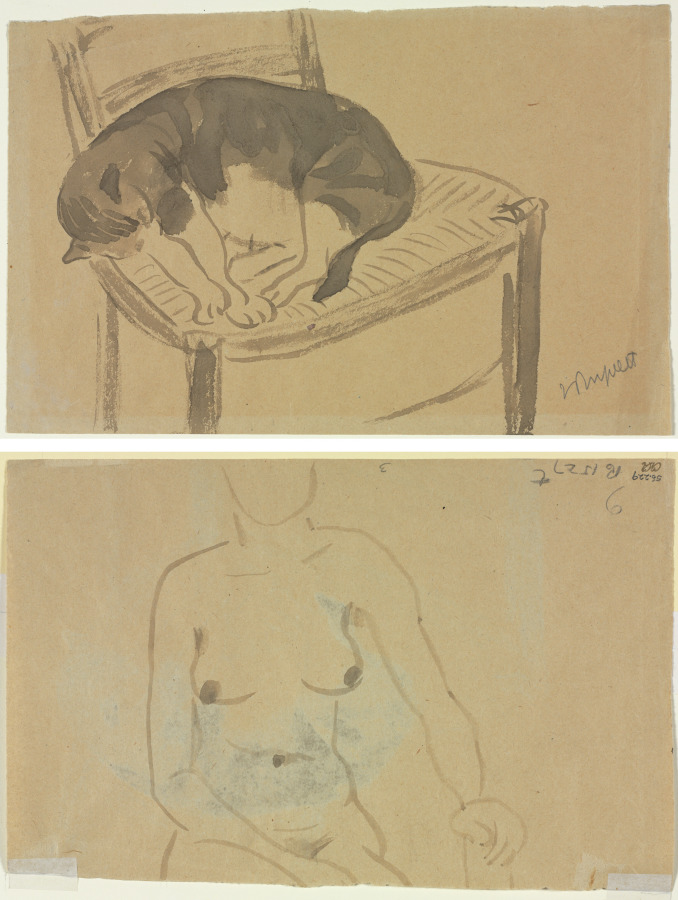
Cindy Sherman
two colour transparencies in lightbox, 1989
When major public collections move in a direction with conviction, private collectors tend to follow within a cycle or two, and the pipeline here looks robust. The critical conversation has been shaped in recent years by a handful of curators and writers willing to think seriously about perception and phenomenology alongside market dynamics. Legacy Russell, whose writing engages technology and embodiment in ways that feel genuinely useful for understanding light based practice, has helped broaden the theoretical frame. Publications including Artforum and Frieze have devoted sustained attention to artists who work with luminescence, often through the lens of environmental and ecological thinking, asking what it means to work with energy and electricity at a moment when both feel politically charged.
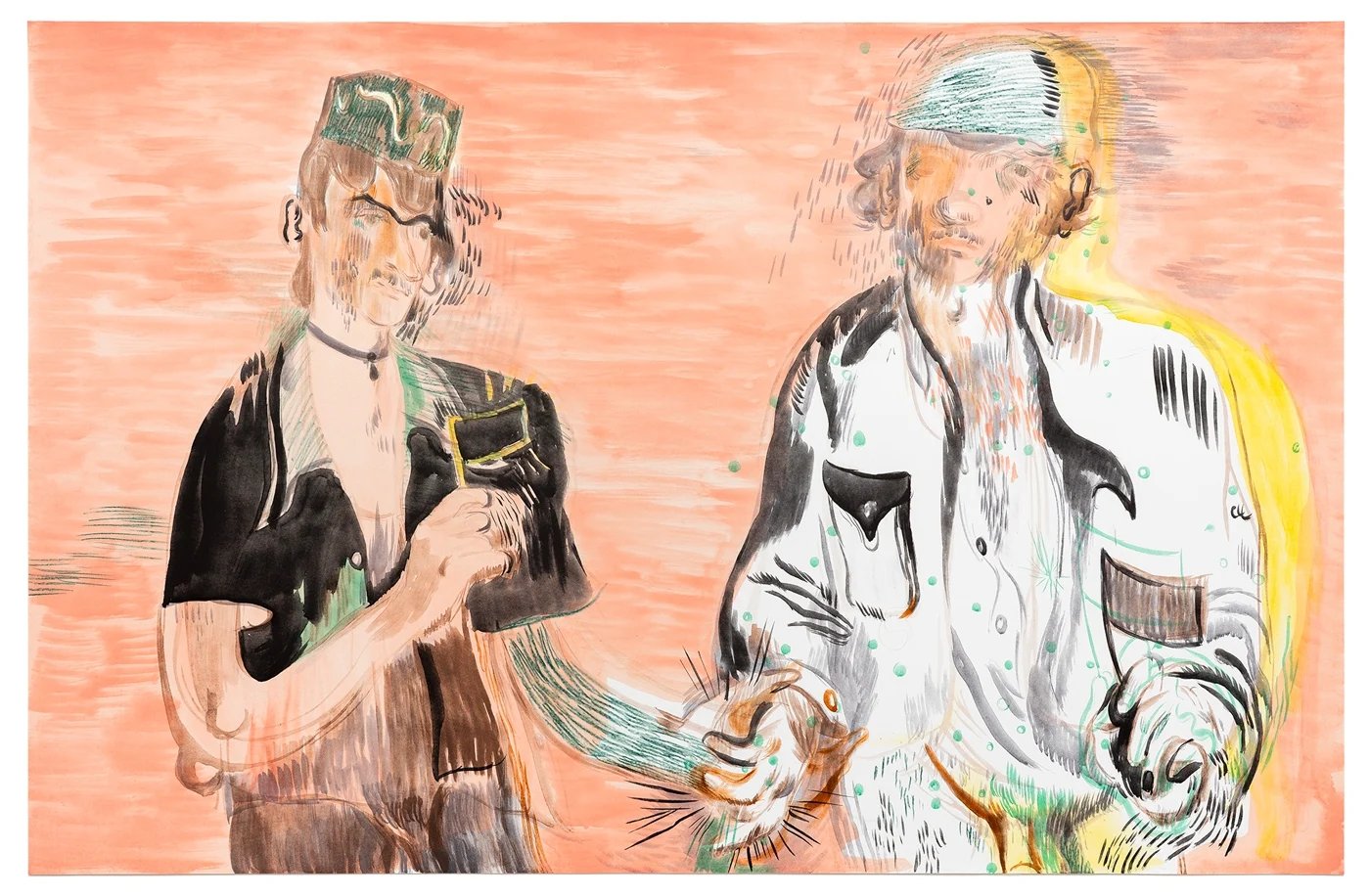
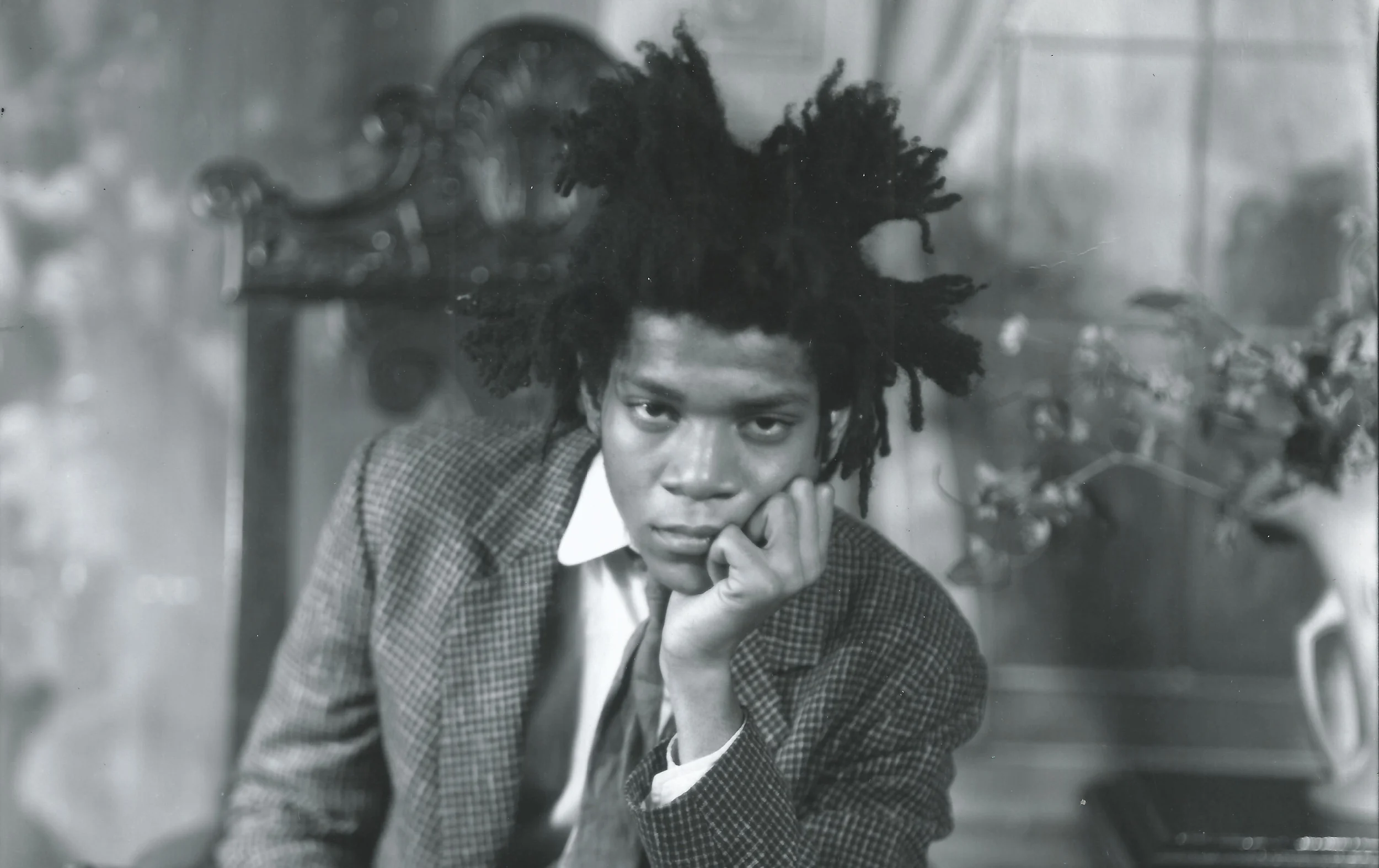
That framing has added intellectual weight to a category that critics once occasionally dismissed as decorative. Cindy Sherman and Jean Michel Basquiat, while not primarily known as light based artists in the conventional sense, share The Collection with practitioners like Weatherford, James, and Levine in ways that illuminate how sophisticated collectors are thinking about their holdings. Sherman's relationship to artificial light, its flatness and its capacity to construct identity, runs through her entire practice. Basquiat's engagement with electricity, signal, and transmission as metaphors was present from his earliest street work onward.
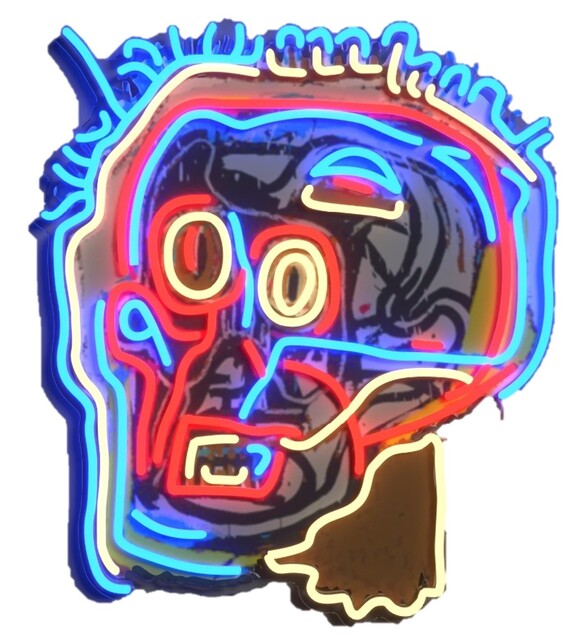
Jean-Michel Basquiat
Untitled (Head), 2023
Placing these figures in proximity to dedicated light artists reveals something true about how the most engaged collectors actually build: not by category but by conversation. Where is the energy heading? The most alive zone right now sits at the intersection of light based practice and spatial experience, work that cannot be adequately reproduced on a screen and therefore reasserts the irreplaceable value of physical encounter. In an era saturated with digital imagery, there is something quietly radical about an object that demands you be in the room with it.
The artists who understand this, who use light not as spectacle but as a condition for a specific kind of attention, are the ones drawing the most serious curatorial and collector interest. That feels less like a trend than a deepening. The light is not going anywhere.