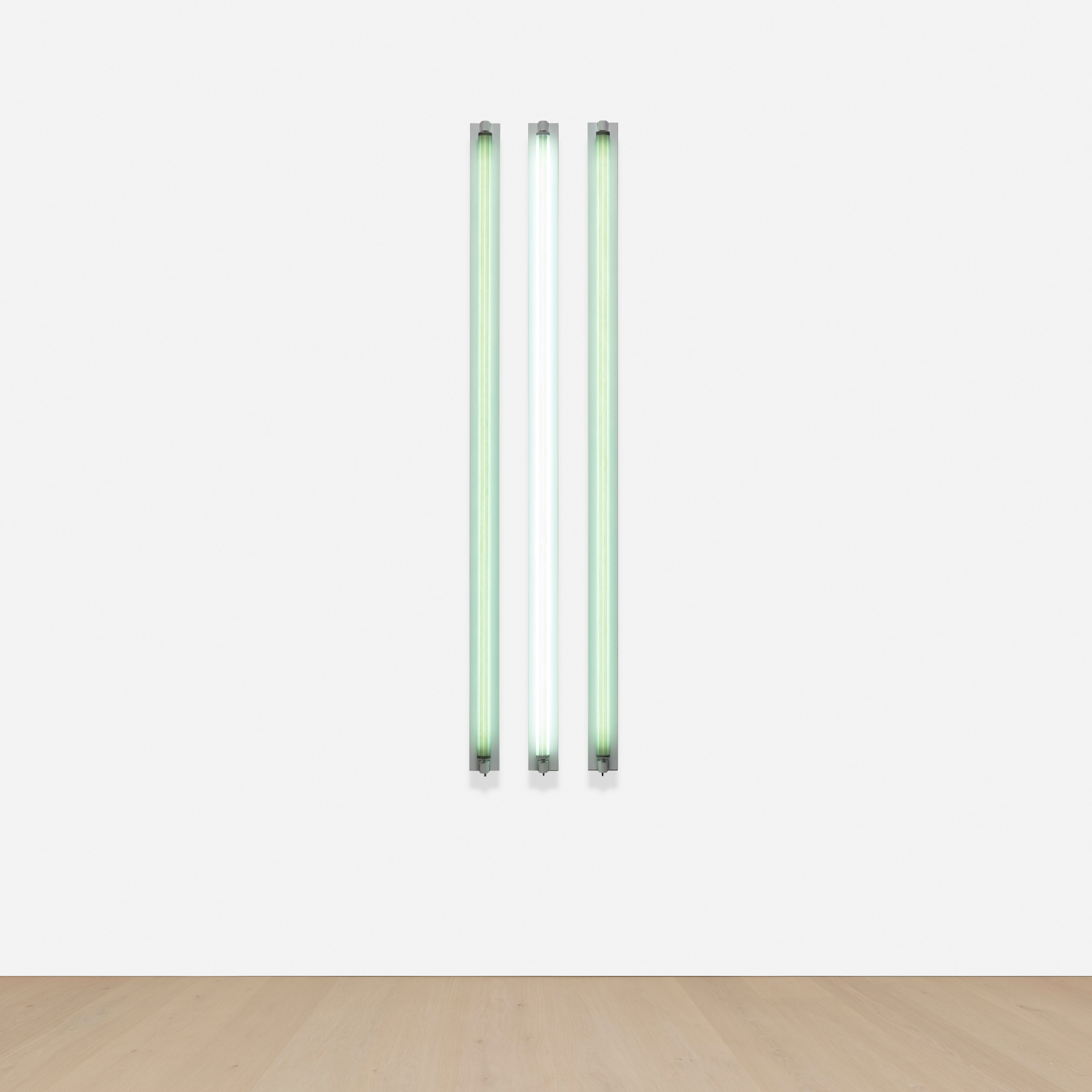
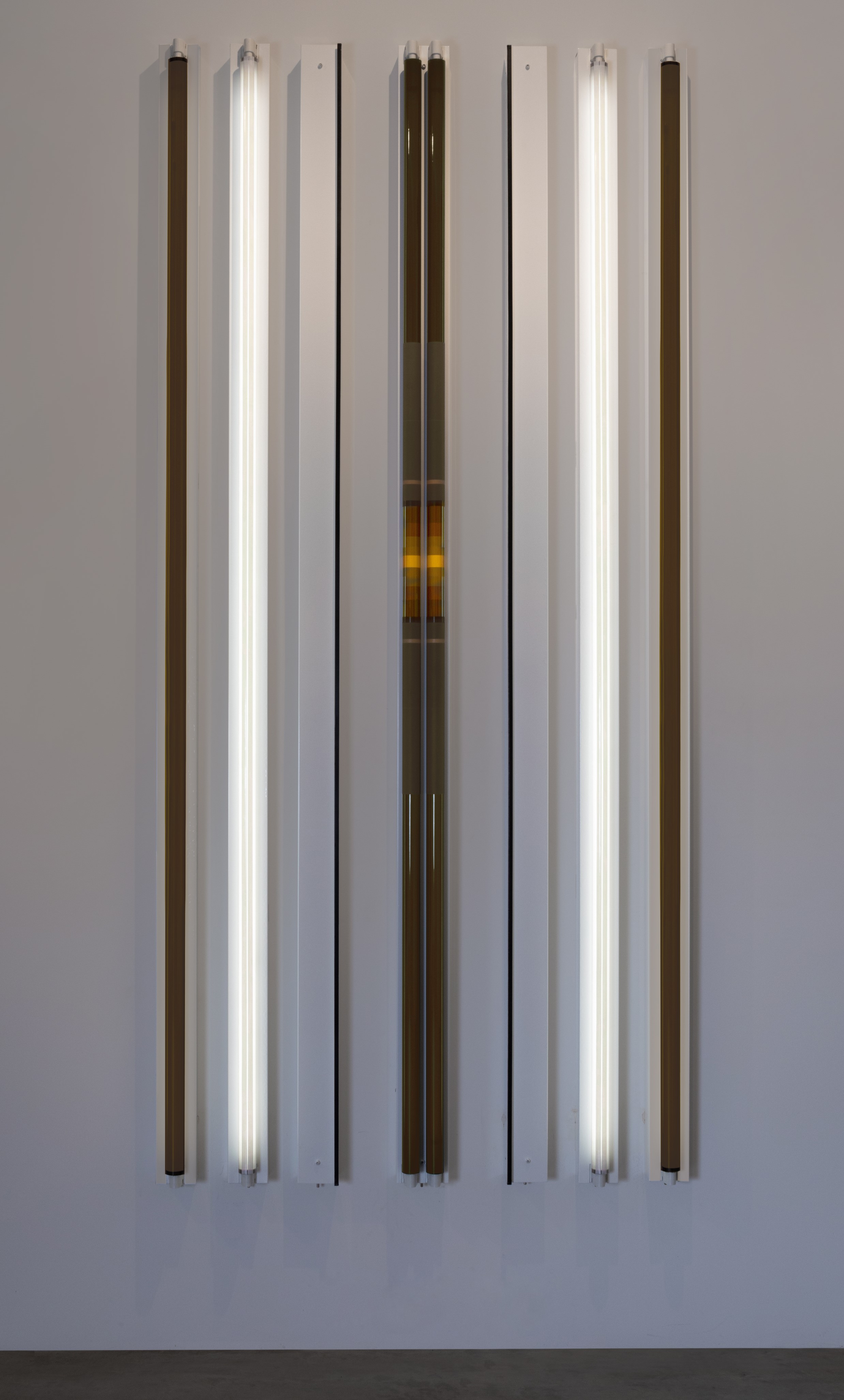
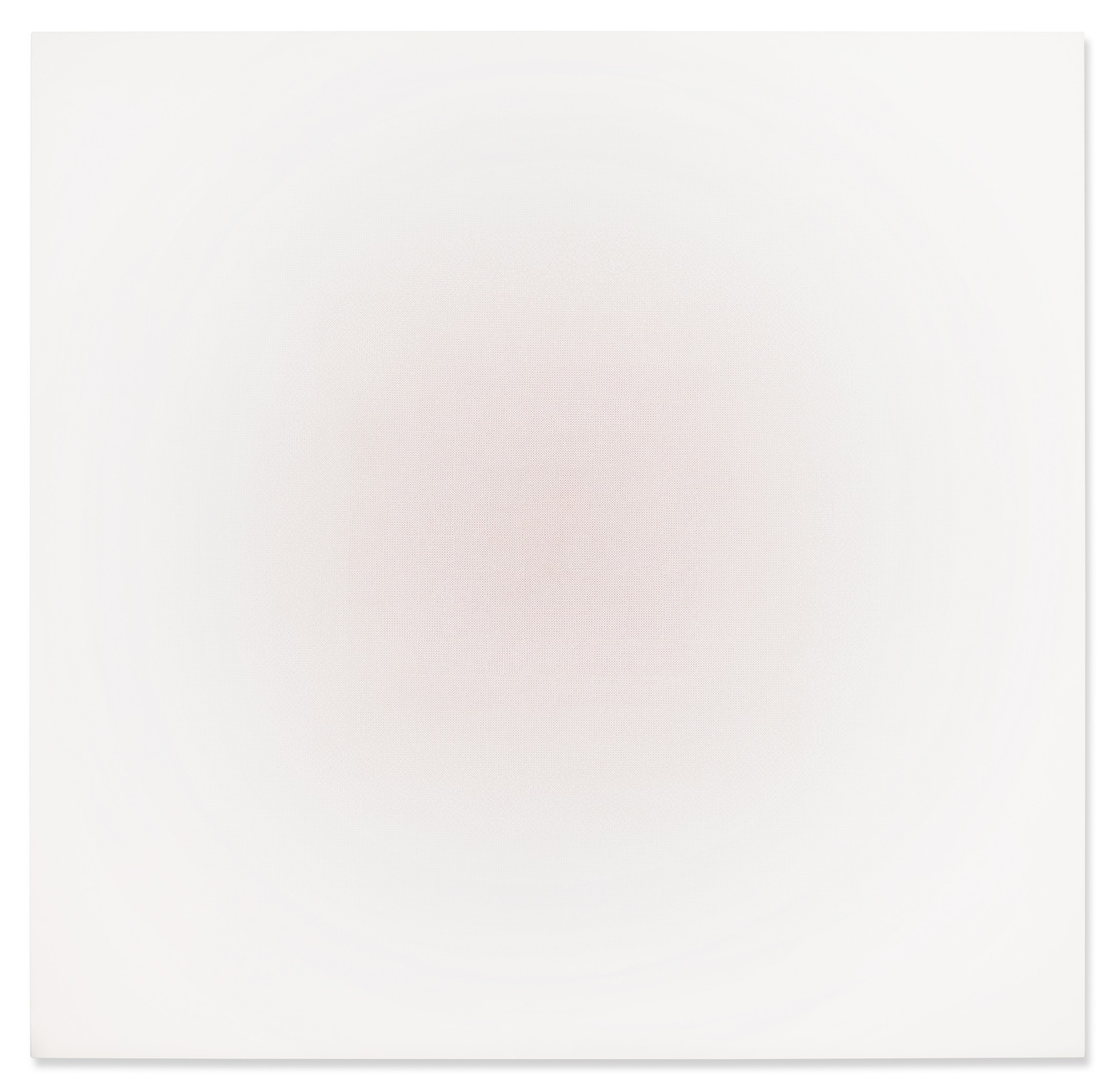
There are rooms you walk into and immediately forget yourself. The walls seem to breathe. The air thickens with something luminous and unnamed. These are the rooms Robert Irwin spent a lifetime building, and the fact that they still exist, still arrest visitors at institutions from the Dia Art Foundation to the Museum of Contemporary Art Los Angeles, tells you everything about the durability of his radical gentleness. When Irwin passed in 2023 at the age of ninety five, the art world lost one of its most patient and penetrating thinkers, a man who had spent seven decades asking a single question with infinite variation: what does it mean to truly see? Robert Irwin was born in Long Beach, California in 1928, and the Pacific coast never really left him. He came of age in a Los Angeles that was still inventing itself, a city without the weight of European tradition pressing down on every canvas, and that freedom proved formative. He studied at the Otis Art Institute and the Chouinard Art Institute during the 1950s, and his early work was firmly rooted in the gestural abstraction that dominated that decade. He was a painter first, showing alongside the Los Angeles community of artists who were building something distinct from the New York scene, something more interested in sensation than statement. The transformation came gradually, then all at once. Through the late 1950s and into the 1960s, Irwin grew increasingly dissatisfied with the painted object as a vehicle for perceptual experience. He began a series of intensive studio experiments, working in isolation for stretches that his contemporaries found almost monastic. His dot paintings from the early 1960s, small canvases covered in meticulous, closely spaced marks, were an attempt to dissolve the boundary between image and atmosphere. By the mid 1960s, he was working on convex aluminum discs that cast halos of shadow on gallery walls, objects that seemed to generate their own light rather than simply reflect it. His 1965 oil on canvas works from this period, including pieces now held in significant private collections, mark a crucial threshold, the last moment before the object itself began to disappear. The scrim installations that followed in the 1970s and 1980s represent perhaps the purest expression of what would become known as the Light and Space movement. Irwin would suspend translucent fabric panels in otherwise empty rooms, allowing natural or artificial light to interact with the material in ways that shifted by the minute, by the angle of the viewer, by the time of day. These were not decorative gestures. They were phenomenological propositions, invitations to notice the conditions of your own perception. His collaborations during this period with psychologist Ed Wortz, conducted under the auspices of the Art and Technology program at LACMA in 1968 and 1969, deepened his engagement with the science of consciousness and confirmed what he had intuited through studio practice: that perception is not passive, it is constructed, participated in, co authored by the body in space. The Getty Center Garden, completed in 1997 in Los Angeles, brought Irwin's ideas to a civic scale and to a broader public than the gallery circuit had reached. Commissioned as a permanent landscape intervention surrounding Richard Meier's travertine campus, the garden became Irwin's most visited work and, for many visitors, their first encounter with an artwork that refused to stand still. The azalea maze at its center, a spiraling topiary arrangement that changes color and texture through the seasons, operates exactly as an Irwin installation does indoors: it rewards attention, punishes passivity, and insists that the viewer is always part of the composition. The garden remains one of the most beloved public art projects of its generation. For collectors, Irwin's work presents a fascinating and genuinely rewarding challenge. The large scale installations are, by their nature, institutional objects, designed for and often permanently installed in museum and civic contexts. But his works on canvas and panel from the 1960s and early fluorescent light works from the 2000s and 2010s represent a more accessible point of entry into a practice of enormous art historical significance. Pieces such as the 2011 fluorescent light work in three parts, and the 2015 work titled Dijon, both available through The Collection, demonstrate how fully Irwin translated his spatial thinking into discrete, collectible form. The fluorescent works in particular carry the essential Irwin signature: an almost uncomfortable level of attention to the conditions of light as a material, and a quiet insistence that the viewer slow down and meet the work on its own terms. At auction, Irwin's works have held steady and appreciated among serious collections, valued for their rarity, their conceptual integrity, and their association with a movement that museum scholarship continues to elevate. Irwin belongs to a constellation of California artists who collectively redefined what art could do with perception and environment. James Turrell, his close peer and sometime collaborator in spirit if not always in method, pursued similar questions through immersive light chambers and skyspaces. Larry Bell worked with coated glass and reflected light in ways that rhymed with Irwin's investigations. Doug Wheeler, Maria Nordman, and Eric Orr all circled the same territory. Together they constitute one of American art's genuinely original contributions to the international postwar conversation, a West Coast counterweight to Minimalism and Conceptualism as practiced in New York, one rooted in the body and in sensory experience rather than in logic or language. What remains most moving about Robert Irwin's legacy is its fundamental optimism. His entire practice was premised on the belief that attention is transformative, that slowing down and truly looking at the world around you changes both you and the world. In an era of accelerating distraction, that proposition feels not nostalgic but urgent. Museums and institutions continue to restage his installations, new audiences continue to be stopped in their tracks by a room full of nothing but light and scrim and the hum of their own presence. For collectors who bring his work into their lives, they are not simply acquiring an object of beauty and historical weight, they are acquiring an ongoing invitation to see differently. That is a rare thing, and it endures.