Floral Painting
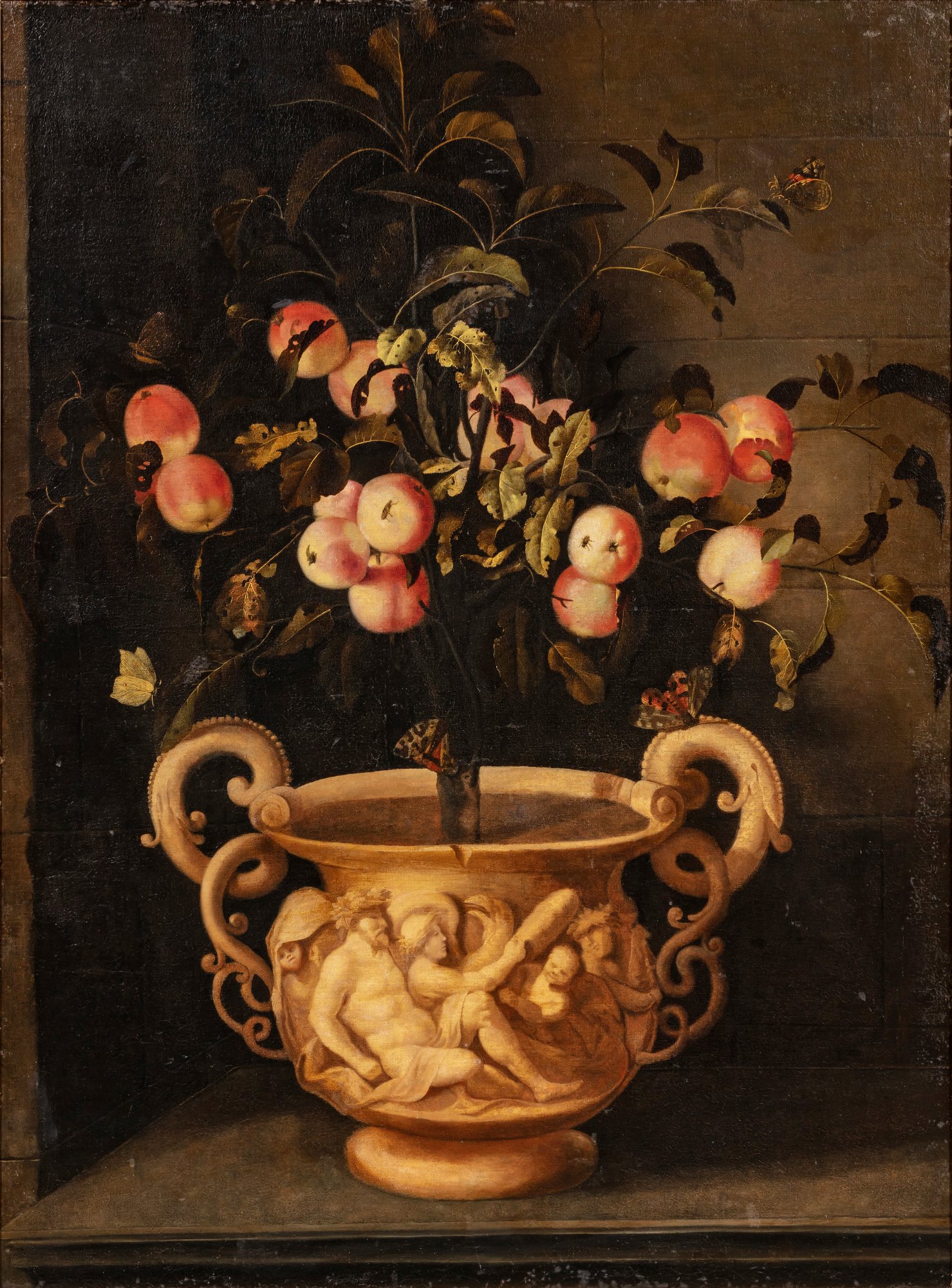
Georg Hinz
Pommier dans un vase en terre-cuite
The Bloom That Never Leaves the Room
There is something almost confessional about a collector who admits they keep returning to floral painting. In an art world that prizes conceptual difficulty and theoretical distance, flowers can seem too obvious, too decorative, too easy to love. And yet some of the most serious collectors in the world have rooms anchored by a great floral work, and they will tell you, quietly, that it is the painting they look at most. That is not a small thing.
Living with art is a long relationship, and the works that sustain attention across years and decades tend to be the ones that offer something beyond the first impression. A great floral painting does exactly that. What draws collectors to this category in the first place is often something personal, a memory of a garden, a grandmother's wallpaper, a holiday in the Netherlands. But what keeps them is something else entirely.
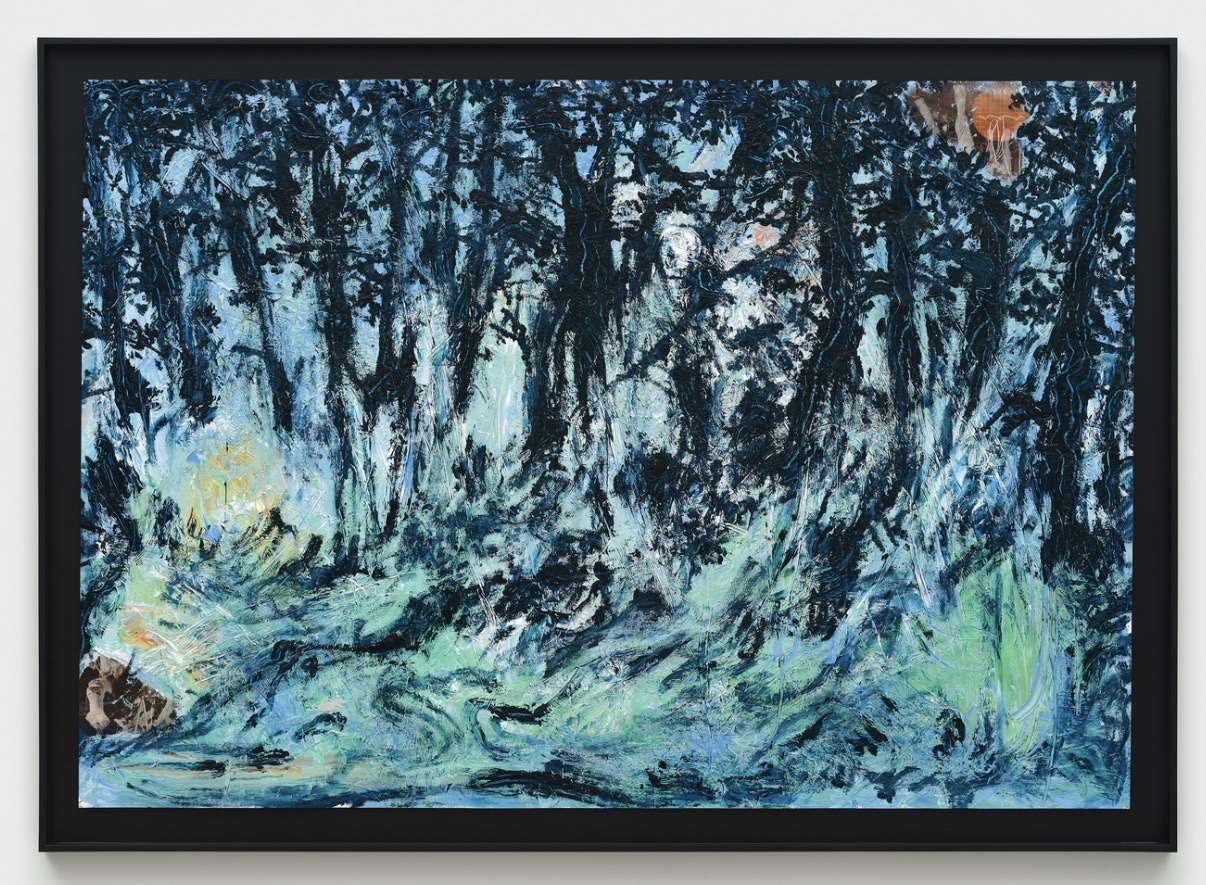
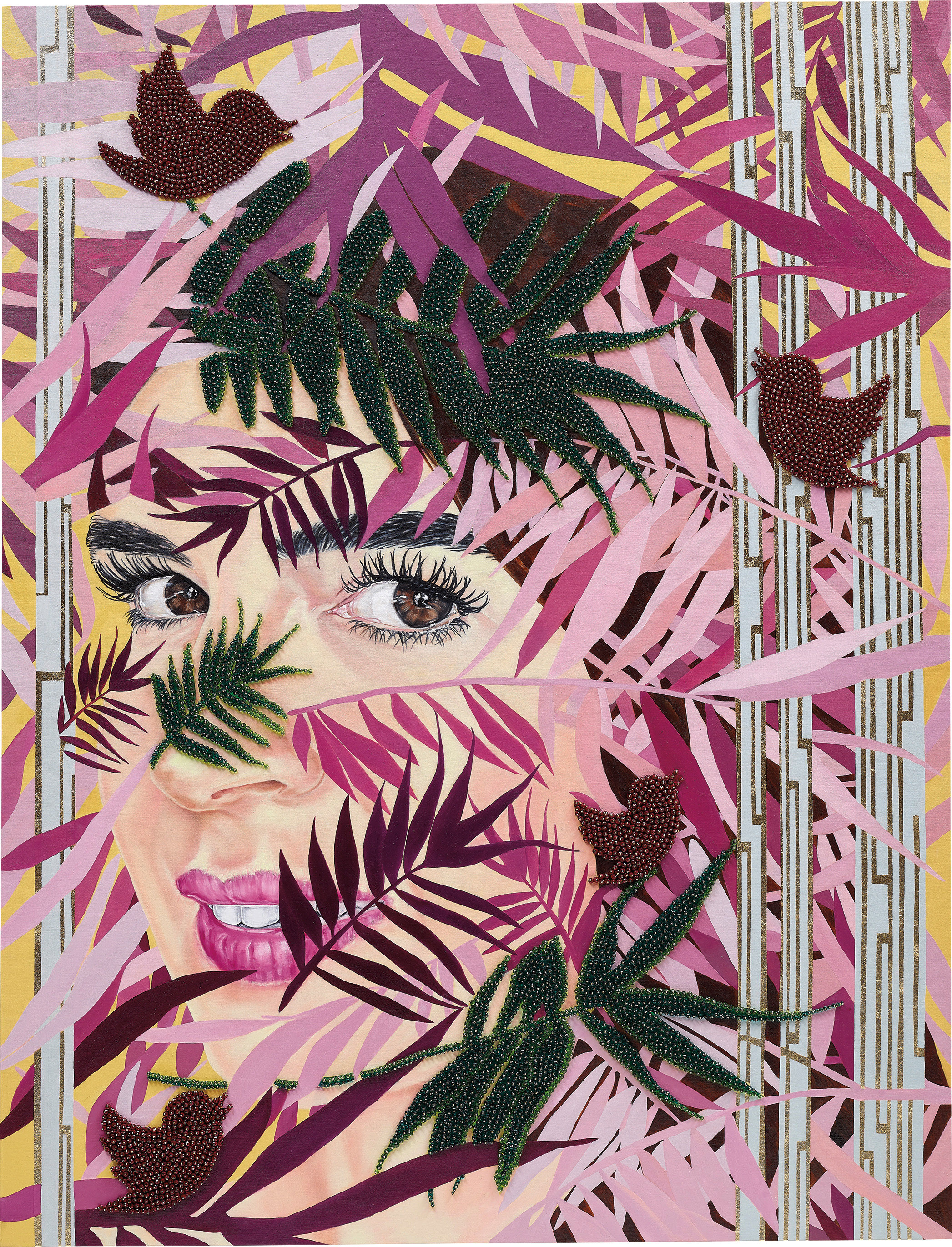
Asli Özok
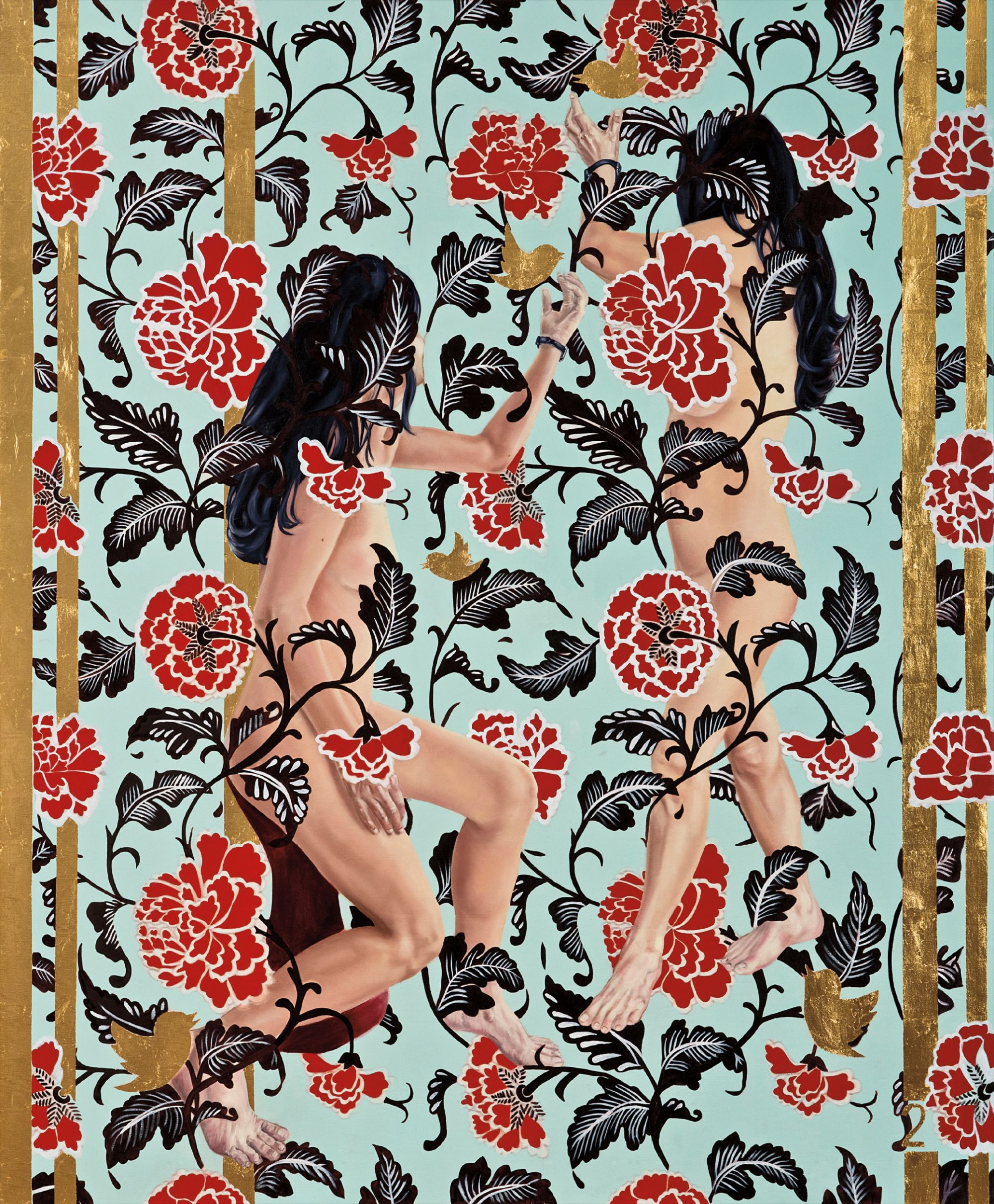
Garden of Armina Rose, 2017
Floral painting is one of the oldest continuous conversations in Western art history, and when a painter engages with it seriously, they are entering a dialogue that stretches back through the Dutch Golden Age, through the Impressionists, through Modernism and into the present. That density of reference gives a great floral work a kind of gravitational weight. You are not just buying a picture of flowers. You are buying a position taken within an argument that has been ongoing for centuries.
Knowing what separates a good floral painting from a great one is the real work of collecting in this space. Composition is the first thing to examine, specifically how the painter handles the relationship between the blooms and the space around them. A weak floral painting fills the canvas with flowers as though they were inventory. A strong one treats the negative space as an active element, letting air and shadow do as much work as the petals themselves.
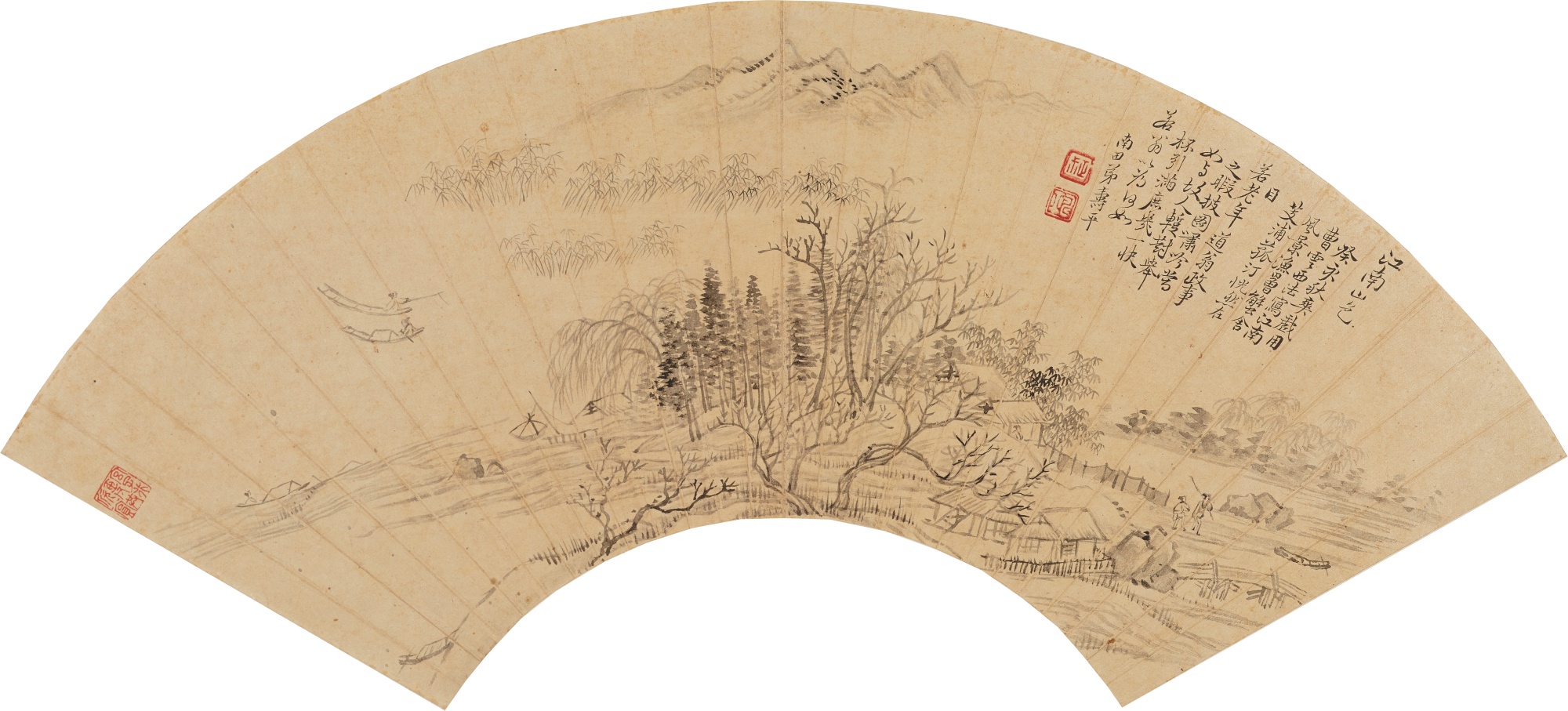
Yun Shouping 1633-1690
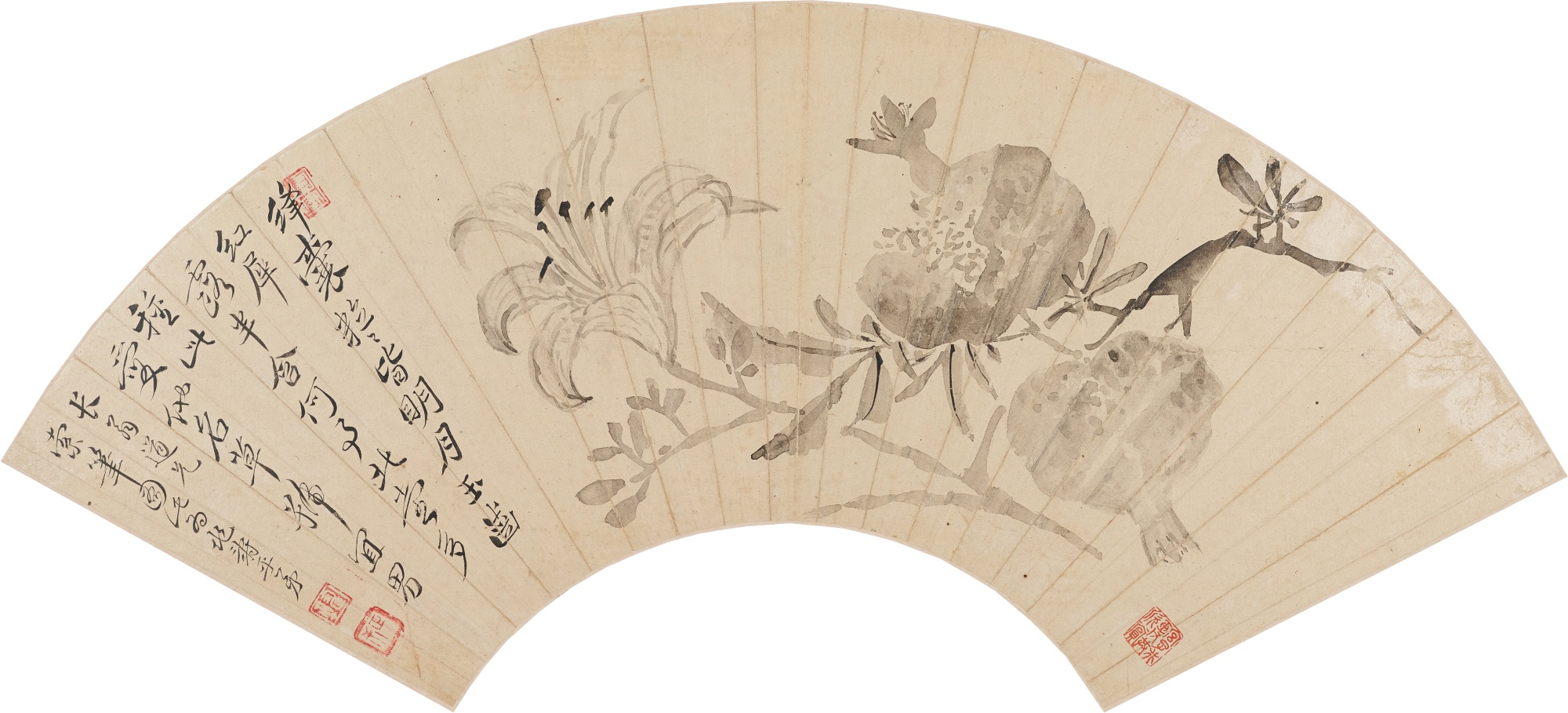
Yun Shouping, Flowers and Fruit
Color temperature is equally important. The best painters in this genre understand that the luminosity of a flower, the way light passes through a petal rather than simply bouncing off it, requires a particular sensitivity to warm and cool tones working in tension. Look also at the treatment of the stems, leaves, and vessels. These supporting elements reveal a painter's true draftsmanship.
Anyone can make a rose look appealing. Making the glass vase that holds it look like glass is another matter entirely. Among the artists represented on The Collection, the range is genuinely instructive. Georg Hinz, the seventeenth century Hamburg painter, worked in the tradition of the Kunstkammer picture, that dense and deliberately overwhelming accumulation of precious objects alongside flowers that was designed to demonstrate both painterly virtuosity and the owner's cultured taste.
Georg Hinz
Pommier dans un vase en terre-cuite
A Hinz work is a document of a particular moment in collecting culture as much as it is a painting, which gives it a double life that serious collectors find compelling. Yun Shouping, the Chinese painter working in the same broad era, took an entirely different approach. His boneless technique, applying ink and color directly without outlines, produces a softness and botanical accuracy that placed him at the center of the Changzhou school and made him one of the most influential flower painters in Chinese art history. Collecting across these two traditions is one of the more interesting moves available in this category right now, because the conversation between European and East Asian floral painting remains underexplored in terms of how museums and auction houses frame these works.
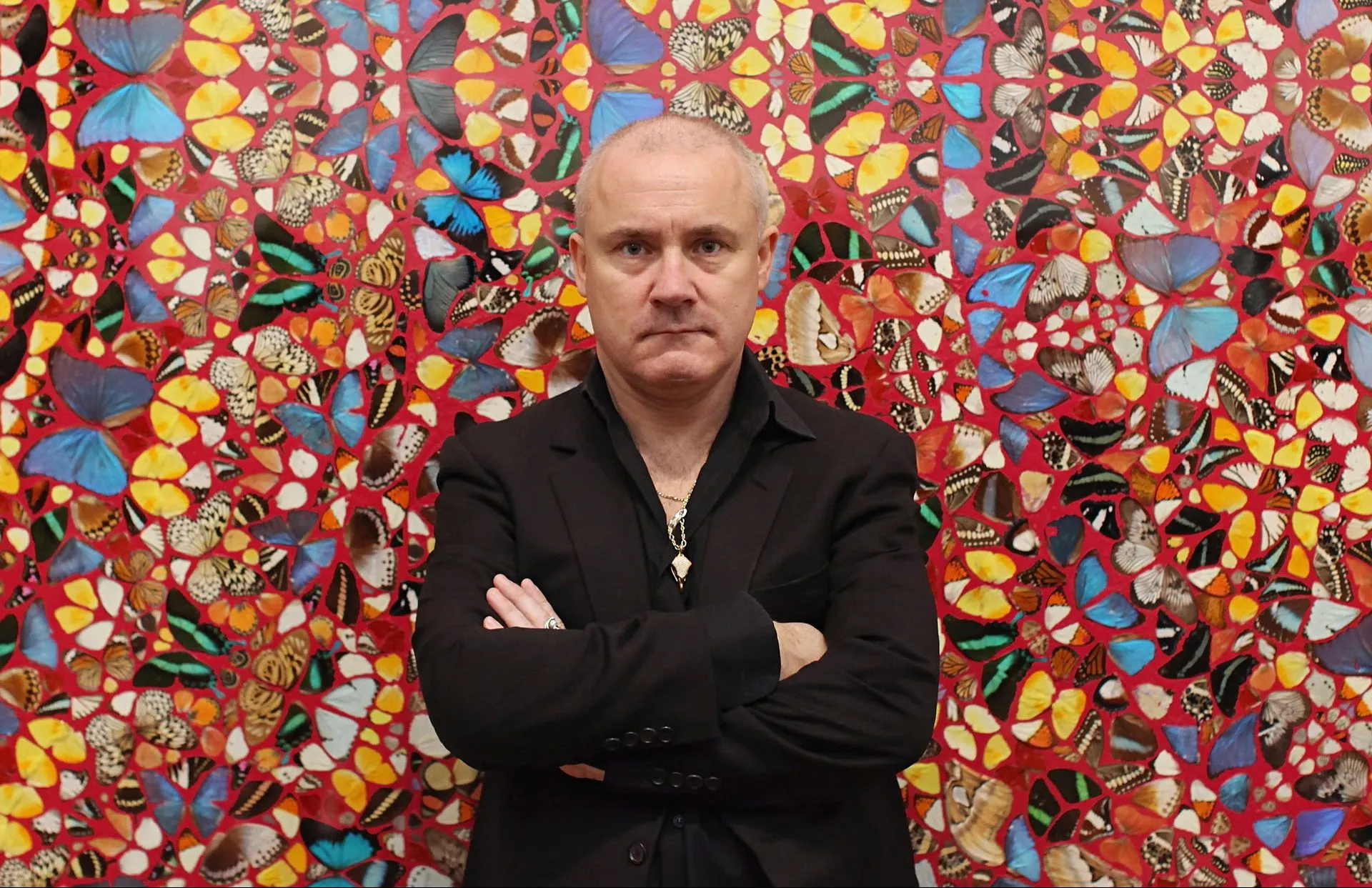
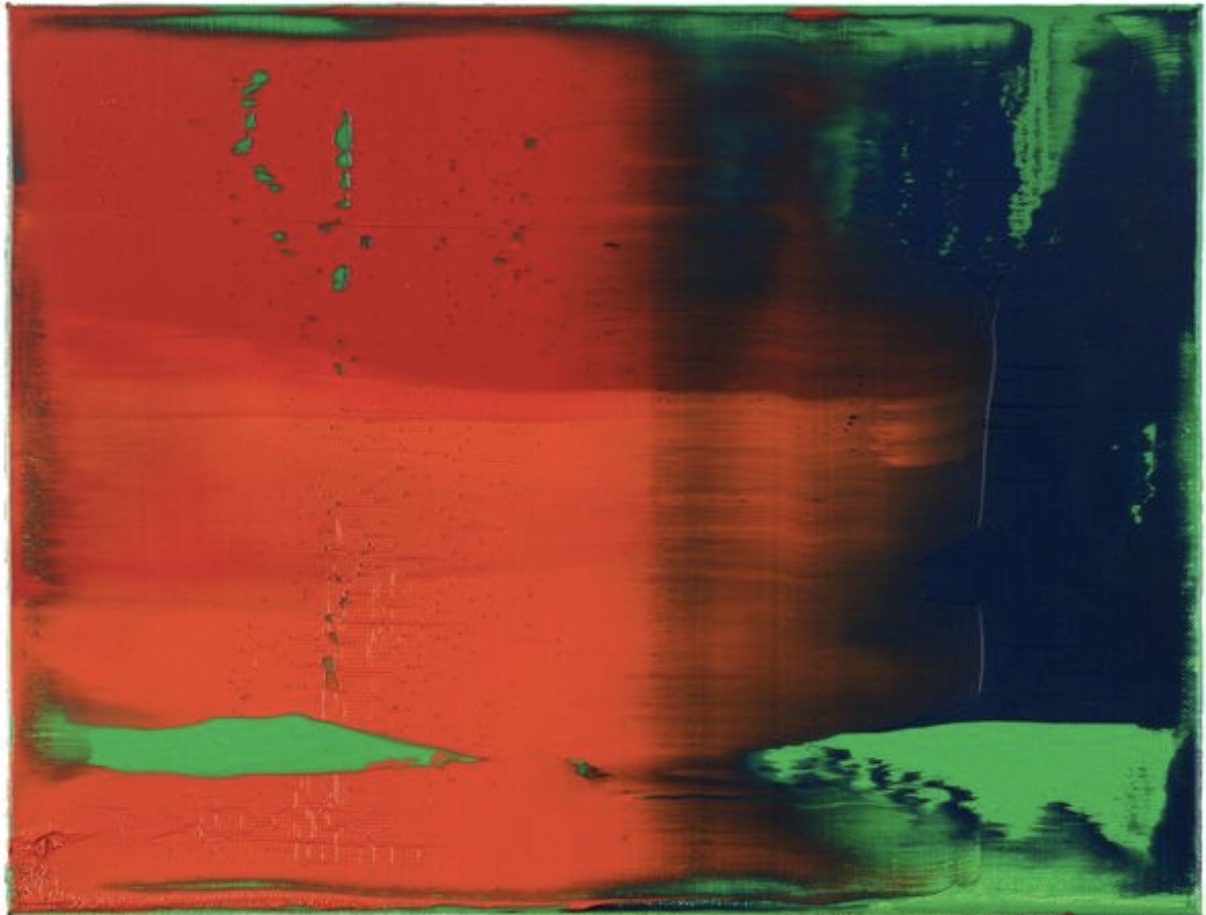
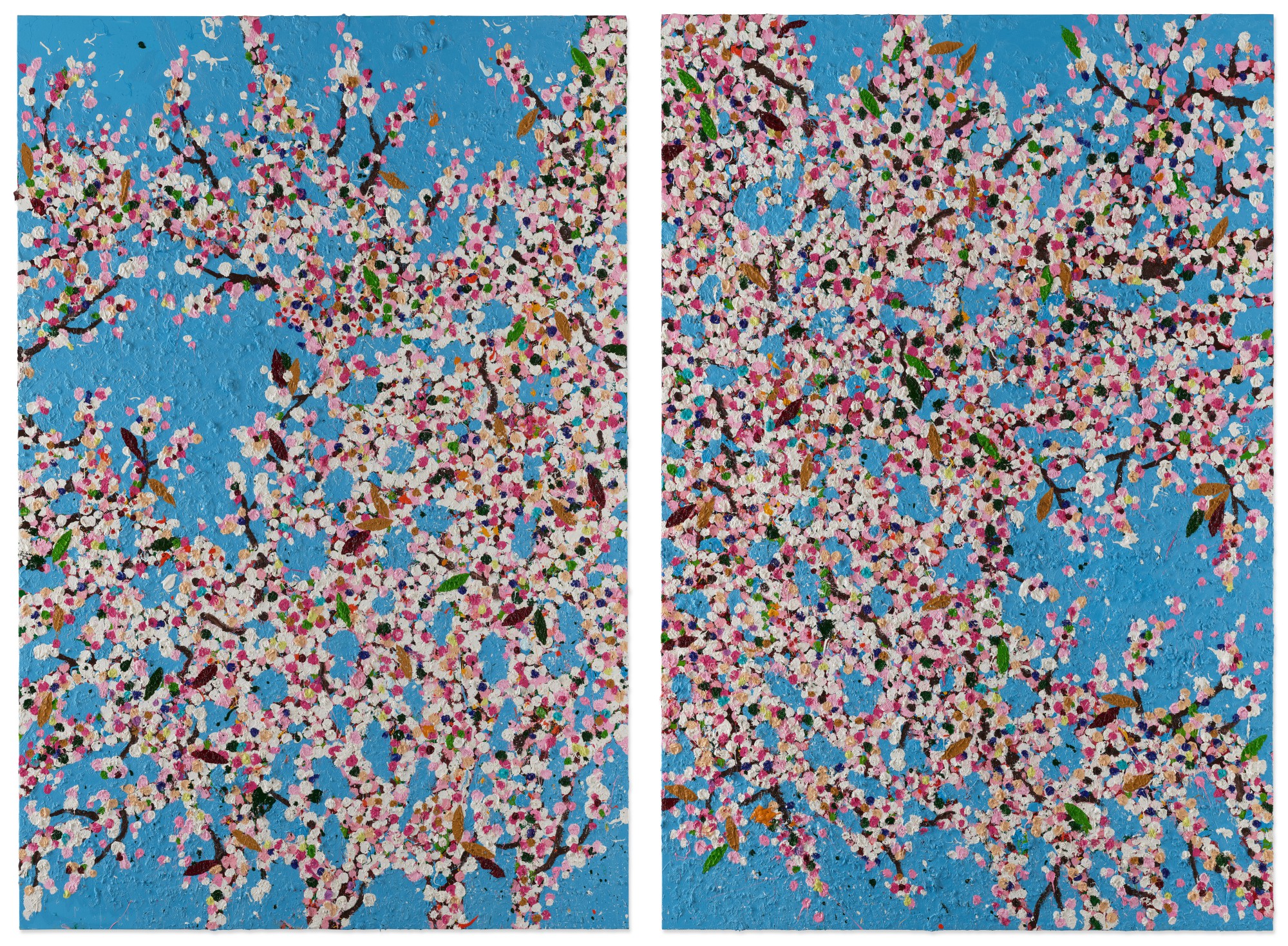
The contemporary end of the market brings its own dynamics. Damien Hirst has produced floral work that is impossible to ignore, partly because it is designed to be impossible to ignore. His spot paintings aside, his engagement with flowers operates as a provocation, asking whether beauty can be sincere in a postmodern context, or whether sincerity itself is the provocation. Gerhard Richter approaches the subject from a very different angle.
Damien Hirst
Happy Life Blossom, 2018
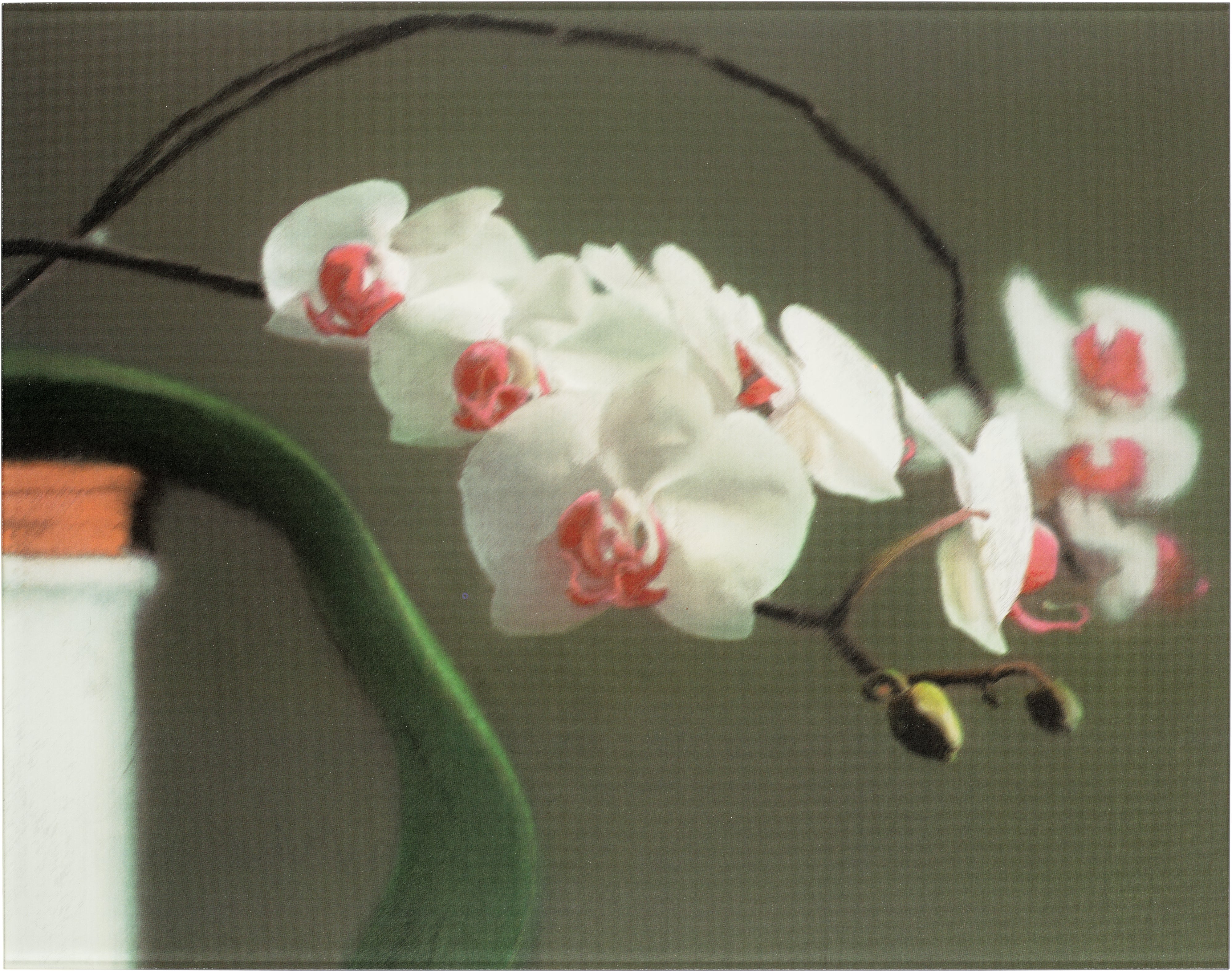
His photorealistic flower paintings, derived from photographs and rendered in that characteristic blurred focus, create an unease that has nothing to do with decoration. They are among the most searched works in his secondary market history, and for good reason. They sell. Asli Özok, the Turkish painter who brings a contemporary sensitivity to the subject, represents the kind of mid career position that rewards attention now, before the market fully catches up to the critical conversation.
Auction performance in the floral category tells a consistent story. Works with strong provenance, early exhibition history, and institutional credibility outperform estimates with notable regularity. The category has also proven more resilient than many others during market corrections, partly because the collector base is broad and partly because floral works sit comfortably in domestic interiors in a way that more confrontational subjects do not. Secondary market demand for historical Dutch and Flemish still life with flowers has remained robust at the major houses for decades.
At the contemporary end, edition prints of floral subjects by well known names tend to be the entry point for newer collectors, but the ceiling for unique works in this space is genuinely high. Practical considerations matter as much as aesthetic ones. Condition is particularly sensitive for older floral paintings because many of the pigments used historically for reds and yellows are prone to fading or shifting over time. Ask for a conservation report and look closely at any UV examination documentation before committing.
Display decisions also matter more in this category than most. Floral paintings are sensitive to direct light, both natural and artificial, and placement near windows or spotlights will cause real damage over time. When looking at contemporary work, ask the gallery whether the work is unique or part of an edition, and if it is editioned, ask for the edition size and the artist's policy on reprinting. These are not aggressive questions.
They are the right questions, and any reputable gallery will welcome them. The collector who asks them is the collector who builds something that lasts.