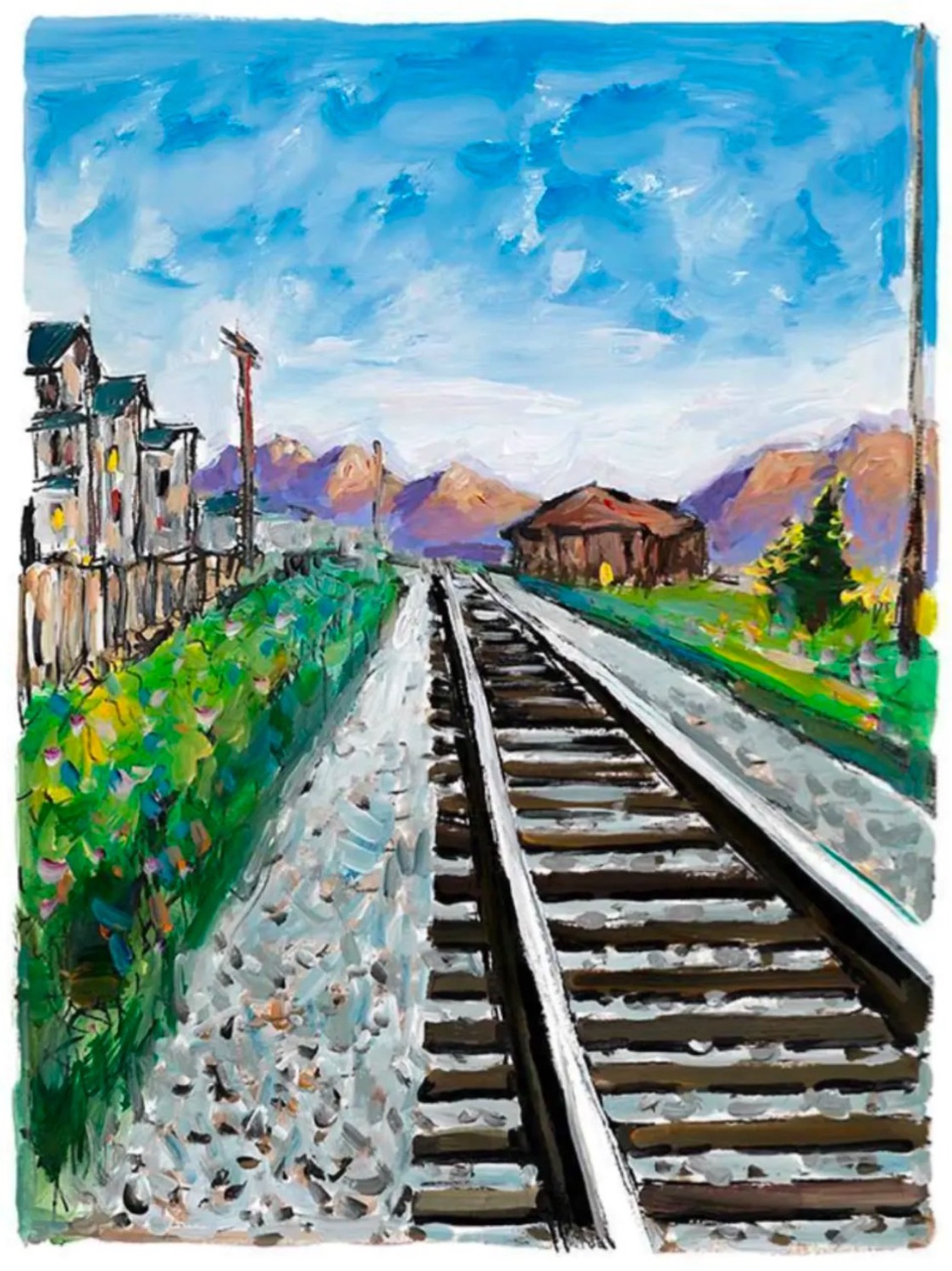
Floral Art
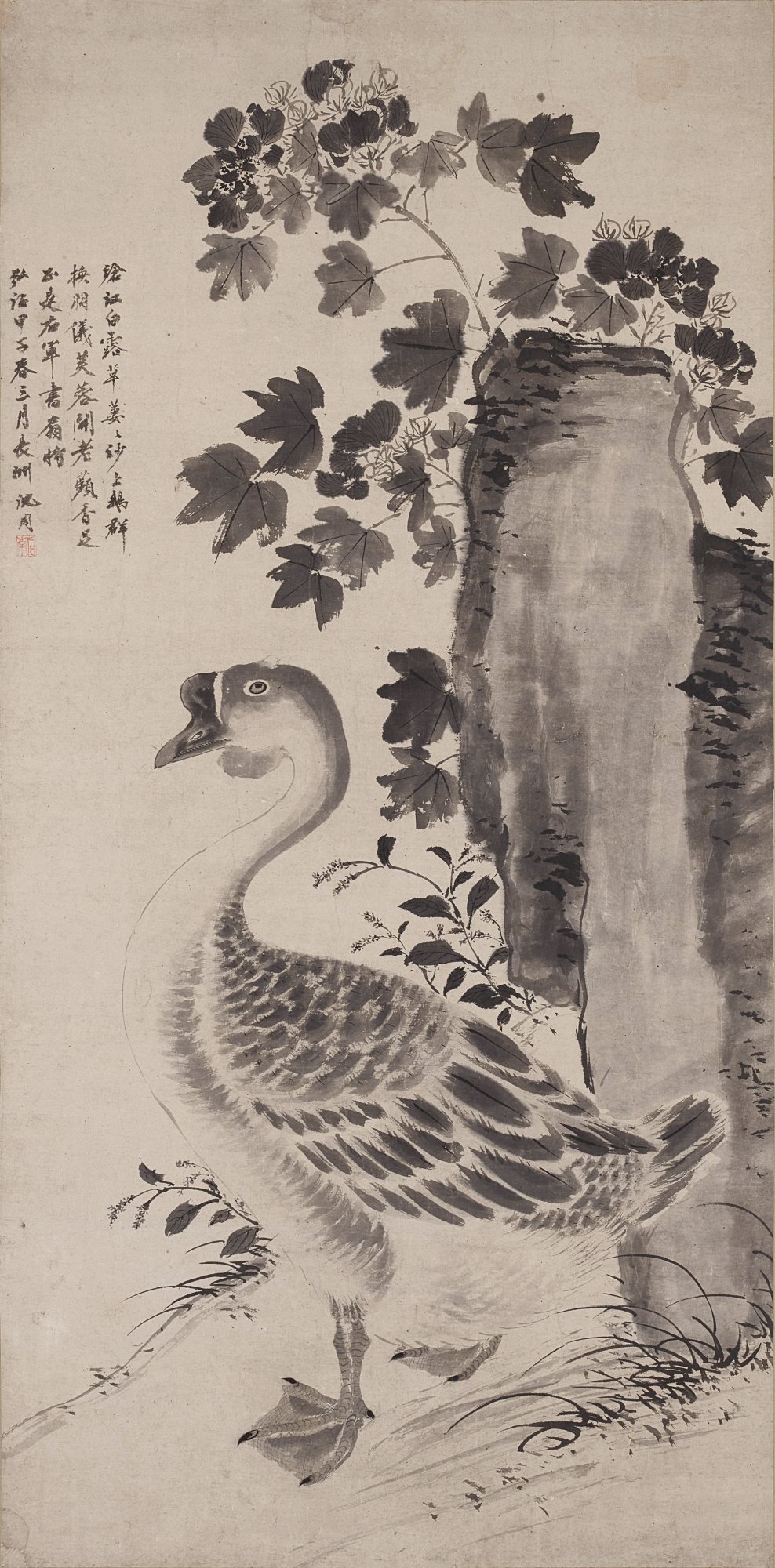
Shen Zhou 1427 - 1509
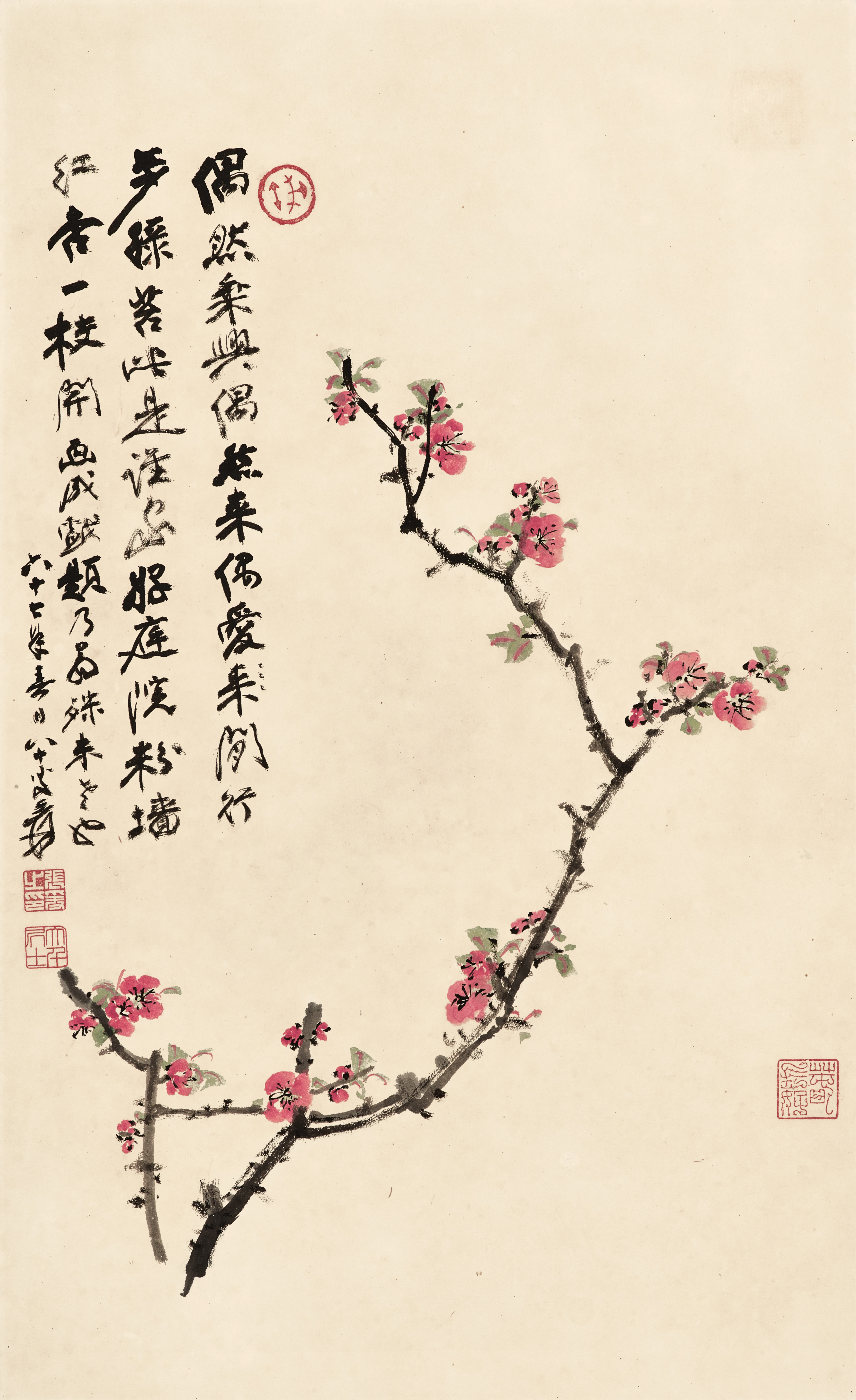
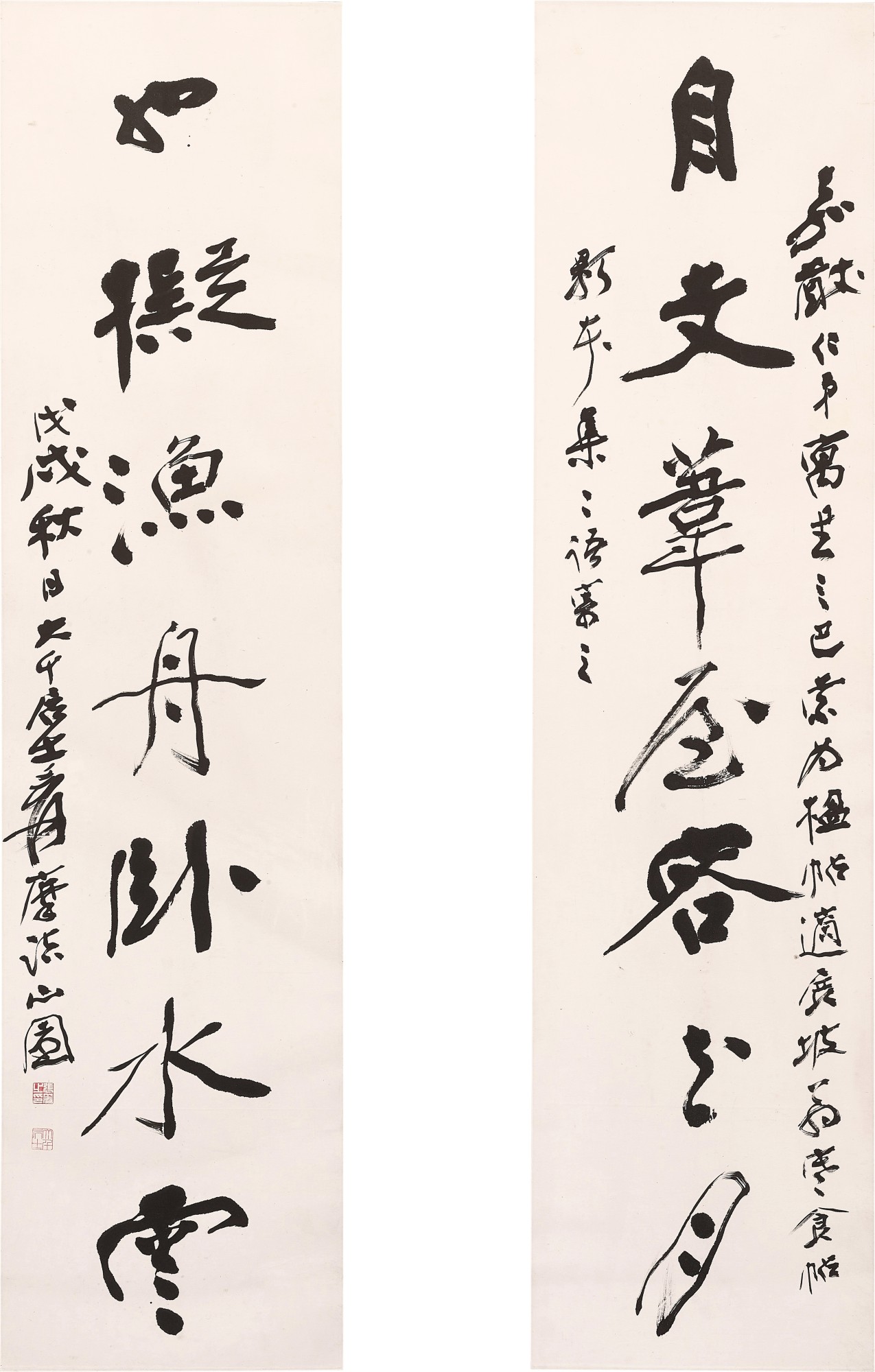
Hibiscus and Goose 蓉汀鵝戲圖
The Flower That Refuses to Fade
There is perhaps no subject in the history of art more persistent, more quietly radical, or more consistently misread than the flower. Dismissed at times as decorative, sentimental, or safely domestic, floral imagery has in fact been one of the most contested and meaning laden territories in painting and photography across centuries and cultures. To look seriously at flowers in art is to confront questions of mortality, desire, national identity, spiritual transcendence, and the very nature of representation itself. The flower is never just a flower.
The tradition runs deep in both Eastern and Western art, though it arrives from strikingly different philosophical directions. In China, floral painting developed as a distinct genre by the Tang dynasty, codified under the category of huaniao hua, or flower and bird painting, which became one of the canonical subjects of literati culture. The brushwork required to render a lotus or a branch of plum blossom was understood as a form of moral and spiritual cultivation, not merely technical practice. Shen Zhou, the great Ming dynasty master born in 1427, exemplifies this tradition at its most refined and philosophically serious, using botanical subjects as vehicles for expressing the inner life of the painter.
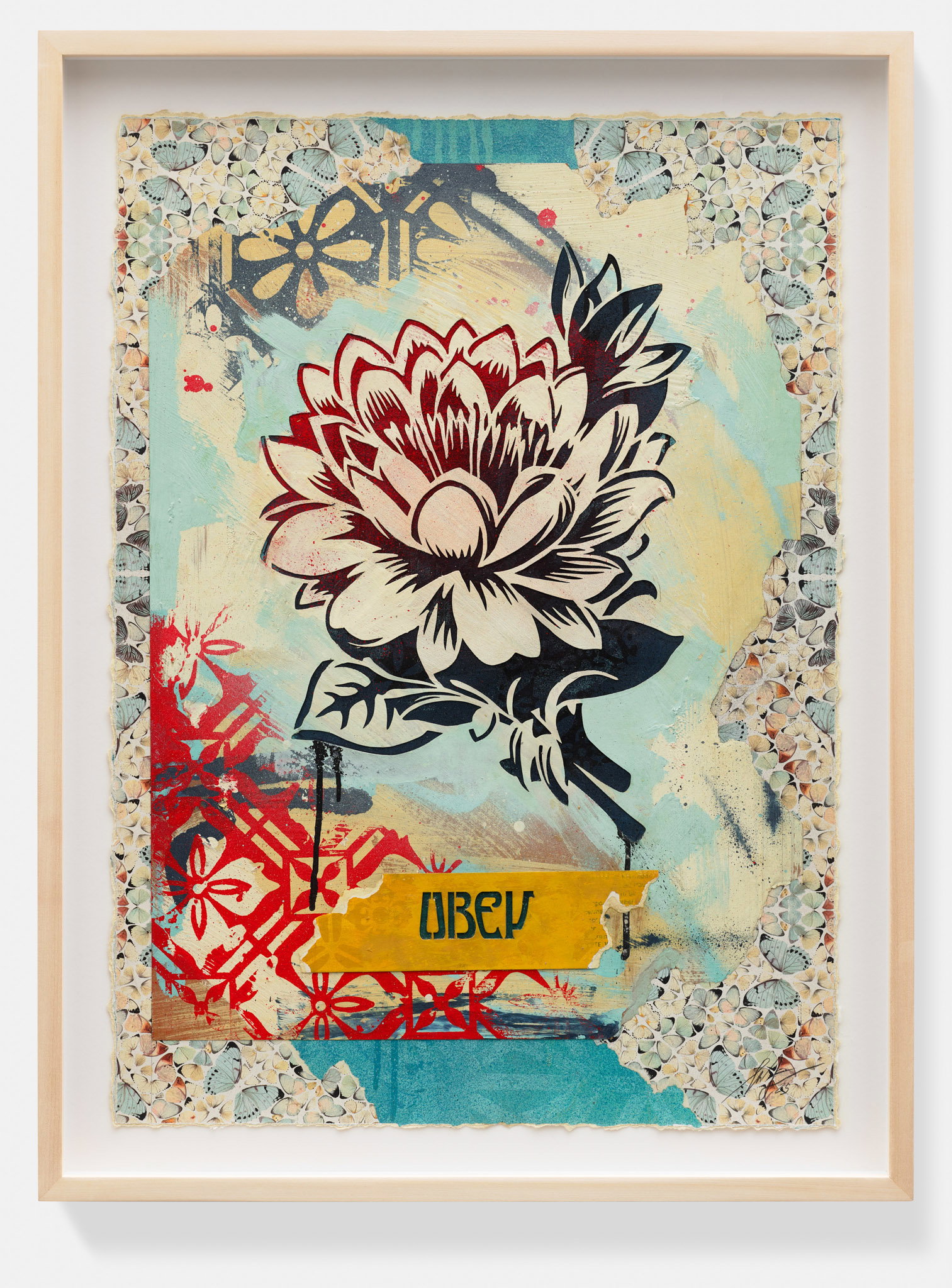
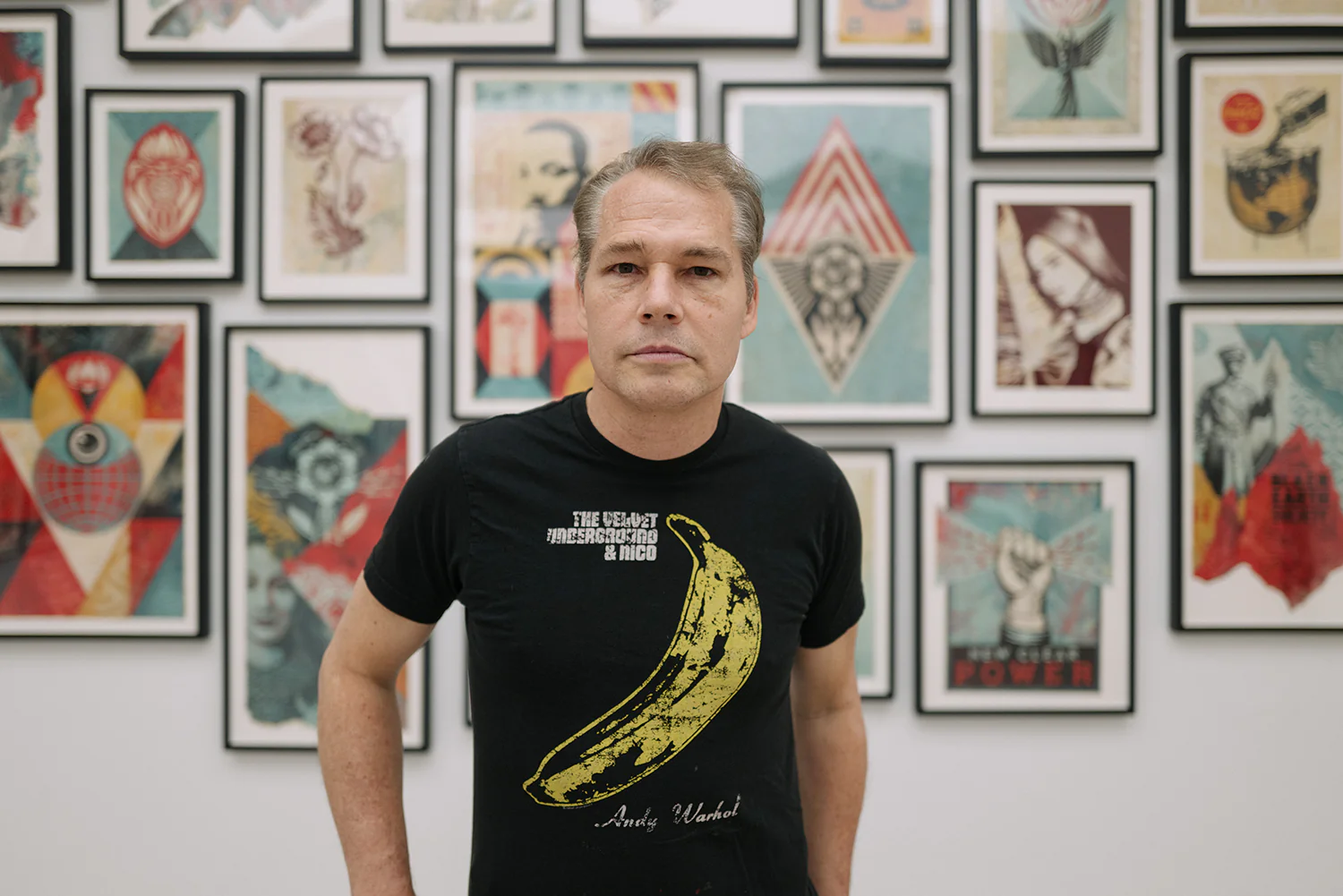
Shepard Fairey
Flower Study with Hirst Butterflies 2, 2025
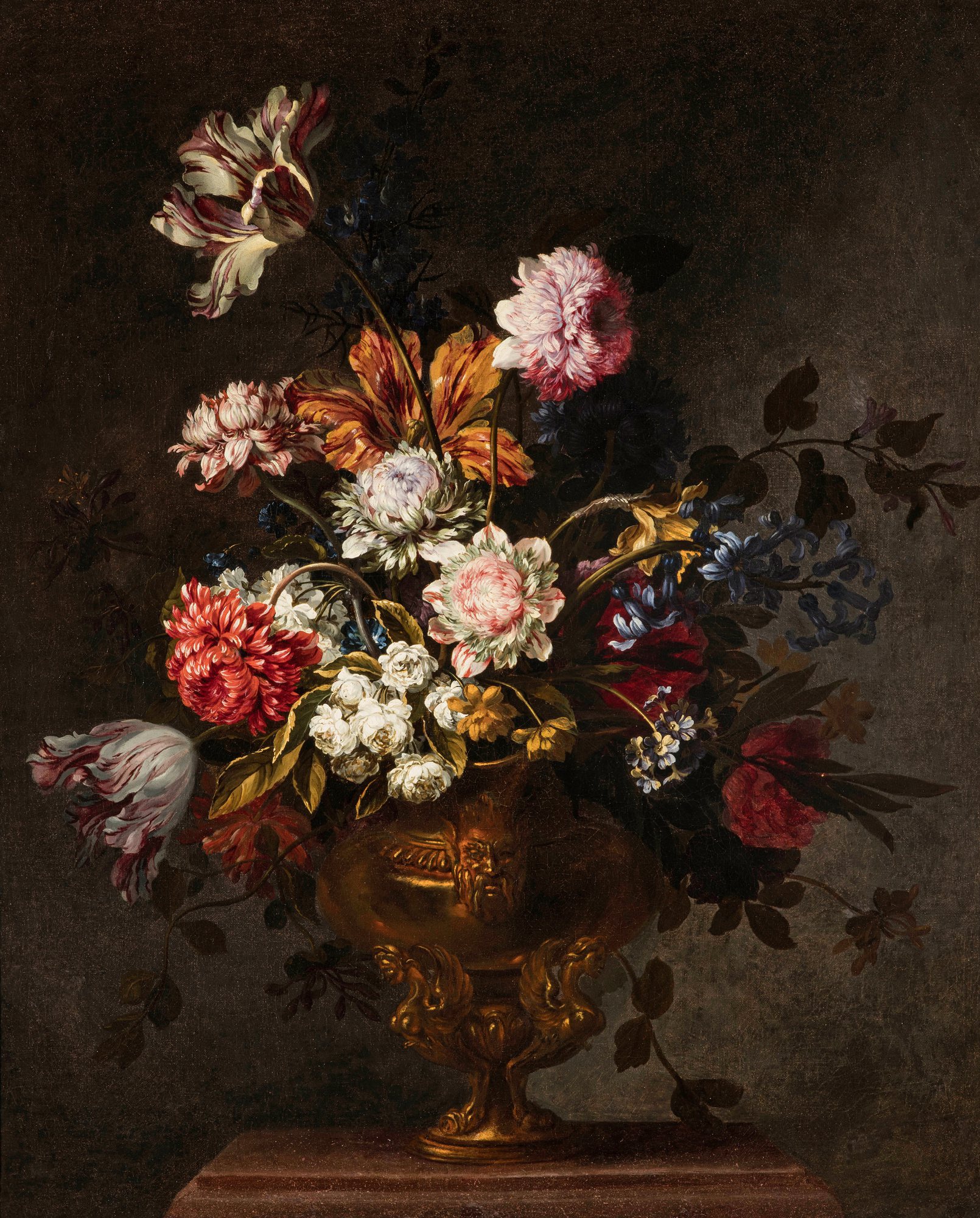
His works remind us that in the Chinese scholarly tradition, flowers were never ornamental afterthoughts but profound statements of selfhood and virtue. In Europe, the tradition takes a different shape. The golden age of Dutch and Flemish flower painting in the seventeenth century produced some of the most technically astonishing and symbolically dense works ever made. Artists like Jan van Huysum and Rachel Ruysch constructed impossible bouquets, gathering blooms from different seasons into a single composition that could never have existed in nature.
The vanitas tradition ran beneath all of it, reminding viewers that beauty was temporary and life was short. Jean Baptiste Blin de Fontenay, the French painter who worked in the tradition of the Flemish masters in the late seventeenth and early eighteenth centuries, brought this sensibility to Versailles, where floral painting served the grandeur of the court while still whispering its quiet reminders of impermanence. The nineteenth century saw the genre both elevated and interrogated. The Impressionists, Manet and Monet chief among them, used flowers to explore problems of light and surface, stripping away much of the iconographic weight of the Dutch tradition in favor of pure sensation.
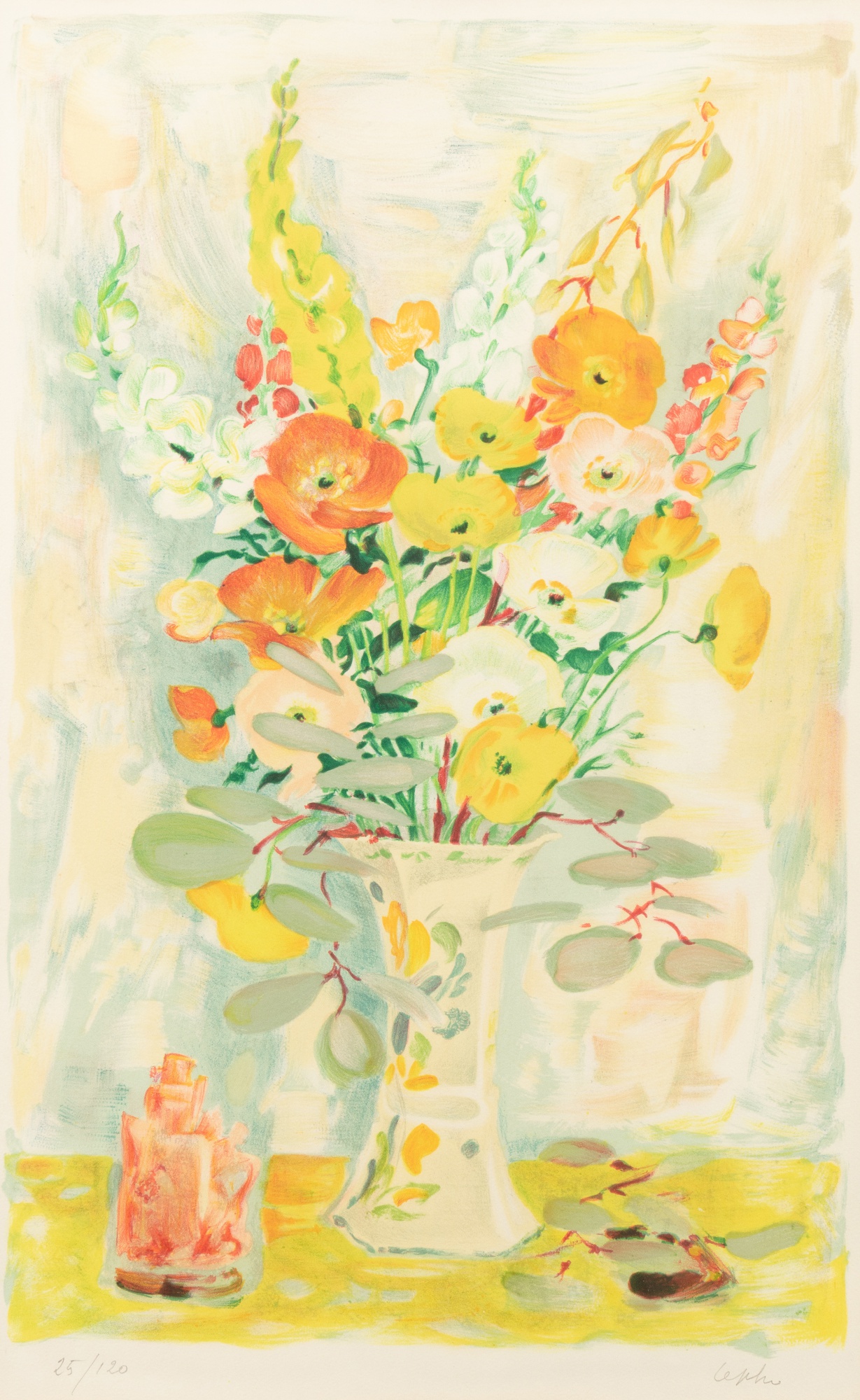
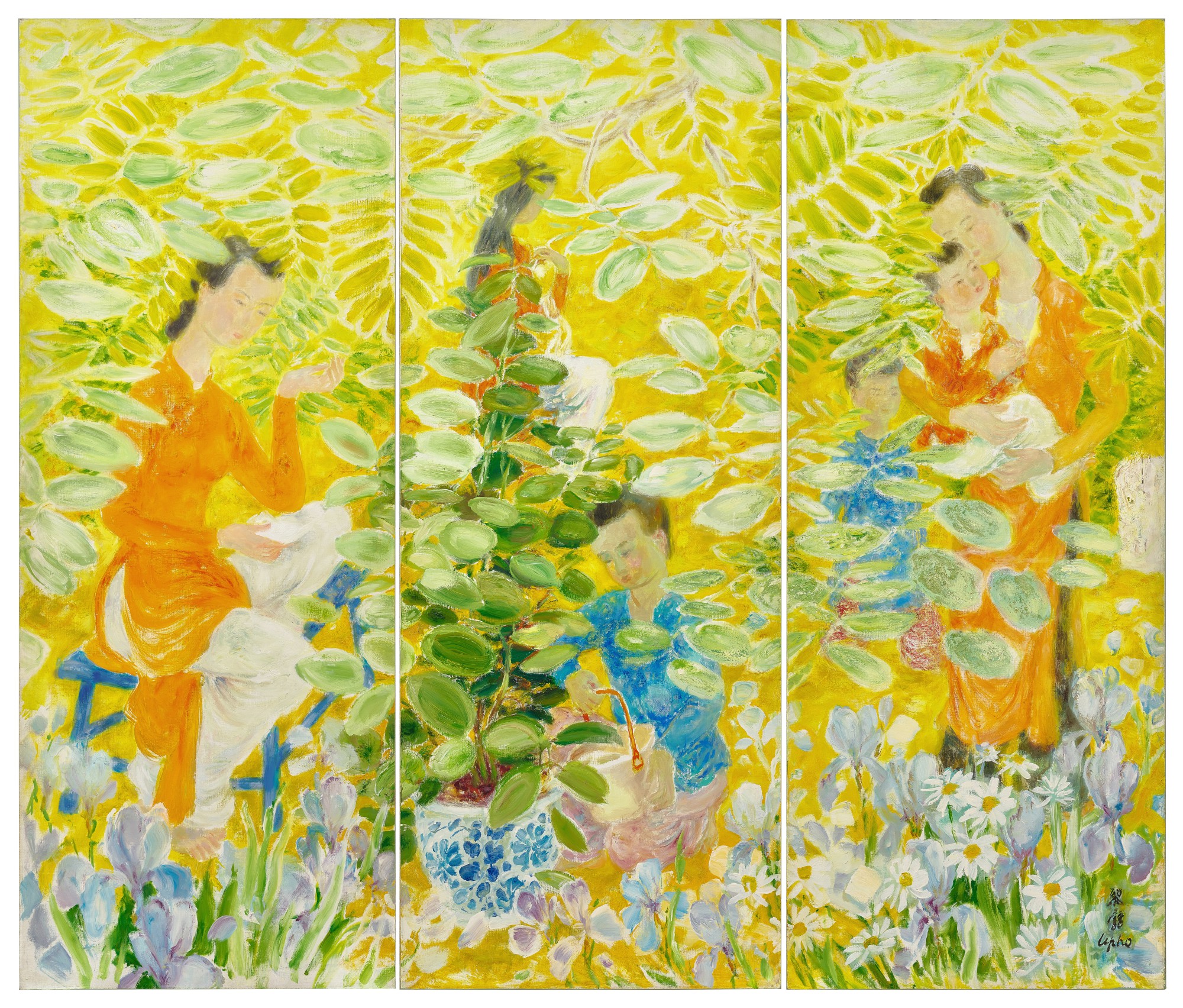
Lê Phổ
黎譜 (1907-2001), 花束, 1950
Into the twentieth century, the genre continued to attract major figures who were unafraid of its long shadow. Zhang Daqian, the extraordinary Chinese painter working across most of the twentieth century and one of the most technically versatile artists of his era, moved fluidly between the ancient literati flower tradition and a splashed ink abstraction that anticipated and in some ways paralleled Abstract Expressionism in the West. His lotus paintings in particular occupy a fascinating middle ground between tradition and rupture. Similarly, the Vietnamese French painter Lê Phổ, trained at the École des Beaux Arts de l'Indochine in Hanoi before coming to Paris, wove together French Post Impressionism and the delicacy of Asian brushwork into floral compositions of genuine poetic weight.
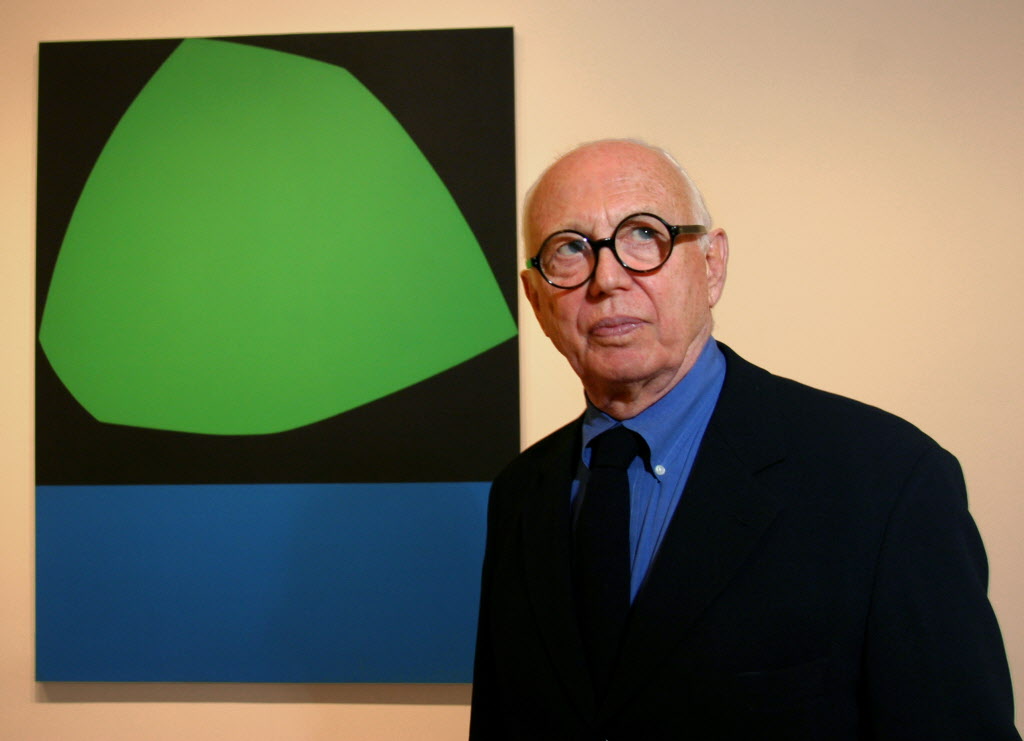
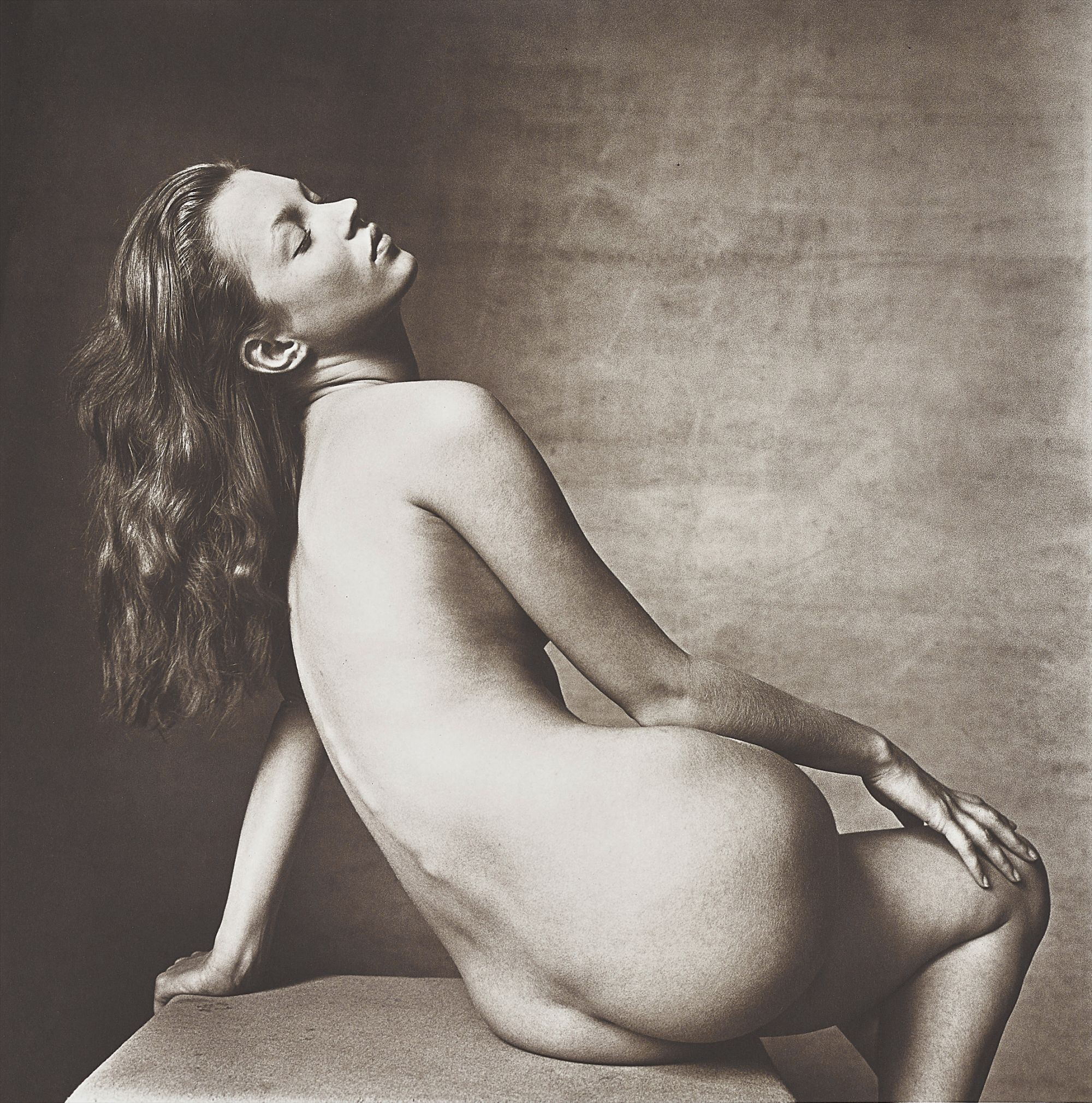
By the mid twentieth century, some of the most interesting work being done with botanical subjects was not straightforwardly representational at all. Ellsworth Kelly, working from direct observation of plants and leaves throughout his career, produced drawings of radical economy that feel at once completely faithful to the natural world and entirely abstract. His plant studies, often made in a single unbroken line, suggest that looking closely at a flower long enough eventually leads you somewhere far beyond decoration. Around the same time, Irving Penn was turning his camera on flowers with the same forensic intensity he brought to fashion and portraiture, producing large format photographs that rendered petals and stems with an almost uncomfortable intimacy.
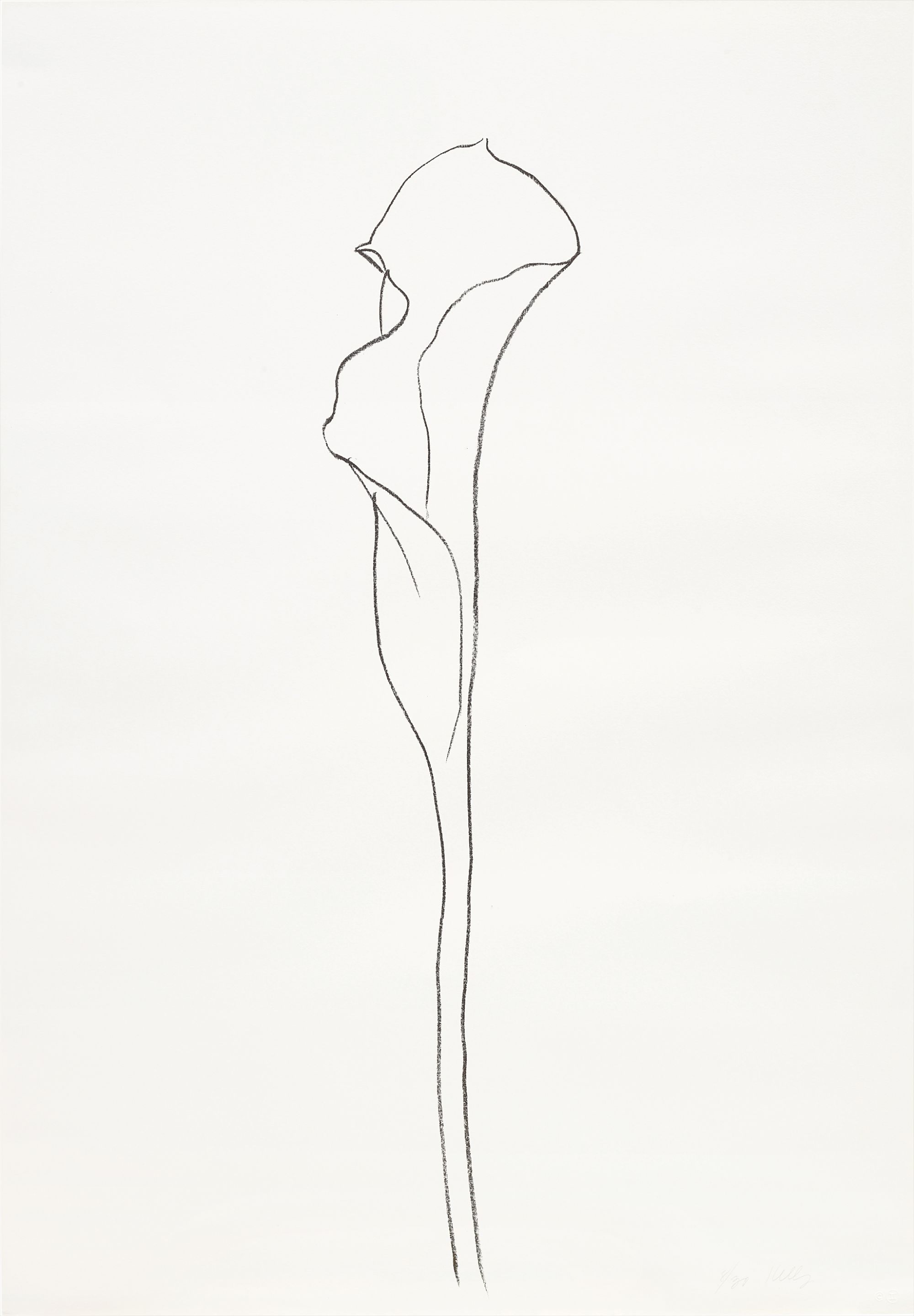
Ellsworth Kelly
Calla Lilly 3
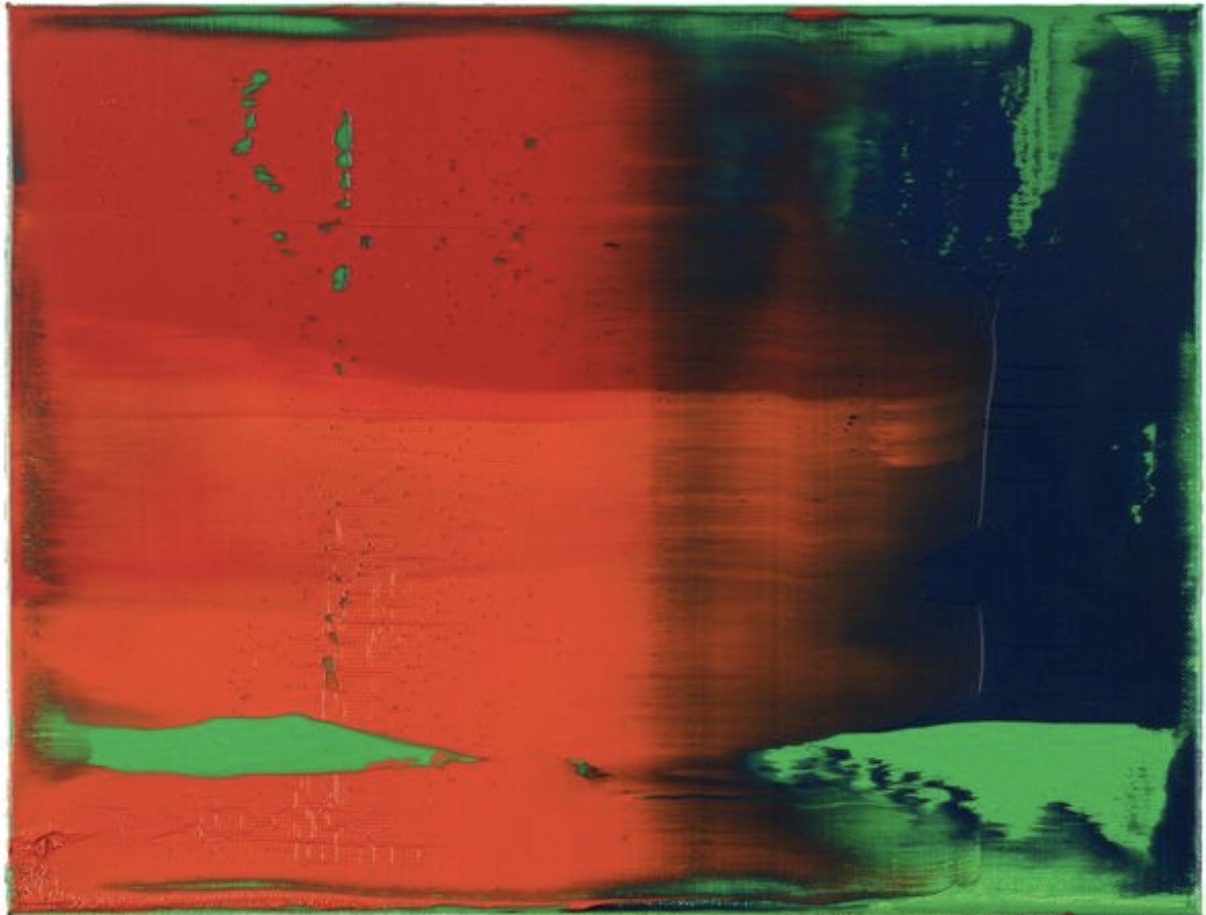
Penn's floral work, particularly the wilting and decomposing flowers he shot in the 1960s and 1970s, returned the memento mori quality of the Dutch masters through the entirely modern medium of photography. The latter decades of the twentieth century brought further reinvention. Donald Sultan, associated with the Neo Expressionist tendency of the 1980s, made flowers in industrial materials, using tar and tile on masonite to create images of tulips and poppies that felt simultaneously lush and toxic. Gerhard Richter, always circling around the question of what painting can and cannot do, made floral works that flickered between photographic illusion and painterly dissolution, using the genre to interrogate representation itself.
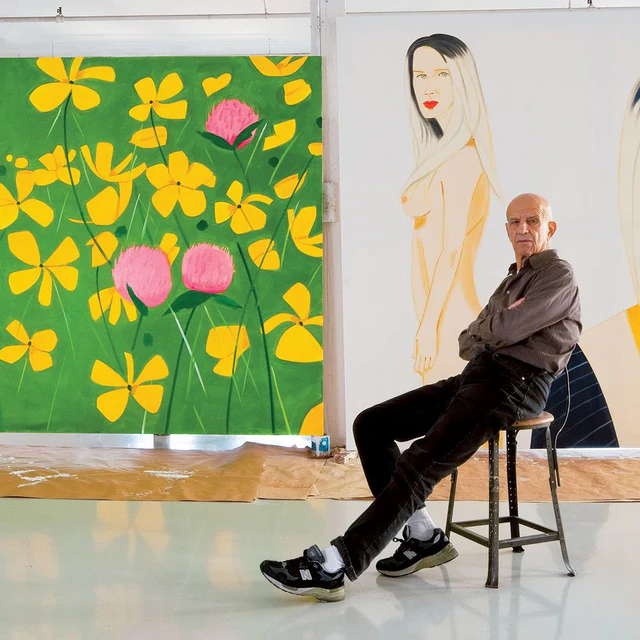
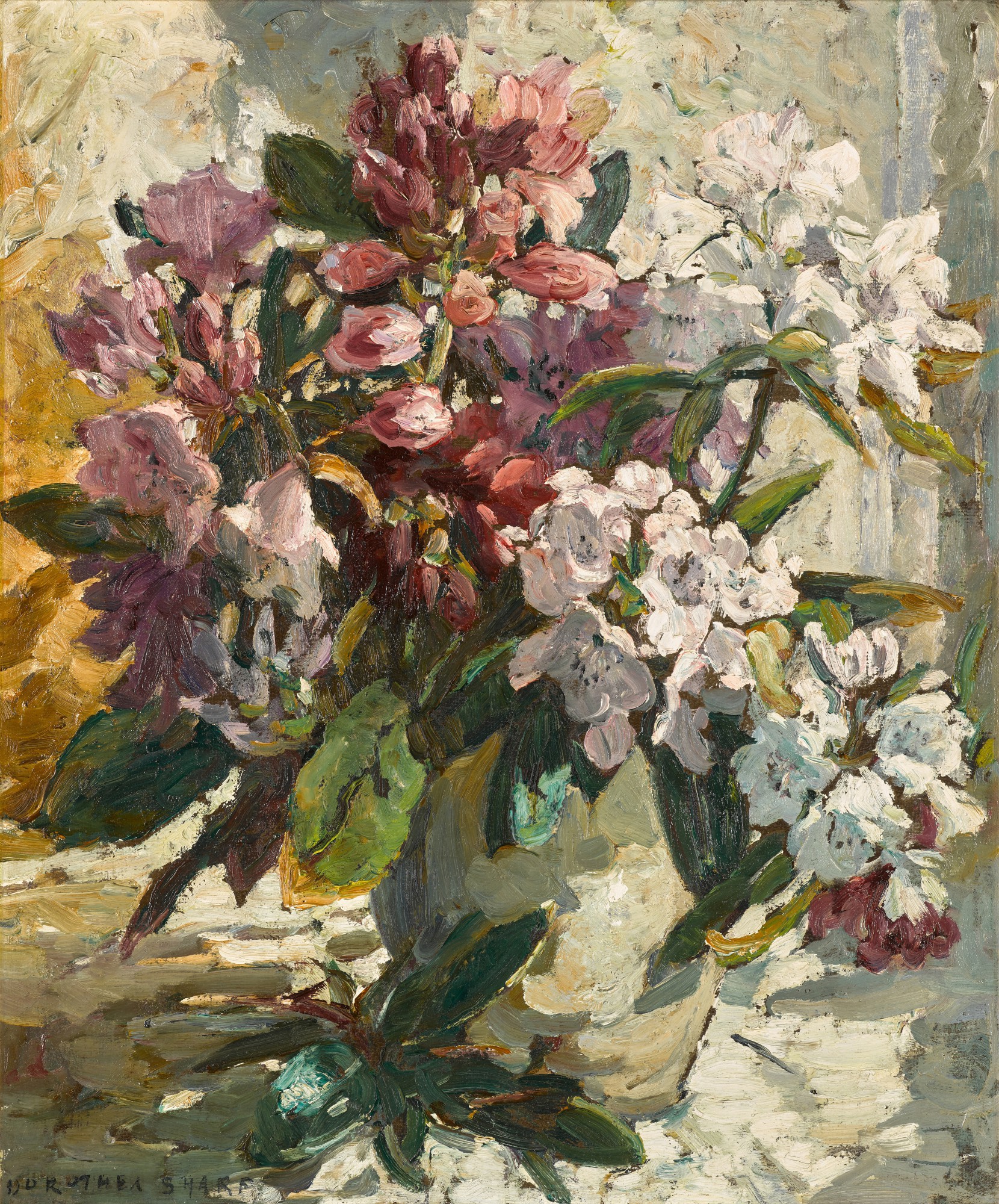
Shepard Fairey, better known for his political imagery, has brought the flower into the vocabulary of street art and graphic activism, recharging its symbolic potential for a new generation and a new set of cultural tensions. The painters Dorothea Sharp and Alex Katz approach floral subjects from almost opposite temperaments. Sharp, working in the early twentieth century, brought an English plein air immediacy to her flowers, all light and freshness. Katz, working across decades in his signature flat, large scale manner, has returned to flowers repeatedly as a subject that rewards his particular brand of cool, assured looking.
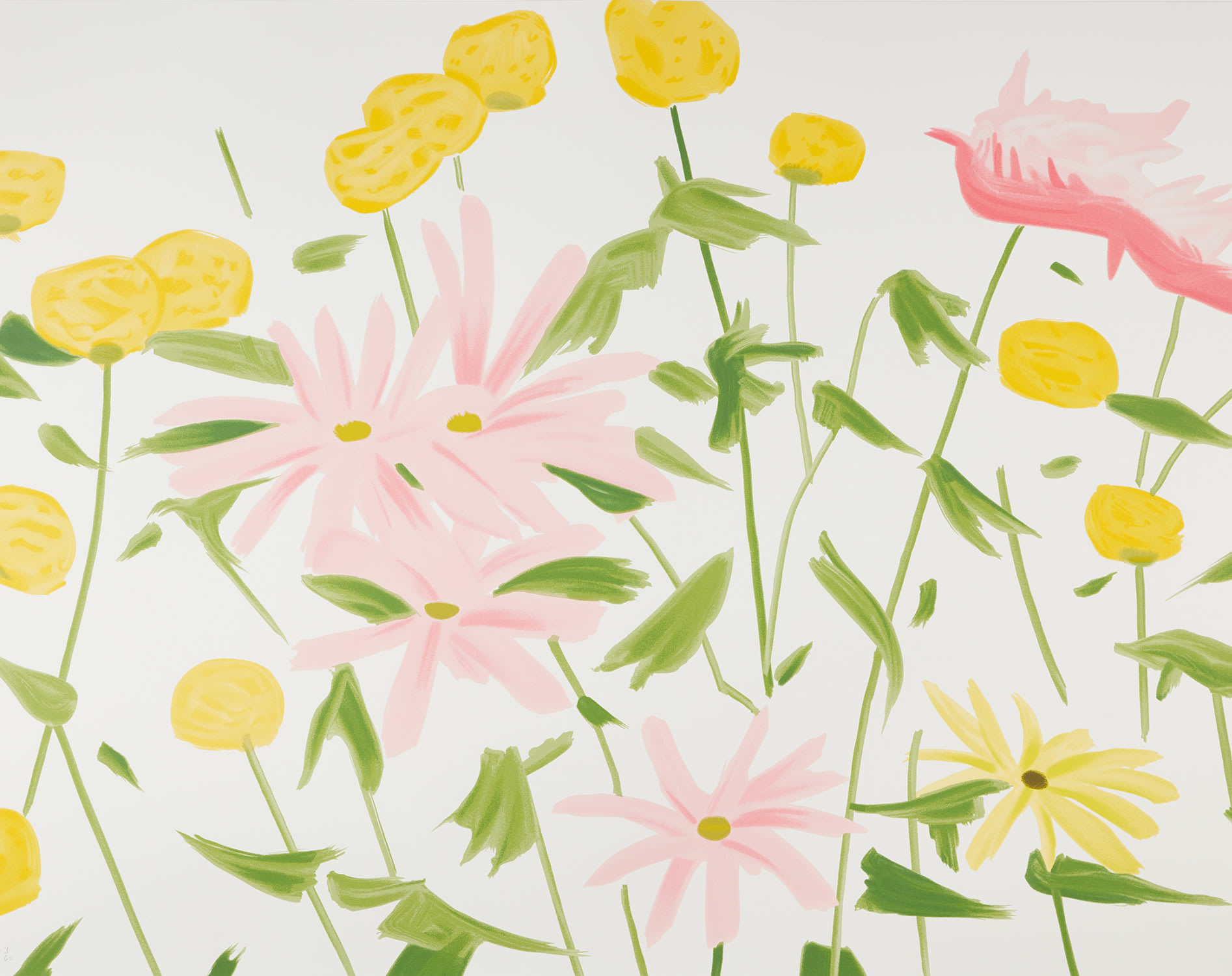
Alex Katz
Spring Flowers
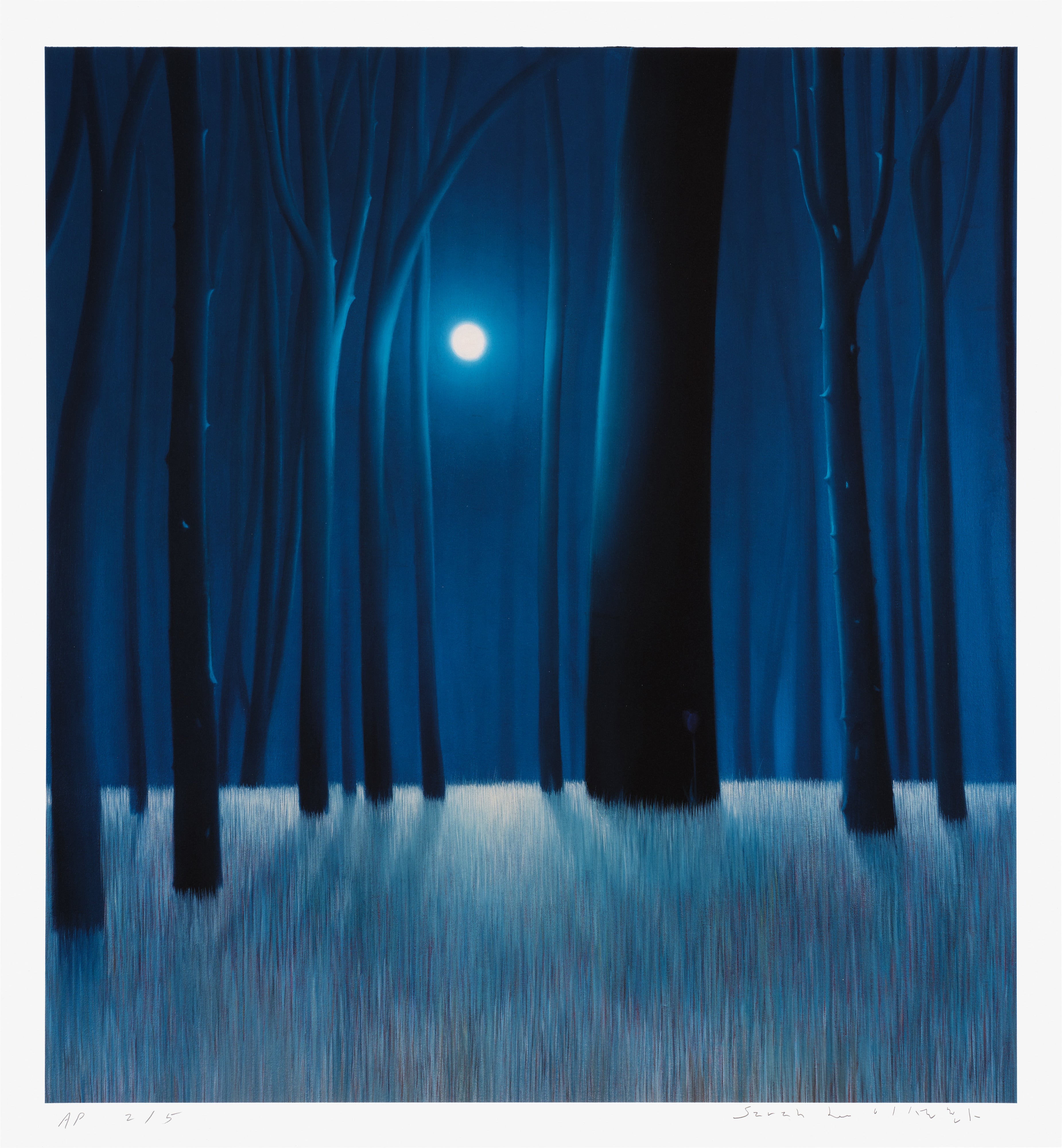
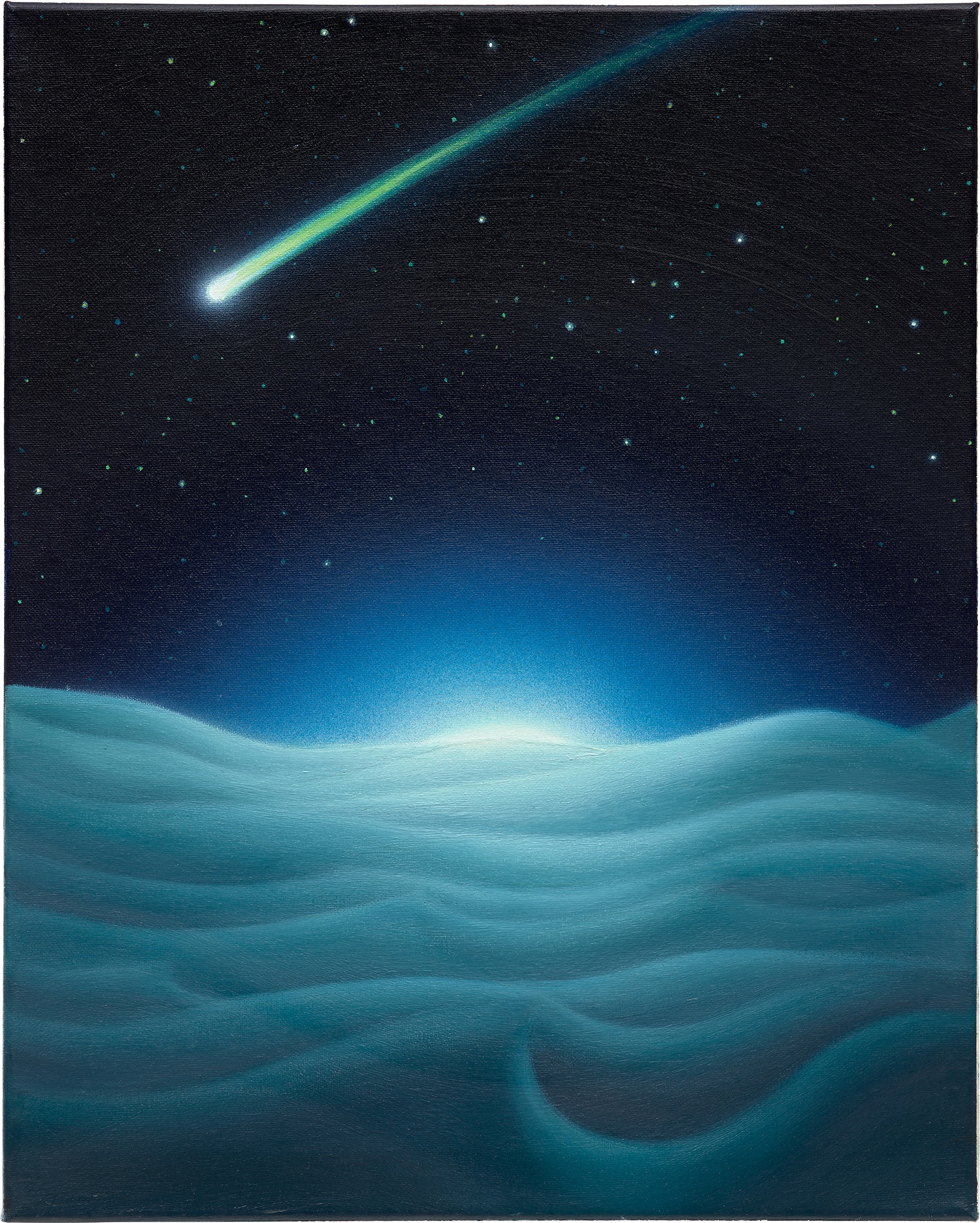
His floral works share the same taut precision as his portrait and landscape work, refusing sentimentality without sacrificing pleasure. Sarah Lee, among the contemporary voices represented on The Collection, continues this tradition of bringing serious pictorial thinking to botanical subjects. What unites these artists across centuries and continents is not a shared style but a shared understanding: that the flower is an extraordinarily useful fiction, a form that nature offers up as if designed for art. It holds together beauty and decay, simplicity and complexity, the particular and the universal with a kind of effortless authority.
For collectors, floral works occupy a genuinely special position precisely because the tradition is so long and so various. A flower painting can be read as a meditation on impermanence, a technical tour de force, a political statement, or an act of pure joyful looking, and often several of these at once. The works gathered on The Collection in this category trace a conversation that spans six centuries and multiple civilizations, and there is no sign it is anywhere close to finished.