Byzantine
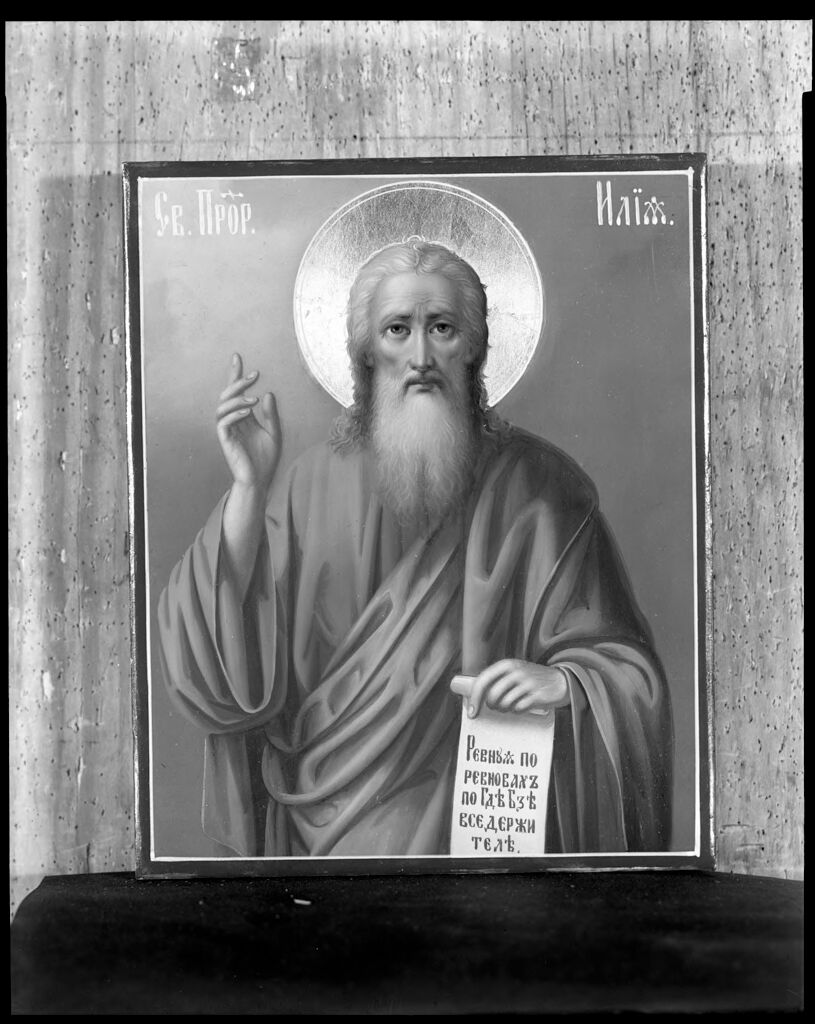
Unidentified Artist
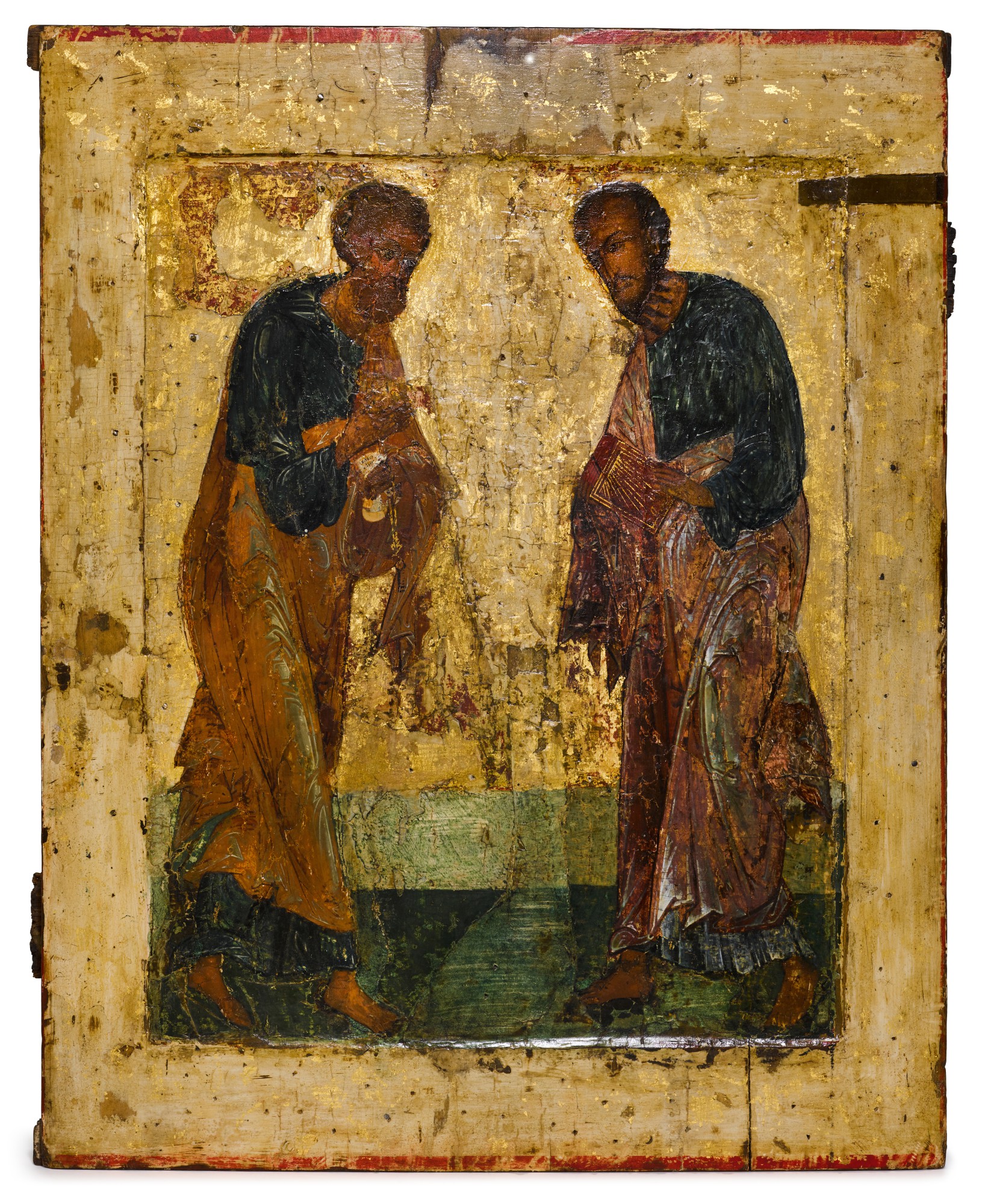
The Holy Prophet Elijah
Gold, God, and the Eternal Gaze
There is a moment, standing before a Byzantine icon, when the usual rules of looking seem to collapse. The figure does not recede into pictorial space or glance away with the studied nonchalance of Renaissance portraiture. It looks directly at you, through you, with eyes that were painted a thousand years ago and have not softened since. This is not art that invites passive admiration.
It makes a claim on the viewer, and that claim has lost none of its force. The Byzantine tradition took shape as the Roman Empire shifted its center of gravity eastward, a process that culminated with Constantine the Great founding Constantinople in 330 AD. What followed over the next eleven centuries was one of the most sustained and coherent visual cultures in human history, a world where art and theology were not separate disciplines but a single enterprise. The Council of Nicaea in 787 AD, which formally restored the veneration of images after the turbulent decades of Iconoclasm, was not merely a theological ruling.
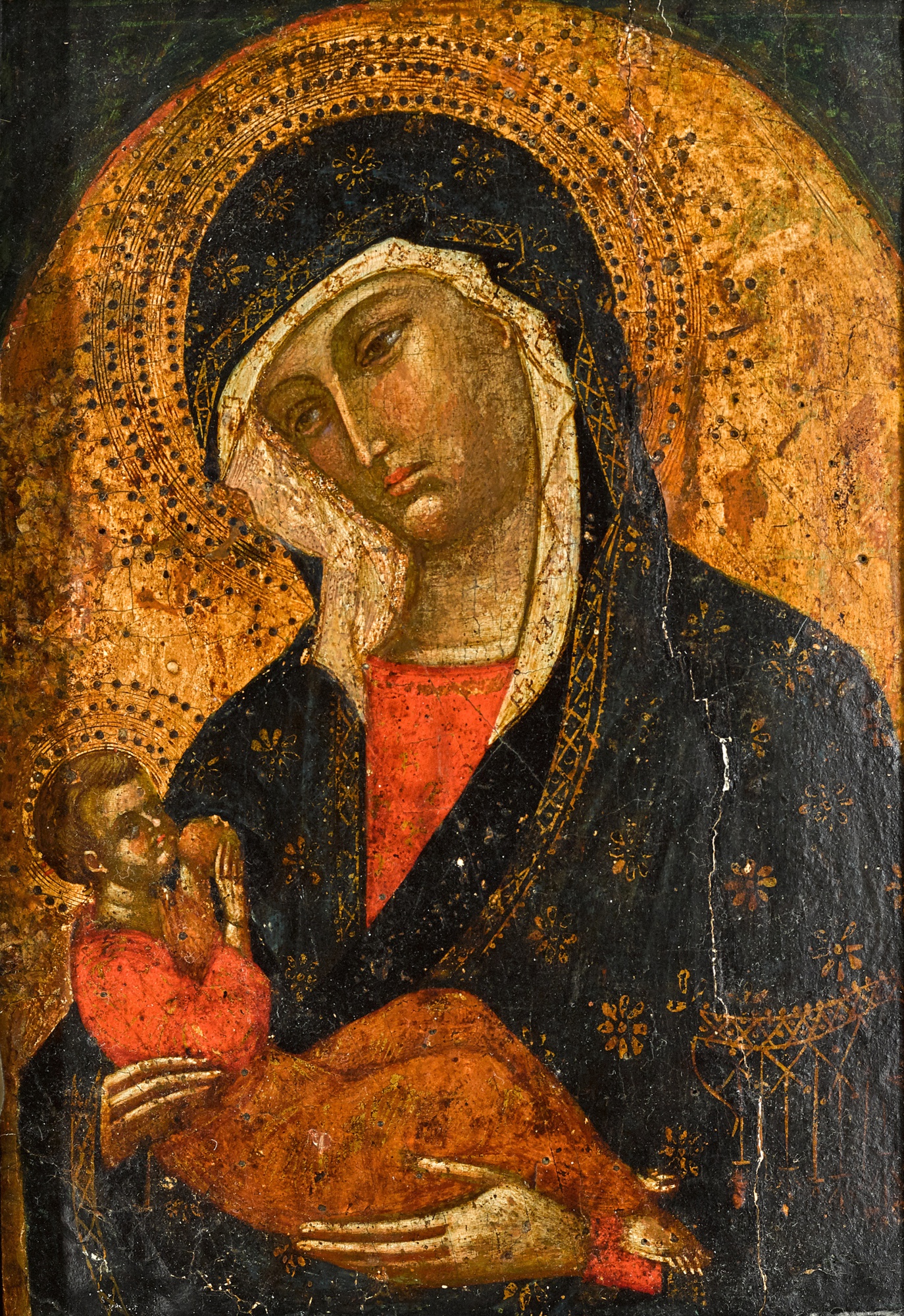
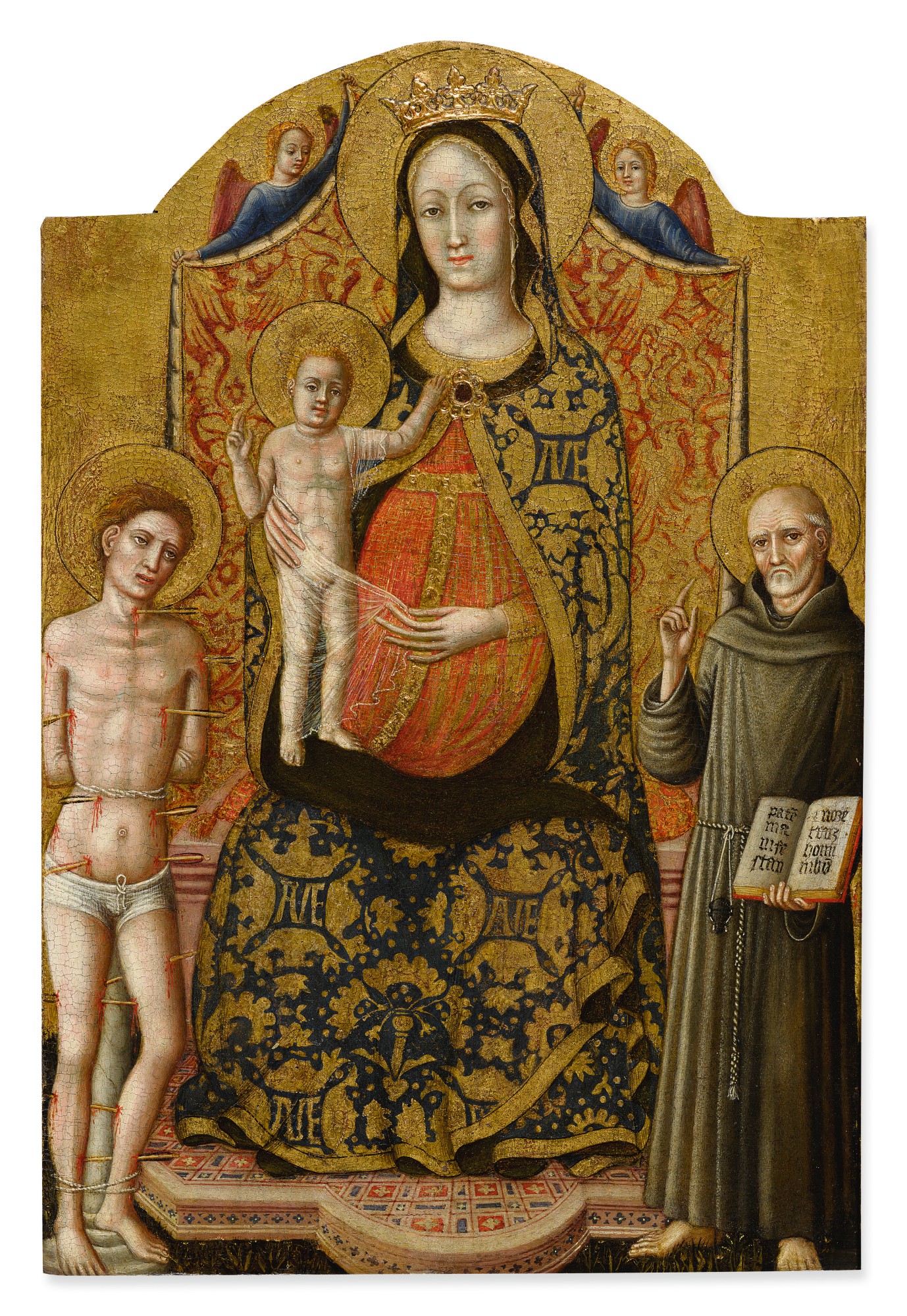
Follower of Paolo Veneziano
The Madonna and Child
It was an aesthetic manifesto, asserting that the visible could carry the sacred, that gold leaf and encaustic pigment could be legitimate vessels for divine presence. The materials themselves were chosen with theological intent. Gold grounds, which collectors encounter again and again in Byzantine panel painting and mosaic work, were not simply decorative. They represented uncreated light, the luminosity of heaven existing outside any earthly time of day or season.
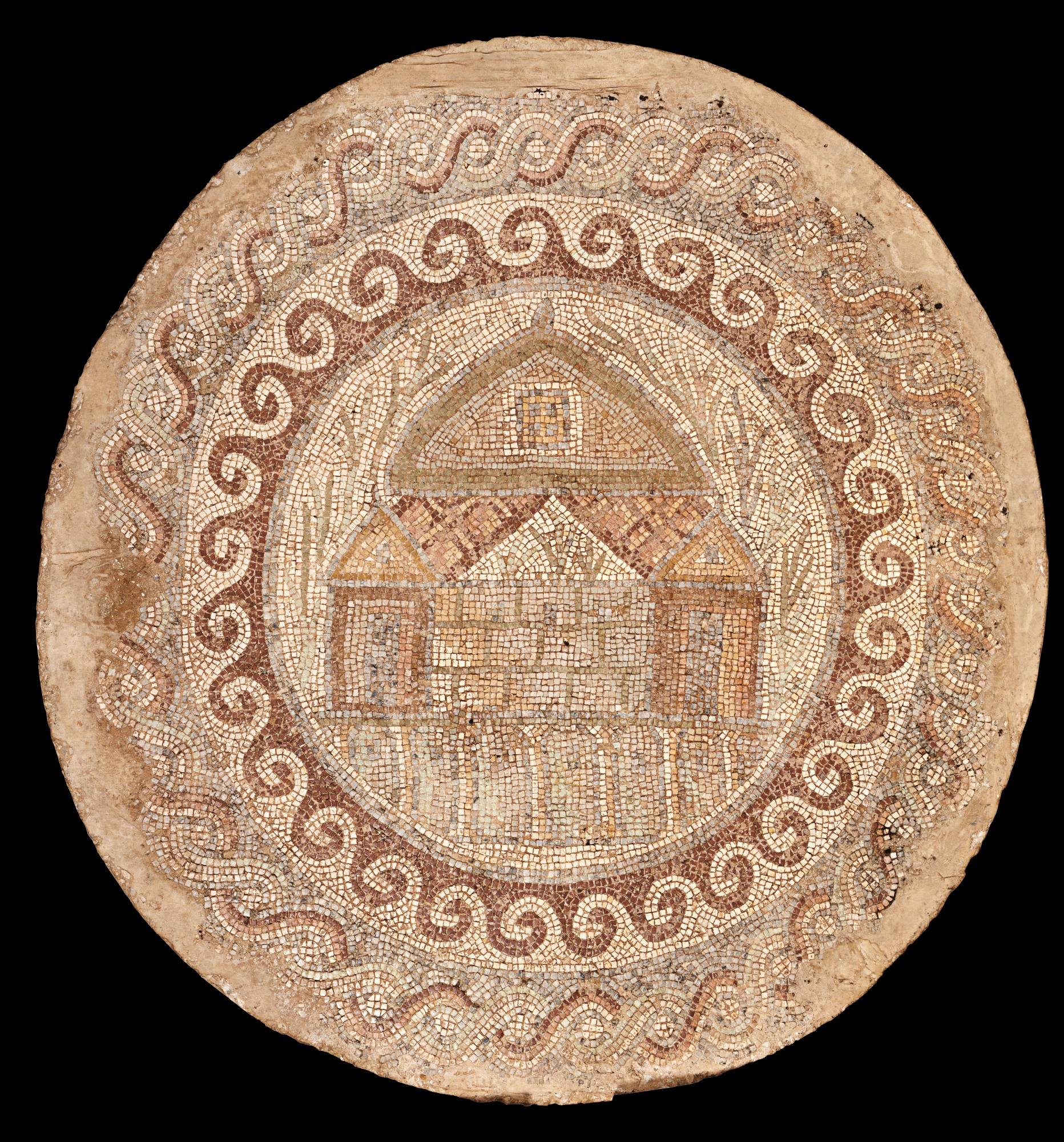
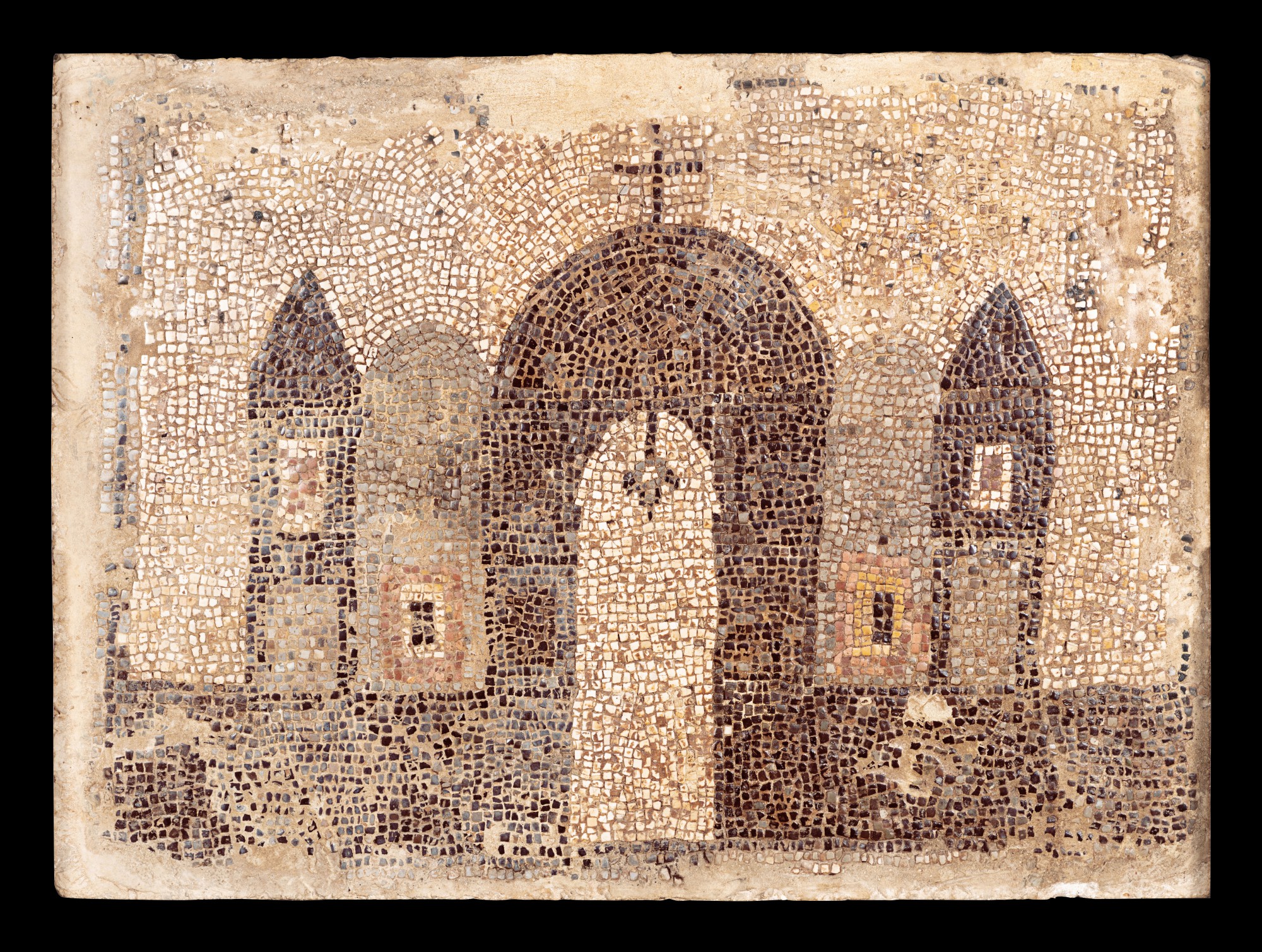
Tesserae in mosaic panels were set at slight angles so that candlelight would animate the surface, making the image seem to breathe. The works in The Collection attributed to A Byzantine Mosaic Panel and A Byzantine Mosaic Roundel demonstrate this principle beautifully, the fragments carrying within them a spatial logic that is entirely their own, neither flat nor deep in any conventional sense, but hovering in a kind of divine suspension. Iconography in Byzantium was governed by tradition in ways that can seem restrictive until you understand the reasoning. The pose of Christ Pantocrator, the right hand raised in blessing with fingers arranged to spell out the Greek letters IC XC, the Gospels held in the left hand, was not a failure of artistic imagination but a commitment to legibility across centuries and geographies.
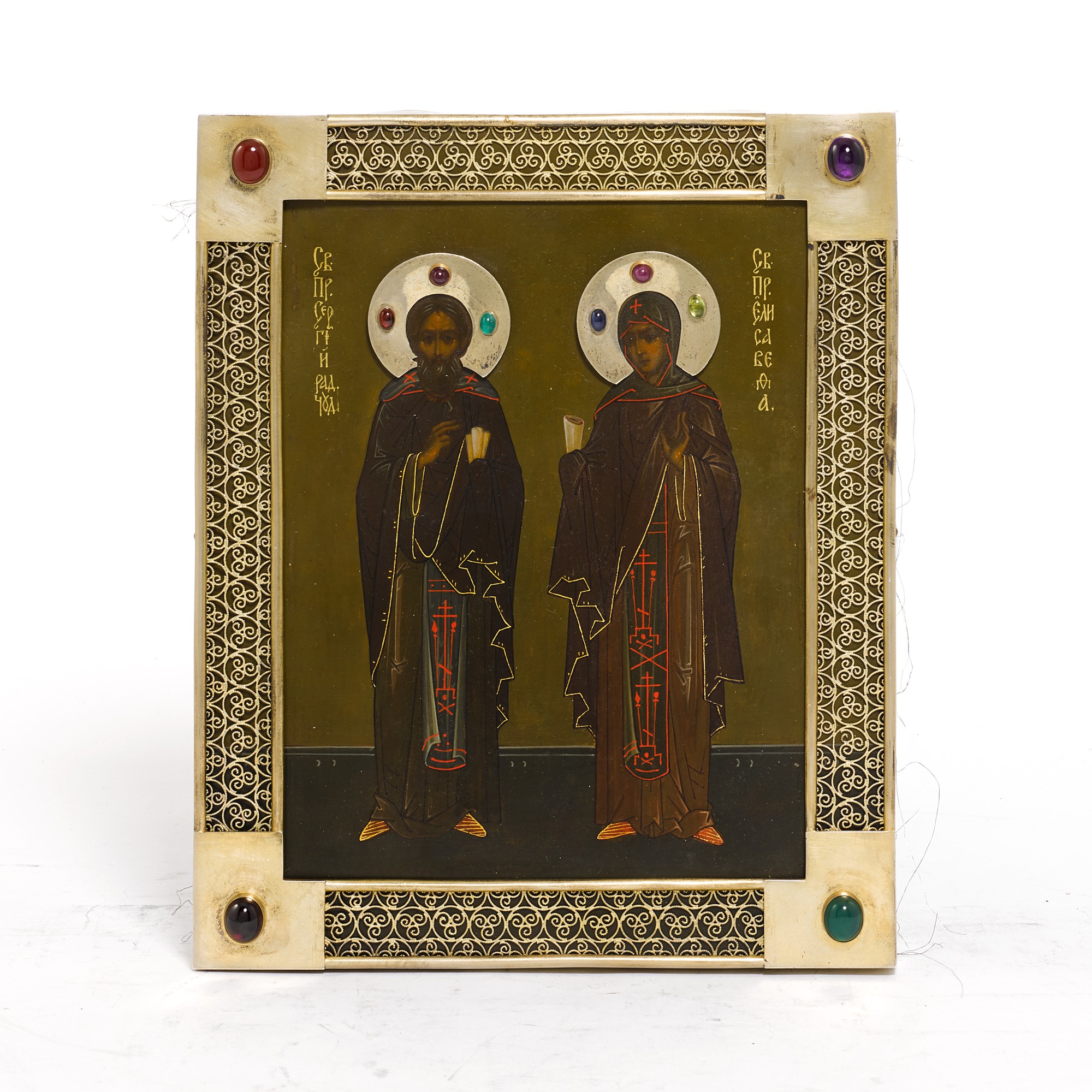
Unknown
A silver-gilt gem-set icon of St Sergei Radonezhsky and St Elisaveta, Kuzma Konov, Moscow, 1899-1908
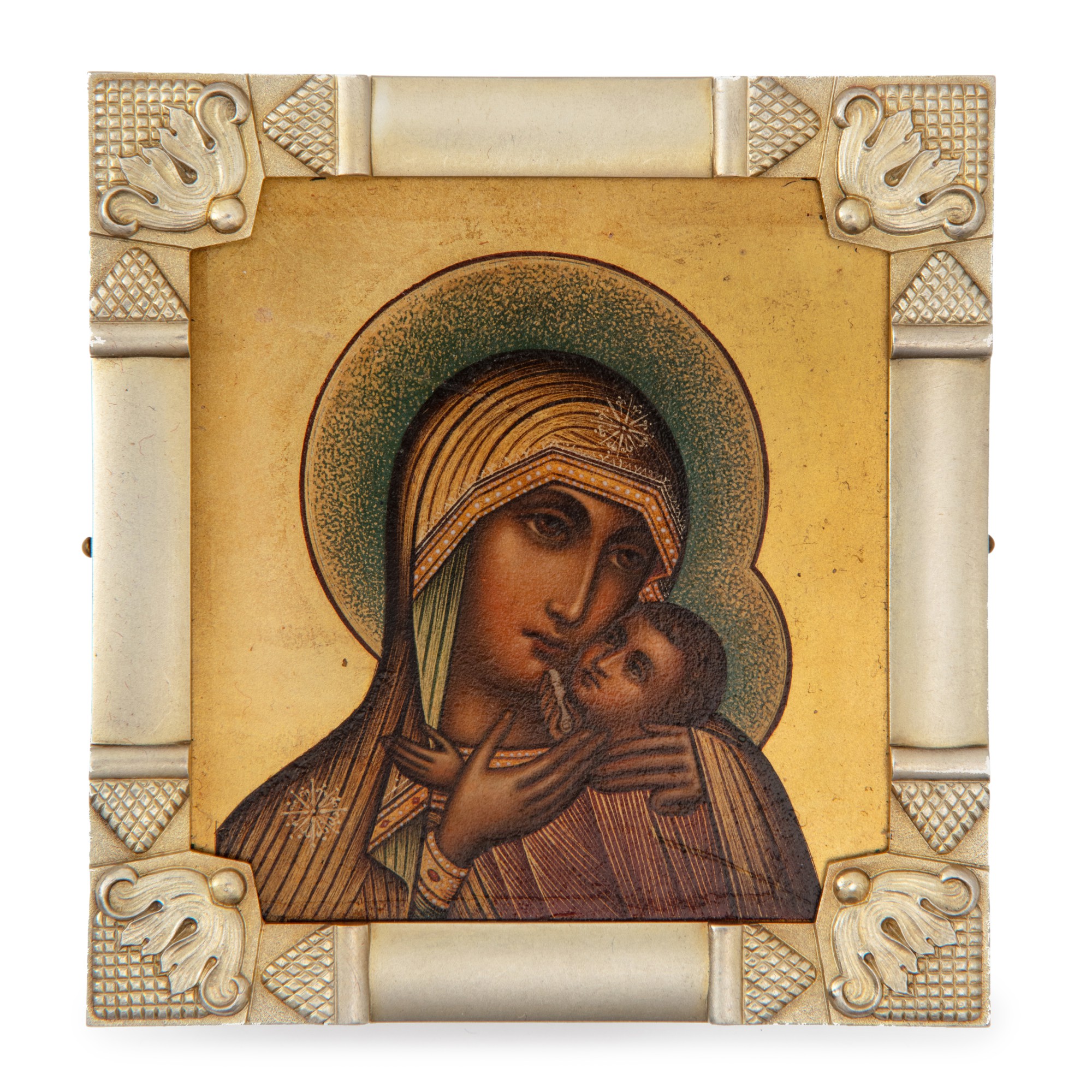
The miniature silver gilt and cloisonné icon of Christ Pantocrator made by Pavel Ovchinnikov in Moscow around 1890, present in The Collection, shows how this visual grammar survived the fall of Constantinople in 1453 and migrated northward into Russian Orthodox practice, where it was eventually absorbed into the luxury craft traditions of the late imperial period. The Fabergé silver gilt icon of Our Lady Kasperovskaya, produced in Moscow between 1908 and 1917, represents the final flowering of that same lineage, Byzantine theology dressed in the jewelled vocabulary of the Romanov court. The influence of Constantinople on Italian painting is a story that is sometimes told too quickly, as if Byzantium were merely a waiting room before the Renaissance. The truth is considerably more interesting.
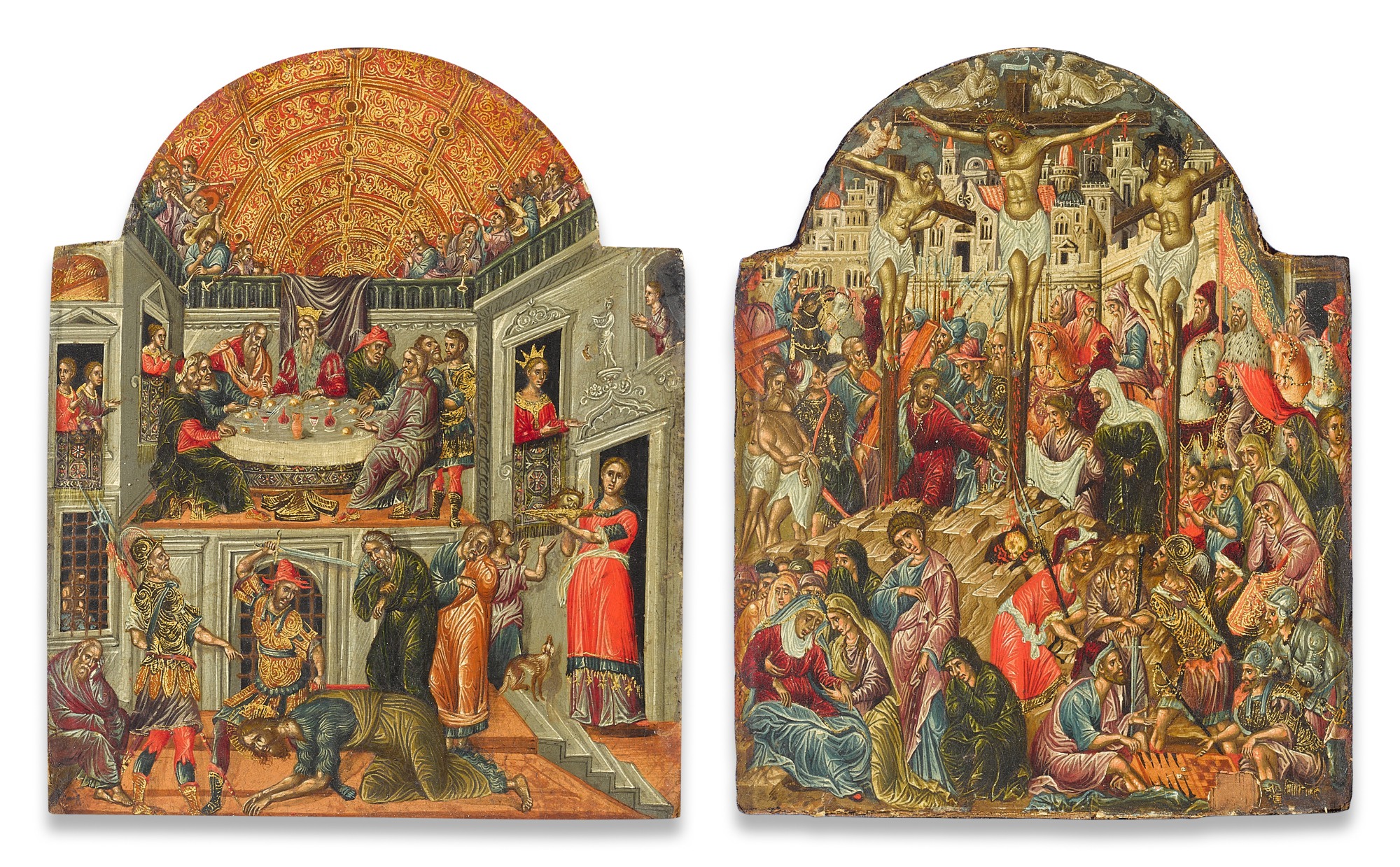
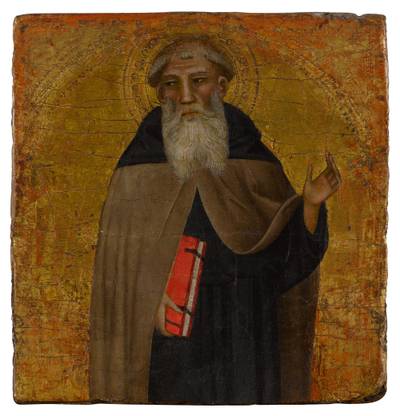
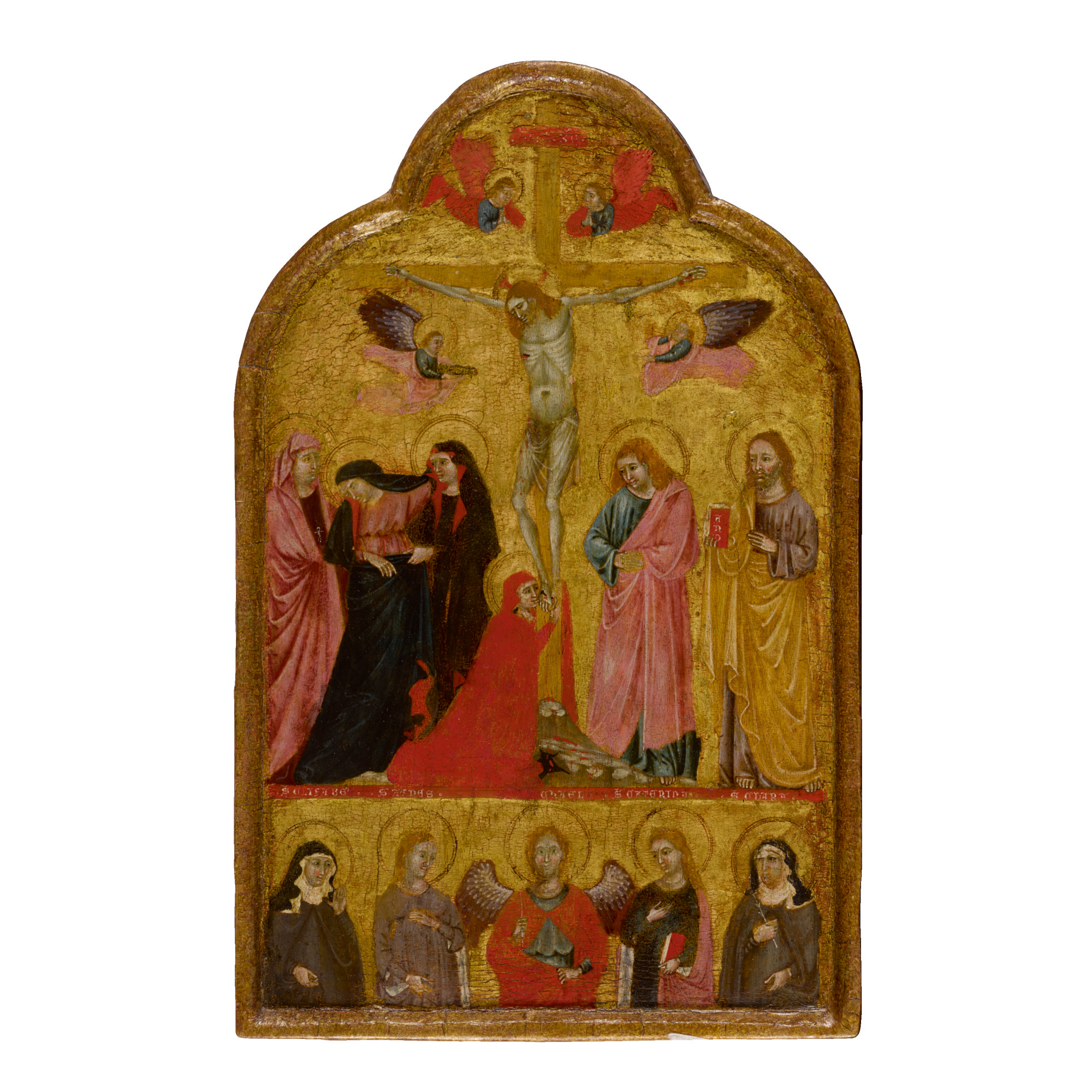
Painters working in Tuscany and Venice in the thirteenth and fourteenth centuries were not passively receiving a declining tradition but actively in dialogue with it. Cenni di Francesco di Ser Cenni, Lorenzo Monaco, and the Master of the San Tommaso Dossal, all represented in The Collection, worked within a visual culture that was still deeply inflected by Byzantine conventions even as it began reaching toward naturalism. Lorenzo Veneziano, similarly present here, worked in a city whose commercial and spiritual ties to the Eastern Empire were intimate enough that the stylistic conversation was constant and two way. The Follower of Paolo Veneziano brings us even closer to that conversation, since Paolo himself is often described as the last great Byzantine painter working on Italian soil, a figure who understood both worlds with unusual depth.
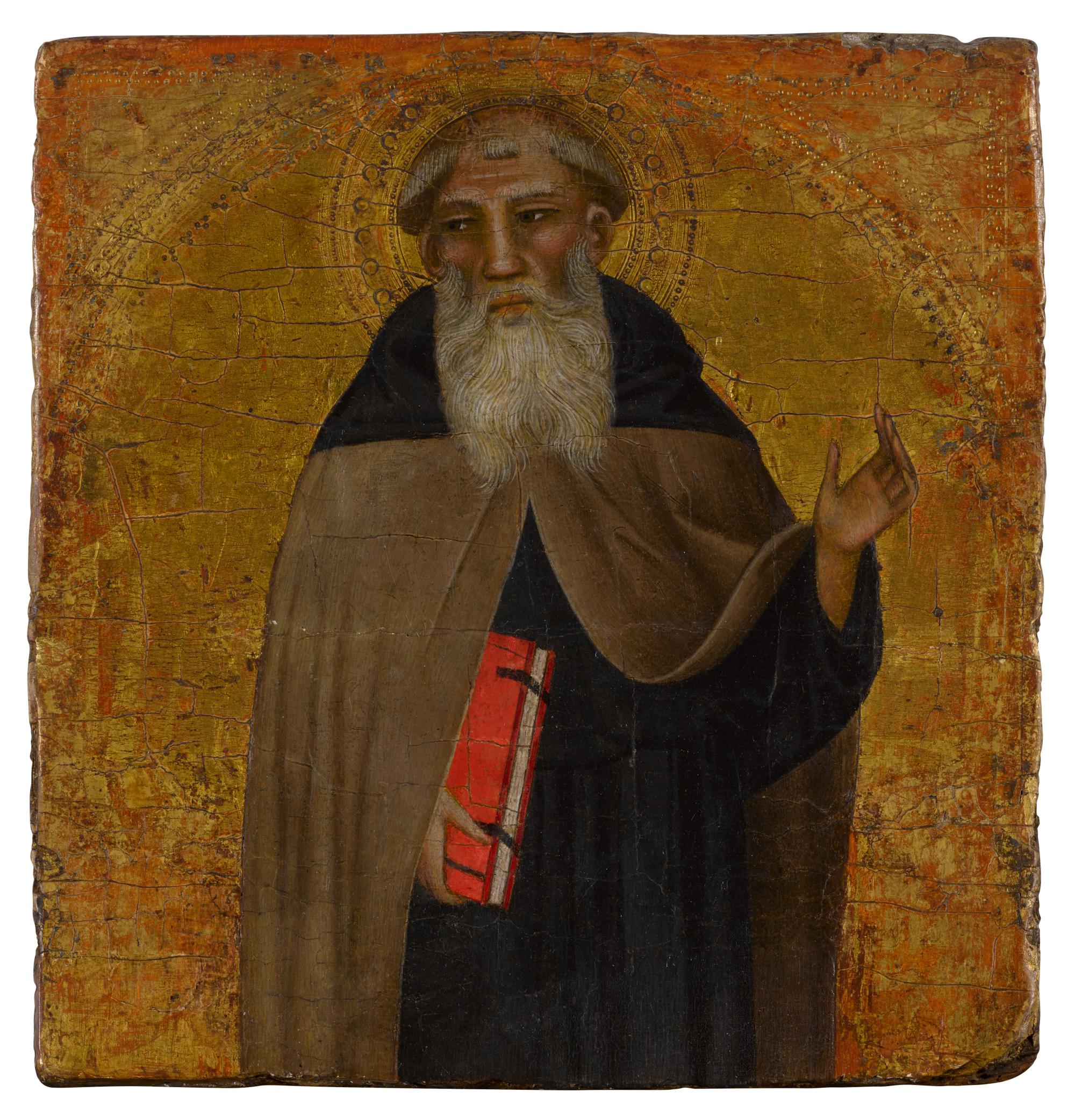
Cenni di Francesco di Ser Cenni
A male saint, possibly Saint Anthony Abbot
Mosaic, perhaps more than any other medium, captures the Byzantine aesthetic at its most ambitious. The great church programs at Ravenna, dating from the fifth and sixth centuries, and later at Constantinople, Thessaloniki, and Palermo, involved teams of craftsmen working across vast architectural surfaces, coordinating thousands of individually set tesserae into compositions of monumental authority. The surviving mosaic fragments in The Collection, including a probable Byzantine mosaic fragment and the Byzantine mosaic panel works, offer something that the intact church programs in situ cannot quite provide: an intimate encounter with the material logic of the thing, the scale of individual tesserae, the variation in colour across a small area, the evidence of human hands making thousands of small decisions that would eventually cohere into a face or a robe or a wing. The story of Byzantium as a living tradition rather than a historical episode is one of the more compelling threads in the broader art market right now.
Collectors and scholars have increasingly pushed back against the old Eurocentric periodisation that treated the fall of Constantinople as a full stop, when in fact Byzantine visual culture continued to develop vigorously in Greece, Russia, Serbia, and the Italian diaspora communities well into the modern era. The Italo Cretan School of the sixteenth and seventeenth centuries, represented in The Collection, produced artists of genuine sophistication working at the intersection of Orthodox iconography and Western Renaissance technique, figures like El Greco before he became El Greco. Even Zurab Tsereteli, the prolific Georgian artist whose work also appears here, carries within his monumental aesthetic something of that Eastern Christian inheritance. What makes Byzantine art so durable as a collecting proposition is precisely what makes it demanding as an object of contemplation.
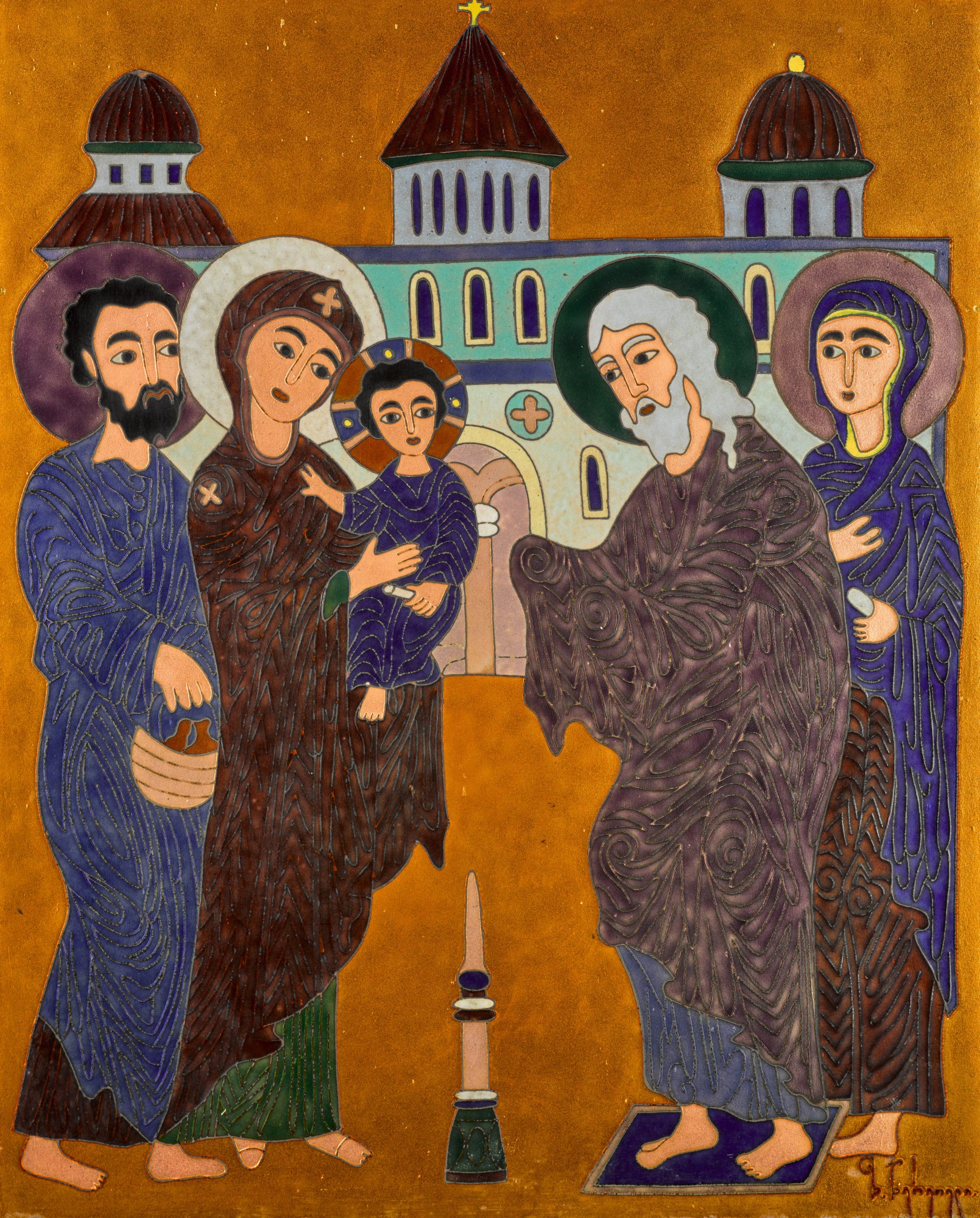
Zurab Tsereteli
The Presentation of Jesus at the Temple
It refuses the comfortable distance that Western post Renaissance painting so often extends to its viewer, the illusion that you are looking through a window at a world that exists independently of your presence. Byzantine art knows you are there. It always has.