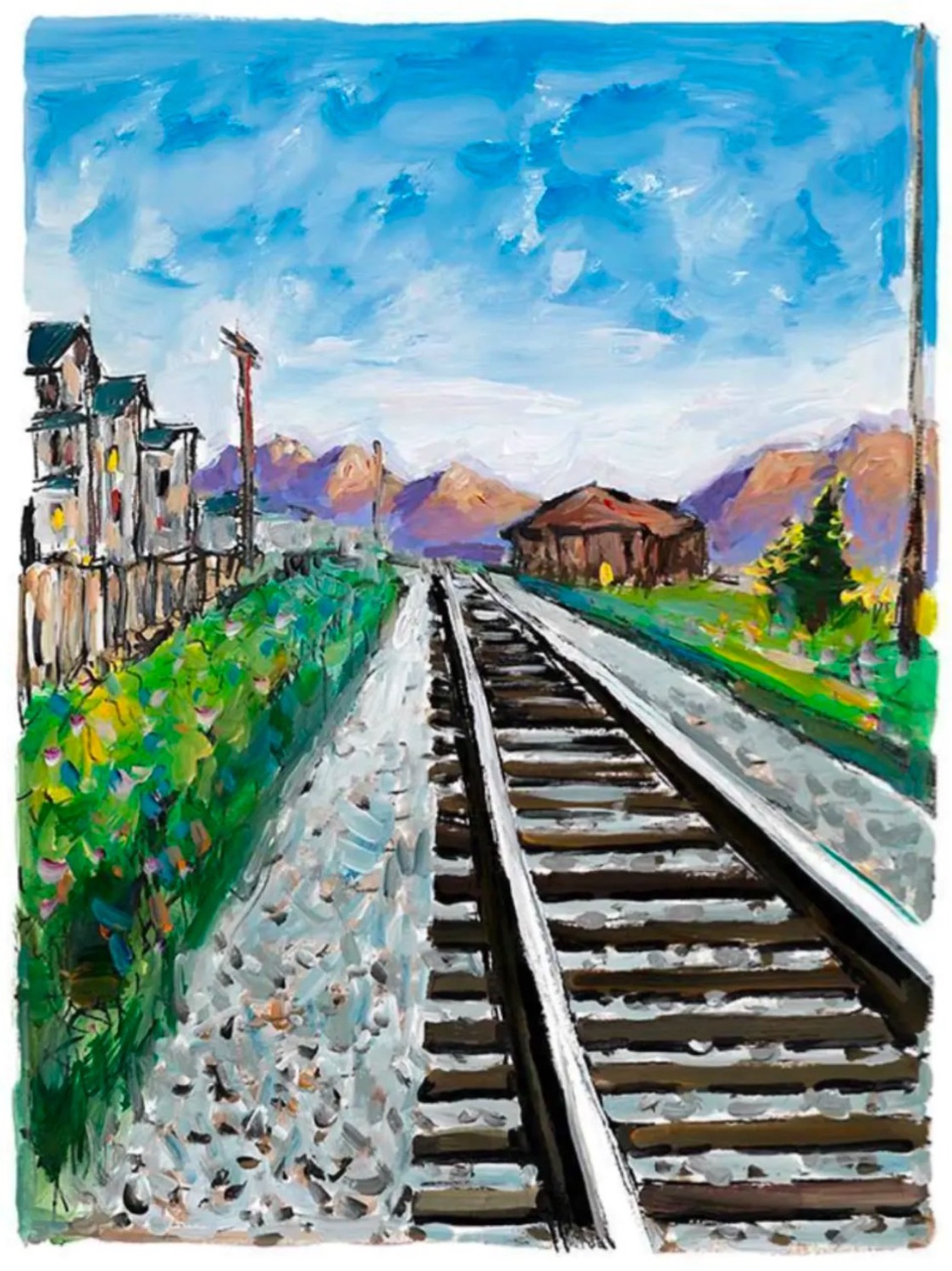
Action Scene
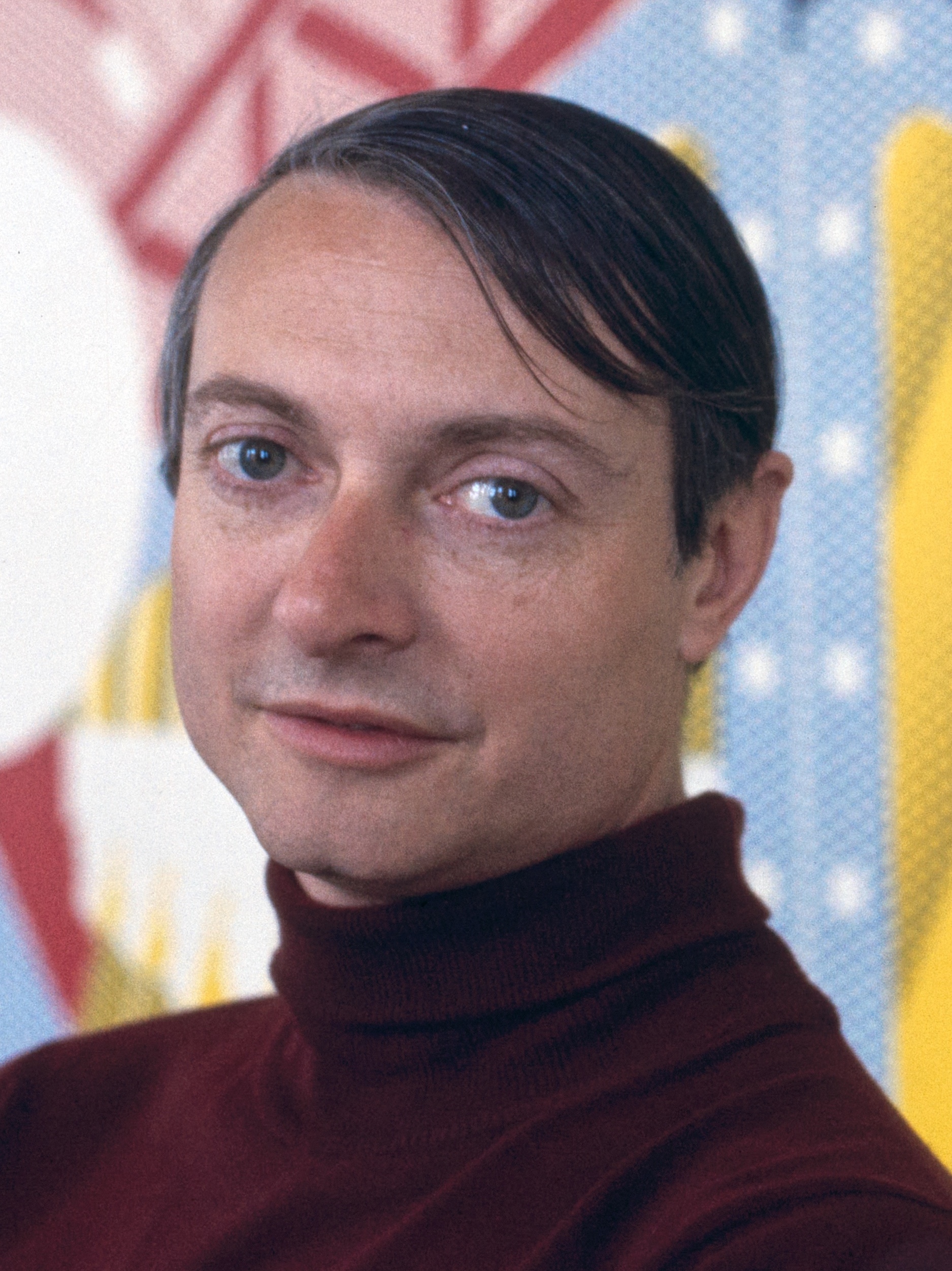
Roy Lichtenstein
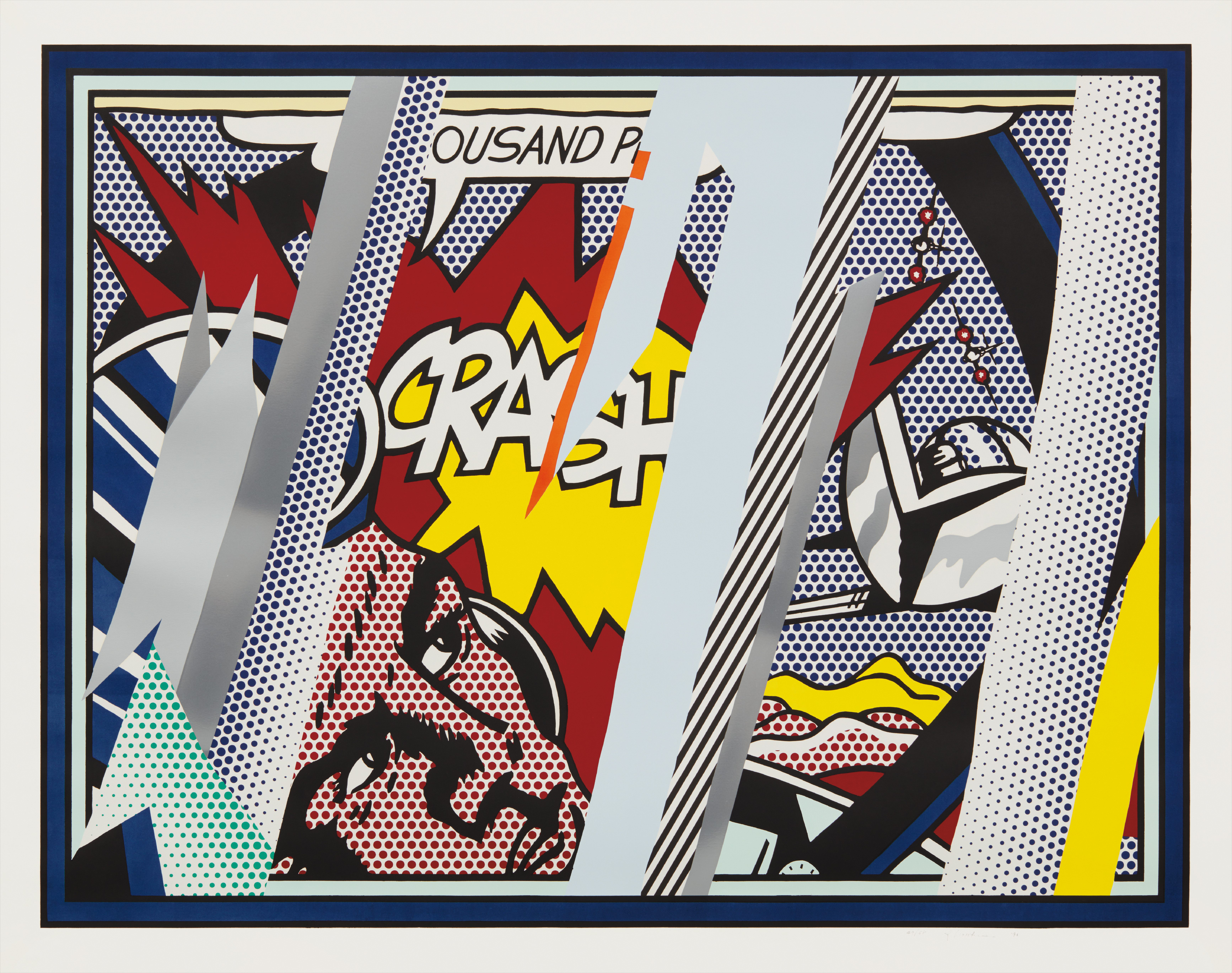
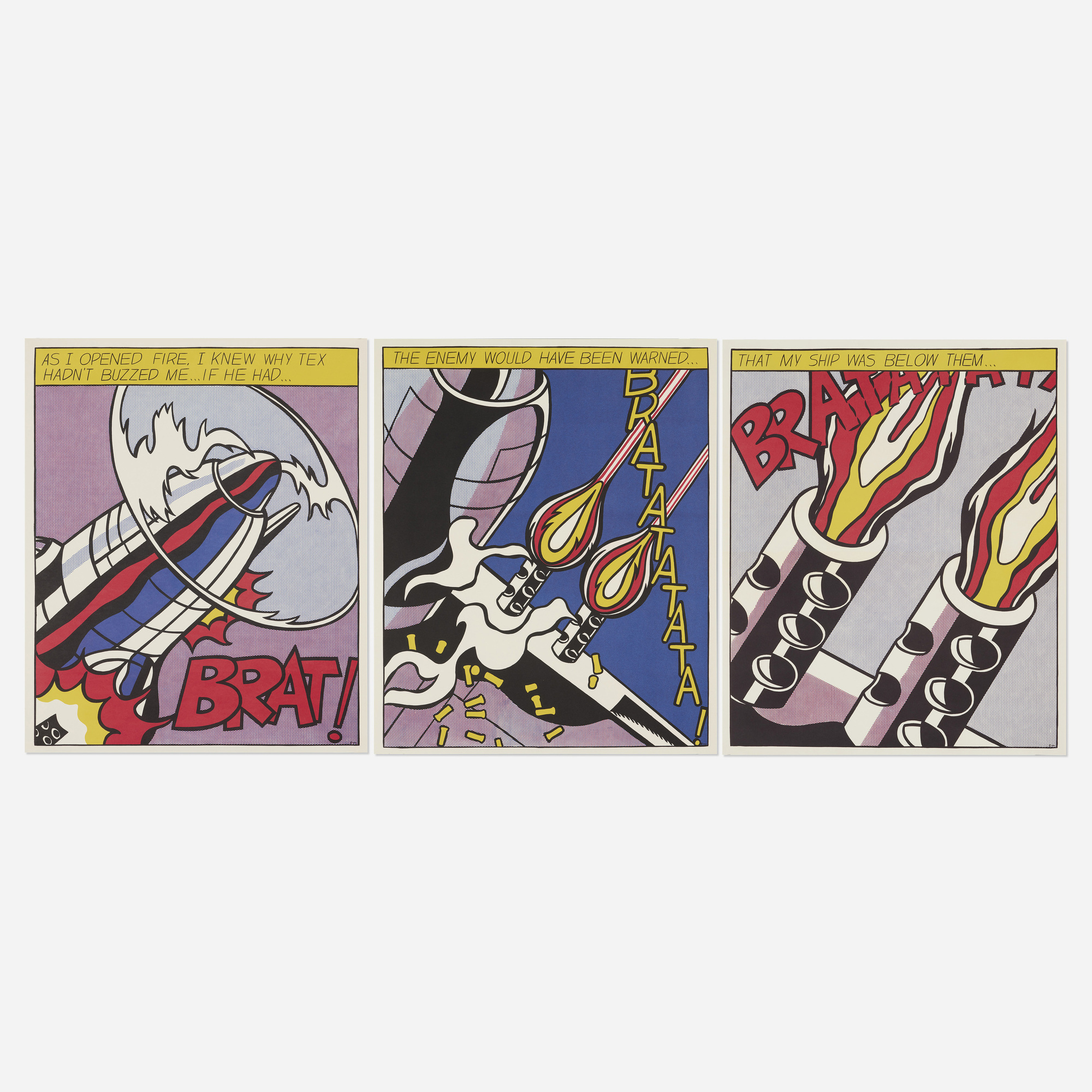
As I Opened Fire (triptych), 1966
When Painting Learned to Move
There is a moment in looking at certain paintings when the eye refuses to settle. Something is always already in motion, a figure mid leap, a horse churning through shallow water, a fist connecting with a jaw rendered in bold primary planes. The action scene, across five centuries of Western art, has functioned as a kind of stress test for the medium itself, demanding that painters solve an essentially impossible problem: how do you stop time in a way that makes the viewer feel it rushing forward. The answers to that question form one of the richest threads in the history of painting.
The roots of the action scene run deep into antiquity, but the tradition that most directly shapes Western painting begins in earnest with the Italian Renaissance. Artists working in the fifteenth and sixteenth centuries looked to ancient relief sculptures and the Hellenistic frieze tradition for compositional strategies capable of conveying movement across a static surface. The diagonal became the fundamental grammar of action. Bodies tilted off their vertical axes, limbs extended beyond the picture frame, ground lines pitched upward to create a sense of rushing space.
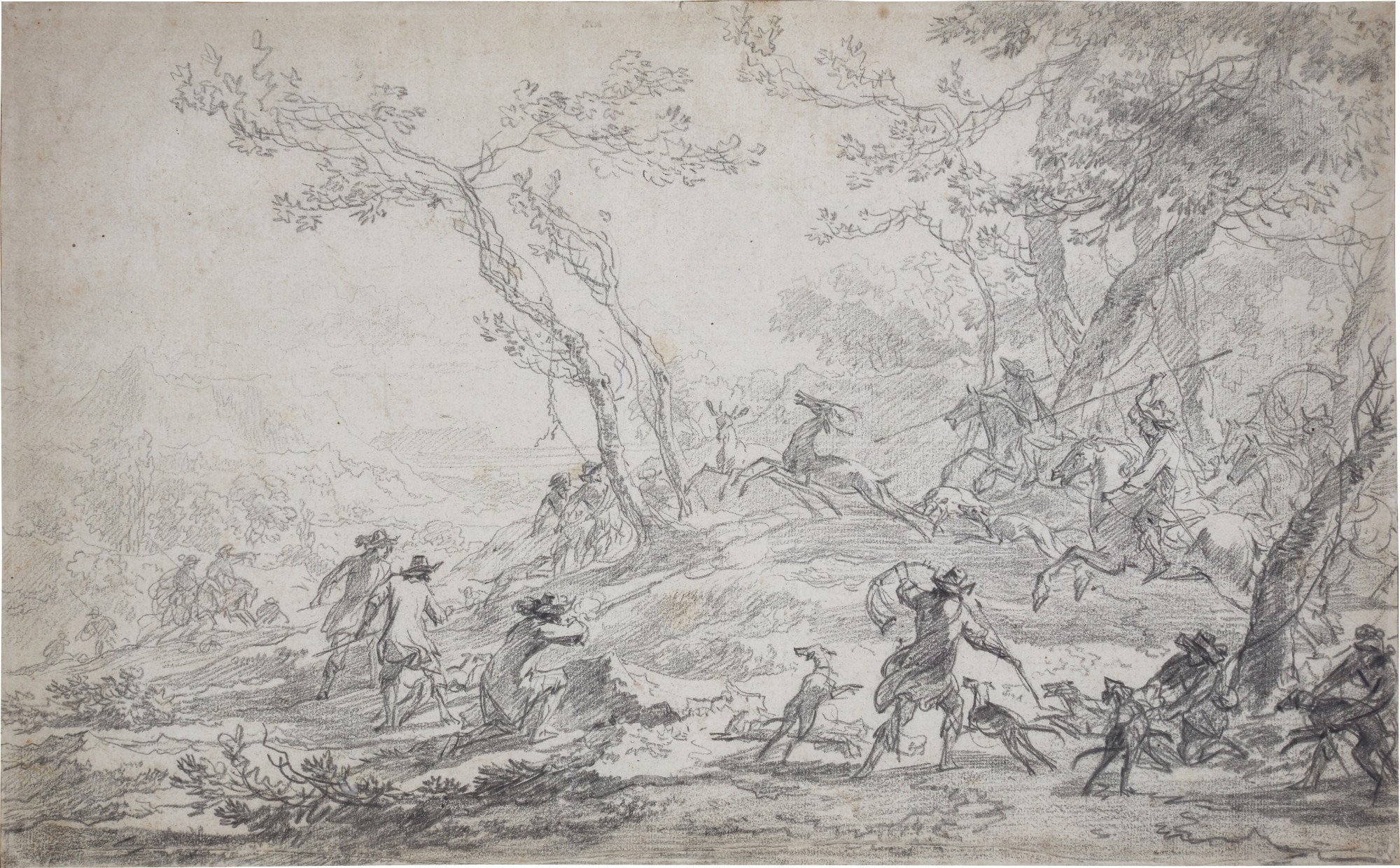
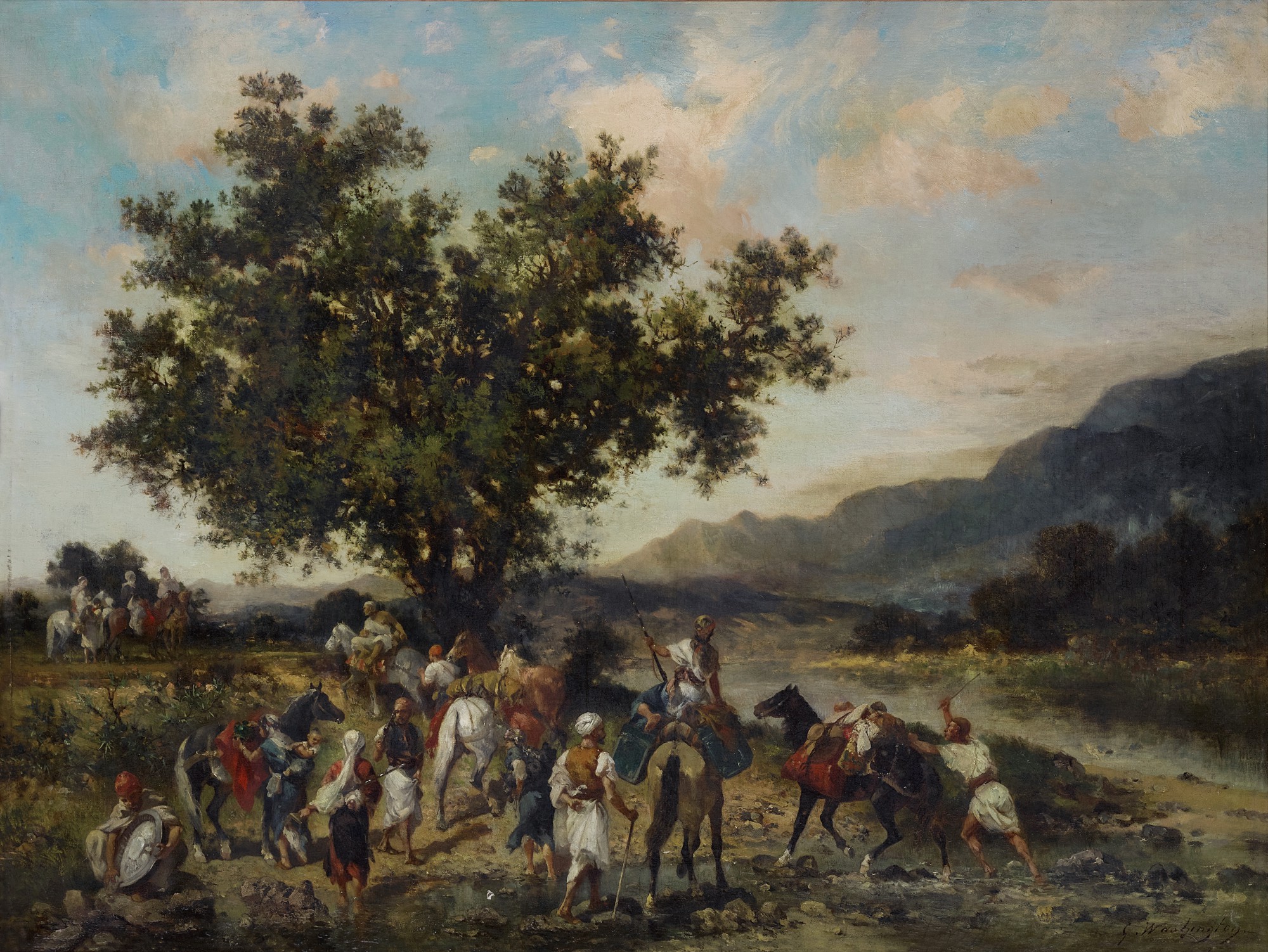
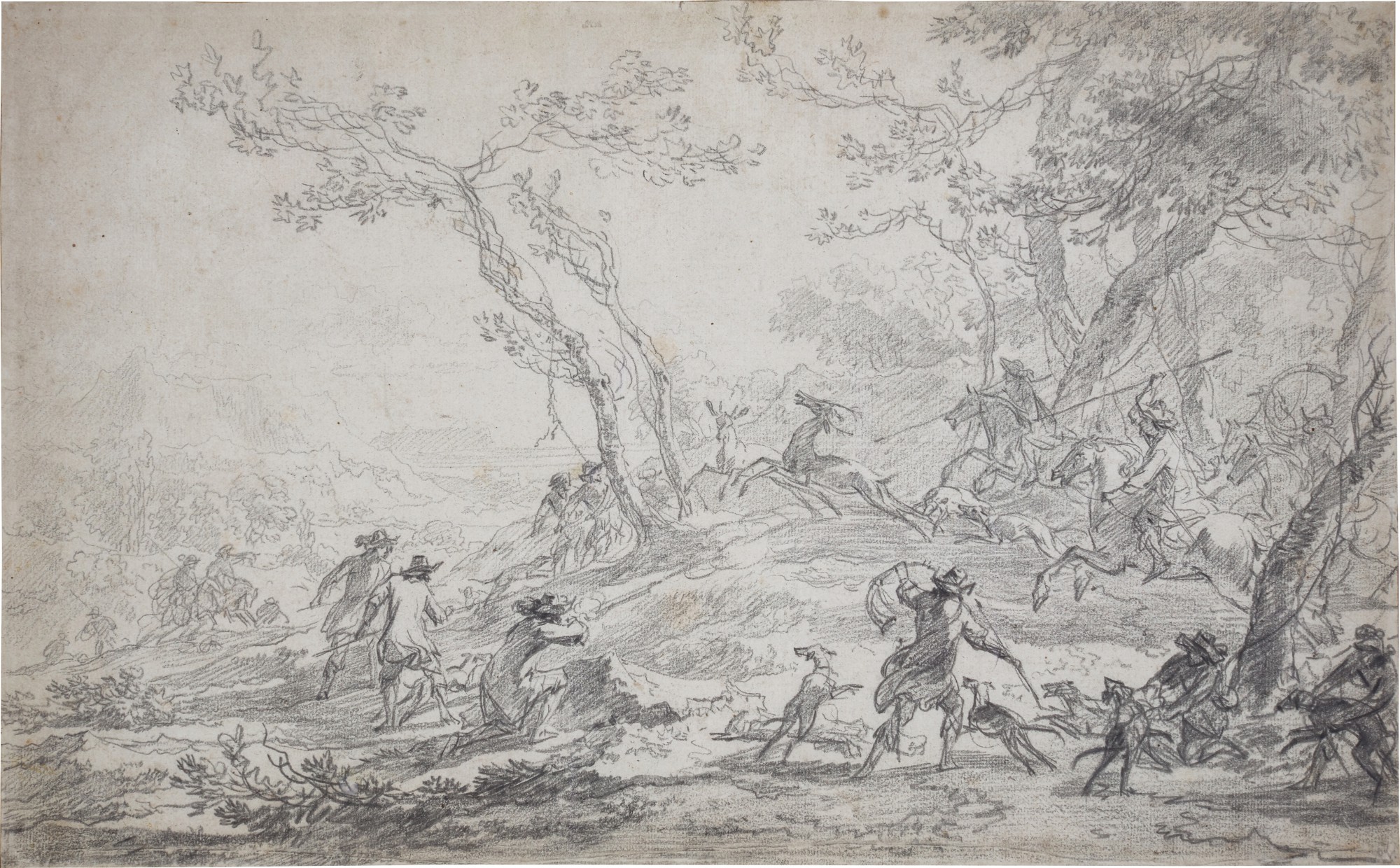
Nicolaes Pietersz. Berchem
A deer hunt
By the time Raphael composed the battle scenes in his Vatican frescoes in the early sixteenth century, the visual language of depicted action had achieved a kind of canonical form that artists would spend the next four hundred years interrogating and dismantling. Baroque painting elevated the action scene to something approaching theatre. Caravaggio's use of dramatic lighting to freeze a single instant of violence or revelation changed the stakes entirely, and his influence radiated outward through Rubens, who brought an almost biological understanding of muscular exertion to battle paintings and hunting scenes in the early seventeenth century. The Dutch Golden Age expanded the vocabulary further, and it is here that the work of Nicolaes Pietersz.
Berchem becomes especially relevant. Berchem, working in Amsterdam through the mid to late seventeenth century, was among the most sophisticated interpreters of the active pastoral, producing scenes in which figures, animals, and landscape conspire together into compositions of remarkable kinetic energy. His handling of light and his ability to suggest movement through the posture of livestock and travelers placed him squarely in a tradition that understood action as something felt in the body of the viewer, not merely observed. The nineteenth century opened new questions about what action could mean in paint.
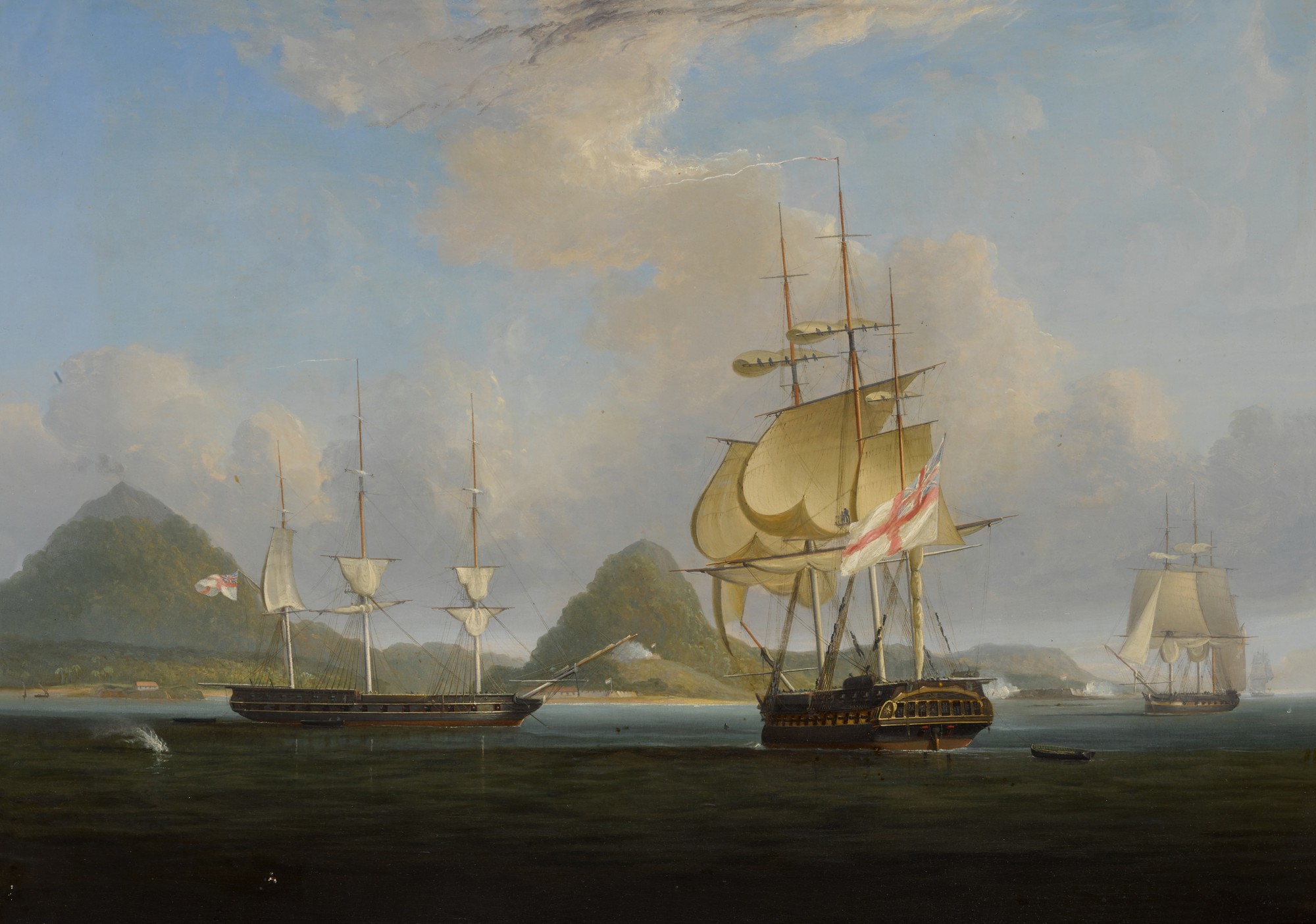
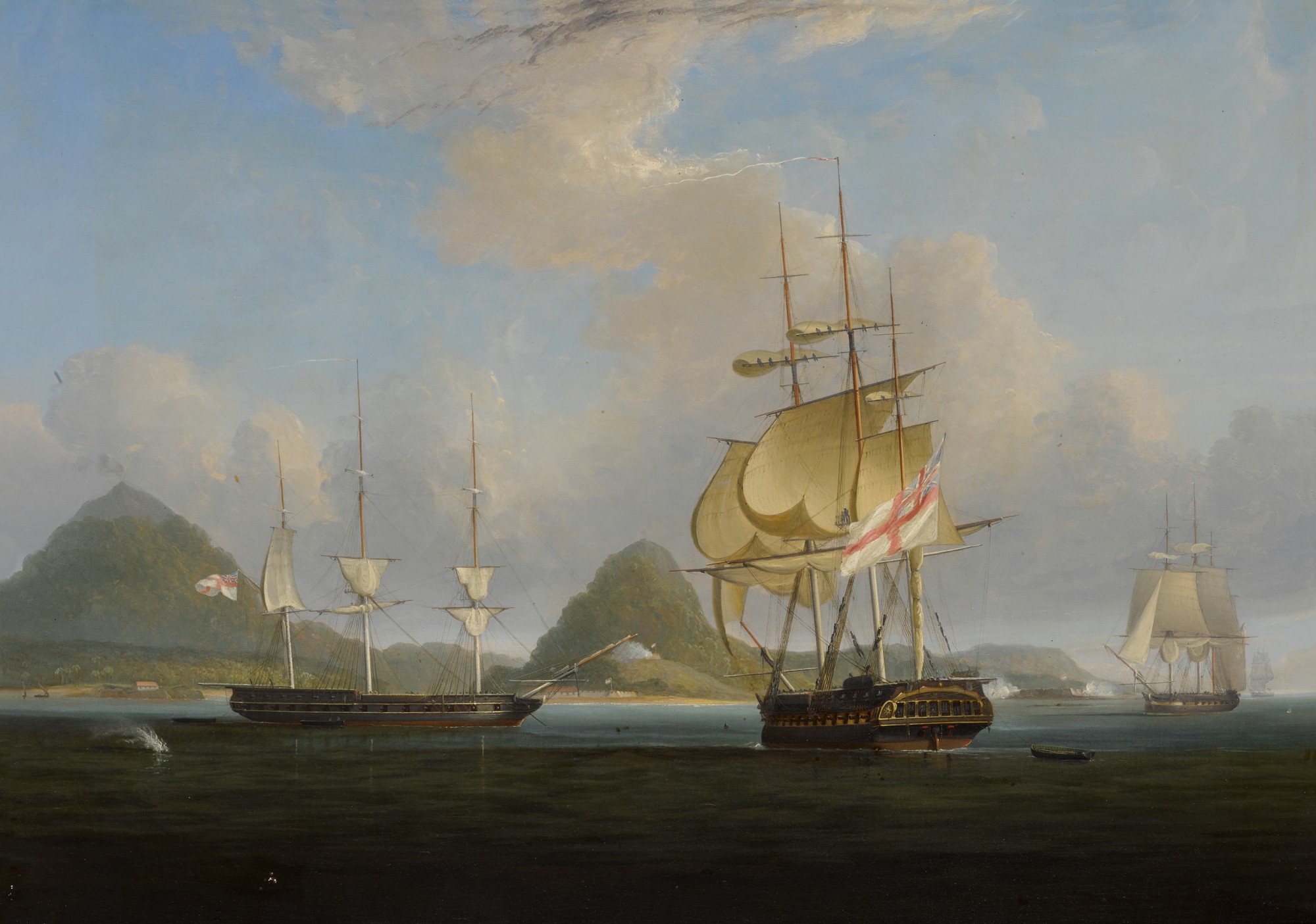
John Lynn
Capture of the Banda Neira
With the advent of photography in 1839 and the subsequent work of Eadweard Muybridge in the 1870s and 1880s, painters lost their monopoly on freezing time. Muybridge's sequential photographs of horses in motion revealed that painters had been getting the gallop wrong for centuries, and this discovery sent tremors through academic painting. The Impressionists responded in part by abandoning the frozen moment altogether in favor of atmospheric blur and the impression of duration. But the figurative tradition held firm in other quarters, and the action scene entered the twentieth century carrying all of its inherited tensions intact.
It was the arrival of American pop art in the early 1960s that produced perhaps the most startling reinvention of the action scene. Roy Lichtenstein, exhibiting work at Leo Castelli Gallery in New York from 1962 onward, lifted the visual conventions of comic book action directly into the gallery space. His appropriation of the Ben Day dot, the bold black outline, and the breathless single frame narrative of pulp illustration was not simple parody. Lichtenstein was deeply engaged with the formal problems of depicting action in two dimensions, and his war and combat paintings foreground exactly the artificiality that all action painting depends upon.
Roy Lichtenstein
As I Opened Fire (triptych), 1966
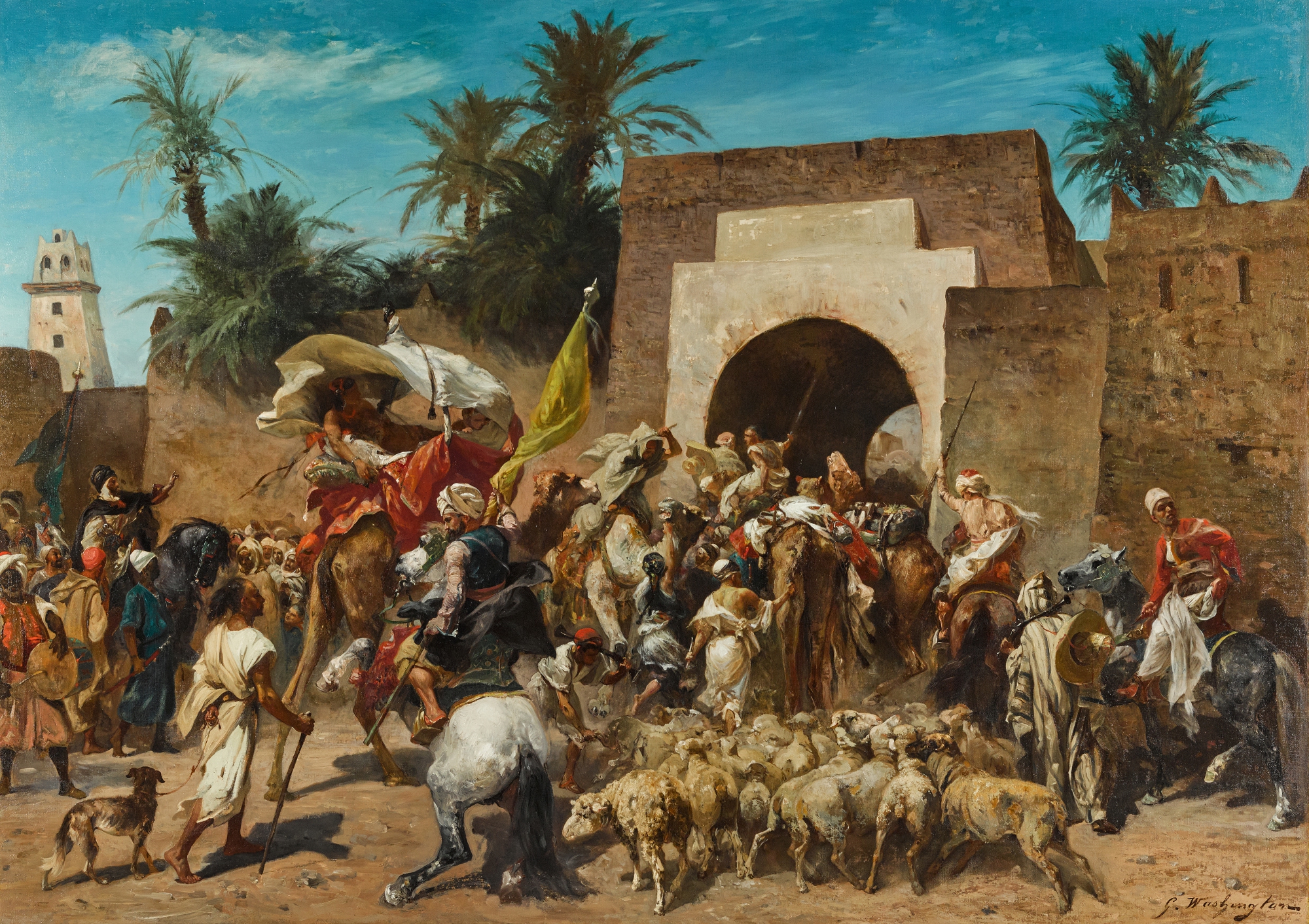
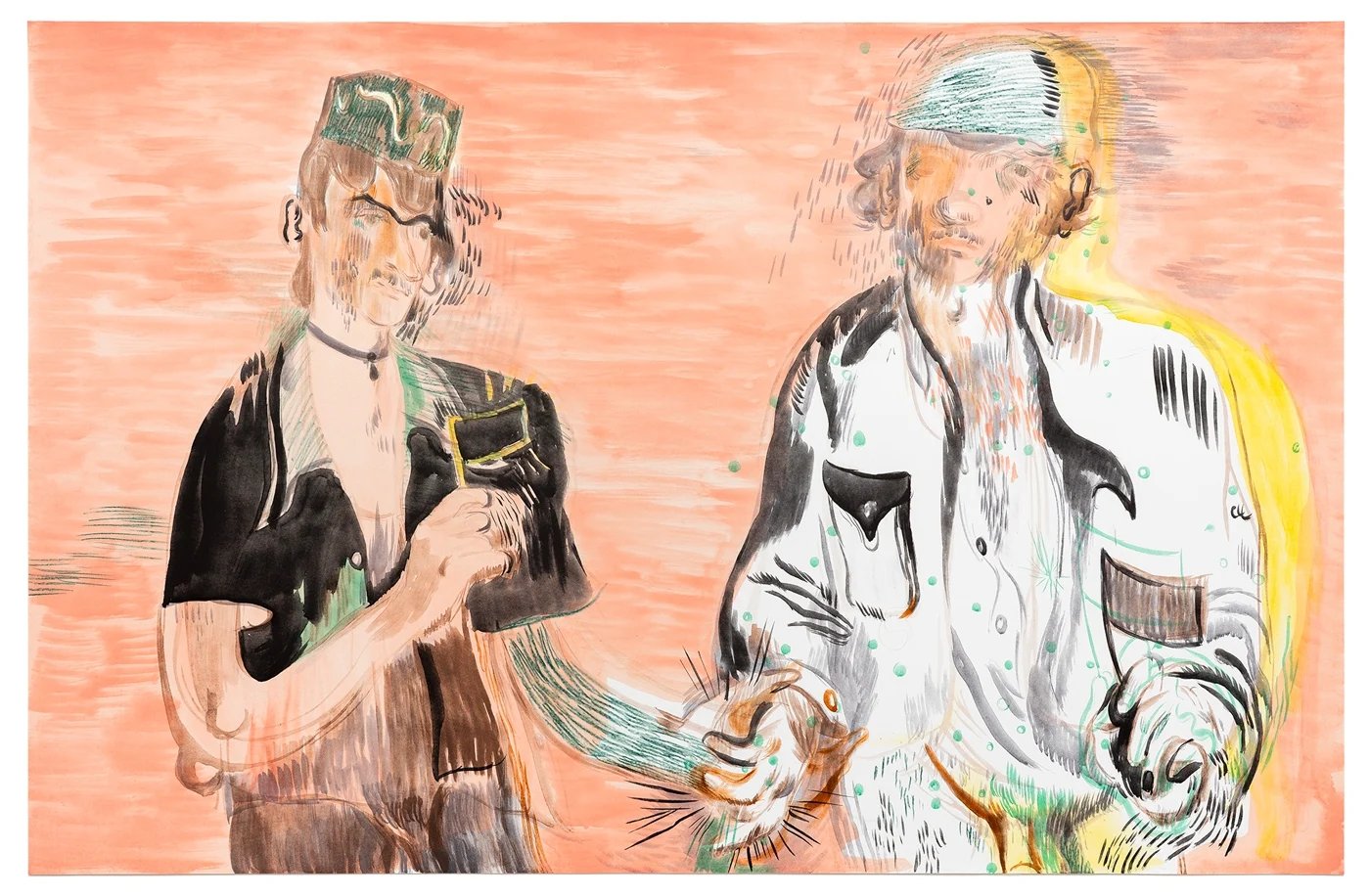
The work on The Collection gives a clear sense of how Lichtenstein used the idiom of the action scene to ask pointed questions about representation, heroism, and the mechanics of visual excitement itself. The conversation between figuration and abstraction that defines so much twentieth century painting also inflected the action scene in unexpected ways. Georges Washington, a Brussels born painter whose work engages with the gestural and the figurative in ways that resist easy categorization, brings a different kind of energy to the tradition. His paintings on The Collection demonstrate how the action scene can absorb influences from abstract expressionism and street culture simultaneously, producing images where the act of painting itself becomes part of the depicted movement.
This layering of process and subject matter is very much a concern of the contemporary moment, and it connects Washington to a lineage that includes de Kooning's fractured figures and Basquiat's kinetic mark making. The techniques that have defined action painting across its history share a common commitment to the suggestion of force through formal means. Foreshortening, the practice of depicting a figure or object as it moves toward or away from the viewer, creates an almost physical pressure on the picture plane. Compositional diagonals generate implied vectors of motion.
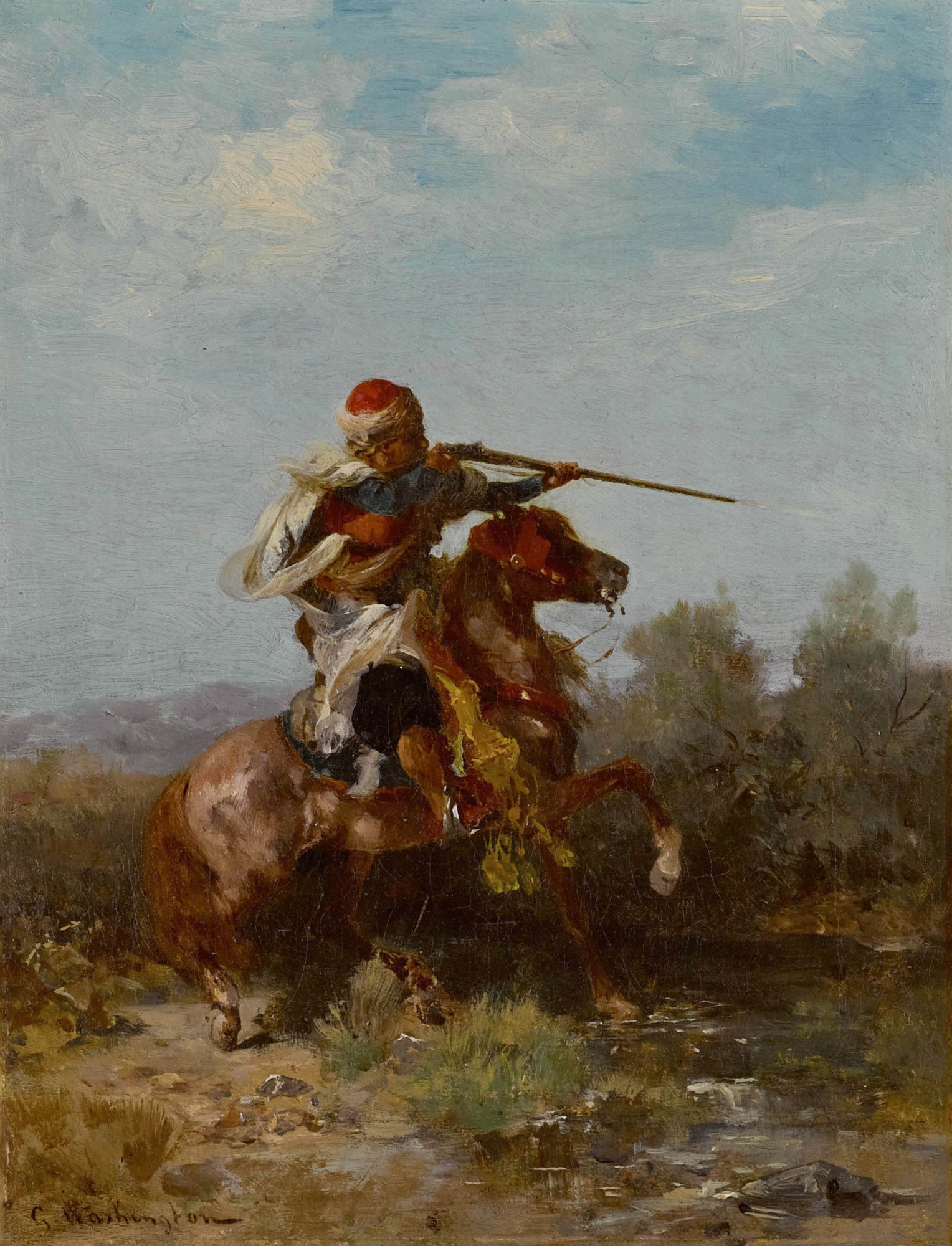
Georges Washington
The Charge
Selective focus, whether achieved through glazing in oil paint or through the blurring of photographic source material, directs the eye and mimics the way attention actually functions in moments of heightened perception. Contemporary painters working in this tradition, including John Lynn whose work appears on The Collection, bring all of these strategies to bear on subjects that range from the intimate to the epic. What the action scene ultimately offers the collector is a concentrated form of looking, one that demands something in return. These works do not permit passive reception.
The eye is recruited, pulled into the implied physics of the scene, made complicit in the illusion of movement. That quality, the ability of a painted surface to produce genuine bodily resonance, is precisely what has kept this tradition vital across five centuries of radical change in everything else. Whether the subject is a mounted figure crossing a ford in seventeenth century Holland, a cartoon fighter throwing a punch in 1960s New York, or a contemporary painter using the action scene as a vehicle for exploring identity and spectacle, the underlying wager remains the same. The still image insists it is moving, and we believe it.