Join The Collection to save, track, and explore works like this.

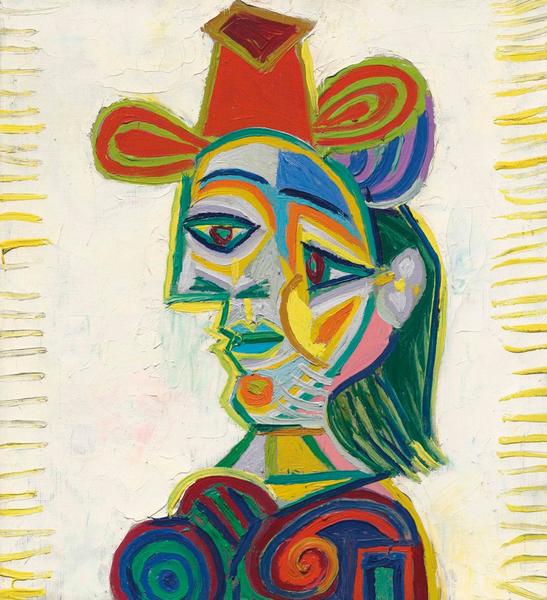
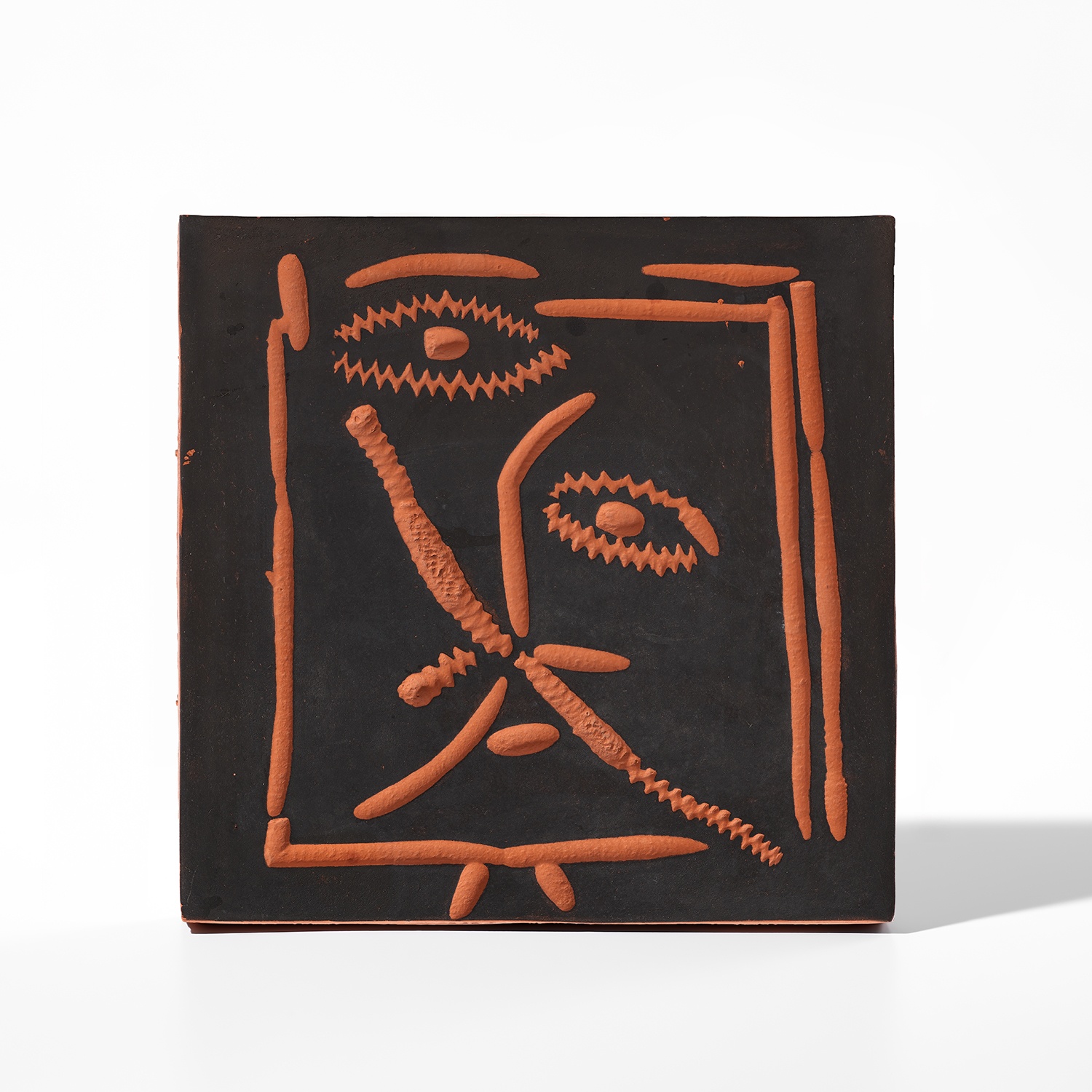
Pablo Picasso — Visage cubiste (Cubist Face) (A.R. 566)
Pablo Picasso

Visage cubiste (Cubist Face) (A.R. 566)

"Visage cubiste (Cubist Face)" exemplifies Picasso's ventures into ceramics during his prolific later years, where he applied the fragmented spatial language of Cubism to the three dimensional medium of earthenware. The work demonstrates his characteristic approach of decomposing the human face into geometric planes and multiple viewpoints simultaneously, rendered here through black painted lines and engraved marks on the warm red earthenware surface. This piece reflects Picasso's continued experimentation with form across different artistic mediums, merging his revolutionary Cubist vocabulary with the ancient craft of pottery.

Medium
Red earthenware plaque painted in black and engraved.

🔨 Auction Lot

MODERNISM 1880-1960: Editions & Works on Paper

April 16, 2025

Lot 70
Start the Discussion

Request access to join the discussion

About this work

Pablo Picasso, Visage cubiste (Cubist Face) (A.R. 566)

"Visage cubiste (Cubist Face)" exemplifies Picasso's ventures into ceramics during his prolific later years, where he applied the fragmented spatial language of Cubism to the three dimensional medium of earthenware. The work demonstrates his characteristic approach of decomposing the human face into geometric planes and multiple viewpoints simultaneously, rendered here through black painted lines and engraved marks on the warm red earthenware surface. This piece reflects Picasso's continued experimentation with form across different artistic mediums, merging his revolutionary Cubist vocabulary with the ancient craft of pottery.

Medium
Red earthenware plaque painted in black and engraved.
Seen at
Phillips, New York, London, Hong Kong

Related themes

Human Face, Faceted planes, 20th Century, Cubism, Modernist, Fragmented Perspective, Geometric Abstraction, Portrait, Spanish, Oil on Canvas

More works by Pablo Picasso

Collected by

Sebastián In Situ, Richard Caswell, Cleveland Museum of Art, Art Institute of Chicago, Sebastián Naranjo, Alex Capecelatro, Saul Beceiro Novo