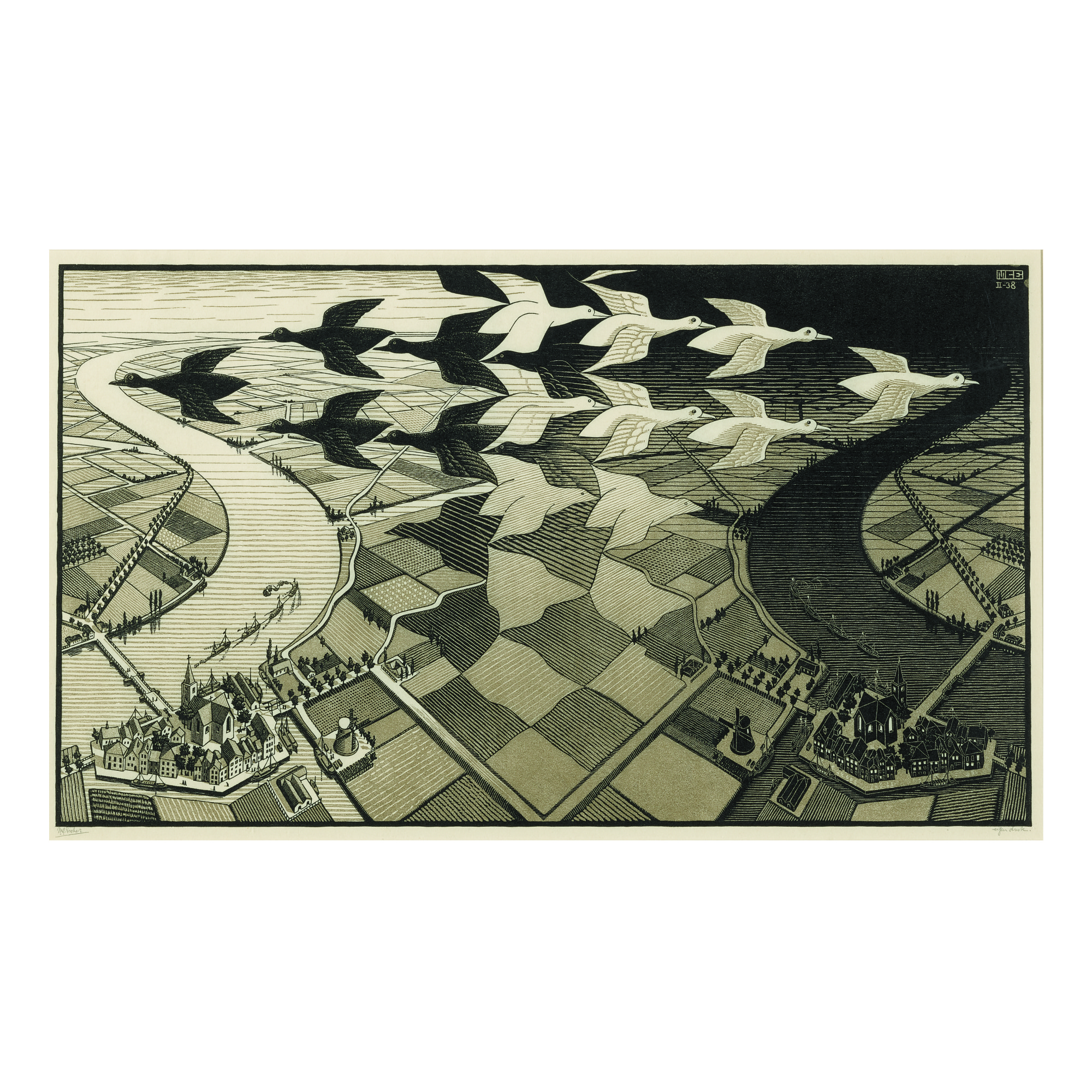
Day And Night (b./k./l./w. 303)
A mesmerizing woodcut that depicts a seamless transition between two opposing worlds, where white birds flying to the right gradually transform into black birds flying to the left against contrasting skies. The interlocking figures emerge from a patchwork of Dutch farmland below, where day and night exist simultaneously on either side of the composition. Escher's masterful use of negative and positive space creates a perfectly balanced duality, blurring the boundary between light and dark, figure and ground.
- Location
- Sotheby's, New York, NY
- Spotted At
- Auction House · Sotheby'sView on map
🔨 Auction Lot
Prints & Multiples Day Sale
April 30, 2019
Estimate: $25,000 to $35,000
Lot 80
Artists in conversation
Victor Vasarely
Hungarian-French · b. 1906
Vasarely pioneered optical art using interlocking positive and negative geometric forms in black and white that create perceptual illusions remarkably similar to Escher's figure ground transformations in this woodcut. His systematic use of shape duality and visual ambiguity mirrors the seamless transition between opposing elements seen in Day and Night.
Maurits Cornelis Escher
Dutch · b. 1898
Jos de Mey was a Belgian artist deeply inspired by Escher who created impossible architectural landscapes and tessellated figure transformations using the same precise draftsmanship and black and white contrast found in this woodcut. His work similarly exploits the boundary between recognizable objects and their interlocking negative spaces.
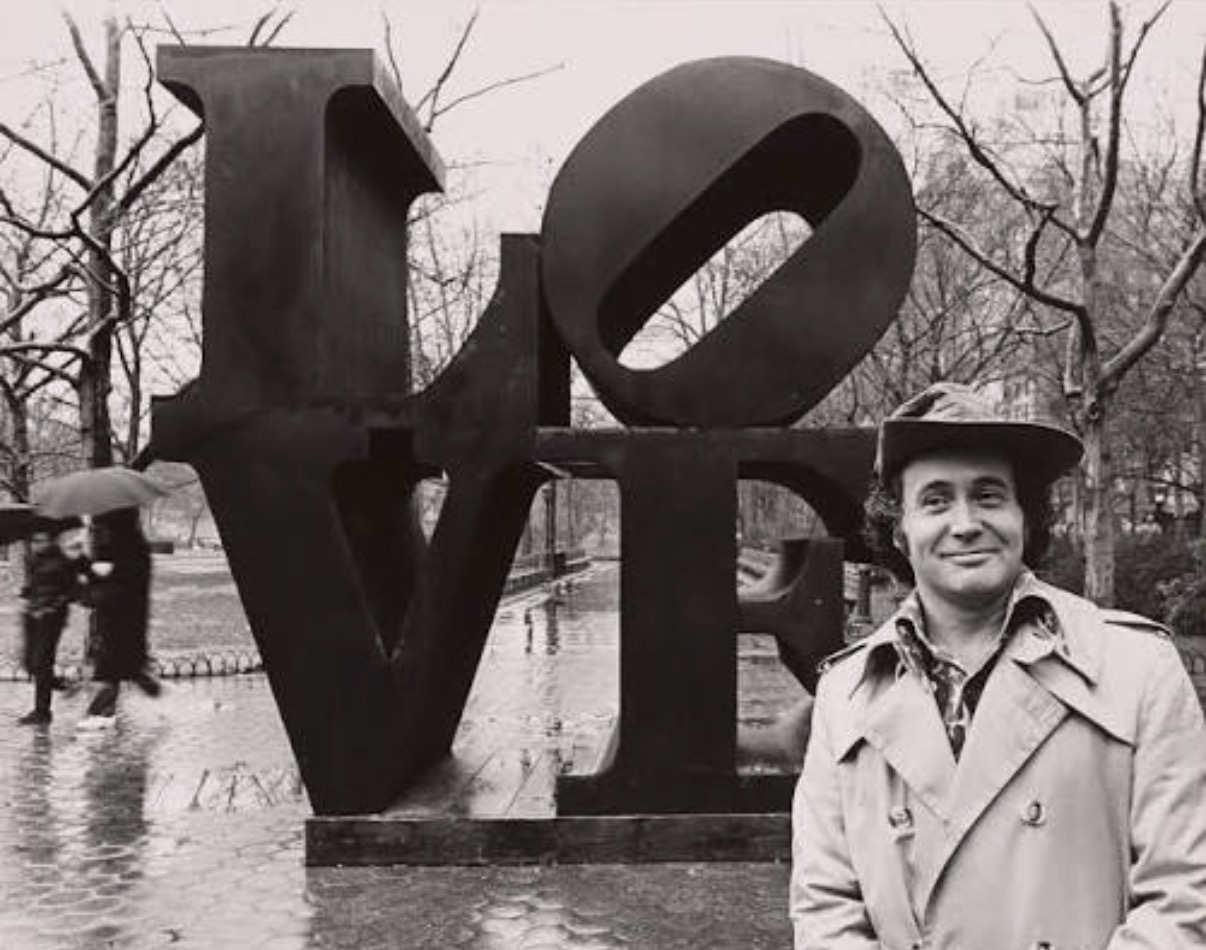
Robert Indiana
American · b. 1928
Bridget Riley creates black and white compositions where repeating organic forms generate powerful visual movement and perceptual tension directly comparable to the rhythmic transformation of birds in this woodcut. Her meticulous use of contrasting tones to produce figure ground ambiguity echoes Escher's balanced duality of light and dark.
Start the Discussion
Request access to join the discussion