Join The Collection to save, track, and explore works like this.

Mirko Basaldella — Maleficio
Mirko Basaldella

Maleficio

1959

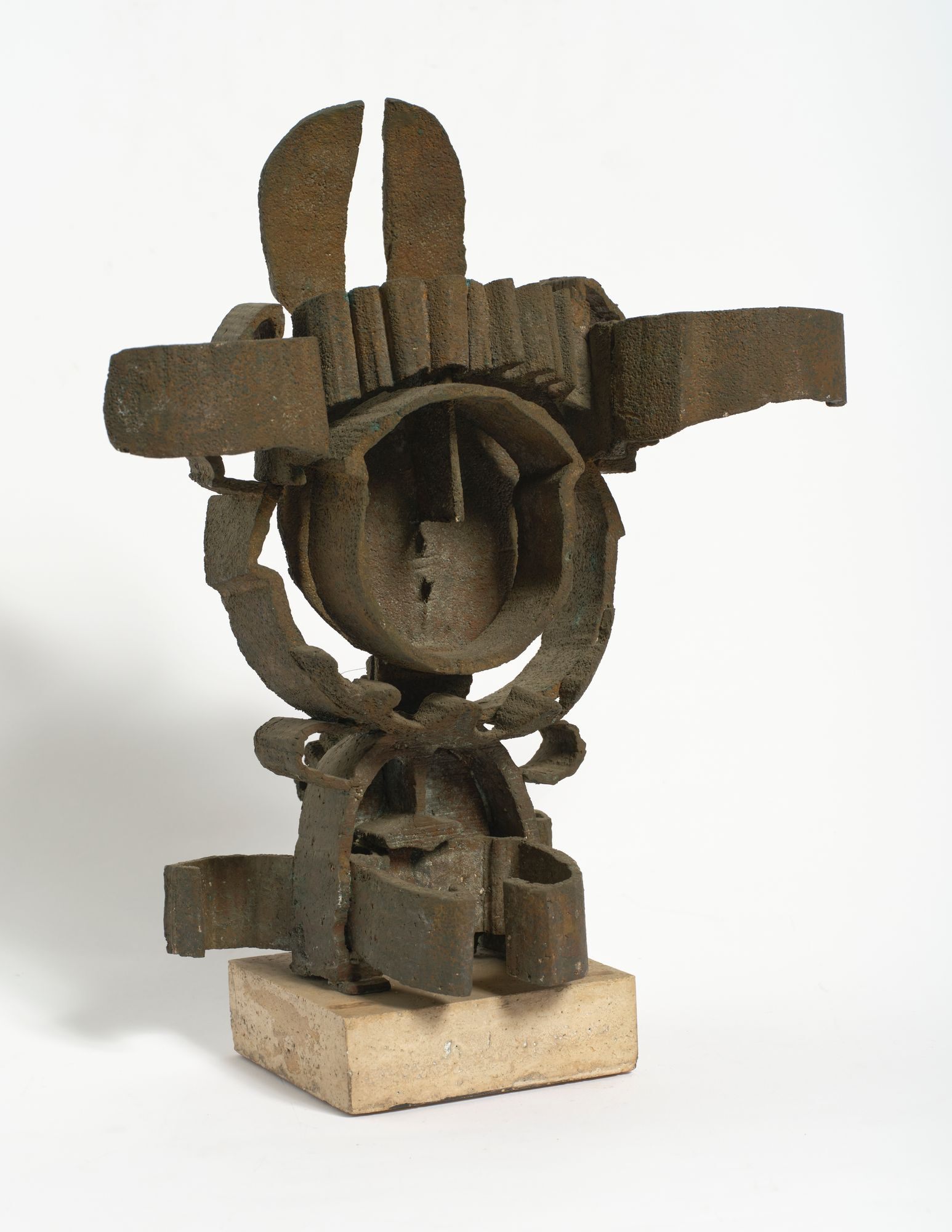
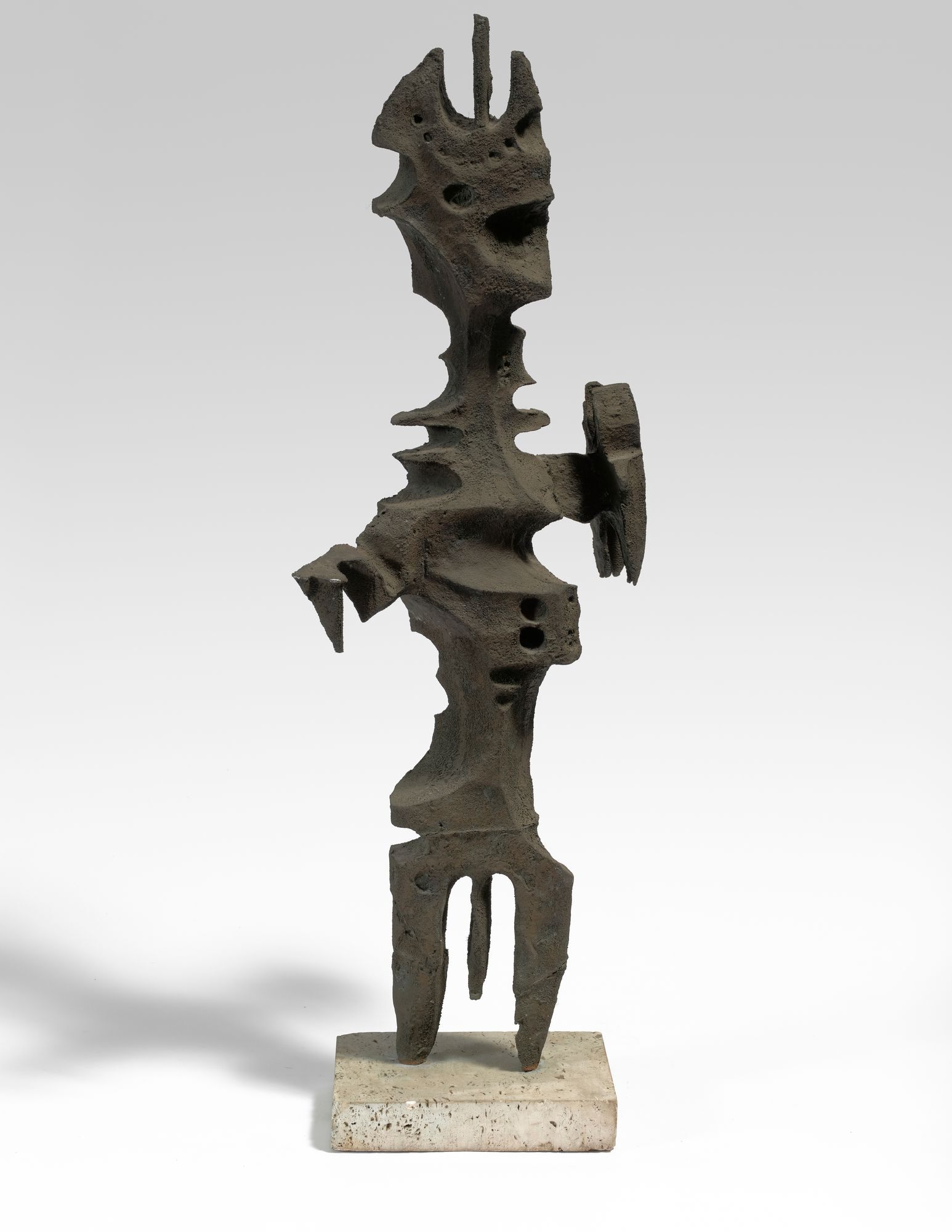
Standing roughly one meter tall upon its travertine base, Maleficio presents a vertical bronze figure of arresting intensity, its silhouette simultaneously evoking the human form and dissolving it into something primal and unsettling. The surface of the cast bronze is deeply textured, pocked with voids and erupting with jagged lateral projections that suggest limbs, wings, or weaponry without resolving into any single legible anatomy. A crowned or horned head rises above a narrowing neck, while the lower body splinters into fork-like supports that anchor the figure with ceremonial gravity. The work radiates a fierce, totemic energy consistent with Mirko Basaldella's sustained engagement with myth, ritual, and the symbolic power of ancient Mediterranean and pre-Columbian material culture. Basaldella completed Maleficio in 1959, a period of exceptional productivity that saw him consolidating the expressive vocabulary for which he is best remembered. Trained in Venice and deeply influenced by surrealist thought as well as by his extended time in the United States, Basaldella developed a sculptural language that fused modernist abstraction with the charged imagery of fetish objects and archaic cult figures. The title, translating from Italian as "evil spell" or "hex," signals the artist's deliberate alignment of the work with traditions of apotropaic sculpture, objects made not for passive contemplation but for active, almost aggressive, psychic function. The rough casting and corroded surface patina amplify this quality, lending the figure the appearance of something excavated rather than made. Works from this period by Basaldella are held in major institutional collections including the Museum of Modern Art in New York, where his monumental Gates for the Ardeatine Caves Memorial brought him international recognition. Maleficio belongs to a smaller, more intimate register of his production, objects that reward close attention and extended acquaintance. The stone base grounds the figure in a lapidary tradition while simultaneously elevating it toward the ritualistic and the ceremonial. For the serious collector, this work represents a compelling convergence of postwar European modernism, primitivist sensibility, and the artist's distinctly personal mythology, offered in a scale that commands presence within a domestic or institutional environment without overwhelming it.

Medium
Bronze sculpture, stone base

🔨 Auction Lot

Martini Studio d'Arte: Modern And Contemporary Art

June 10, 2026

Estimate: €8,000 to €10,000

Lot 37

Start the Discussion

Request access to join the discussion

More by Mirko Basaldella

About this work

Mirko Basaldella, Maleficio, 1959

Standing roughly one meter tall upon its travertine base, Maleficio presents a vertical bronze figure of arresting intensity, its silhouette simultaneously evoking the human form and dissolving it into something primal and unsettling. The surface of the cast bronze is deeply textured, pocked with voids and erupting with jagged lateral projections that suggest limbs, wings, or weaponry without resolving into any single legible anatomy. A crowned or horned head rises above a narrowing neck, while the lower body splinters into fork-like supports that anchor the figure with ceremonial gravity. The work radiates a fierce, totemic energy consistent with Mirko Basaldella's sustained engagement with myth, ritual, and the symbolic power of ancient Mediterranean and pre-Columbian material culture. Basaldella completed Maleficio in 1959, a period of exceptional productivity that saw him consolidating the expressive vocabulary for which he is best remembered. Trained in Venice and deeply influenced by surrealist thought as well as by his extended time in the United States, Basaldella developed a sculptural language that fused modernist abstraction with the charged imagery of fetish objects and archaic cult figures. The title, translating from Italian as "evil spell" or "hex," signals the artist's deliberate alignment of the work with traditions of apotropaic sculpture, objects made not for passive contemplation but for active, almost aggressive, psychic function. The rough casting and corroded surface patina amplify this quality, lending the figure the appearance of something excavated rather than made. Works from this period by Basaldella are held in major institutional collections including the Museum of Modern Art in New York, where his monumental Gates for the Ardeatine Caves Memorial brought him international recognition. Maleficio belongs to a smaller, more intimate register of his production, objects that reward close attention and extended acquaintance. The stone base grounds the figure in a lapidary tradition while simultaneously elevating it toward the ritualistic and the ceremonial. For the serious collector, this work represents a compelling convergence of postwar European modernism, primitivist sensibility, and the artist's distinctly personal mythology, offered in a scale that commands presence within a domestic or institutional environment without overwhelming it.

Medium
Bronze sculpture, stone base
Year
1959
Seen at
Martini Studio d'Arte

Related themes

Expressive Form, Bronze, European Artist, Figurative Abstract, Dark Palette, Male Artist, Modernist, Mid Century, Sculpture, Primitive Art, Italian Artist, Cast Bronze, Standing Figure, Abstract Sculpture, Symbolic Art, Mythological Theme, Totemic Figure, Surrealist, Textured Surface, Ritual Object, Ancient Influence

More works by Mirko Basaldella