Swimming Pool
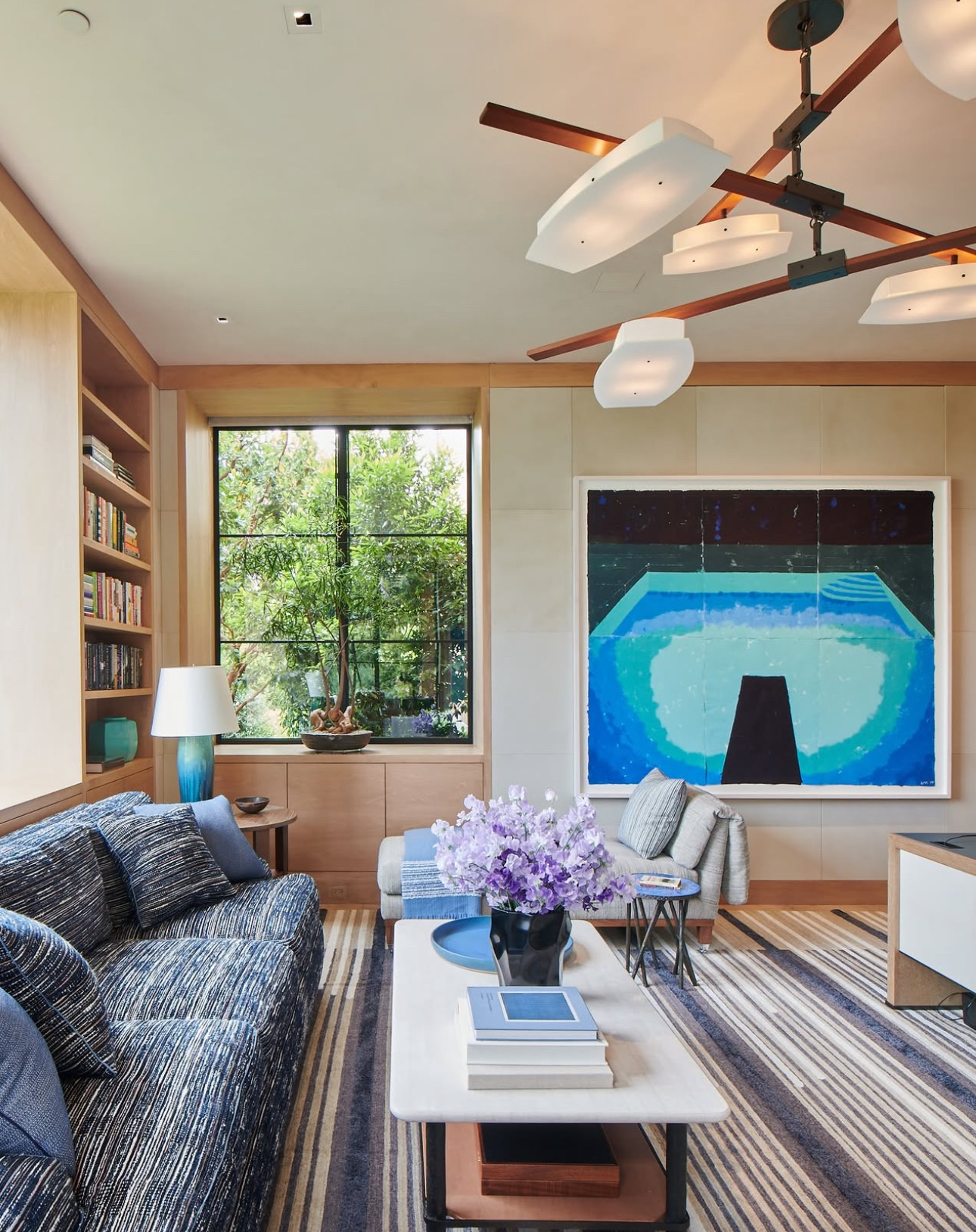
David Hockney
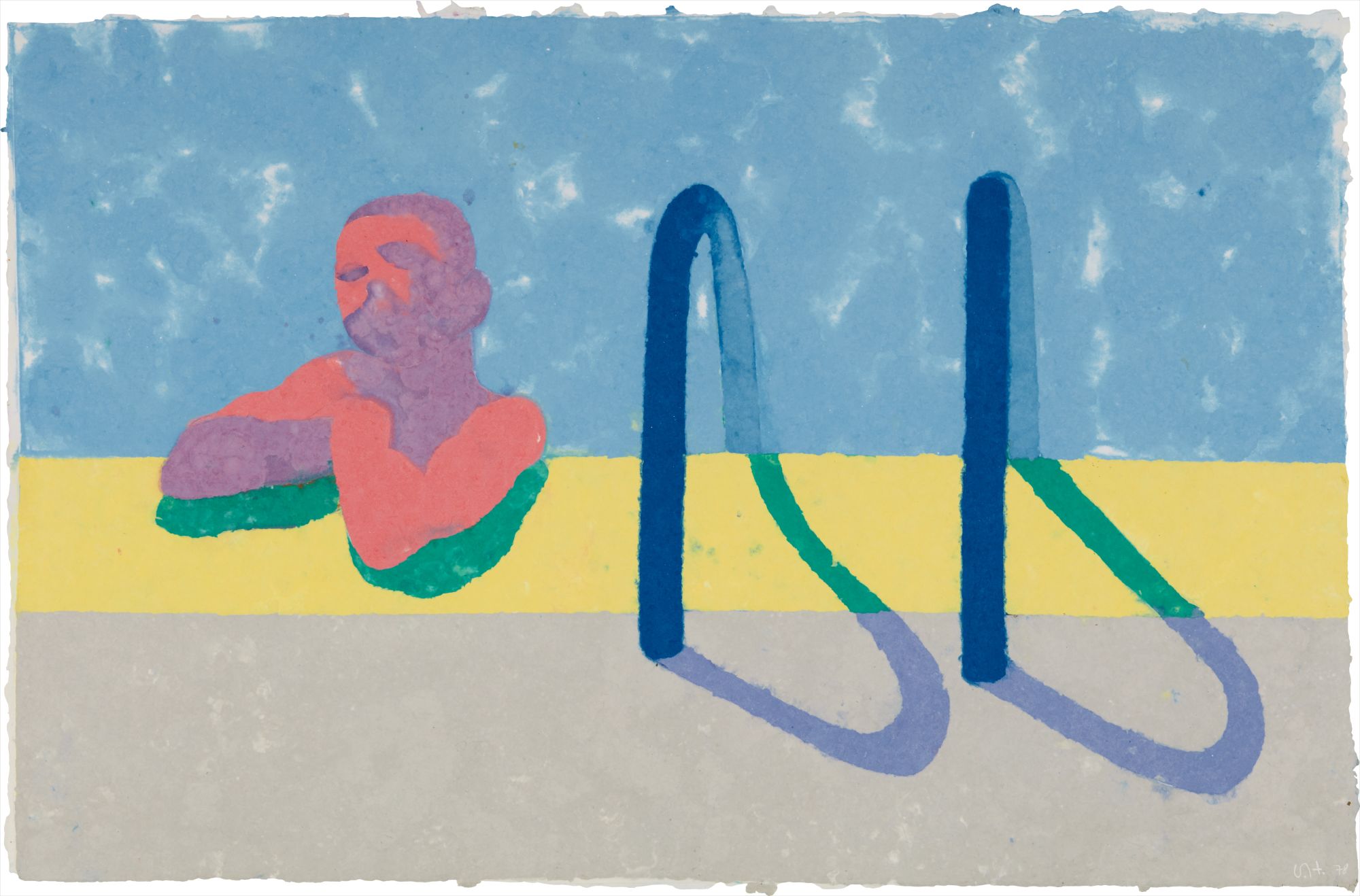
Paper Pool: Diving Board

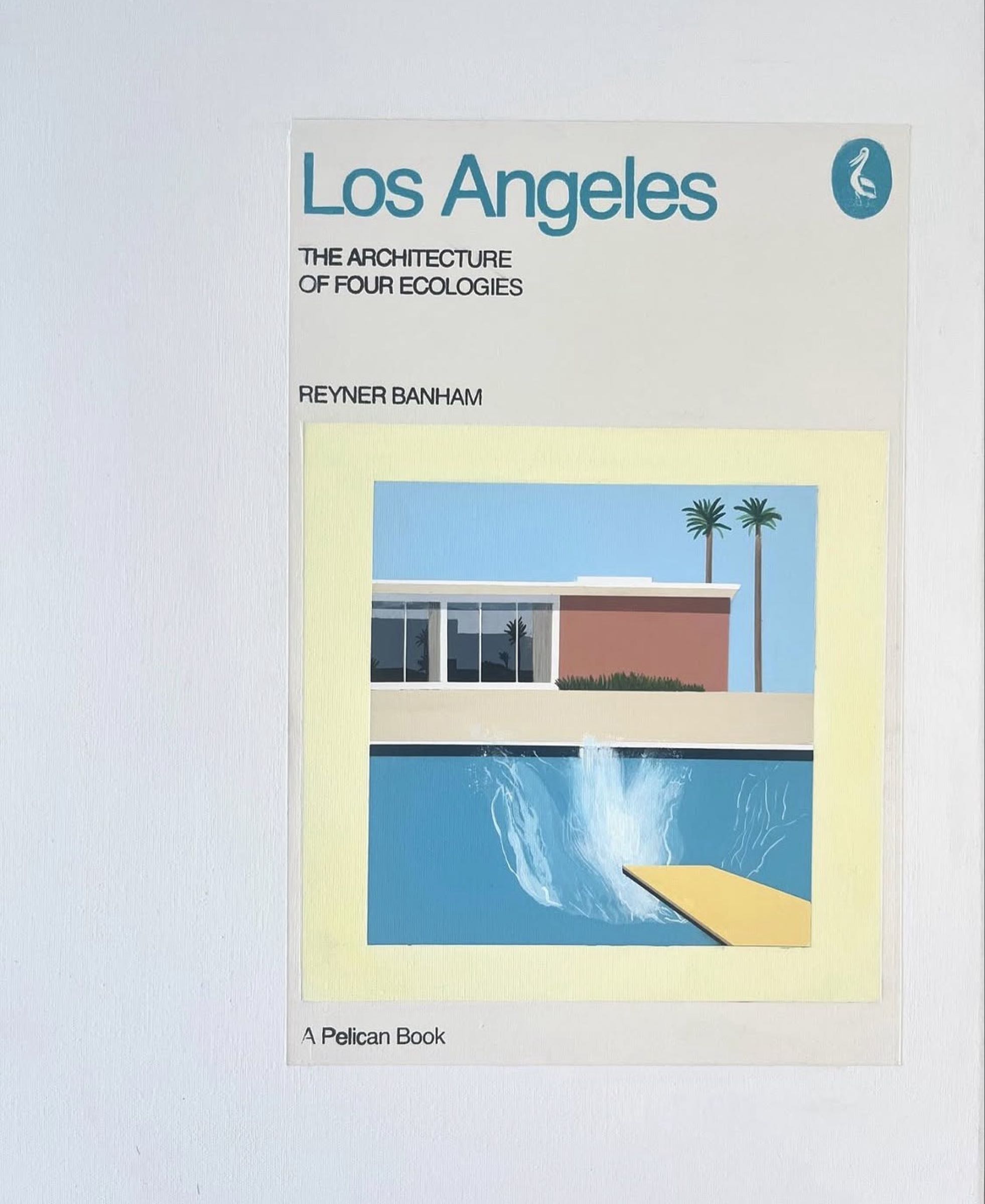
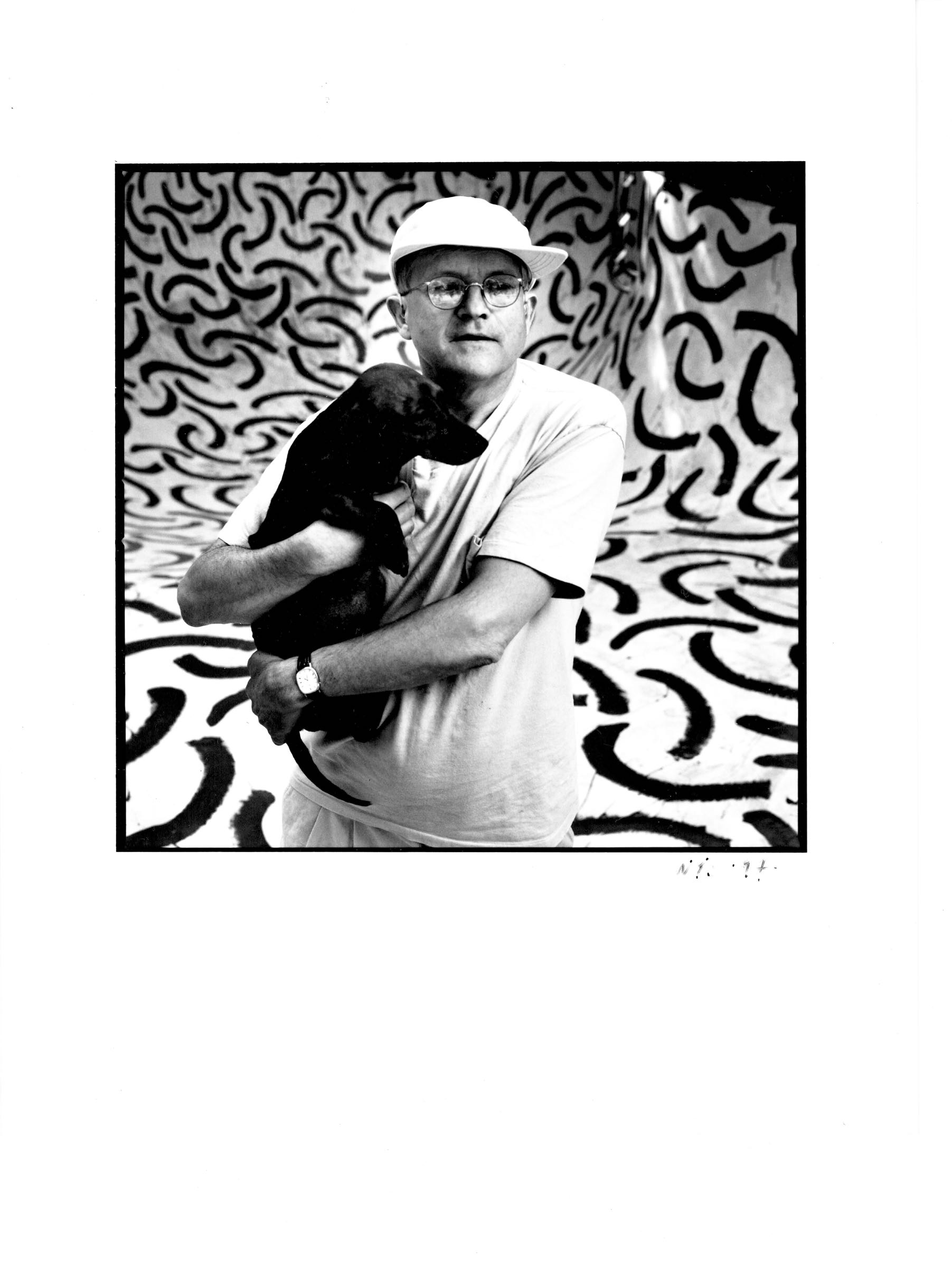
The Swimming Pool Will Always Seduce Us
There is something almost too perfect about the swimming pool as a subject for art. It contains multitudes: leisure and danger, transparency and concealment, the democratic promise of postwar prosperity and the persistent anxieties that lurk just beneath any shimmering surface. That artists have returned to it again and again across decades and disciplines is not coincidental. The pool is, at its core, a stage for the human condition, lit from below.
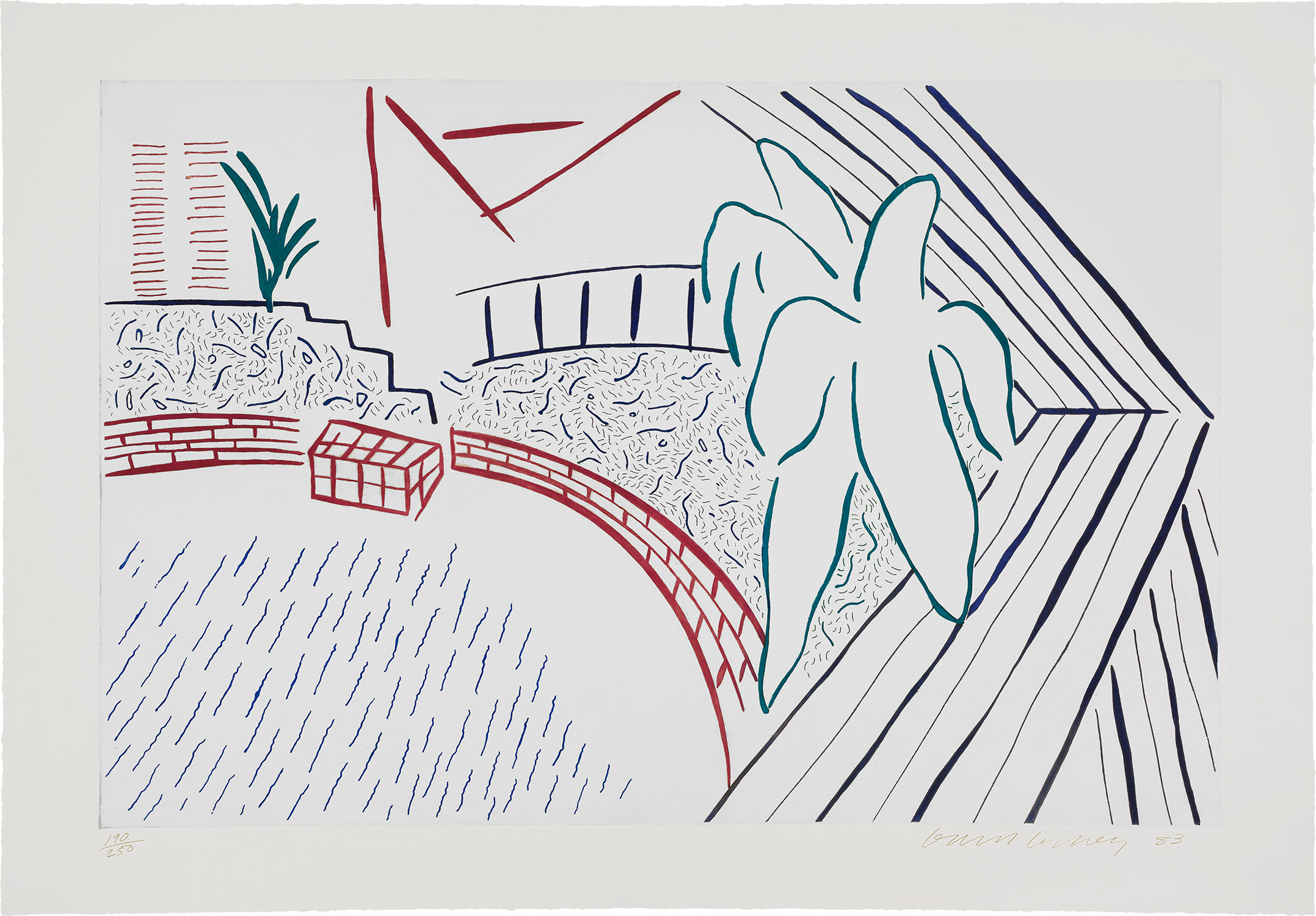
The swimming pool entered the serious vocabulary of Western art most memorably through David Hockney, whose California pool paintings of the late 1960s and early 1970s became among the most recognizable images of their era. Works like A Bigger Splash, completed in 1967, fused the visual language of hard edge abstraction with a deeply personal response to place, sunlight, and desire. Hockney understood that the pool was not merely a setting but a subject in its own right, capable of carrying psychological and social weight with remarkable economy. The splash itself, frozen mid air in that iconic canvas, became a kind of philosophical proposition about time, presence, and the act of looking.
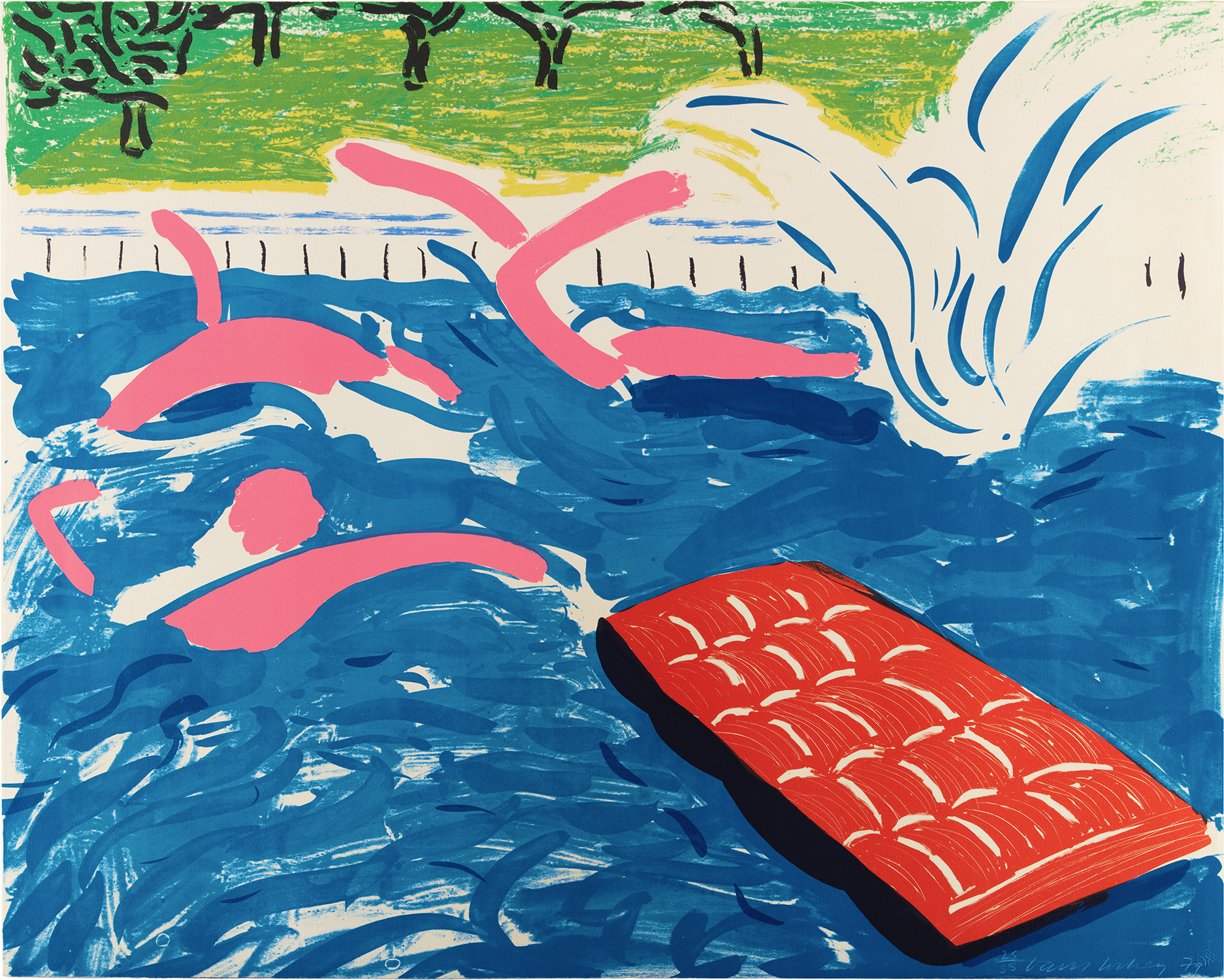
David Hockney
Afternoon Swimming (T.G. 266, M.C.A.T. 233, W.G. 87)
Hockney is well represented on The Collection, and spending time with those works is to understand how a painter can make water think. But the pool as image did not begin or end with Hockney. The social history runs deeper. In America, the backyard pool became a symbol of a particular postwar dream, its expansion across suburban landscapes through the 1950s and 1960s tracked closely with both rising affluence and the painful, ongoing politics of racial segregation.
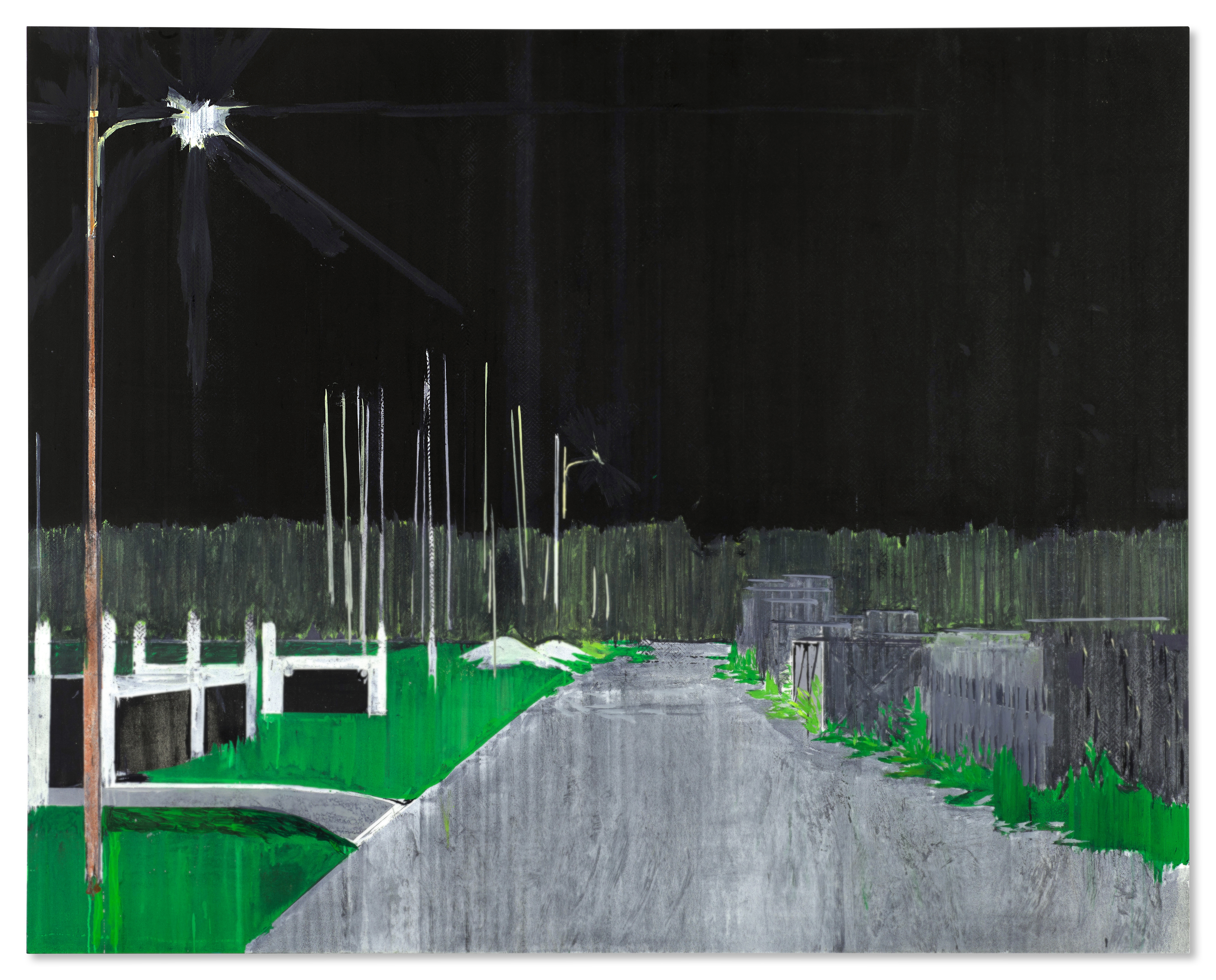
Public pools were sites of violent exclusion, and the private pool that gleamed in so many California canvases carried within it that entire history, whether its painters acknowledged it or not. This is something the British painter Hurvin Anderson has addressed with extraordinary care and nuance over the course of his career. Anderson, whose work is also part of The Collection, has spent years painting pools of a different register, quieter, more ambiguous, charged with a stillness that Hockney's sun drenched canvases rarely permit. His interiors and exteriors of pools in places like Trinidad and the American South hold the viewer at a certain remove, inviting questions about access, memory, and belonging.
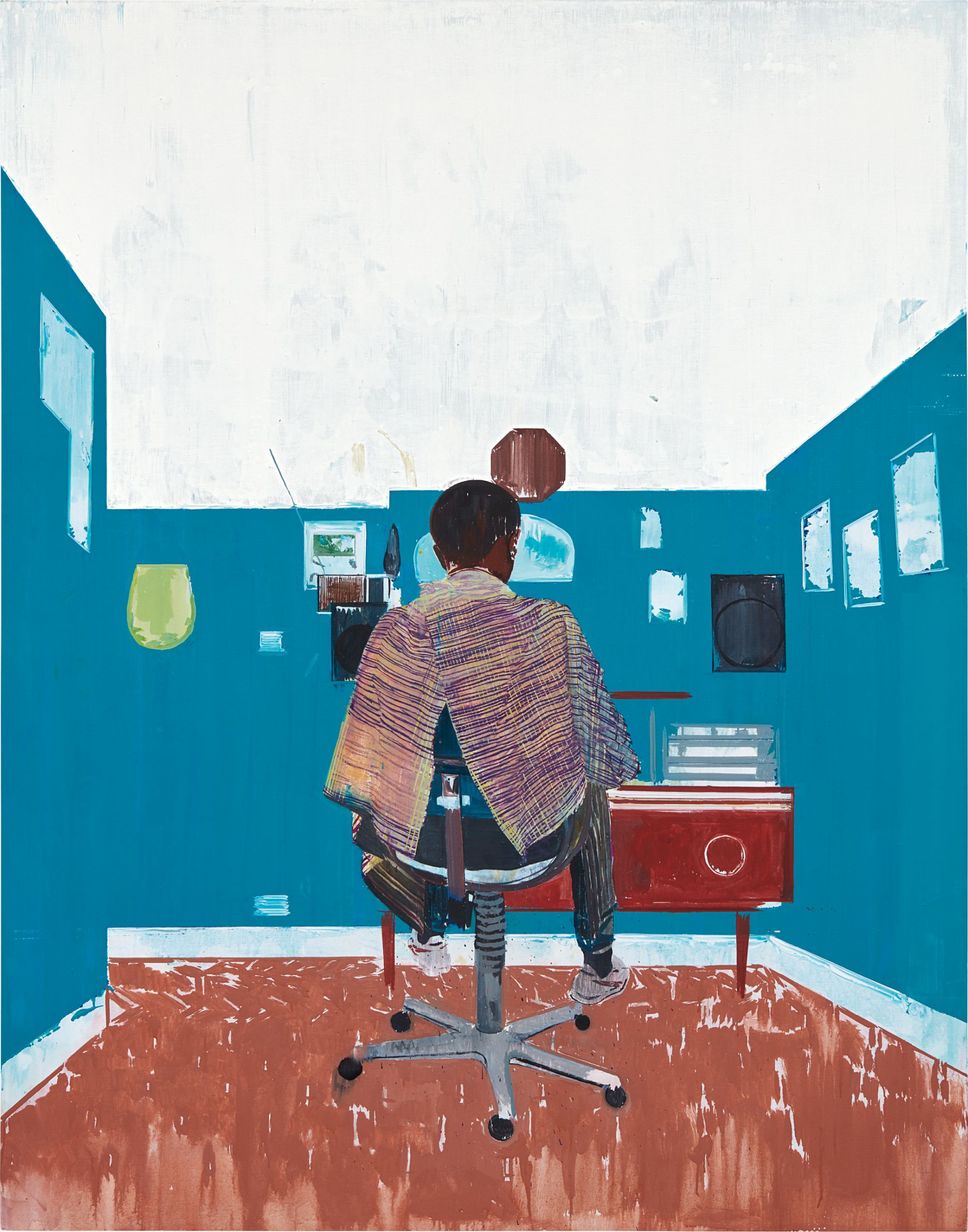
Hurvin Anderson
Peter's Series: Back, 2008
Where Hockney's pools are inhabited or recently vacated by the white leisure class, Anderson's are often empty of figures entirely, the water itself carrying the burden of history. The two bodies of work in dialogue become something far greater than either alone, a meditation on who gets to float and who is kept from the water altogether. Beyond painting, artists working in photography, installation, and now artificial intelligence have found the pool an irresistible formal and conceptual space. Wolfgang Tillmans photographed pools and water with an intimacy that blurred the personal and the documentary throughout the 1990s and into the 2000s.
Leandro Erlich's installation The Swimming Pool, first realized in 1999 and later acquired by the 21st Century Museum of Contemporary Art in Kanazawa, Japan, created a full scale pool in which visitors appeared to walk underwater, playing on the surface's capacity to deceive and transform. These works demonstrate how the pool functions as a kind of perceptual laboratory, a contained environment in which light, depth, and reflection can be manipulated to profound effect. Artificial intelligence has brought yet another dimension to this long conversation. When AI systems engage with the swimming pool as a generative subject, they draw on an enormous archive of visual and cultural associations, and the results can be both familiar and genuinely strange.
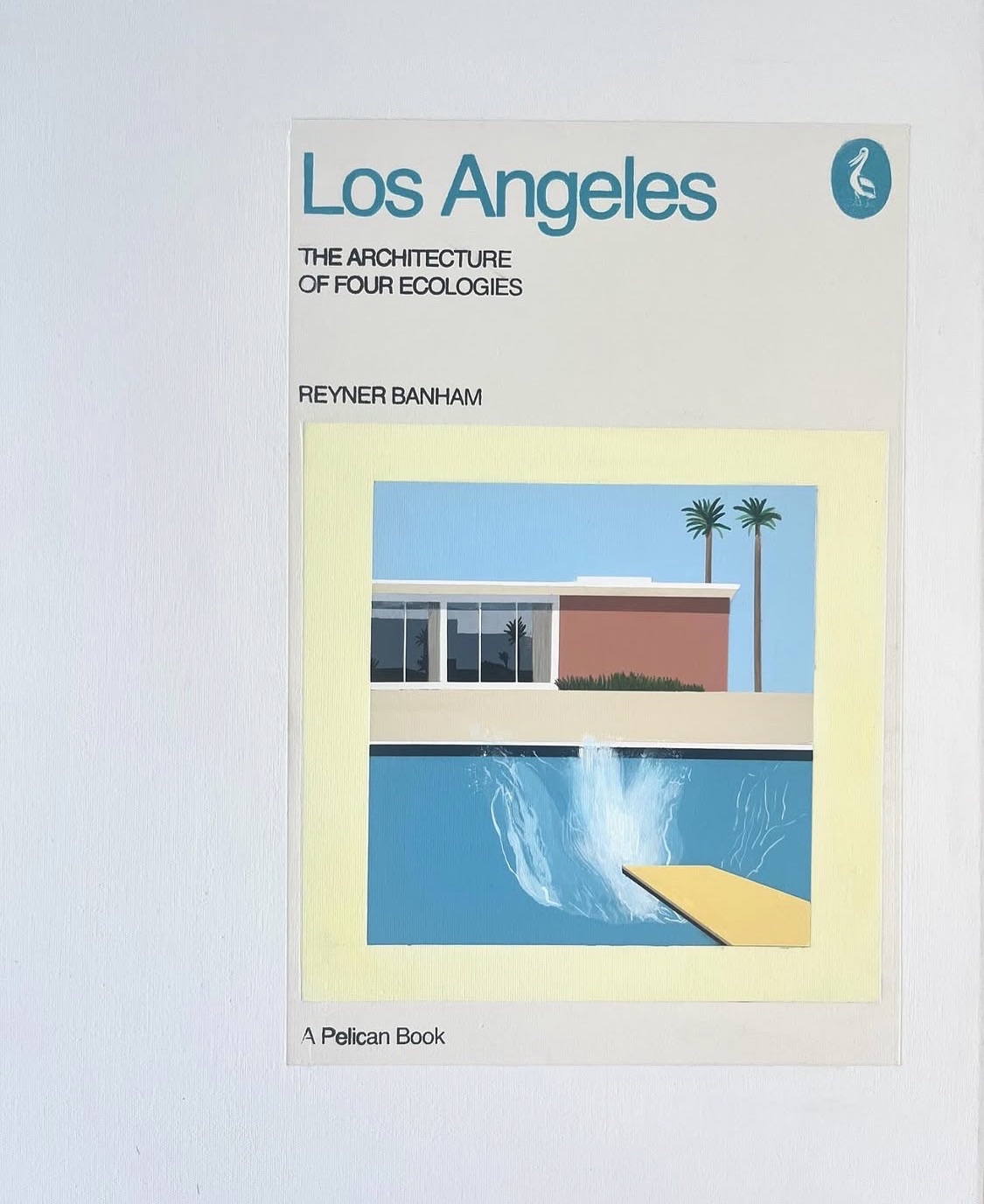
Sharrissa Iqbal
Untitled (Book Cover Series), 2017
The AI generated pool image tends to hover between the hyperreal and the slightly wrong, a shimmer that is too even, a shadow that falls from no identifiable source. In this, it inadvertently captures something that has always been true of the pool in art: it is a space that exists in excess of reality, too blue, too still, too inviting to be entirely trusted. Artists exploring AI as a medium are discovering that the pool offers a perfect testing ground precisely because its visual grammar is so well established. To distort it is to distort something fundamental about desire and representation.
The broader art world today is increasingly interested in how generative technologies engage with loaded subjects, and the swimming pool is among the richest available. When a platform like The Collection brings together works across this theme, from Hockney's foundational contributions to newer voices experimenting with AI, what emerges is a conversation across time and method that the pool has always seemed to invite. Artists like Sharrissa Iqbal, Maureen Elizabeth Dougherty, and Wayne Shimabukuro, each working within their own distinct visual languages, bring fresh perspectives to a subject that rewards continued attention. The pool is never just a pool.
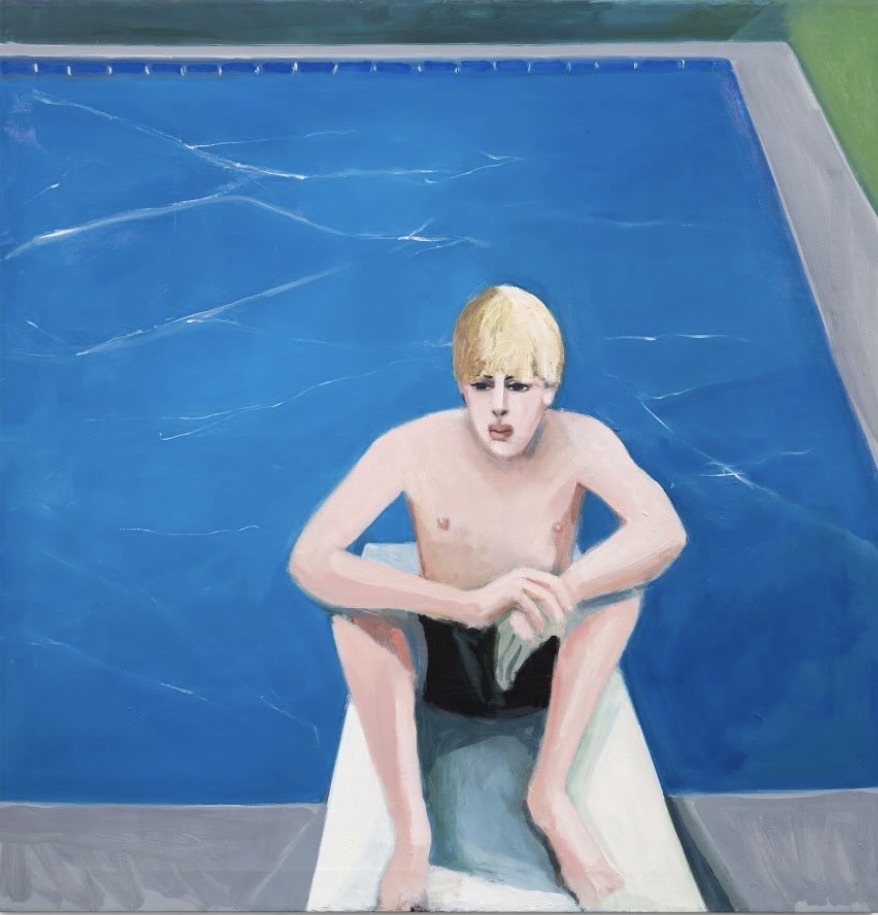
Maureen Elizabeth Dougherty
Boy on board, 2025
It is a mirror, an archive, a wish. What makes the swimming pool so enduringly powerful as an art historical subject is precisely its double nature. On the surface, literally and figuratively, it promises pleasure, clarity, and escape. Underneath, it holds everything we have poured into it: our class dreams, our racial histories, our physical vulnerability, our longing for immersion and transformation.
Art that engages seriously with this subject, whether made with oil paint in a Notting Hill studio or generated through a neural network processing millions of images, is always asking the same question beneath the beautiful, shifting light. What does it mean to be suspended between surfaces, neither fully in nor fully out, held up by something we cannot quite see.