Saint Joseph
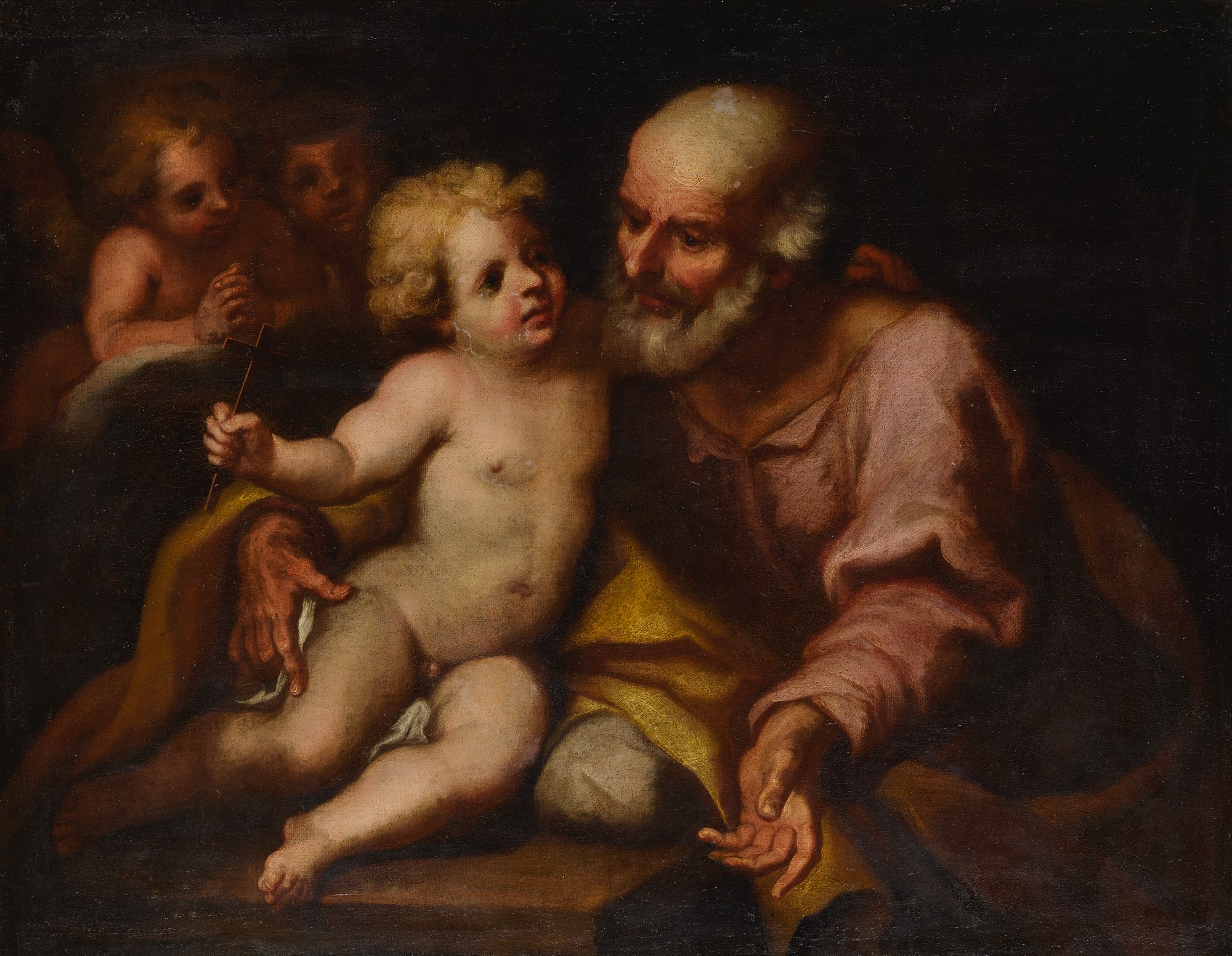
Genoese School, late 17th century
Saint Joseph and the Christ Child
The Saint Who Rewards Patient Looking
There is something quietly radical about a collector who chooses to live with Saint Joseph. In a market that rewards spectacle and novelty, the decision to hang a devotional image of the carpenter saint in your home is a statement of a different kind of confidence. These are works that ask something of you. They do not announce themselves from across the room.
They build meaning slowly, through repeated encounters, through the quality of morning light falling on a painted cloak, through the way a great artist can make wood shavings on a workshop floor feel like the most consequential still life ever conceived. Collectors who discover this territory tend to stay in it for life, drawn back by the sense that there is always more to see. The appeal is partly theological and partly purely visual. Joseph occupies a unique position in the Christian iconographic tradition: he is the earthly father, the protector, the man of labor and humility in a narrative otherwise populated by the divine and the transcendent.
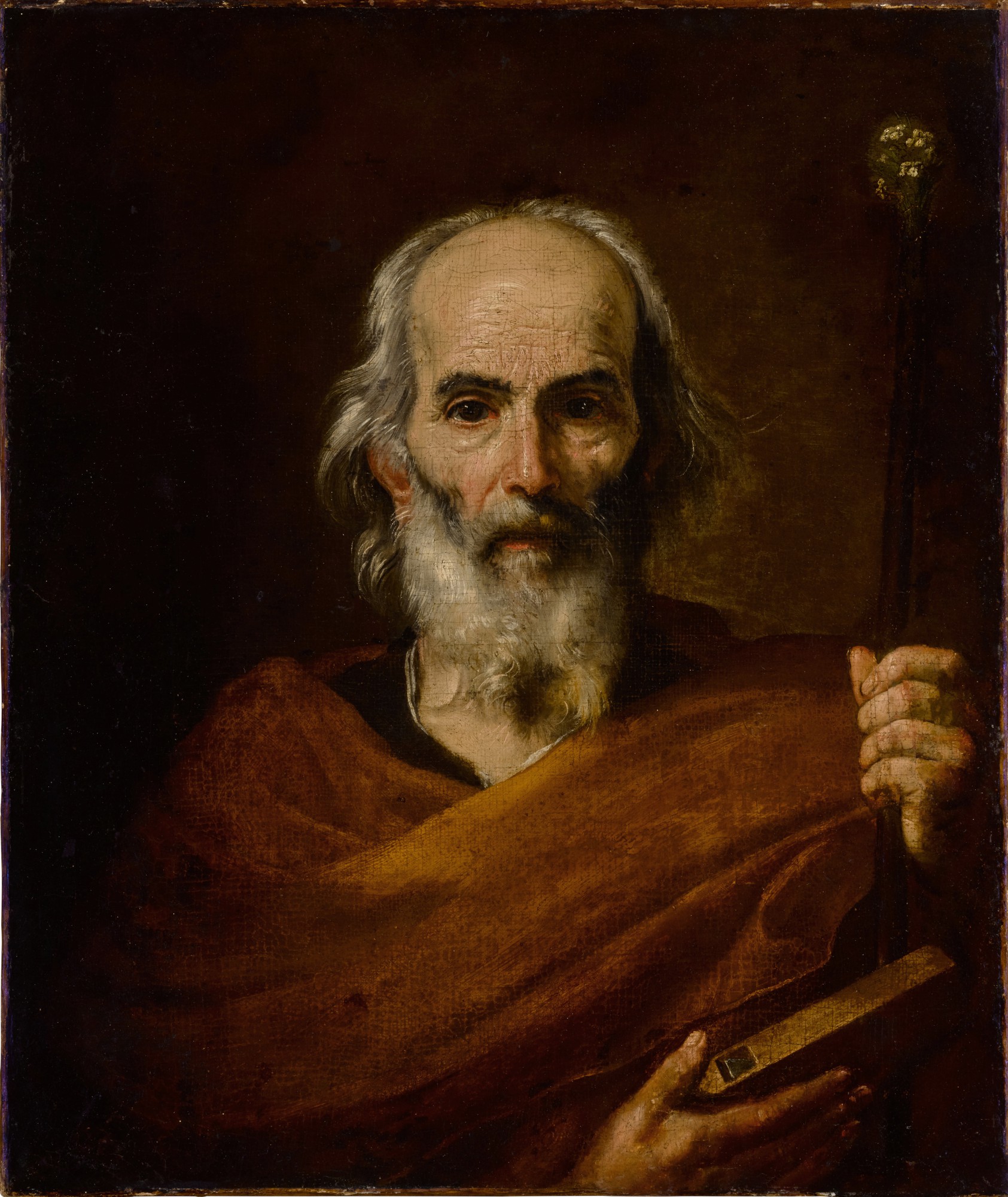
Jusepe de Ribera, called lo Spagnoletto
Saint Joseph with a plane and square
That tension gave painters extraordinary latitude. In the seventeenth century especially, artists could approach him as a genre subject, as a portrait of old age and tenderness, or as a vehicle for the most ambitious chiaroscuro effects they could muster. The result is a category of painting where the human and the sacred meet on unusually intimate terms, and where a collector can find works of genuine psychological complexity alongside more straightforward devotional images. What separates a good example from a truly great one comes down to a few factors that experienced collectors learn to read quickly.
The handling of light is paramount. The most compelling Joseph paintings use darkness not as absence but as atmosphere, something with weight and temperature. Equally important is the relationship between the saint and any secondary figures, most often the Christ child. The finest works give that relationship a quality of genuine tenderness rather than merely compositional proximity.
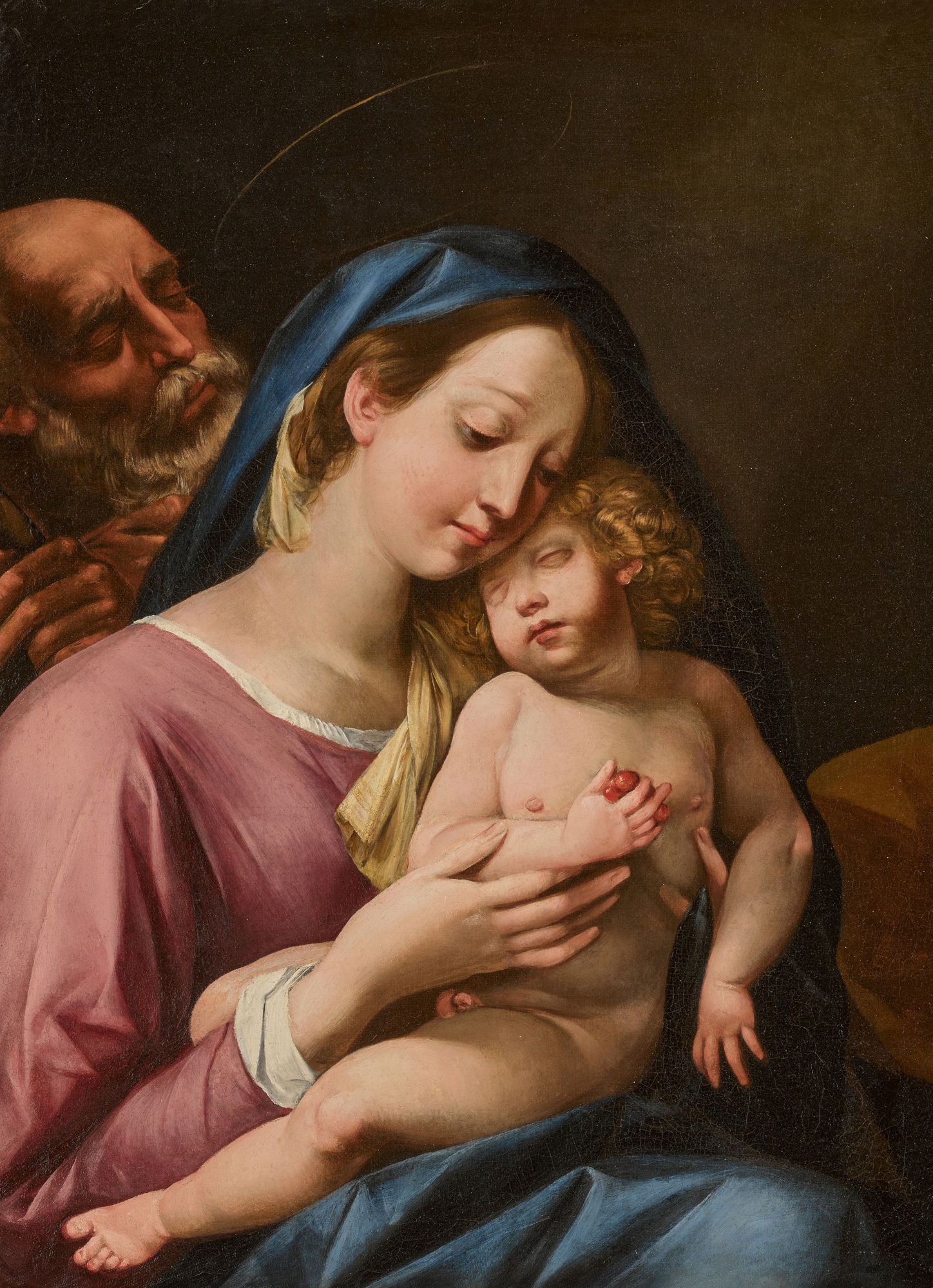
Giuseppe Cesari, called Cavaliere d'Arpino
The Virgin with Child and Saint Joseph
And then there is what might be called credibility of labor: the degree to which the artist convinces you that this is a working man, with working man's hands, caught in a moment of rest or contemplation. When all three of these elements converge, you have something exceptional. The artists represented on The Collection illuminate the range of possibilities within this subject. Jusepe de Ribera, called lo Spagnoletto, is perhaps the most obvious point of entry for a serious collector.
His Neapolitan period work, produced from the 1610s onward under the influence of Caravaggio and the Spanish Viceregal court, set a standard for devotional intensity that few contemporaries could match. His figures have skin you can almost touch, age that accumulates in faces like sediment, and a moral seriousness that elevates even modest formats. A Ribera Joseph is not simply a religious picture. It is an argument about what painting can do.
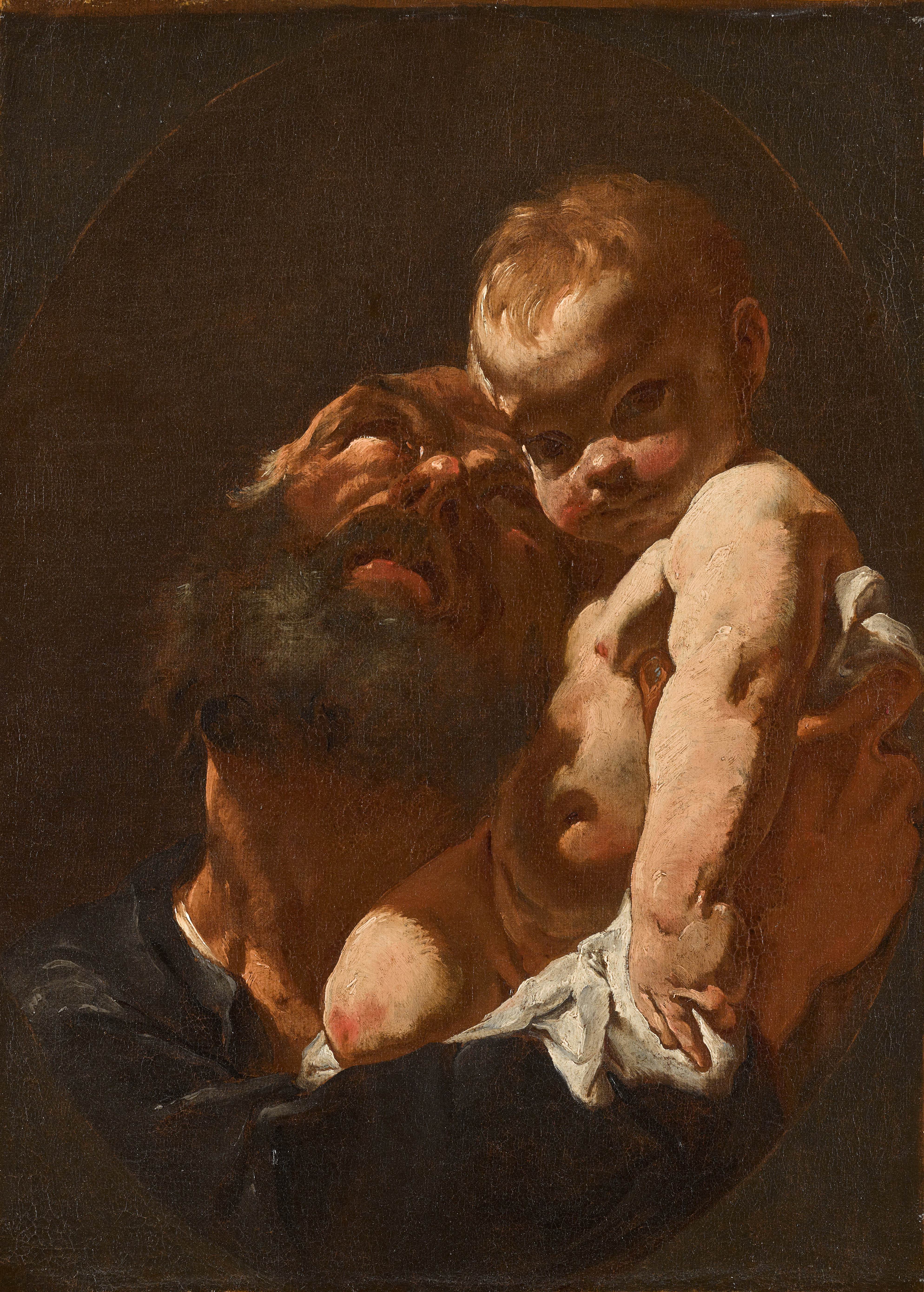
Giovanni Battista Tiepolo
Saint Joseph and the Christ Child
Giovanni Battista Tiepolo offers an entirely different proposition: Venetian luminosity, a palette of extraordinary refinement, and a compositional ease that makes even his most ambitious altarpiece sketches look effortless. Tiepolo's Josephs tend toward the tender and the lyrical, bathed in the golden light that made him the most sought after decorator in eighteenth century Europe. The two artists together define the poles of the market: Ribera for gravity and psychological force, Tiepolo for elegance and sensory pleasure. Giuseppe Cesari, called Cavaliere d'Arpino, represents a different and in some ways undervalued entry point.
A dominant figure in late sixteenth and early seventeenth century Rome who employed the young Caravaggio in his workshop, d'Arpino has long been somewhat overshadowed by the artists who worked in his orbit. But his technical command is considerable, and works attributable to him carry the kind of documented Roman provenance that serious collectors prize. The Genoese School of the late seventeenth century similarly offers opportunities for the collector willing to move beyond the obvious names. Genoese painting from this period draws on a remarkable synthesis of Flemish naturalism, Roman classicism, and the particular quality of Ligurian light, and attribution research in this area has become increasingly sophisticated over the past two decades, meaning that the field is still yielding discoveries.
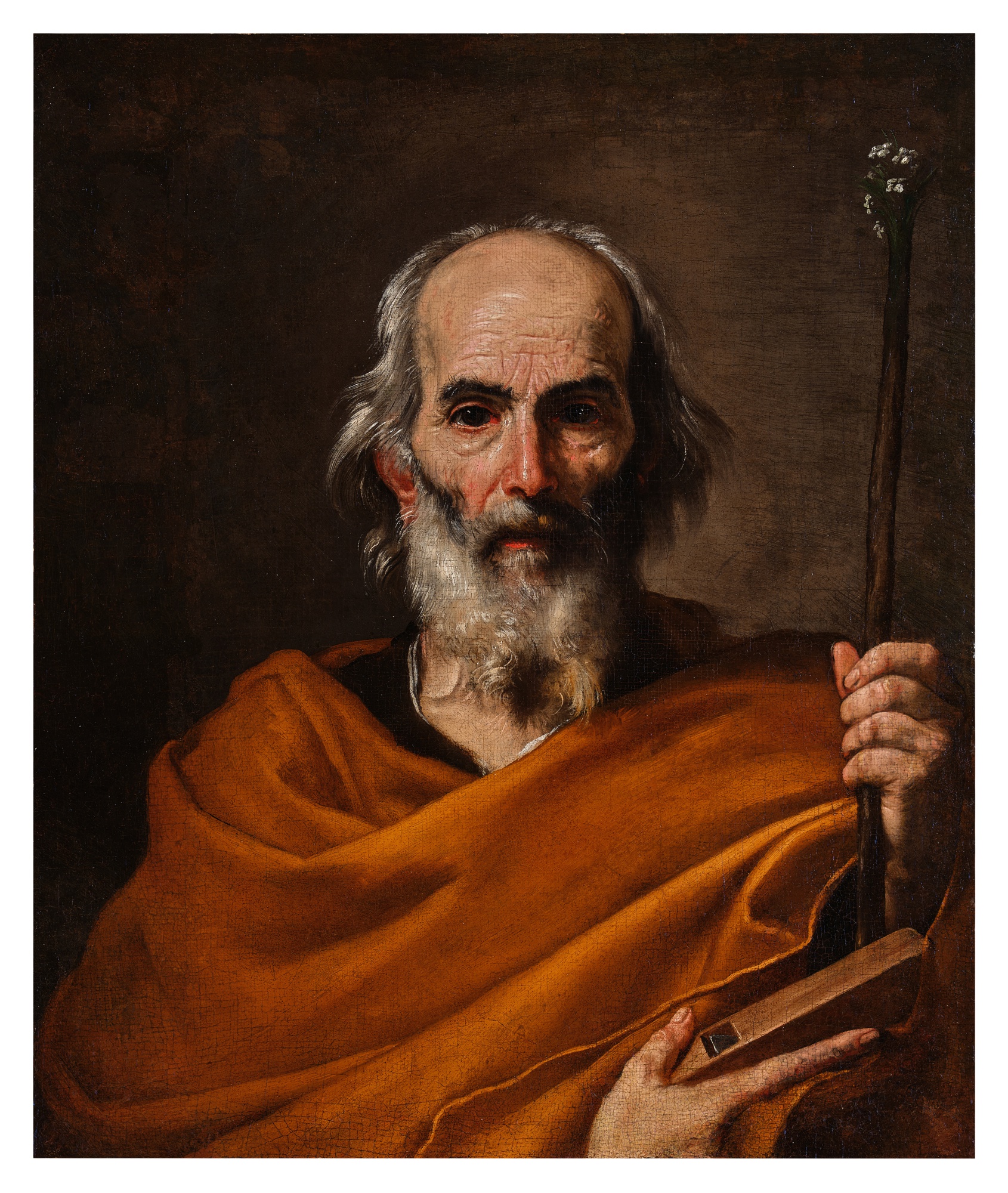
Jusepe de Ribera, called Spagnoletto
Saint Joseph Holding a Plane and Flowering Rod
At auction, devotional works featuring Saint Joseph occupy a broad price band that rewards careful research. Major attributed works by Ribera have achieved significant results at the principal houses, with strong competition from both European institutional buyers and private American and Asian collectors building serious Old Master holdings. But the category also contains genuine value at the middle and lower end of the market, where workshop pieces, regional school attributions, and works with interesting provenance but modest condition can offer entry points that are difficult to find in more fashionable areas of the Old Master market. The key is understanding what you are buying and why.
A workshop Ribera with good documentation and solid condition is a very different proposition from a speculative attribution, and pricing should reflect that distinction clearly. On the practical side, condition is everything in this category, and there are specific things to ask before committing to a purchase. Request a full condition report from a conservator with Old Master experience, not simply a gallery assessment. Ask about the support: panel paintings from this period require different environmental conditions than canvas, and cracking or flaking in panel works can be costly to address.
Inquire about cleaning history and whether there are significant areas of restoration in the face or hands, which are the areas most likely to have suffered and most critical to the work's reading. For display, these paintings respond well to warm incandescent or carefully calibrated LED lighting with a color temperature below 3000 Kelvin, which honors the tonal range the artist intended rather than flattening it. Finally, ask for full provenance documentation as far back as the gallery can trace it. In the current regulatory environment, and for your own peace of mind, a clean and well documented ownership history is not a bonus.
It is a baseline requirement.