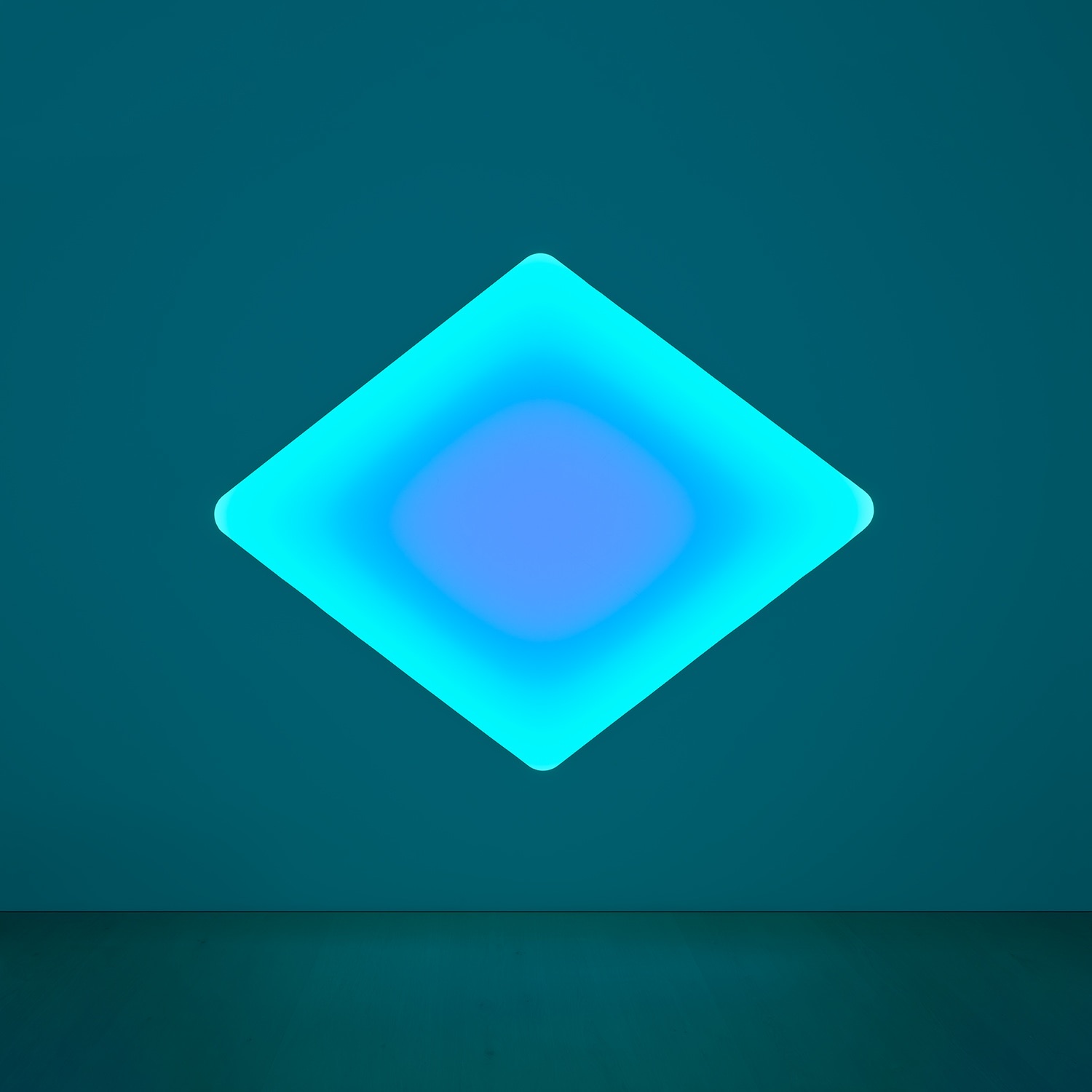
Relief
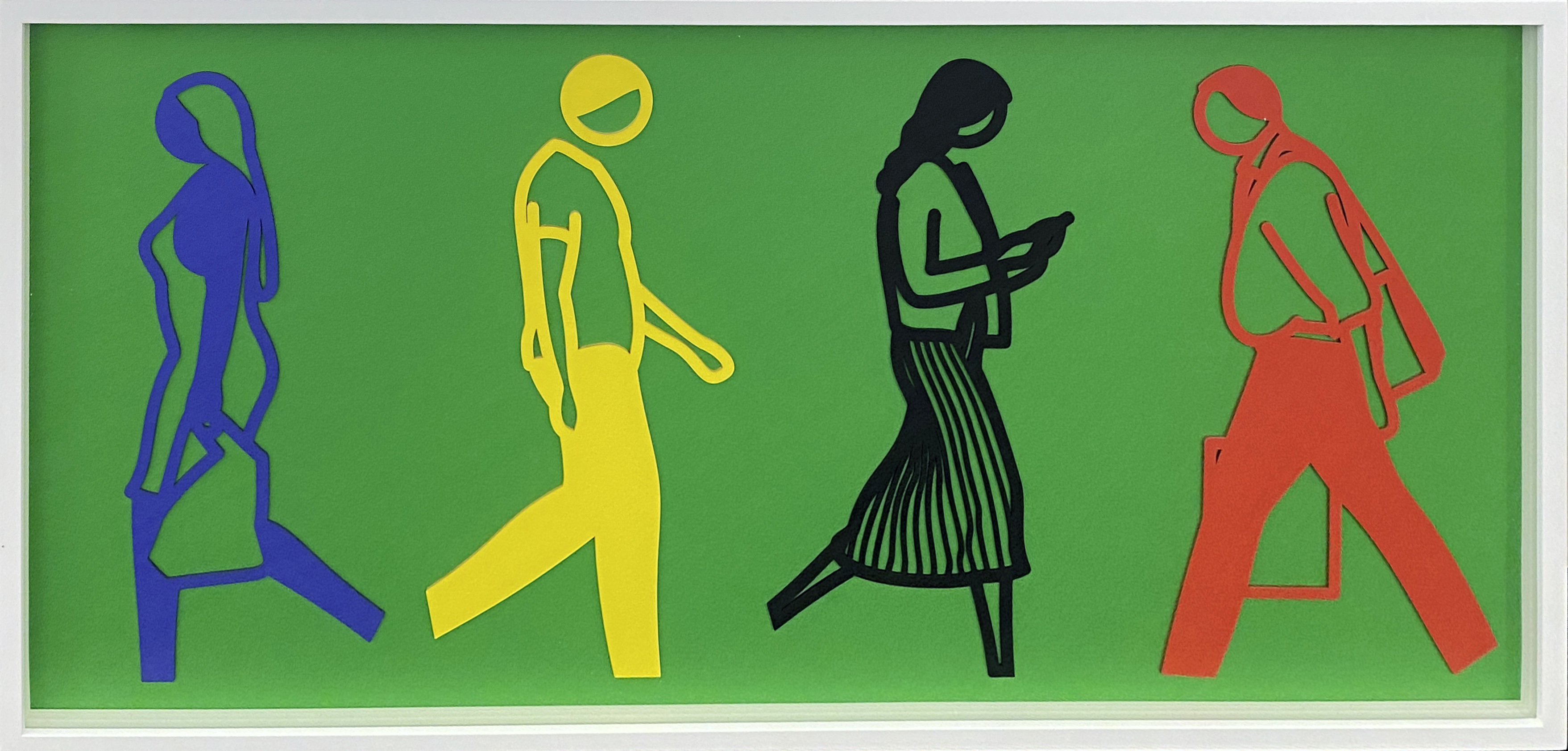
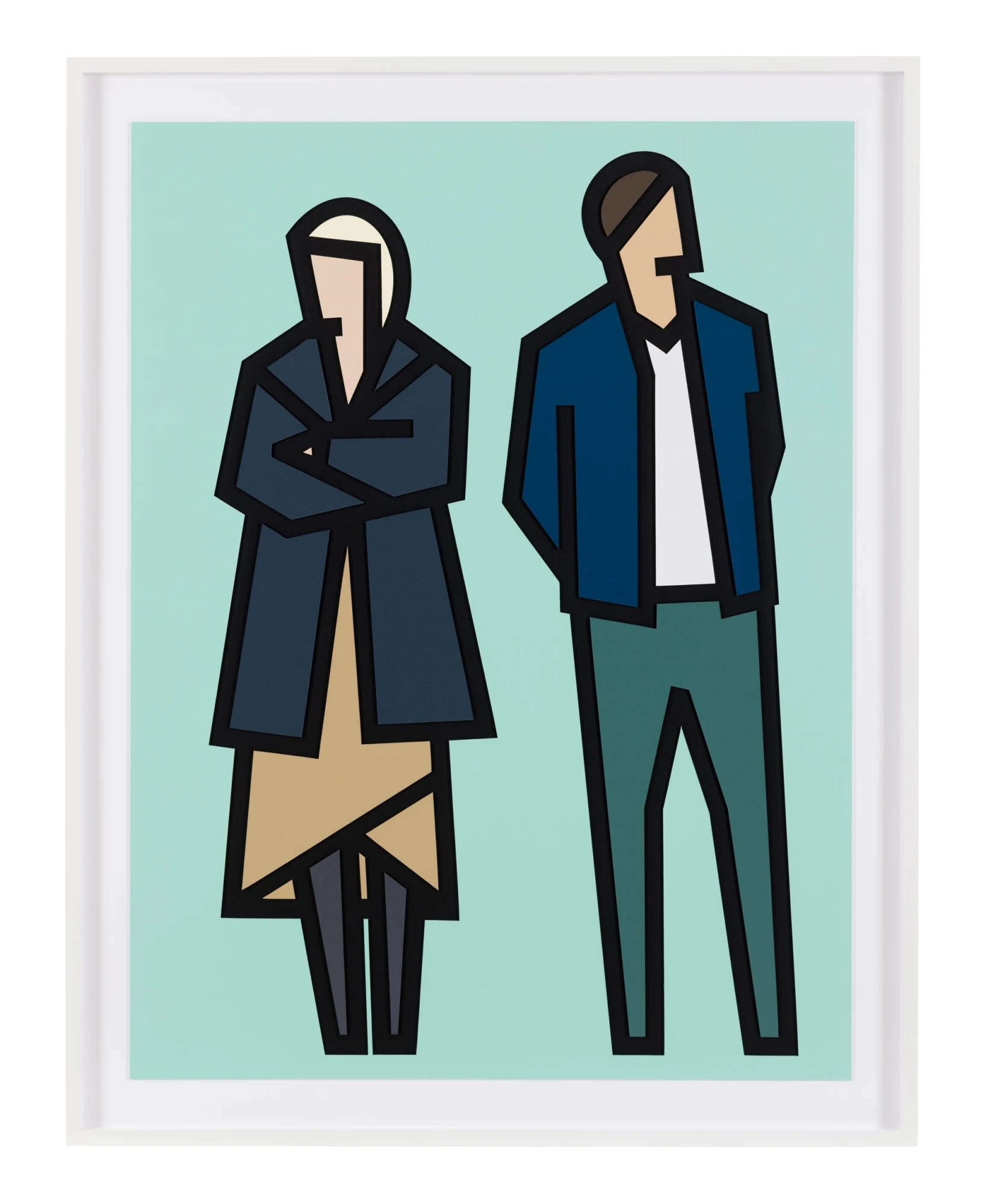
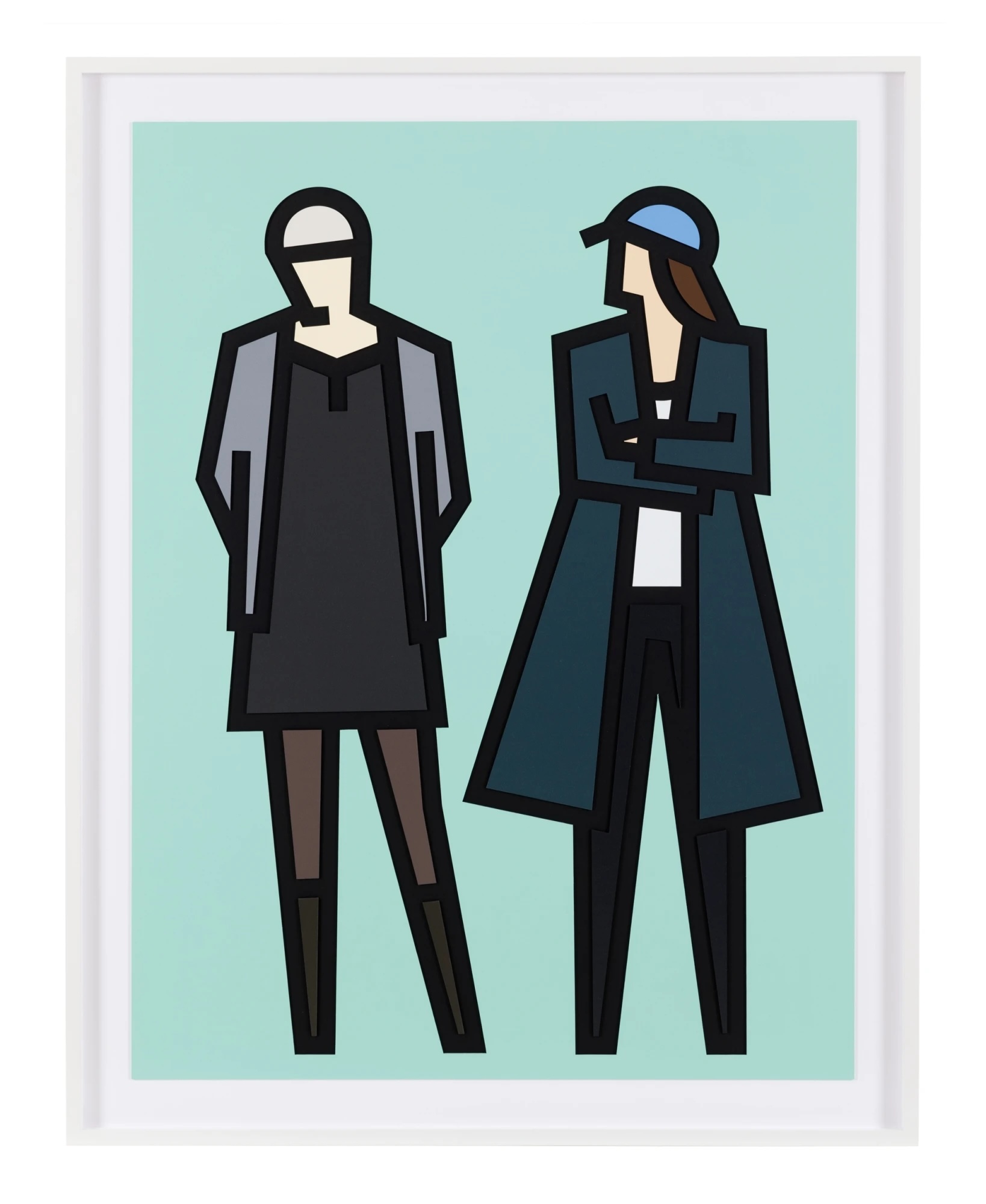
Julian Opie
Street (3), 2020
Between Surface and Shadow: The Enduring Power of Relief
There is something fundamentally human about the impulse to make a flat surface speak in three dimensions. Long before painting had a grammar, before sculpture had a tradition, there was relief: the modest, insistent push of form against a ground, the play of light across a carved edge, the moment when a surface becomes a world. Relief sits at the crossroads of every medium we prize, and it has never stopped being strange and compelling, no matter how many centuries we have had to get used to it. The impulse stretches back further than most collectors care to imagine.
Among the works on The Collection, an Assyrian gypsum alabaster foundation plaque and fragments of South Arabian limestone carving remind us that relief was the primary visual language of ancient administration, devotion, and memory. Assyrian palace reliefs from the 9th and 8th centuries BC were not decorations but instruments of power, filling room after room at Nimrud and Nineveh with narratives of conquest and divine order. The material choice mattered enormously: gypsum alabaster is soft enough to carve with precision but holds detail over millennia. When you stand before such a fragment today, you are receiving a message sent across four thousand years, and it still lands.
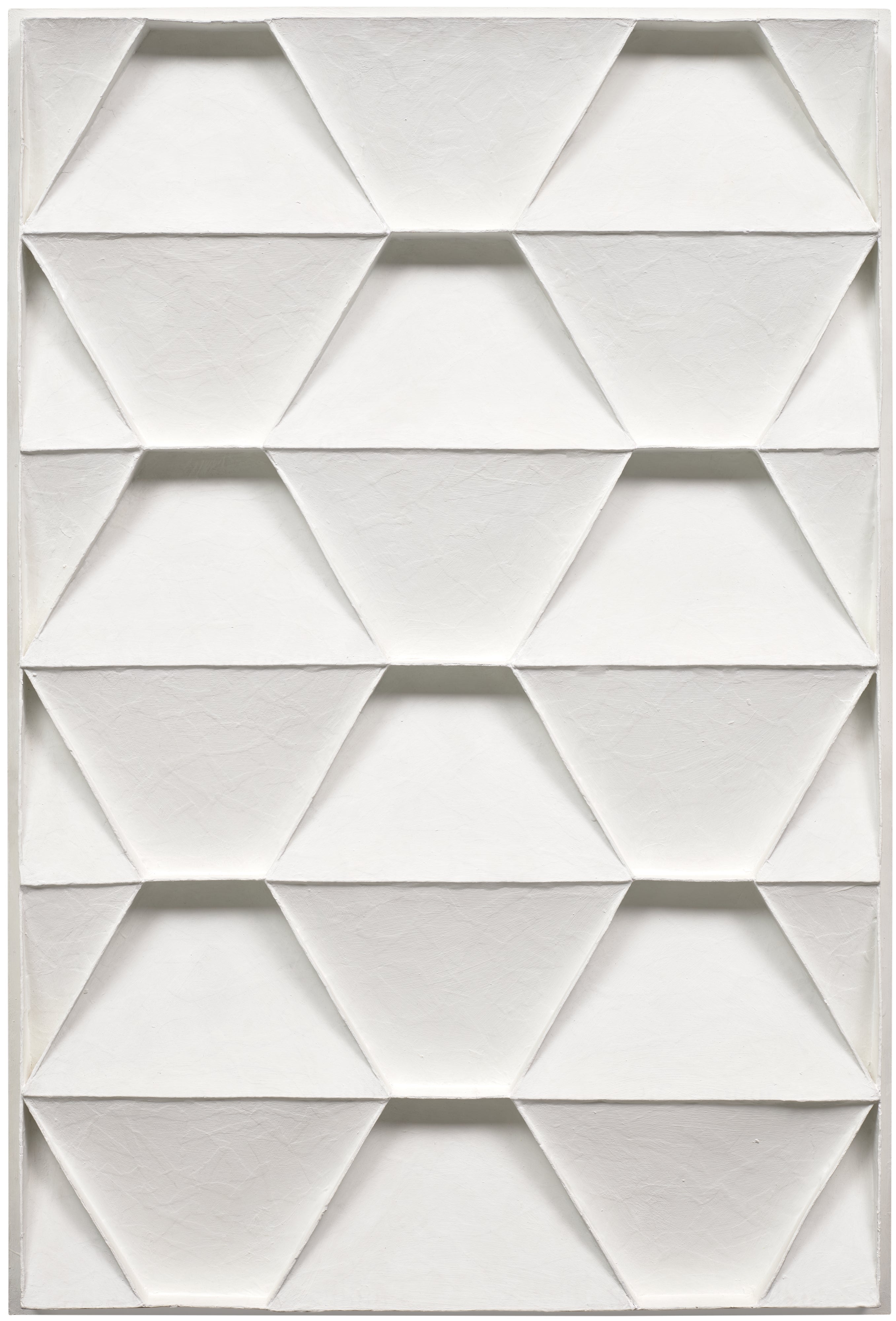
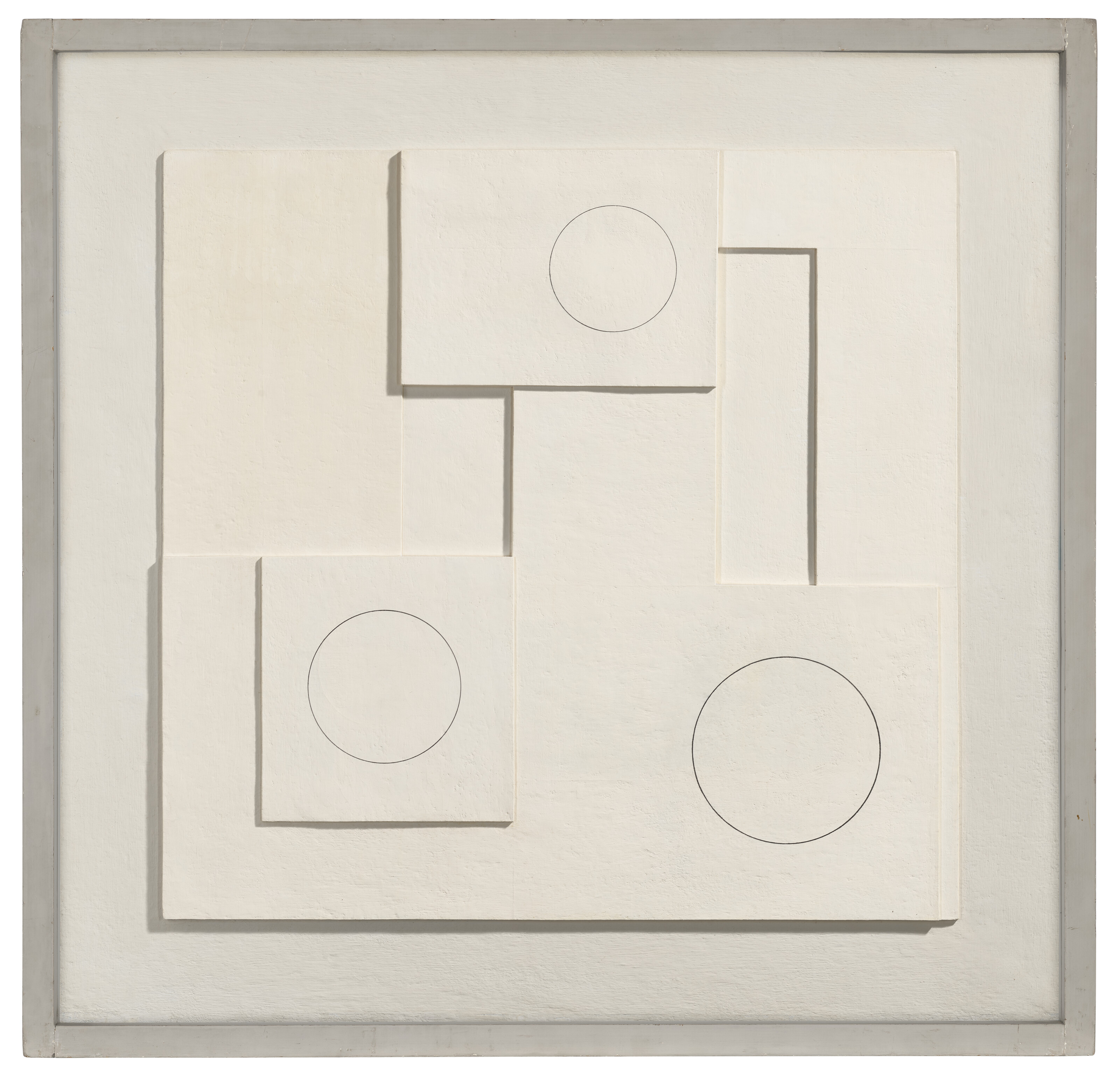
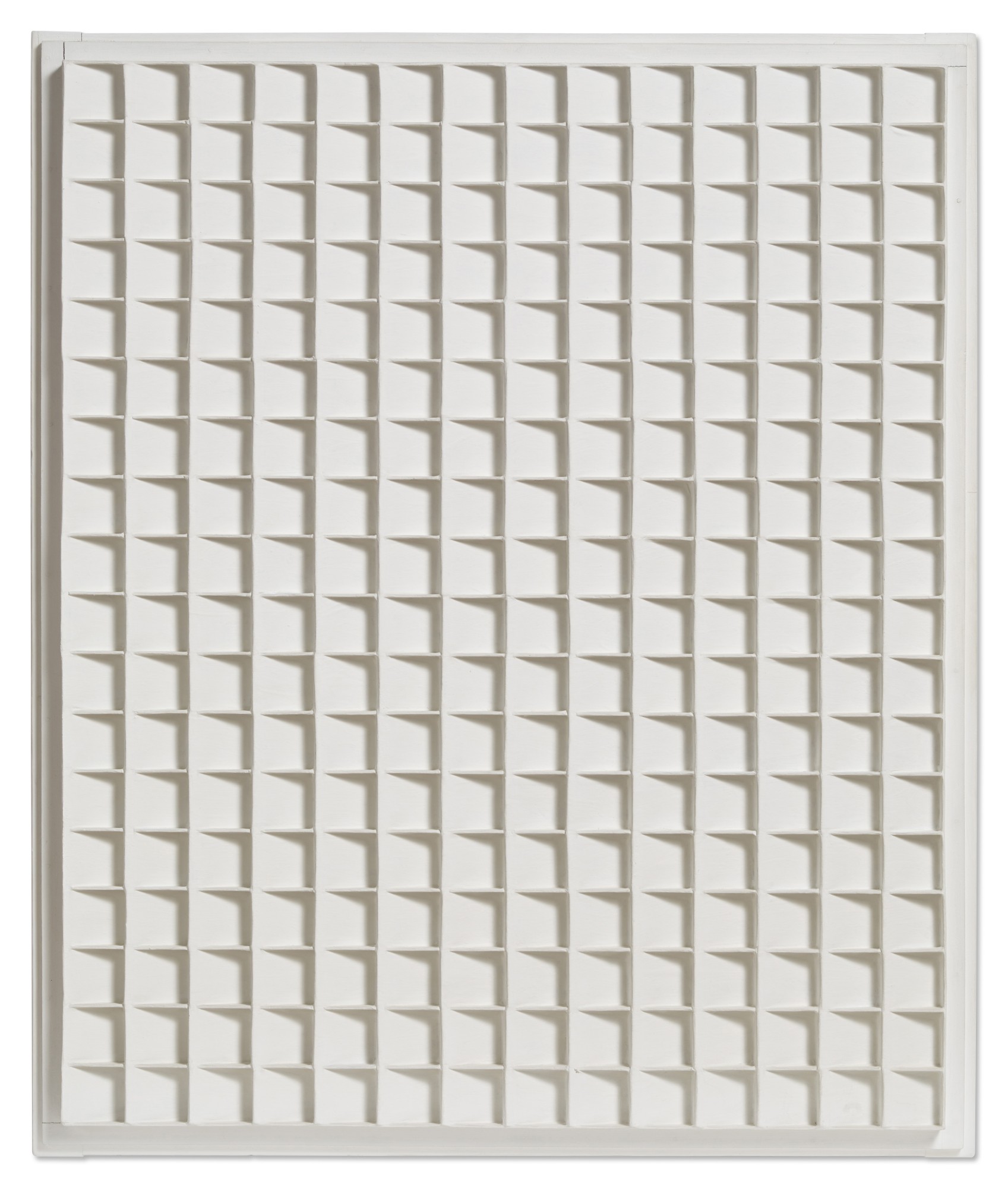
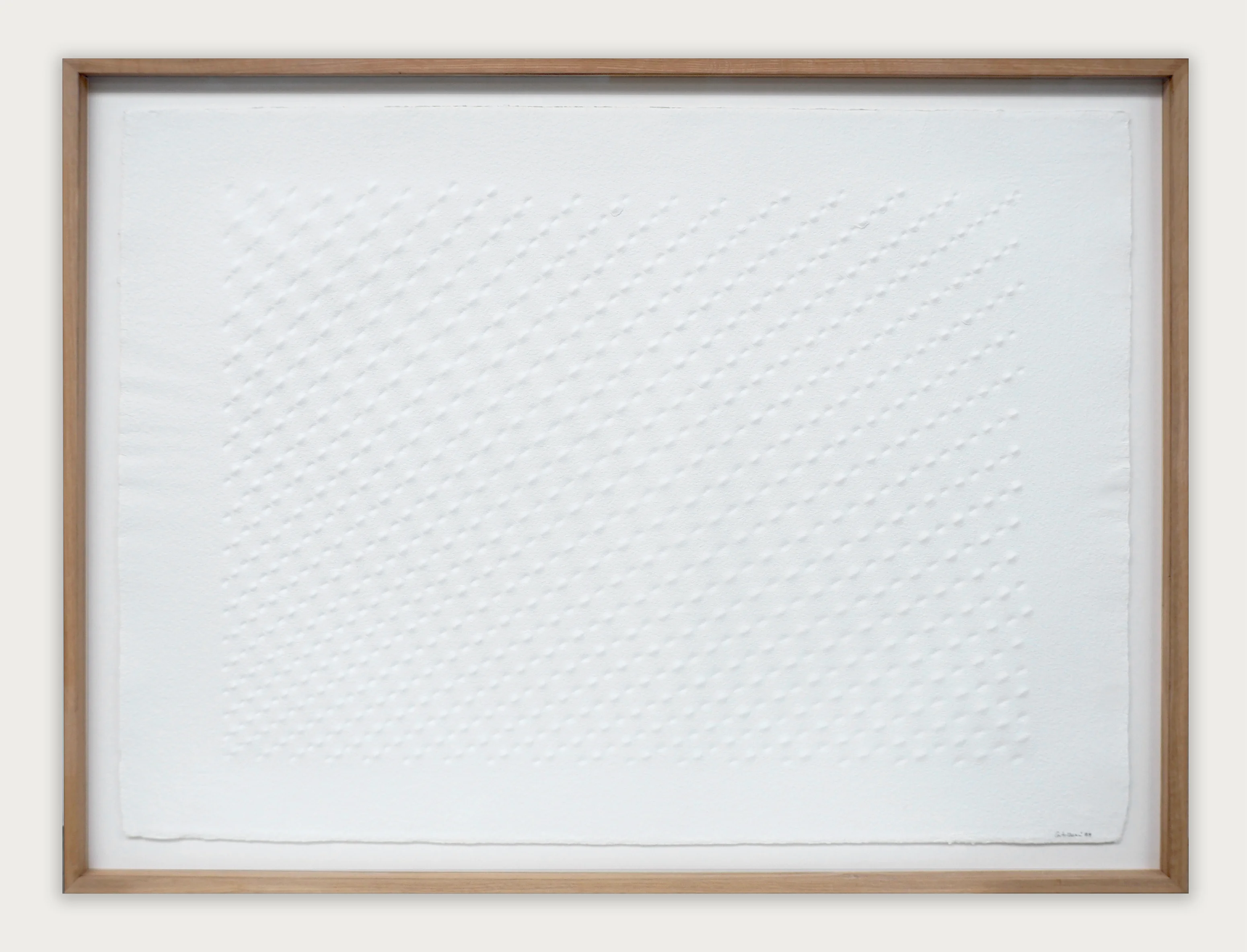
Jan Schoonhoven
R69-23, 1969
Egyptian relief developed along a different axis entirely. The polychrome limestone stelae on The Collection exemplify a tradition in which colour and incision worked together as equals, where the carved line established fact and the painted surface established feeling. Egyptian artists developed two distinct approaches, raised relief and sunken relief, each producing a completely different quality of light. Sunken relief, which is the cutting of forms into the stone below the surface plane, catches harsh Mediterranean light and sharpens every edge.
Raised relief, in which the background is cut away to leave figures projecting forward, softens in shadow and glows in low light. This was not technical accident but sophisticated optical thinking, and it informed relief practice everywhere that followed. The Roman world absorbed and transformed these traditions. A Roman marble theatre mask from the 3rd century AD in The Collection carries the theatrical exaggeration of its subject into the very logic of its carving: deep undercutting, dramatic shadow, the face reading powerfully from a distance.
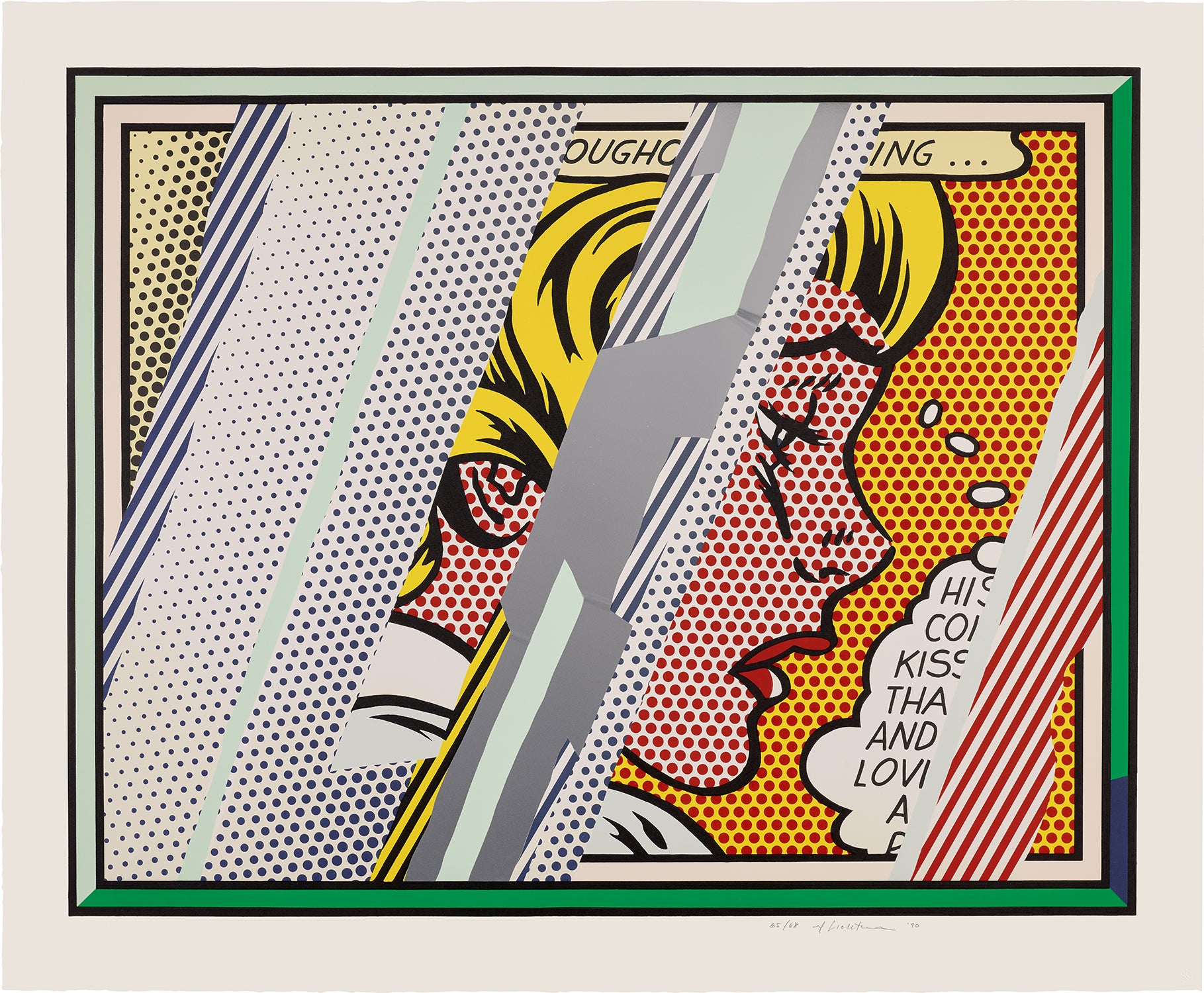
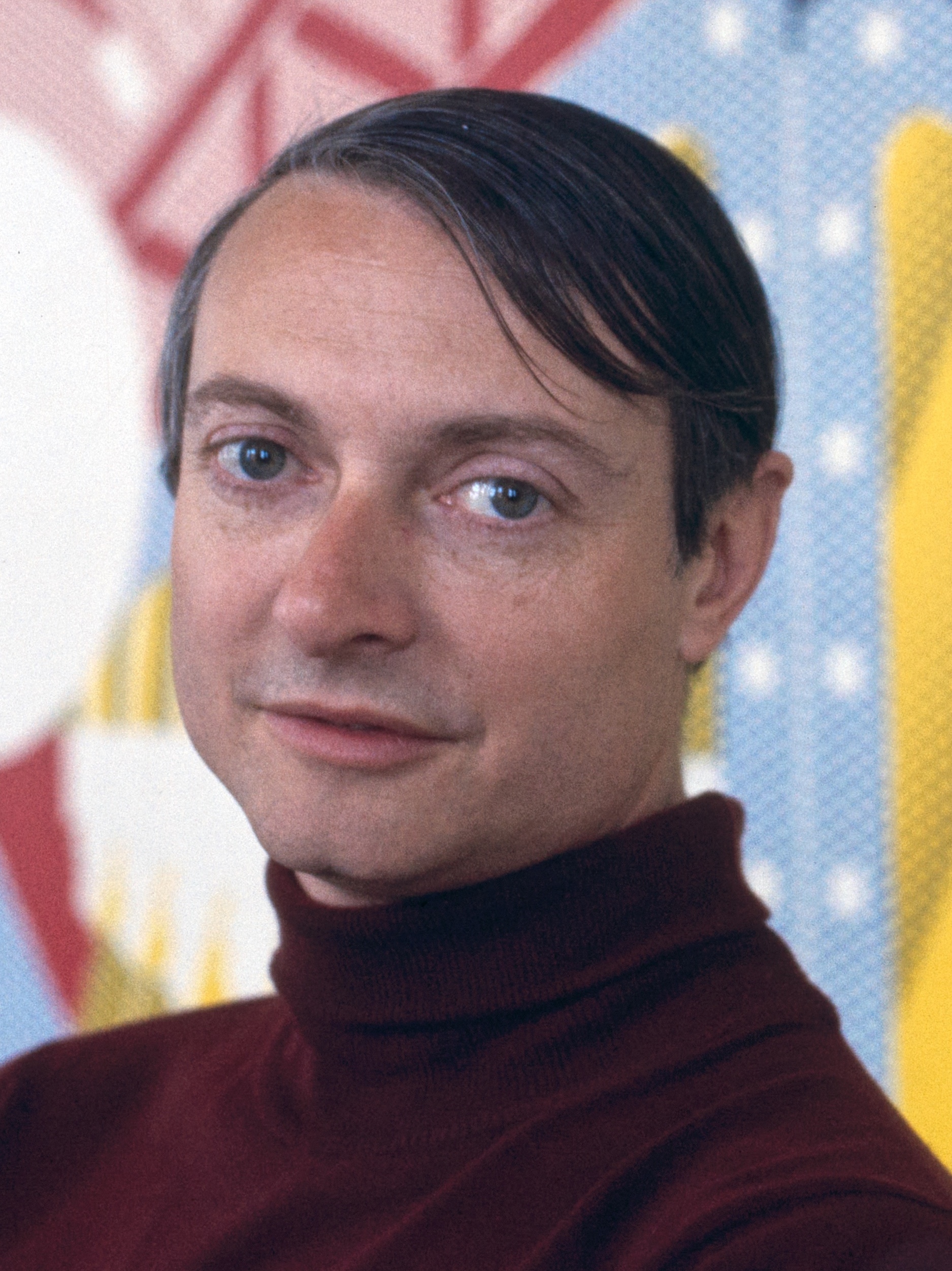
Roy Lichtenstein
Reflections on Girl, from Reflections Series (C. 245)
Roman relief makers understood that their work would often be seen from below, at scale, in motion, and they carved accordingly. It is useful to remember this when looking at later European relief traditions. The question of who is viewing, from where, and under what light is never far from a serious discussion of the form. The Renaissance and Baroque periods brought relief into intimate domestic and devotional spaces, reducing its scale while intensifying its ambition.
Sculptors such as Donatello pioneered the technique known as schiacciato, an extremely shallow carving that created an almost painterly illusion of depth and recession through compression of planes. It is one of the more remarkable achievements in the history of art: the sense of space generated by a relief only a few millimetres deep. Antoine Louis Barye, whose work appears on The Collection, pushed the tradition toward a romantic and naturalistic expressiveness in the 19th century, his bronzes of animals combining surface energy with an underlying structural confidence rooted firmly in this long lineage. The 20th century did not so much break with relief as explode it.
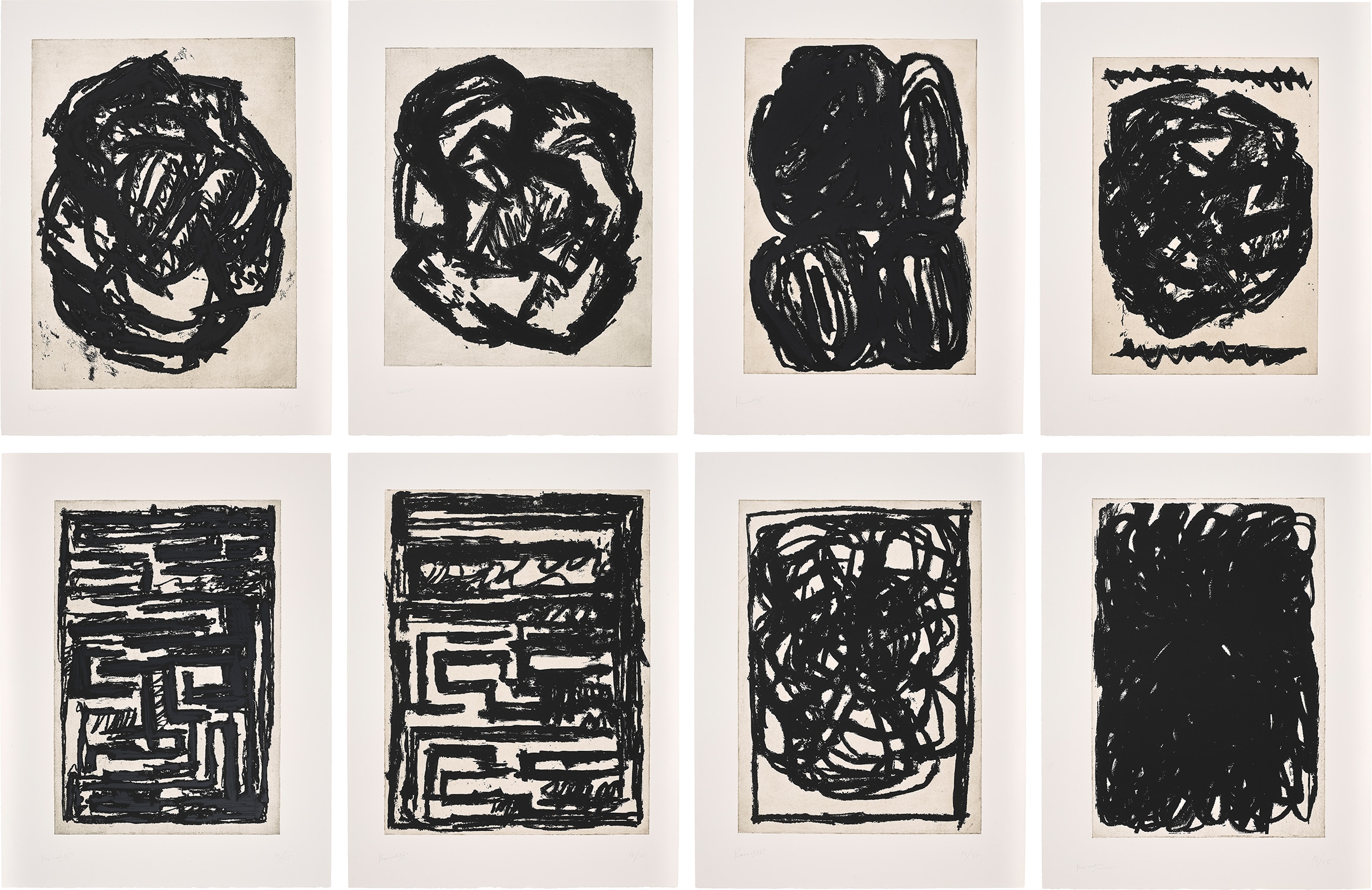
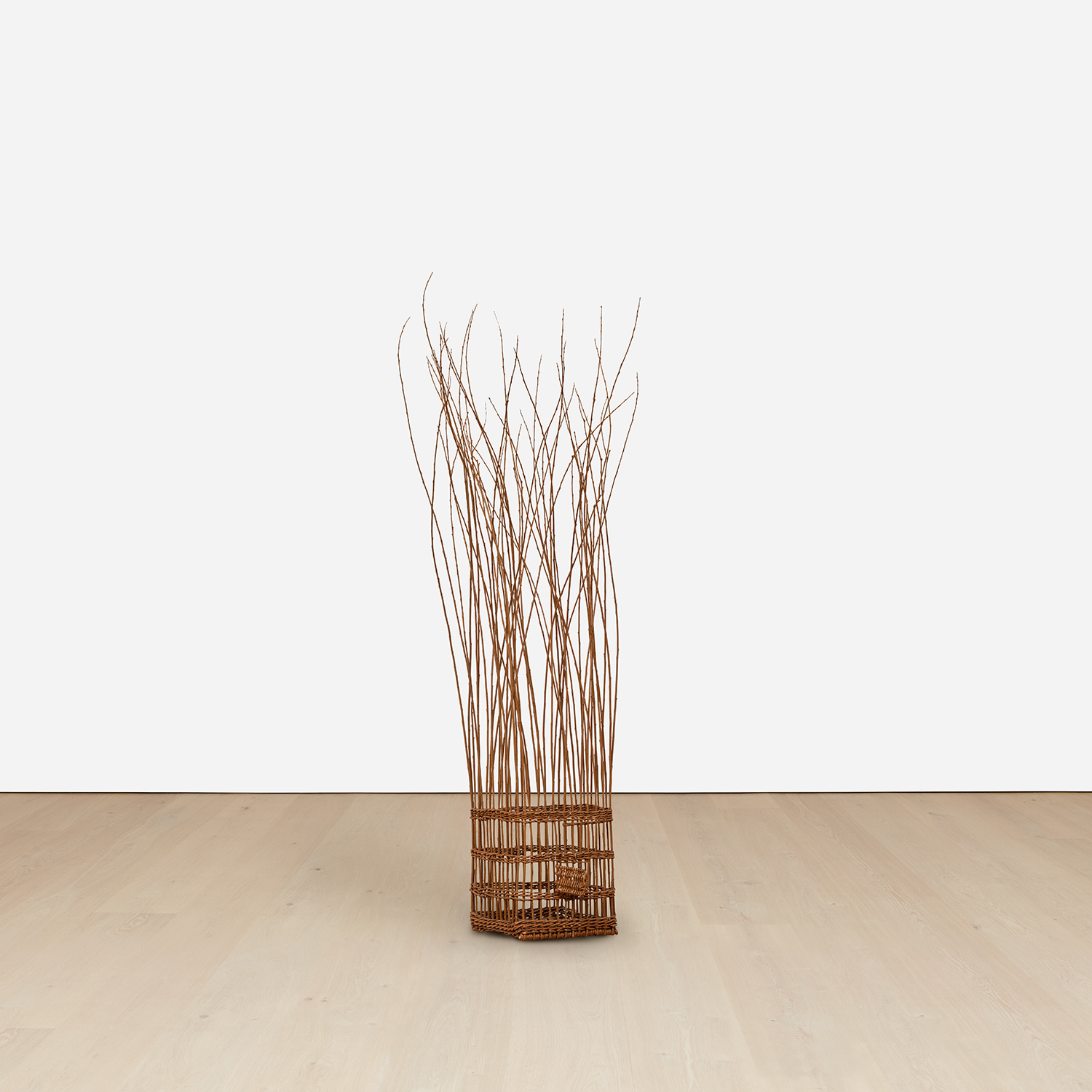
Jannis Kounellis
The Minotaur
The postwar decades produced an extraordinary concentration of artists who returned to the wall bound object with new urgency and entirely new frameworks. Jan Schoonhoven, the Dutch artist associated with Nul and Zero movements, began making his austere white cardboard reliefs in the late 1950s and 1960s. His systematic grids and tessellated forms, well represented on The Collection, are almost brutally impersonal, yet they generate an almost meditative visual experience. The point for Schoonhoven was the elimination of individual expression in favour of pure perceptual effect.
Light does the work. The hand is present but irrelevant. Enrico Castellani, whose works also appear on The Collection, arrived at a related but distinct position through his shaped canvases of the late 1950s onward. By stretching canvas over a field of nails, he created surfaces that undulate in shallow rhythms, absorbing and releasing light across a monochrome field.
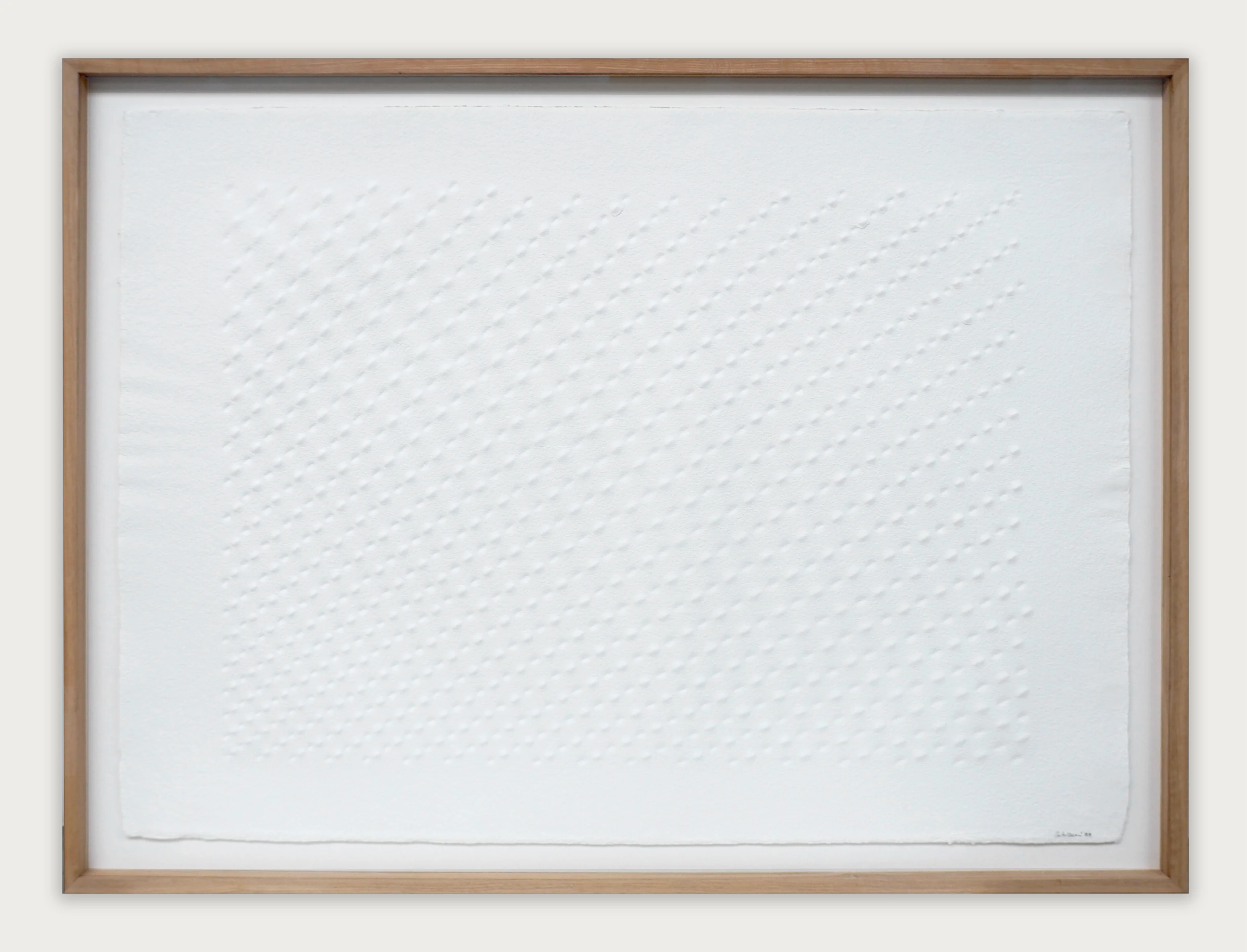
Enrico Castellani
Senza Titolo, 1988
These are technically paintings, but they function entirely as reliefs. Castellani was close to Piero Manzoni, and the two artists together defined an Italian strand of the Zero movement that was more lyrical and materially sensuous than its German counterparts. Heinz Mack, represented on The Collection and a founding figure of ZERO in Düsseldorf in 1958, brought a similar devotion to reflective surfaces and optical vibration, though his materials often extended to aluminium and polished metal. The Brazilian sculptor Sergio Camargo represents yet another direction.
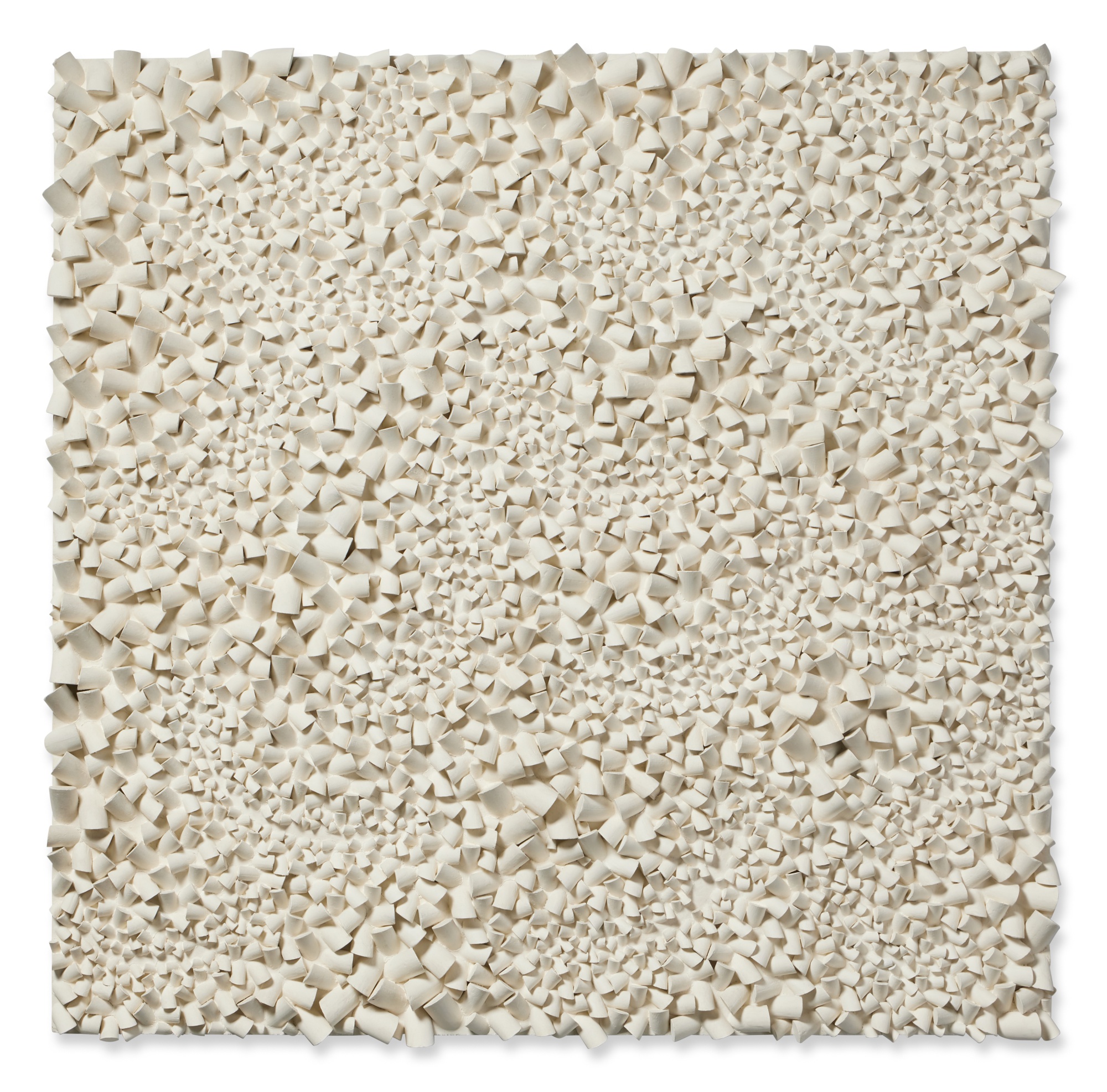
His white painted wooden reliefs, multiple works of which appear on The Collection, are composed of cylindrical forms at varying angles, creating surfaces of extraordinary rhythmic complexity. Camargo was influenced by Brancusi but arrived at something entirely his own: a tropical concretism full of sensory warmth despite its apparent austerity. His work rewards patience. The longer you look, the more the surface seems to breathe.
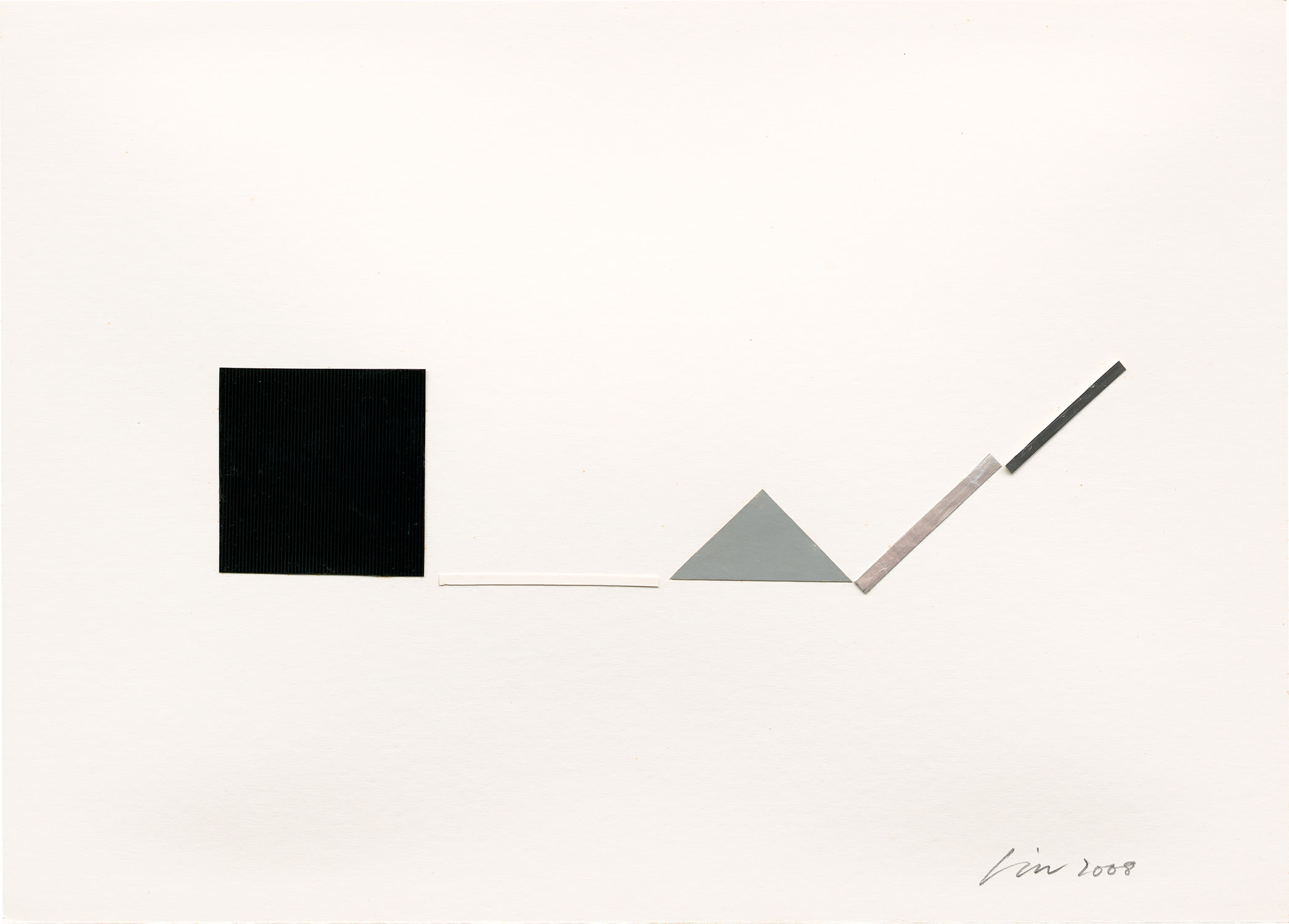
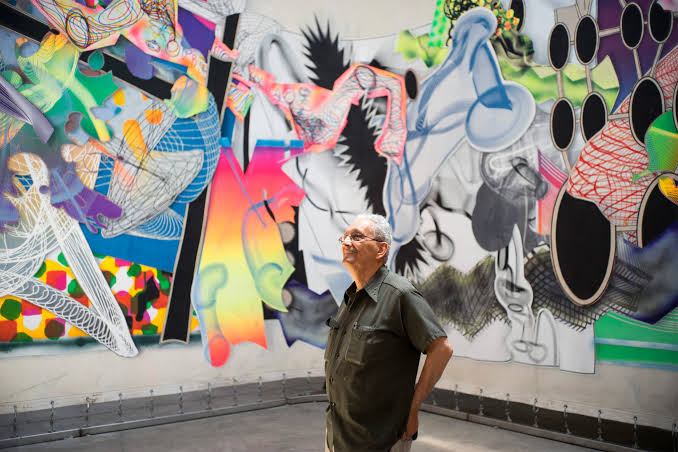
Richard Lin, the Taiwanese born British artist whose paintings in relief share space on The Collection with these Europeans, occupies a fascinating position between traditions. His precisely engineered surfaces, often using industrial materials including aluminium plate, speak to both Minimalist rigour and a deep interest in classical Chinese thought. Frank Stella and Roy Lichtenstein, two American artists with significant presences on The Collection, each used relief strategies at critical points in their careers: Stella through his shaped canvases and later extruded metallic constructions, Lichtenstein through his brushstroke reliefs that folded painting's self awareness back into three dimensions. What all of these works share, across four millennia and dozens of cultures, is an insistence on the threshold.
Relief is the art form that refuses to choose between the flat and the volumetric, between the image and the object. It operates in the space between things, which is perhaps why it retains such peculiar power. In an art world still fascinated by the edges of categories, by what counts as painting and what counts as sculpture, by where a surface ends and a space begins, relief continues to ask the most interesting questions. And it has been asking them since before we had words for any of this.