Political Portraiture
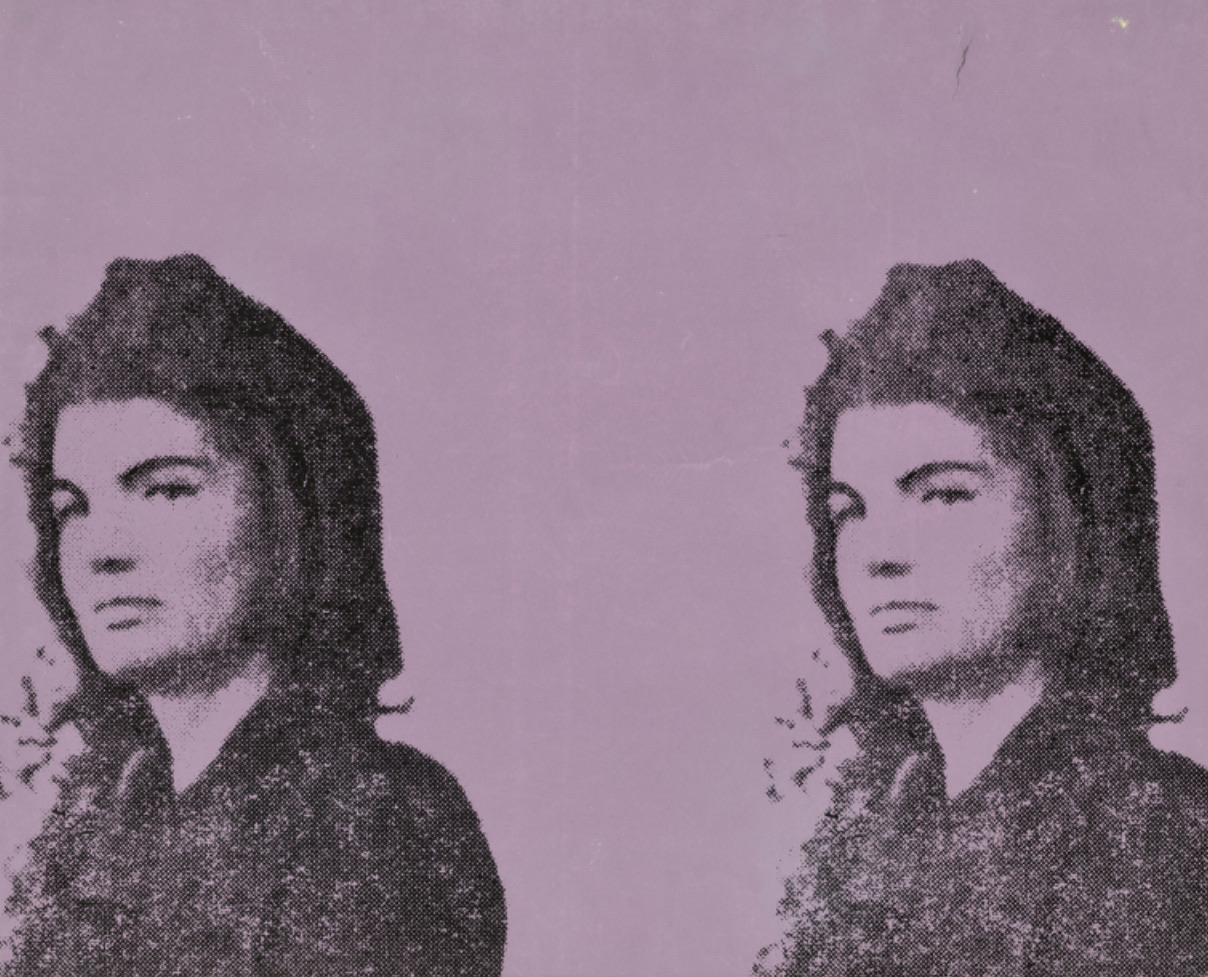
Andy Warhol
Jacqueline Kennedy II (Jackie II), from 11 Pop Artists II, 1966

Power, Paint, and the Politics of the Face
There is something deeply unsettling about a portrait that tells the truth. Not the truth of likeness, the careful rendering of a jaw or a hairline, but the deeper truth of power: who holds it, who performs it, and who gets to decide how it is remembered. Political portraiture has always operated in this charged territory, and its history is essentially a history of negotiation between the subject and the artist, between flattery and critique, between the official record and the subversive whisper underneath it. The tradition stretches back to antiquity.
Roman emperors understood portraiture as statecraft. The bust of Augustus was not merely a likeness but a claim, broadcast across an empire in marble and bronze, of divine authority and civic virtue. By the Renaissance, rulers across Europe had absorbed this lesson entirely. Hans Holbein's 1540 portrait of Henry VIII remains one of the most psychologically loaded images in Western art.
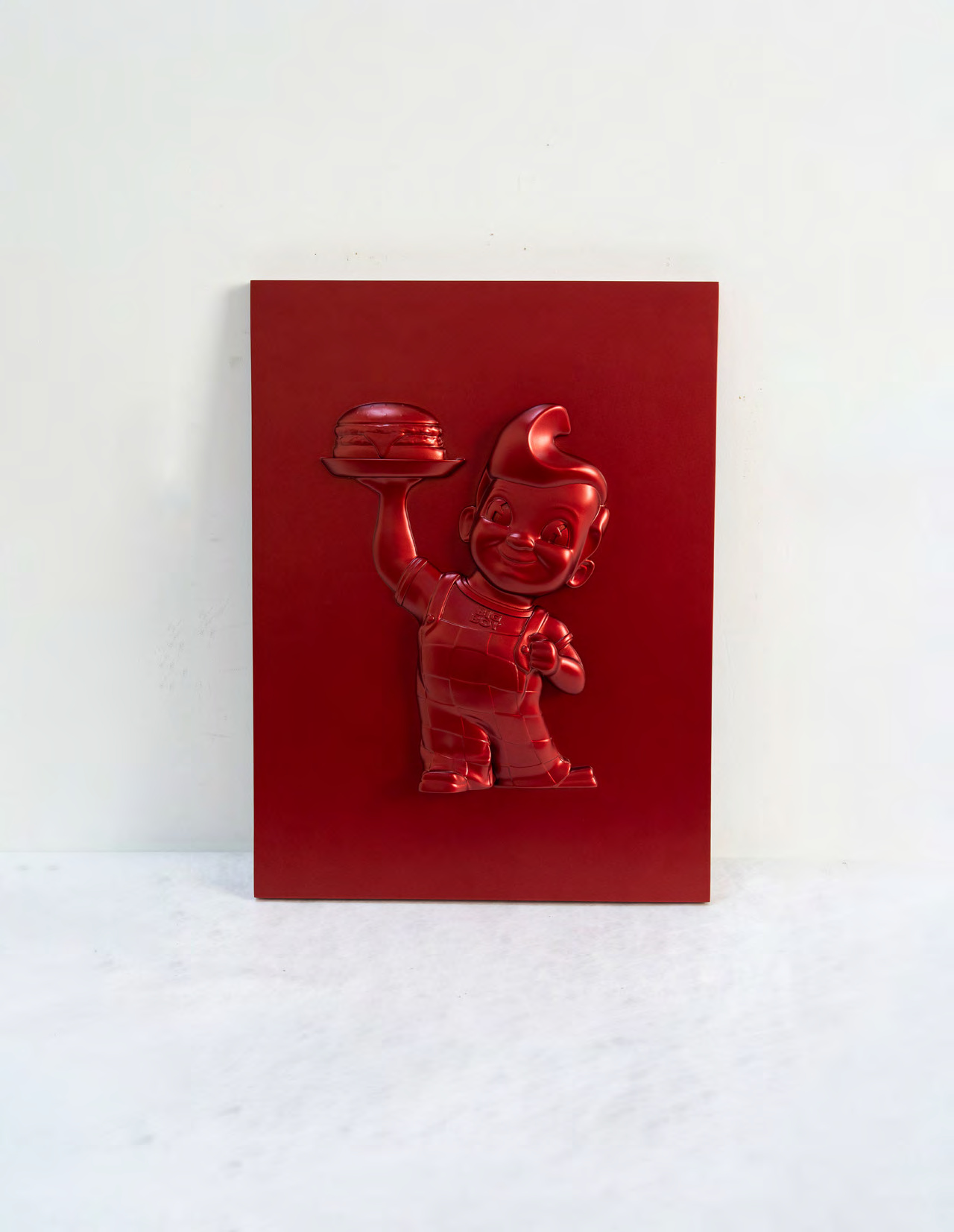
Robert Longo
Bob's Big Boy (Portrait of American President), 2026
The posture, the gaze, the sheer physical mass of the man: everything is calculated to project dominance. And yet for all its propagandistic intent, the painting has endured precisely because Holbein was honest enough, or brave enough, to let a flicker of something harder and more ambiguous show through. The genre shifted dramatically in the nineteenth century as democratic movements reshaped the political landscape and new publics demanded new kinds of imagery. Caricature and satirical portraiture flourished in parallel to official painting, often with greater cultural bite.
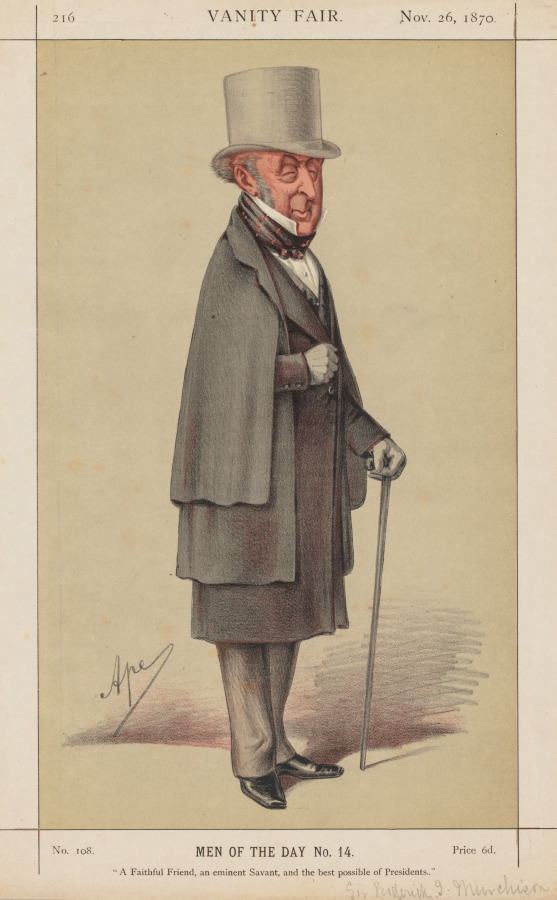
Carlo Pellegrini, the Italian born artist who worked in London under the name Ape for Vanity Fair magazine from the 1860s onward, understood this instinctively. His caricatures of politicians and public figures reduced powerful men to their essential absurdities with a wit and psychological precision that formal portraiture rarely allowed. His work on The Collection reminds us that mockery is also a form of portraiture, and often the more truthful one. The twentieth century brought with it an entirely new set of tools and anxieties.
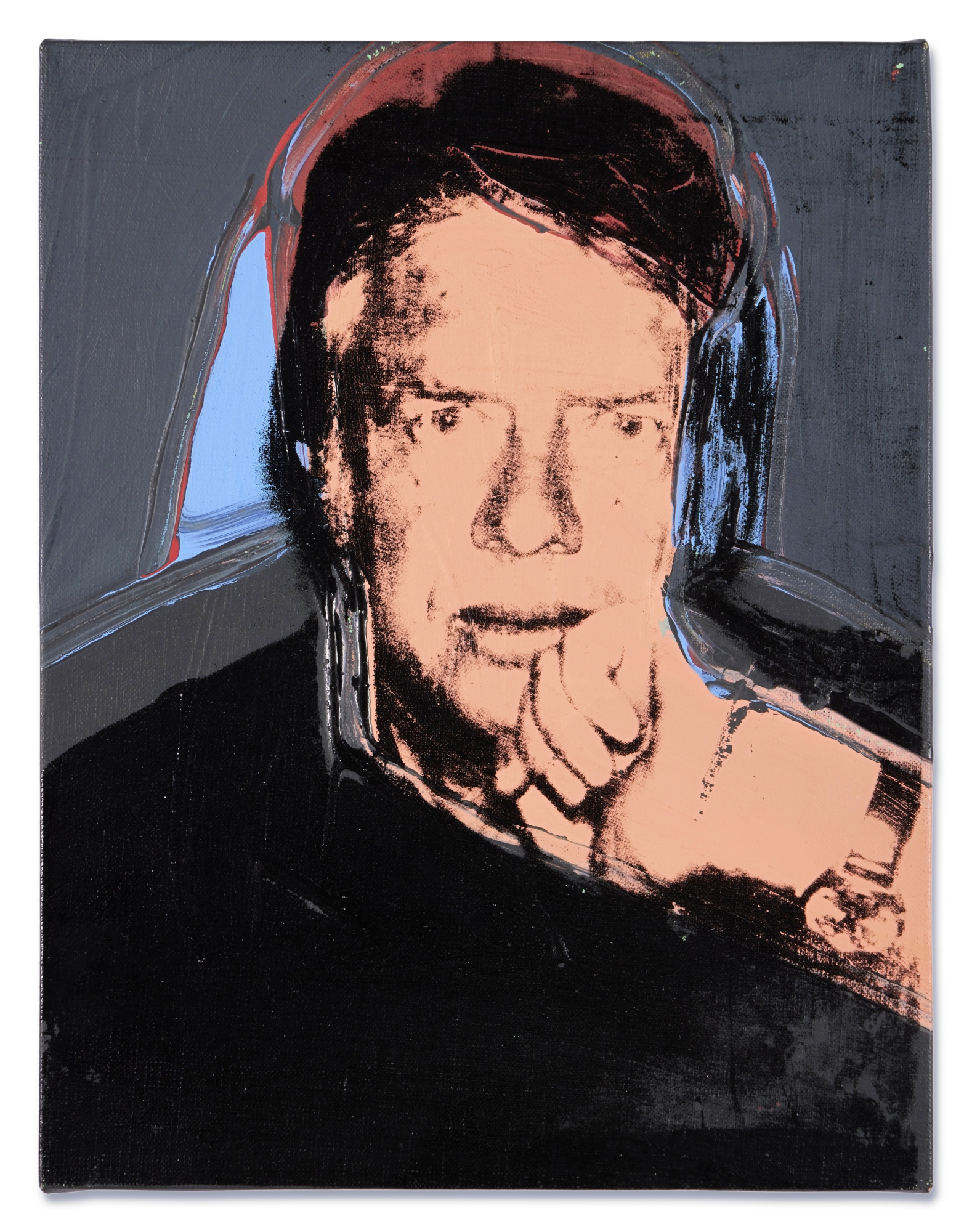
Andy Warhol
Jacqueline Kennedy II (Jackie II), from 11 Pop Artists II, 1966
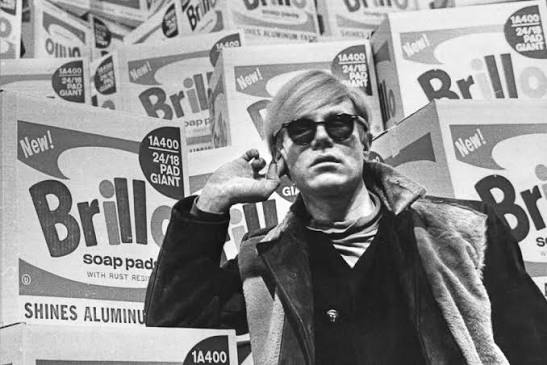
Photography democratized likeness. Mass media industrialized celebrity. And artists who thought seriously about political portraiture were forced to contend with a world in which the image of a leader was already everywhere, already managed, already suspect. Andy Warhol understood this more clearly than almost anyone.
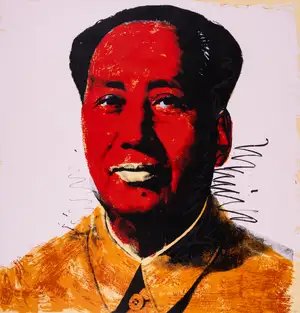
His silkscreened portraits of Mao Zedong, produced in 1972 following Nixon's historic visit to China, took the most reproduced face in the world and subjected it to the same treatment he had given Marilyn Monroe and Campbell's soup cans. The effect was both leveling and vertiginous. The Chairman became commodity, icon, wallpaper. Warhol, whose work is well represented on The Collection, was not making a protest painting.
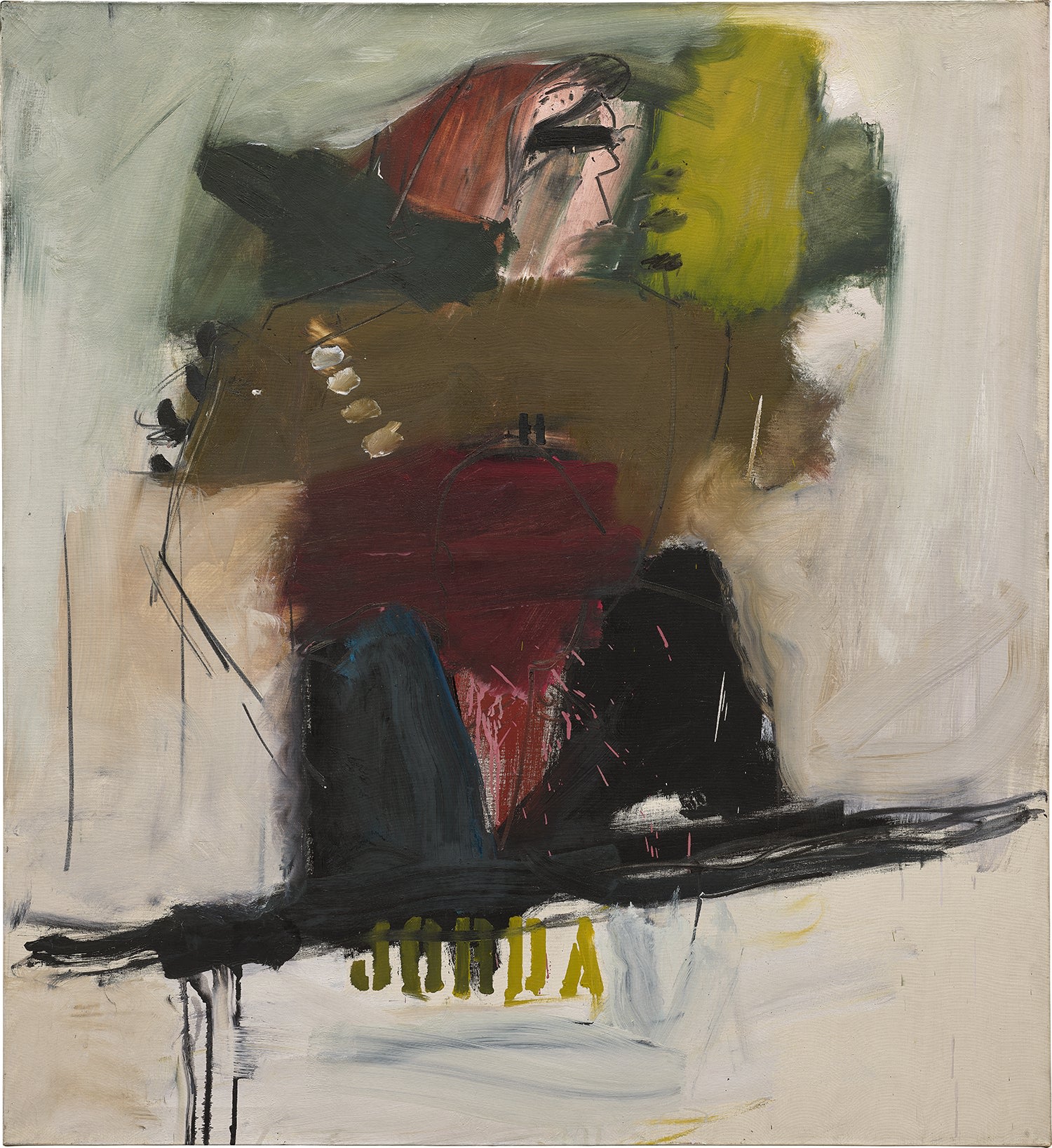
Larry Rivers
Arab King Hussein at the U.N., 1960
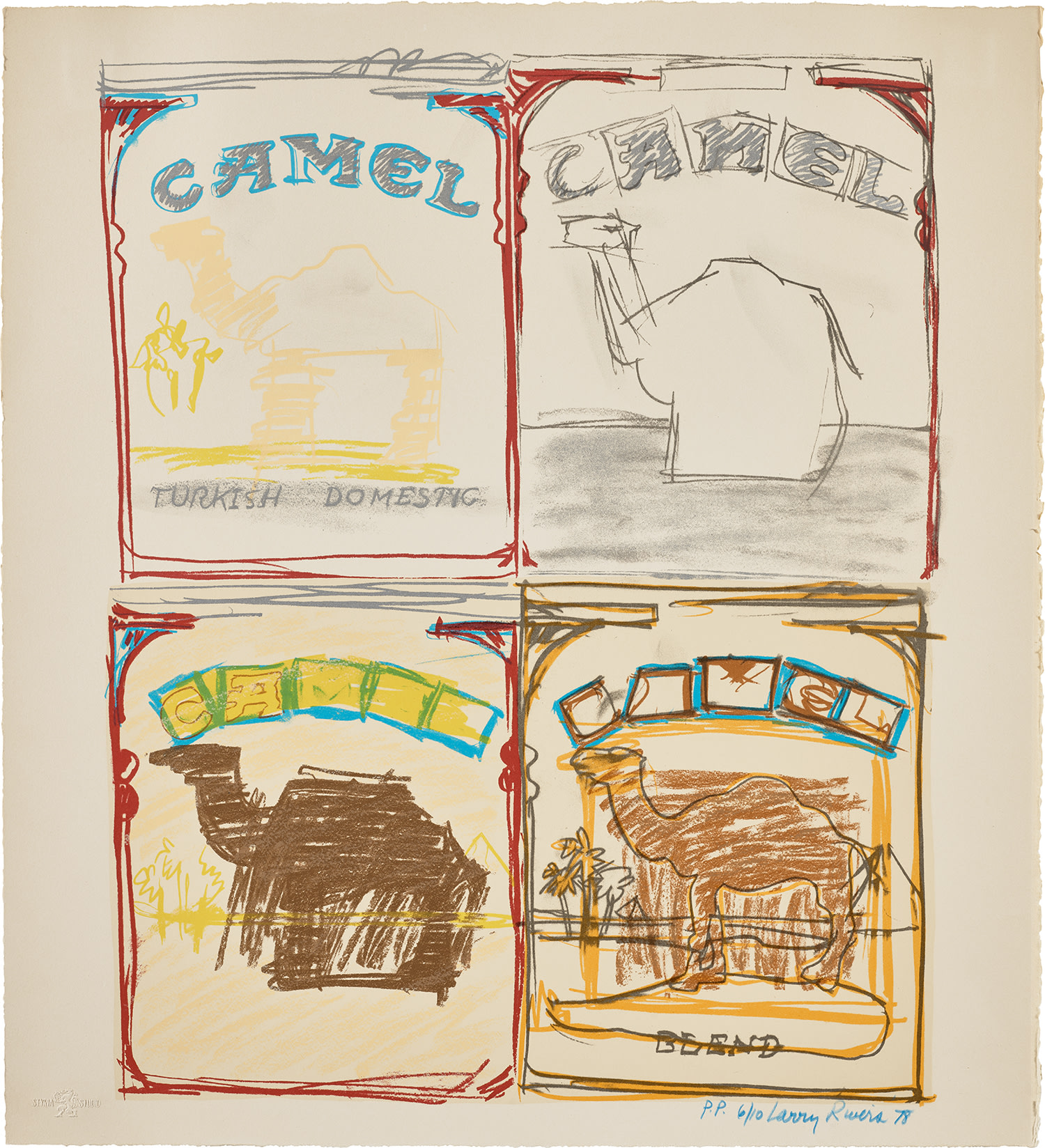
He was making something more unsettling: a diagnosis of how power circulates in a media saturated culture. Larry Rivers brought a different energy to the question of political imagery. His 1953 painting Washington Crossing the Delaware, now in the collection of the Museum of Modern Art, took one of the most mythologized moments in American history and subjected it to an almost insolent looseness of execution. The gesture was not merely stylistic.
Rivers was interrogating what it meant for a young country to manufacture its own founding mythology through images, and what happened when you refused to let those images harden into icons. His work, available on The Collection, sits at an interesting crossroads between Abstract Expressionism and a kind of wry, streetwise historicism that anticipates later generations of artists who would take American political culture apart image by image. The conceptual and photographic turns of the late twentieth century opened the field still further. Hiroshi Sugimoto's long exposure photographs of wax figures of historical and political leaders, part of his Portraits series, present us with images that are at once eerily convincing and deeply strange.
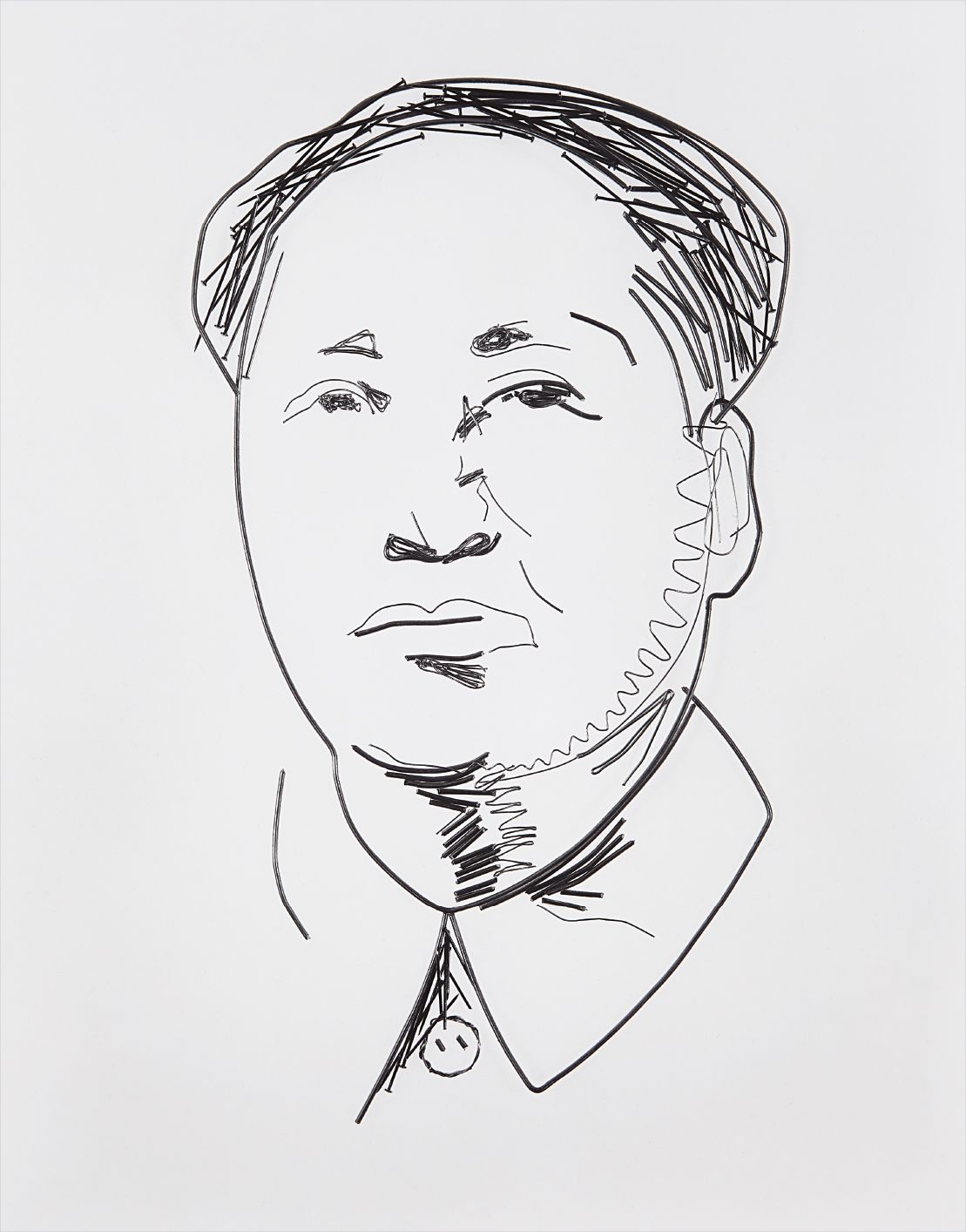
Vik Muniz
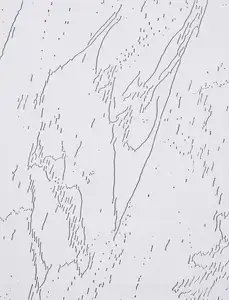
Study for Mao
Because a wax figure is itself a portrait, Sugimoto's photographs are portraits of portraits, a doubling that raises quietly devastating questions about authenticity, representation, and the degree to which we ever encounter historical figures at all or only their accumulated representations. His work on The Collection operates with characteristic restraint, and the silence it generates is political in the deepest sense. Vik Muniz approaches similar territory from a completely different angle. His work in the Pictures series and beyond has consistently explored how images are constructed from materials that carry their own weight and associations.
When Muniz recreates famous portraits or political imagery from unexpected substances, sugar, chocolate syrup, magazine clippings, he is not simply being clever. He is asking us to think about the material conditions of representation, about what images are made of and what that making conceals. His presence on The Collection enriches any conversation about political portraiture because he refuses to let the image be innocent. What unites this tradition across five centuries and wildly different contexts is a fundamental question about who controls the narrative of a life in public.
Official portraiture says: this is what we wish you to see. Satirical portraiture says: look what they are hiding. Conceptual approaches to the political portrait go further still, asking whether the face itself is a reliable site of meaning, or whether power has learned to use even the portrait against us. The best works in this tradition hold all three of those possibilities in tension at once.
For collectors, political portraiture presents a particularly rich field precisely because it refuses to separate aesthetics from history. These works do not hang quietly. They argue. They implicate.
They remind us that the image of a face was never a neutral thing, and that every decision about how power is depicted is also a decision about how power is understood. In a moment when political imagery is more pervasive and more deliberately constructed than at any point in history, that argument feels not only relevant but urgent.