Nativity
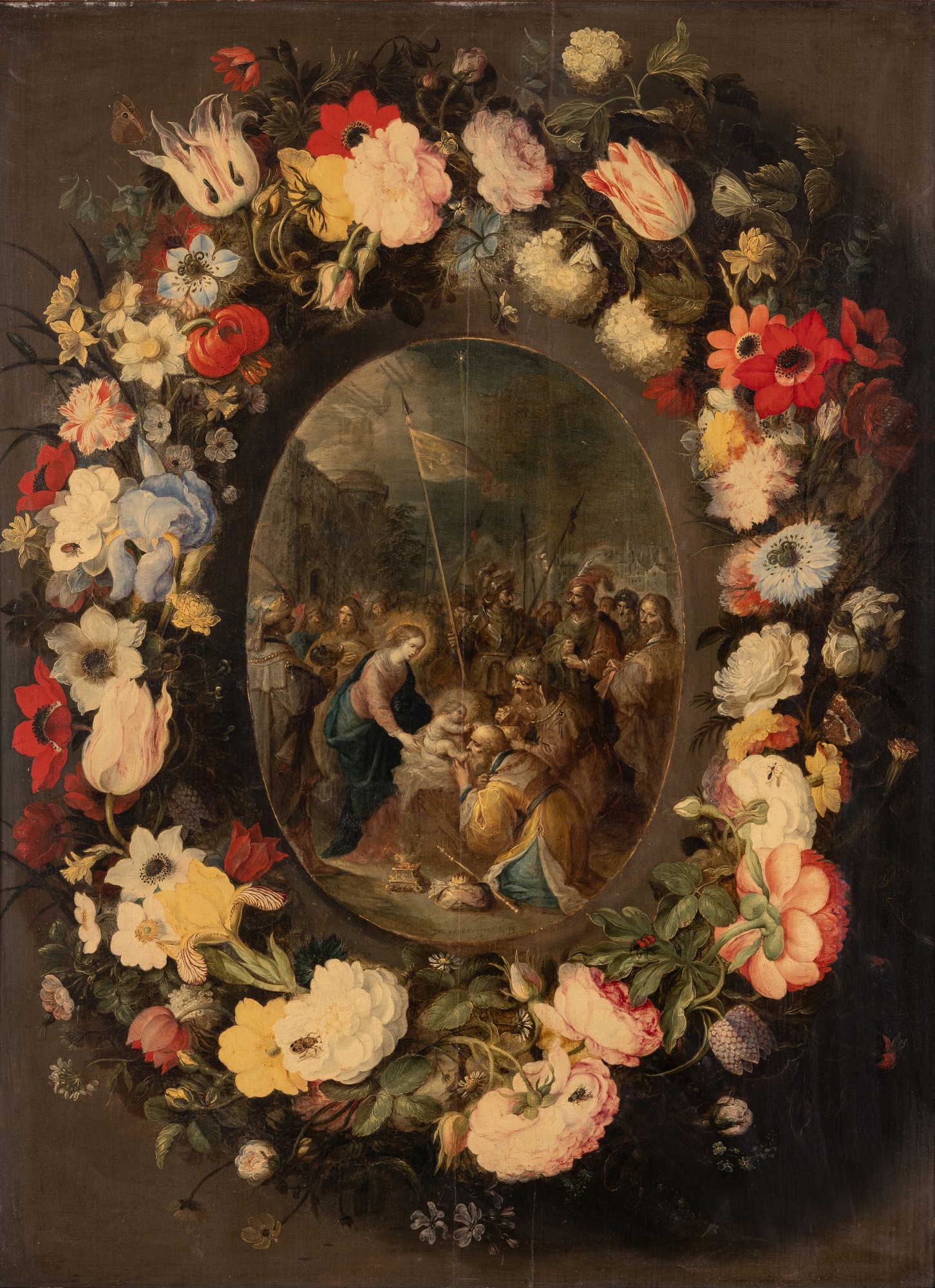
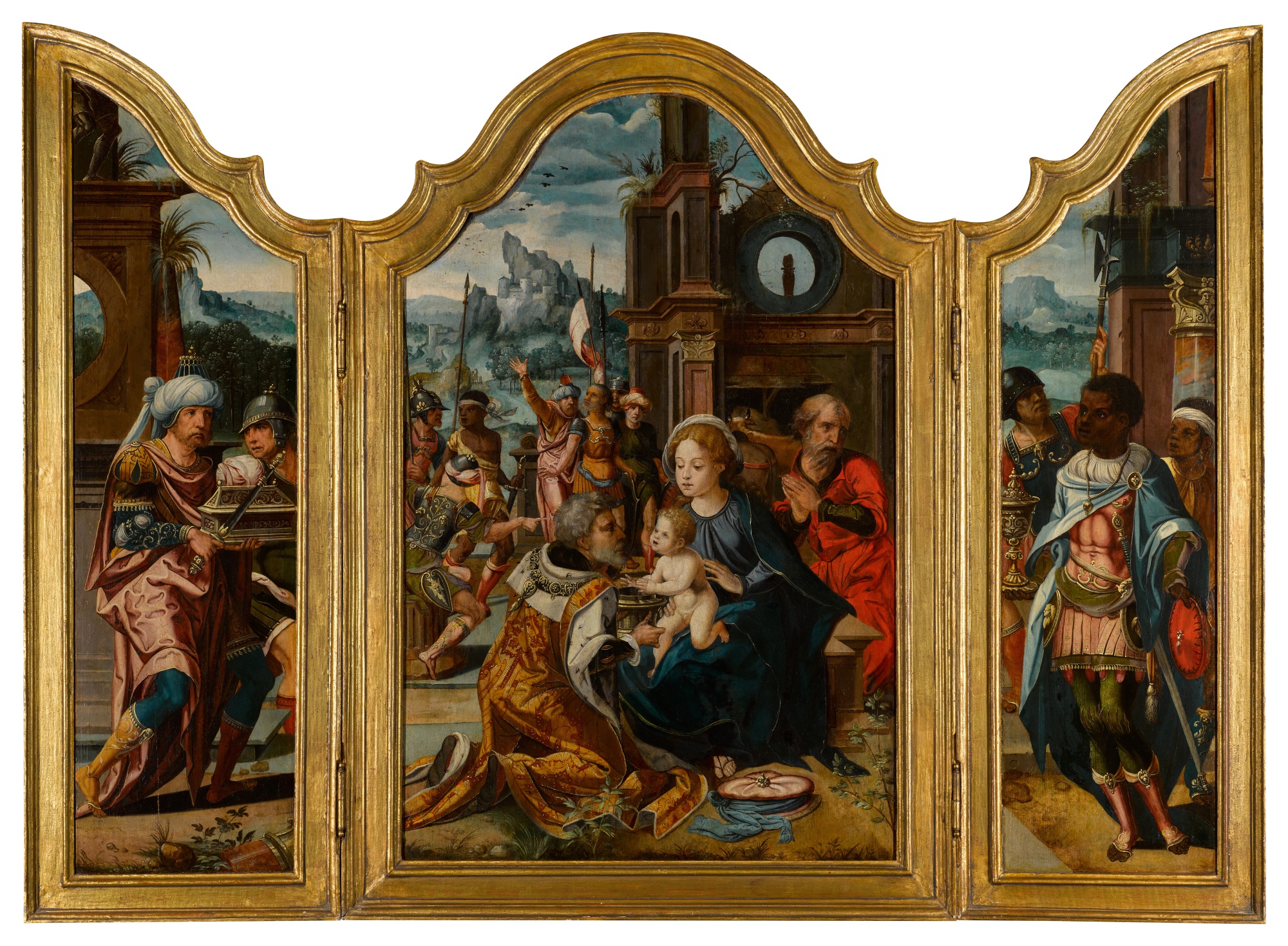
Jan Breughel the Younger and Frans Francken the Younger
The Adoration of the Magi, surrounded by a garland of flowers
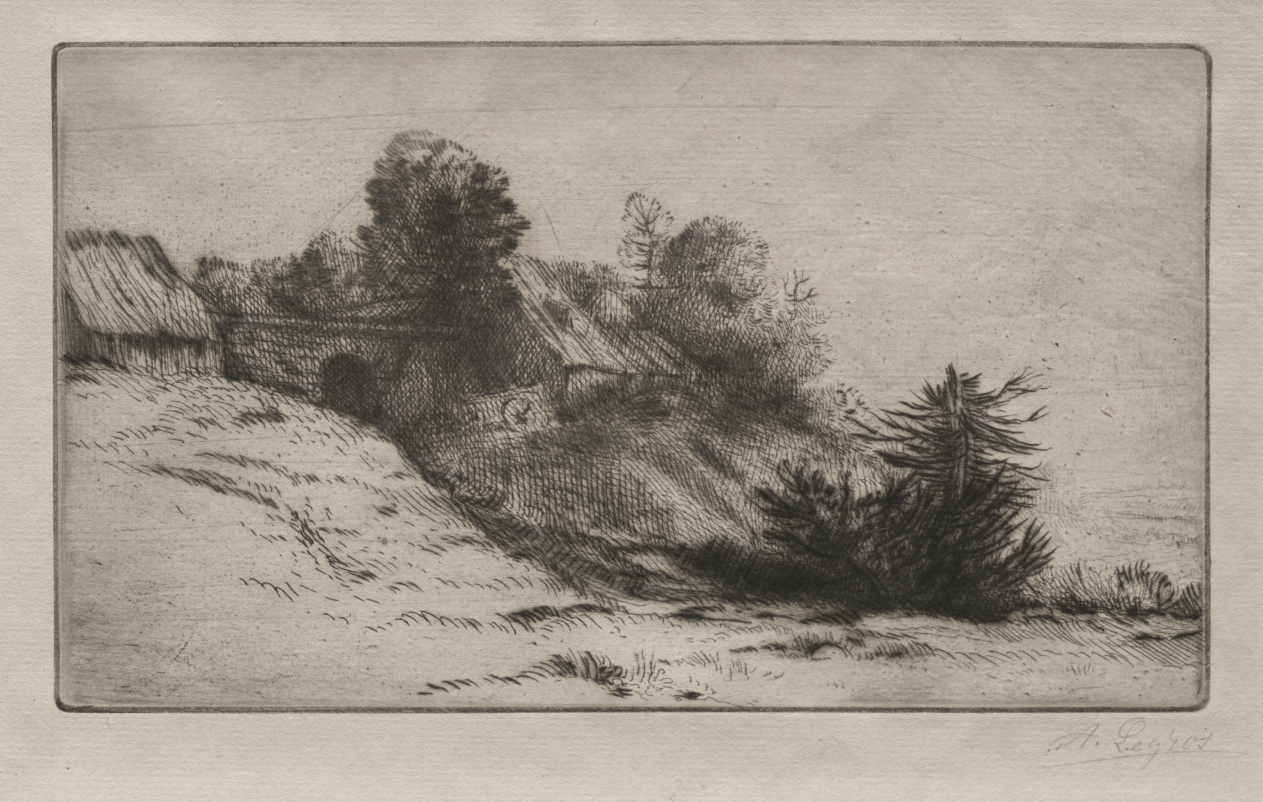
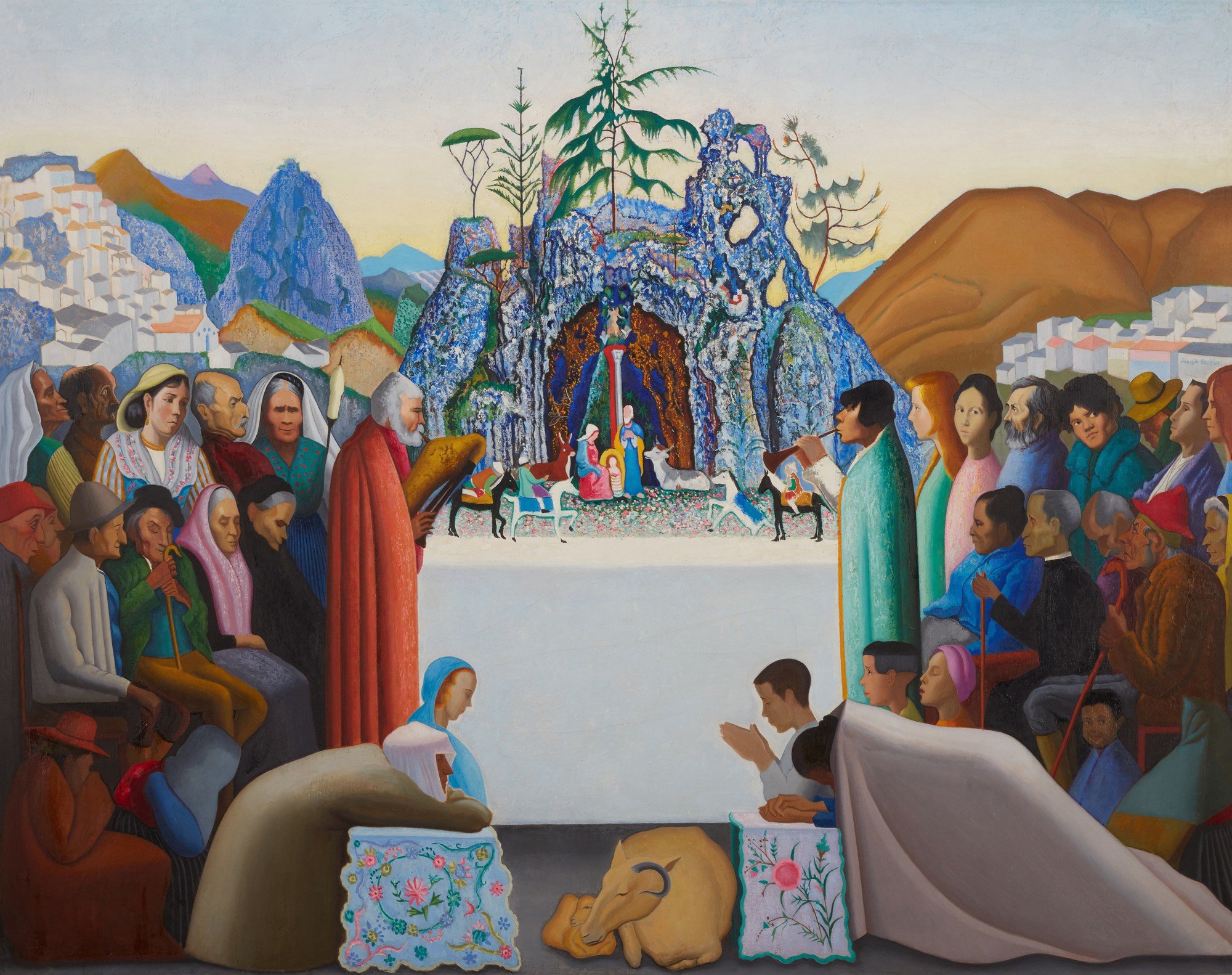
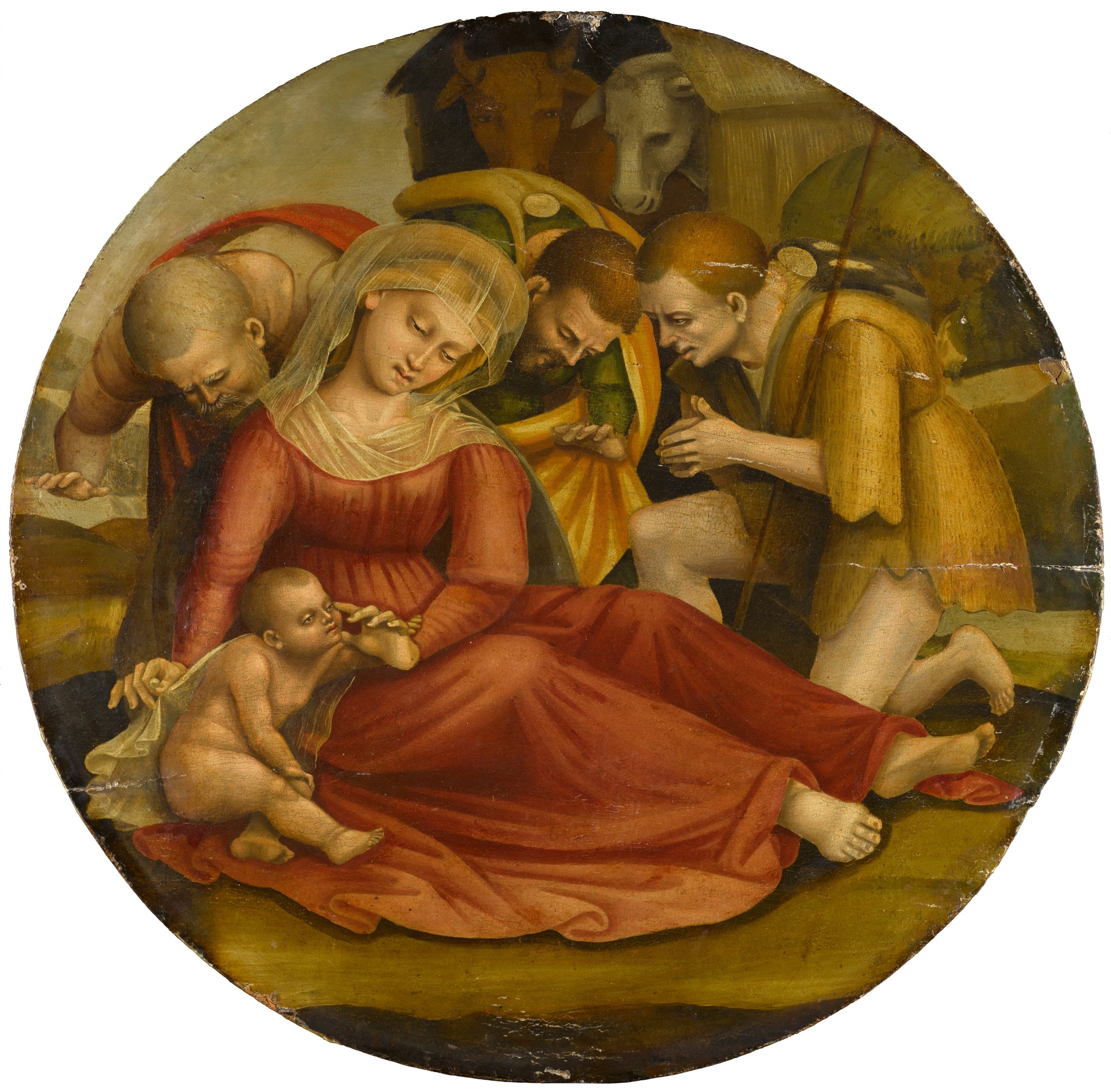
Light in the Straw: Nativity's Enduring Gaze
Few subjects in the history of Western art have demanded so much from painters, and received so much in return, as the Nativity. A scene of radical vulnerability, a newborn child in a manger surrounded by animals and the soft bewilderment of new parents, it has been rendered across six centuries with every conceivable emotional register, from the hieratic solemnity of Byzantine gold grounds to the flickering candlelit intimacy of the Baroque. What keeps drawing artists back is precisely what makes the subject so difficult: it asks you to make the transcendent feel like something that actually happened, in a real place, on a cold night, to real people who had no idea what they were part of. The iconography of the Nativity as we recognize it today solidified gradually across the medieval period, drawing on two Gospel accounts that are themselves selective and spare.
By the thirteenth century, artists working within the Franciscan tradition began introducing the stable, the ox and the ass, the hovering angels, all details absorbed from devotional literature and popular imagination rather than scripture alone. The Meditationes Vitae Christi, a widely circulated text attributed to the Franciscan Pseudo Bonaventure, gave painters a vivid narrative to work from, and its influence can be felt across Italian panel painting from Giotto onward. The scene became a primary vehicle for exploring one of painting's most persistent problems: how to show divinity made flesh, how to locate holiness not in the distant and the golden but in the ordinary and the near. Benozzo Gozzoli, whose remarkable fresco cycle in the Palazzo Medici Riccardi in Florence dates to 1459, understood the Nativity as an occasion for courtly spectacle as much as sacred meditation.
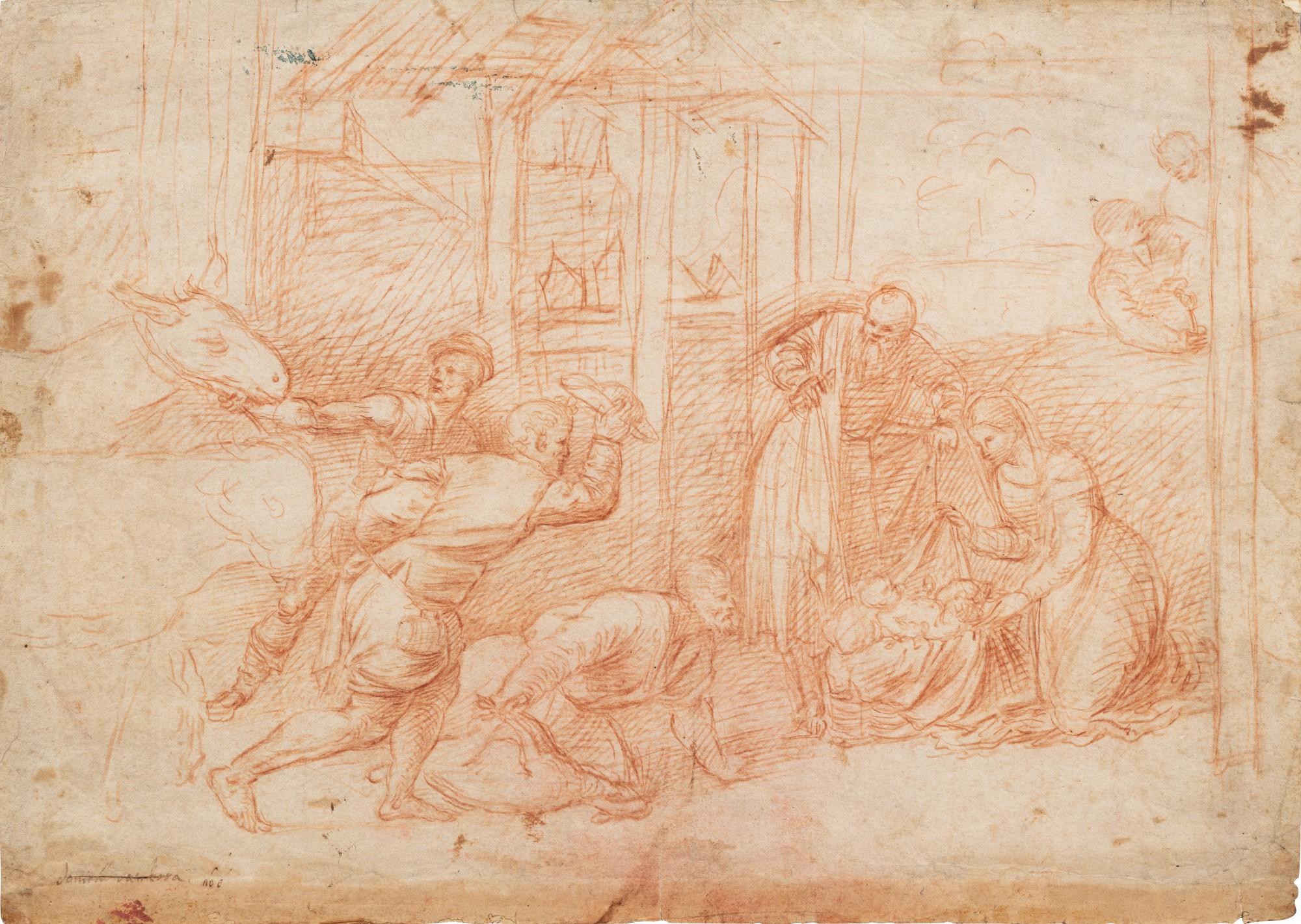
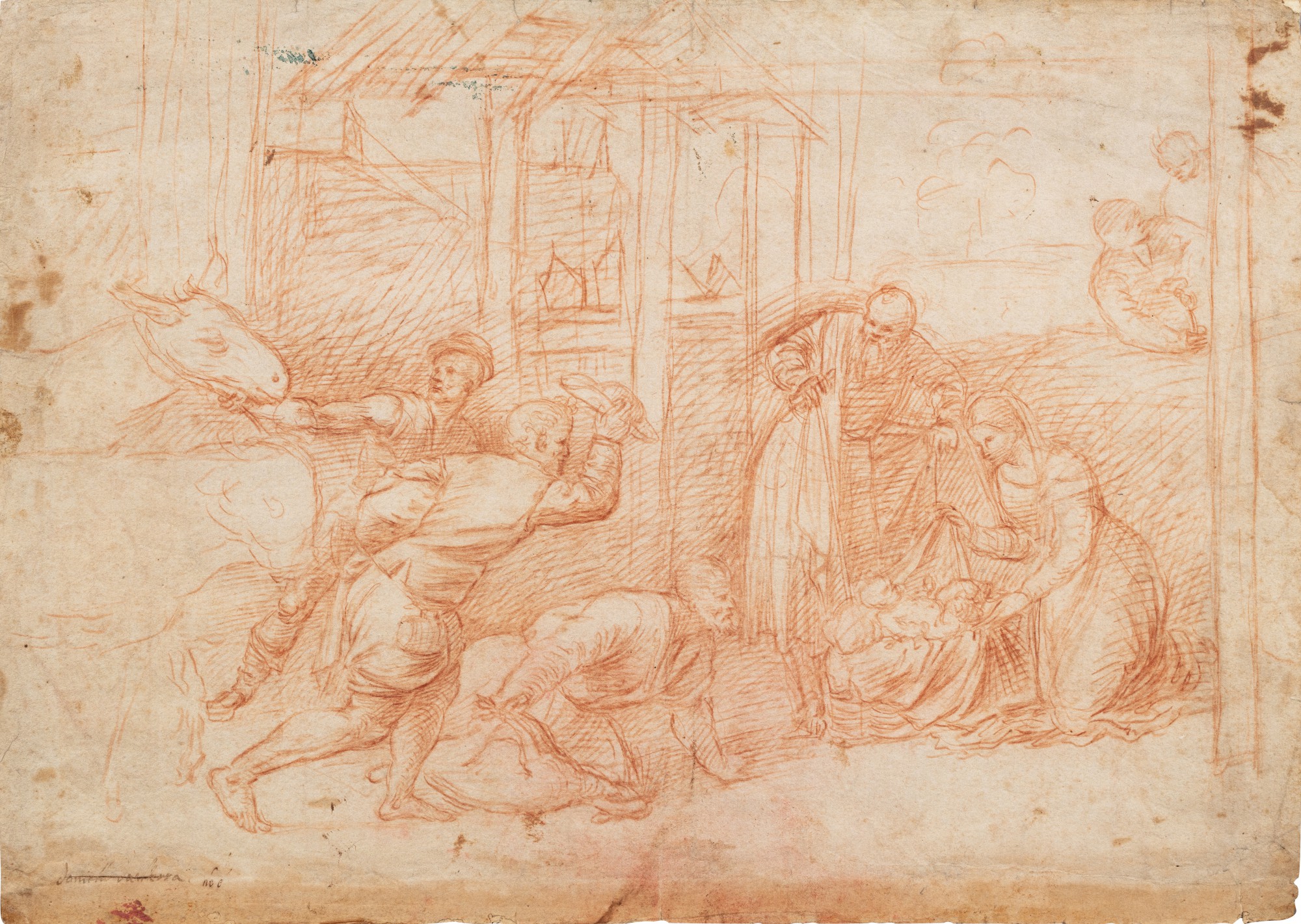
Attributed to Camillo Boccaccino
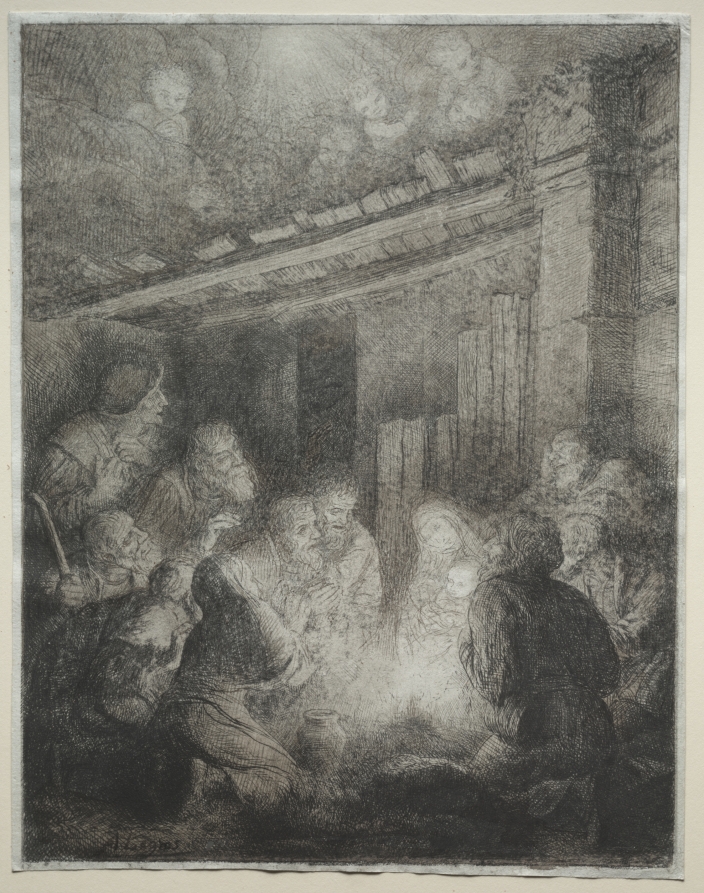
The Adoration of the Shepherds, after Titian
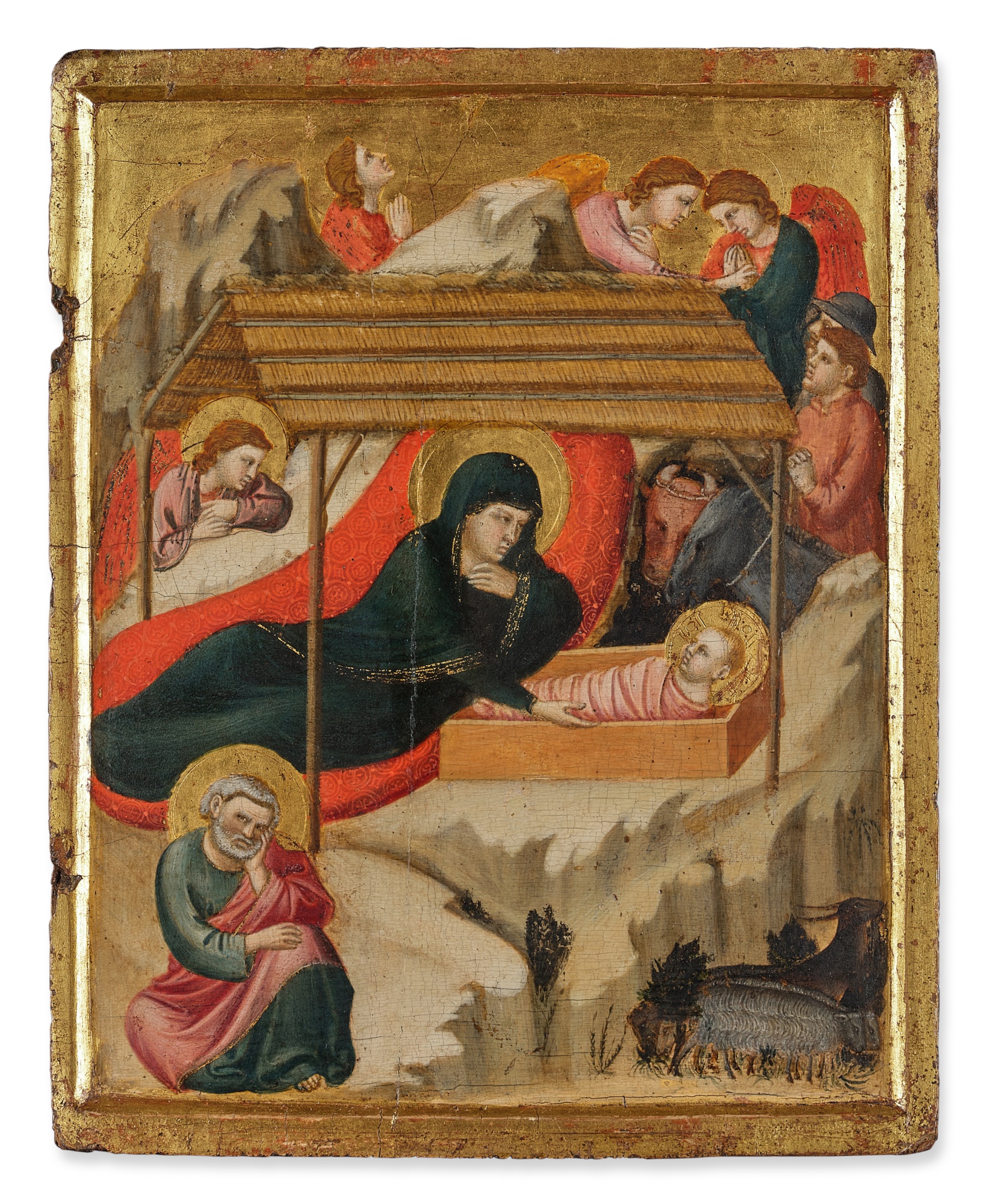
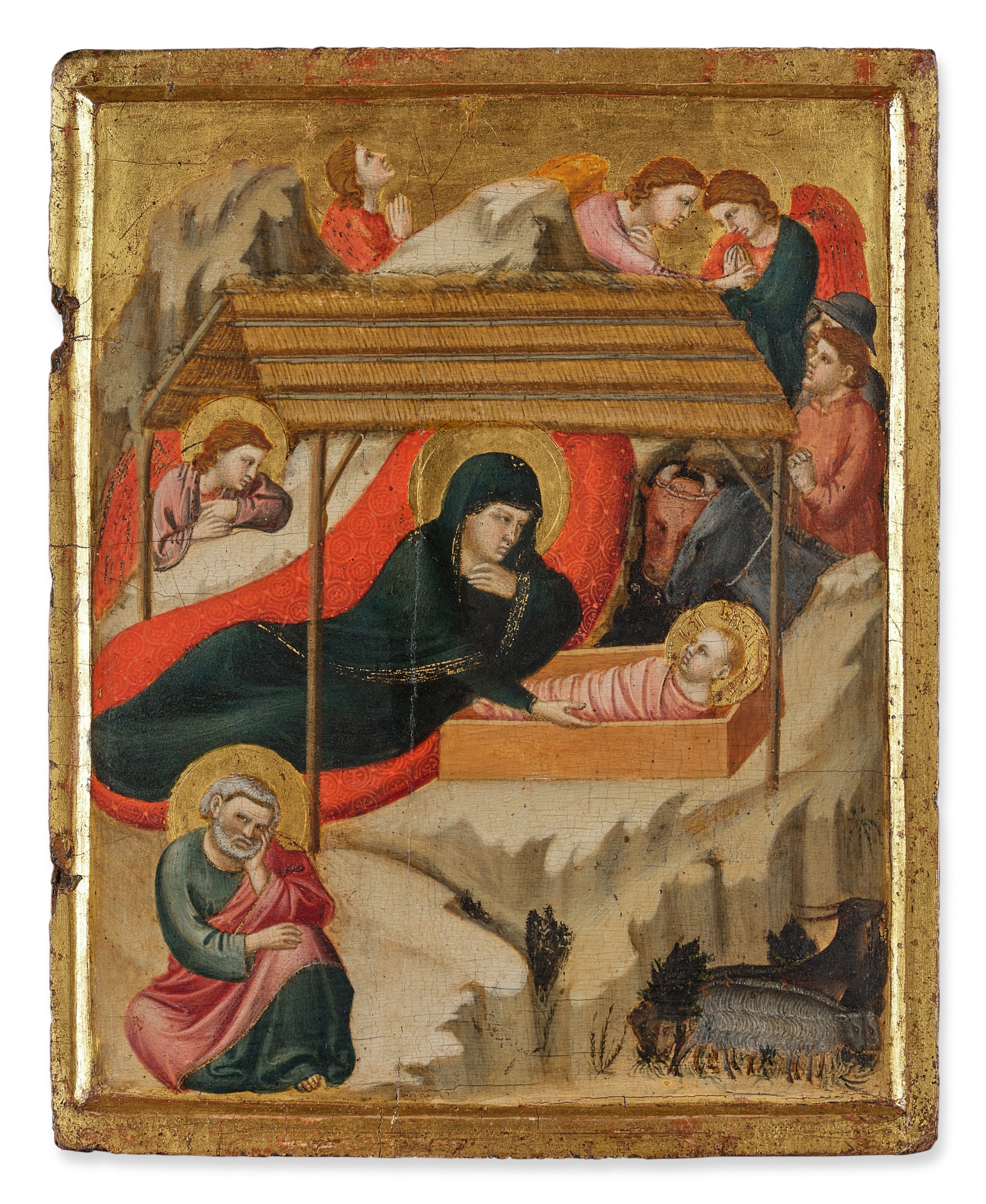
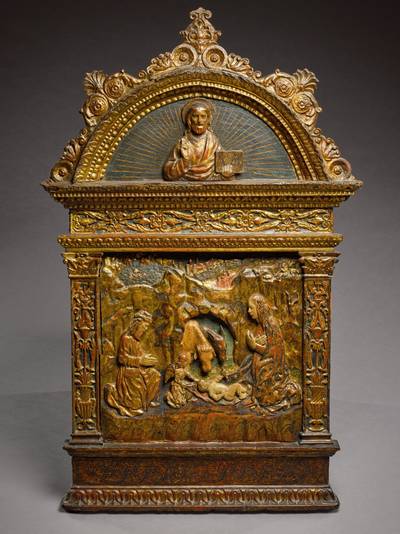
Working in Tuscany in the generation after Fra Angelico, Gozzoli brought a delight in procession, in costume and landscape and the sheer pleasure of the visible world, to sacred narrative. That sensibility connects him to a broader Florentine tradition of humanizing the holy, making the divine story feel inhabited by figures you might actually encounter. The Workshop of Andrea di Nerio, operating slightly earlier in the Trecento, shows how those representational conventions were already taking shape in central Italy, with the characteristic elongated grace of late medieval figure painting giving way, slowly, to something more bodied and present. The fifteenth century brought new urgency and new tools to the subject.
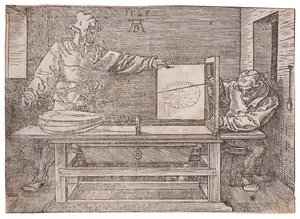
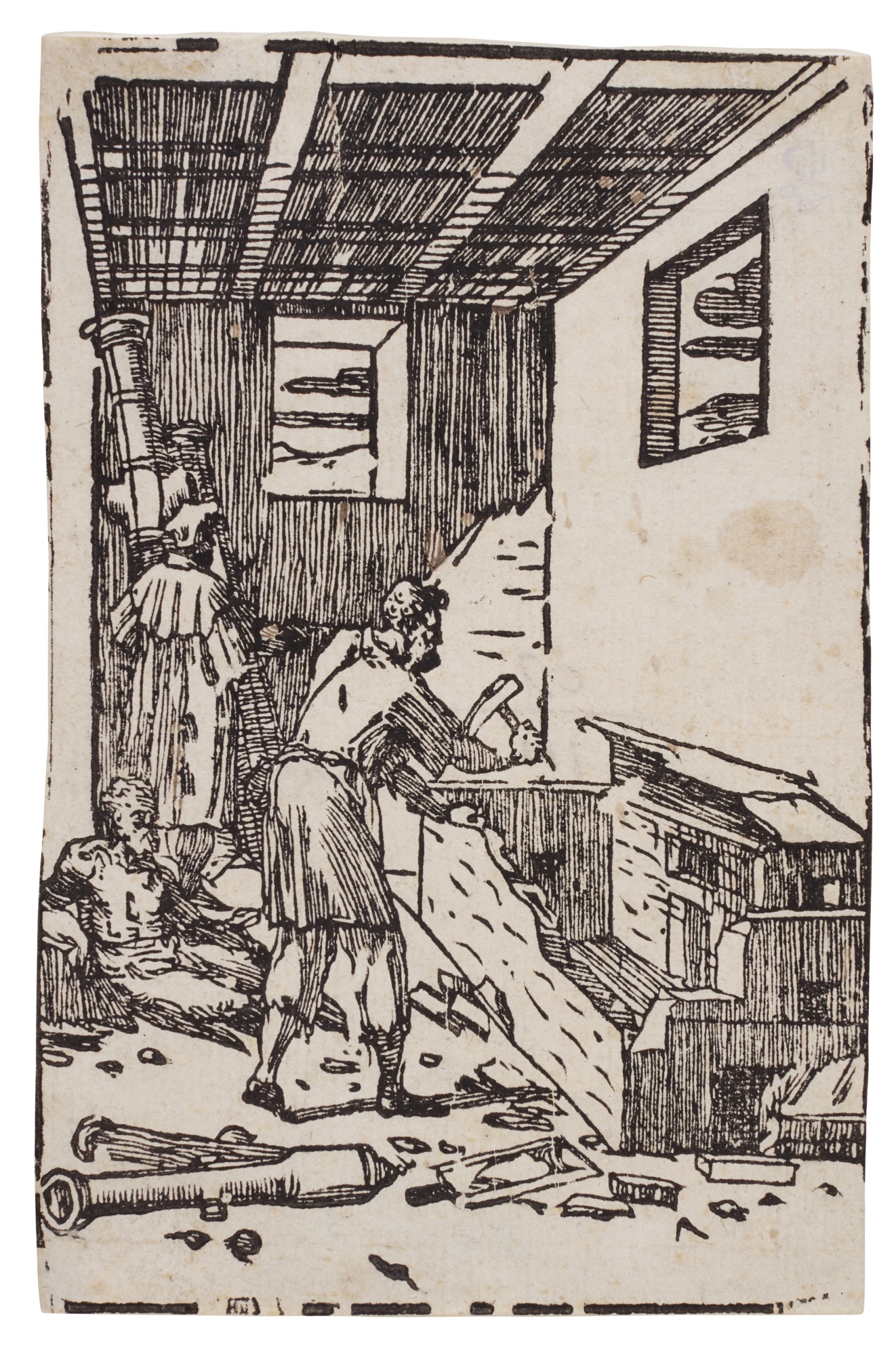
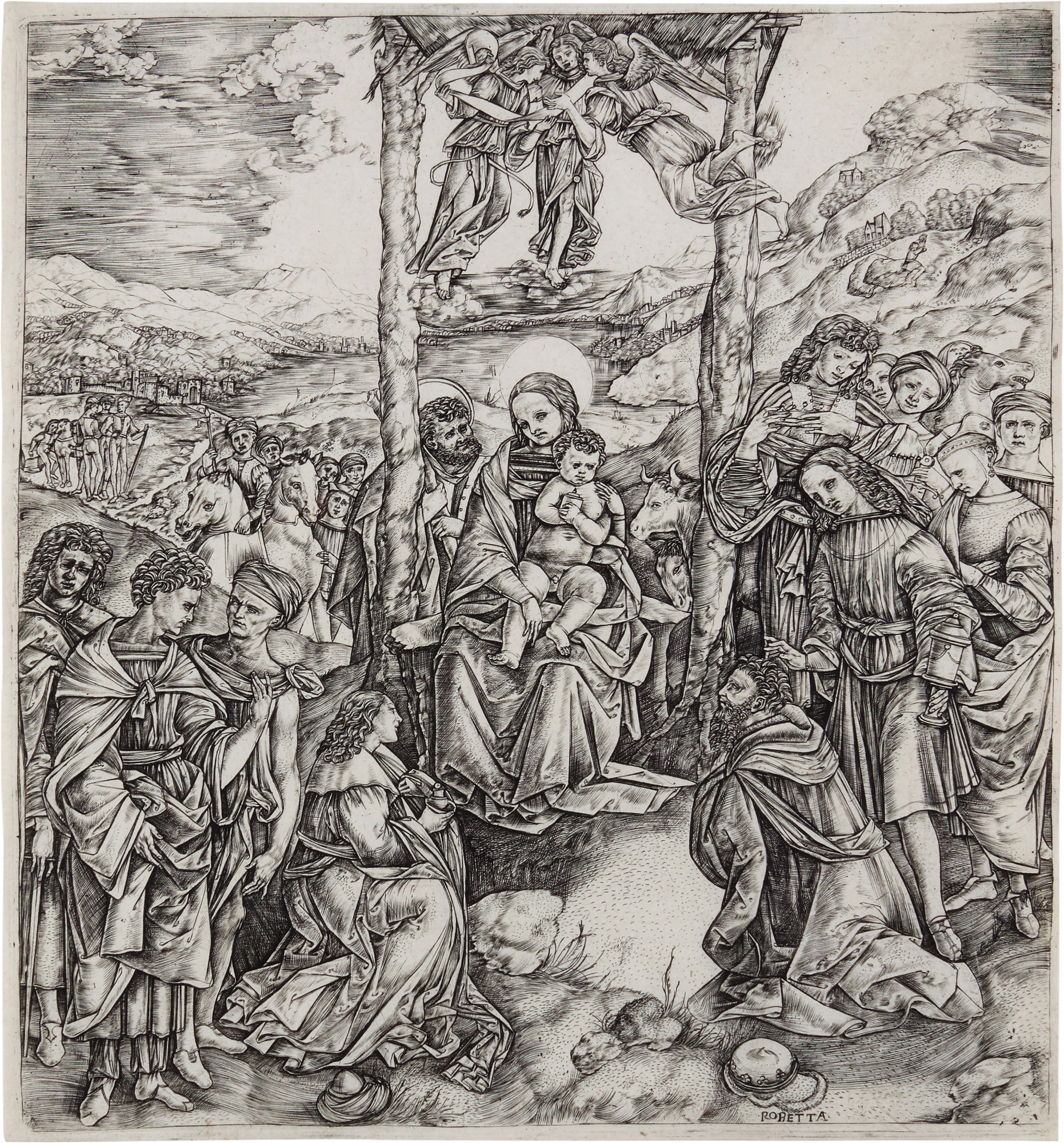
Albrecht Dürer, who visited Italy twice and absorbed everything he could from Mantegna and Giovanni Bellini, approached the Nativity with his characteristically analytical eye. His prints on the subject, including the celebrated series from the Life of the Virgin completed around 1511, show a German master pushing the compositional possibilities of a familiar subject into new formal territory. The way Dürer handles architectural space, the interplay of ruined classical structures with the humble domestic scene playing out within them, speaks to a northern European fascination with decay and regeneration that inflects the subject quite differently from Italian treatments. Cristofano Robetta, the Florentine engraver working in the late fifteenth and early sixteenth centuries, was among the Italian artists who encountered and adapted Dürer's northern innovations, a reminder of how rapidly visual ideas traveled across Europe even before print culture fully matured.
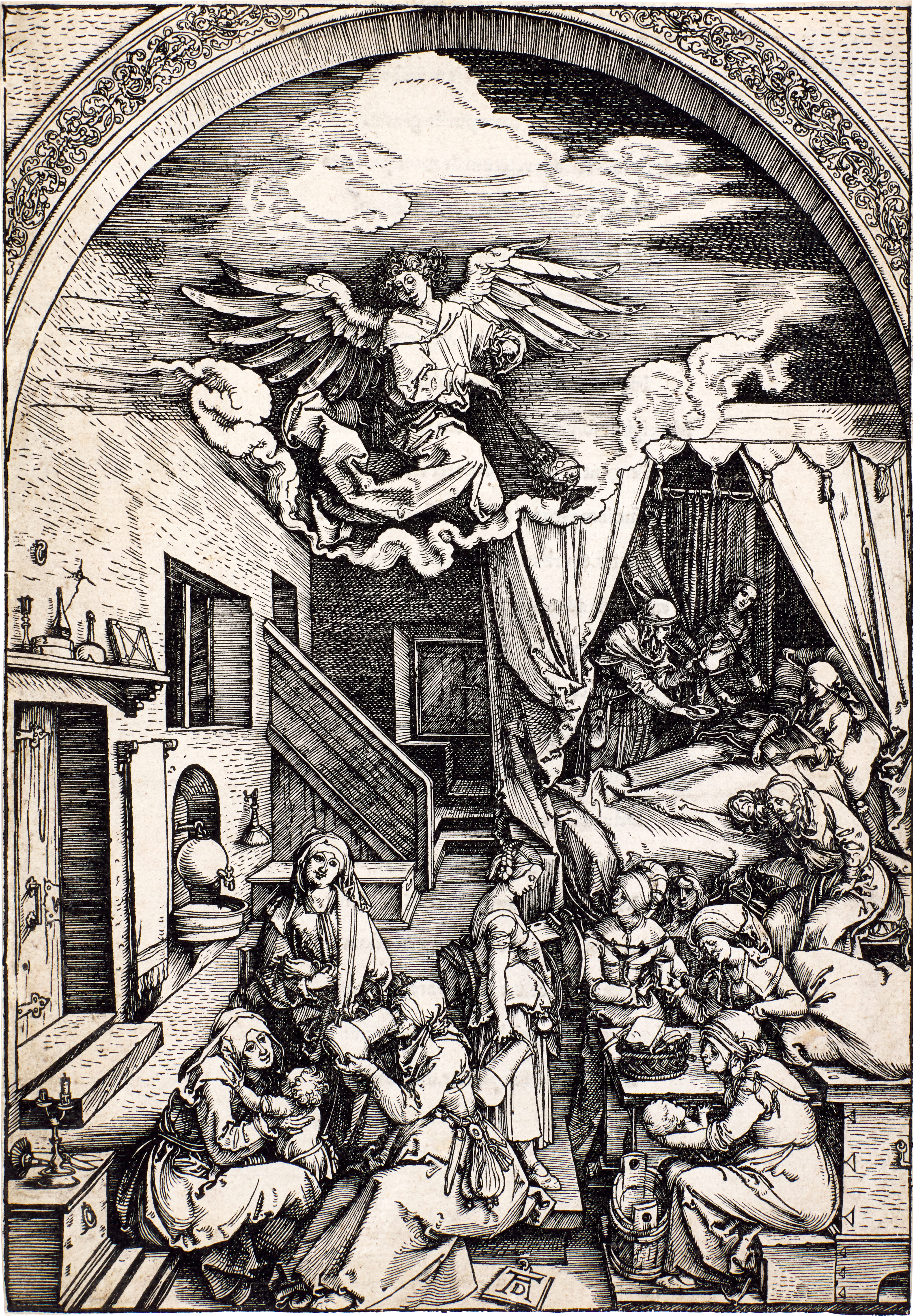
Albrecht Dürer
The Birth of the Virgin (B. 80; M., Holl. 192)
In the sixteenth century the subject opened up into something more dramatically charged. Bernardino di Betto, known as Pinturicchio, brought his characteristic gift for decorative richness and lush landscape backgrounds to sacred narratives, while Domenico Beccafumi, the great eccentric of the Sienese cinquecento, used the Nativity as a vehicle for his extraordinary experiments with nocturnal light. The question of light became central: if the Christ child was himself a source of illumination, what did that mean for the painter arranging shadows? Francesco Signorelli, working in the tradition established in Umbria and Tuscany, navigated that question with the careful attention to spatial coherence that characterized the central Italian school.
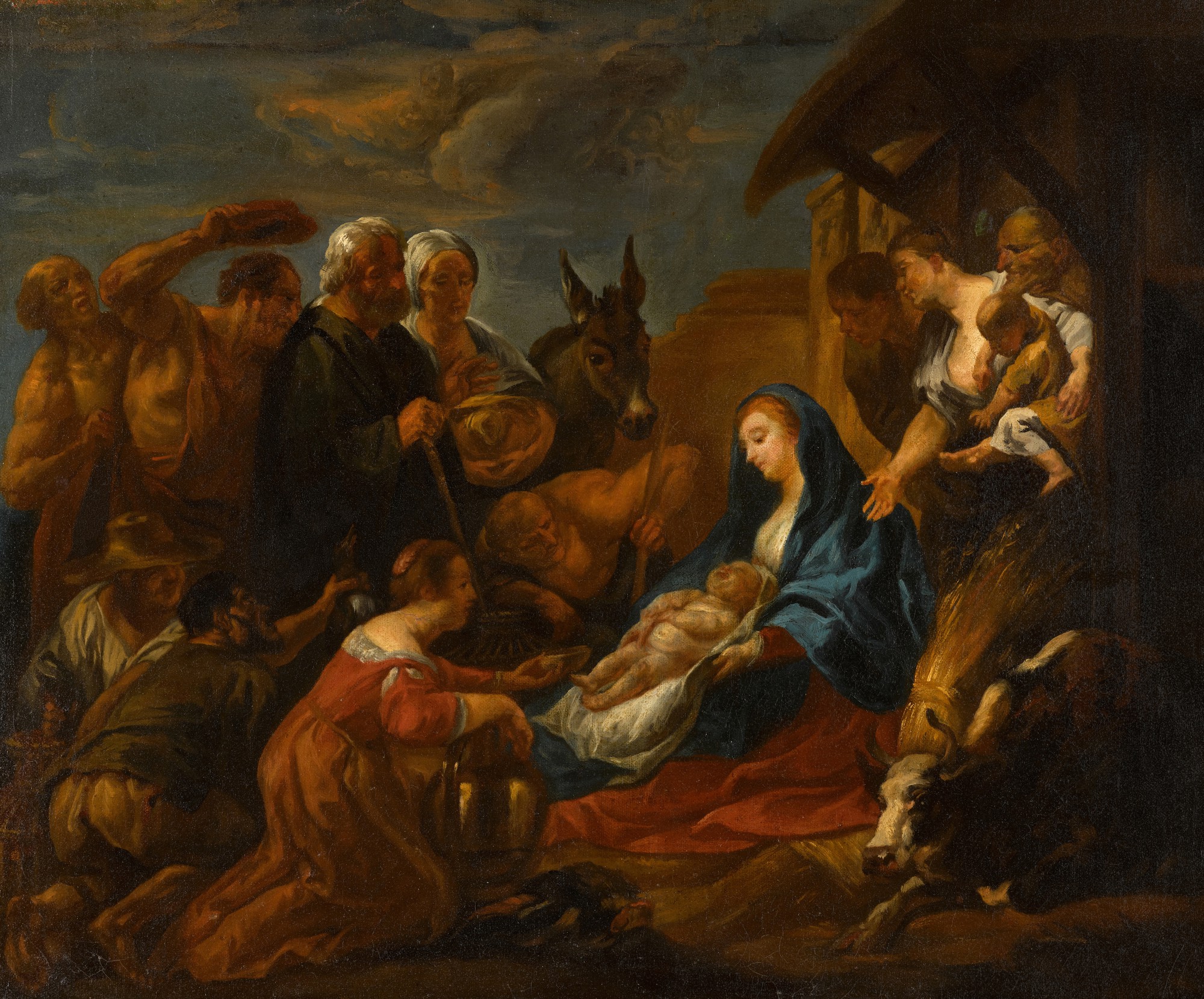
Camillo Boccaccino, the Cremonese painter active in the early sixteenth century and working in a tradition influenced by Venetian colorism, brought a different warmth to the subject, one rooted in the sensuous handling of paint that characterized the Lombard schools around 1500. The Baroque transformed everything. Caravaggio's use of extreme chiaroscuro, his insistence on placing sacred figures in the postures and clothing of ordinary people, gave painters across Europe a new permission to be radical. Jacob Jordaens, the great Antwerp painter who outlived both Rubens and van Dyck, brought a Flemish earthiness to religious subjects that is at once monumental and deeply human.
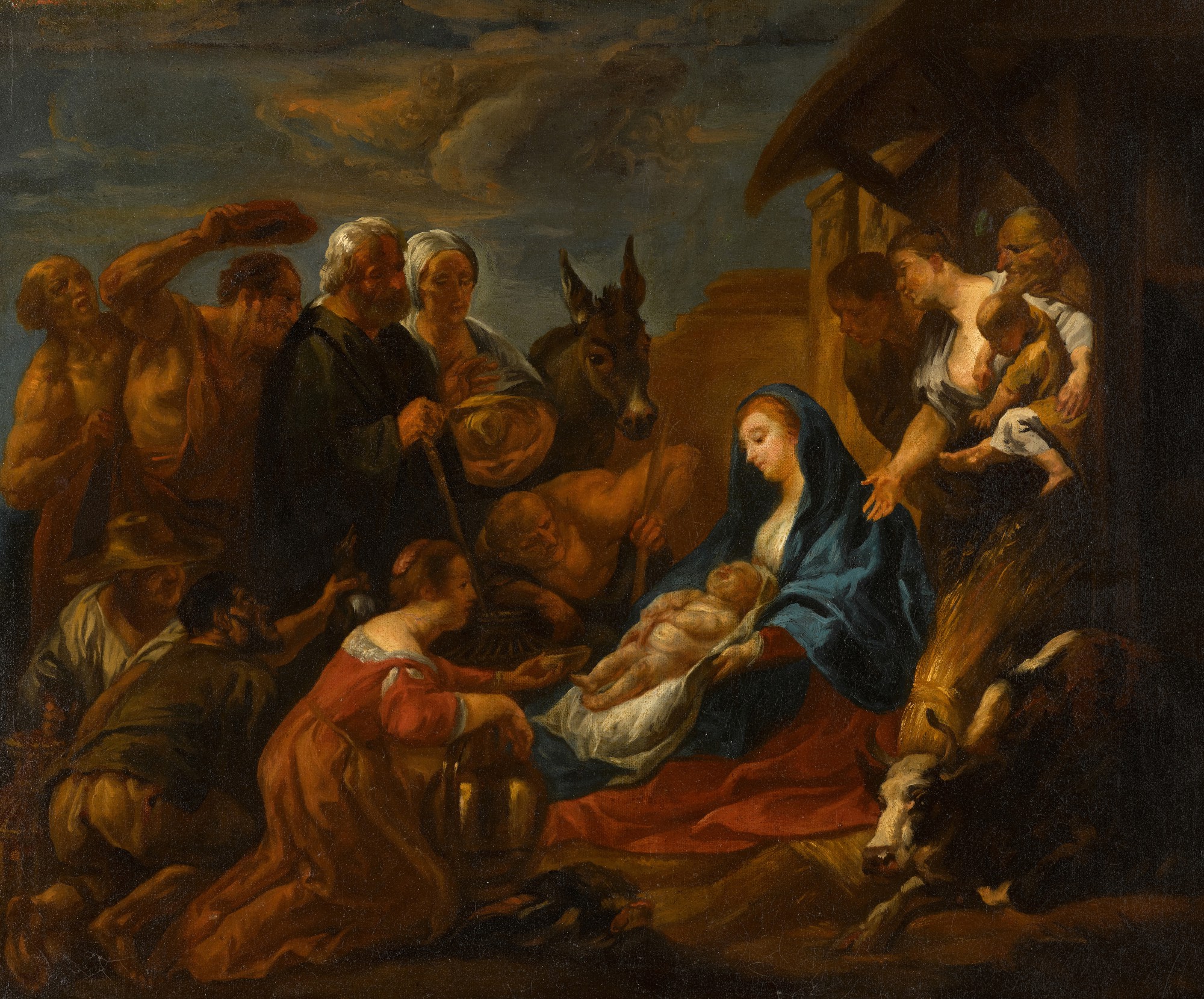
Jacob Jordaens
The Adoration of the Magi
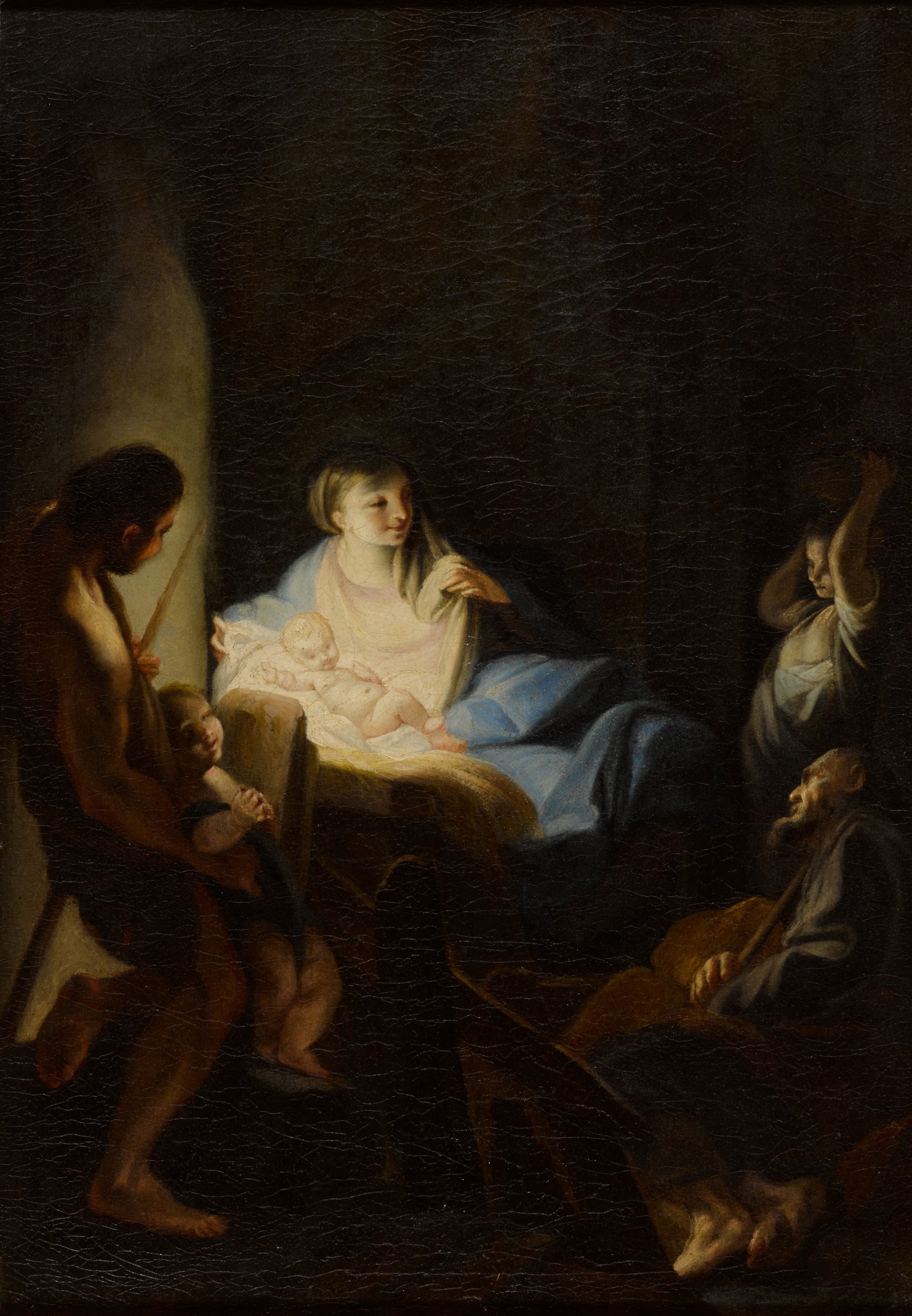
Francesco Solimena, the dominant figure in Neapolitan painting in the late seventeenth and early eighteenth centuries, brought operatic drama to the subject, compositions that seem to strain at their own edges with energy. Hans Rottenhammer the Elder, working between Germany and Venice, synthesized northern and Venetian traditions in small scale devotional works of exquisite refinement. Giovanni Antonio Burrini, the Bolognese painter formed in the tradition of the Carracci, brought academic discipline and genuine feeling together in ways that reward sustained attention. The Flemish tradition produced some of the most layered and visually complex treatments of the Nativity in the entire canon.
Jan Brueghel the Younger and Frans Francken the Younger, two of the great collaborators of Antwerp's Golden Age, brought their combined gifts for landscape, interior detail and narrative incident to religious subjects with results of extraordinary richness. Benjamin Gerritsz. Cuyp, working in Dordrecht in the seventeenth century, represents a somewhat quieter strain of northern devotional painting, more intimate in scale, more focused on the tender specifics of the scene. What is striking, standing back from the full sweep of this tradition, is how insistently the Nativity has served as a mirror for each era's deepest preoccupations.
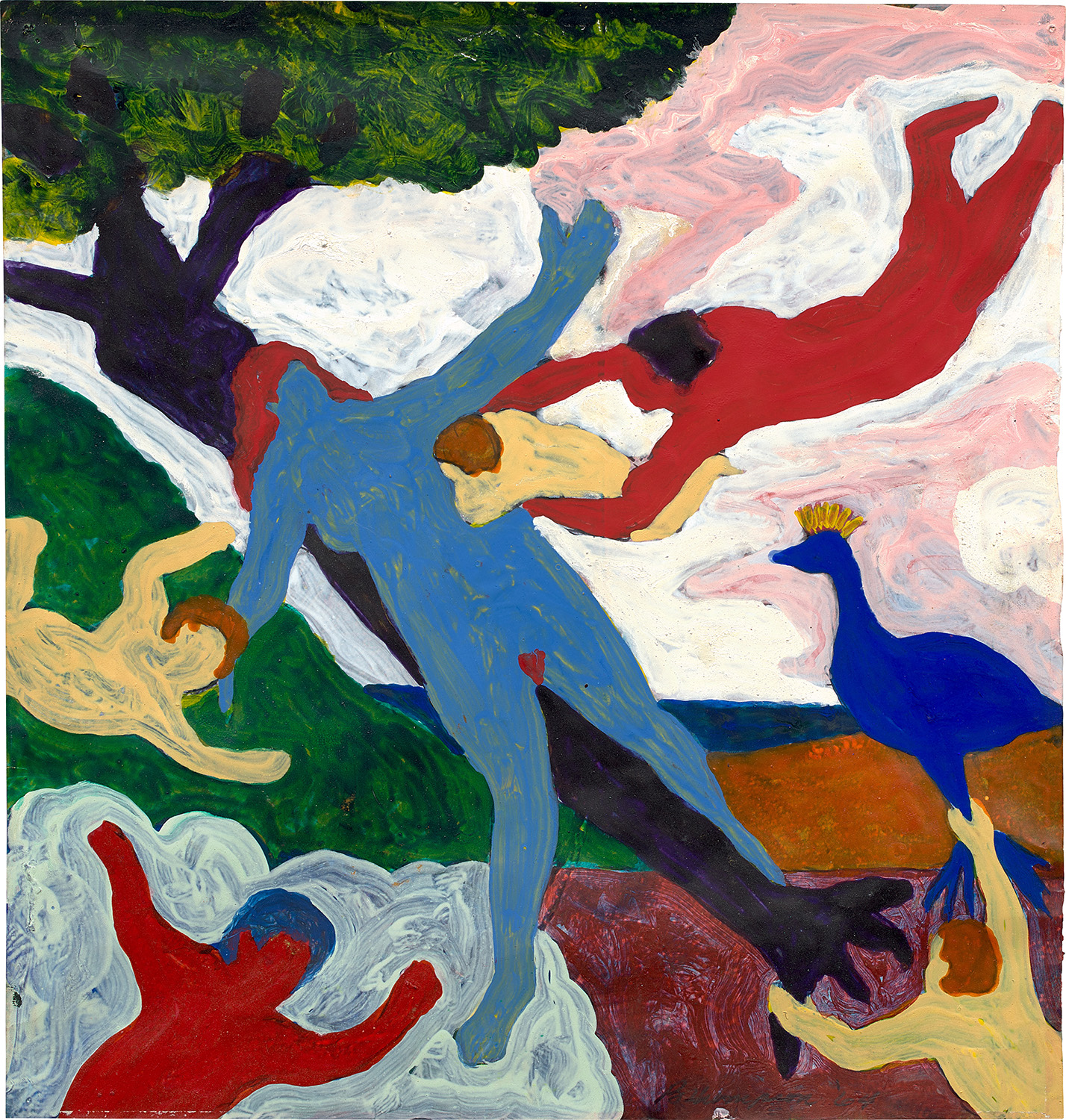
Bob Thompson
Nativity Scene, 1964
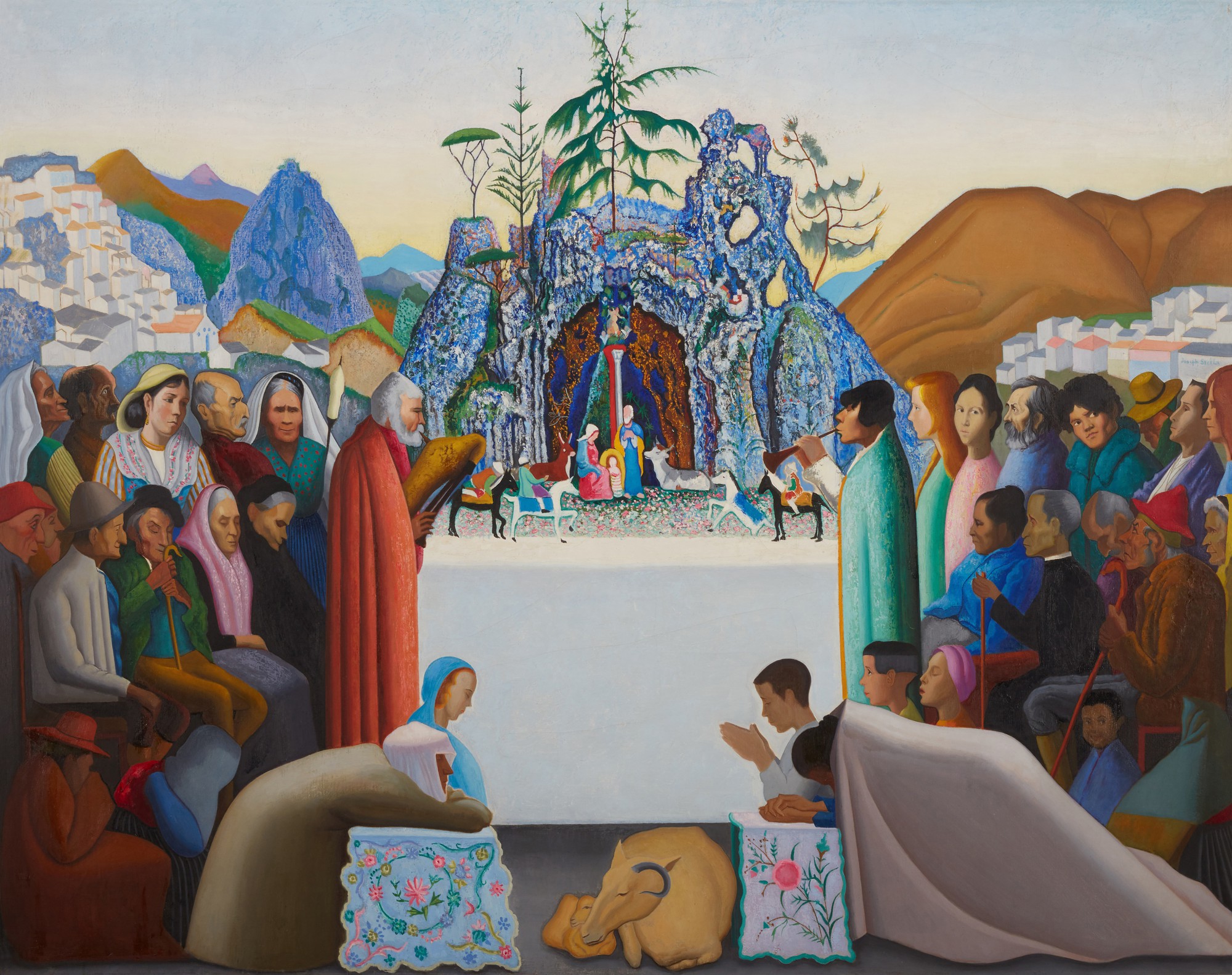
It has accommodated imperial theology and radical humility, courtly magnificence and spare mysticism, the confident draftsmanship of the Renaissance and the atmospheric dissolution of the Baroque. The works gathered on The Collection represent many of those currents, from the careful gold of late medieval devotion to the visceral drama of the seventeenth century. Bob Thompson, the American painter who spent the early 1960s reimagining the entire canon of European religious painting through a lens of raw color and existential urgency, reminds us that the Nativity is not only a historical subject but a living one, still capable of producing something genuinely new. The scene endures because it holds, at its center, an image that resists resolution: immense significance folded into absolute smallness, a light that the darkness has not comprehended.