Material Culture
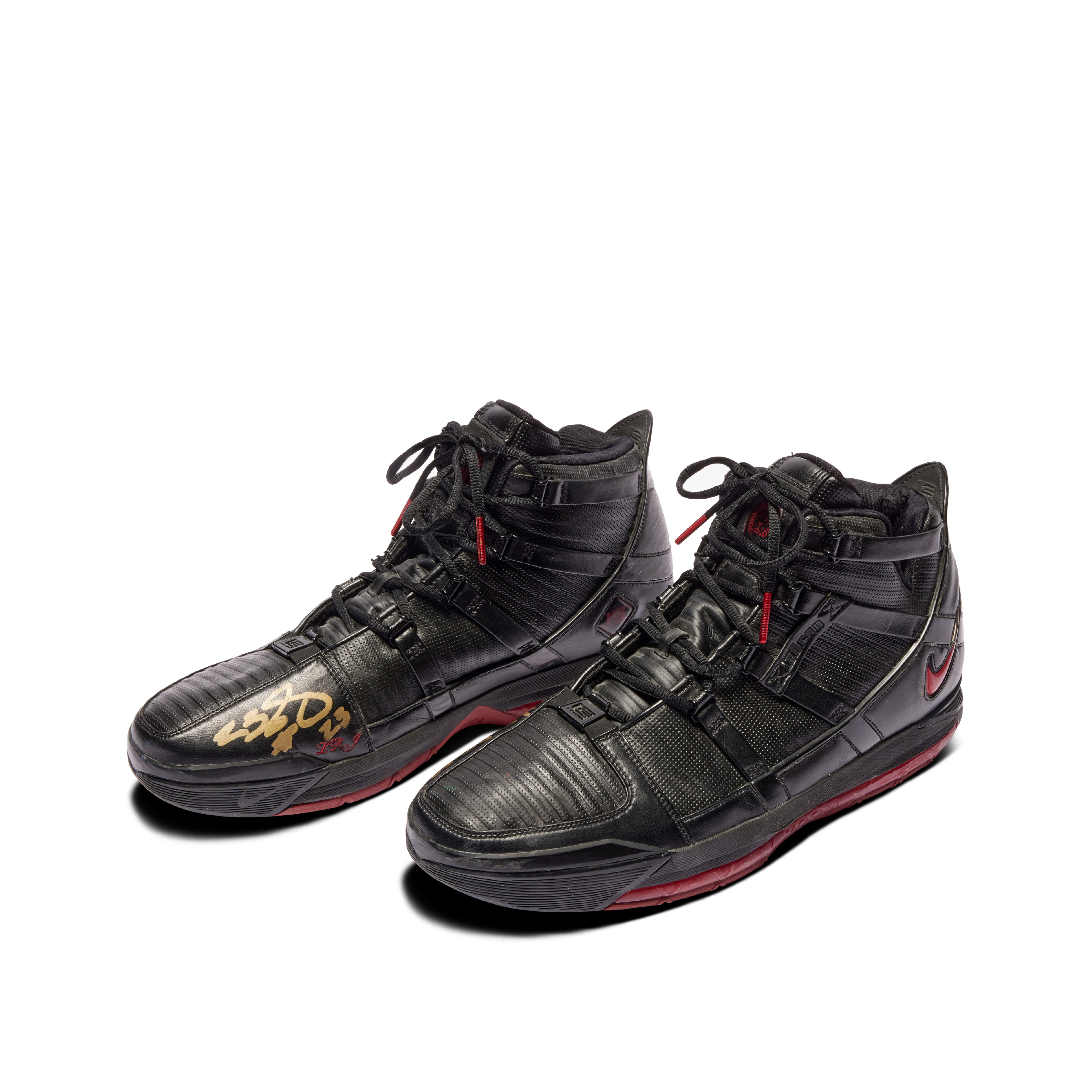
Nike, Nike Zoom Lebron 3, Size 16
Size 16
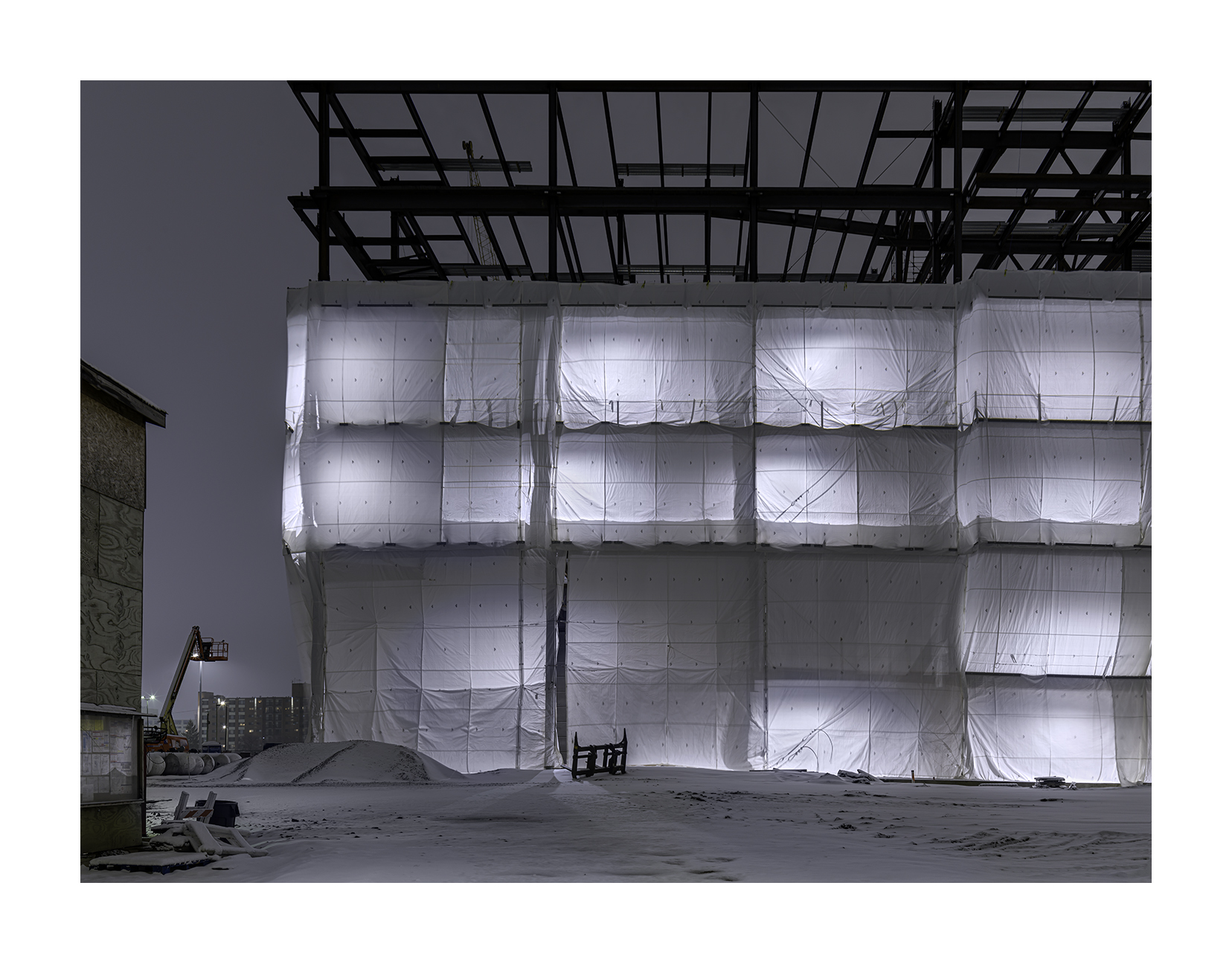
When Objects Speak Louder Than Words
There is something almost transgressive about taking the ordinary seriously. A shoe, a bowl, a carved piece of ivory, a shelf holding commercially manufactured goods these are the things we step over, shelve away, or discard without ceremony. Material culture as an artistic framework insists that we stop, look harder, and ask what human desires, anxieties, and social arrangements are embedded in the things we make and keep. It is one of the most persistently vital currents in contemporary art, and its origins are stranger and more layered than a first glance might suggest.
Anthropologists and historians were thinking about material culture long before artists formalized it as a practice. By the mid nineteenth century, museum collections in Europe and North America were systematically acquiring objects from Indigenous communities, treating them as ethnographic evidence rather than as art or as the expressions of living traditions. The objects that ended up in glass cases tools, ceremonial items, everyday implements were stripped of context and framed as curiosities of the "primitive." That violence of classification would eventually become subject matter in its own right.
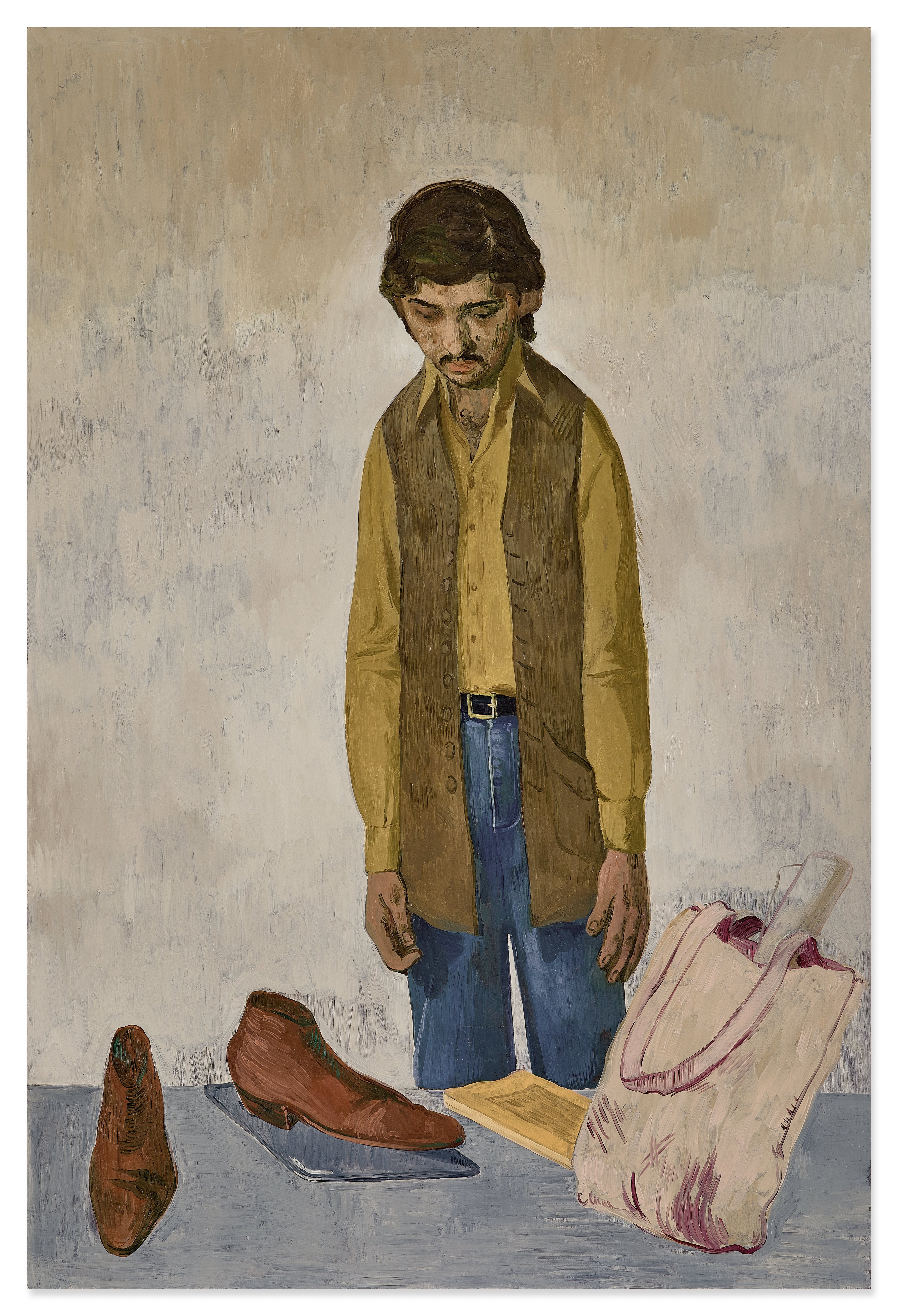
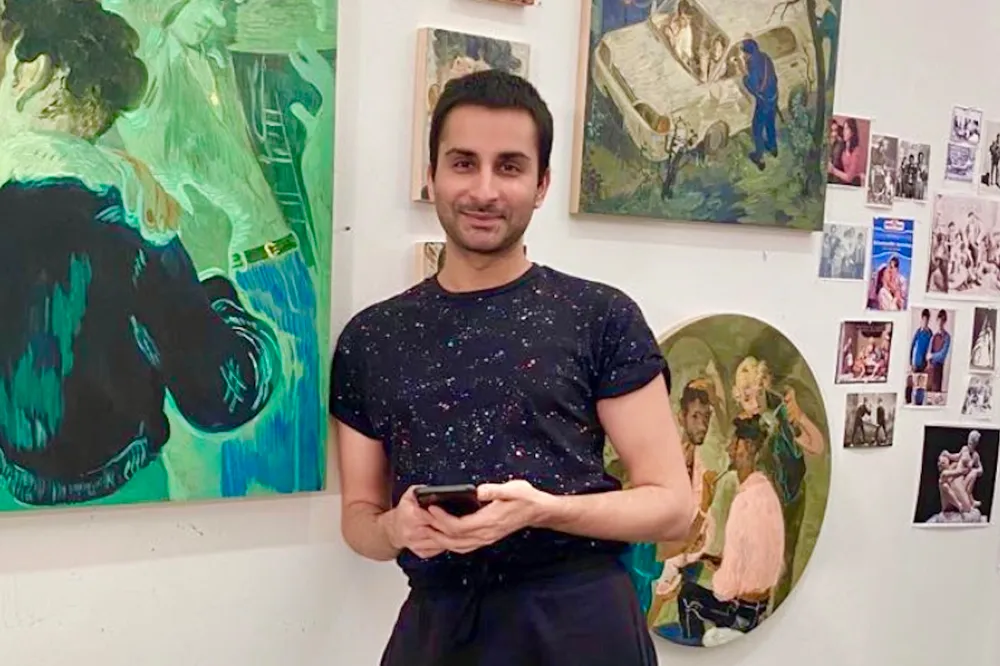
Salman Toor
Man with Tote Bag and Laptop 男子、手提袋與筆記電腦, 2018
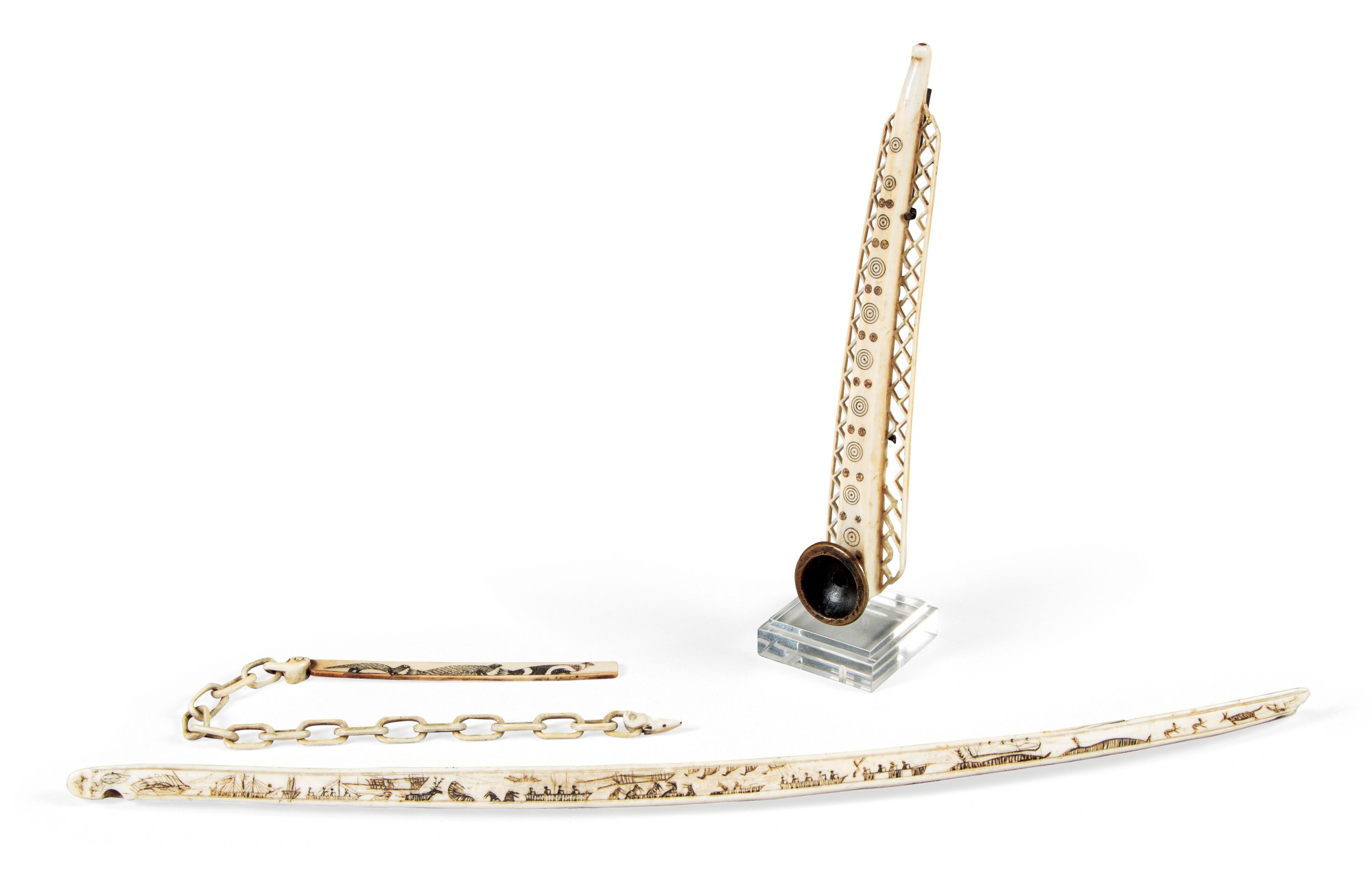
The three Alaskan objects held in The Collection, including an Inupiak bow drill, an Inuit pipe, and a walrus ivory ornament, carry exactly this kind of layered freight: they are feats of engineering and aesthetic intelligence that Western institutions spent decades misreading. The artistic reckoning with objects and their cultural weight accelerated dramatically in the twentieth century. Marcel Duchamp's readymades, beginning around 1913, proposed that the gesture of selection could itself constitute authorship, and that any manufactured object might be conscripted into the space of art. But it was the generation that came of age in the 1970s and 1980s who pushed this logic into more socially specific territory.
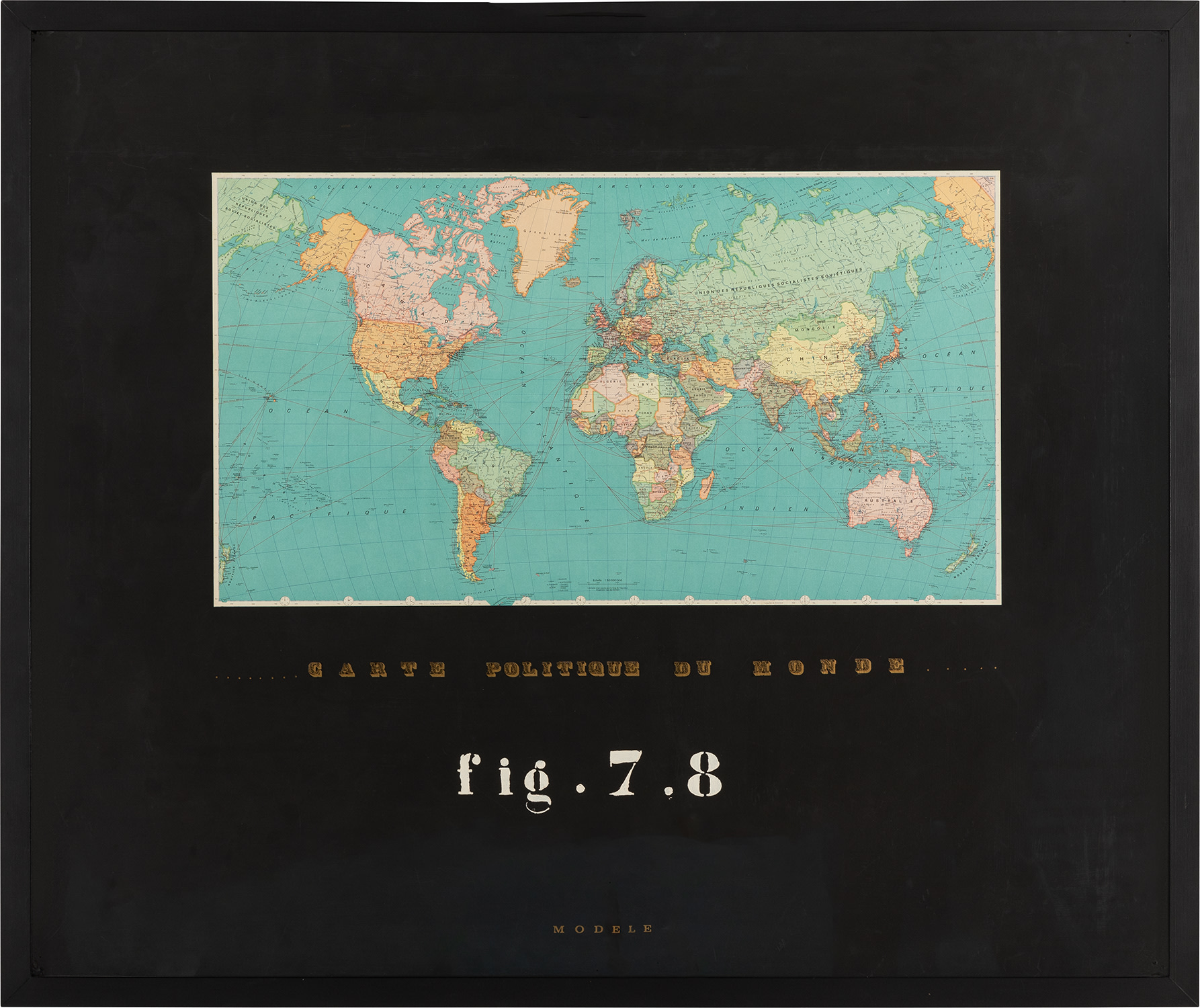
Marcel Broodthaers, the Belgian artist who died in 1976, was perhaps the most structurally rigorous of these thinkers. His practice dismantled the institutional frameworks that give objects meaning, turning museum logic back on itself with a dry, melancholy wit. A work by Broodthaers on The Collection rewards exactly this kind of slow, suspicious looking. Haim Steinbach brought a different sensibility to the conversation.
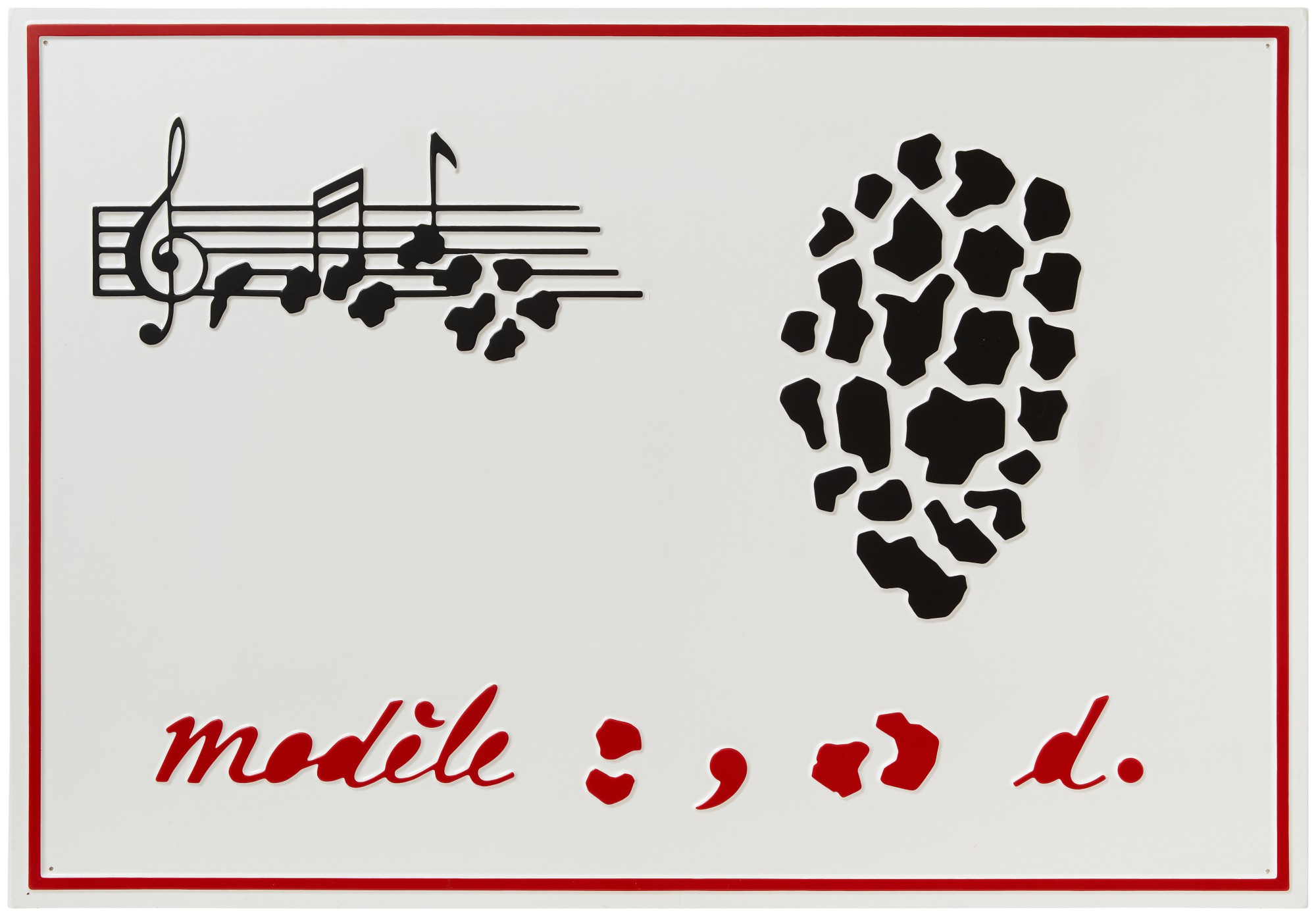
Marcel Broodthaers
Modèle (Charbon) , 1969
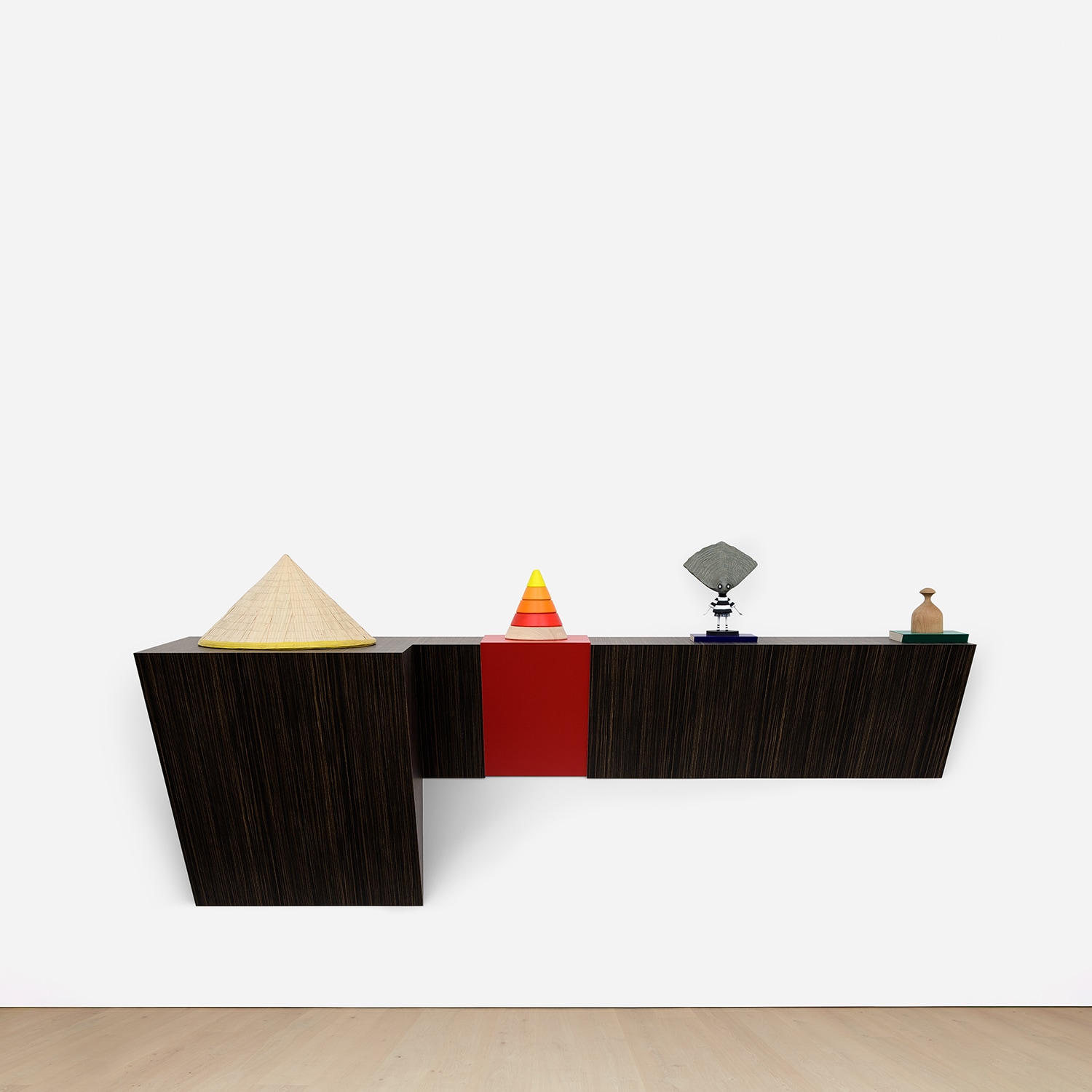
Beginning in the early 1980s, his signature shelf works arranged commercially available products with the deadpan formality of minimalist sculpture. The objects Steinbach chose sneakers, cleaning products, decorative ceramics were never arbitrary. They were chosen for their cultural specificity, their class associations, their subcultural resonances. His work is deeply indebted to the commodity critique of that decade, but it never feels merely theoretical.
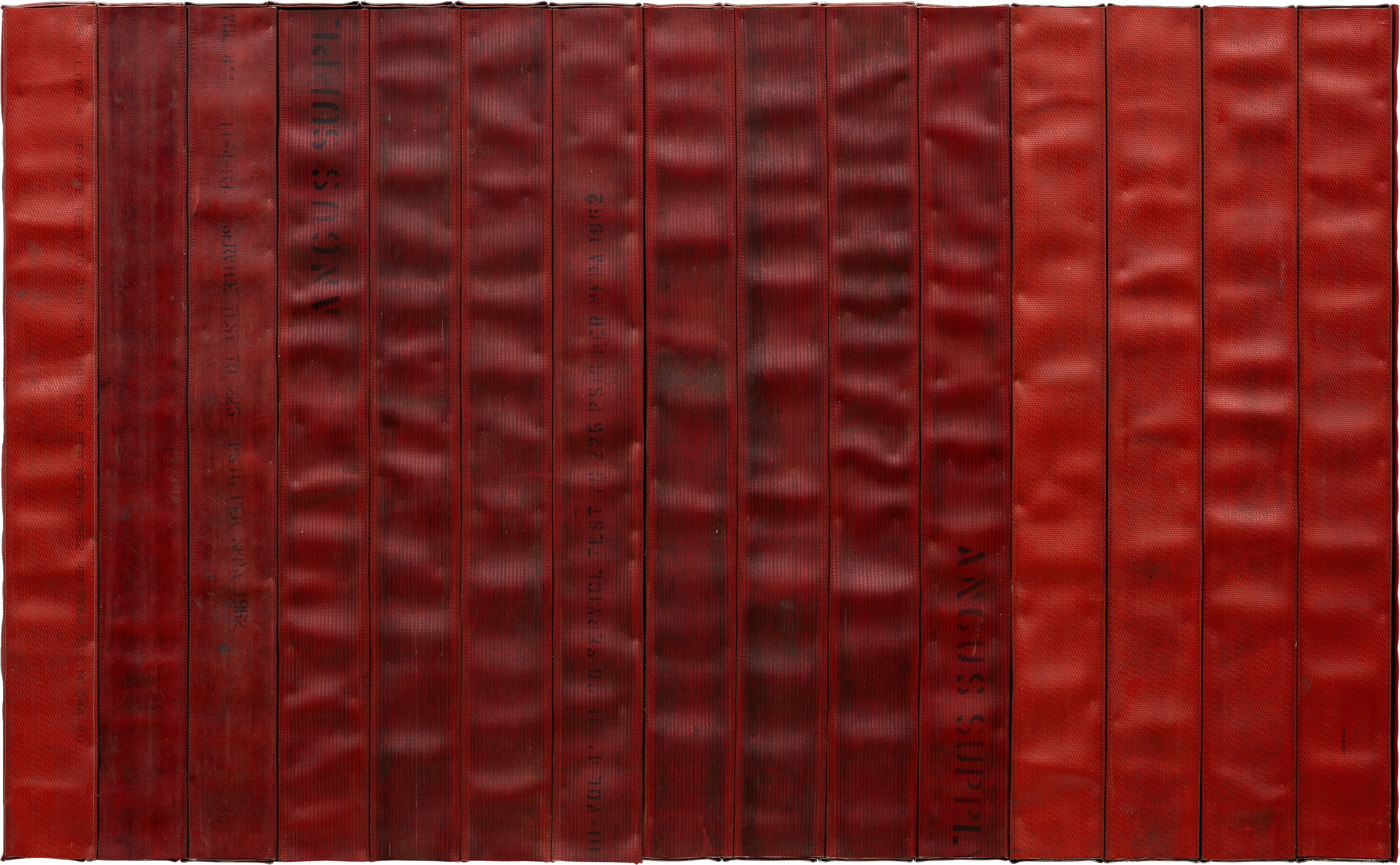
There is genuine affection in his arrangements, an acknowledgment that desire is real even when it is manufactured. Theaster Gates operates in a related but distinct register, gathering materials from decommissioned Black cultural institutions in Chicago and transforming them into sculpture, architecture, and archive. His practice insists that objects carry communal memory, and that the labor of preservation is itself a political act. The question of whose objects count has never been more urgently posed than in our current moment.
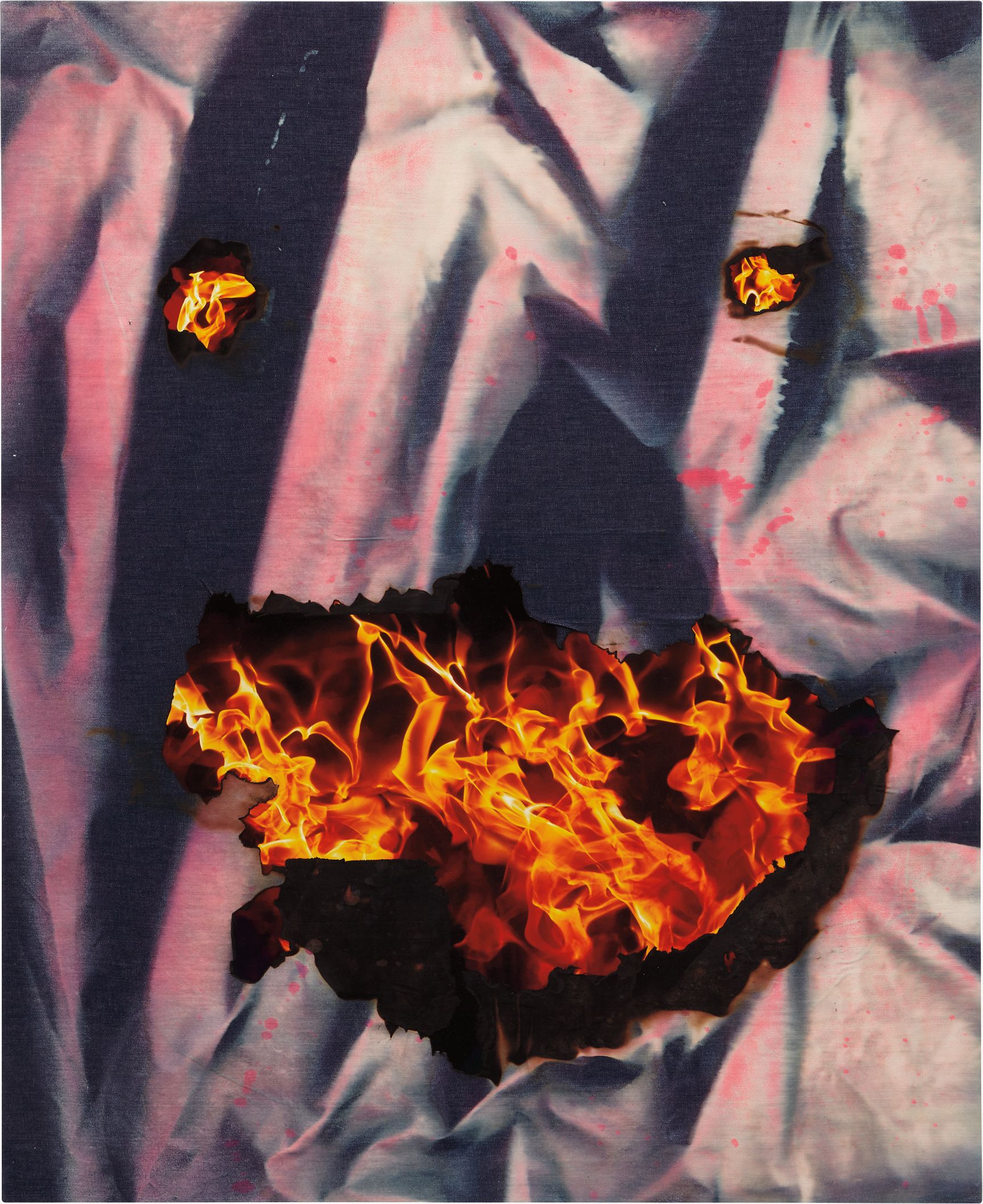
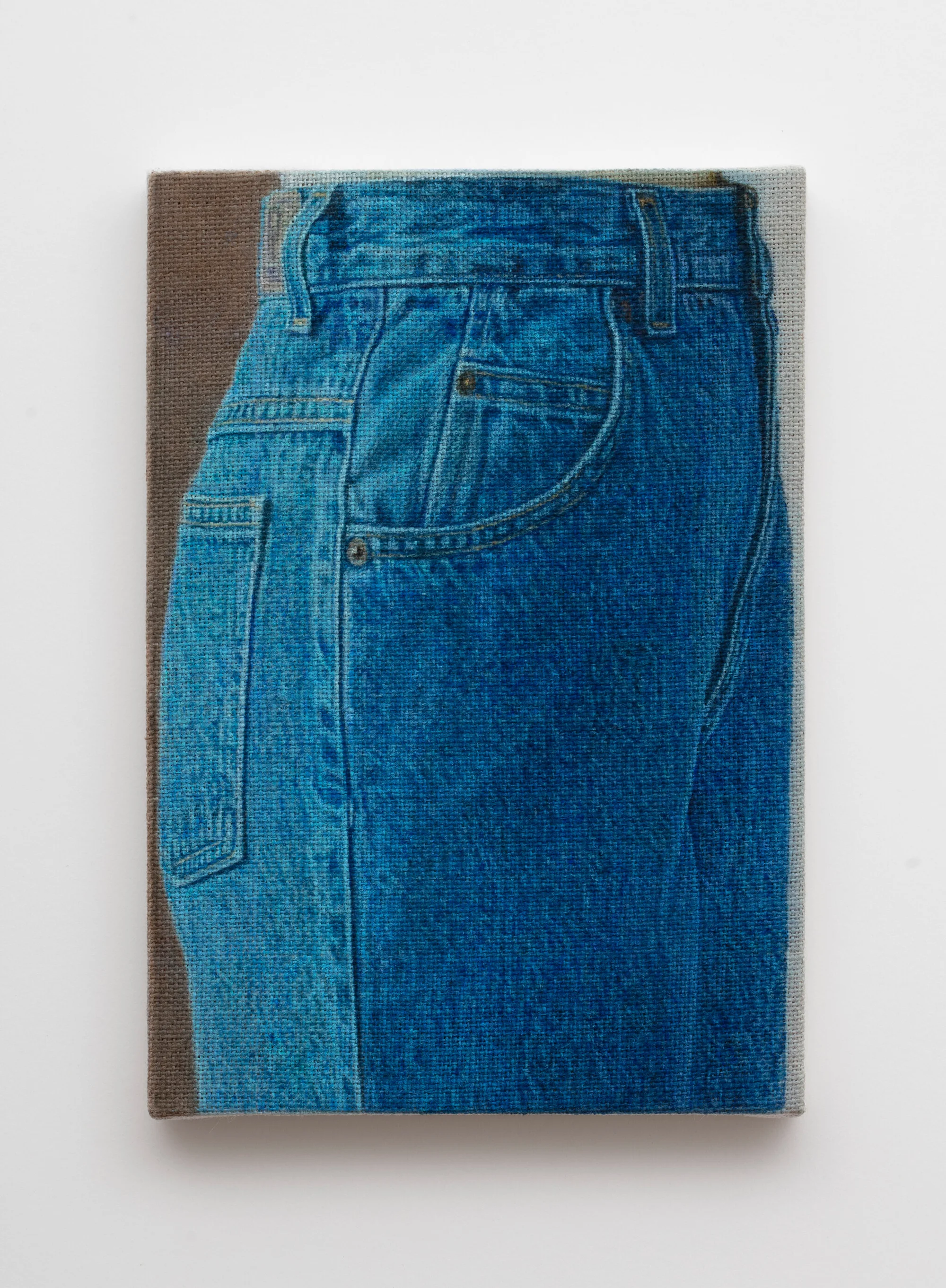
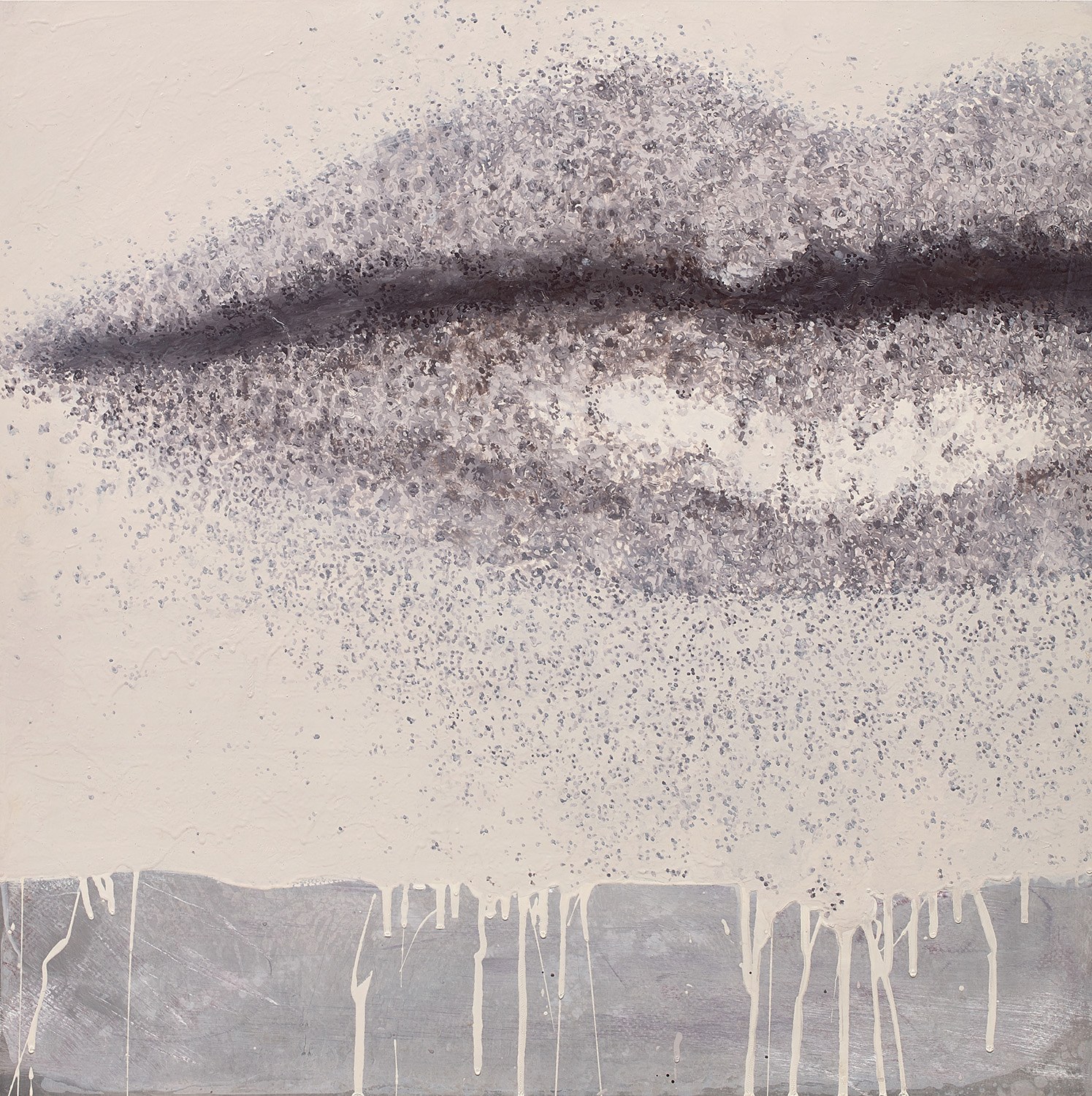
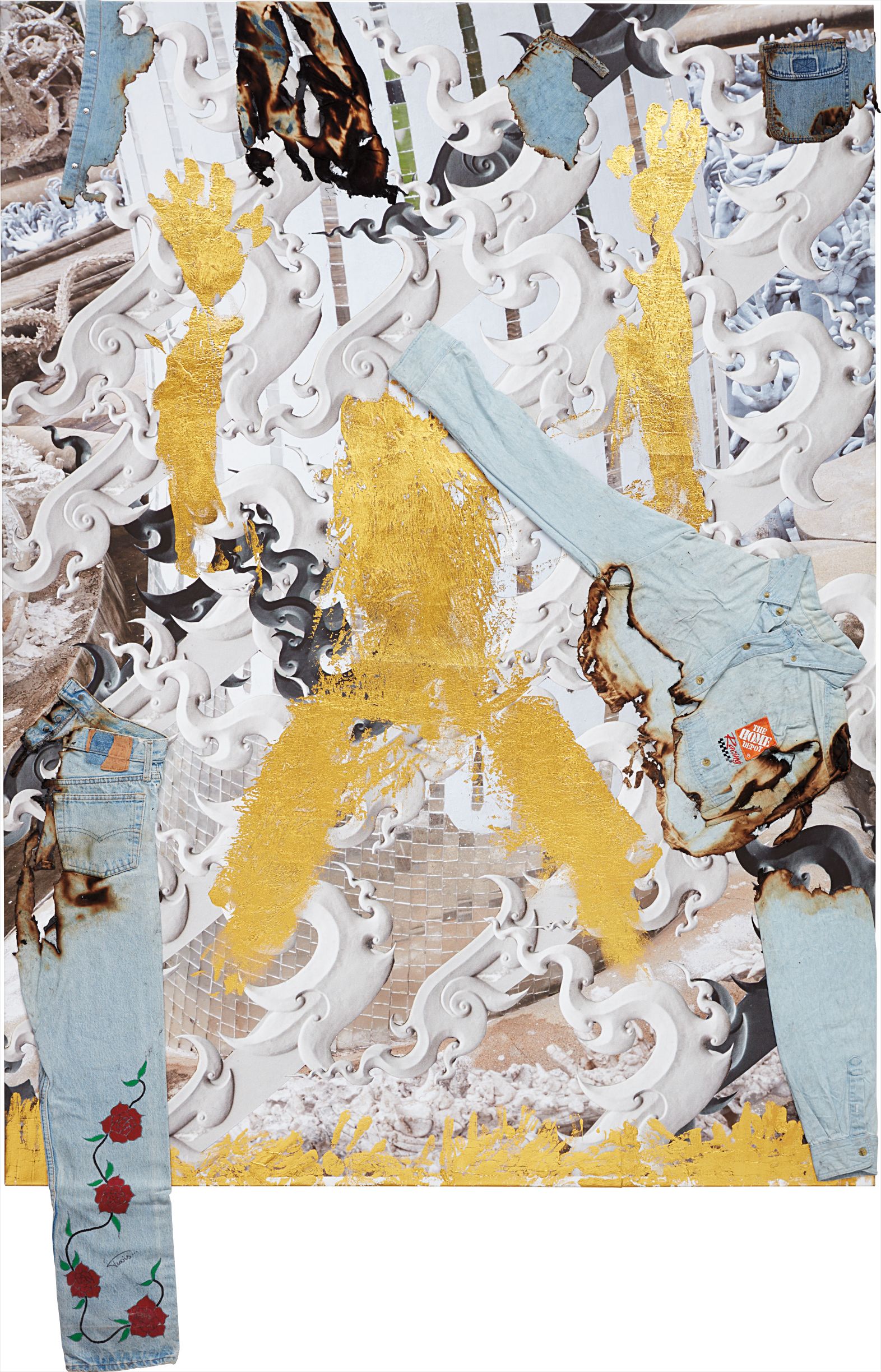
Korakrit Arunanondchai
denim, spraypaint and inkjet print on canvas, 2013
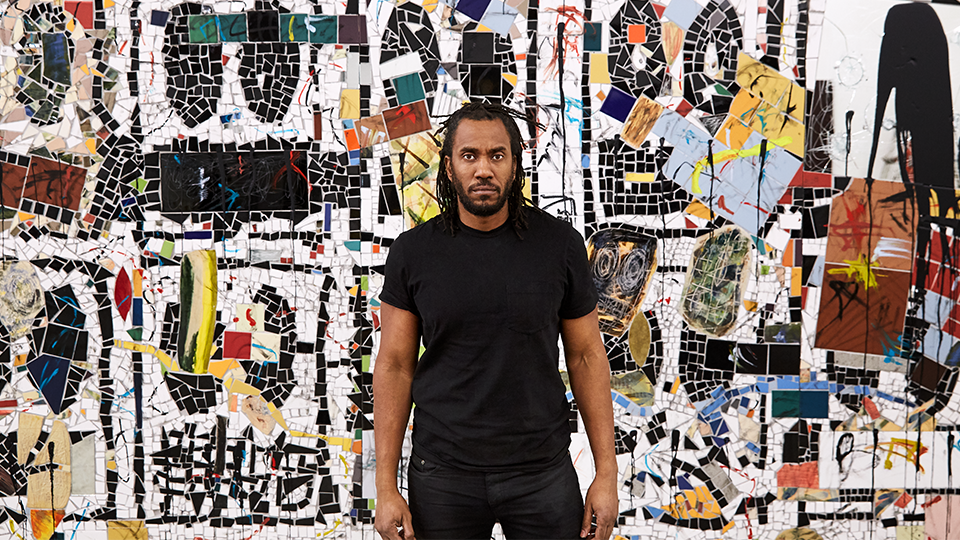
Rashid Johnson works with materials that carry specific cultural and historical weight shea butter, black soap, tropical plants, mirrors assembling them into installations that speak to Black identity, anxiety, and resilience. His shelves rhyme formally with Steinbach's but the stakes are different, more personal and more pointed. Korakrit Arunanondchai approaches material culture from yet another angle, weaving together denim, painting, video, and performance to explore how global consumer culture intersects with Thai history and spiritual practice. Both artists treat the manufactured object not as a neutral vessel but as a site where power moves and leaves traces.
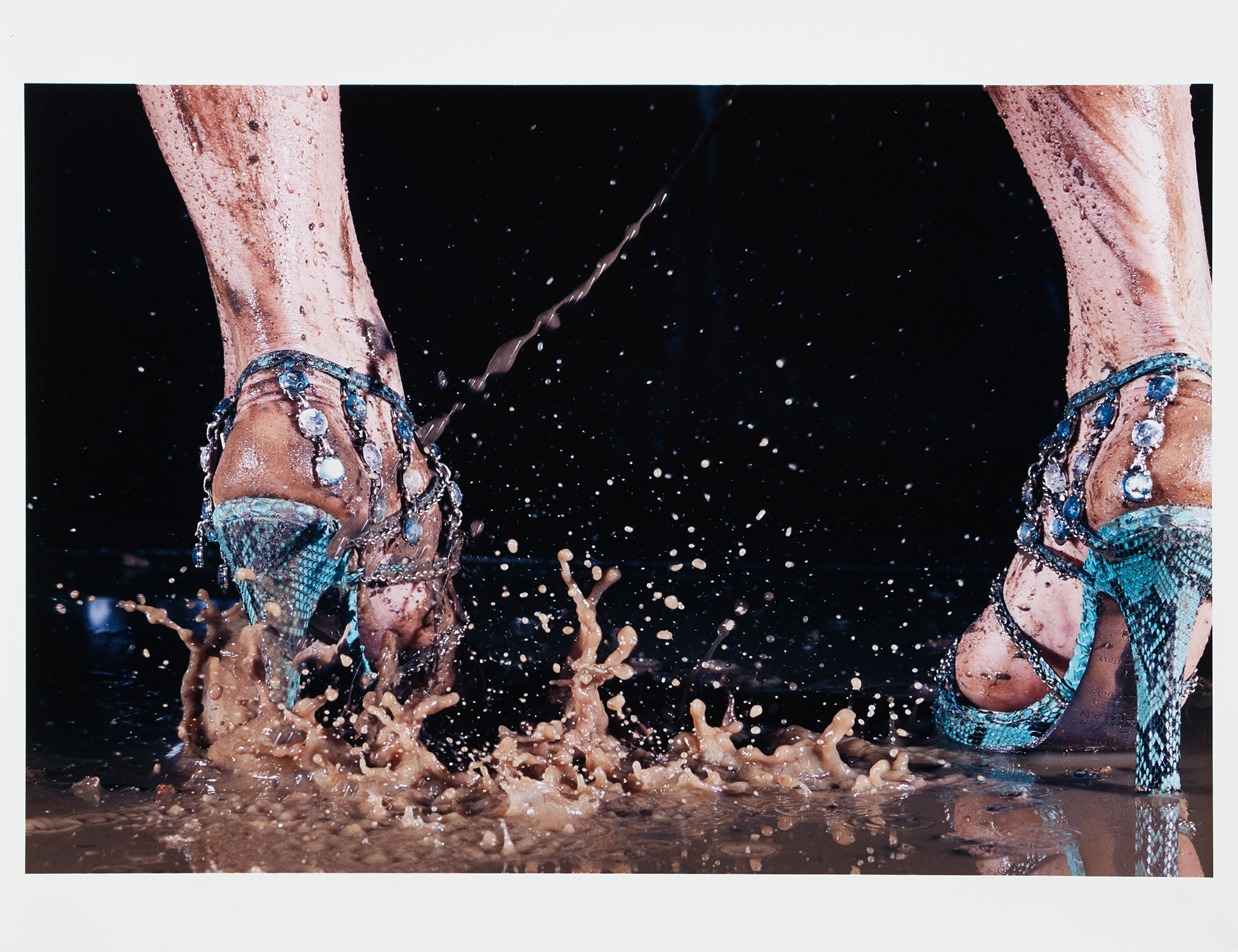
Athletic footwear might seem like an unlikely candidate for serious art historical consideration, but the Nike Zoom LeBron 3 and the Nike Air Jordan 9 Player Sample Cleats in The Collection make a compelling case. Sneaker culture has generated its own complex economies of desire, status, and memory. The Player Sample designation places these objects in a specific taxonomy: made for a specific body, never intended for retail, circulating later through collector networks that mirror in miniature the mechanisms of the art market itself. Marilyn Minter has long been attuned to this territory, making paintings and photographs that treat consumer surfaces lacquered nails, glossy lips, athletic shoes with a technical virtuosity that implicates the viewer in the seduction it depicts.
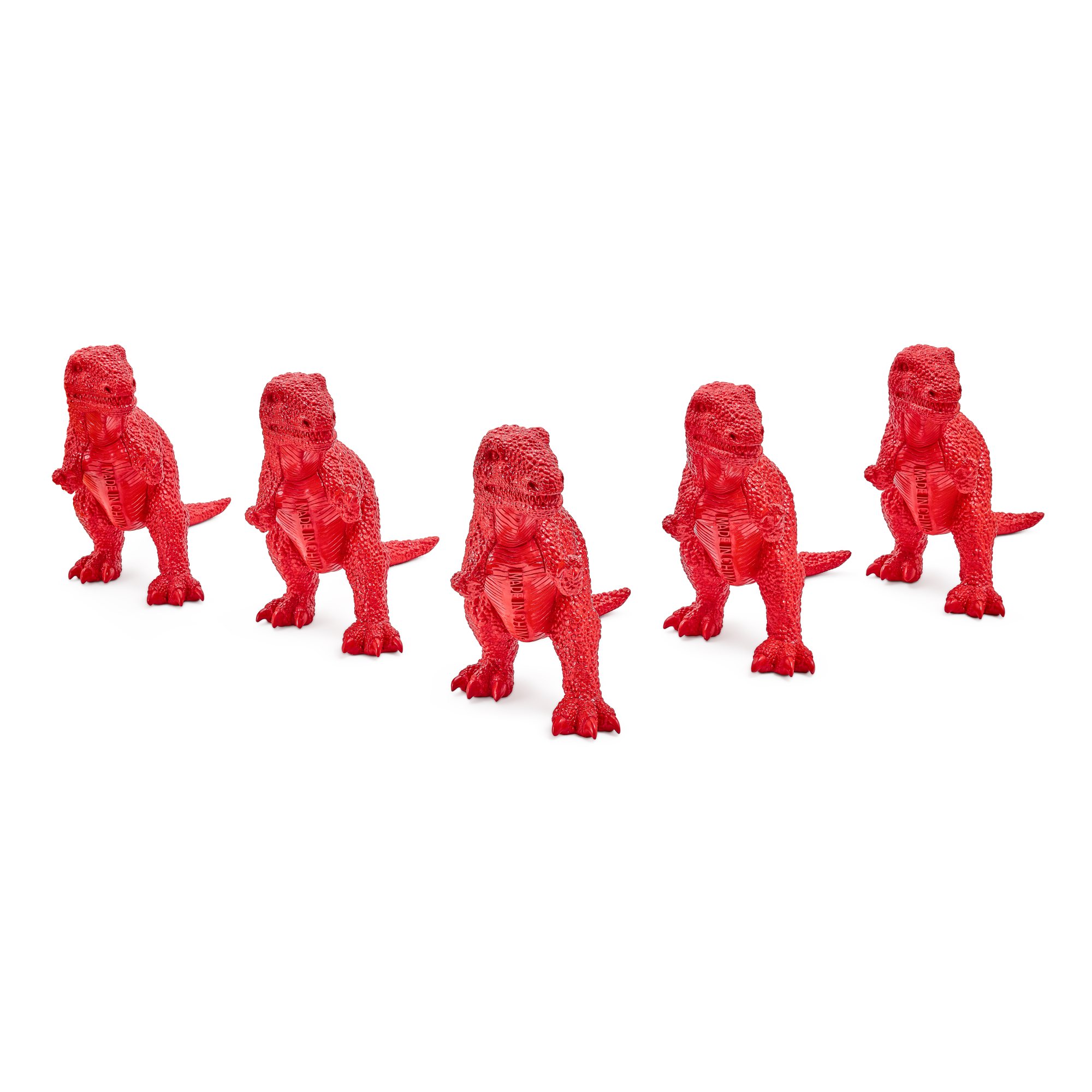
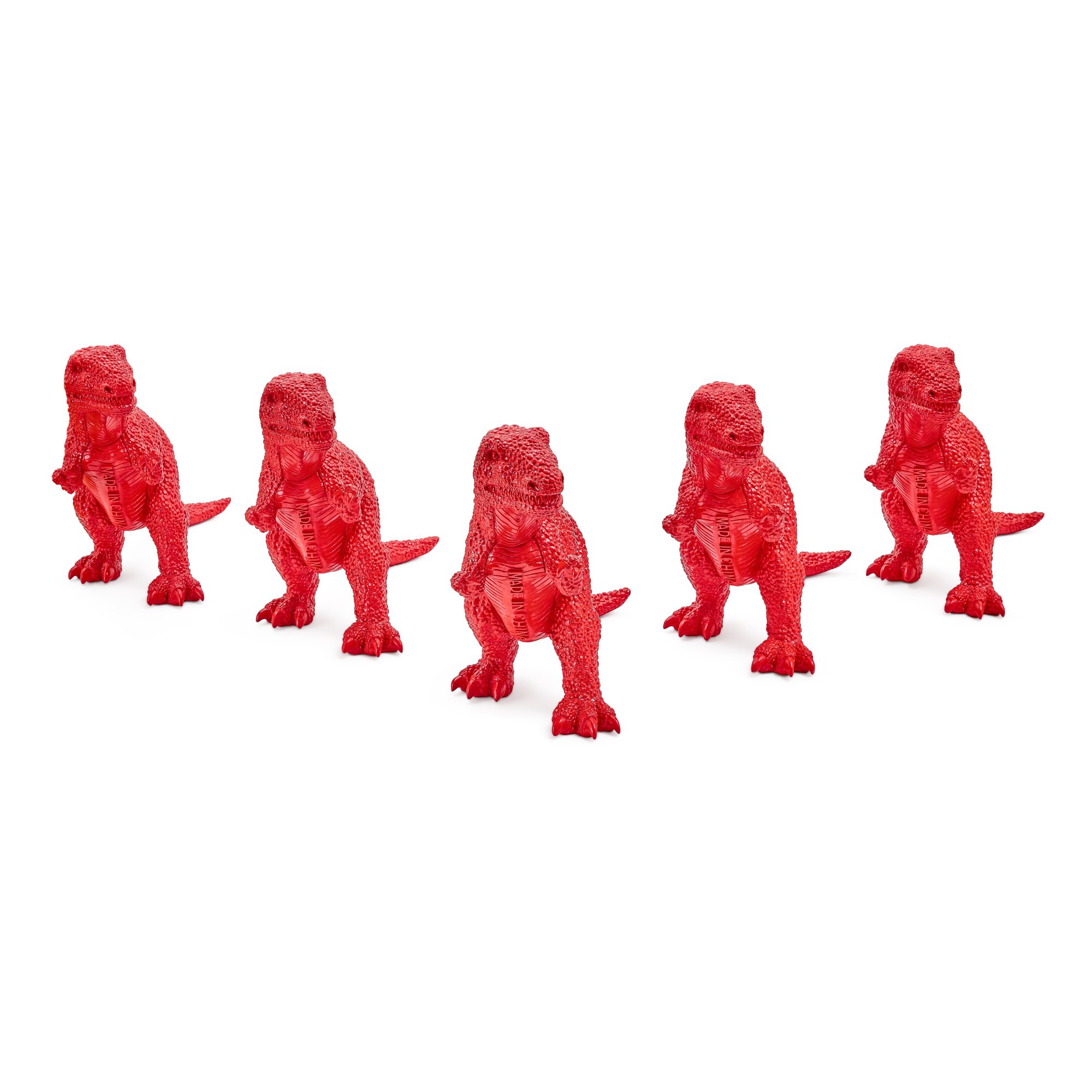
Sui Jianguo
Made in China (5 Works) 中國製造(5件作品), 2002
Salman Toor's paintings and Sui Jianguo's sculptures engage material culture from different positions but share a preoccupation with what objects reveal about the bodies that use them. Dave Jordano's photographic work, rooted in the post industrial landscapes of Detroit, treats the material remnants of industrial labor as both documentary evidence and elegy. Across all of these practices, what connects them is a refusal to treat objects as inert. Everything made by human hands encodes the conditions of its making.
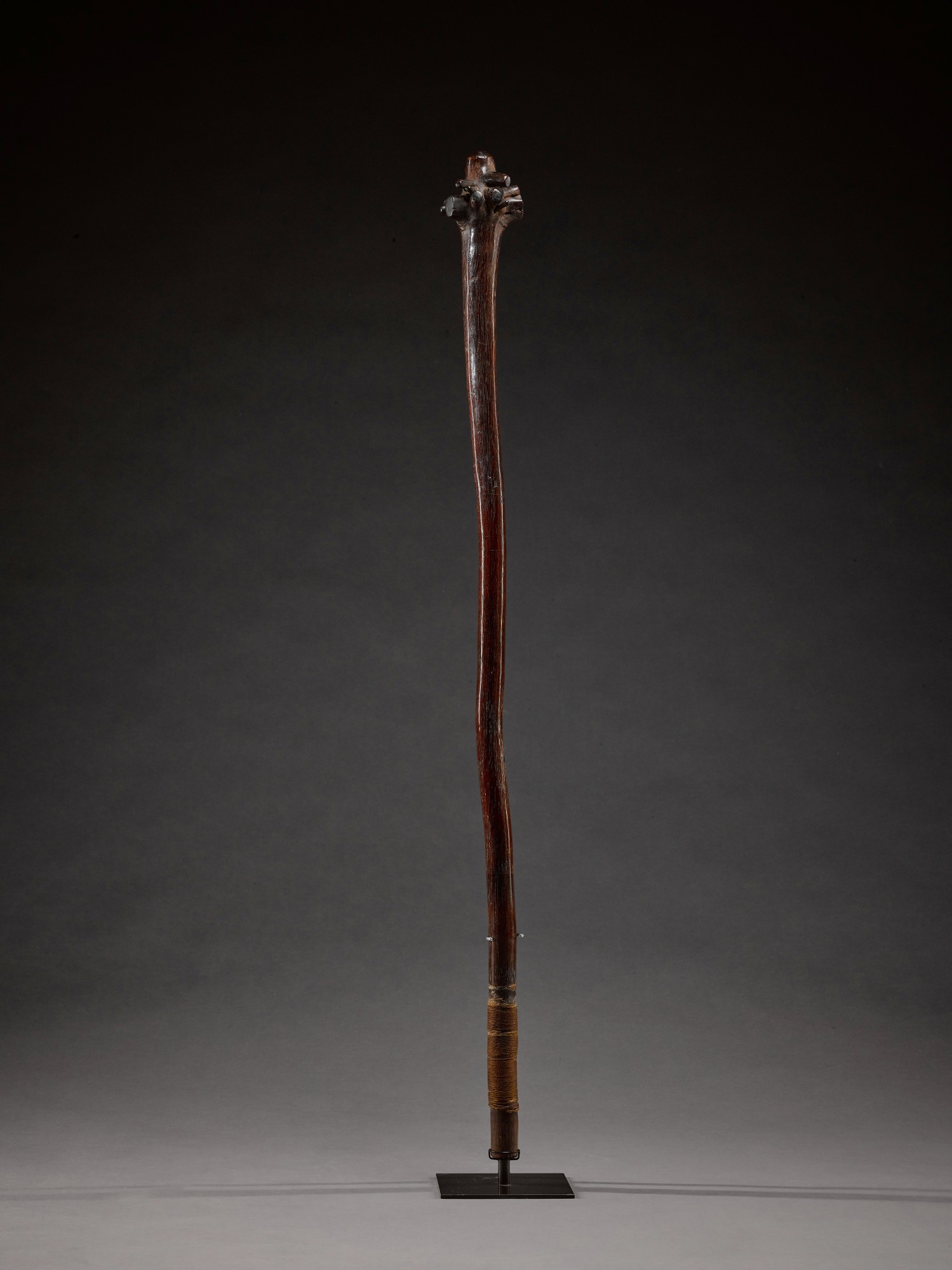
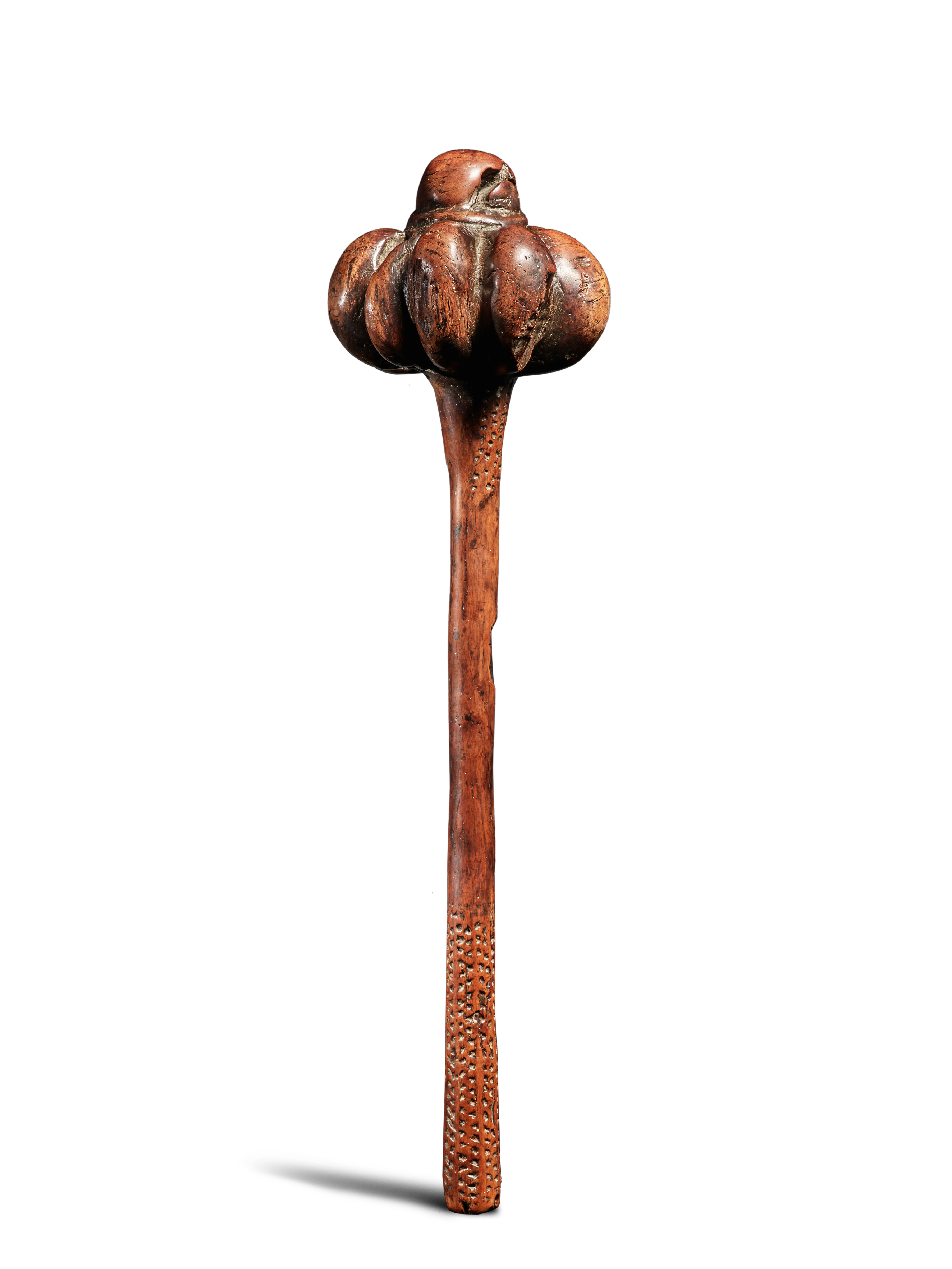
The lasting significance of material culture as an artistic framework lies in this insistence on implication. To look at a bow drill made by an Inupiak craftsperson or a throwing club of uncertain provenance is to encounter a form of intelligence adapted to specific conditions of survival and meaning making. To look at a pair of athlete specific sneakers that never reached a store shelf is to encounter the intersection of sport, commerce, celebrity, and aspiration. The art historical project that runs from Duchamp through Broodthaers and Steinbach and into the work being made right now is essentially a philosophical one: it asks what we owe to the things we have made, and what they, in turn, can tell us about who we are.
The Collection brings these conversations together across time and geography, and the dialogue between them is genuinely illuminating.