Gutai Movement
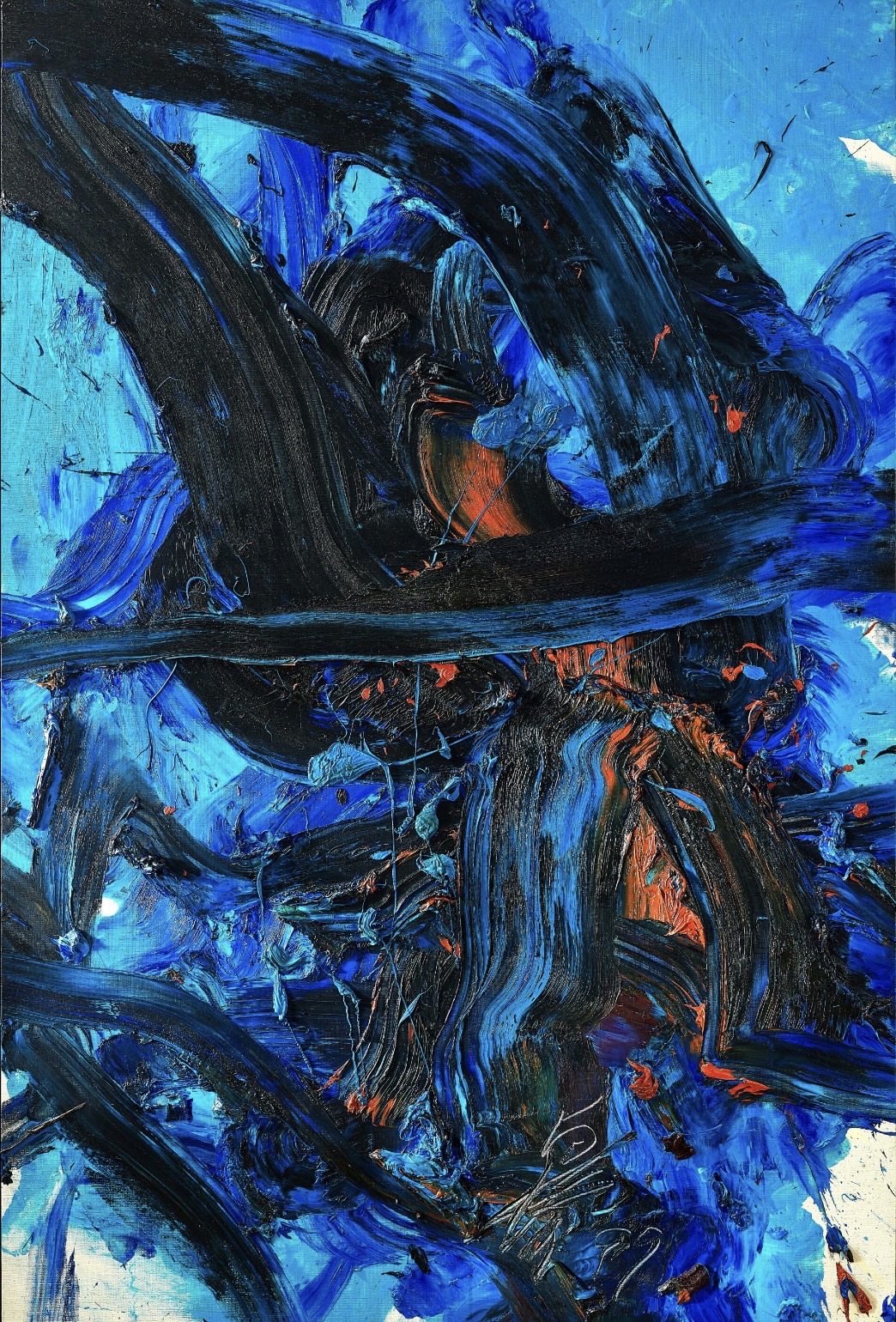
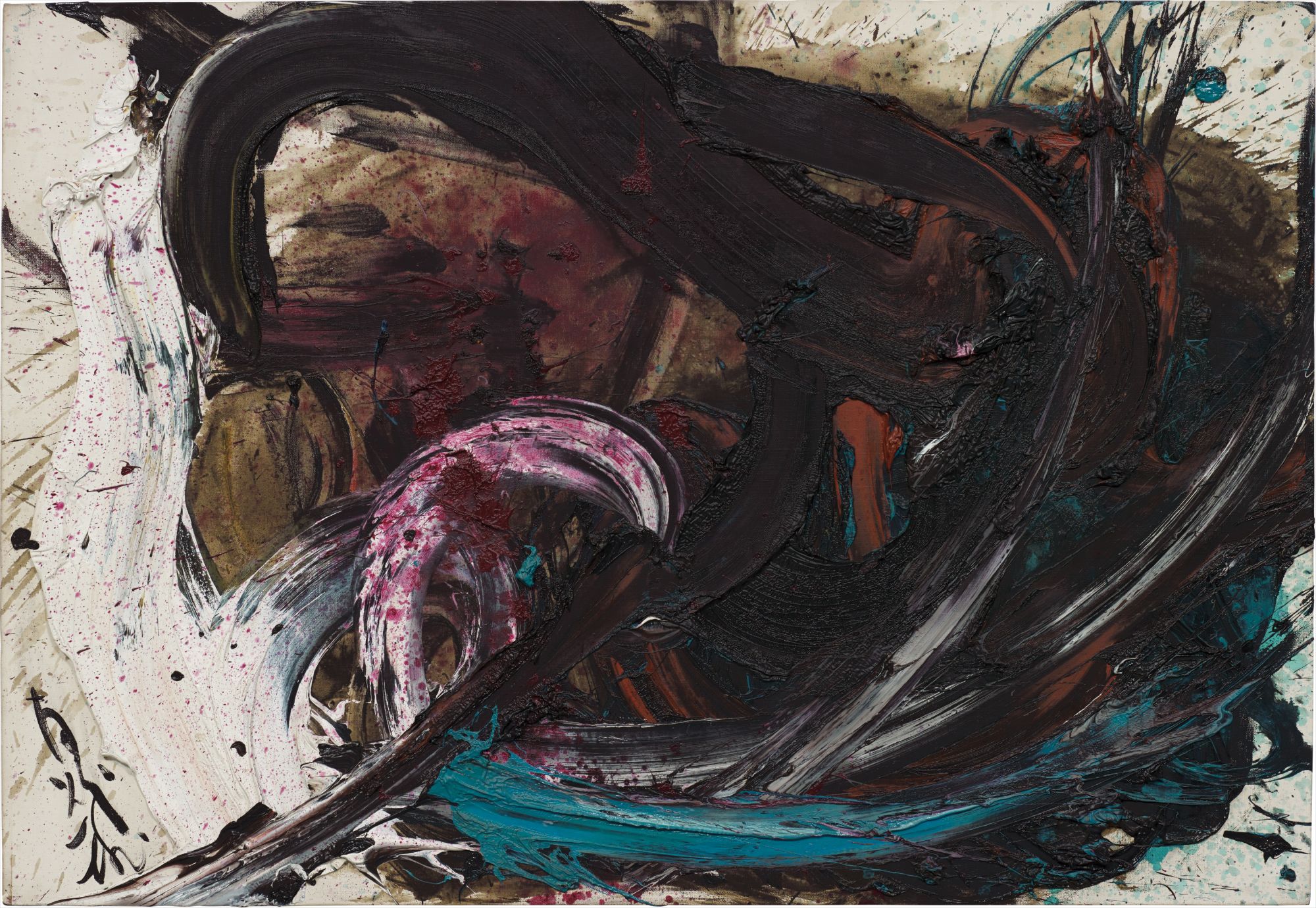
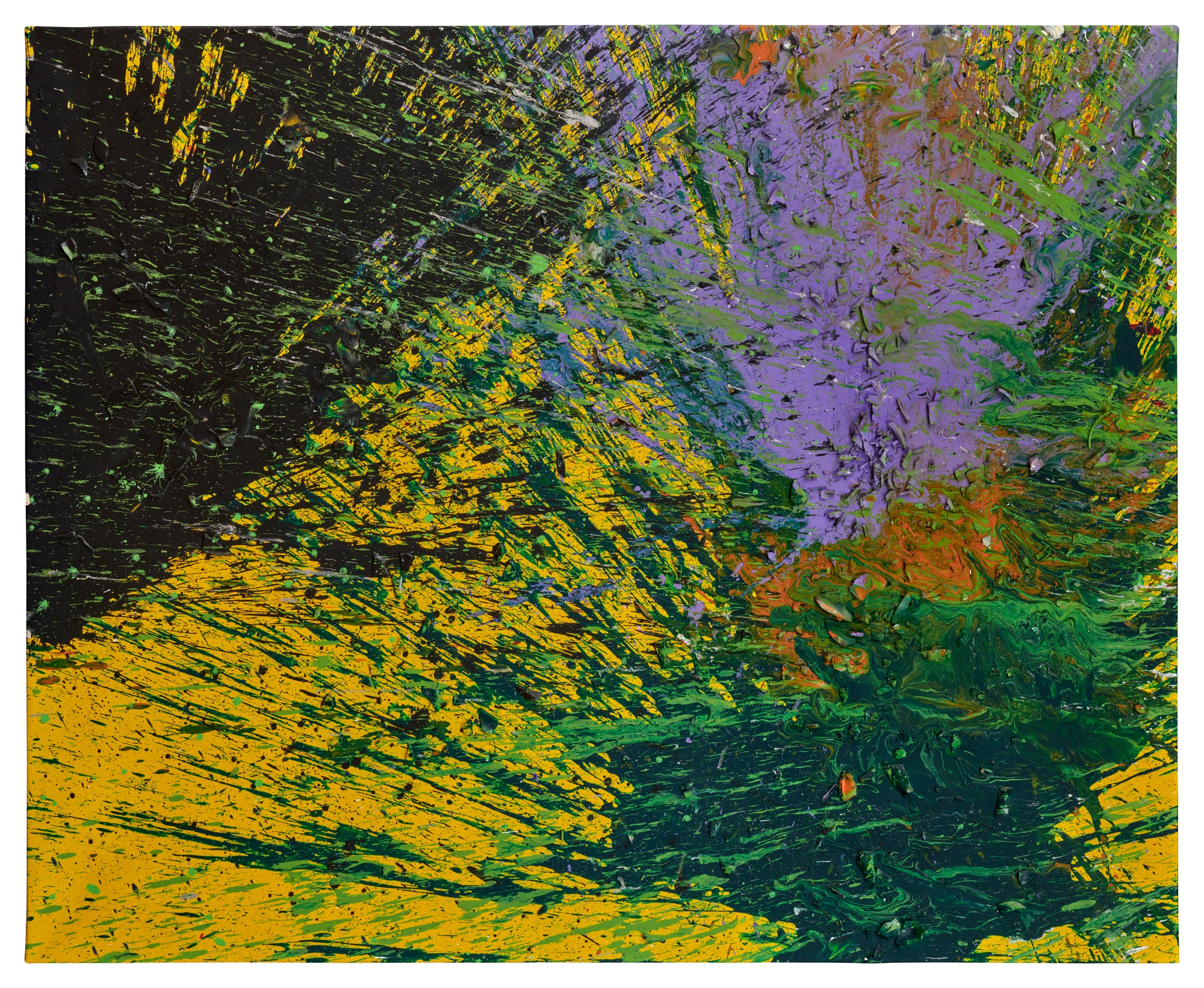
Kazuo Shiraga
Kaien, 1999
Paint, Fire, Body: Why Gutai Still Burns
There is a particular kind of energy that Gutai works carry into a room, and collectors who have lived with one will tell you it is not subtle. These are paintings and objects that were made through genuine physical confrontation, where the artist's body, speed, and intention are embedded in the surface as surely as the pigment itself. That quality of presence, of arrested action, is what draws serious collectors to the movement again and again. It is not nostalgia for postwar Japan or a fascination with art historical footnotes.
It is the simple, undeniable fact that a great Gutai work feels alive. Founded in Osaka in 1954 by Jiro Yoshihara, the Gutai Art Association gathered artists who were deeply skeptical of painting as it had been practiced and deeply serious about what it could become. The group's guiding provocation was to challenge conventional materials and methods at a fundamental level, to see what happened when the human body and raw matter were allowed to collide without the mediation of tradition. The results were extraordinary and, in many ways, remain unmatched in their directness.
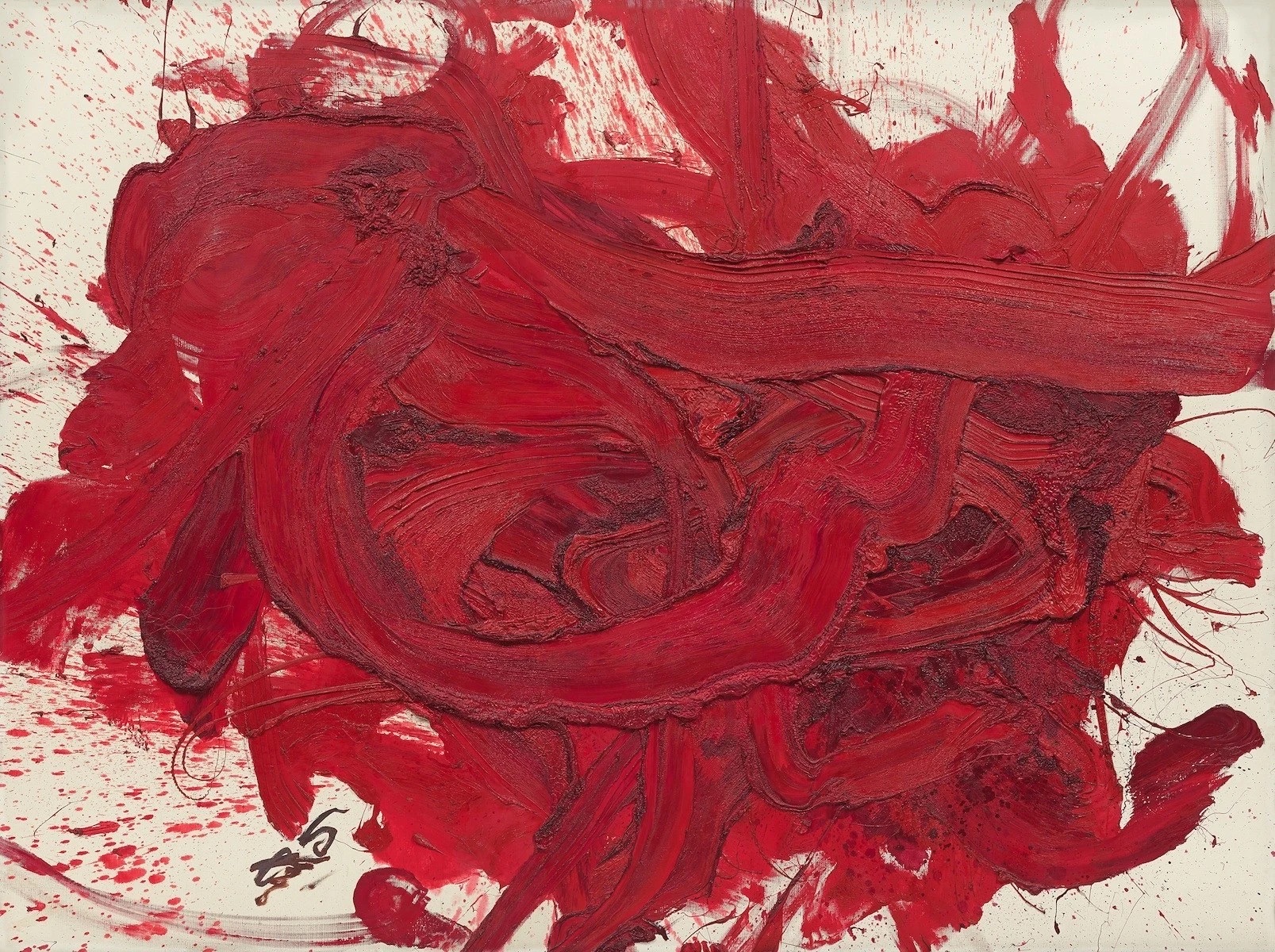
Kazuo Shiraga
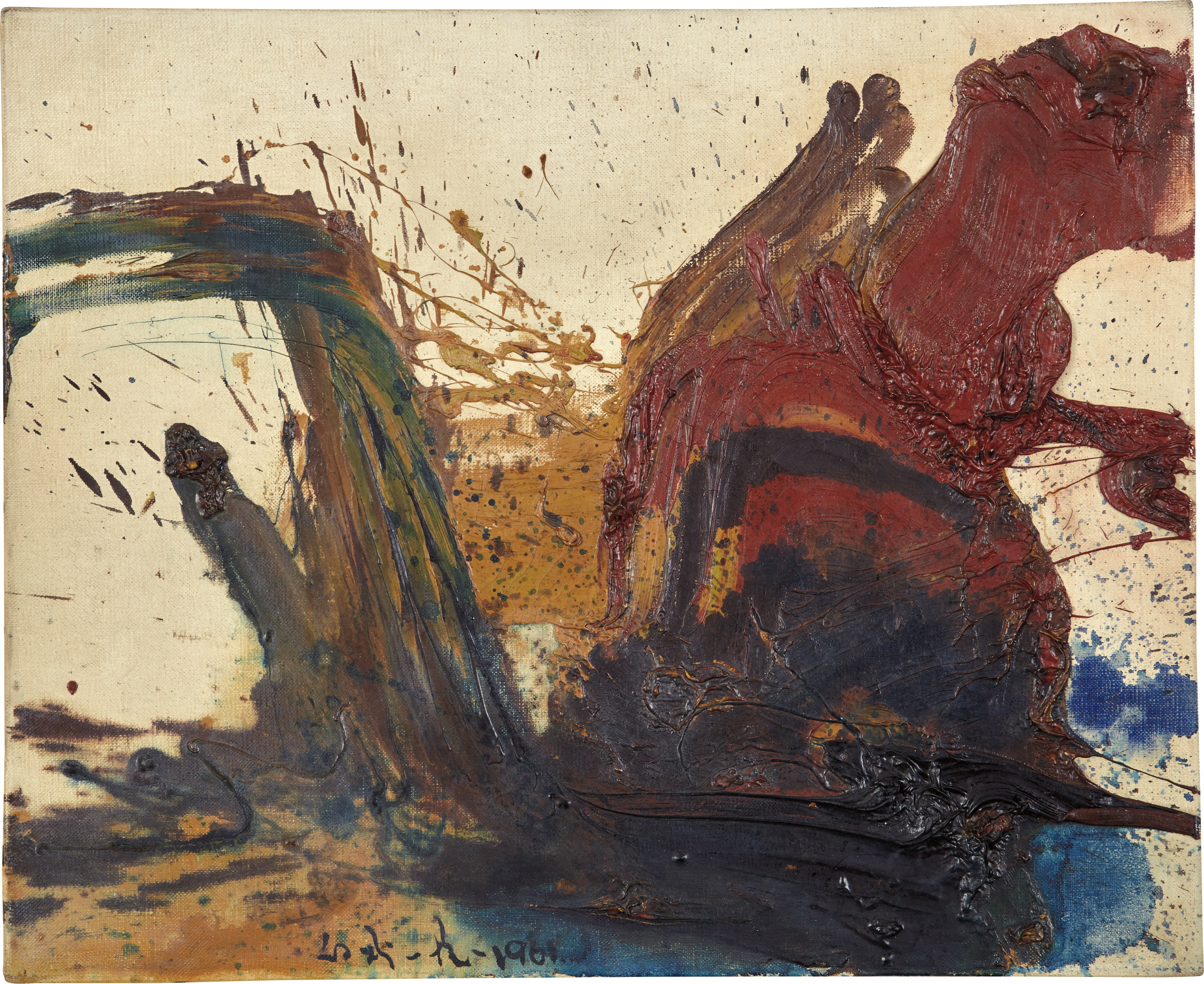
"In front of me lay an austere road to originality. Run forward, I thought, run and run, it won’t matter if I fall down... Let me do it with my hands, with my fingers. Then, as I ran, thinking that I was moving forward, it occurred to me: Why not feet? Why don’t I paint with my feet?" Kazuo Shiraga, 1955
When the movement formally dissolved in 1972 following Yoshihara's death, it left behind a body of work that Western institutions were slow to fully absorb but that the market has spent the last two decades correcting. For a collector trying to distinguish a good Gutai work from a great one, the most useful question to ask is whether the method is visible in the result. The movement's central commitment was to making the process inseparable from the object, and the strongest works honor that absolutely. Kazuo Shiraga, who famously painted by suspending himself from a rope and dragging his feet through thick impasto, produced canvases where the evidence of his swinging trajectory is recorded in every gesture.
A great Shiraga is one where that physical logic is coherent and forceful, where the ropes of paint describe a body moving through space with conviction. Works where the surface feels rehearsed or decorative are the weaker examples, and they exist. Knowing the difference requires looking at enough of them. Shiraga remains the anchor name in any serious Gutai collection, and the works available through The Collection represent some of the most compelling entries into this part of the market.
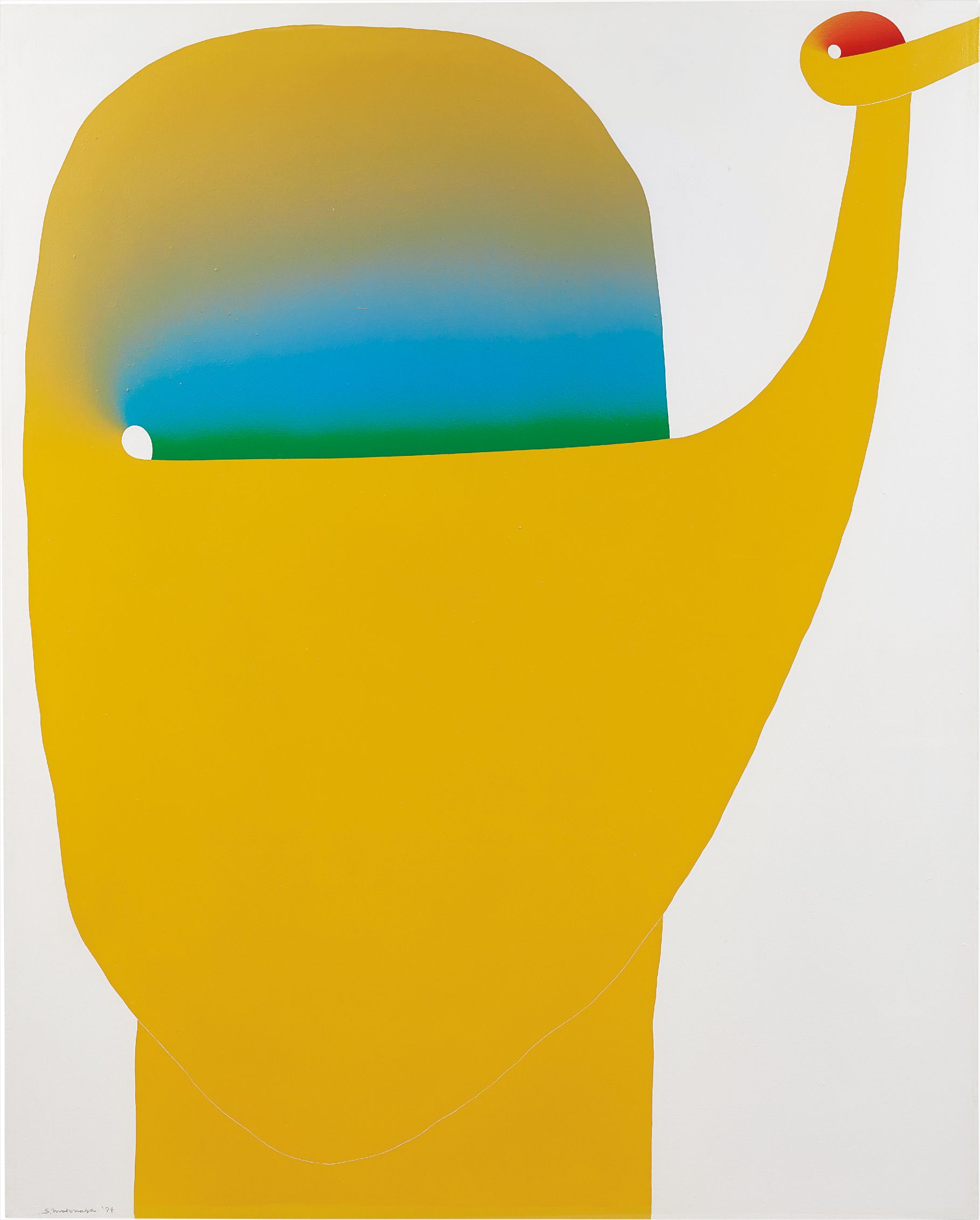
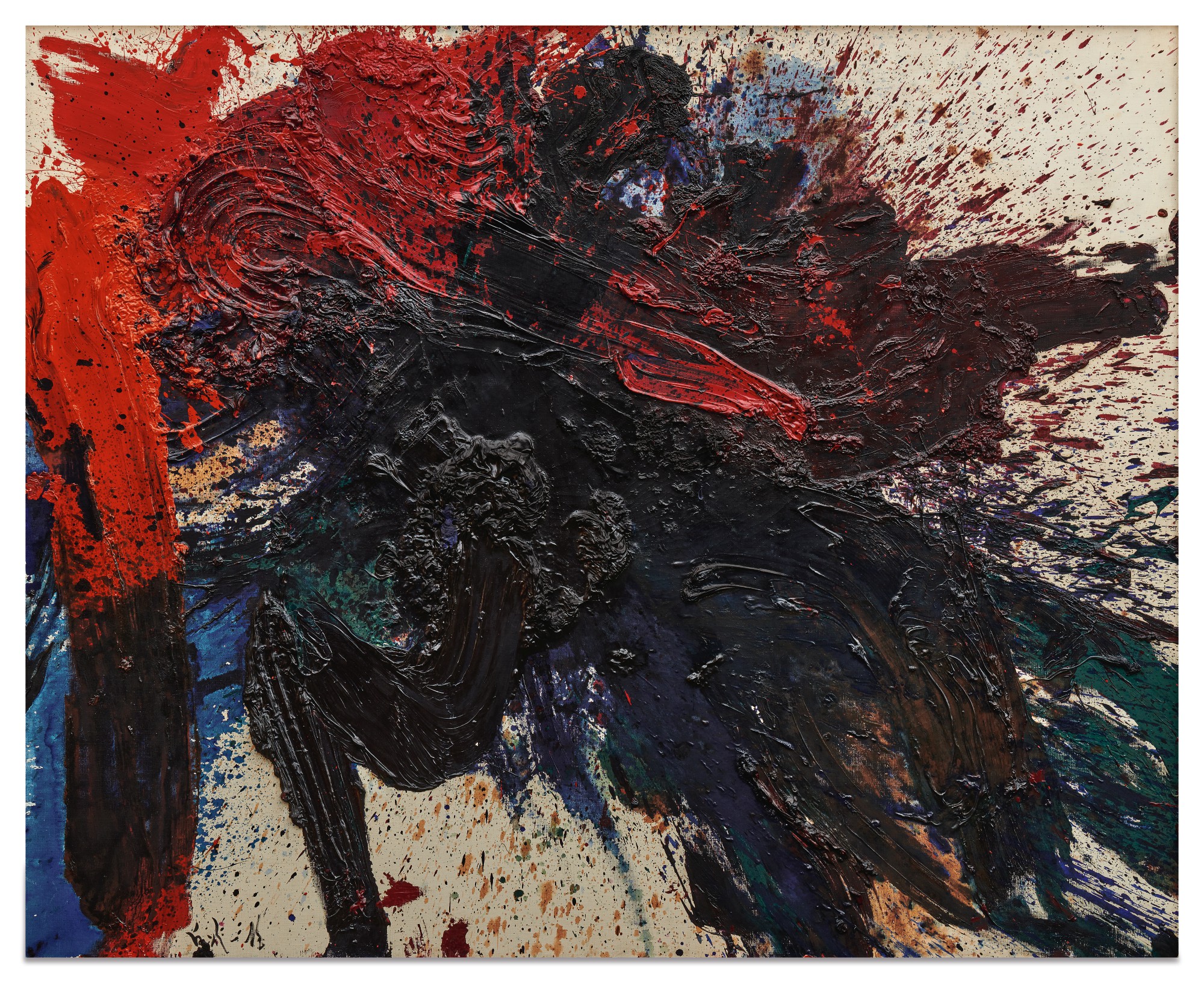
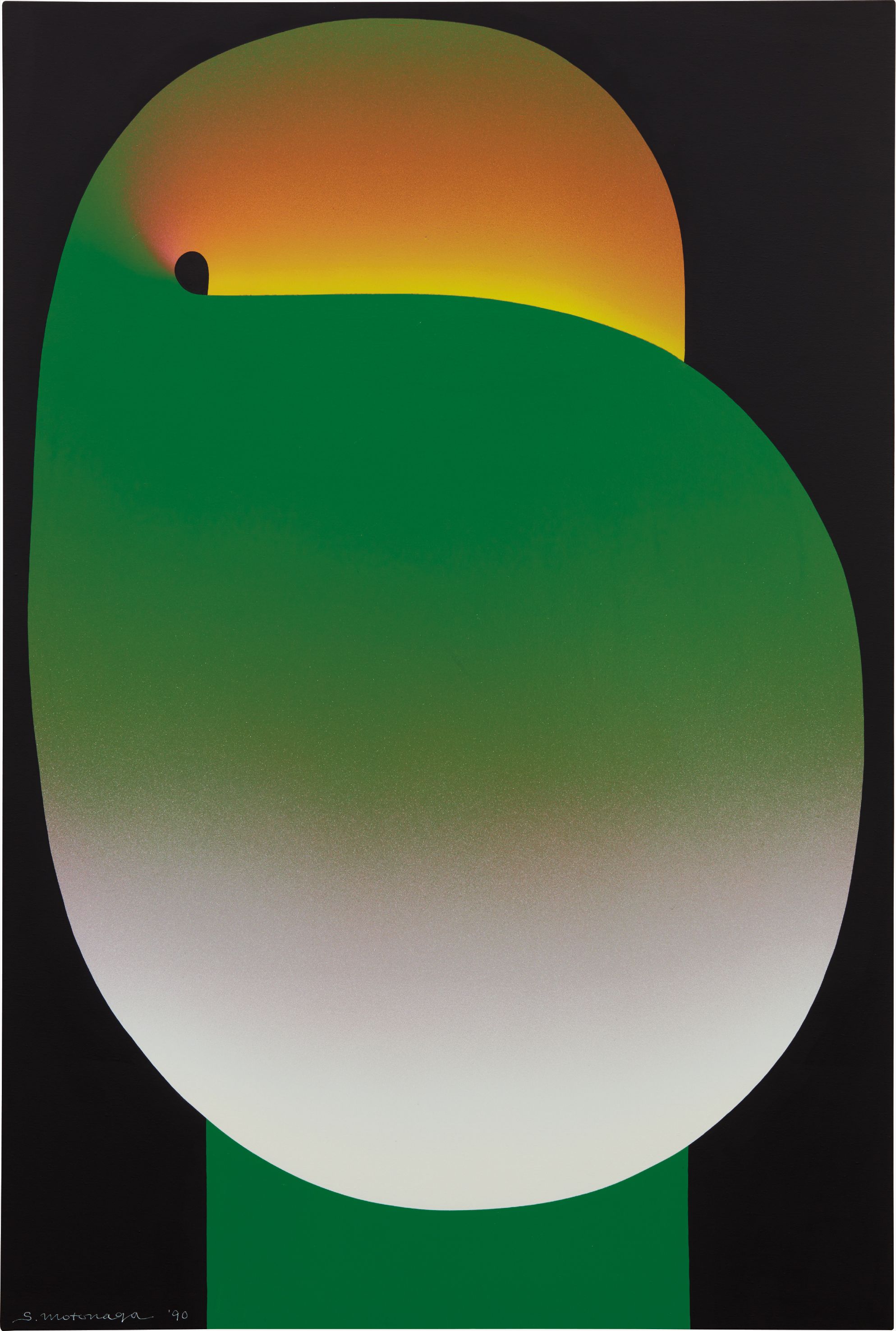
Sadamasa Motonaga
Work, 1974
His career spanned several decades and went through distinct phases, with the dense, churning surfaces of his mature work commanding the strongest attention from institutional buyers and private collectors alike. Shozo Shimamoto, who experimented with explosive paint application by hurling bottles of pigment at canvases, offers a different kind of energy but one equally rooted in irreversible physical action. His works carry an immediacy that is almost shocking in person. Sadamasa Motonaga, known for flowing organic forms and a palette that feels simultaneously playful and precise, represents a softer but no less committed strand of the movement.
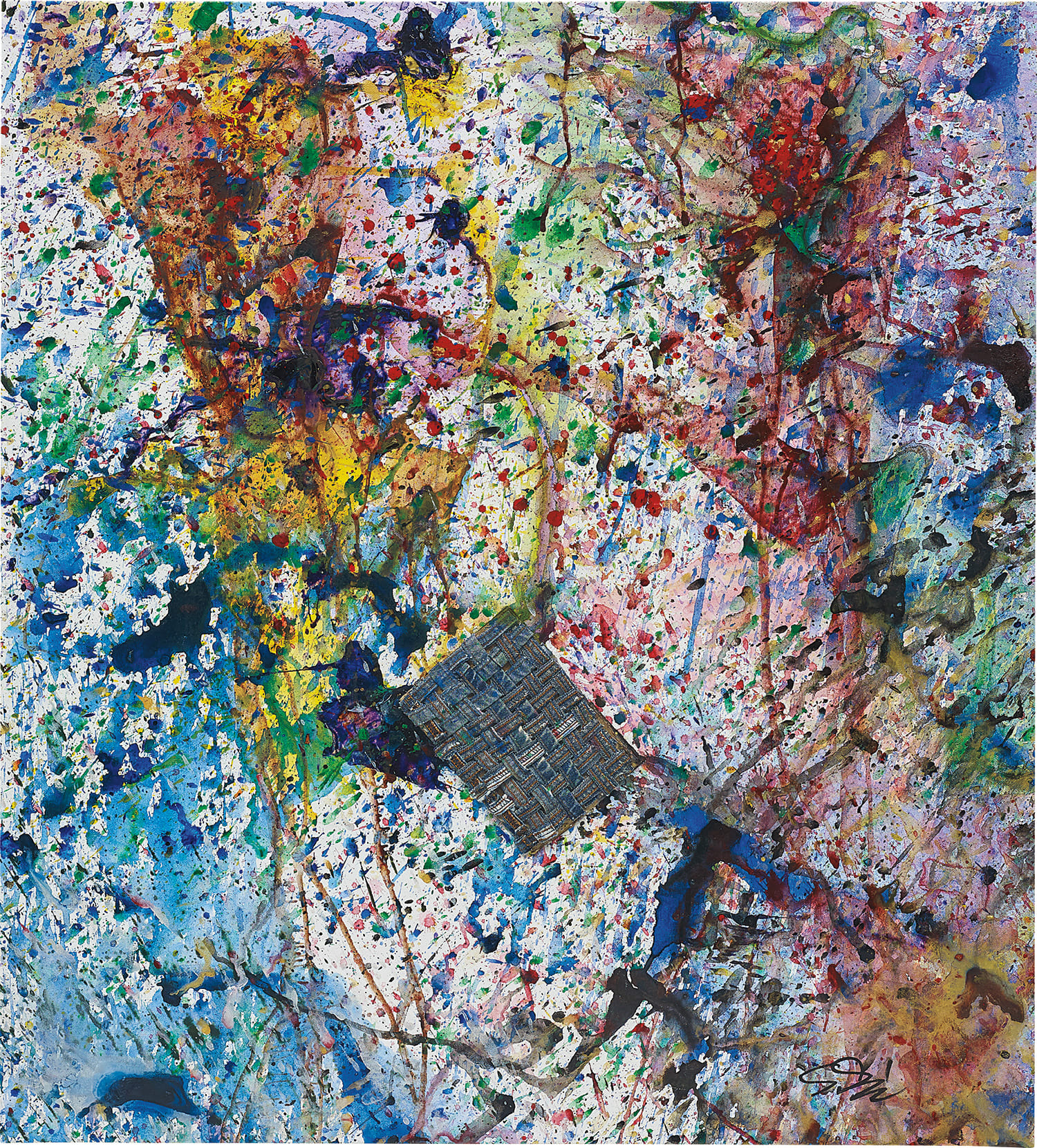
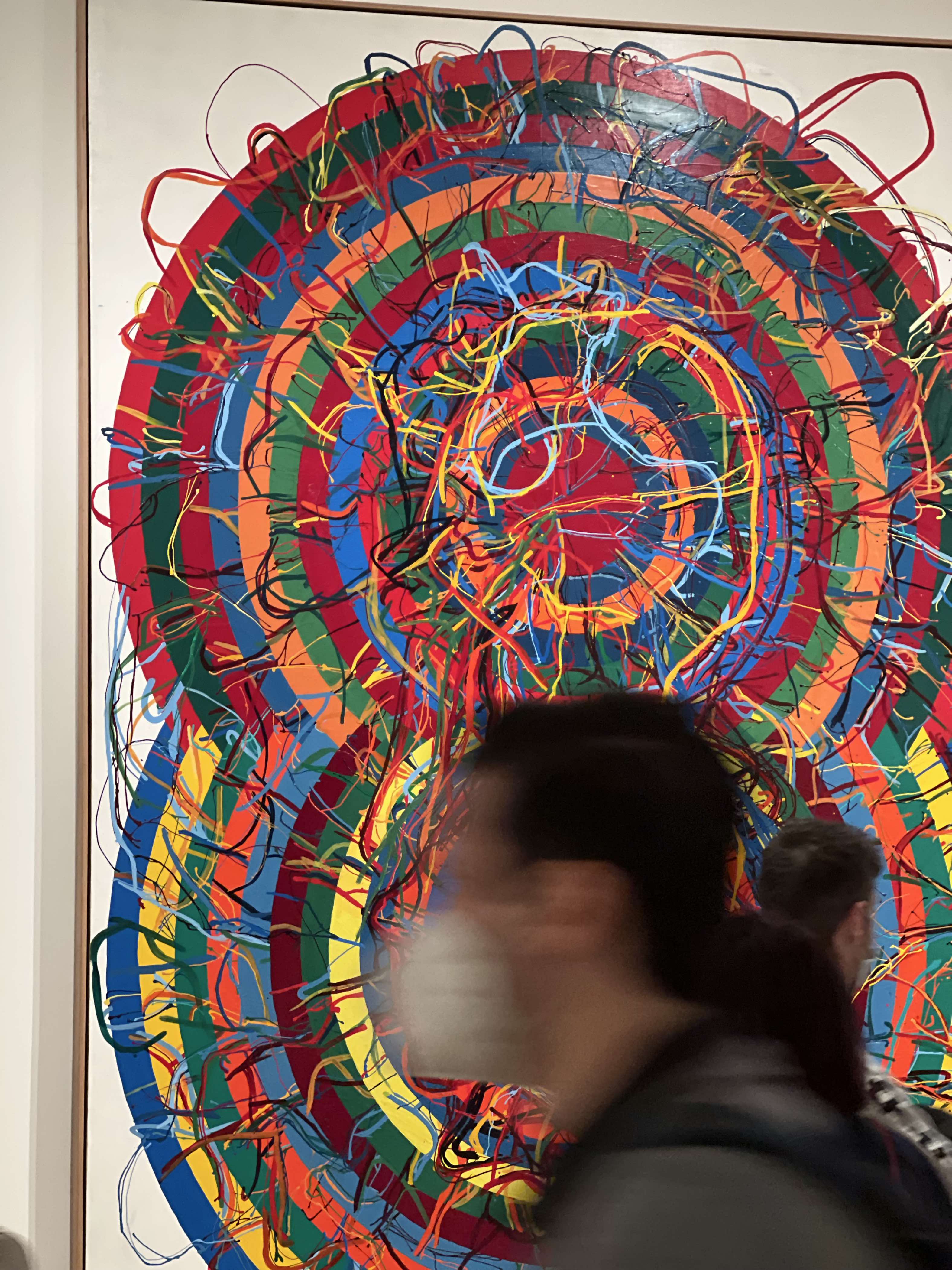
His work translates beautifully into domestic settings and has been somewhat undervalued relative to his importance. Atsuko Tanaka, whose practice extended from her famous Electric Dress of 1956 into paintings of interconnected circular forms, occupies a singular position: she was one of the movement's most conceptually rigorous members and her work on paper and canvas is among the most sought after by museums building out their postwar Asian holdings. The secondary market for Gutai has matured considerably since the landmark 2013 retrospective at the Guggenheim in New York brought the movement to a broader Western audience. Before that moment, many works could be acquired at prices that now seem almost implausible.
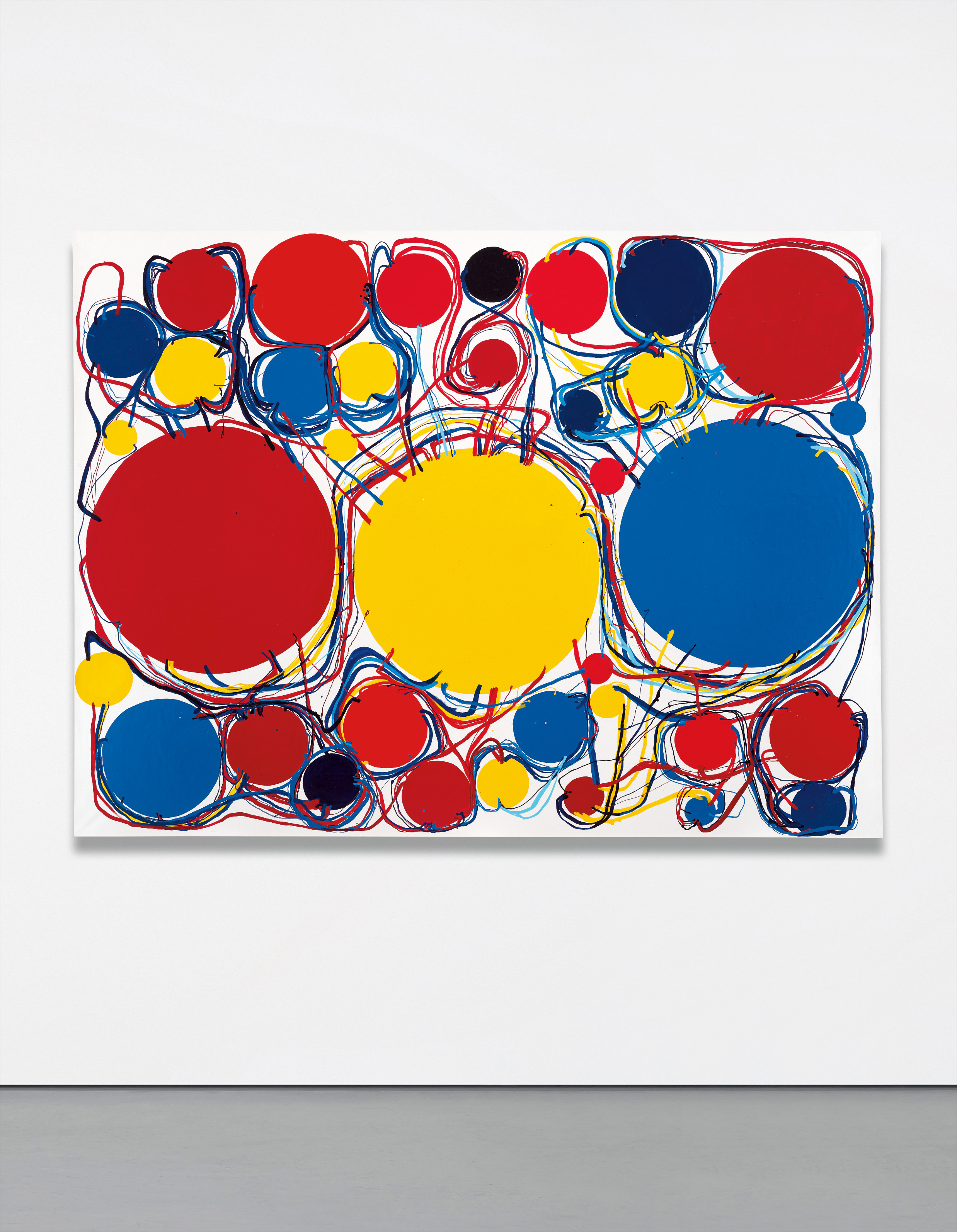
Atsuko Tanaka
2001-f
The correction has been real but it has not been uniform. Shiraga's top examples have reached well into the millions at Christie's and Sotheby's, while works by artists like Motonaga and Shimamoto still present genuine value relative to their art historical standing. The market for Tanaka has grown steadily in line with renewed institutional interest in women artists of the postwar period. For collectors operating below the top tier, there are still entry points that will look prescient in a decade.
Younger artists engaging seriously with Gutai's legacy are worth watching, even if the direct lineage is complicated by the movement's specificity to time and place. Artists working in performative abstraction across Japan, South Korea, and the broader Asia Pacific region are being reconsidered alongside Gutai's precedents in ways that are beginning to influence collecting decisions. Curators at institutions like the National Museum of Art in Osaka have been deliberate about framing this continuity, and collectors who follow those institutional conversations tend to find opportunities before they become obvious. Practically speaking, condition is a more complicated issue with Gutai works than with conventional paintings, precisely because the materials and methods were unconventional by design.
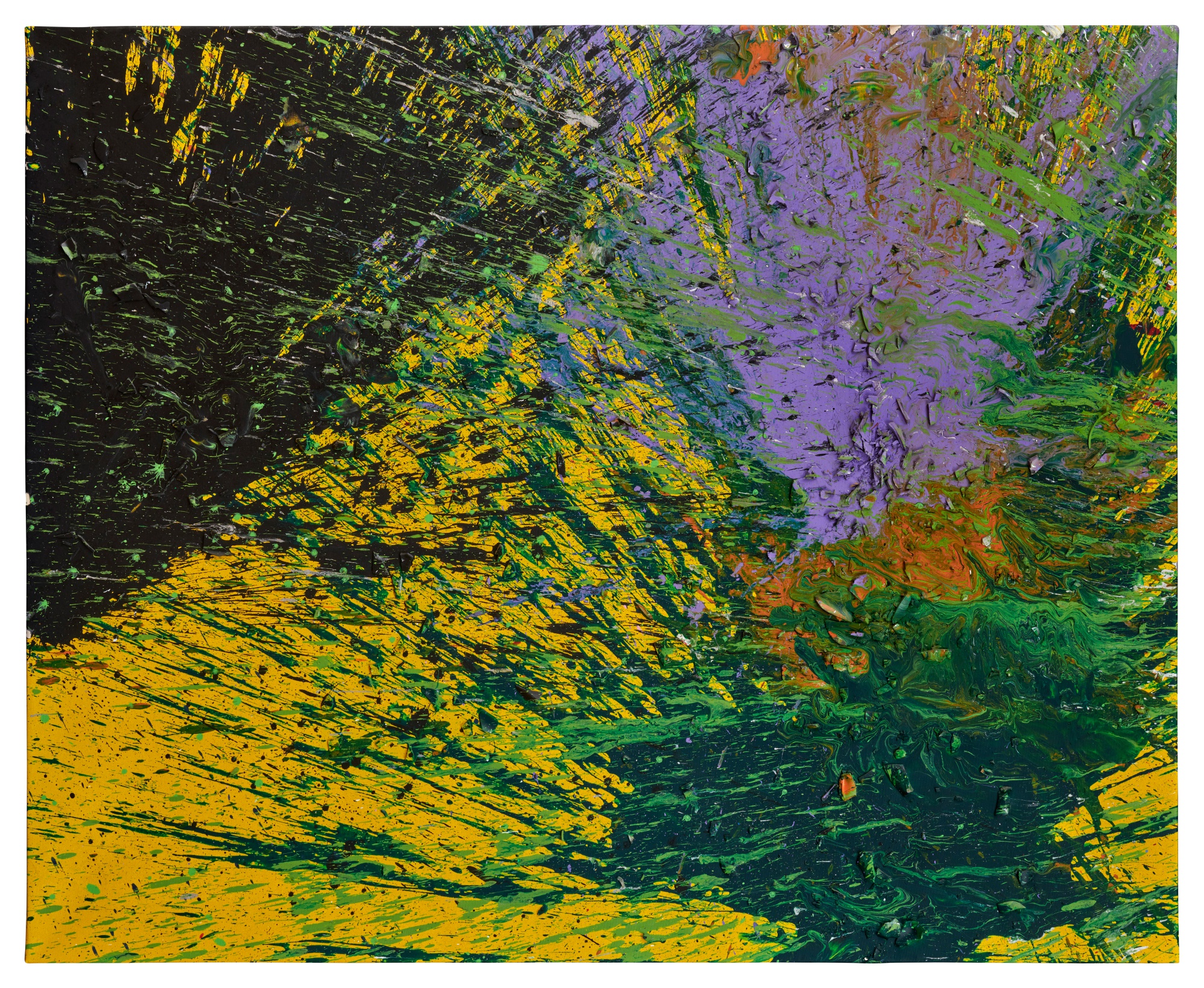
Shozo Shimamoto
Magi 914 (Bottle Crash series), 2008
Paint applied with the force and volume that Shiraga or Shimamoto used can be vulnerable in ways that a brush applied surface is not. When considering a work, ask the gallery or seller for a detailed condition report and, where possible, an exhibition history that documents how the work has been stored and displayed. Unique works are far preferable to later editioned objects in this context, and the distinction matters enormously to the secondary market. As for display, these works reward space and light.
They were made in conditions of physical openness and they read best when given room to breathe, away from the competition of densely hung walls. A single strong Gutai work, given the right placement, will carry an entire room. The deeper reason collectors return to Gutai, beyond the market arguments and the art historical credentials, is something harder to articulate but easy to feel. These works were made by people who believed that art could be a genuine encounter between a human being and the world, not a representation of that encounter but the thing itself.
That belief left a mark on every object they made. Living with that kind of conviction, framed and hanging on your wall, changes how a room feels. That is not a small thing.