Functionalism
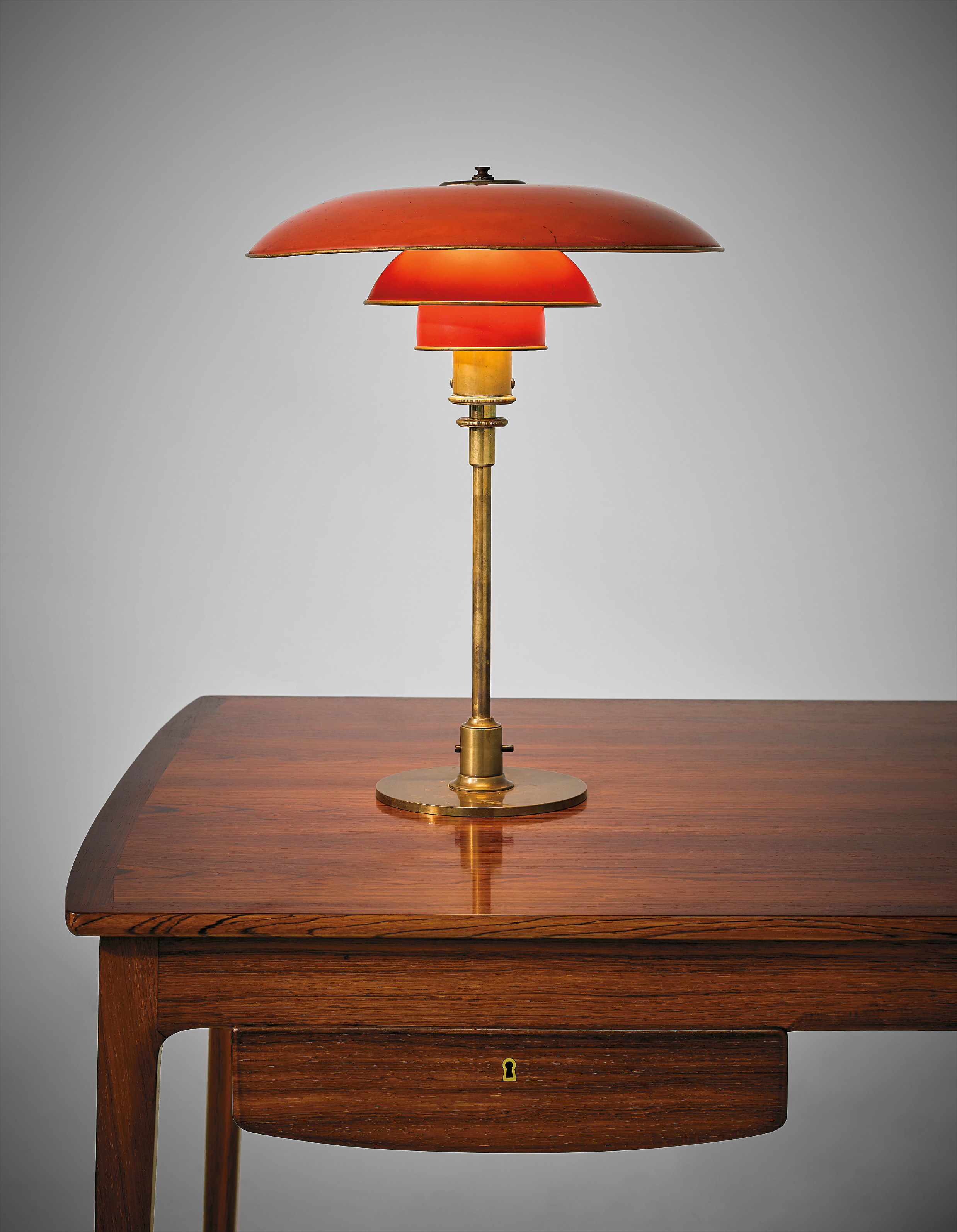
Poul Henningsen
Early desk lamp, type 4/3 shades
Beauty That Actually Does Something
When a Hans J. Wegner Shell Chair sold at Phillips London in 2022 for multiples over estimate, the room understood something important was shifting. This was not a design history lesson being priced by nostalgia. It was a live market registering the idea that the most considered objects ever made, things conceived to be sat in and used and loved daily, were finally being treated with the same seriousness we reserve for paintings hung behind velvet ropes.
That result was a signal, and collectors paying attention have been reading it carefully ever since. Functionalism as a collecting category is having a complicated and genuinely exciting moment. The word itself carries baggage, summoning cold Bauhaus classrooms and the kind of puritanical design theory that strips pleasure from everything in the name of purpose. But what the market is actually rewarding right now is something far more human than that.
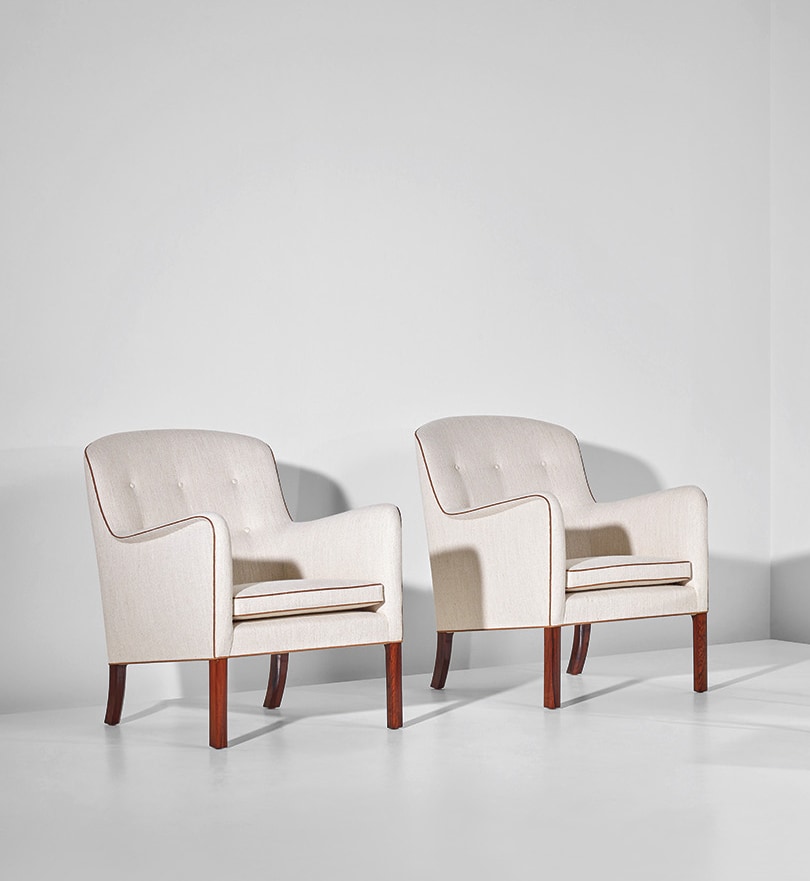
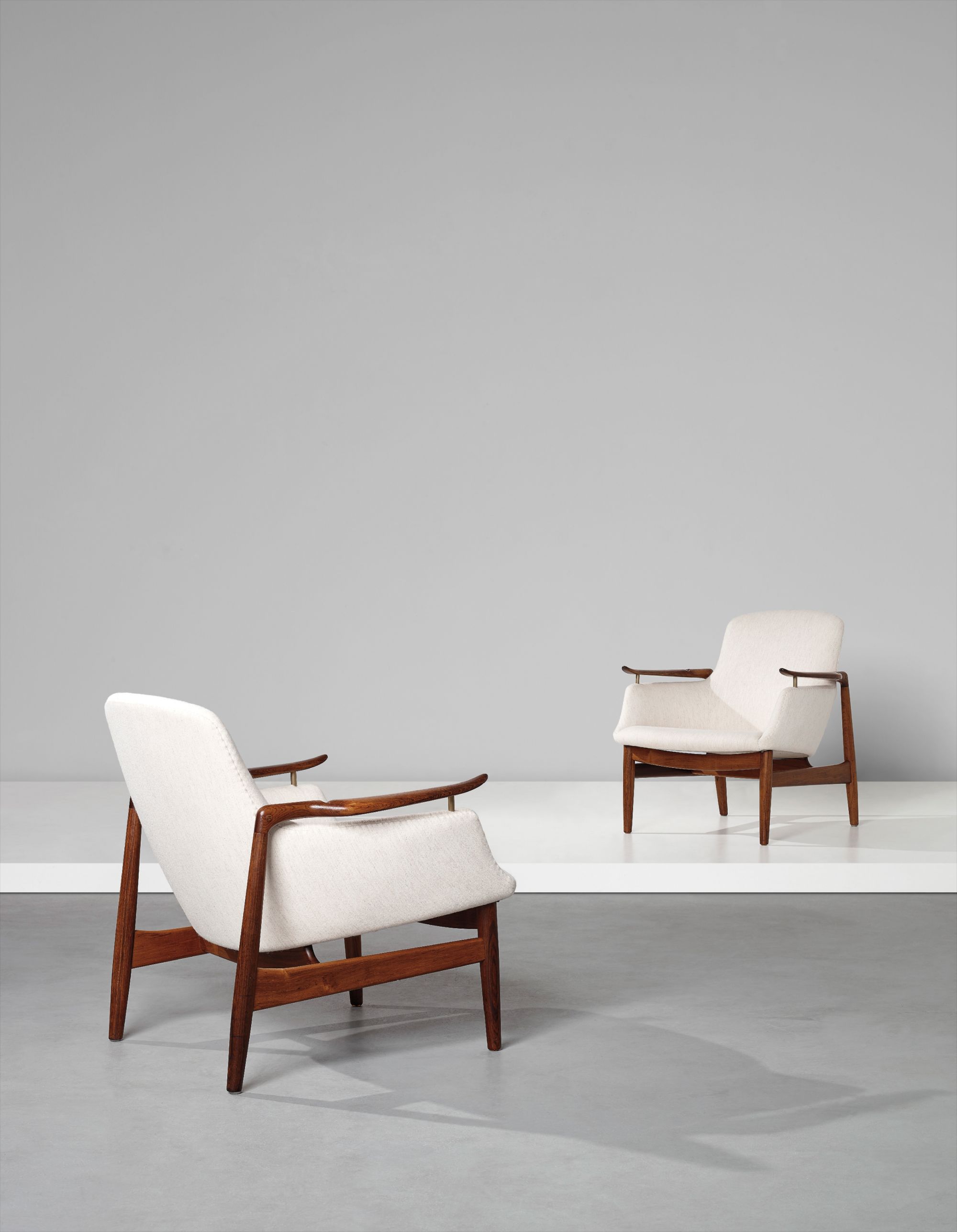
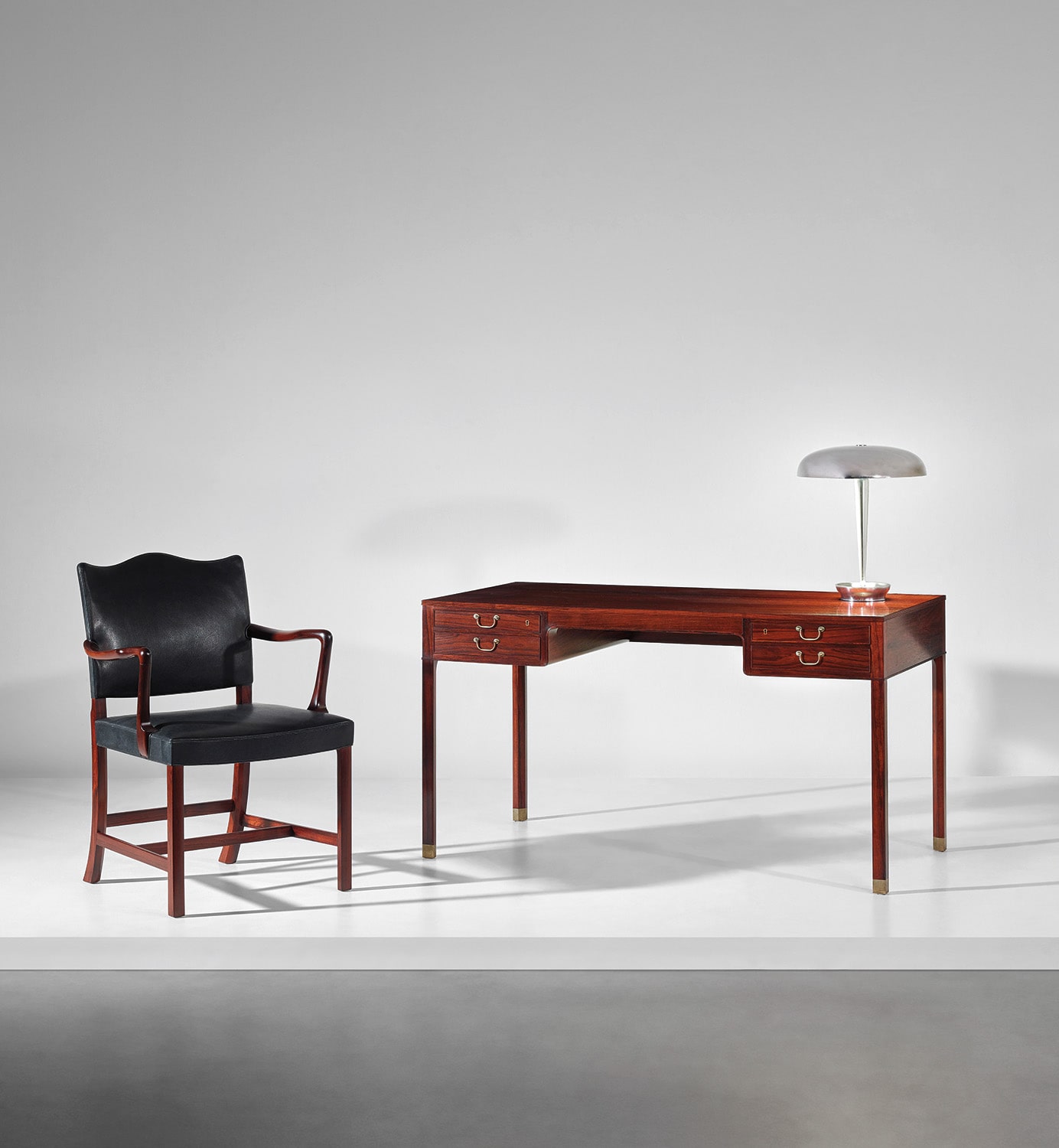
Ole Wanscher
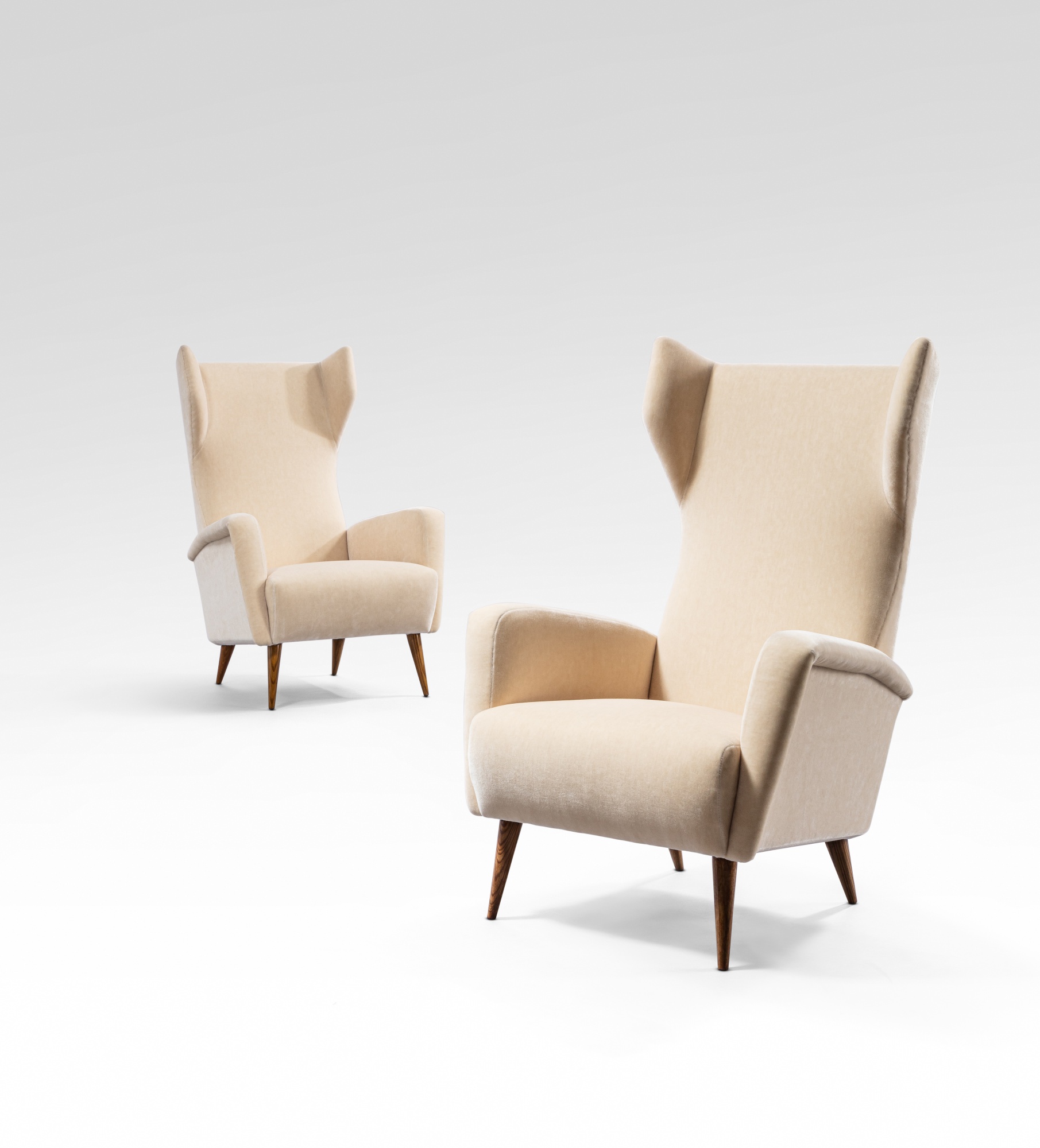
Pair of armchairs
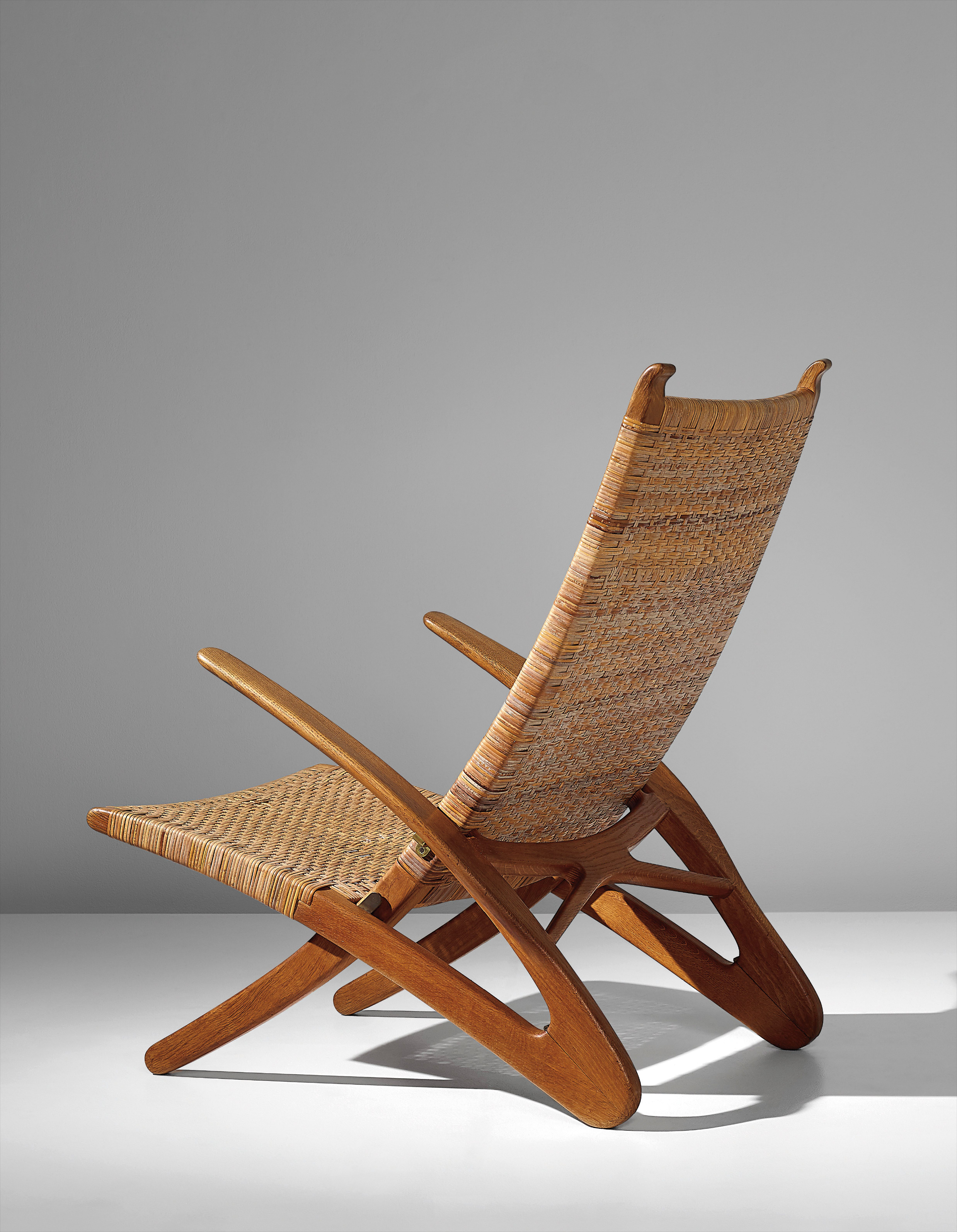
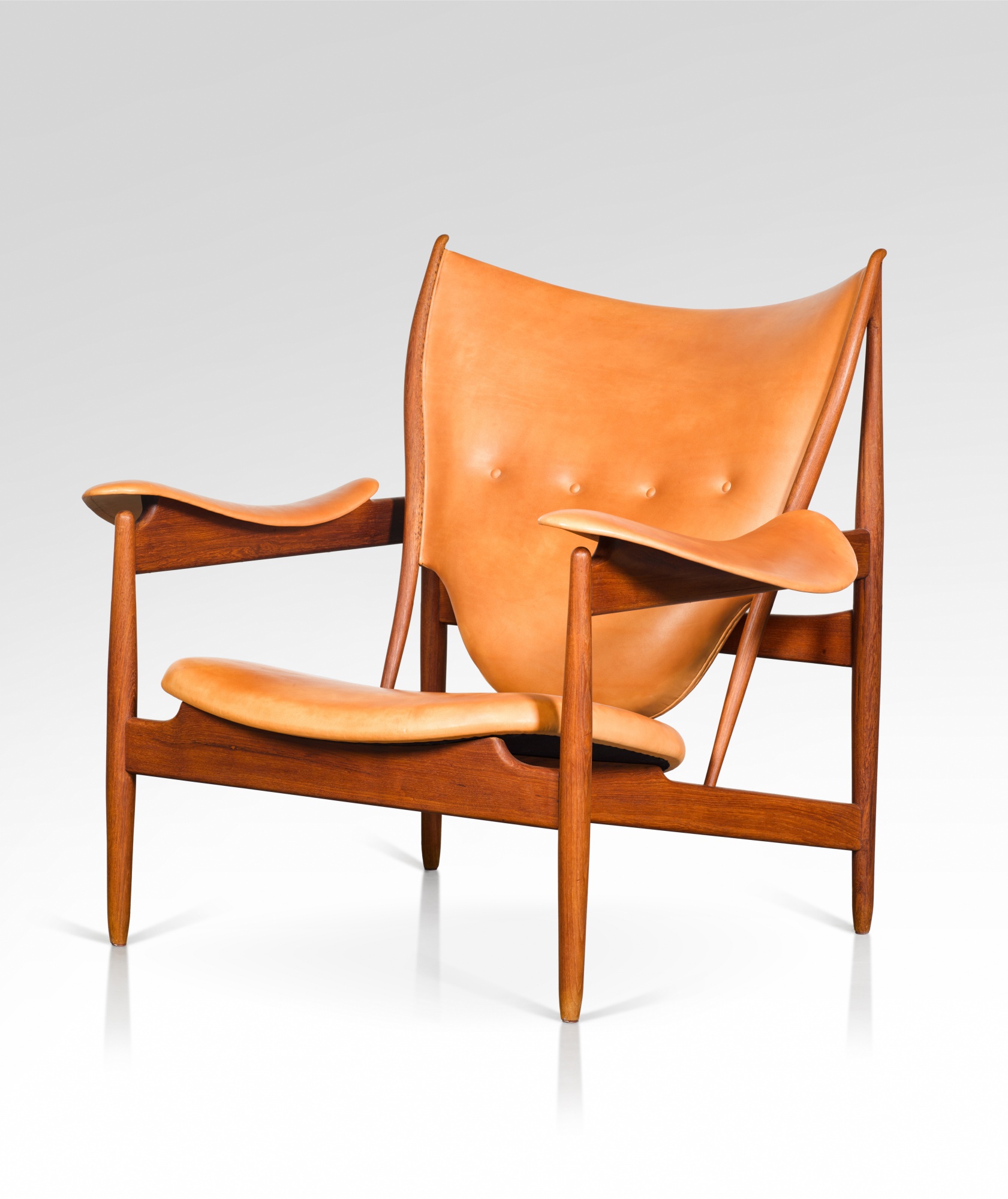
The work of designers like Finn Juhl and Ole Wanscher, both of whom brought a sculptural warmth and an almost sensuous attention to material into their Danish modernist practice, reminds us that functionalism was always more capacious than its critics allowed. These were makers who believed that beauty was not decoration applied to function but was in fact a property of function itself, when function was understood with enough intelligence and care. Museum programming has been quietly building this case for years. The Louisiana Museum of Modern Art in Denmark, long one of the great institutions for understanding the overlap between art and design, has consistently foregrounded the designers who came out of the Danish craft tradition, and its permanent collection and recurring thematic exhibitions have given international visitors a frame for understanding why a chair by Wegner is not a lesser object than a sculpture by a more conventionally celebrated contemporary.
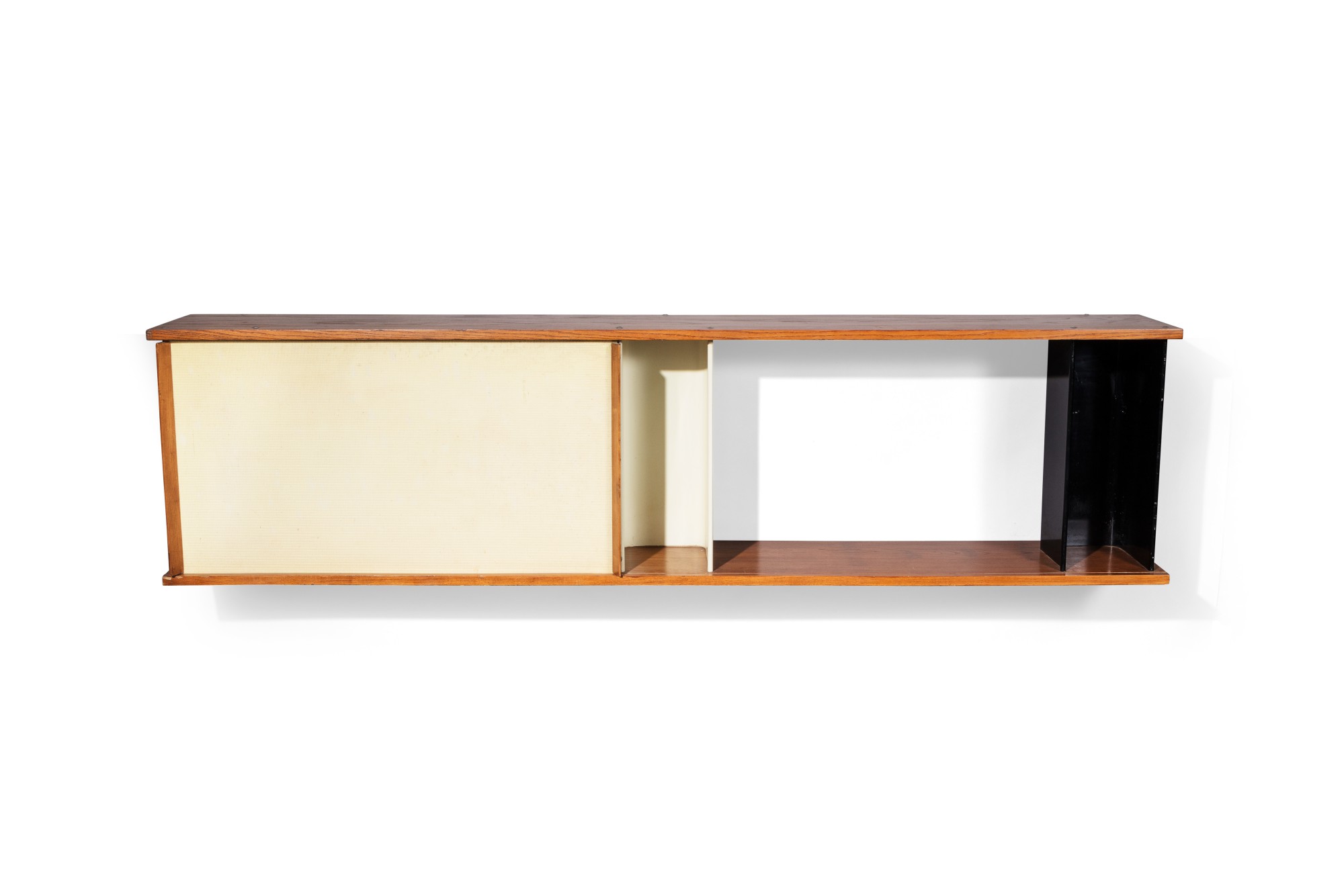
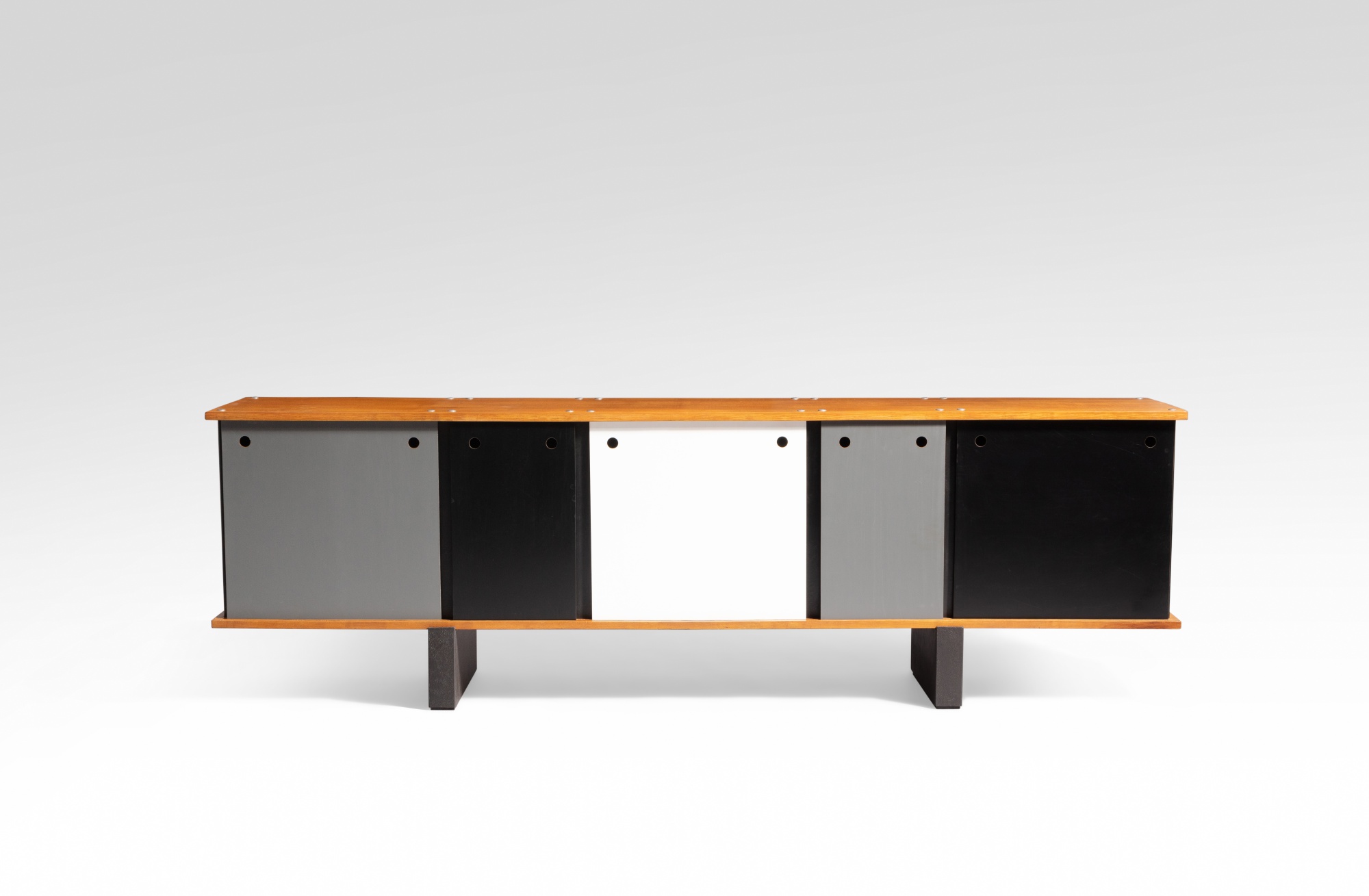
The Vitra Design Museum in Weil am Rhein has been equally rigorous, with its retrospective attention to Charlotte Perriand doing enormous cultural work. The 2019 to 2020 Perriand retrospective at the Fondation Louis Vuitton in Paris introduced her practice to a generation of younger collectors who had simply not encountered the full scope of what she made, and the market responded accordingly. Her work, always thoughtful, always grounded in lived human experience, now sits at auction with the kind of price trajectory that feels entirely deserved rather than speculative. Gio Ponti occupies a somewhat different position in the current conversation, and his trajectory in the market is instructive.
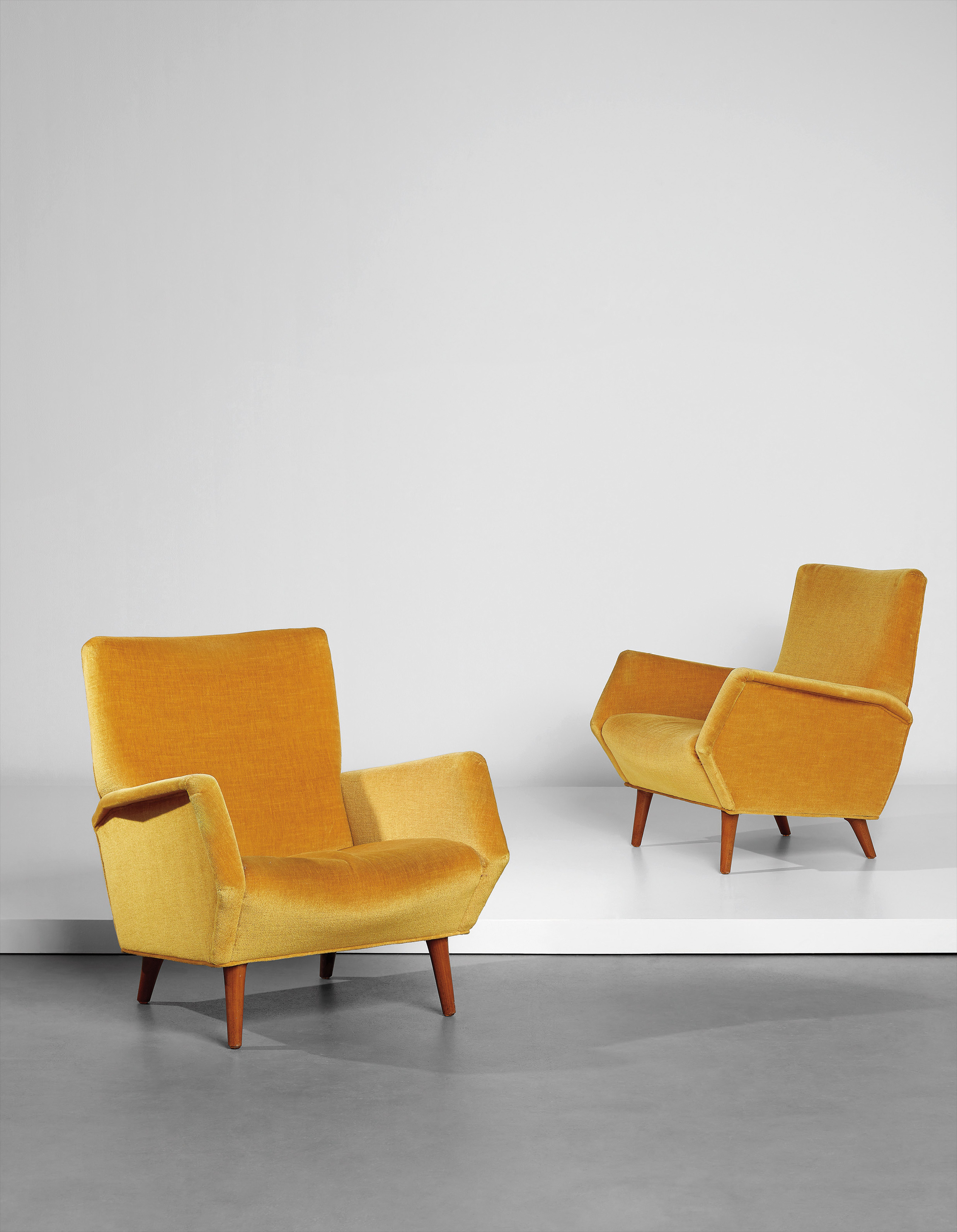
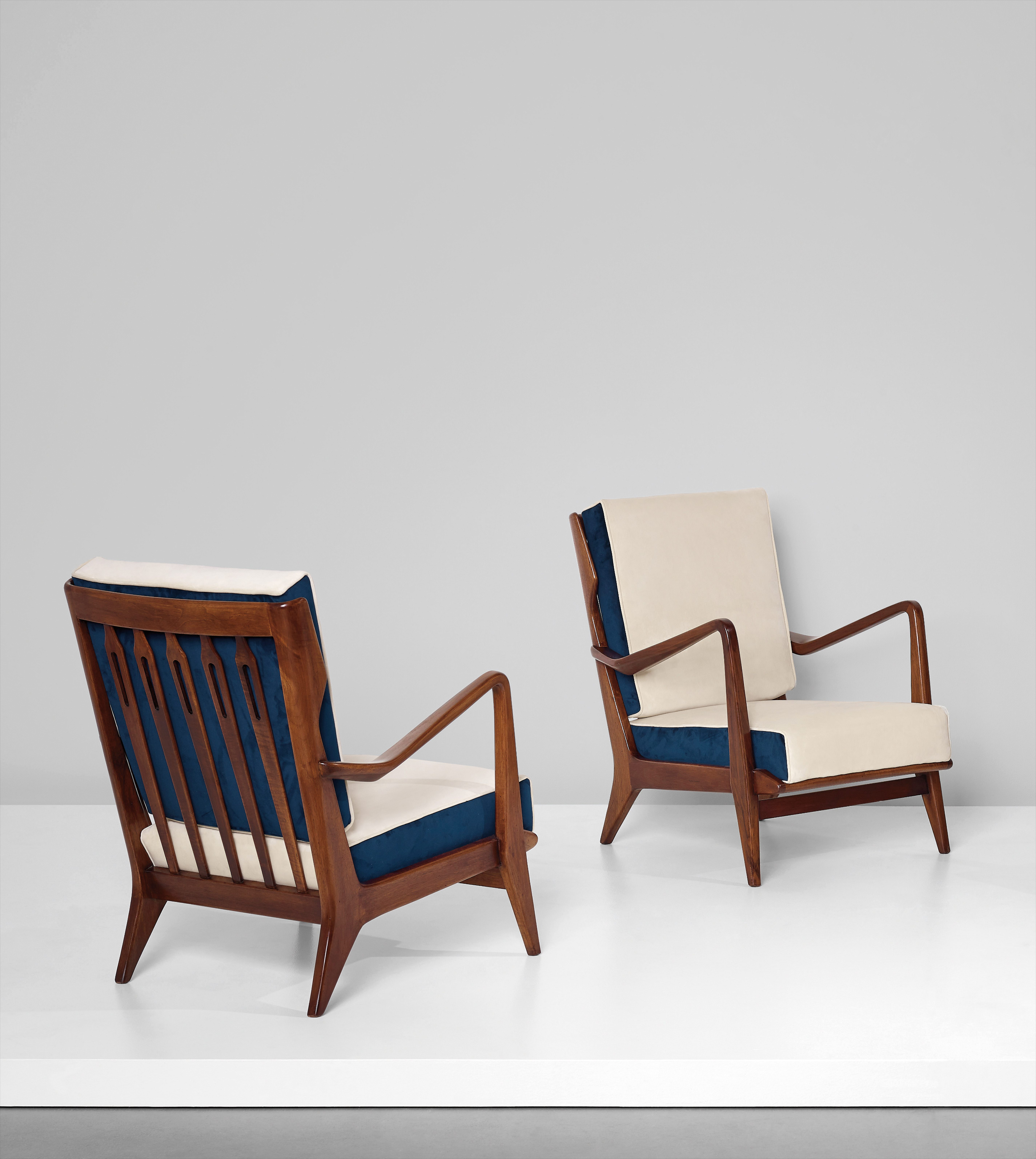
Gio Ponti
Pair of armchairs, model no. 803
Italian design has always attracted a slightly different buyer profile than Scandinavian modernism, and Ponti's extraordinary range, spanning architecture, ceramics, furniture, and editorial work at Domus magazine, makes him a genuinely complex figure to collect. His Superleggera chair of 1957 remains one of the most iconic objects in twentieth century design and when strong examples appear at Wright in Chicago or at Sotheby's in Milan, they consistently outperform conservative estimates. What is interesting about Ponti's growing institutional standing is that curators have become more willing to read his work against art historical frameworks rather than confining him to design history. He understood proportion and material the way a painter understands color, and the best collectors of his work seem to grasp that intuitively.
The critical writing around this space has also matured considerably. Penny Sparke's scholarship on modernist design has given serious collectors a vocabulary for thinking about gender and domesticity in relation to functionalism, which has added real depth to how we understand Perriand's practice in particular. The work of writers like Alice Rawsthorn, whose ongoing critical engagement with design in publications including the New York Times and later her own Substack, has brought design criticism into a conversation with contemporary art criticism in productive ways. Curators at institutions like the Museum of Modern Art in New York, where the design collection has been periodically reactivated and reframed, are increasingly asking the same questions about authorship, intention, and cultural meaning that their colleagues in the painting and sculpture departments have been asking for decades.
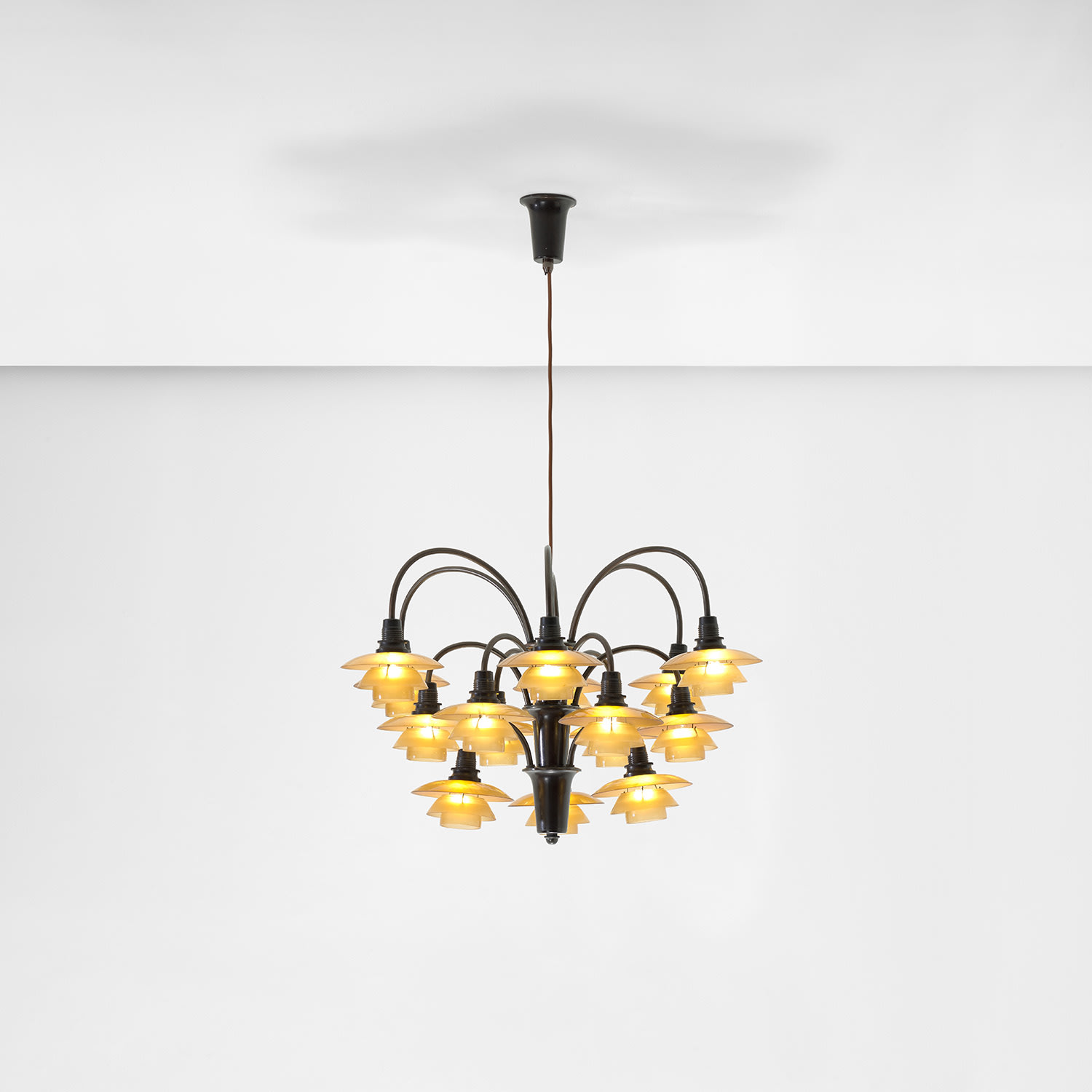
Poul Henningsen
Early desk lamp, type 4/3 shades
That alignment is good for the market and better for the culture. Poul Henningsen deserves particular attention in this moment because his work sits at a fascinating intersection of the technical and the poetic. His PH lamp series, developed through the 1920s and beyond, was conceived around a precise and studied understanding of light distribution, and yet what the objects produce is something that feels almost magical in a domestic space. When serious collectors begin to think of Henningsen not merely as a lighting designer but as someone who was essentially sculpting with light itself, the collecting logic changes.
That shift in perception is already underway, and it tends to precede significant price movement in the auction record. What feels genuinely alive in this category right now is the growing appetite among younger collectors who came to contemporary art first and are now moving laterally into this space. They are not buying functionalist design as furniture. They are buying it as a way of extending a practice of looking and thinking into every room of their lives.
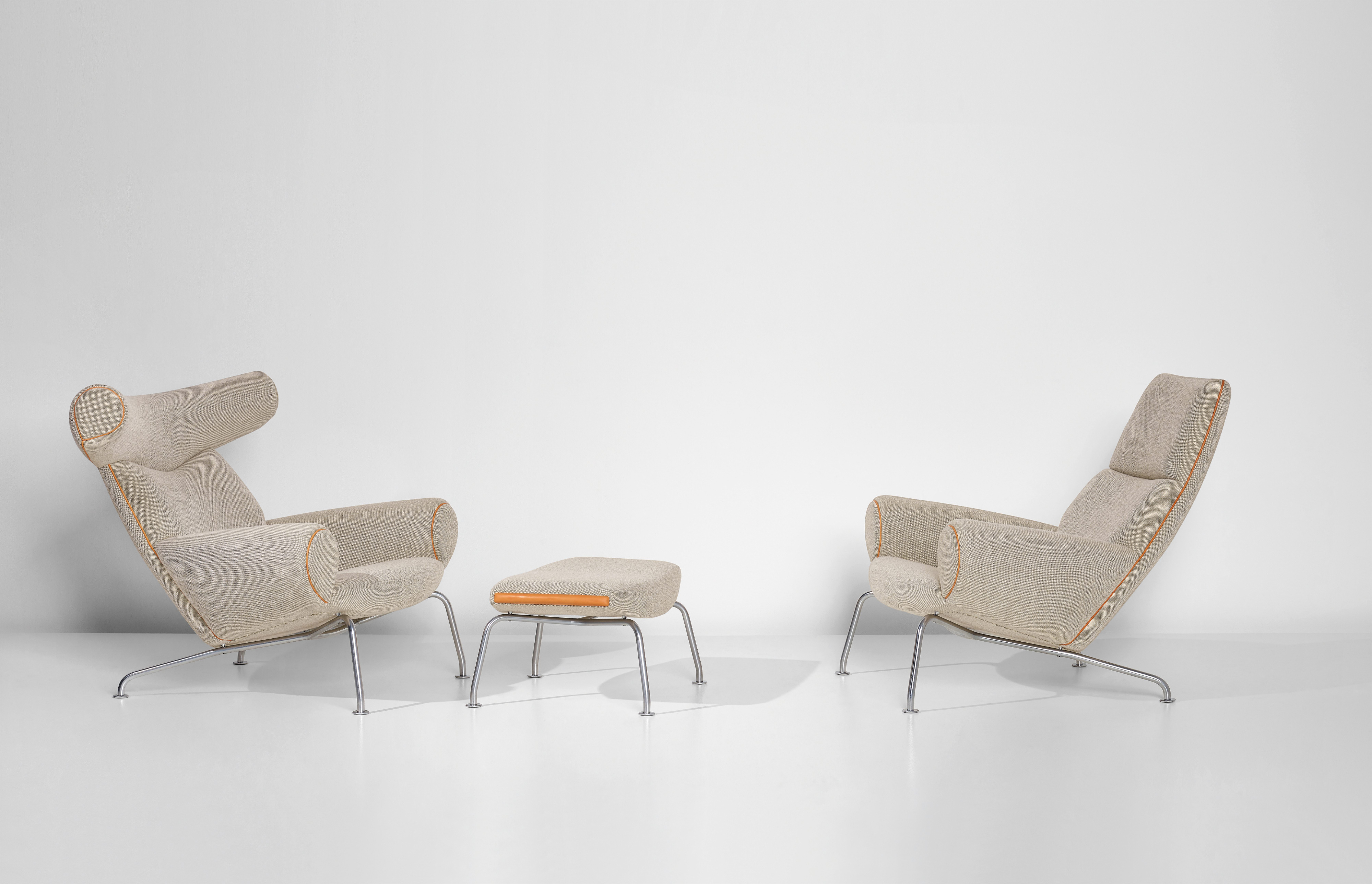
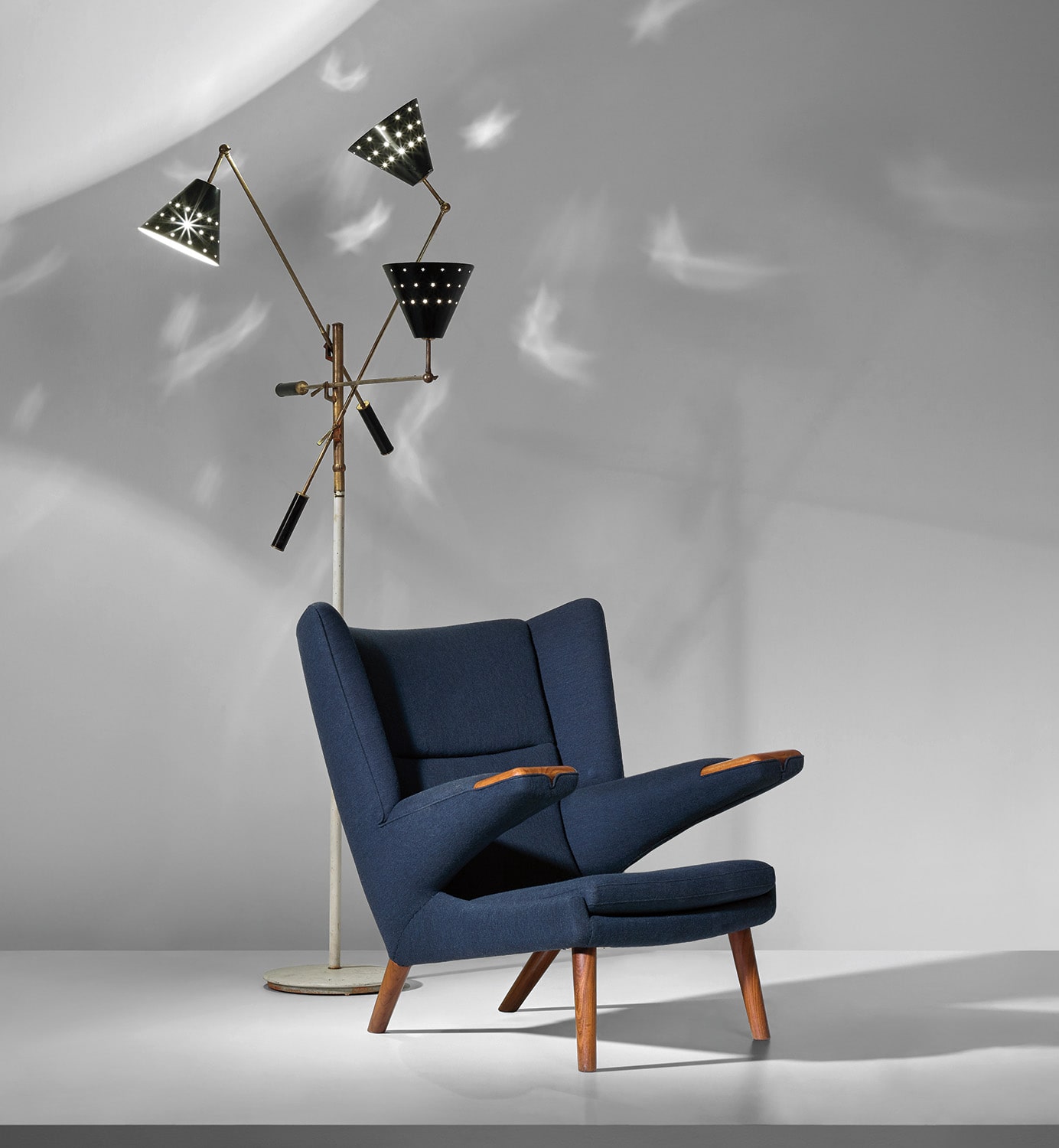
Hans J. Wegner
Two 'Ox' lounge armchairs, model nos. AP-46 and AP-47, and footstool, model no. AP-49
This is a different kind of collector from the one who traditionally drove the Danish modern or Italian mid century markets, and their participation is introducing new energy and new price floors. What feels more settled is the canonical status of the major names, which is both reassuring and, if you are buying, increasingly expensive. The surprises, and there will be some, are likely to come from secondary figures whose work was overlooked because it did not fit neatly into existing national narratives, and from institutions in Asia and the Middle East beginning to collect seriously in this space for the first time. The functionalist tradition, it turns out, travels.