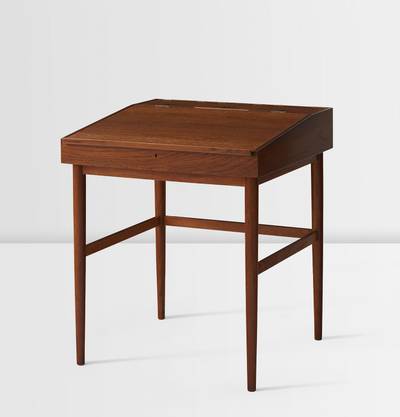
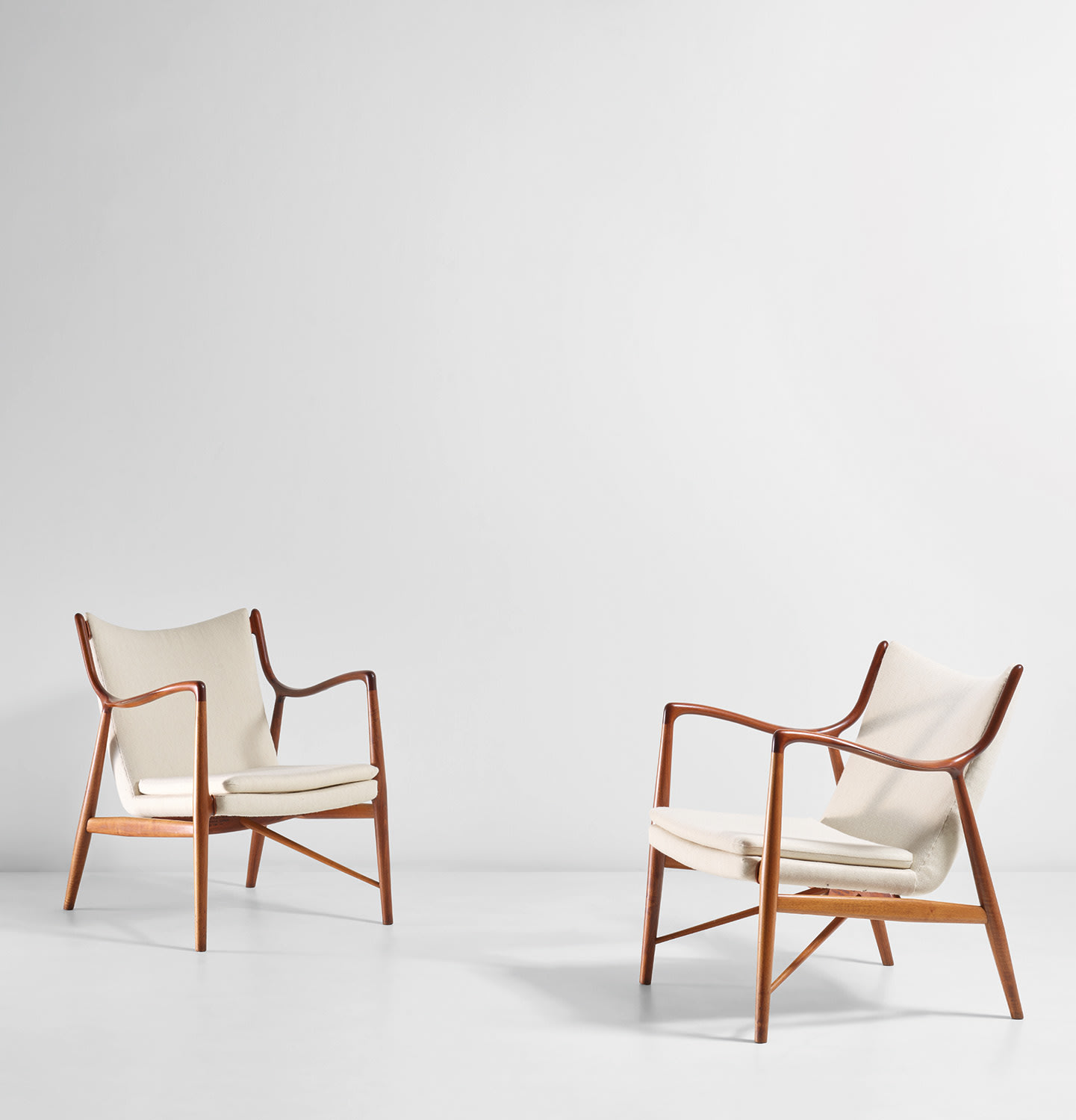
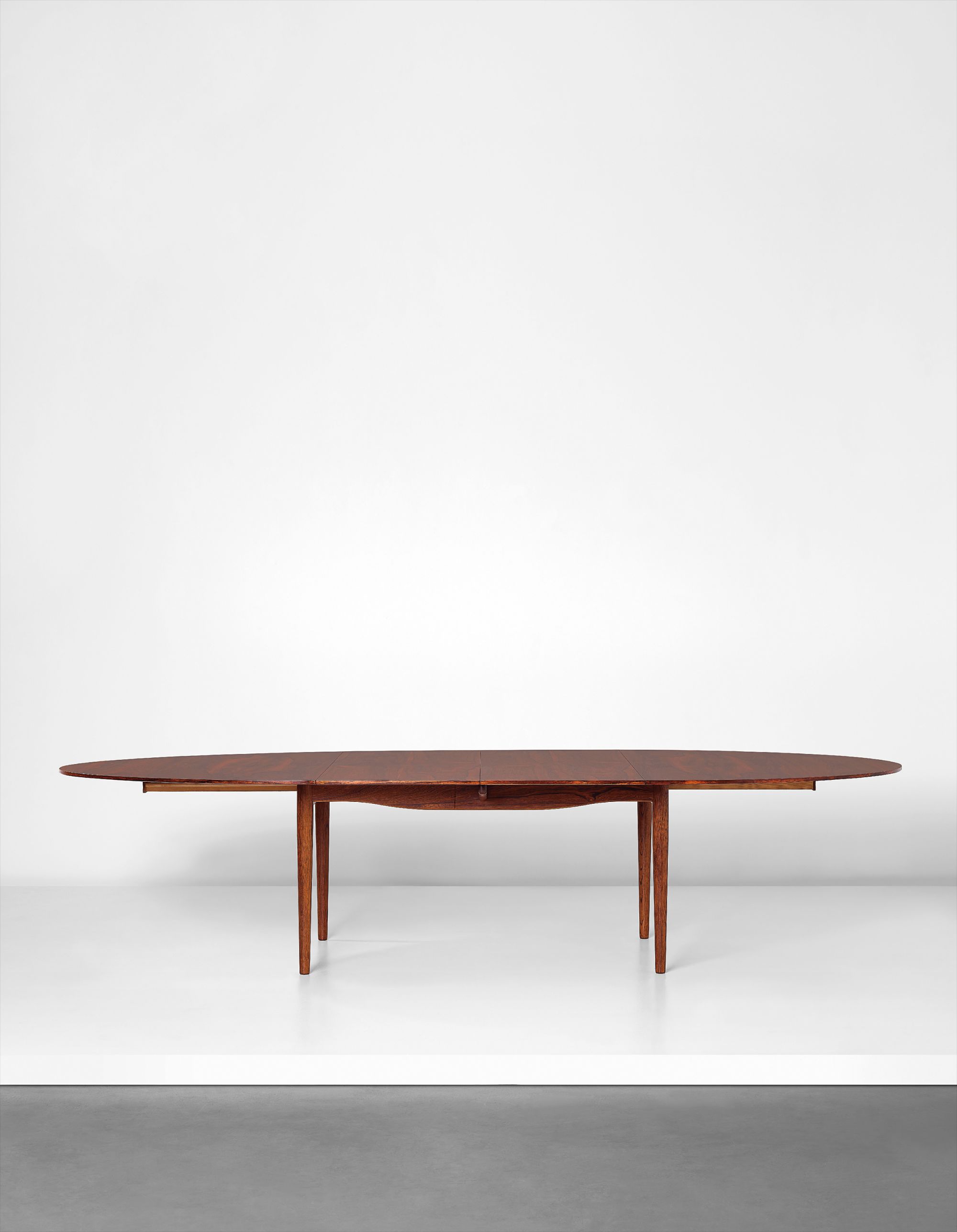
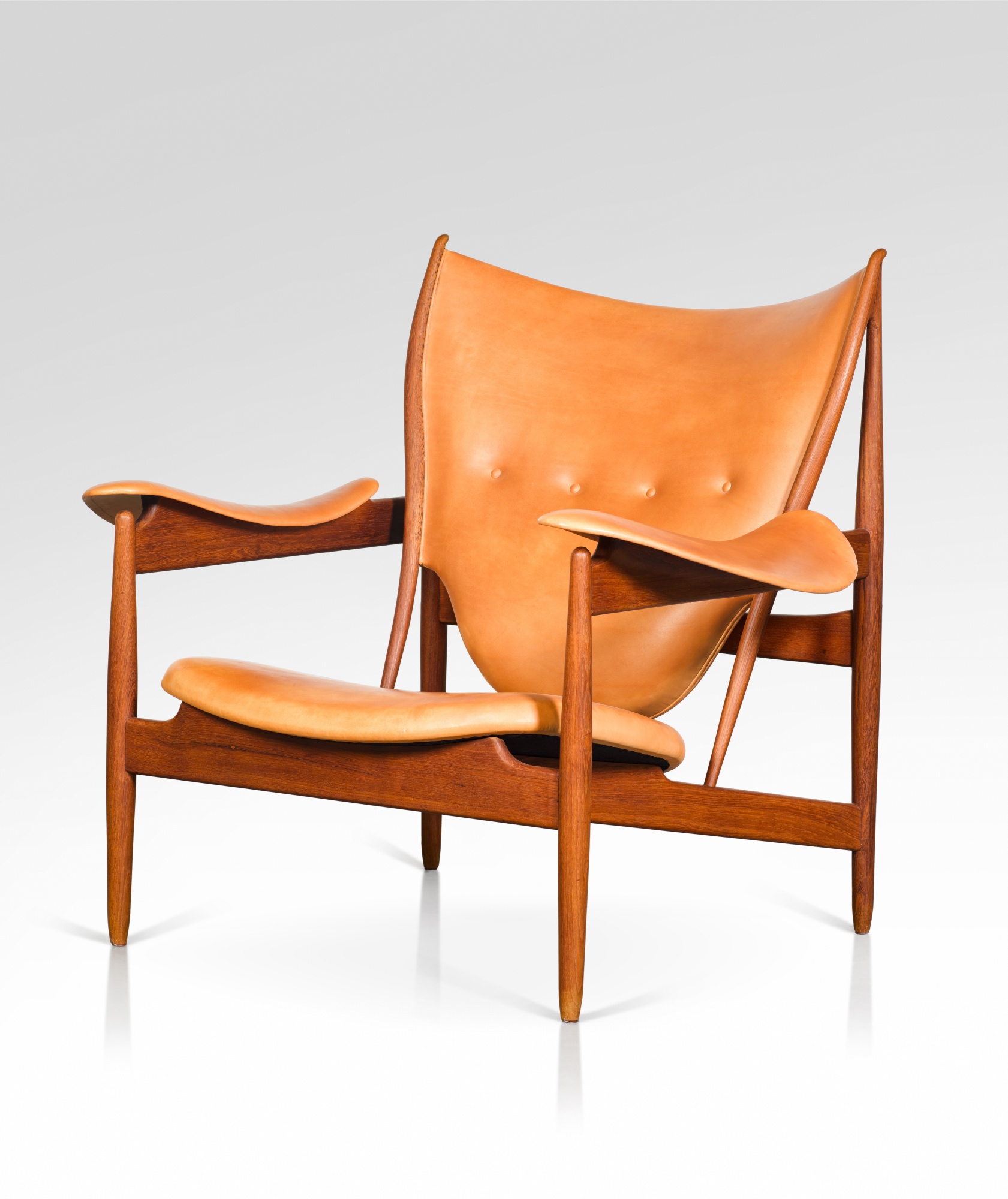
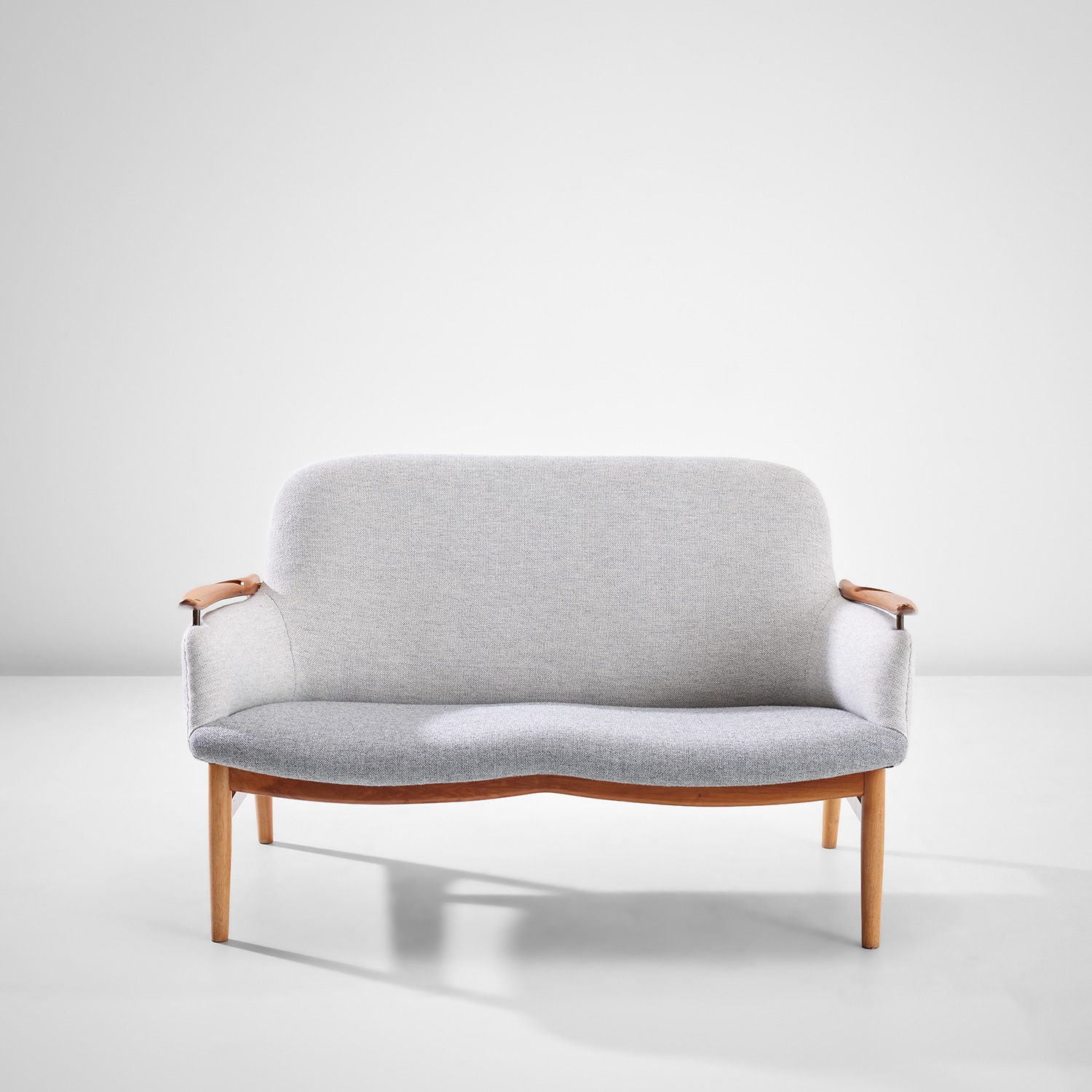
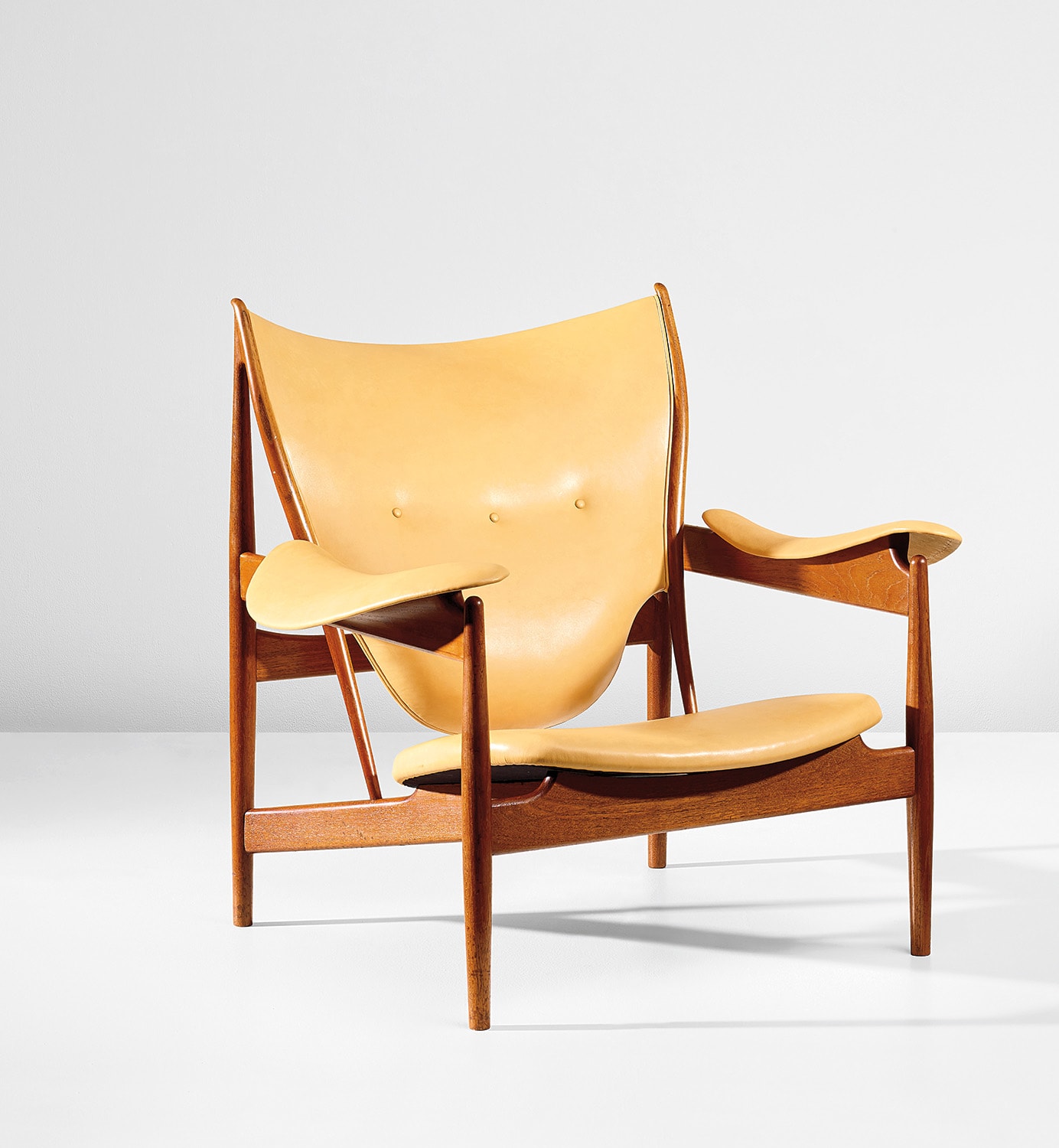
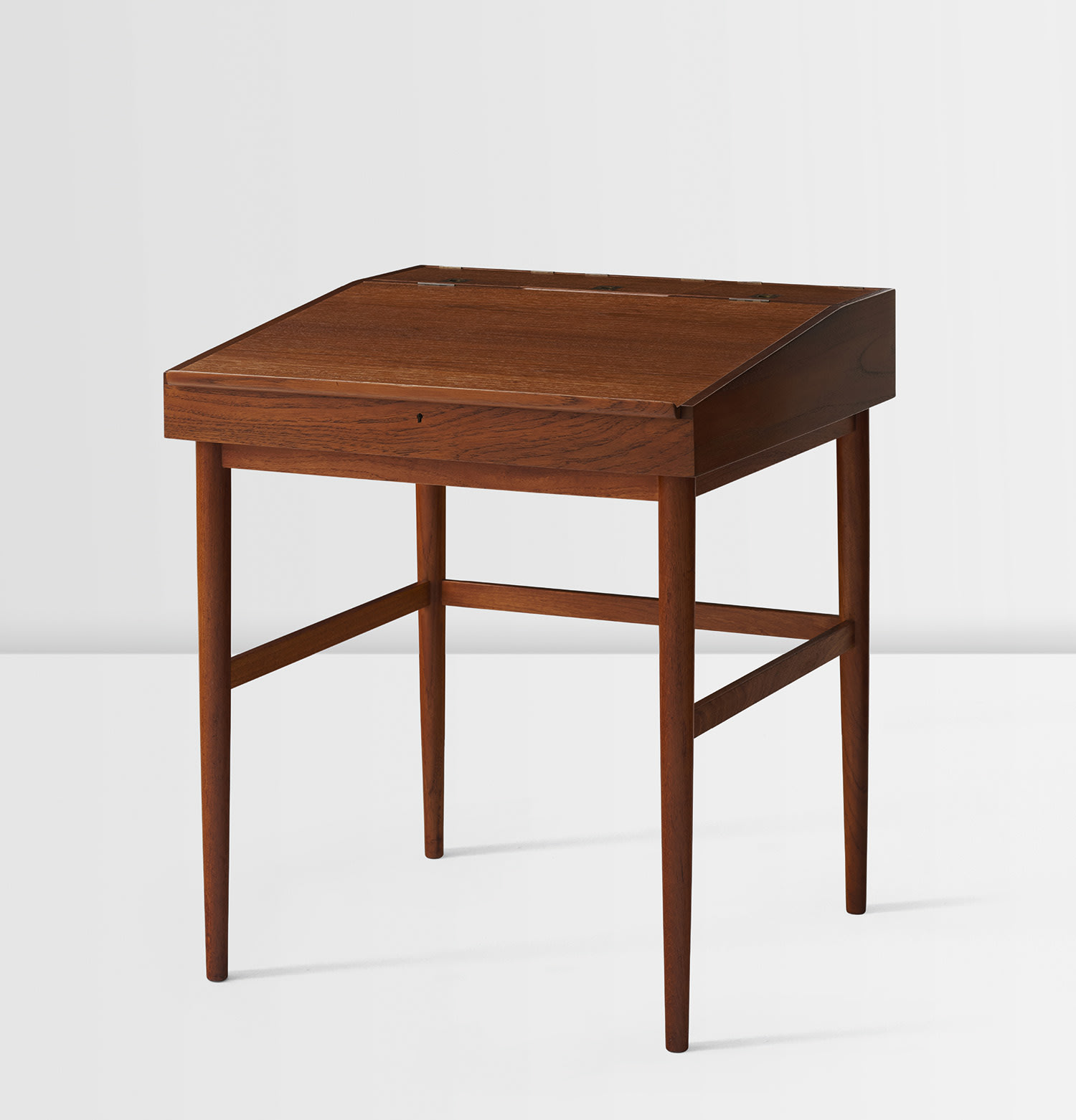
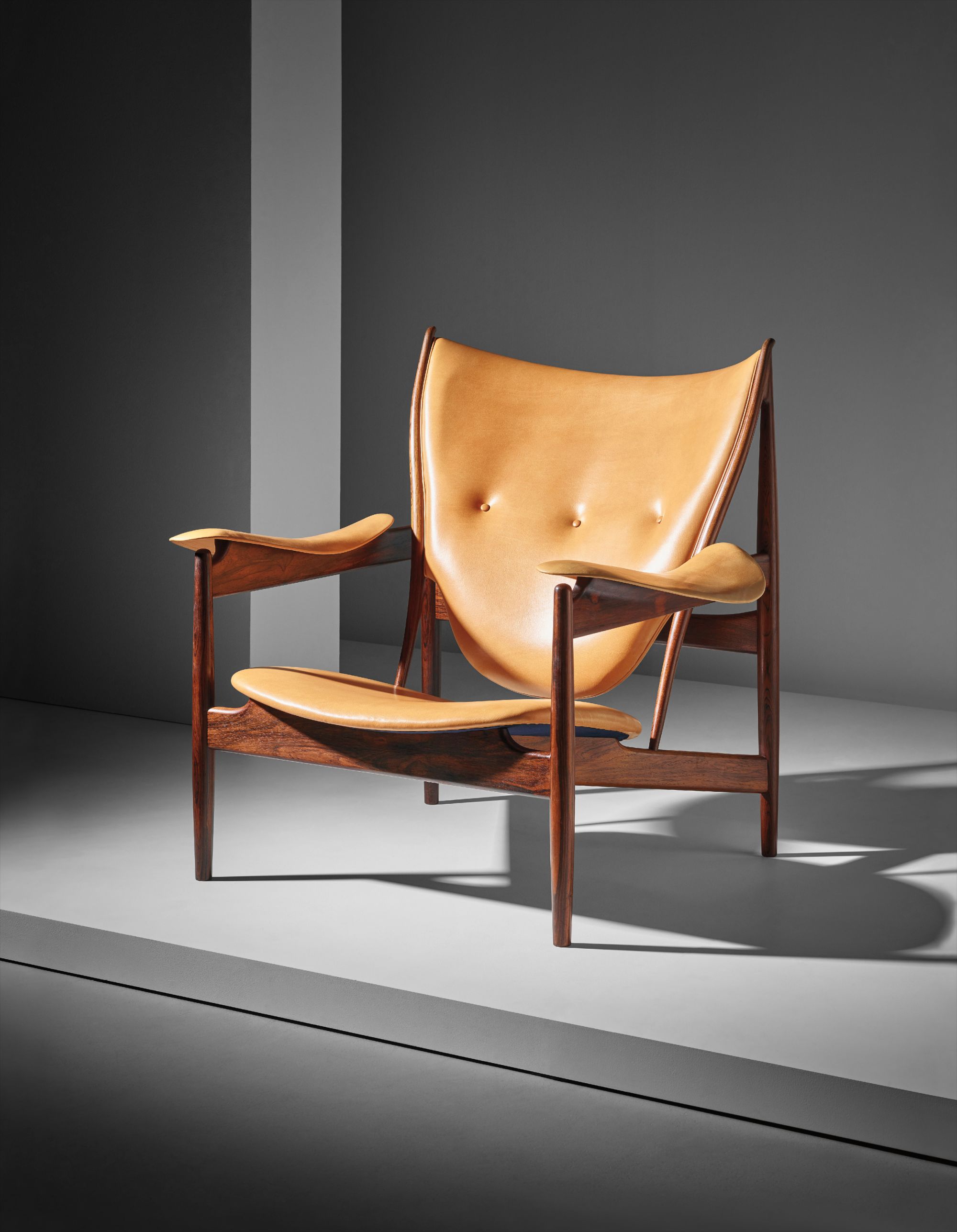
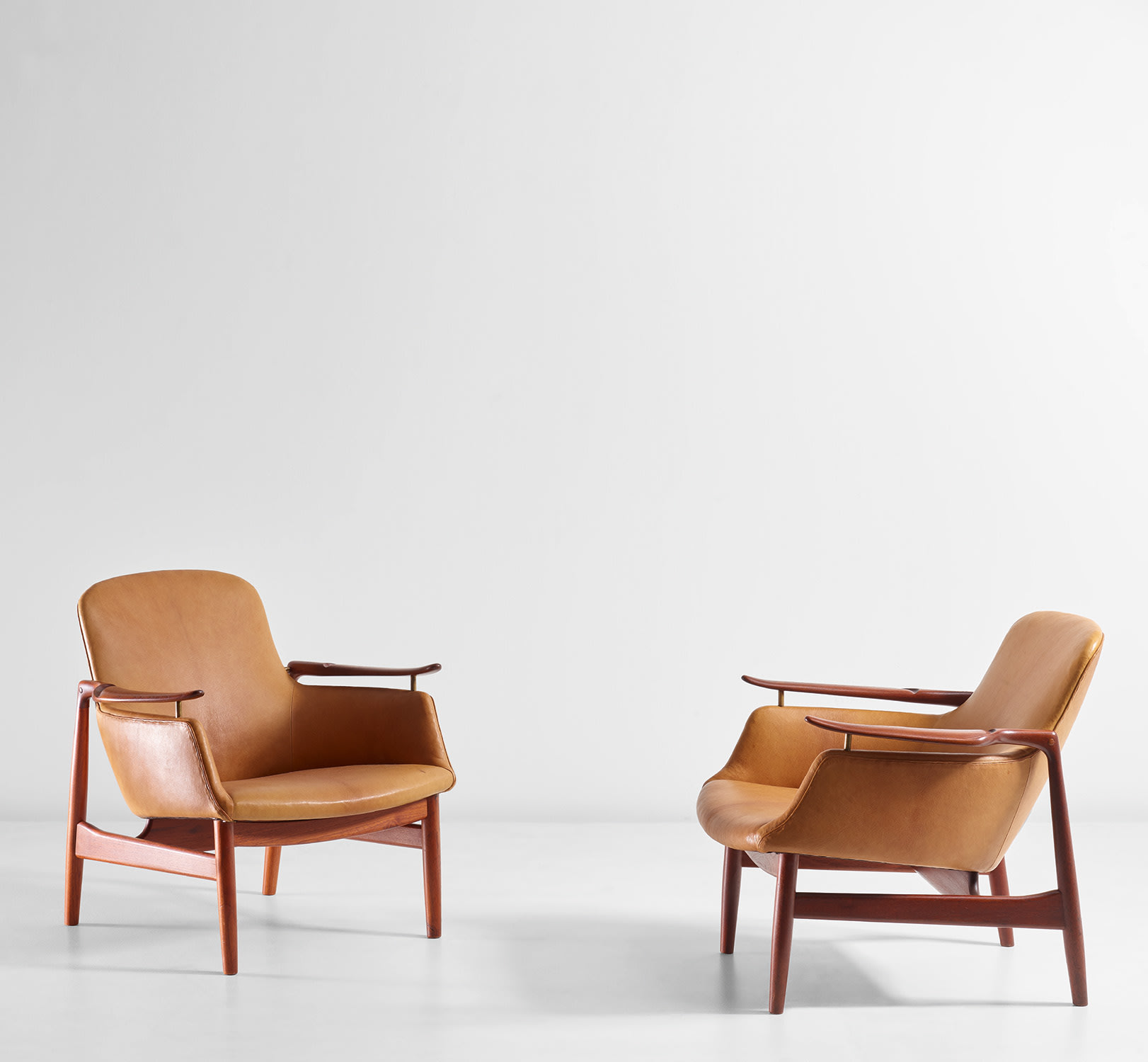
In the spring of 2022, the Louisiana Museum of Modern Art outside Copenhagen mounted a sweeping celebration of Danish design's golden generation, and once again Finn Juhl's work stopped visitors in their tracks. His chairs did not simply furnish a room. They commanded it. Placed among paintings and sculpture, they held their own with the quiet authority of art that knows exactly what it is. That moment, replicated in museums and auction rooms from New York to Tokyo, speaks to something essential about Juhl's legacy: he was not merely a furniture designer who happened to be talented. He was a visual artist who chose wood and upholstery as his primary medium. Finn Juhl was born in Frederiksberg, Denmark in 1912, the son of a textile merchant. His mother died when he was very young, a loss that shaped a somewhat solitary and deeply interior sensibility. He initially intended to study art history, and that instinct toward the visual, toward understanding objects as cultural and aesthetic propositions, never left him. He trained instead as an architect at the Royal Danish Academy of Fine Arts in Copenhagen, graduating in 1934, and spent the following years working in the office of the noted Danish architect Vilhelm Lauritzen. It was a practical education in proportion, materials, and the relationship between a designed object and the human body that would prove foundational to everything that followed. The decisive break came in the late 1930s, when Juhl began collaborating with the master cabinetmaker Niels Vodder. This partnership, which would produce some of the most celebrated furniture of the twentieth century, was born out of a shared conviction that craft and artistic ambition were not in opposition. The Copenhagen Cabinetmakers Guild exhibitions, held annually through the 1940s and into the 1950s, became Juhl's primary platform, and each year he arrived with something that challenged the prevailing understanding of what Danish furniture could be. Where many of his contemporaries worked within a tradition of restrained, functional joinery, Juhl was looking elsewhere. He was looking at Arp, at Brancusi, at the organic abstract sculpture that was reshaping European art. His colleague Esbjørn Hort, who studied alongside him at the Academy, noted that Juhl made this influence explicit in how he staged his own work, placing a wall mounted plaster relief by Hans Arp directly above one of his sofas at exhibition. The furniture and the sculpture were in conversation, and the furniture was not the lesser partner. Juhl's great breakthrough arrived with pieces that seemed to defy the structural logic of traditional cabinetmaking. His most radical formal innovation was the separation of the seat and backrest from the supporting frame, allowing upholstered forms to float in space rather than rest upon their structure. This was not merely a visual gesture. It expressed a philosophy: that comfort and beauty were inseparable, that the body's experience of an object was as much aesthetic as physical. The Chieftain Chair, first presented at the Copenhagen Cabinetmakers Guild exhibition in 1949, is perhaps the fullest expression of this vision. With its sweeping armrests that curve like the prow of a ship, its sculpted wooden frame, and its commanding scale, the Chieftain is simultaneously throne, sculpture, and manifesto. The name was not Juhl's own but was given by the journalist and critic Svend Erik Møller, who recognised that the chair carried the authority of something beyond ordinary domestic furniture. Beyond the Chieftain, Juhl's body of work reveals a sustained and evolving intelligence. The FJ 45 easy chairs show his mastery of a more intimate scale, their forms generous and enveloping without surrendering elegance. The extendable dining table model FJ 49 T demonstrates his command of functional architecture, the way a large object can organise a room with grace rather than dominance. His writing desk, model FJ 40, is among the earliest and most refined expressions of his formal language, a piece that rewards close attention with its refined joinery and organic detailing. The two seater sofas, particularly the early models executed by Vodder, carry an extraordinary energy. The 1941 sofa is a document of a designer at the height of his creative confidence, absorbing the lessons of European modernism and translating them into something distinctly and beautifully his own. For collectors, Juhl's work occupies a position of exceptional desirability within the Scandinavian modern canon. His pieces were made in relatively limited numbers, and the finest examples, particularly those produced by Niels Vodder in the 1940s and early 1950s, appear at auction with the weight of museum quality objects. Early and rare examples of the Chieftain armchair, model FJ 49 A, command significant attention whenever they come to market. Collectors are advised to consider provenance carefully, as well as the condition of both the wooden frame and the original upholstery. Juhl authorised various reissues over the course of his life, and distinguished production houses including Baker Furniture in the United States and later Niels Roth Andersen brought his designs to wider audiences. However, the Vodder pieces remain in a category of their own, combining historical significance with an irreplaceable handcraft quality. The FJ 53 armchairs, too, represent a particularly compelling collecting proposition, their refined forms showing a designer who had fully resolved his visual language into something serene and complete. To understand Juhl fully is to understand the remarkable constellation of talent that surrounded him in postwar Danish design. Hans Wegner, Arne Jacobsen, and Børge Mogensen were his contemporaries, and together they defined what the world came to know as Danish Modern. Yet Juhl was always the outlier, the one most explicitly connected to fine art, the one whose work was hardest to categorise as furniture in any purely utilitarian sense. He was, significantly, the first Danish designer to break into the American market in a sustained way, exhibiting at the Baker Furniture showrooms and appearing in American homes and interiors publications through the 1950s. Edgar Kaufmann Jr., the design curator at the Museum of Modern Art in New York, was among his earliest champions, and MoMA's permanent design collection holds Juhl's work as evidence of his place in the broader history of modernist form. Finn Juhl died in 1989 at his home in Ordrup, north of Copenhagen, a house he had designed and furnished himself and which now functions as a museum dedicated to his life and work. His legacy is not nostalgic. The questions he asked about the relationship between art and function, between the handmade object and the body that inhabits it, remain alive and urgent. In a collecting landscape increasingly attentive to the borders between design and sculpture, Juhl stands as a figure whose work has only grown more relevant with time. To live with a Finn Juhl piece is to live with something that asks something of you: to look carefully, to sit slowly, and to understand that beauty is not an addition to life but its very structure.