Football
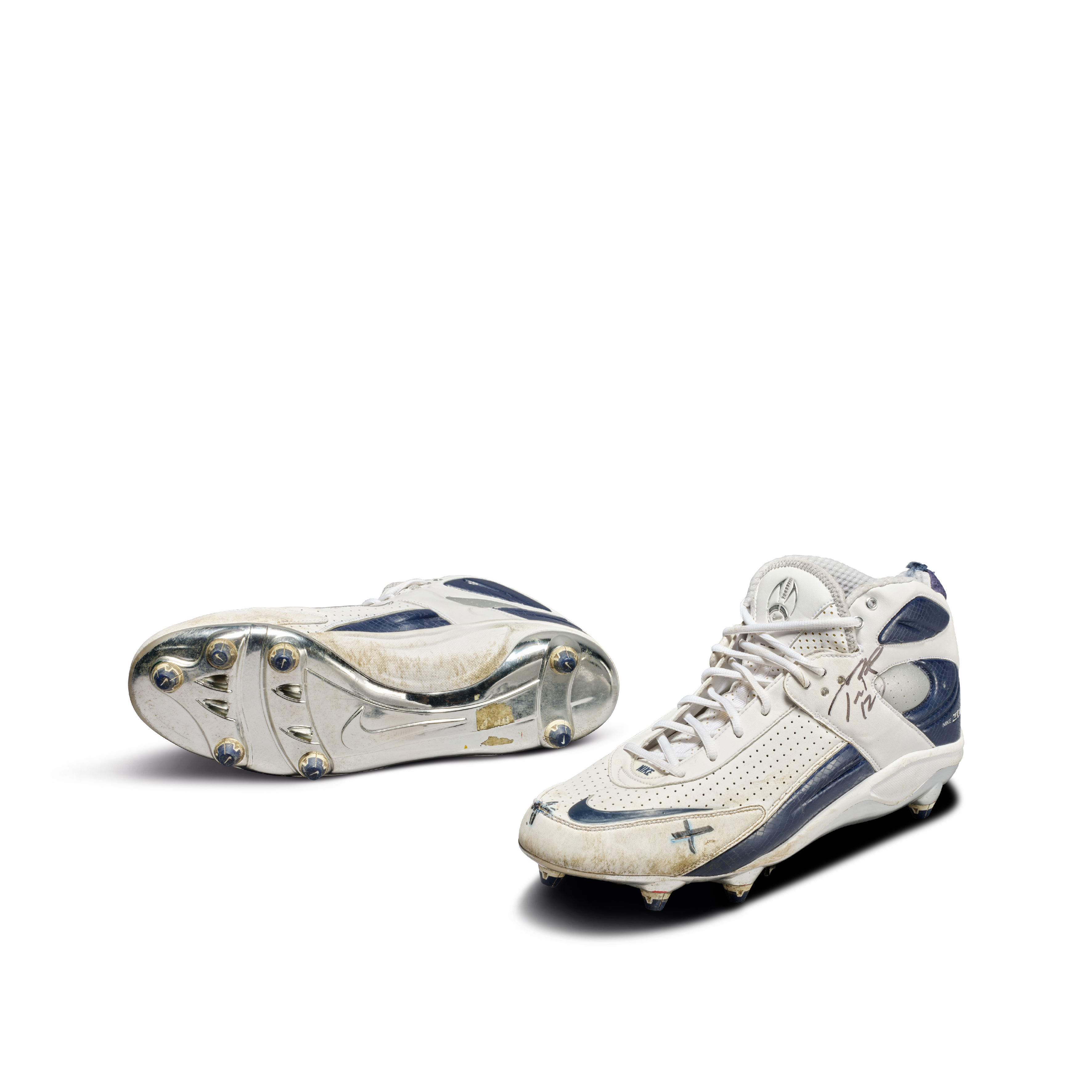
Nike, Nike Air Zoom Blade Pro, Size 13
Tom Brady 2006-2007 NFL Playoffs New England Patriots Game Worn & Signed Cleats

The Beautiful Game Enters the Frame
There is something viscerally satisfying about living with art rooted in sport, and football in particular carries an energy that few other subjects can match. The game arrives in the home not as mere decoration but as charged atmosphere, a reminder of crowd noise and grass and the particular tension of a contested play. Collectors drawn to this territory often describe the same experience: a work catches them off guard, something familiar rendered strange and luminous, and they find they cannot stop looking. That pull is real, and it points toward something deeper than nostalgia or fandom.
The best football art locates the human body in extremis, and that is perennially compelling subject matter regardless of what sport you follow. What separates a good work from a great one in this space comes down to whether the artist understands movement as more than illustration. Sport is about time compressed and physicality extended, and the works that endure are the ones that somehow hold both. A great painting or print in this category does not merely depict a player or a game, it transmits the sensation of being present.
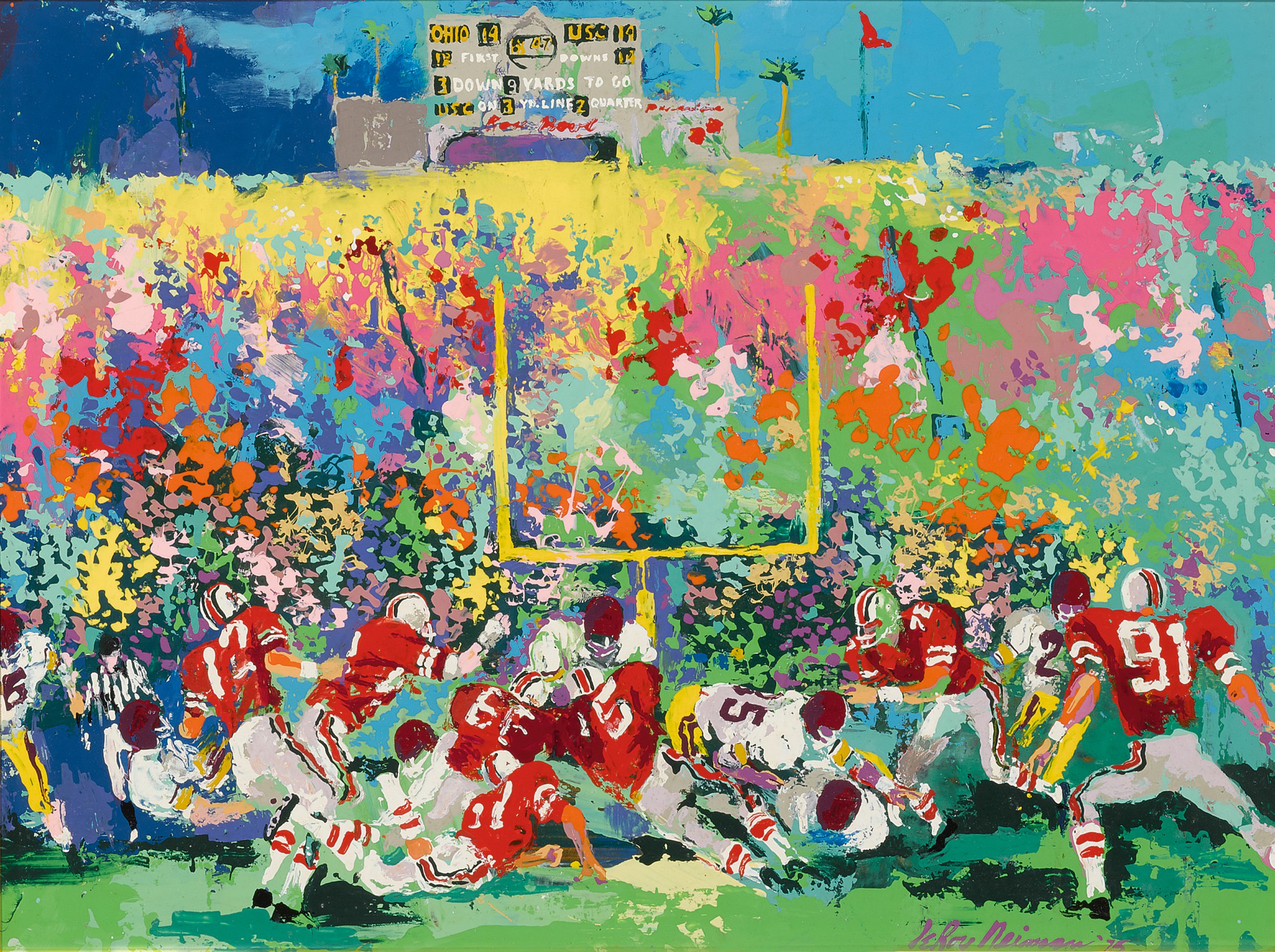
LeRoy Neiman
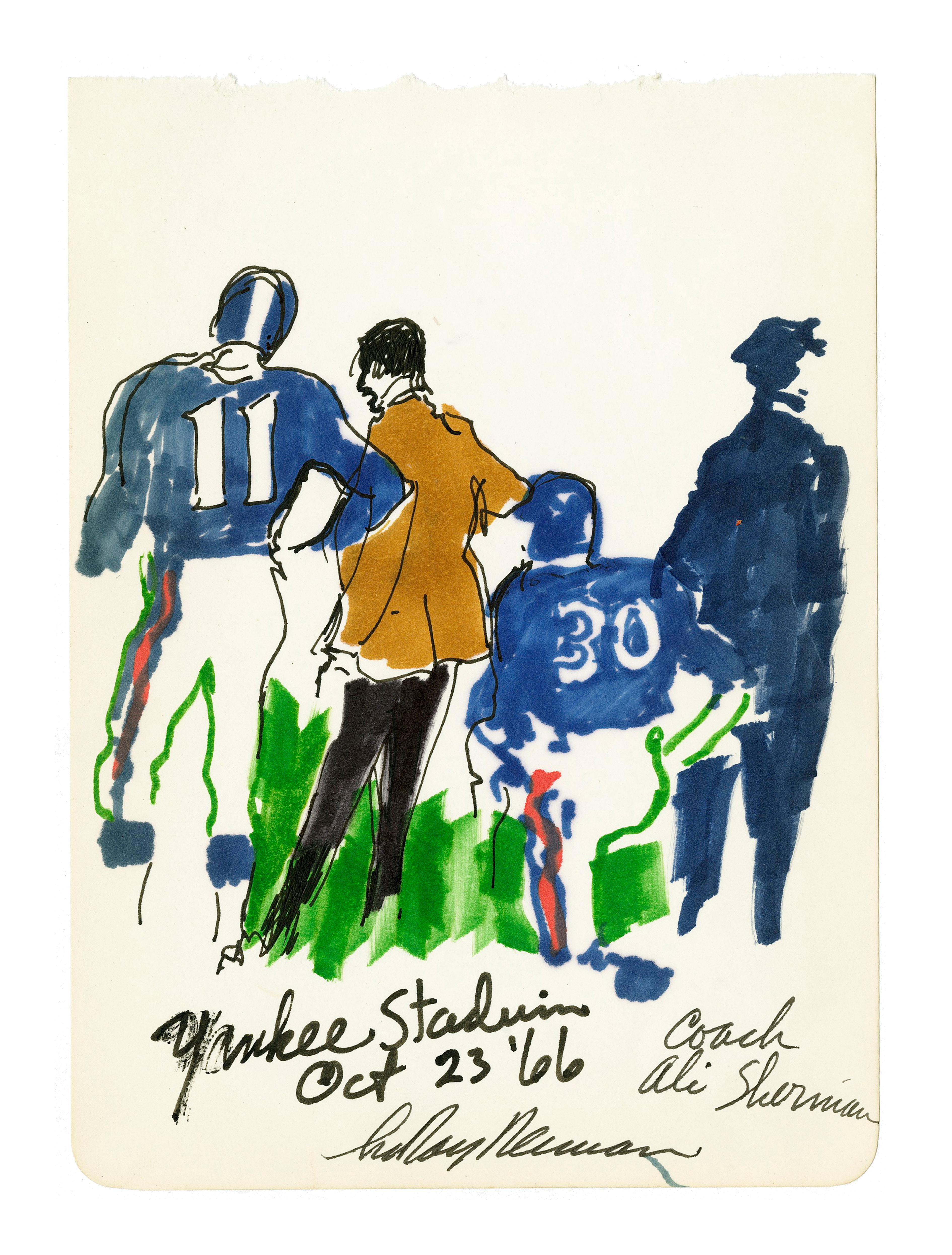
Giants Coach, Allie Sherman at Yankee Stadium
Color temperature matters enormously here. The artificial light of a stadium, the fluorescence bouncing off a helmet, the way a crowd becomes abstraction in the background. Collectors should ask themselves whether a work would hold their attention if they had no emotional attachment to the sport. If the answer is yes, they are probably looking at something serious.
LeRoy Neiman is the anchor name in any serious conversation about football as fine art, and his work remains among the most collectible in this genre for reasons that go beyond brand recognition. Neiman developed a signature approach built on expressionistic mark making and an almost aggressive use of color that made his sports subjects feel electric rather than documentary. He spent decades working from life at major sporting events, and that directness shows. His football works in particular capture crowd and player simultaneously, refusing to separate the individual from the spectacle.
Rose Wylie
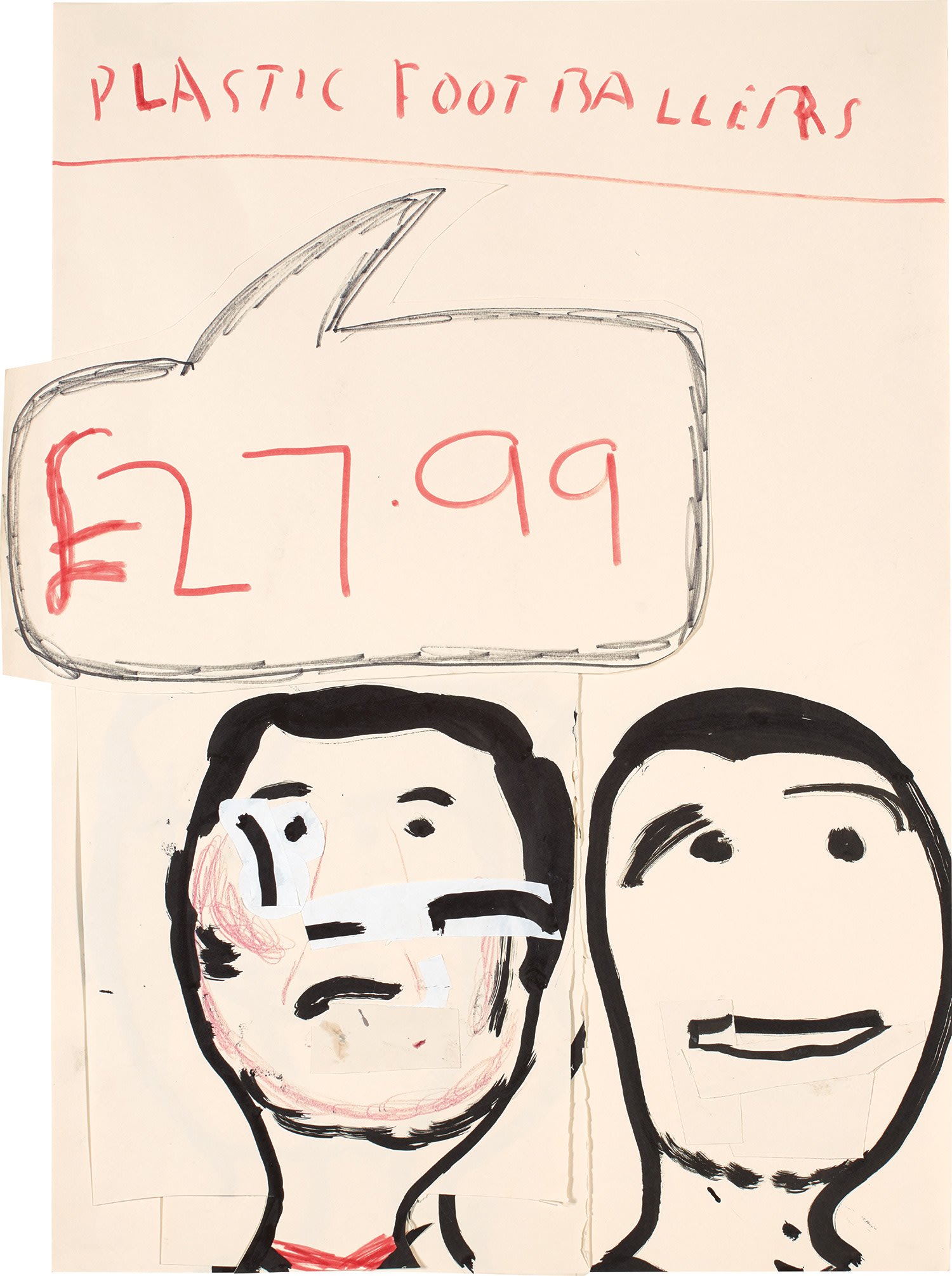
Plastic Footballers, 2003
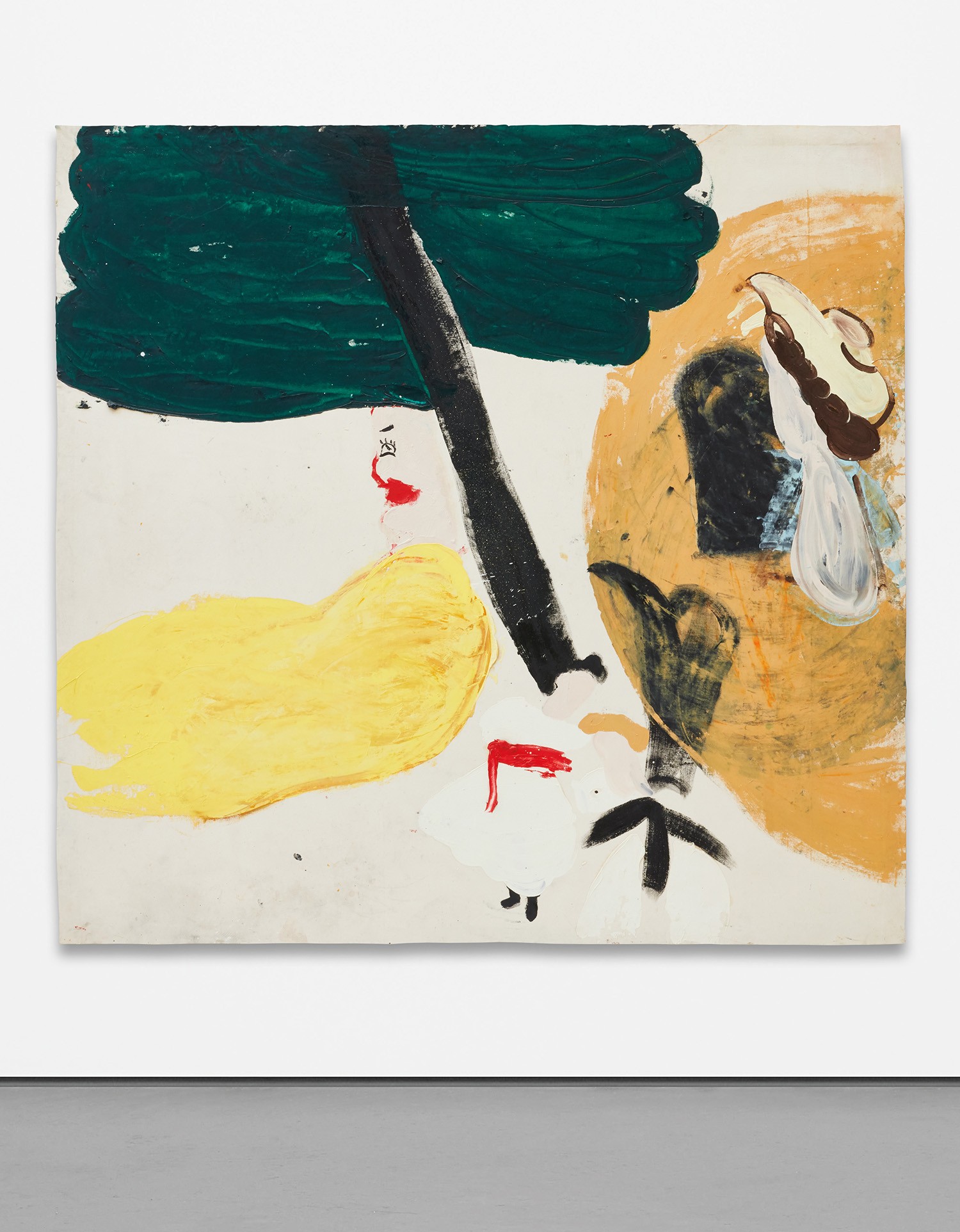
The works represented on The Collection offer collectors a genuine entry point into an artist whose primary market was robust and whose secondary market has remained consistent through multiple economic cycles. Beyond the expected names, the category holds genuinely surprising territory. Rose Wylie, the British painter who only began receiving major institutional attention in her seventies, has brought her characteristically loose and joyful figuration to football subjects in ways that feel entirely fresh. Her paintings refuse the heroic register that most sports art defaults to, finding instead something almost childlike in their directness, though the intelligence behind that simplicity is considerable.
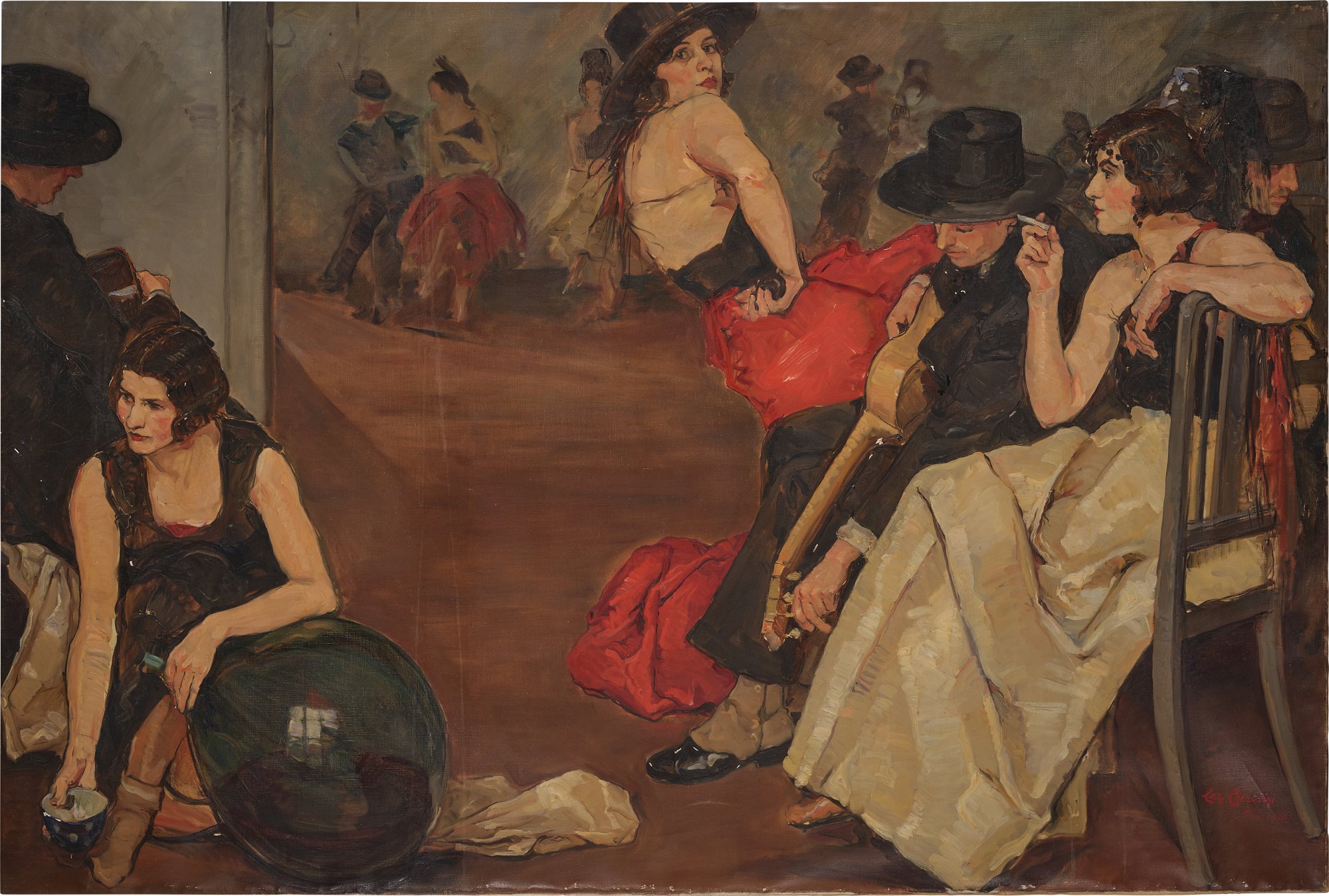
Carlo Cherubini brings a different sensibility altogether, and collectors interested in European perspectives on American football will find his work provocative and formally inventive. These are artists working against the grain of the genre, which is often where the most interesting collecting opportunities exist. The presence of objects alongside paintings and prints is one of the distinctive pleasures of collecting in this space. The Nike Air Zoom Blade Pro in size thirteen, for instance, is not a conventional artwork but it occupies the same cultural and aesthetic territory as a Duchampian readymade while carrying a specificity that makes it genuinely strange and compelling as an object.
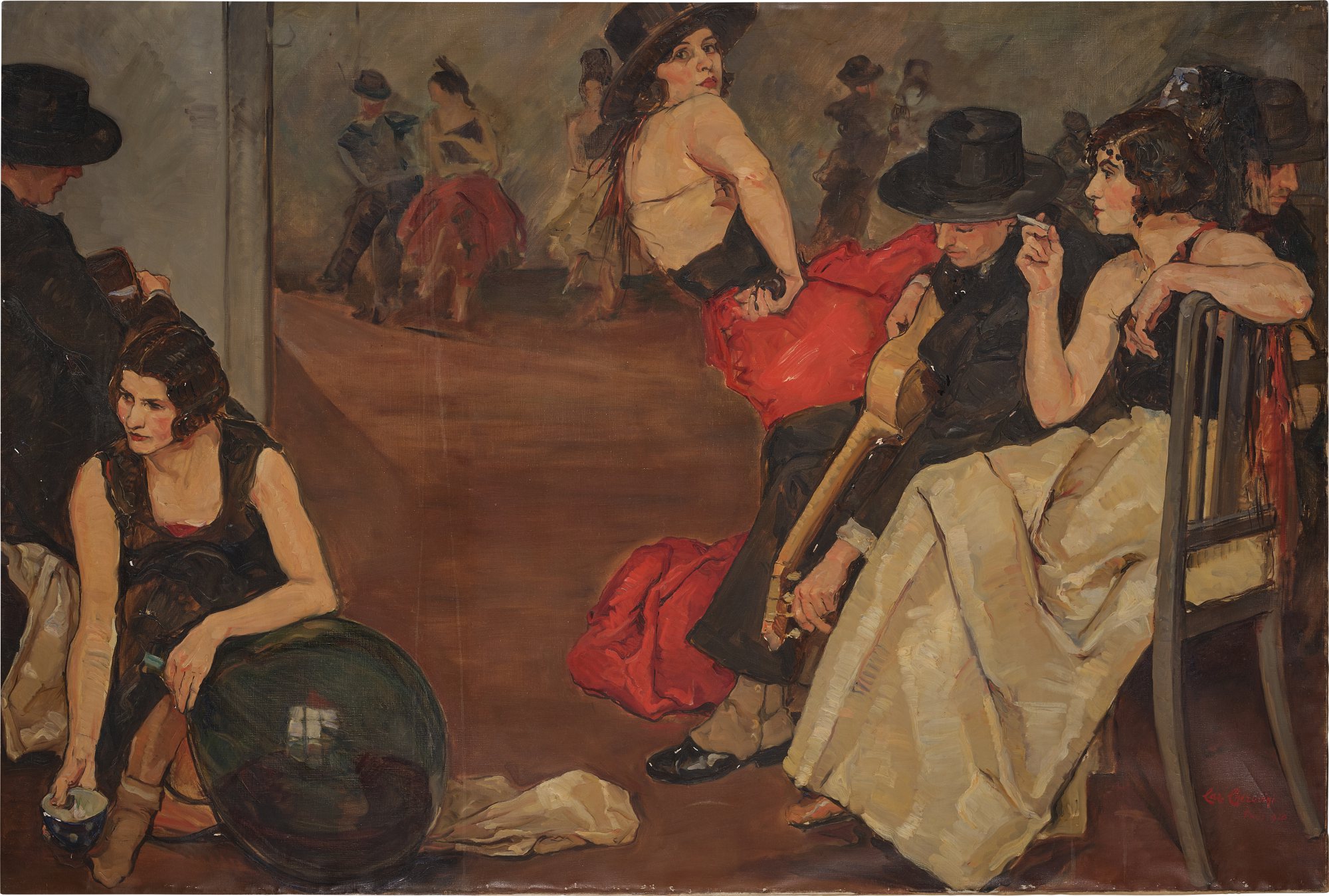
Carlo Cherubini
Flamengo
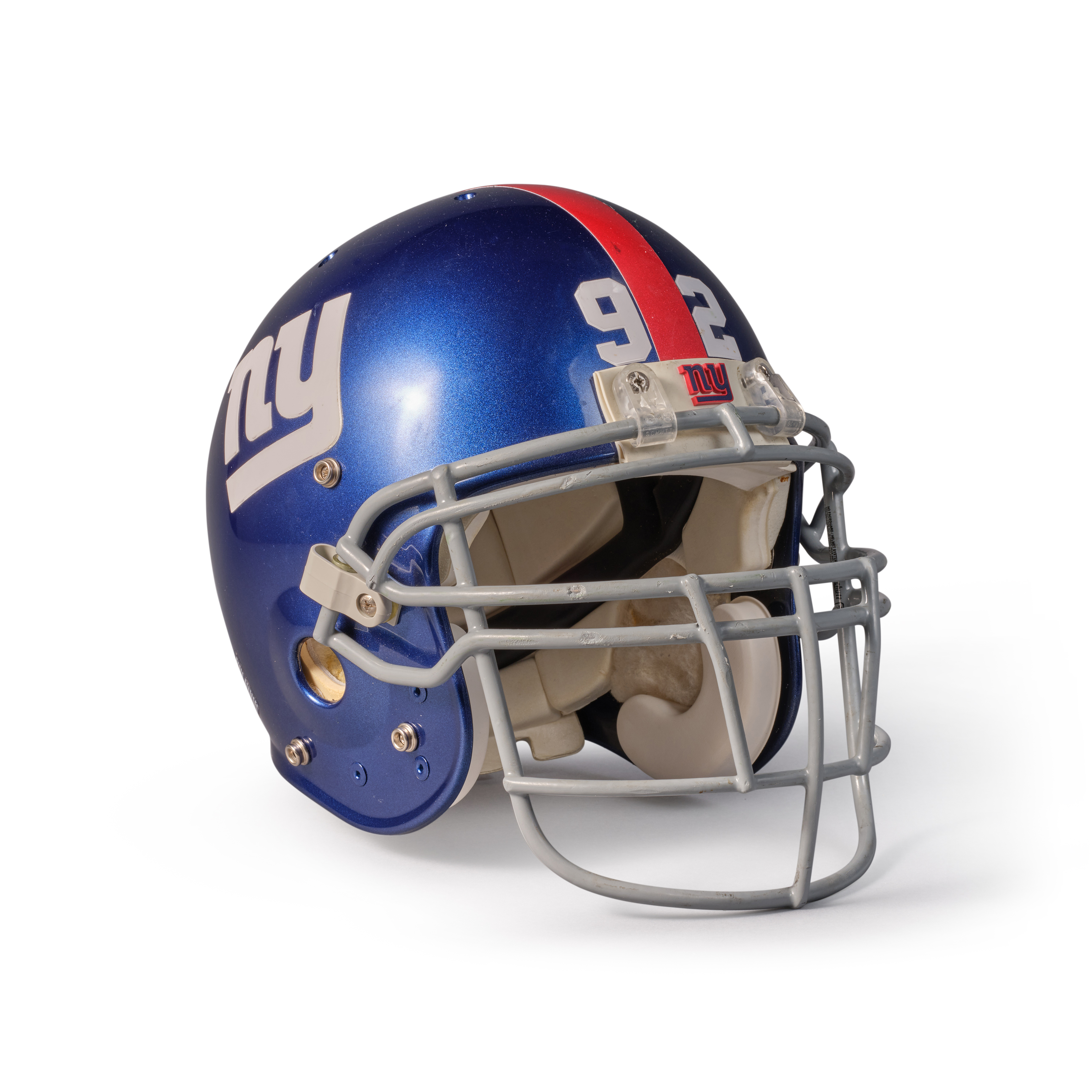
A Schutt football helmet similarly exists at the intersection of industrial design, athletic function, and cultural mythology. Collectors with an eye toward contemporary art history will recognize that the boundary between artwork and artifact has been productively blurry since the 1960s, and sports equipment presented in a collecting context participates in that ongoing conversation. The question to ask is always about intentionality and presentation: how is the object framed, and what does that framing ask you to see. At auction, football related works occupy an interesting position.
Neiman prints and multiples move reliably through the major houses and regional auction platforms, with strong results particularly when condition is excellent and provenance is clear. Unique paintings by Neiman have historically commanded a significant premium over his printed editions, which is worth understanding before entering the market. The broader category of sports art has seen sustained collector interest over the past decade, driven partly by a generation of collectors who grew up with both art world literacy and deep sports culture investment. That convergence has pushed prices upward for strong examples while also expanding the field of what counts as collectible.
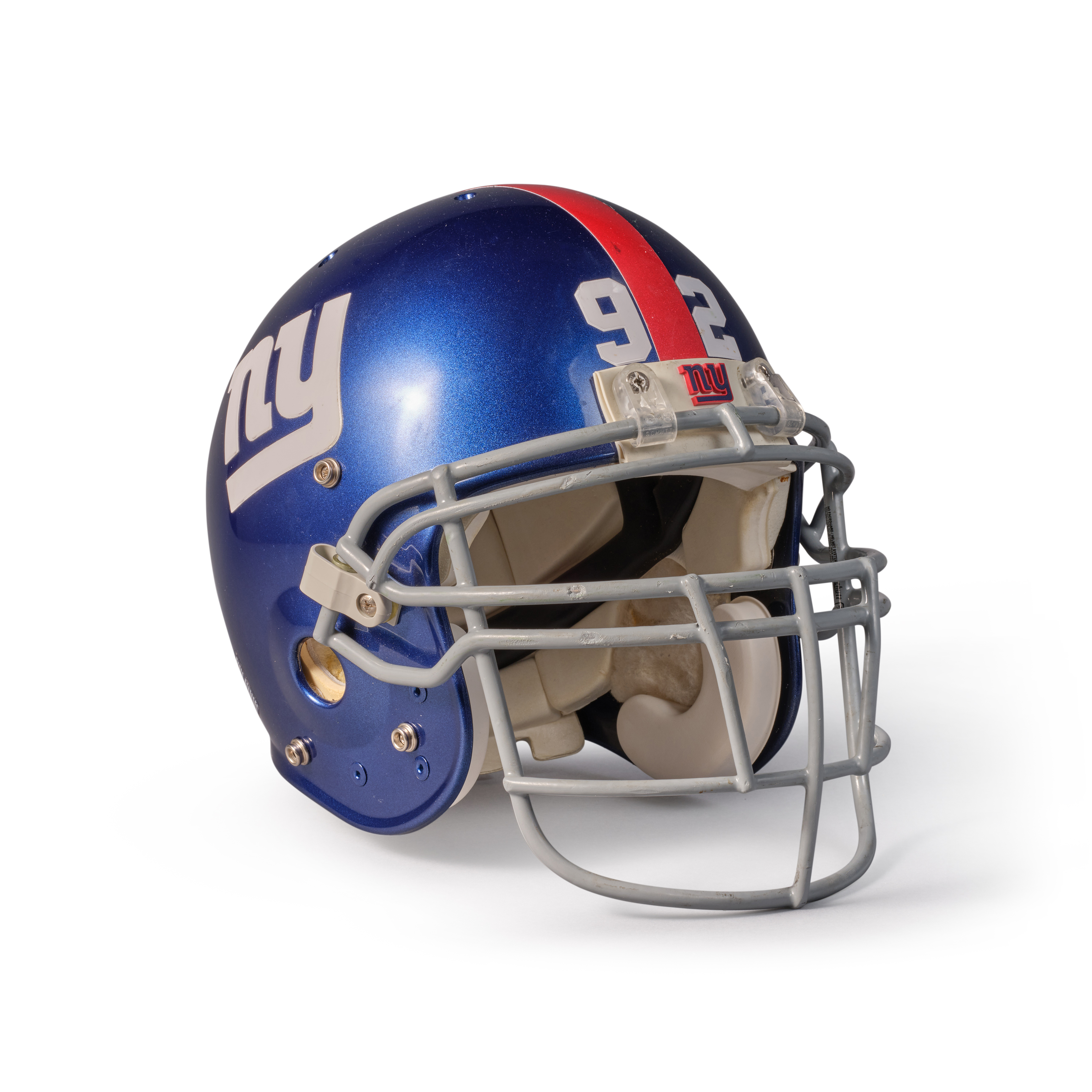
Schutt, Schutt Football Helmet
2008 NFC Championship Game & NFC Divisional Round | Game-Used Giants Helmet
Practically speaking, condition is paramount in this category and deserves more scrutiny than it sometimes receives. Printed works on paper are vulnerable to light damage and should be framed with UV protective glazing from the outset. Sculptural or object based works including helmets and footwear require careful attention to material stability, particularly if they include organic components that may deteriorate over time. When approaching a gallery or platform about a work in this space, ask explicitly about edition size for prints and multiples, and ask whether the edition is sold out or still active.
A sold out edition with documented provenance will always perform better on the secondary market than an open edition, all else being equal. Ask also about any exhibition history attached to the work, as institutional exposure adds meaningfully to both cultural weight and market value. The most honest thing to say about collecting at the intersection of football and art is that the field rewards genuine curiosity and resists easy categorization. The best works here are not sports memorabilia dressed up for gallery walls.
They are investigations of the body, of spectacle, of American mythology and its contradictions, conducted by artists who happened to find football a useful lens. Collectors who approach the category with that understanding rather than with a fan's sentimentality will find themselves building something coherent and genuinely interesting over time. The works on The Collection represent a real range of approaches and ambitions, and the conversation between them, a Neiman print next to a Wylie canvas next to a helmet presented as object, is itself worth having.