Empowerment Theme
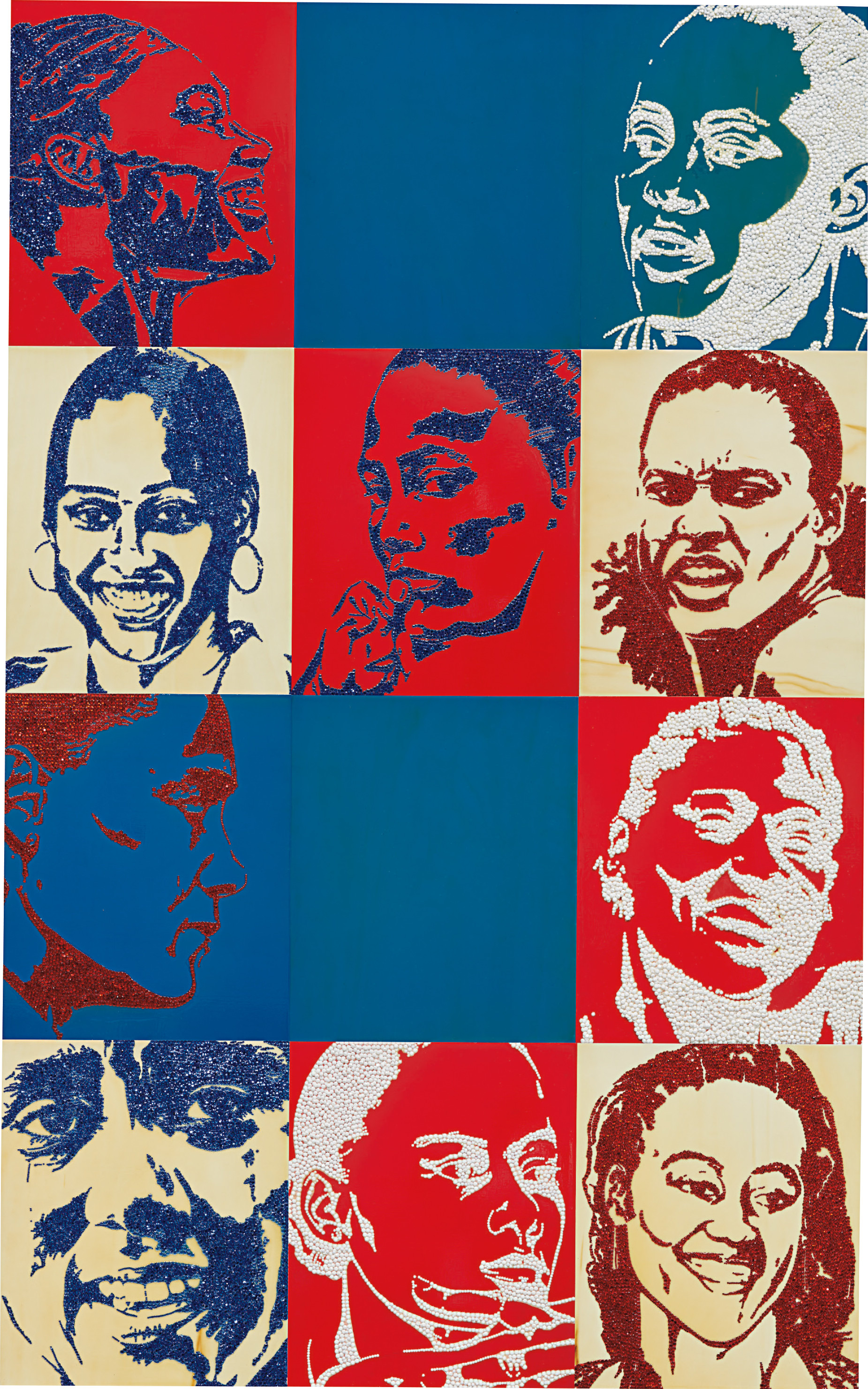
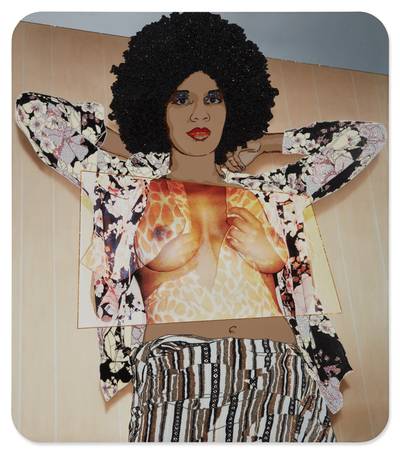
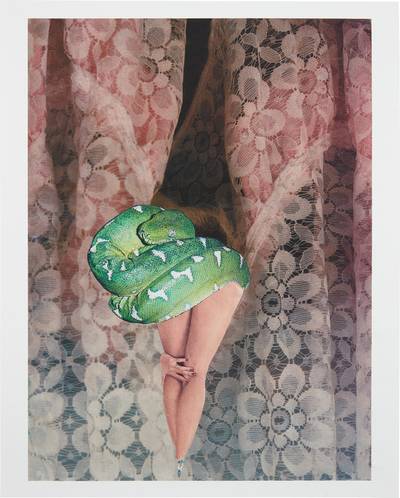
Mickalene Thomas
America the Beautiful, 2008
Art That Refuses to Ask Permission
There is a particular charge in standing before a work of art that looks back at you with full authority. Not aggression, not pleading, but something rarer and more unsettling: absolute self possession. The empowerment theme in contemporary art is not a trend or a marketing category. It is the visual language of subjects who have decided, after centuries of being rendered decorative or invisible or dangerous, to take up space on their own terms.
That decision, when it lands on canvas or in sculpture or across a city wall, feels almost physical. The roots of empowerment as a conscious artistic framework stretch back through centuries of resistance, but its modern vocabulary crystallized most forcefully in the 1960s and 1970s. The civil rights movement, second wave feminism, and the emergence of community muralism all demanded that art do more than beautify. The Chicago Mural Group, founded in 1971, and its predecessor the Wall of Respect, painted in 1967 on the South Side of Chicago, established a precedent that public imagery could function as a declaration of collective dignity.
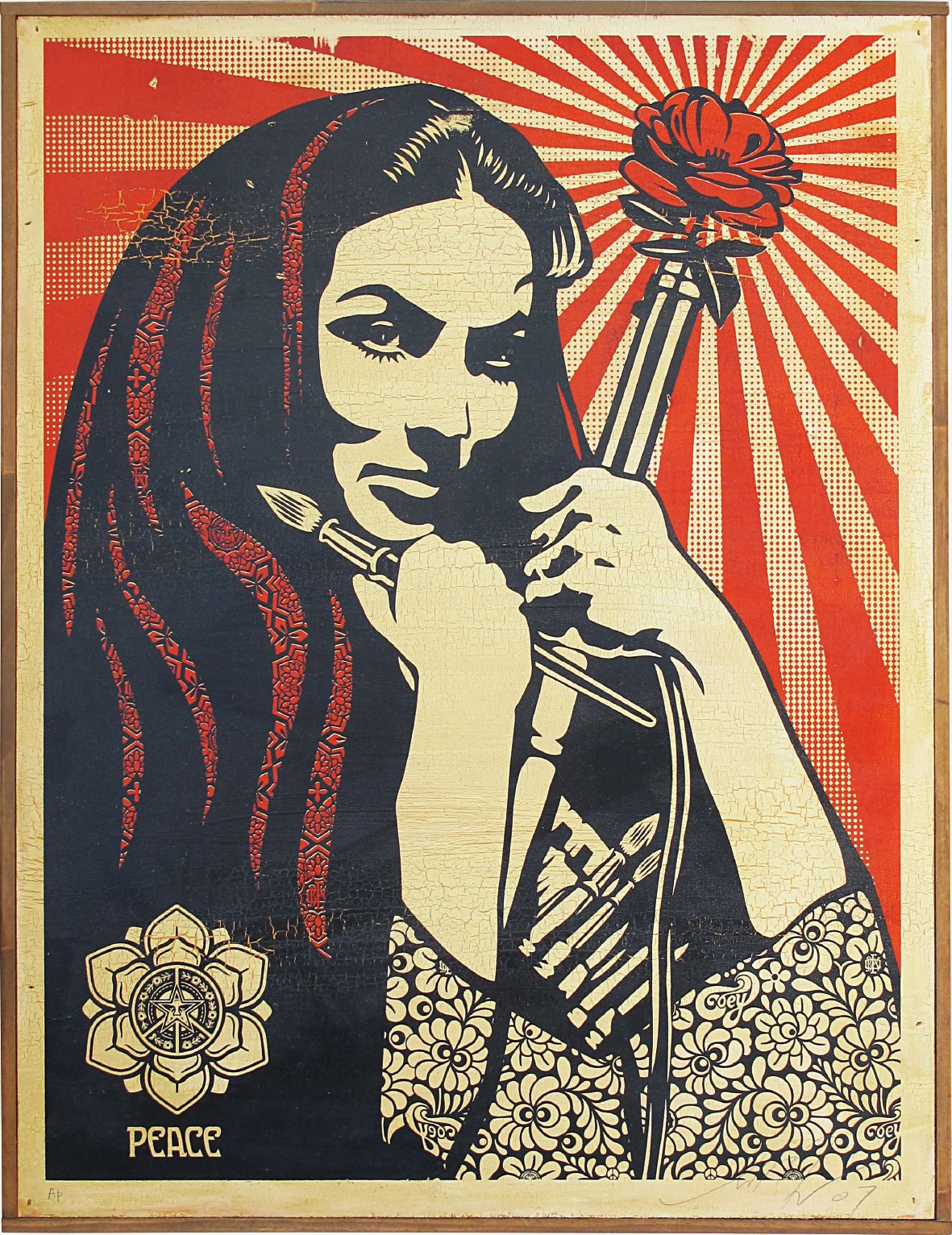
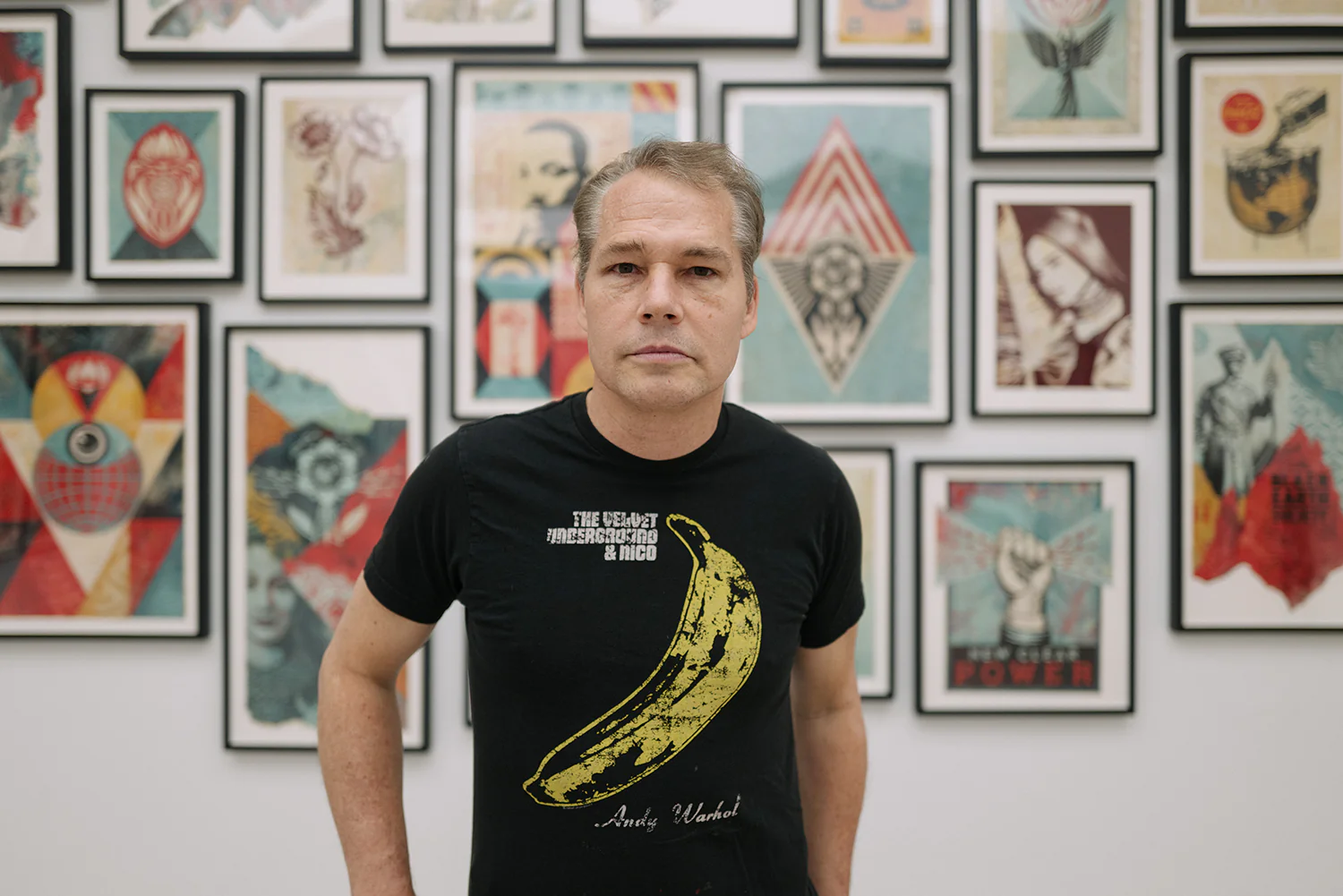
Shepard Fairey
Revolutionary Woman With Brush
These were not illustrations of political slogans. They were assertions that the community itself was the subject worth celebrating, worth seeing. The 1980s brought a harder edge. Artists working through the AIDS crisis and under the pressure of Reagan era policy cuts developed a visual culture of urgency that permanently altered what empowerment could look like in art.
Gran Fury, the collective connected to ACT UP, made work that weaponized the clean authority of advertising. Barbara Kruger, whose text and image collages became among the most cited works of the decade, stripped the language of power down to its bones and handed it back transformed. Her 1989 work shown at the Mary Boone Gallery reminded viewers that authority is constructed, which means it can be deconstructed, which means it can be reclaimed. By the 1990s the conversation had deepened considerably, absorbing postcolonial theory, identity politics, and an increasingly global sense of whose stories the art world was willing to hold.
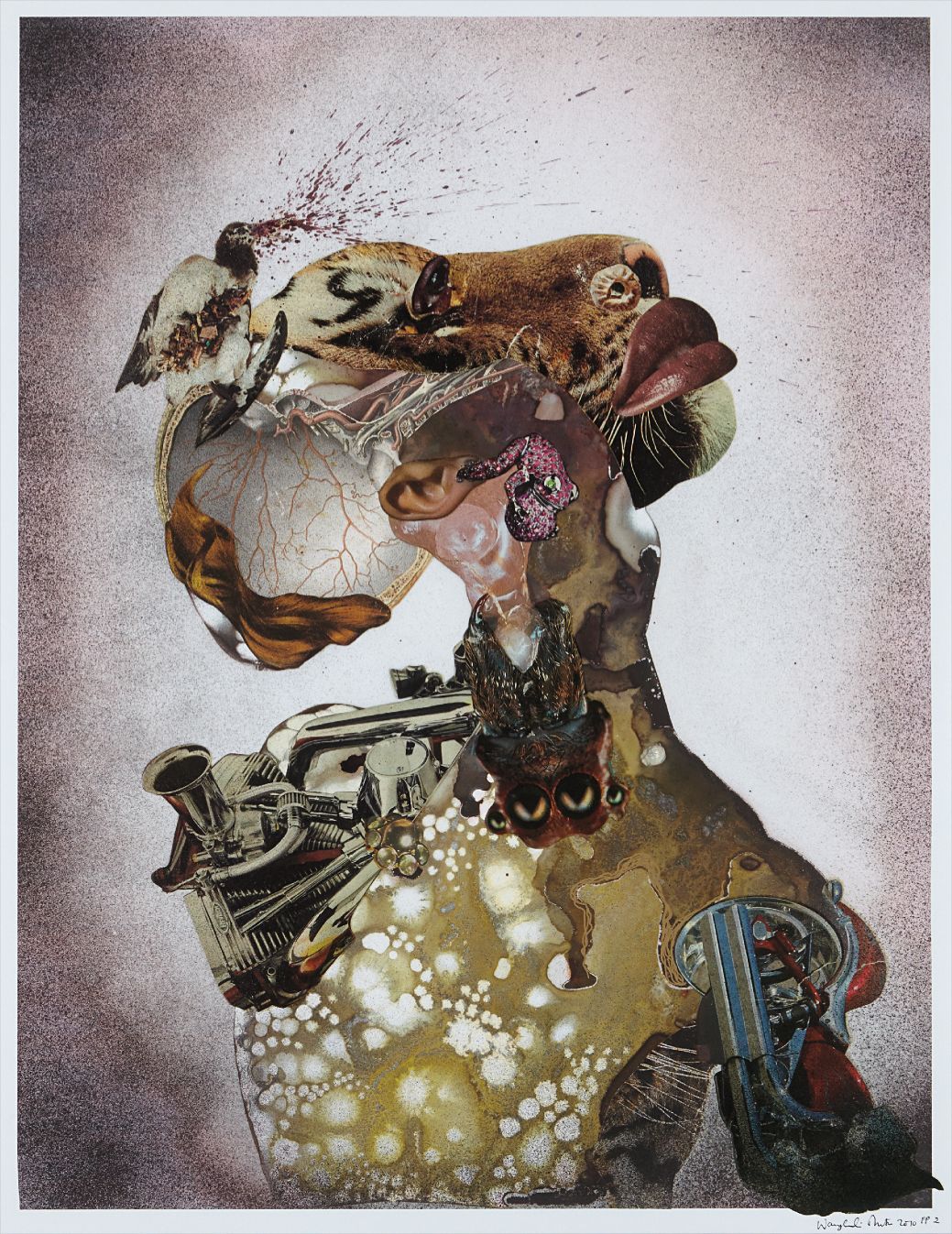
Wangechi Mutu
Homeward Bound
It is in this expanded field that you begin to understand the significance of an artist like Wangechi Mutu, whose collaged and painted figures draw from science fiction, African cosmology, fashion photography, and medical illustration to create beings that exist entirely outside Western taxonomies of the body. Mutu's work does not argue for inclusion within existing systems. It proposes entirely different ones, which is perhaps the more radical gesture. Her figures are wounded and powerful simultaneously, and that simultaneity is precisely the point.
Mickalene Thomas arrives at empowerment through a different door, one upholstered in rhinestones and deliberate pleasure. Her large scale portraits of Black women, rich with rhinestone embellishment and references to both art historical portraiture and 1970s interior design, insist that glamour is a legitimate site of political meaning. Thomas has spoken about reclaiming the reclining nude, a form that in Western painting historically objectified the female body for a presumed male gaze. In her hands, the same compositional logic becomes an occasion for sovereignty.
Mickalene Thomas
America the Beautiful, 2008
The women in her work are not performing for anyone. They are simply, magnificently, there. Shepard Fairey brings the empowerment theme into the street and the screen, working in a visual idiom that is instantly legible to people who have never set foot in a gallery. His 2008 Barack Obama Hope poster became one of the most reproduced political images in American history, drawing consciously on the traditions of Soviet constructivist propaganda while inverting their authoritarian purpose.
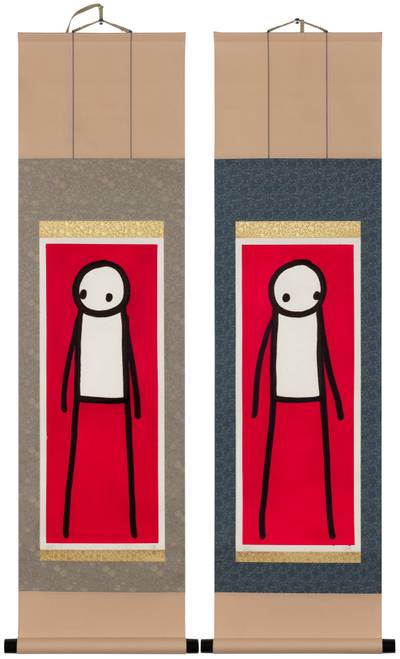
Fairey's practice is rooted in the idea that the tools of mass persuasion can be turned toward liberation rather than control. The tension in his work, between appropriation and originality, between street art and institutional legitimacy, is itself a form of empowerment argument. The British artist known as Stik works in an almost diagrammatic simplicity, his stick figure forms reduced to the absolute minimum required to convey human presence and human connection. What is remarkable is how much emotional weight those spare lines carry.
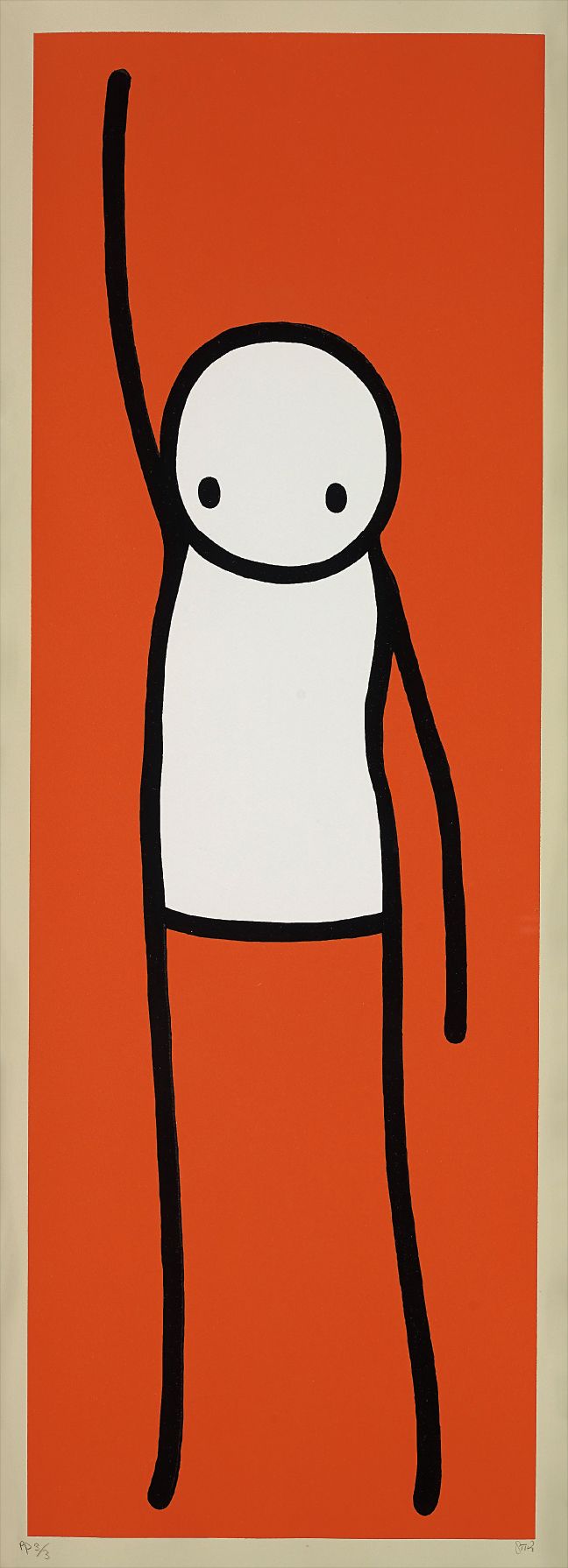
Stik
Liberty (Orange)
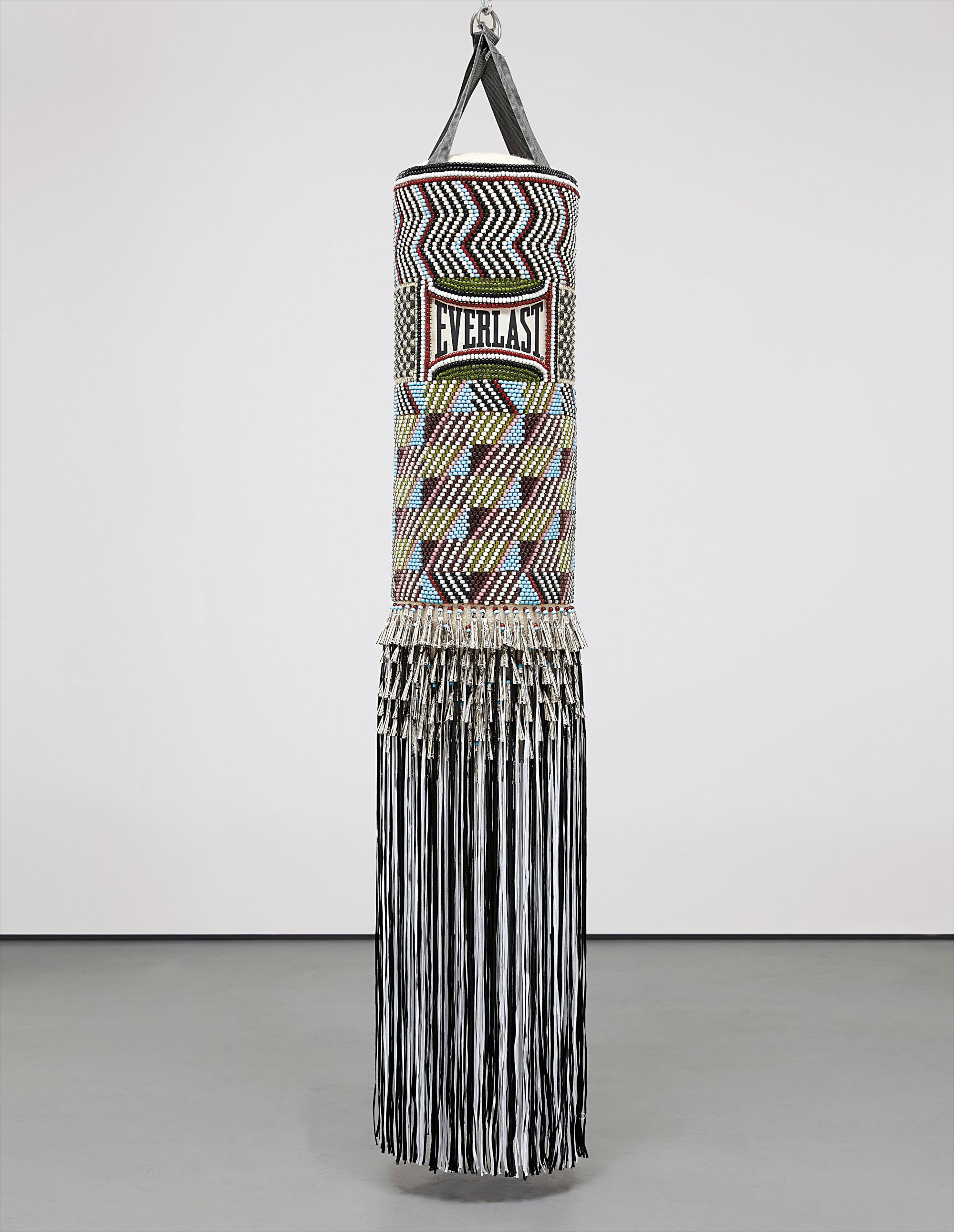
Stik has painted on walls across London and internationally, often in communities experiencing poverty or displacement, and the figures frequently appear in postures of solidarity or protection. The work trusts that viewers do not need complexity to recognize dignity. That trust is its own kind of empowerment. Jeffrey Gibson stands at a particularly generative crossroads, fusing his Choctaw and Cherokee heritage with the visual energy of punk, rave culture, and abstract painting.
His beaded punching bags, his text works drawn from pop songs, his vibrantly patterned canvases: all of them perform a kind of cultural reclamation that refuses the nostalgic or the mournful. Gibson was the first Indigenous artist to represent the United States solo at the Venice Biennale, in 2024, and the choice felt like an acknowledgment that the art world was catching up to work that had been quietly transforming what Native American contemporary art could mean for well over a decade. What unites these artists across wildly different practices and visual languages is a shared refusal to accept the premise that some lives are inherently more worthy of depiction than others. Empowerment in art is not about flattery or uplift in any simple sense.
The best work in this tradition is too honest for that. It holds complexity, pain, and contradiction alongside beauty and assertion. It earns the emotion it produces. For collectors, the empowerment theme presents both an invitation and a responsibility.
These works do not sit quietly on a wall. They ask questions of the rooms they enter and the people who own them. The works on The Collection across this theme represent a range of approaches and a shared commitment to that active, demanding presence. Collecting in this space is not simply an aesthetic choice.
It is a statement about whose vision of the world you are choosing to live with.