Comic Art
Marjane Satrapi
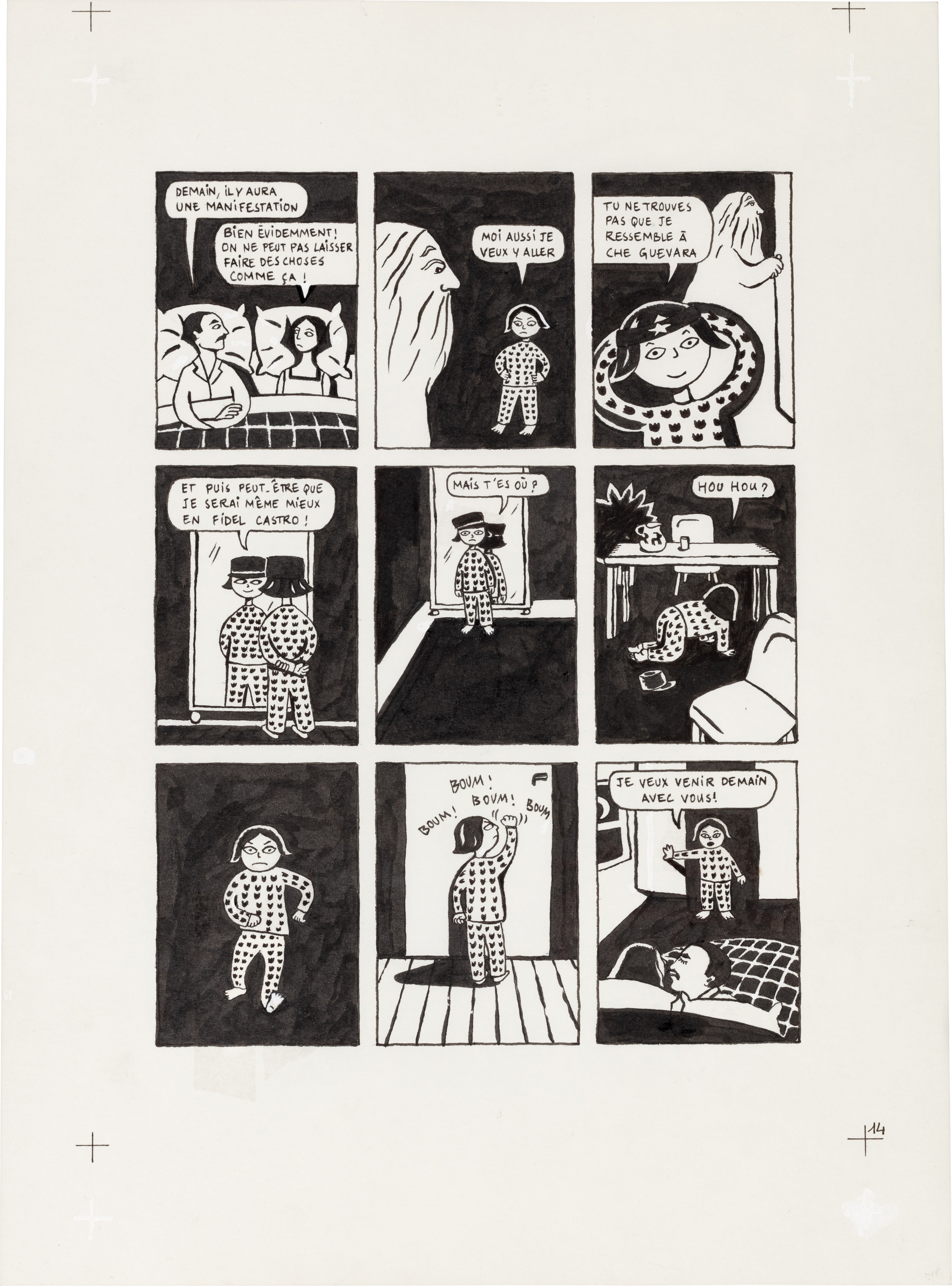
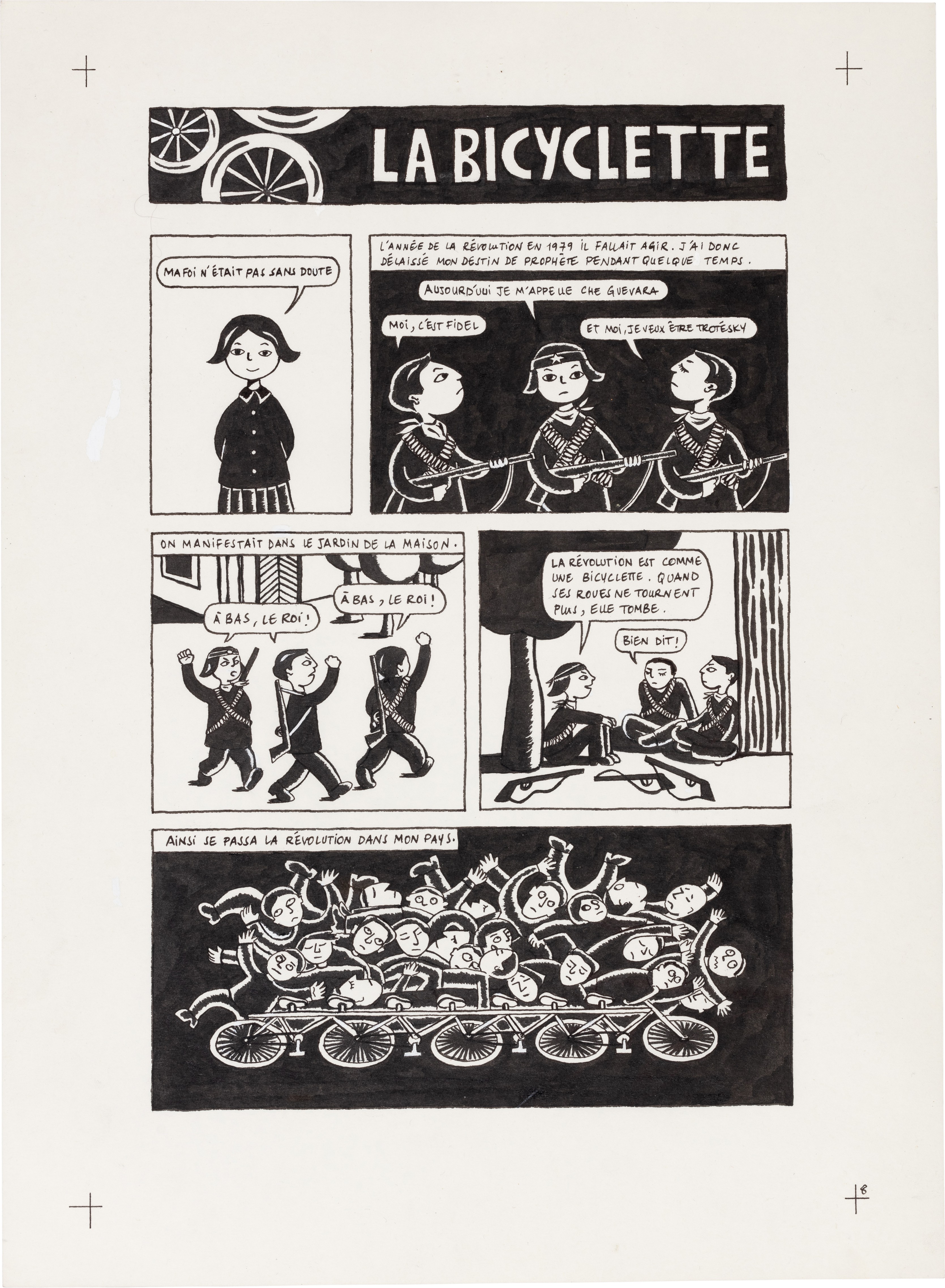
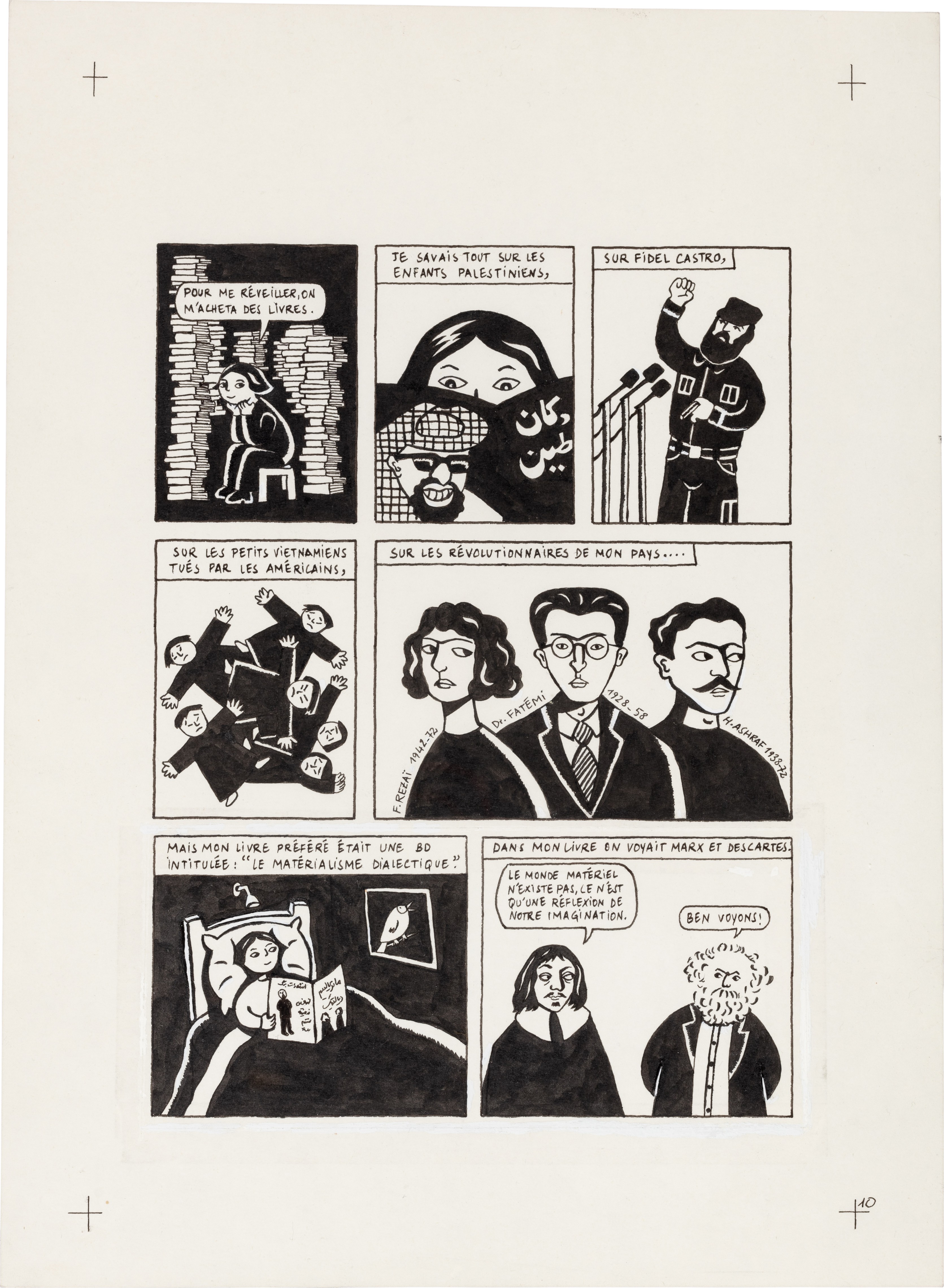
Persepolis (Original Book Art, page 10), 2000
Sequential Art Finally Gets Its Museum Moment
There is a particular kind of snobbery that has long haunted the corridors of serious art collecting, one that drew a firm boundary between the gallery wall and the printed page. Comic art, with its speech bubbles and ink thick outlines, its serialized rhythms and populist origins, was for decades considered beneath consideration by the institutional art world. That condescension has aged very poorly. Today, original comic pages, animation cels, and graphic novel illustration boards command serious auction prices, attract scholarly attention, and hang in the collections of some of the most discerning buyers in the world.
The question is no longer whether comic art belongs in that conversation. The question is why it took so long to get there. The origins of sequential visual storytelling stretch back further than most people realize. Hogarth's engraved series A Rake's Progress from 1735 is frequently cited as an ancestor of the form, using sequential images to narrate moral drama across a series of panels.
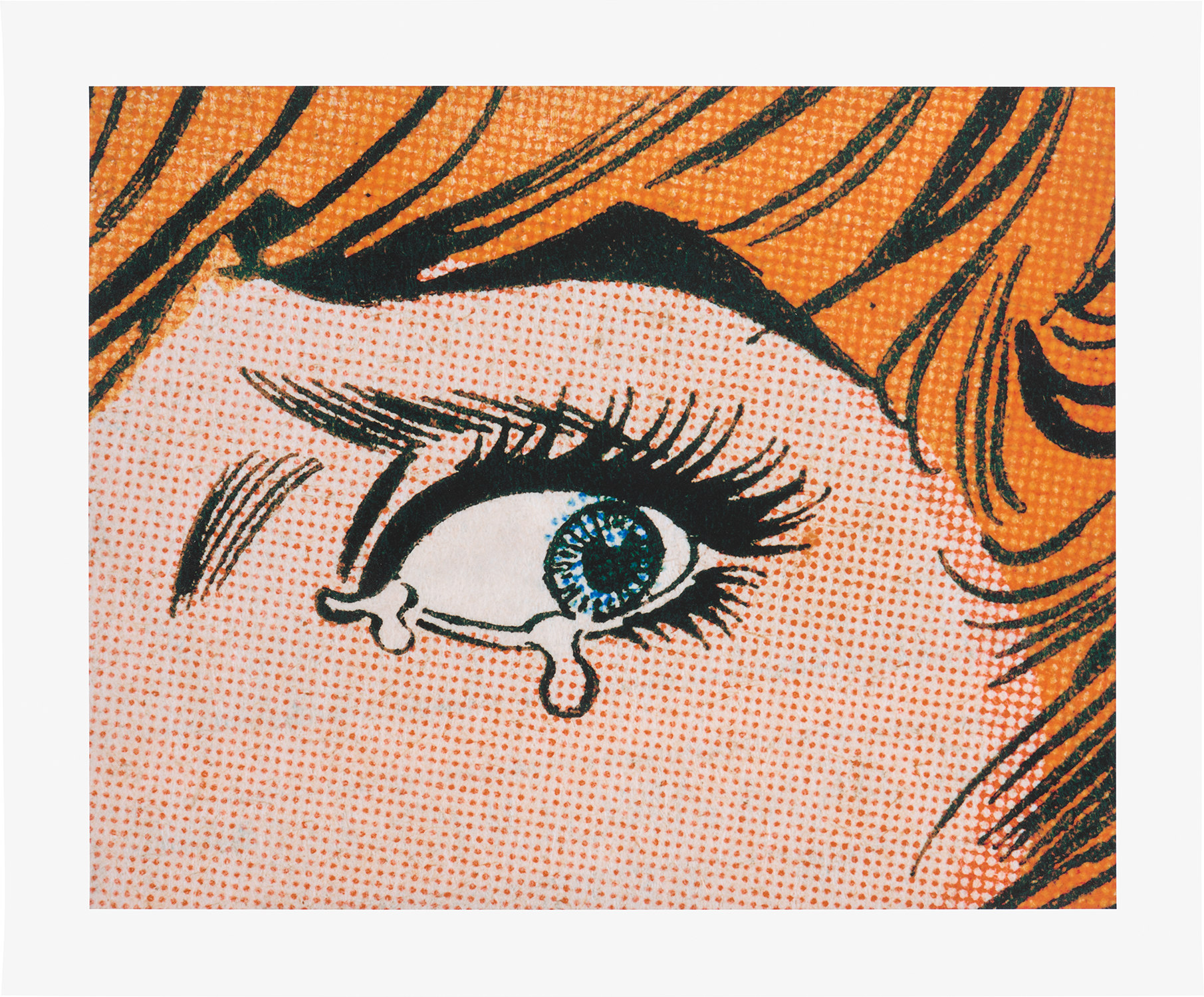
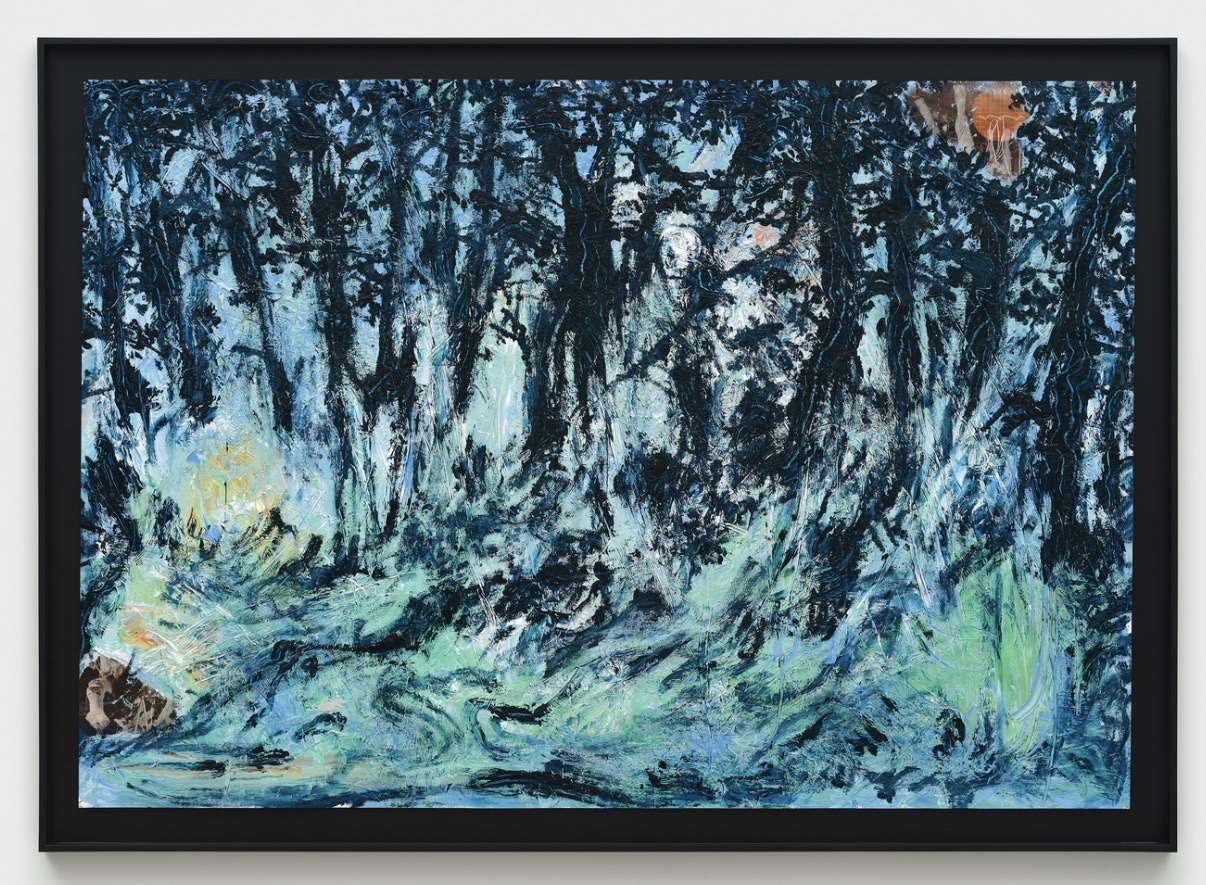
Anne Collier
Woman Crying, Comic, for Texte zur Kunst
The modern comic strip as we know it crystallized in the American newspaper boom of the late nineteenth century, with Richard Outcault's The Yellow Kid appearing in the New York World from 1895 onward. These early strips were understood as popular entertainment, commercial product, disposable culture. The idea that the original artwork behind them might one day carry aesthetic or monetary weight was not part of anyone's thinking at the time. The mid twentieth century transformed comic art in ways that would eventually force the fine art world to reckon with it.
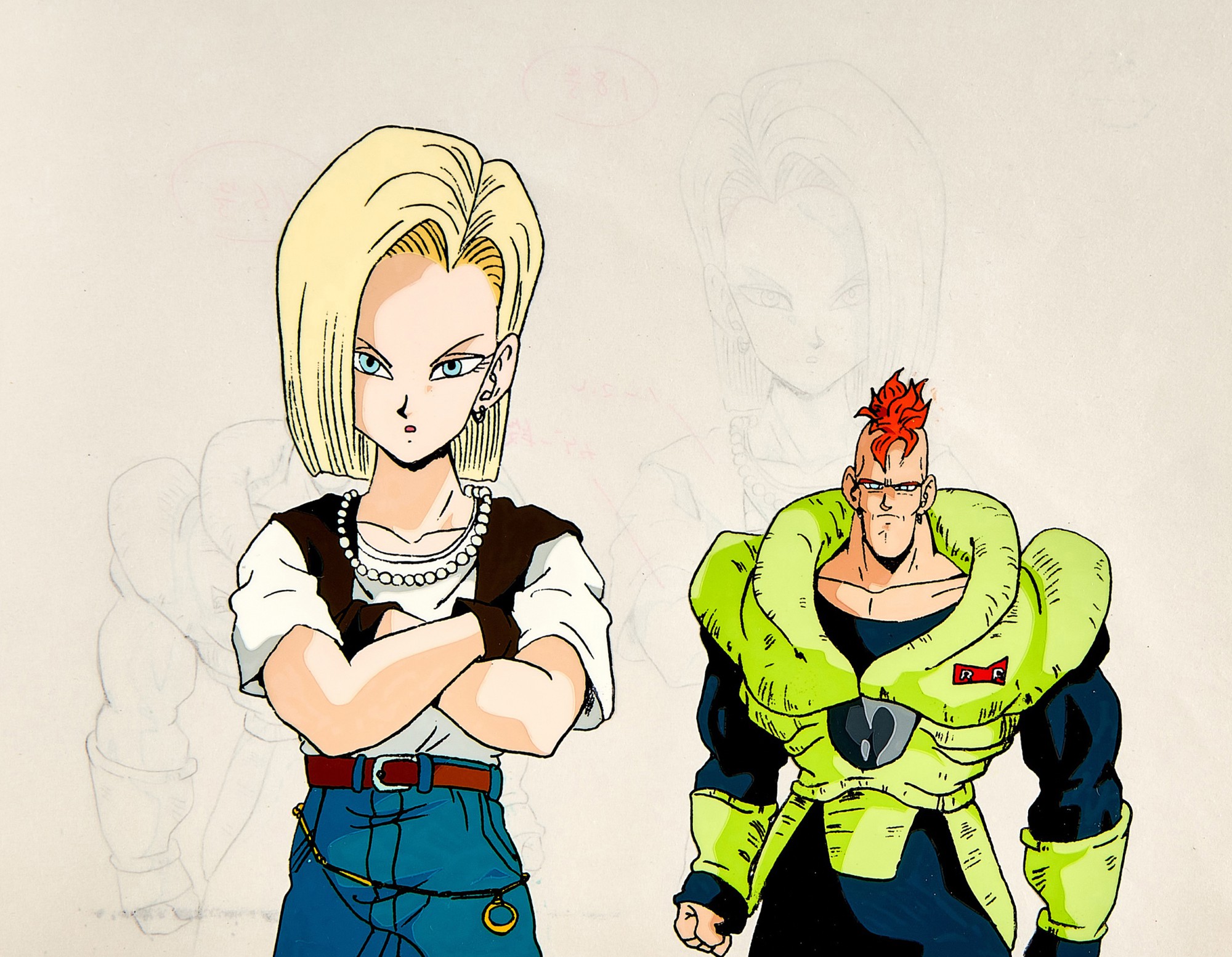
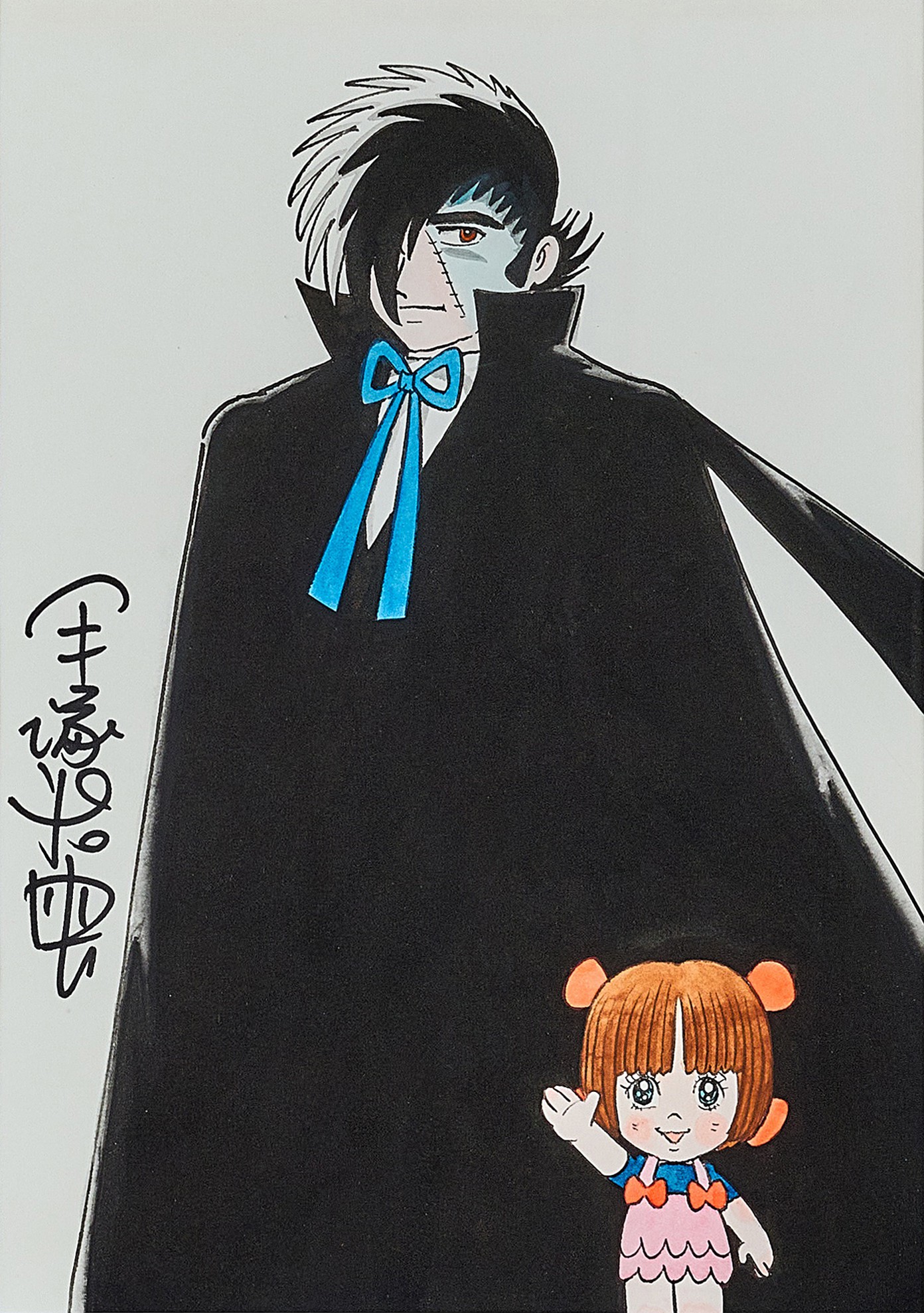
In Japan, Osamu Tezuka was essentially inventing a visual language from scratch, drawing on both Disney animation and cinematic techniques to create manga as a serious narrative form. His 1952 series Astro Boy established conventions of panel pacing, emotional expressiveness through simplified facial geometry, and the capacity of the drawn line to carry genuine dramatic weight. Tezuka understood himself as an artist in the fullest sense, and the industry he seeded would eventually produce one of the most globally influential visual cultures of the twentieth century. The animation that followed in his tradition, including the iconic work associated with Dragon Ball Z produced by Toei Animation, brought those visual principles to vast international audiences, generating original cels that now circulate as prized collectibles.
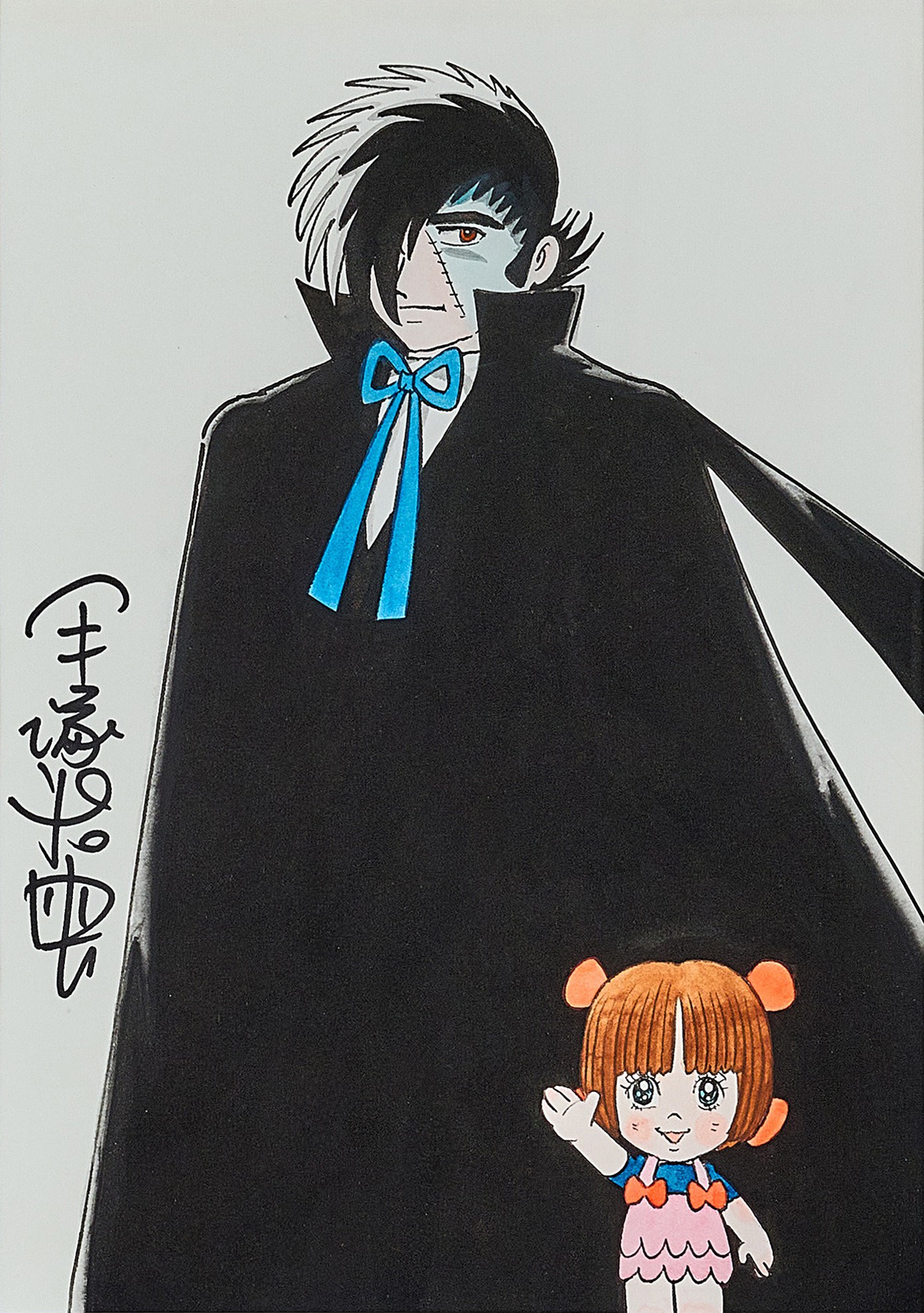
Osamu Tezuka
怪醫黑傑克及皮諾可
In the West, a parallel transformation was underway. The underground comix movement of the 1960s and 1970s, centered in San Francisco and associated with artists like Robert Crumb, claimed the form explicitly as artistic territory. These were works that engaged directly with politics, sexuality, psychedelia, and social critique, and they were made with full consciousness of their aesthetic choices. By the 1980s, Art Spiegelman's Maus was serialized in Raw magazine before being collected and eventually winning the Pulitzer Prize in 1992, a moment of institutional acknowledgment that sent a clear signal.
The graphic novel had arrived as a literary and visual form worthy of serious critical engagement. What makes the original artwork of comic and graphic novel illustration so compelling as a collecting category is its dual nature. These objects exist somewhere between drawing, painting, printmaking, and narrative literature. The hand of the artist is present in ways that printed reproductions cannot capture, with correction fluid, pencil underdrawing, india ink applied in varying pressures, and the physical evidence of creative decisions visible on the surface.
Marjane Satrapi
Persepolis (Original Book Art, page 10), 2000
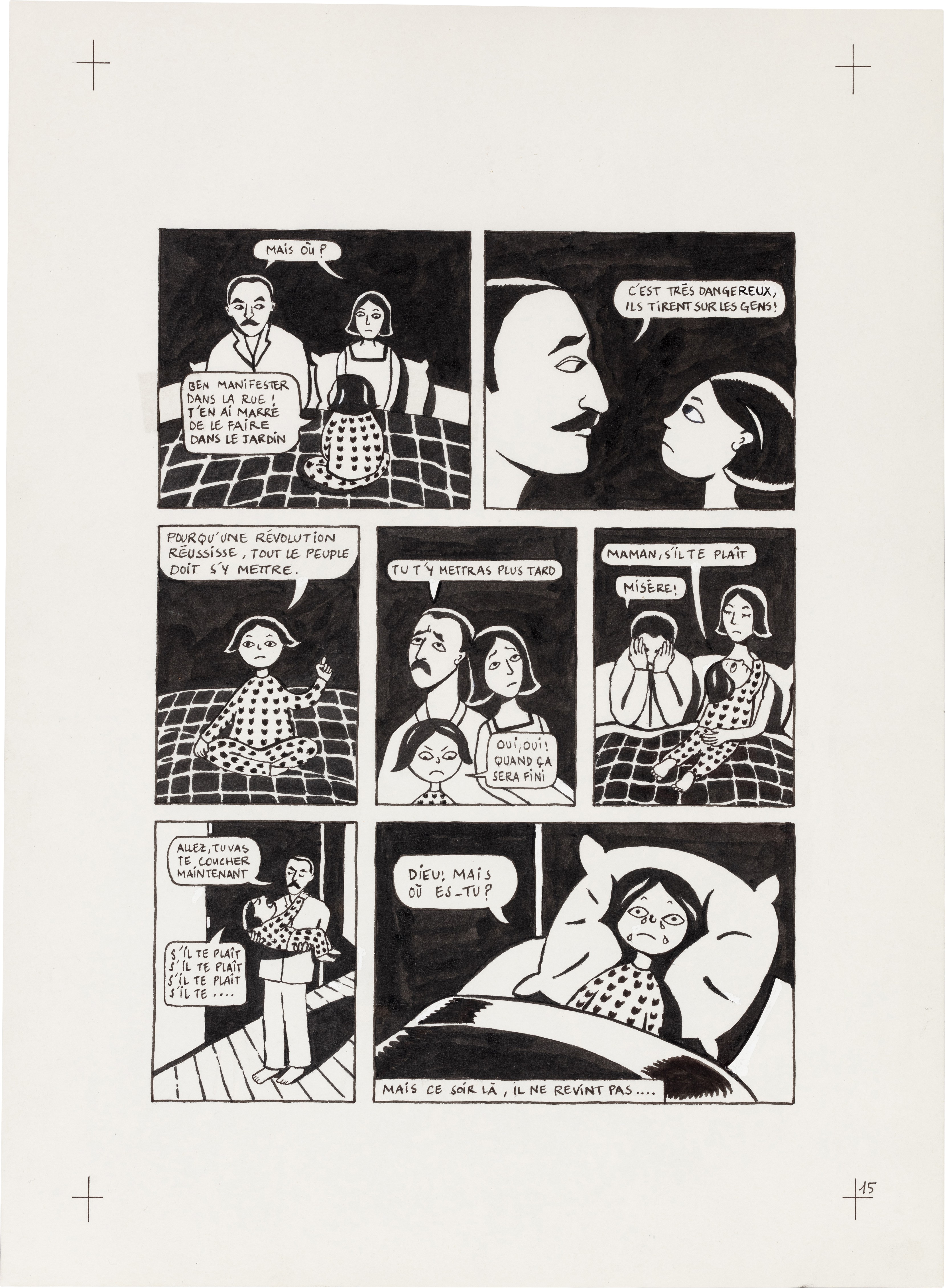
Marjane Satrapi, whose work is well represented on The Collection, builds her pages in stark black and white with a graphic boldness that owes much to Persian miniature tradition as well as to the long legacy of European political cartooning. Her 2000 graphic novel Persepolis is one of the defining works of the form, using autobiography, history, and visual metaphor to navigate displacement and identity with a precision that purely verbal storytelling could not achieve. Collecting her original pages means holding something at the intersection of memoir and monument. The relationship between comic art and the broader fine art world has grown increasingly intimate.
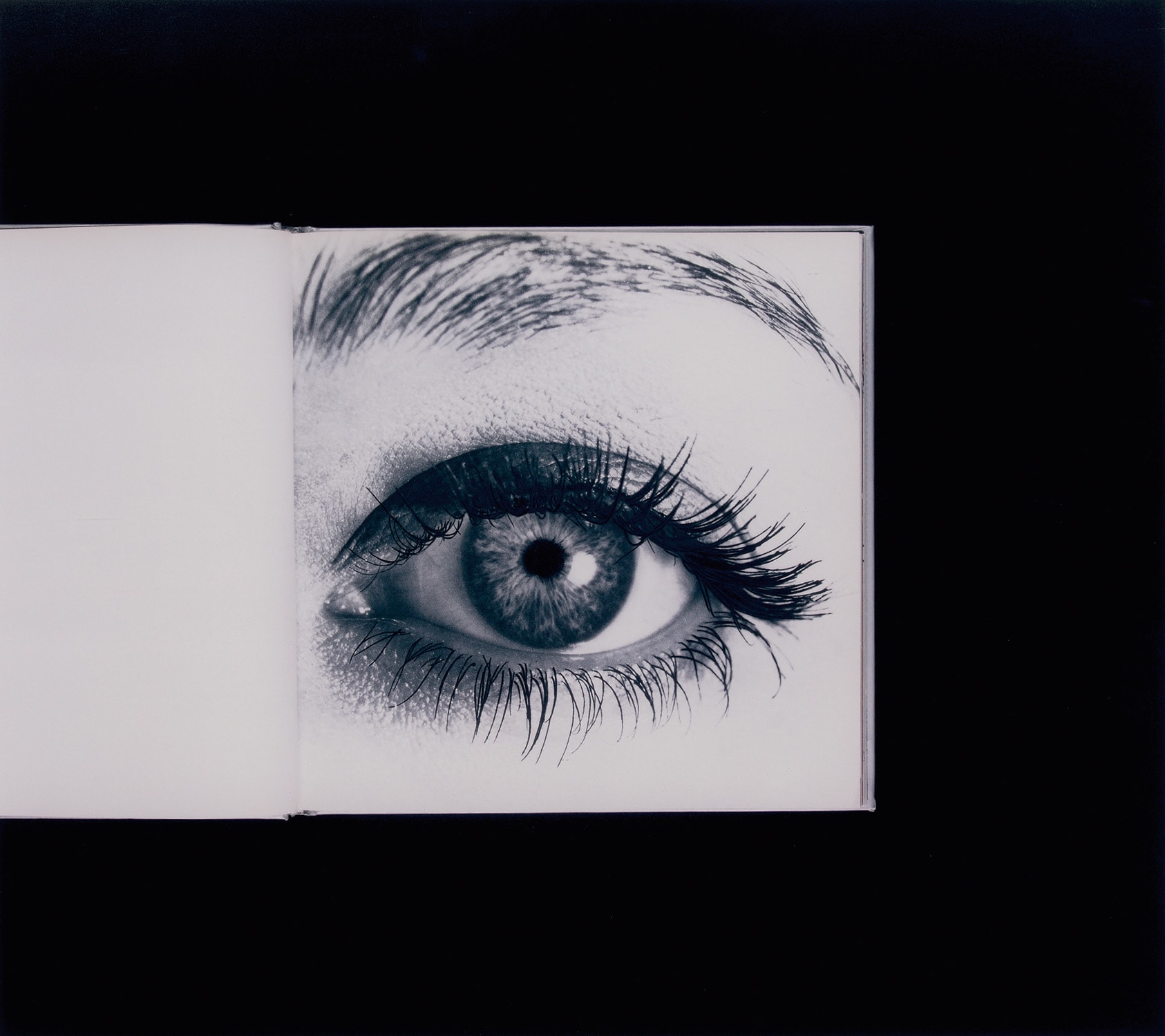
Roy Lichtenstein famously appropriated comic imagery in the 1960s, blowing up Ben Day dots and speech bubbles into monumental paintings that hung at Leo Castelli and entered major museum collections. The appropriation was controversial precisely because it extracted the visual grammar of comics while leaving the originators unacknowledged. More recent artists have worked differently, engaging with the form on its own terms rather than cannibalizing it. Anne Collier, whose conceptual photography practice is represented on The Collection, has worked extensively with found printed matter including comic books, examining the cultural residue embedded in mass produced imagery with a cool analytic intelligence.
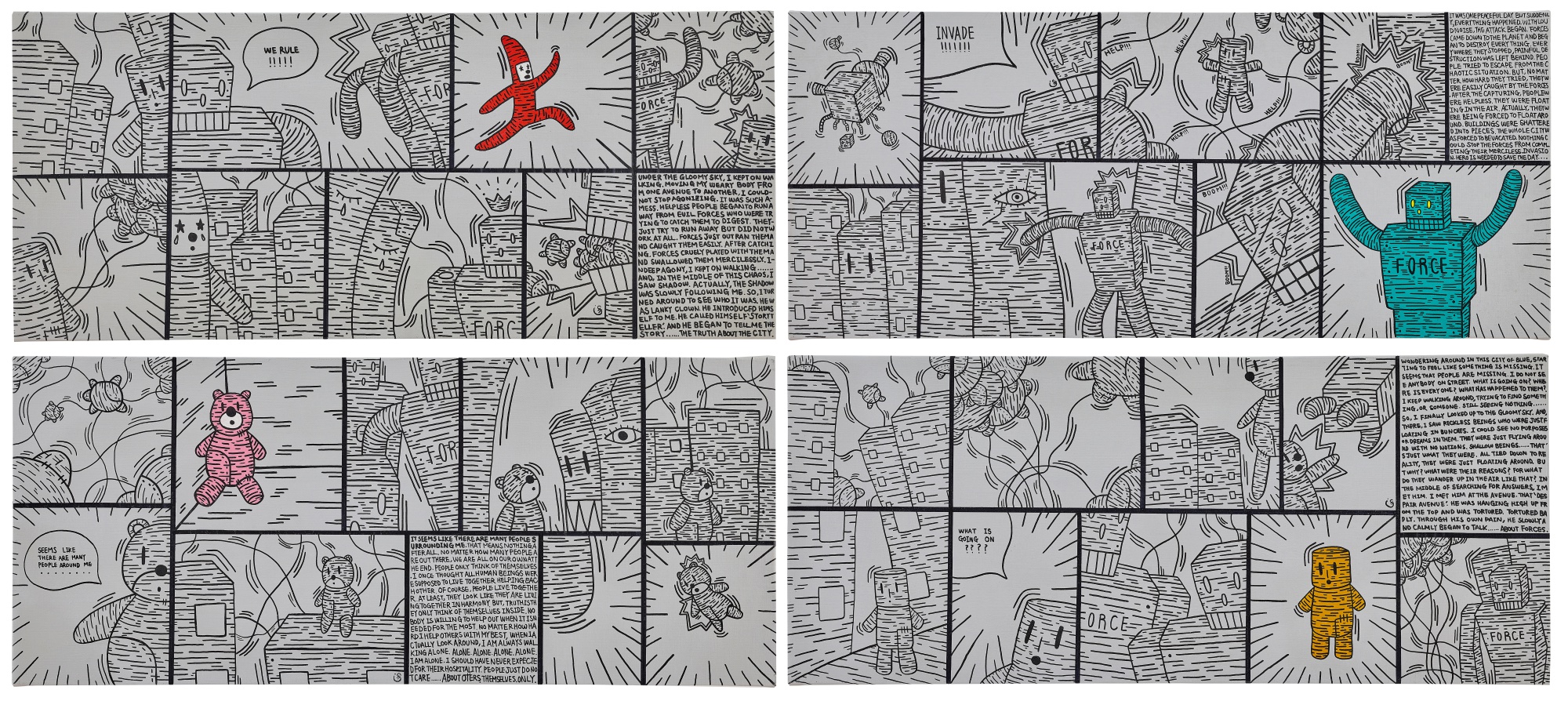
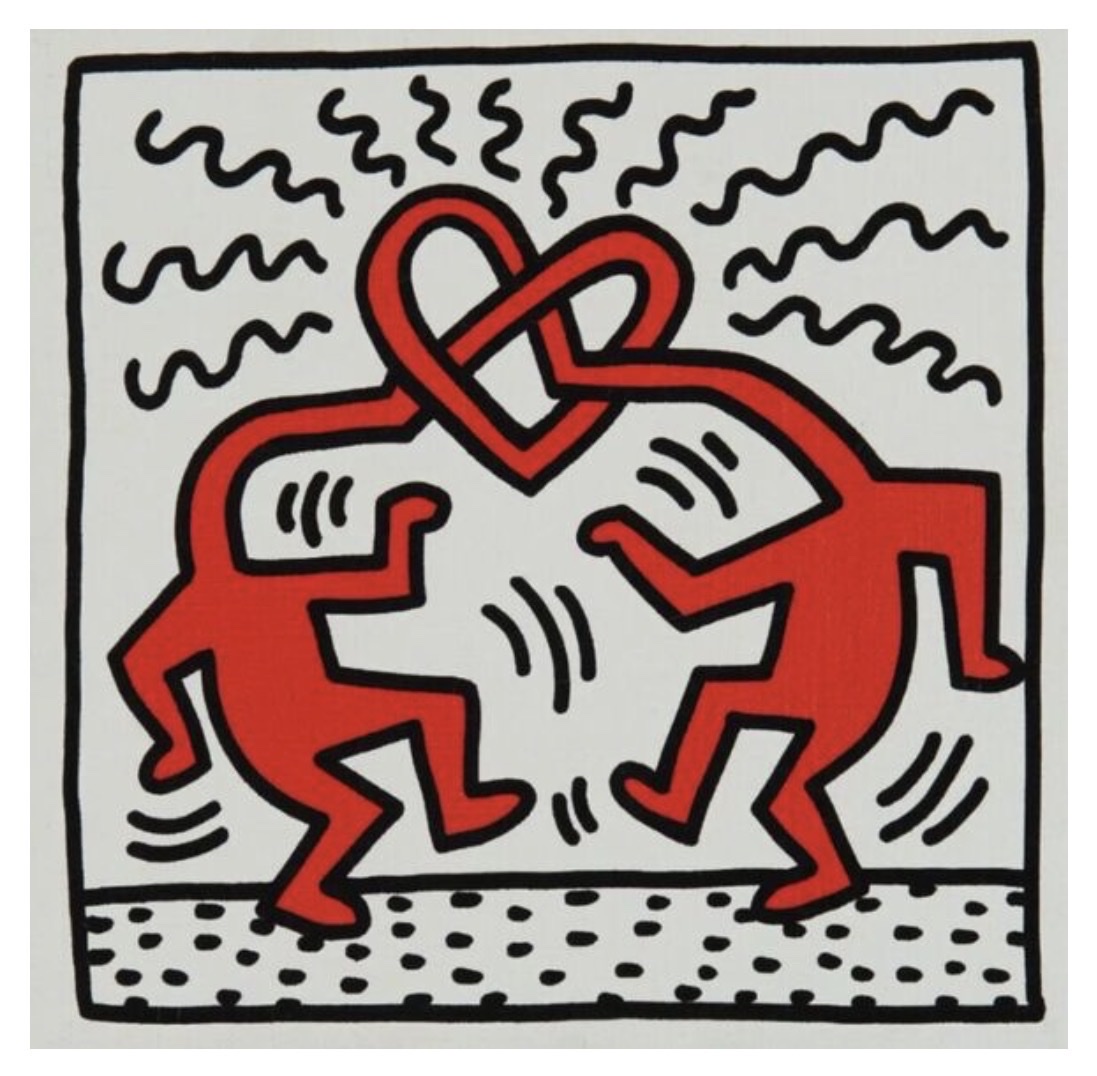
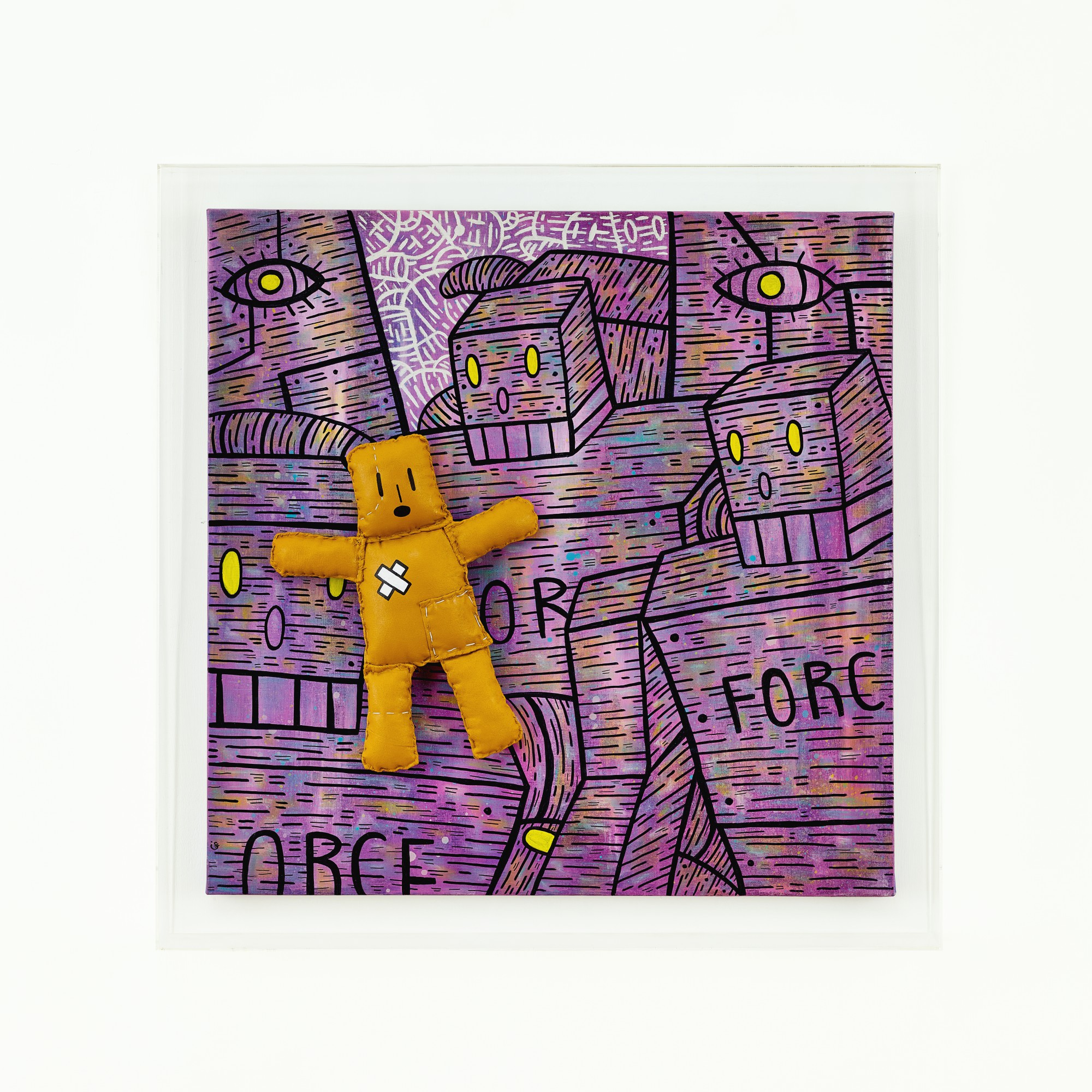
Eddie Kang
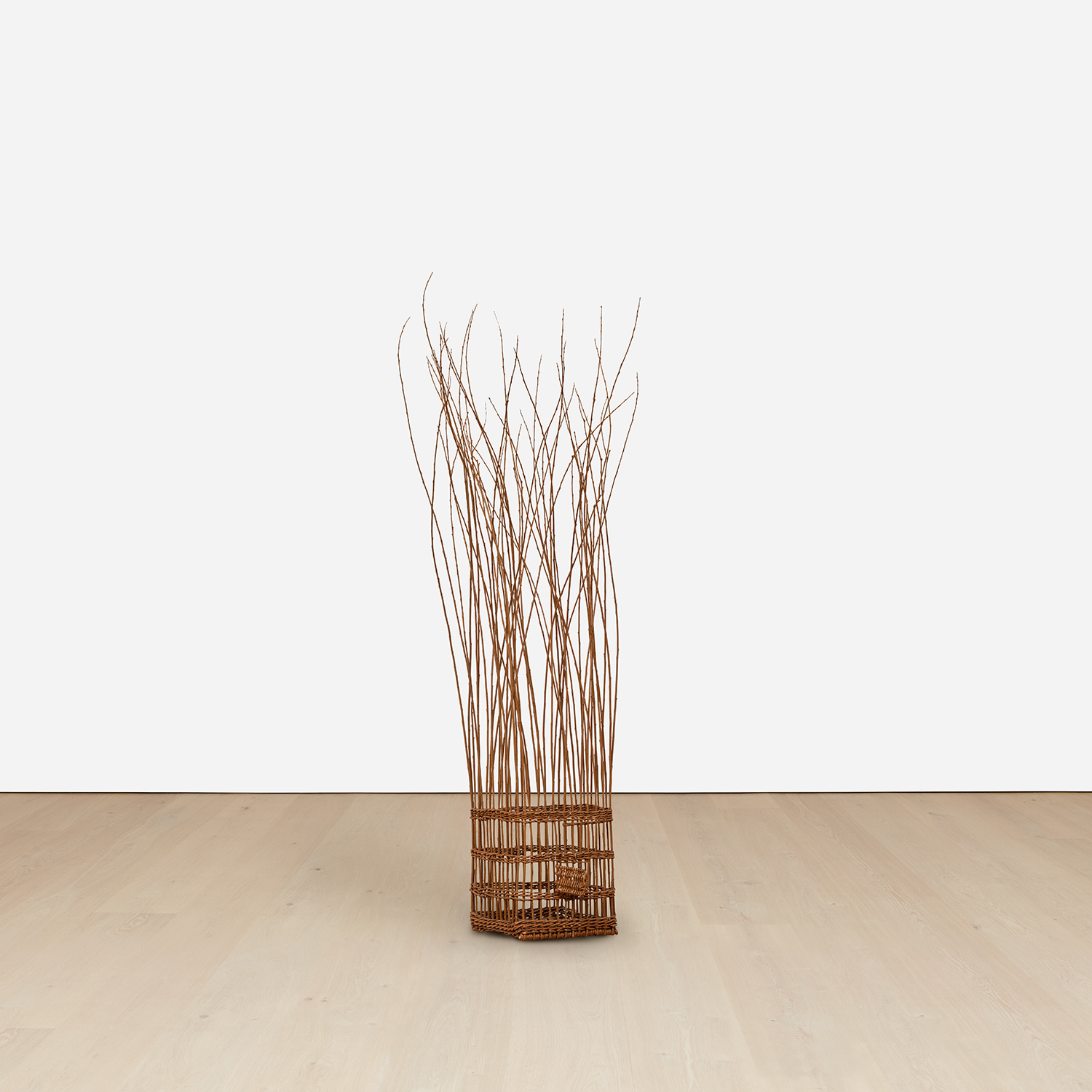
i. 宇宙-說書人 ii. 宇宙-粉紅小熊 iii. 宇宙-布偶 iv. 宇宙-力量(一套四幅), 2008
Her approach treats the comic object not as raw material to be transformed but as a cultural artifact that already contains its own complex meaning. Eddie Kang represents a younger generation of artists for whom the boundaries between fine art, illustration, and sequential storytelling are simply not interesting as boundaries. His work moves fluidly between these modes, reflecting a generation raised on manga, animation, street art, and museum culture simultaneously. This porousness is characteristic of where the most vital work in comic adjacent art is happening now, in studios and practices that do not recognize the hierarchies that previous generations spent so much energy policing.
What collectors are recognizing, with growing sophistication, is that the original artwork behind beloved comic and graphic narrative traditions carries a specific kind of aura. These are objects that were made to be reproduced and distributed, to be read and discarded, and yet the originals survive as witnesses to an act of imagination that touched millions of people. There is something genuinely moving about that. The market has noticed, and so have the institutions.
The Louvre hosted a comics exhibition in 2020. MoMA holds animation cels in its collection. The walls are not just coming down. They were never quite as solid as people pretended.