American Regionalism
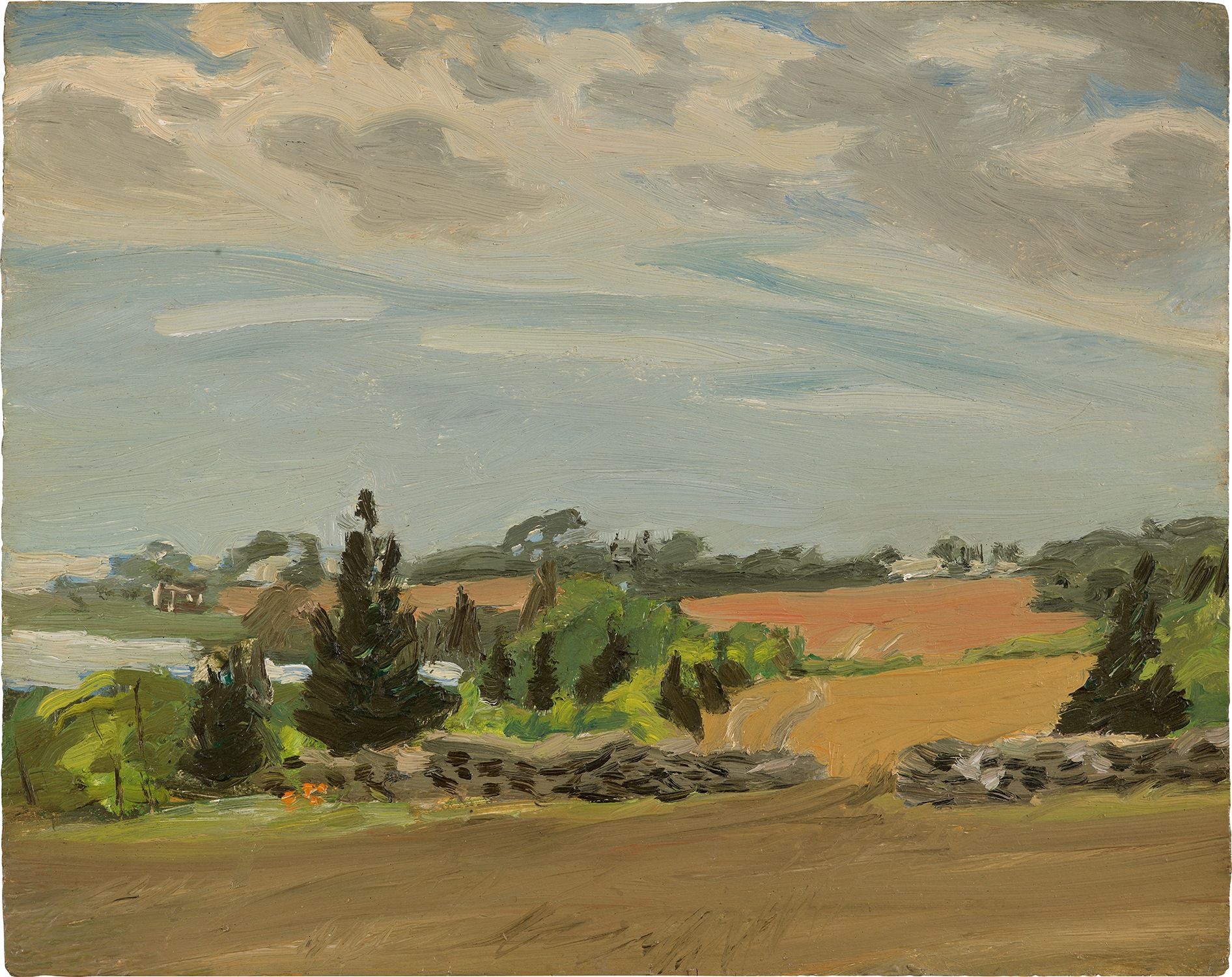
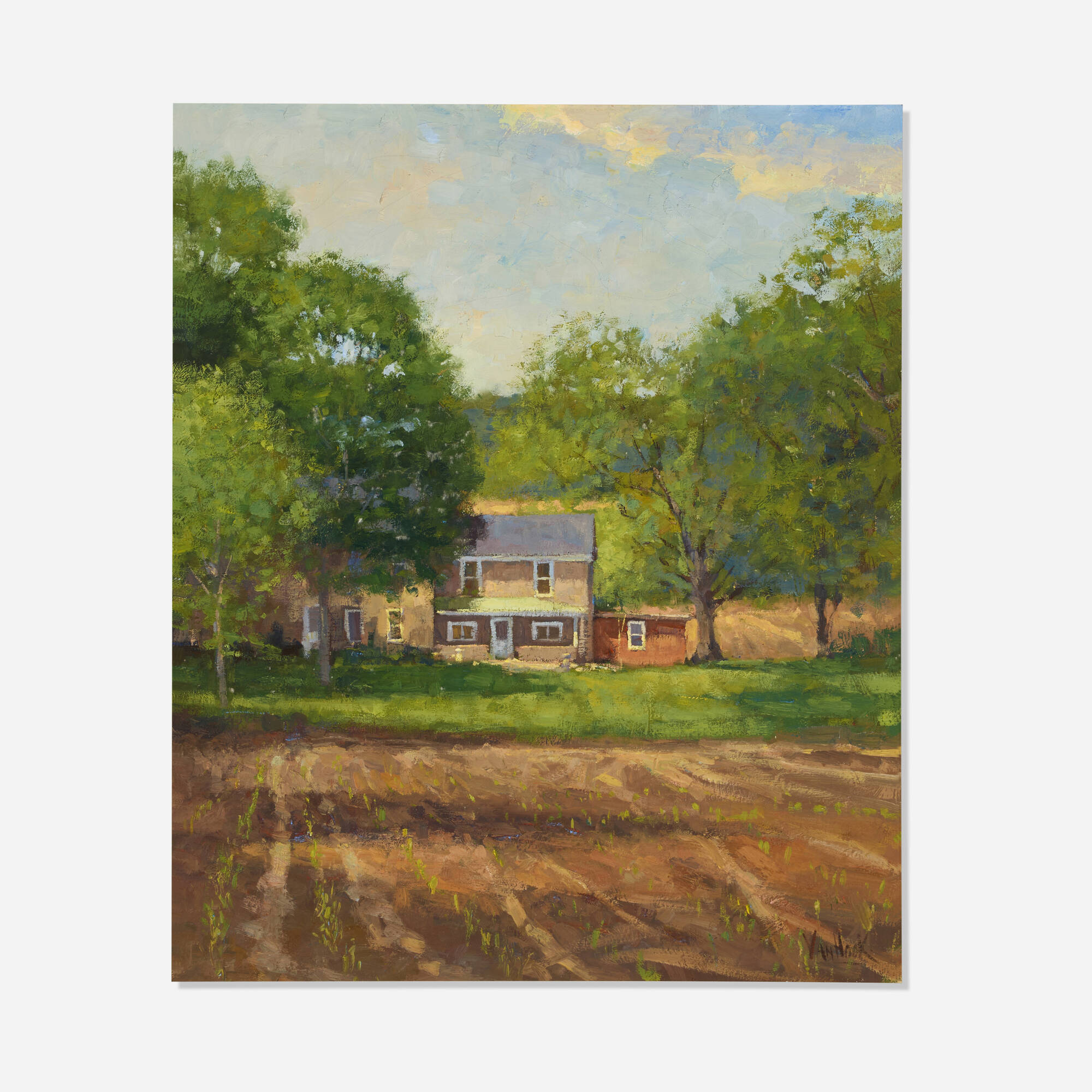
Fairfield Porter
Connecticut Landscape, 1968

The Land Remembers: Collecting American Regionalism
There is something almost confessional about living with American Regionalist work. These paintings ask you to slow down, to notice the particular quality of light falling across a harvested field, the weight of a figure leaning into wind, the way a small town holds its breath between seasons. Collectors who find their way to this movement often describe the same experience: they stopped in front of a work expecting nostalgia and found instead something more complicated and more alive. That tension between familiarity and genuine pictorial ambition is precisely what makes Regionalism one of the most rewarding areas of American art to build around.
The movement coalesced in the 1930s as a conscious counterweight to European modernism, though the best works never read as reactionary. Artists like Thomas Hart Benton were deeply sophisticated formal thinkers, and his influence on a generation of American painters was enormous. What Regionalism offered was a commitment to place as subject matter with the same seriousness that Abstract Expressionism would later bring to gesture and space. For collectors today, that rootedness translates into works that hold the room without demanding to be the center of conversation.
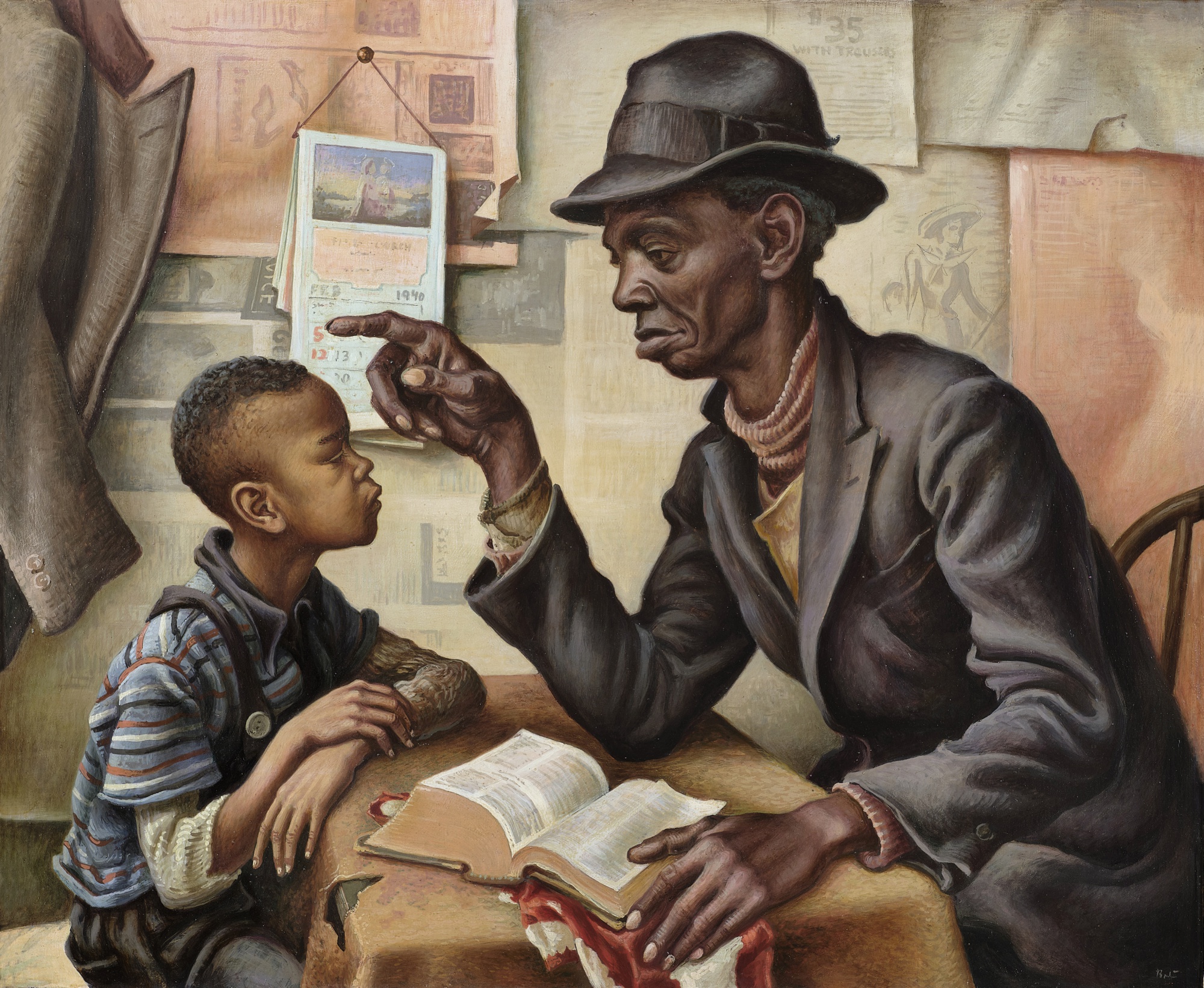
Thomas Hart Benton
Instruction (The Bible Lesson), 1940
They live generously alongside other things. When distinguishing a good work from a great one in this category, the question to ask first is whether the painting is doing something beyond illustration. The weakest Regionalist work leans heavily on subject matter alone, trusting that a barn or a county fair will carry emotional freight without any help from the painter. The strongest work uses that subject as a scaffold for genuine compositional risk.
Look for evidence that the artist understood modernism even while appearing to resist it. Benton's murals and easel paintings are threaded through with a Mannerist energy in the figure handling, a sinuous rhythm that owes something to El Greco and something to jazz. When you see that kind of informed tension in a work, you are looking at something that will sustain long looking. The Collection brings together artists who represent very different registers of the Regionalist sensibility.
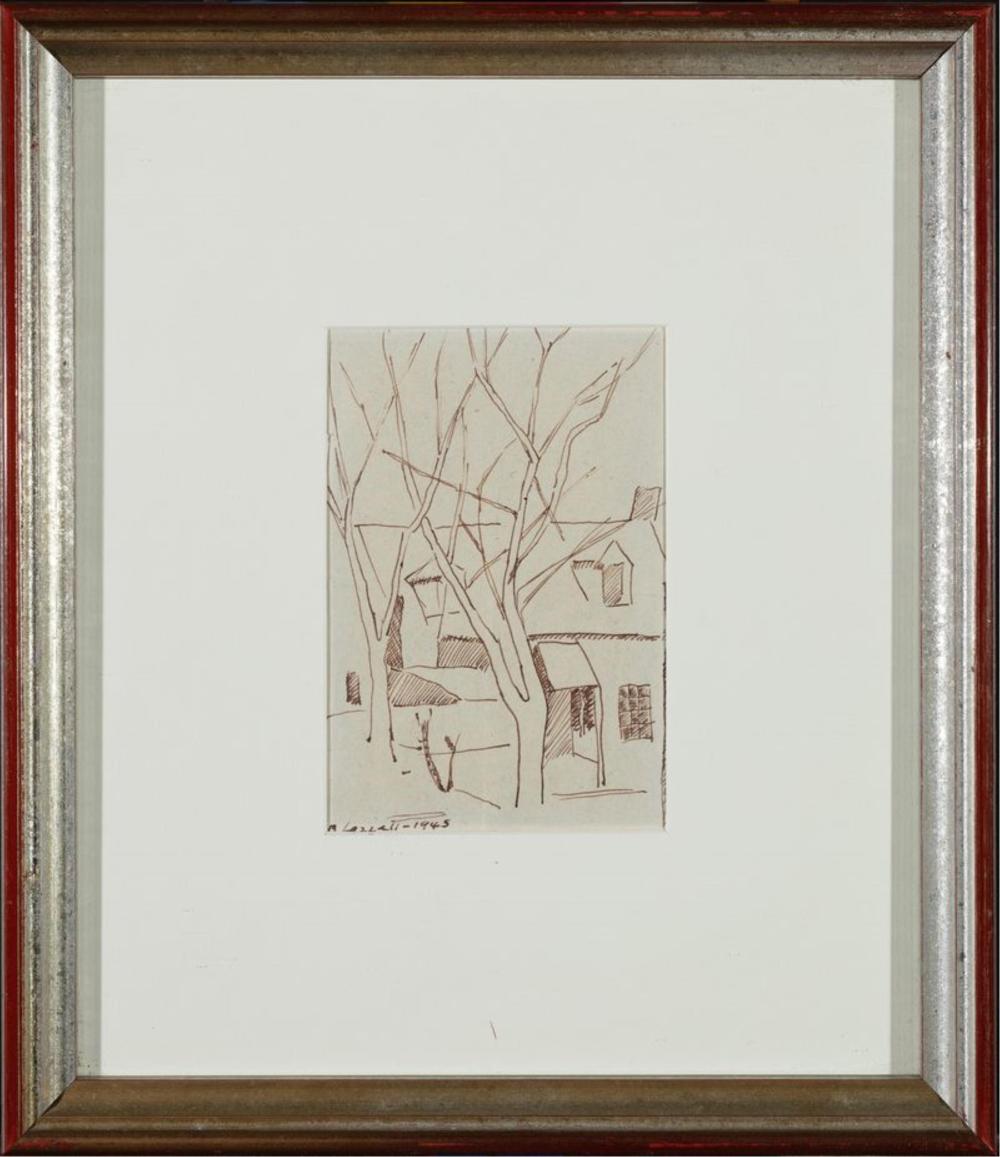
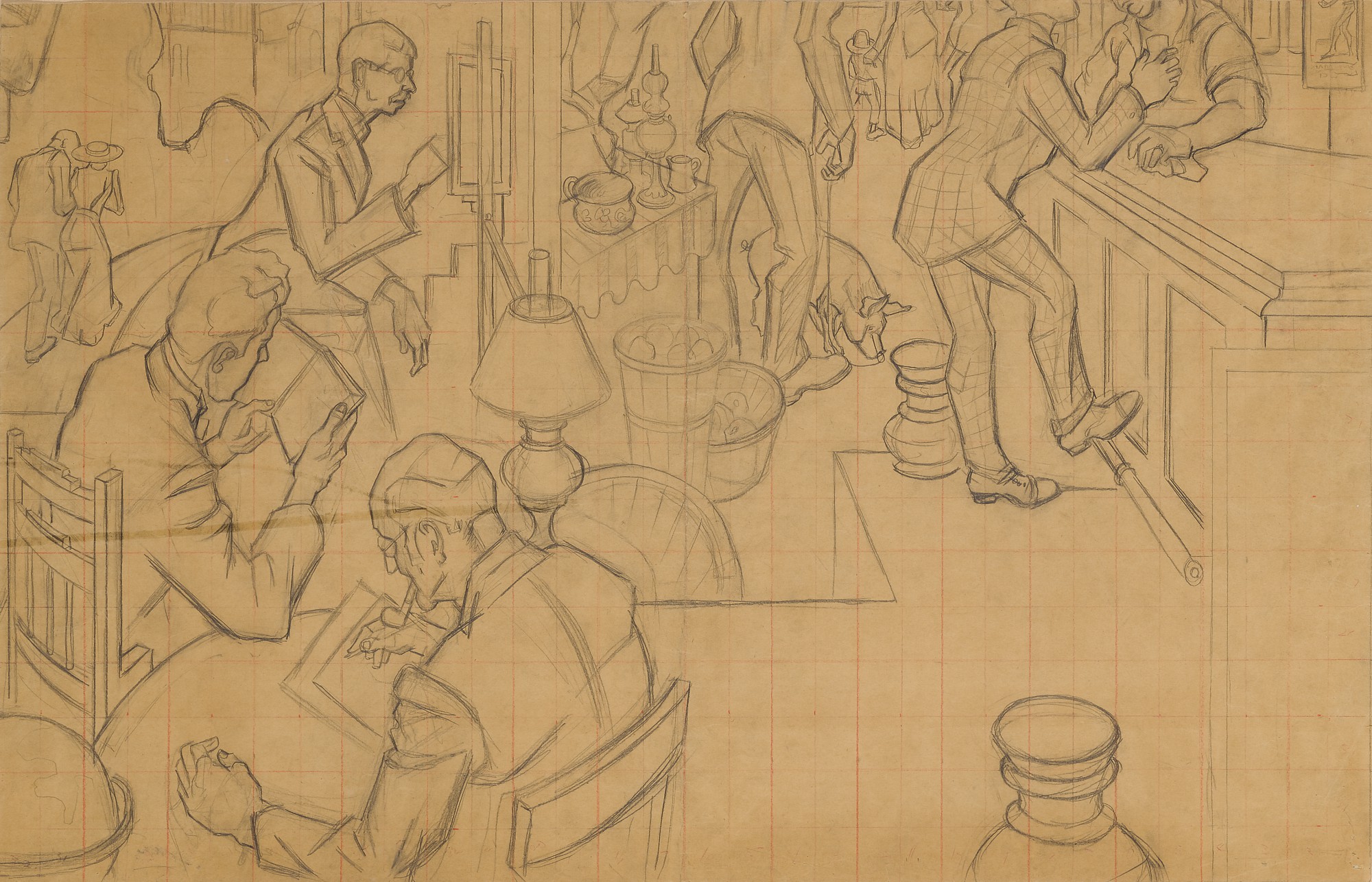
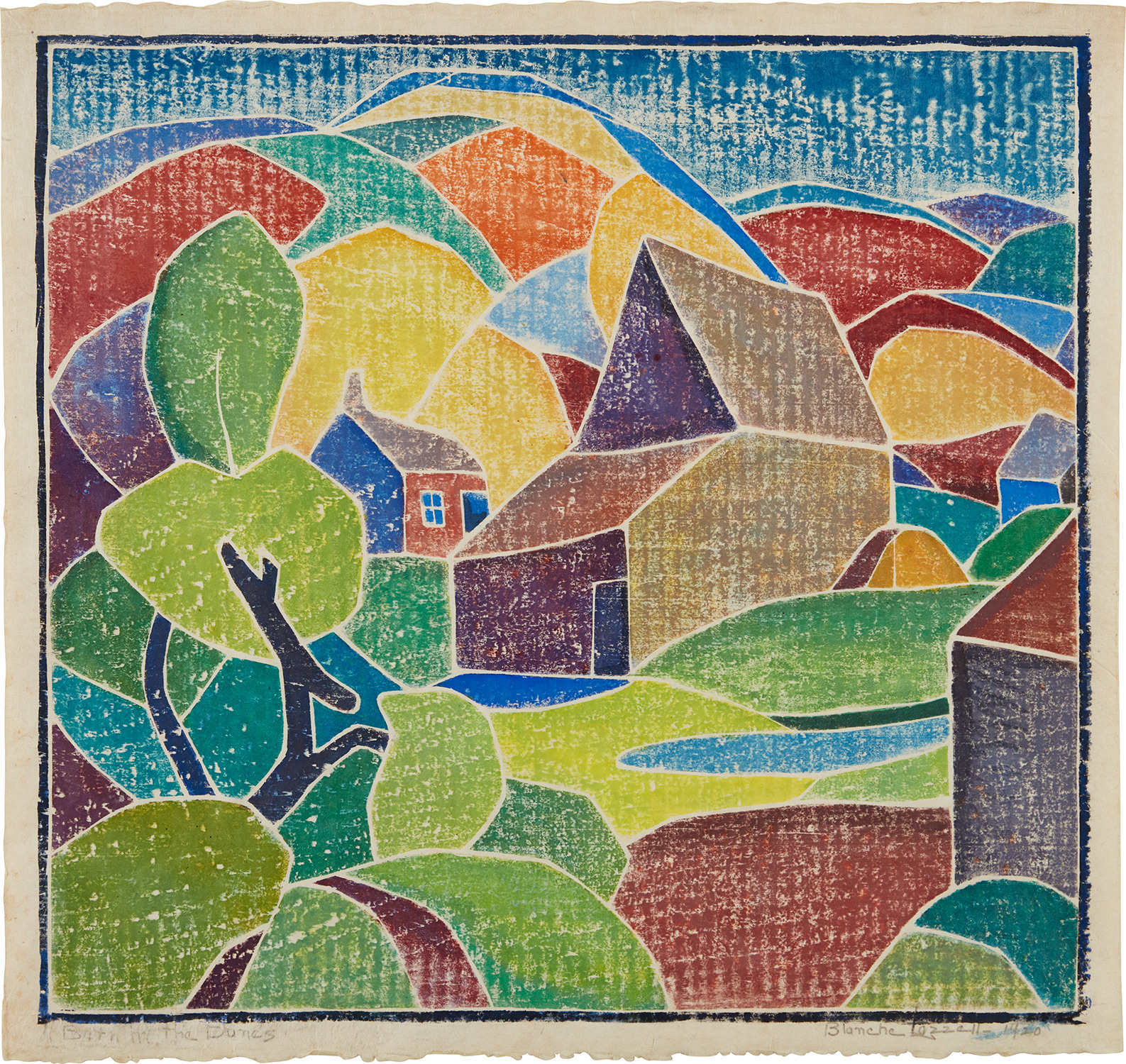
Blanche Lazzell
Double-sided sketch, 1945
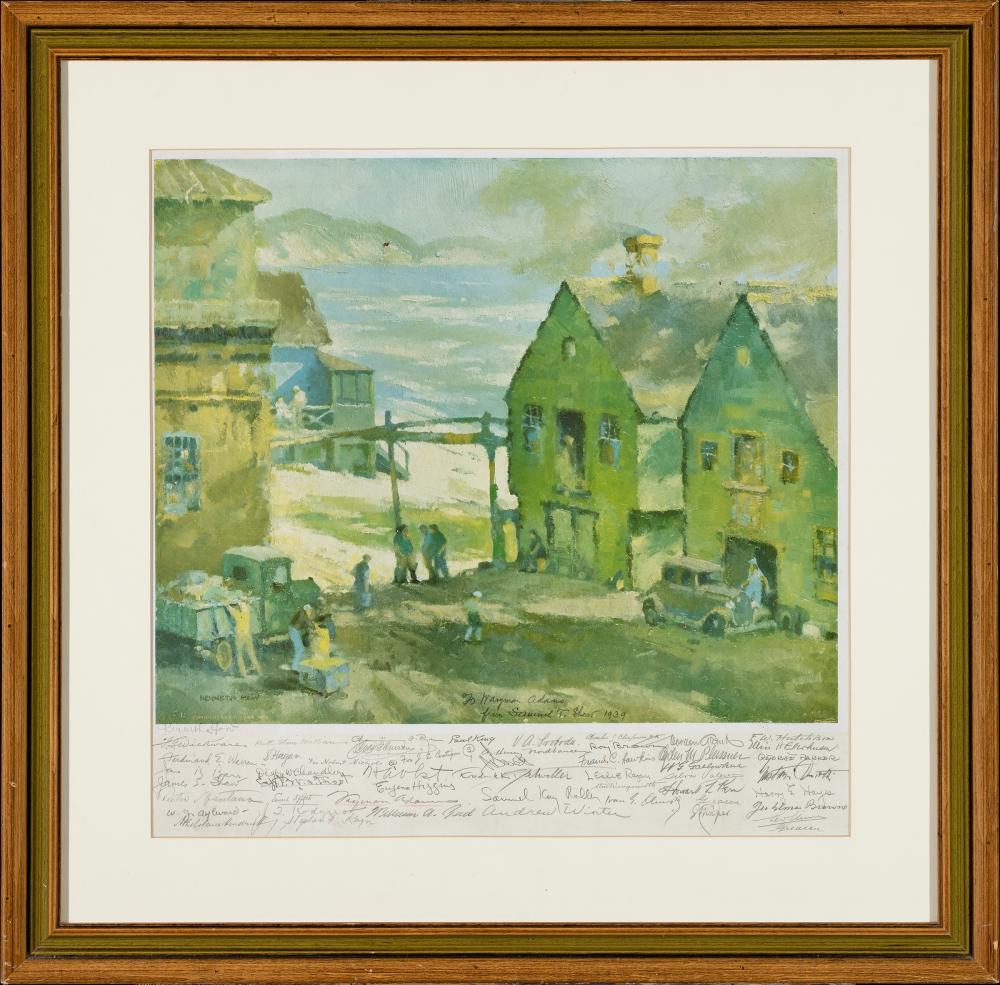
Thomas Hart Benton remains the anchor figure for any serious consideration of the movement, and works from his hand carry both art historical weight and genuine market strength. His prints, in particular, have attracted renewed attention from younger collectors who want a point of entry into his work without the price ceiling that his paintings now command. Blanche Lazzell occupies a fascinating position, bridging Regionalist subject matter with a Provincetown modernism that kept her work formally adventurous throughout her career. Her white line woodcuts are among the most distinctive objects in American printmaking and remain undervalued relative to their quality.
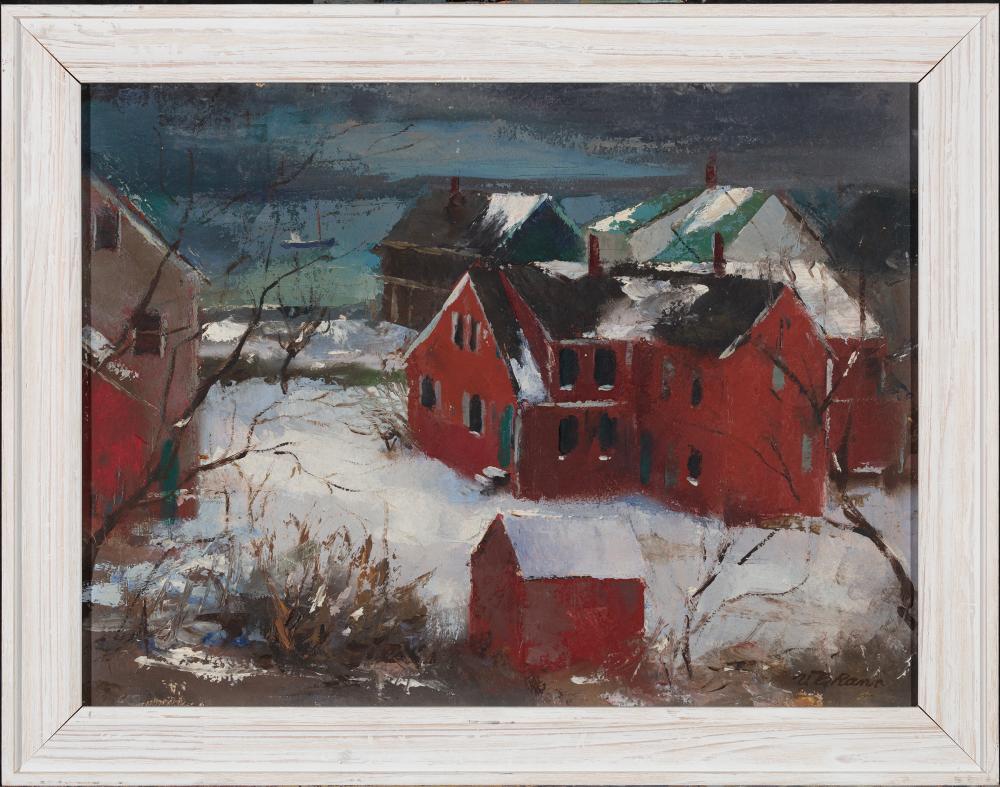
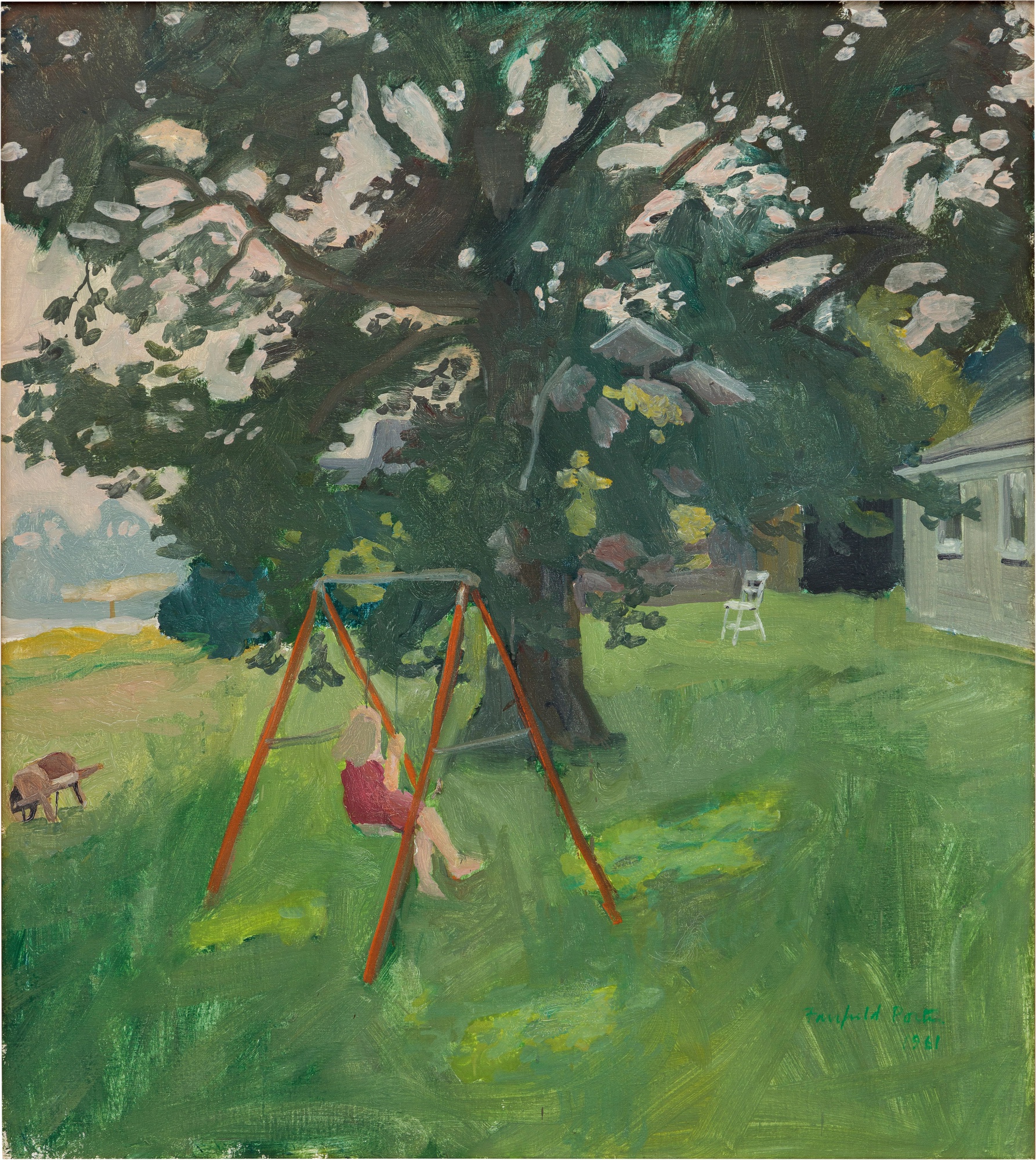
Gustave Baumann's color woodcuts, rooted in the landscape and folk culture of New Mexico, have seen sustained market appreciation over the past decade as collectors have recognized how fully realized his vision was. Fairfield Porter presents a different and compelling case. Porter does not fit neatly inside Regionalism as a label, but he shares the movement's fundamental conviction that the ordinary and the local are worthy of the most serious painterly attention. His work has been championed by painters as different as Alex Katz and John Ashbery, and critical reappraisal of his place in postwar American art has been underway for some time.
Fairfield Porter
Connecticut Landscape, 1968
Collectors who came to Porter early have been rewarded. For those entering the market now, works on paper and smaller panels represent the most accessible points of entry into a body of work that continues to gain institutional traction. Charles William Dahlgreen, working primarily in the Midwest and focusing on landscapes of Illinois and Wisconsin, represents the kind of regional figure whose work is deeply rooted in place and whose market remains local enough that exceptional examples can still be found at prices that reflect regional rather than national demand. The secondary market for American Regionalism has matured considerably since the 1980s and 1990s, when the category was still treated somewhat apologetically by major auction houses.
Today, strong works by recognized figures move reliably at the major sales, and estimates have tightened as scholarship has deepened. Benton's prints and drawings appear regularly at regional auction houses as well as at Christie's and Sotheby's, and condition reports have become more rigorous as the market has professionalized. One useful indicator when evaluating a work at auction is provenance continuity. Works that have remained in private collections or with a single owner for decades tend to come to market in better condition and with cleaner documentation than works that have changed hands frequently.
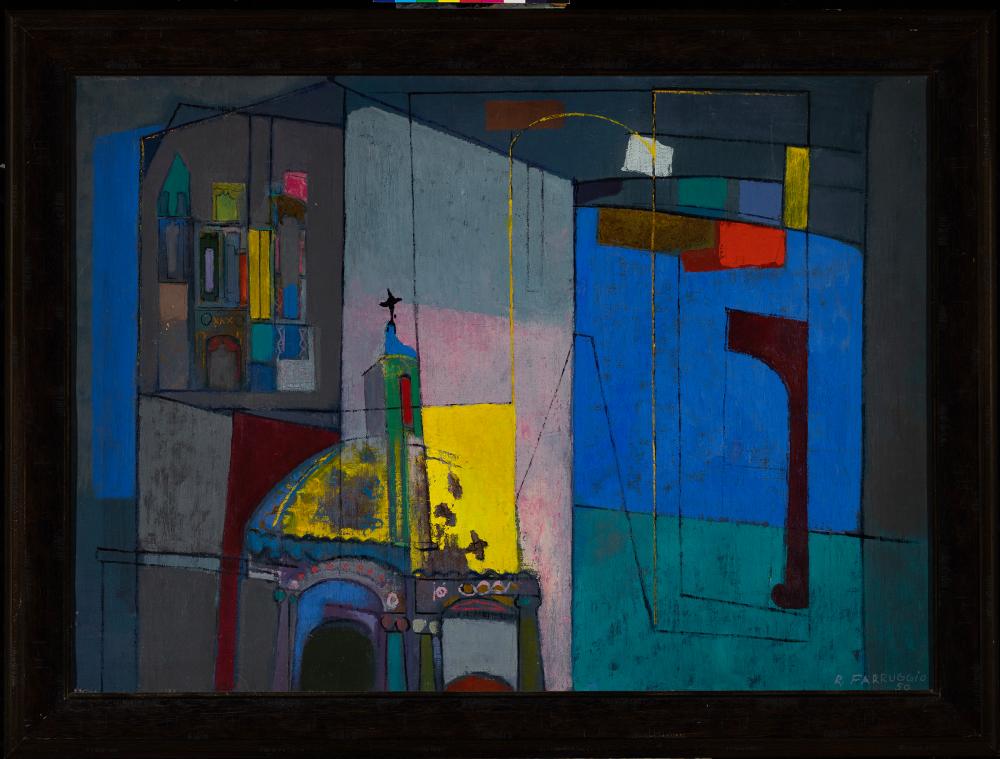
Remo Michael Farruggio
Churches, Mexico, 1950
Practical considerations matter enormously in this category. Many Regionalist works on paper are susceptible to light damage, and works that have been displayed unframed or behind non UV glass for extended periods may show fading that is impossible to fully reverse. When approaching a gallery or a private seller, ask specifically about exhibition history and whether the work has been assessed by a conservator. For prints and works on paper, ask whether the work has been hinged properly or whether there is any evidence of past mounting with pressure sensitive adhesives.
These are not arcane questions and any reputable dealer will welcome them as evidence of a serious buyer. With unique works in oil or tempera, ask about any recorded restoration and request documentation. Display deserves real thought. Regionalist work tends to benefit from natural light and from settings where it is not competing with high contrast or highly chromatic neighbors.
A Thomas Hart Benton lithograph hung alongside aggressively contemporary work can feel diminished, while the same print in a room with warm materials and considered lighting will reveal its full range of tone and texture. The most satisfying collections built around this movement tend to treat it not as a historical category to be documented but as a living sensibility about place, labor, and the dignity of the particular. That is an idea that travels across time very well, and it is why these works continue to find new audiences with each generation of collectors willing to look past the label and into the work itself.