American Design
George Nakashima
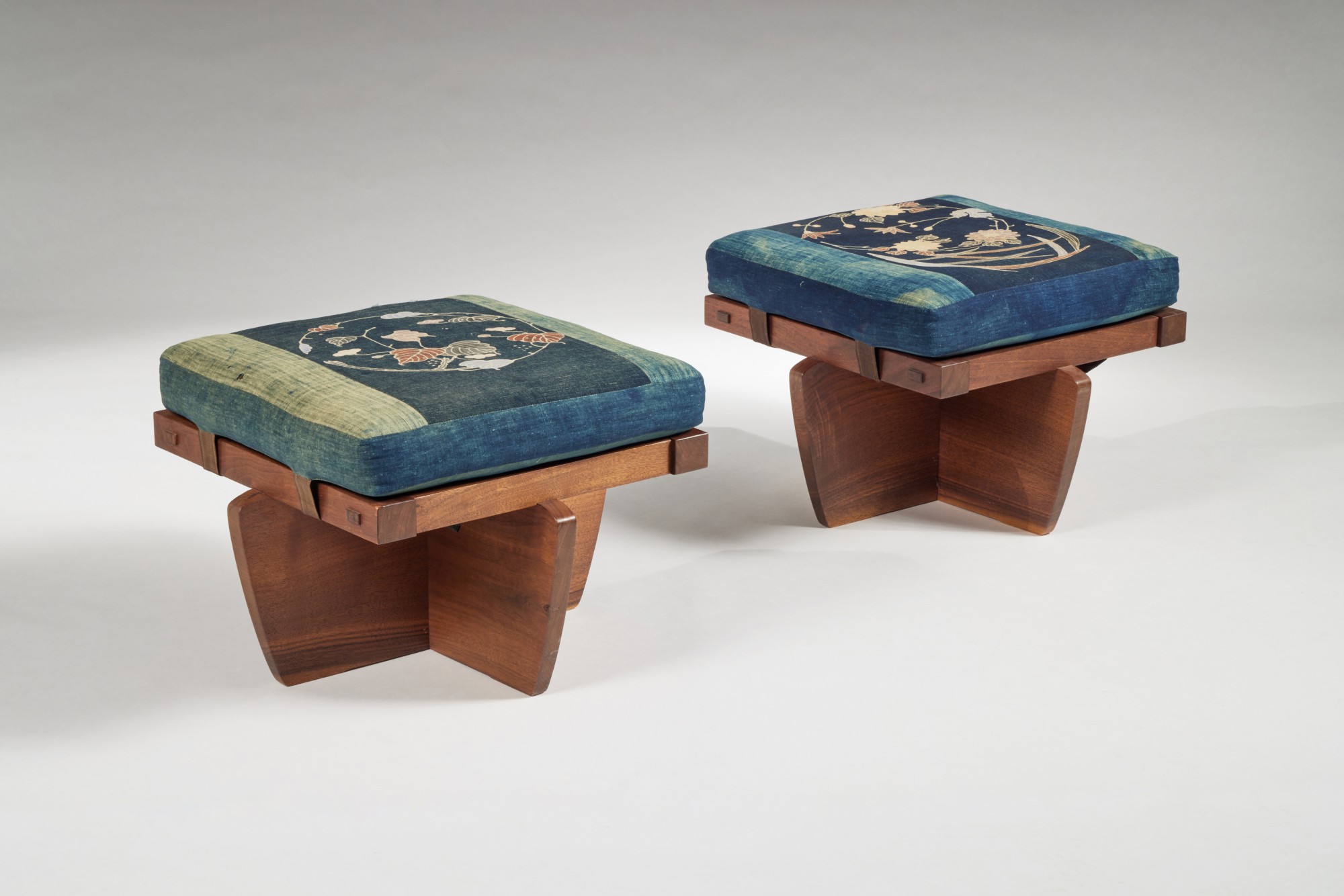
Pair of “Greenrock” Ottomans from the Japanese House of Governor and Mrs. Nelson A. Rockefeller, Pocantico Hills, New York

Made by Hand, Built to Last Forever
There is a particular quality of attention that runs through the best American design objects, a kind of moral seriousness embedded in the grain of the wood or the curve of a leg joint. These are not pieces that announce themselves loudly. They ask you to come closer, to run a hand along a surface, to notice the way light falls differently at noon than it does at dusk. In a collecting landscape often dominated by painting and sculpture, American design occupies a quietly radical position, insisting that the boundary between art and use was always a fiction someone invented for convenience.
The story of American design as a self conscious artistic movement is really a story about resistance. By the early twentieth century, industrialization had flooded the market with machine made goods that were efficient, affordable, and almost entirely without soul. The craftspeople who pushed back did not form a single school or sign a manifesto. They simply went into their workshops and made things with their hands, drawing on European Arts and Crafts precedents from figures like William Morris while insisting on something distinctly American in the result.
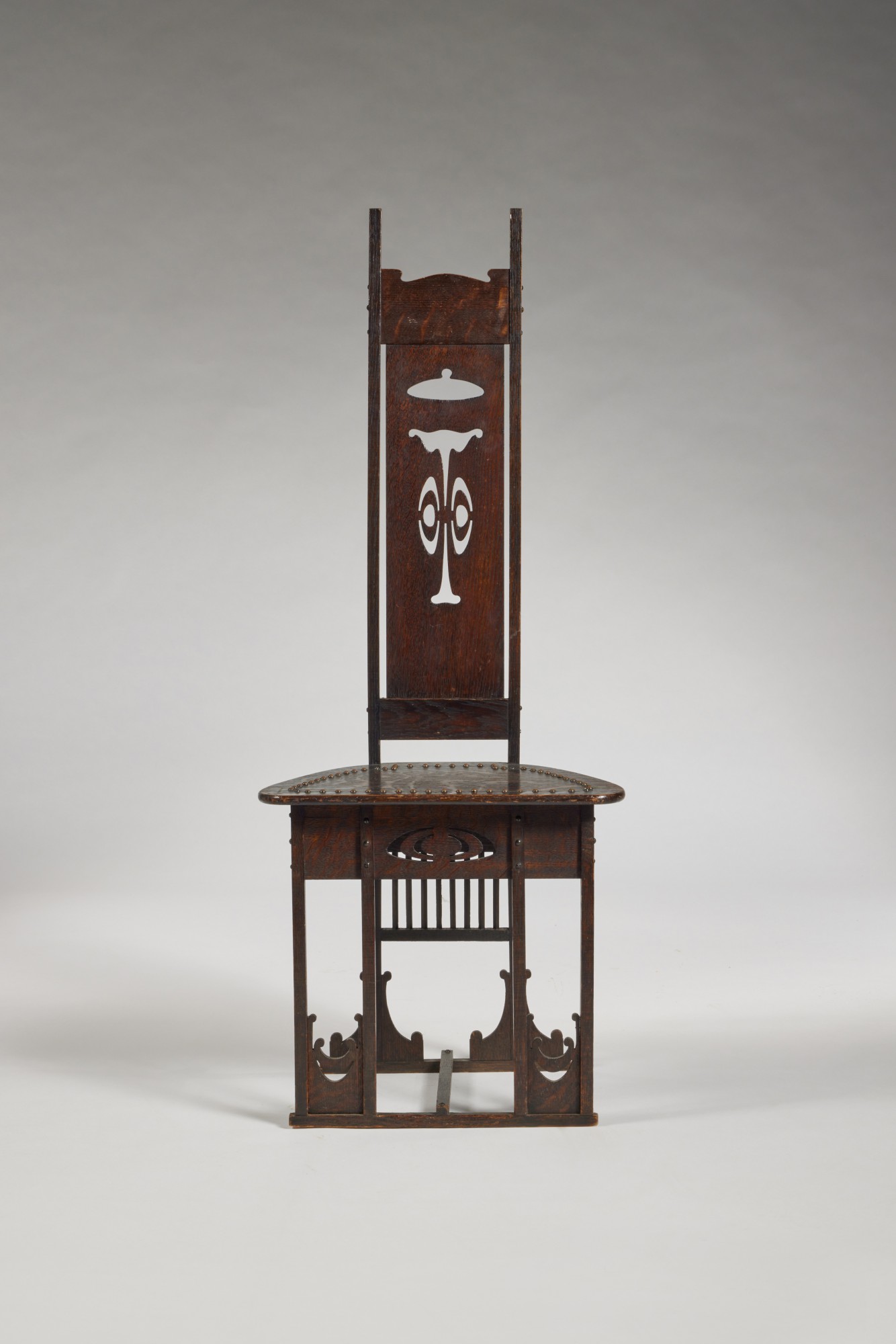
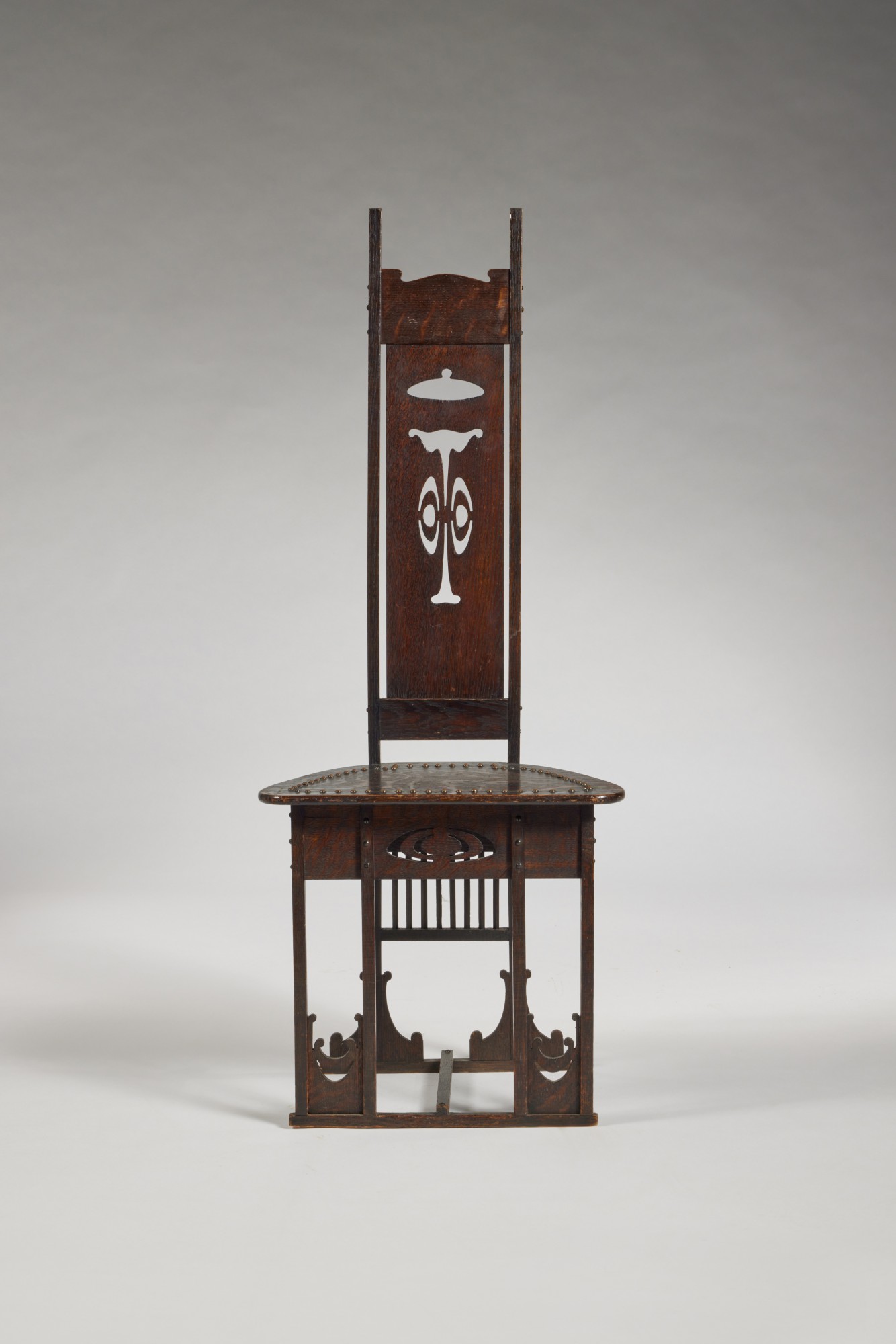
Charles Rohlfs
Hall Chair
That American quality is harder to name than to recognize: a rawness, a directness, a preference for the thing itself over the decorative flourish. Charles Rohlfs was among the earliest to articulate this sensibility in wood. Working out of Buffalo, New York in the 1890s and early 1900s, he produced furniture that sat somewhere between Gothic revivalism and something entirely his own invention, with carved surfaces that looked almost calligraphic and joinery that felt like a structural argument. His work appeared at international exhibitions in Turin and St.
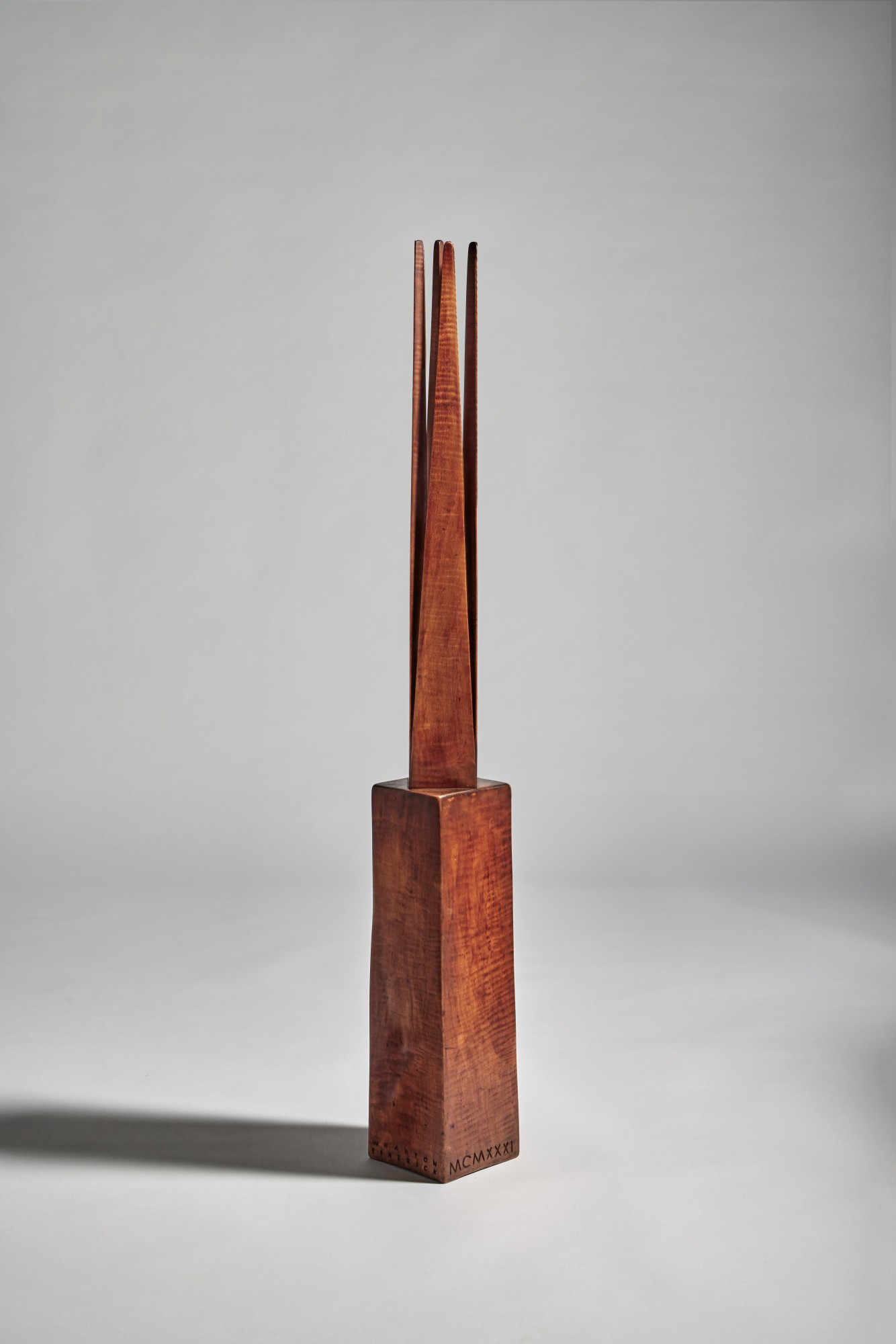
Louis in the first years of the twentieth century, earning him a reputation that extended well beyond the United States. Rohlfs understood the chair and the desk as expressive objects, and that understanding opened a door that American makers have been walking through ever since. Wharton Esherick took that inheritance and transformed it into something closer to sculpture. Working from his remarkable studio in Paoli, Pennsylvania, which he built and carved and shaped over decades into a total environment, Esherick rejected the rectangle as a tyranny.
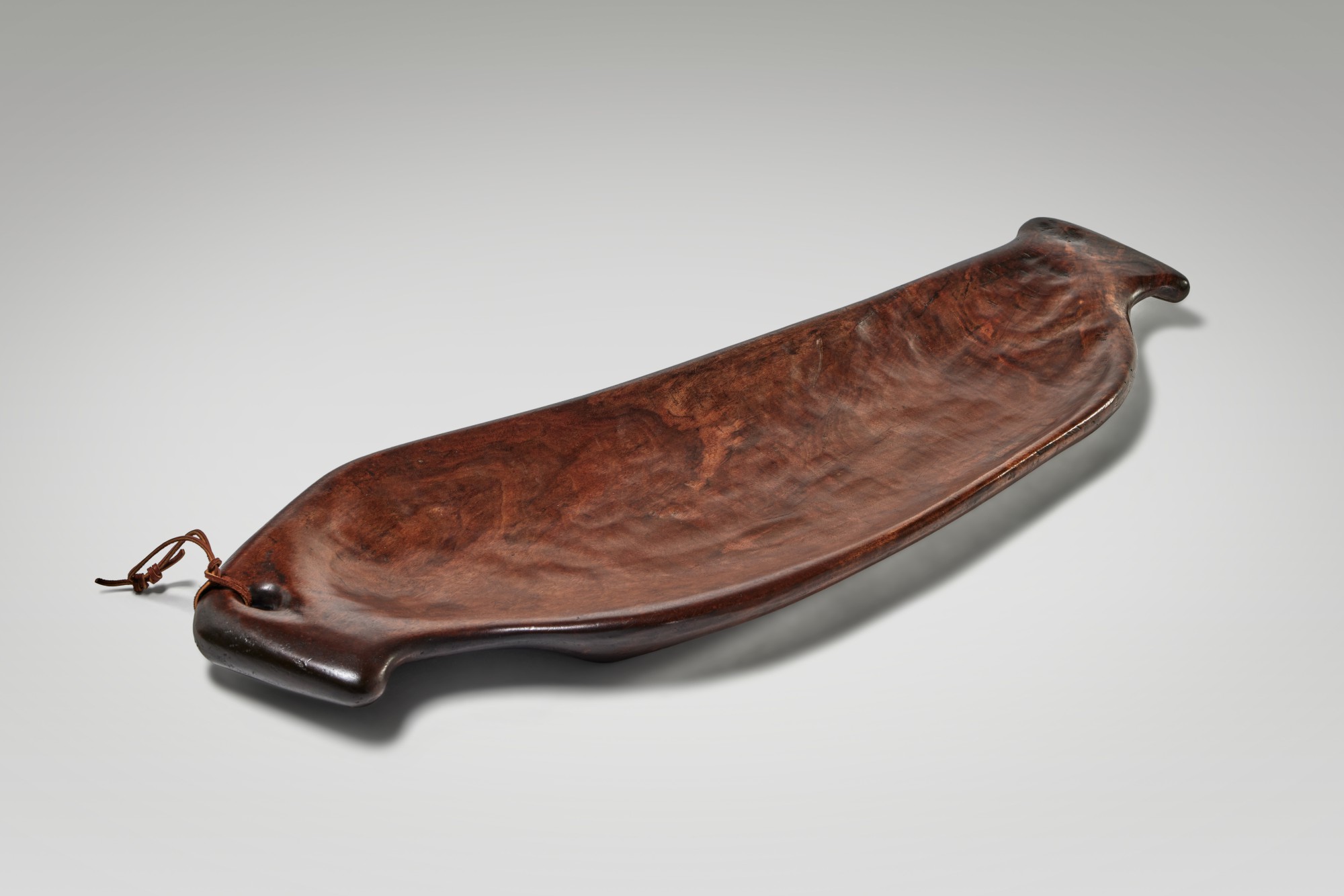
Wharton Esherick
Handled Tray
His furniture from the 1930s onward followed the logic of the tree rather than the logic of the grid, with forms that spiraled and cantilevered and surprised. He called himself a woodworker for most of his life, resisting the label of artist with a stubbornness that was itself a kind of artistic position. The Museum of Modern Art included his work in its 1941 exhibition Organic Design in Home Furnishings, a moment that placed American craft firmly within the conversation of modernism. Works by Esherick on The Collection offer a rare chance to live with objects that carry this history in their very fiber.
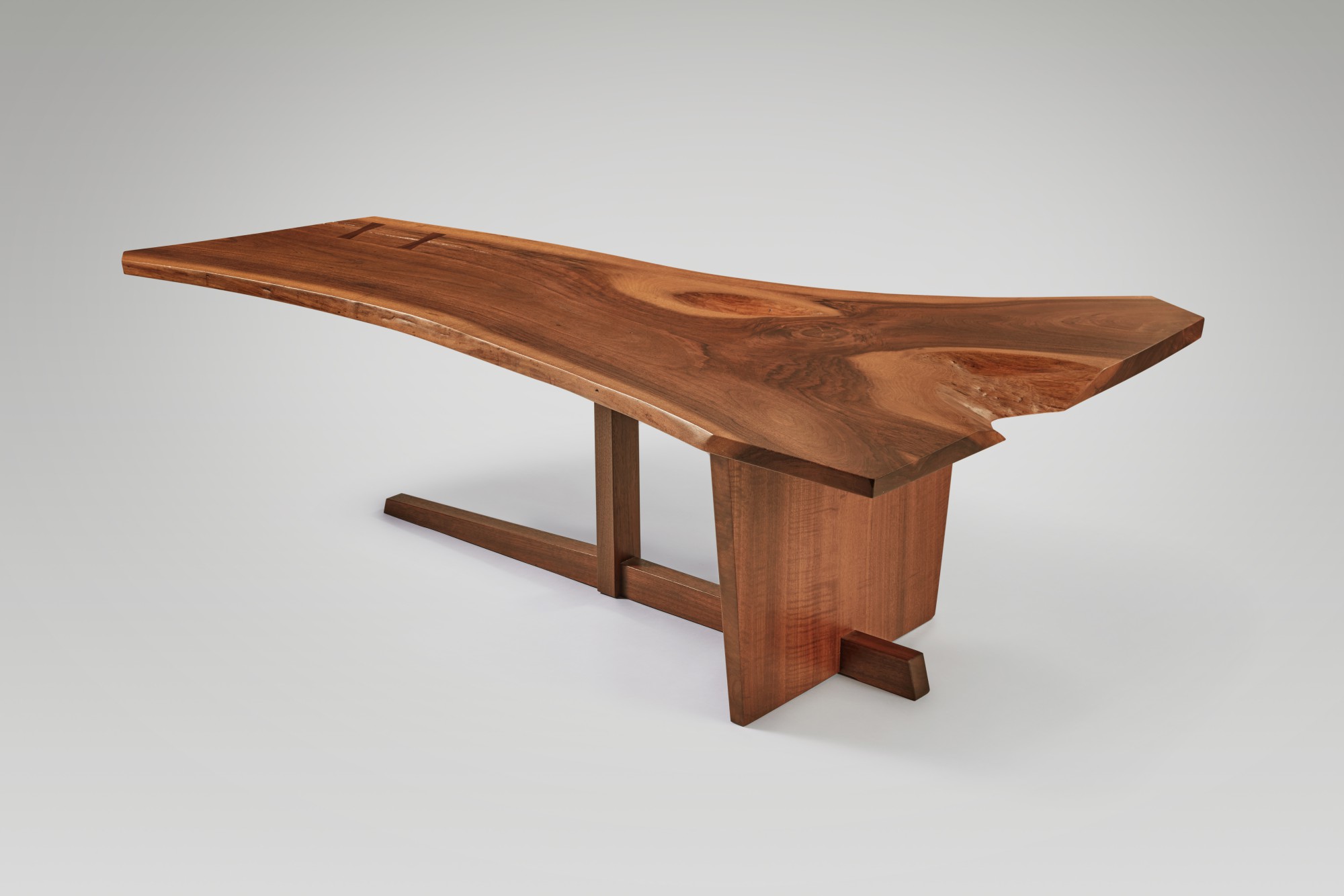
George Nakashima arrived at his mature practice through a path that included formal architectural training, time in Japan learning traditional joinery, and the devastating experience of internment during World War II. Out of that history came a philosophy of deep attention to the individual character of each piece of wood. Nakashima's slabs retain their natural edges, their voids, their idiosyncrasies, treated not as flaws to be corrected but as the essential truth of the material. His New Hope, Pennsylvania studio became a pilgrimage site for collectors and architects from the 1950s onward, and the work continues to appreciate in ways that reflect genuine rarity and a coherent, fully realized vision.
George Nakashima
Pair of “Greenrock” Ottomans from the Japanese House of Governor and Mrs. Nelson A. Rockefeller, Pocantico Hills, New York
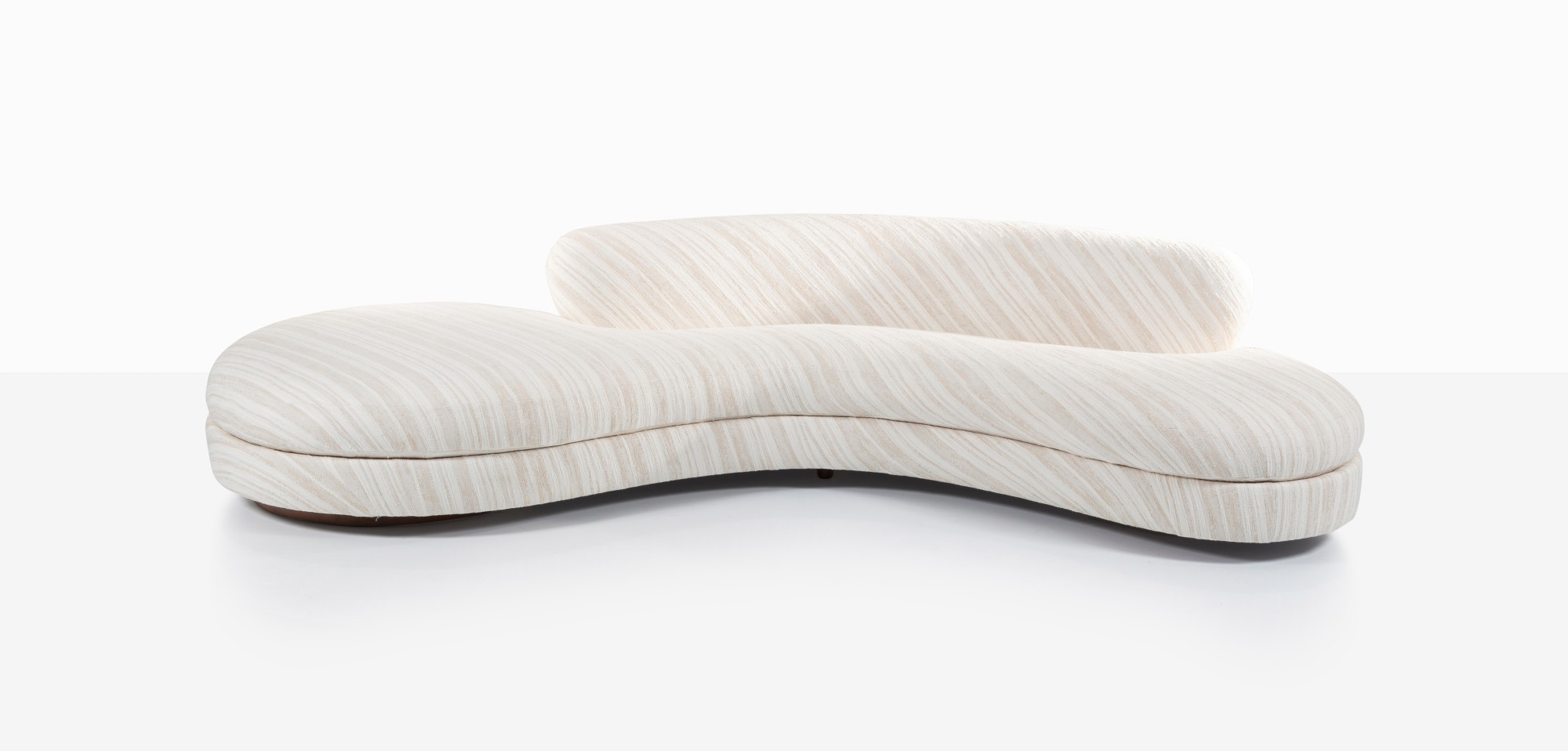
His presence on The Collection speaks to how central his contribution remains to any serious account of American design. The postwar decades brought new energies and new vocabularies. Vladimir Kagan, working in New York from the late 1940s, brought a sensuous, biomorphic quality to upholstered furniture that felt genuinely forward looking, absorbing the lessons of European modernism while retaining something warm and inviting that a lot of continental design deliberately withheld. Work produced after his direct involvement, in the tradition he established, continues to attract serious collectors who respond to that particular combination of formal sophistication and bodily pleasure.
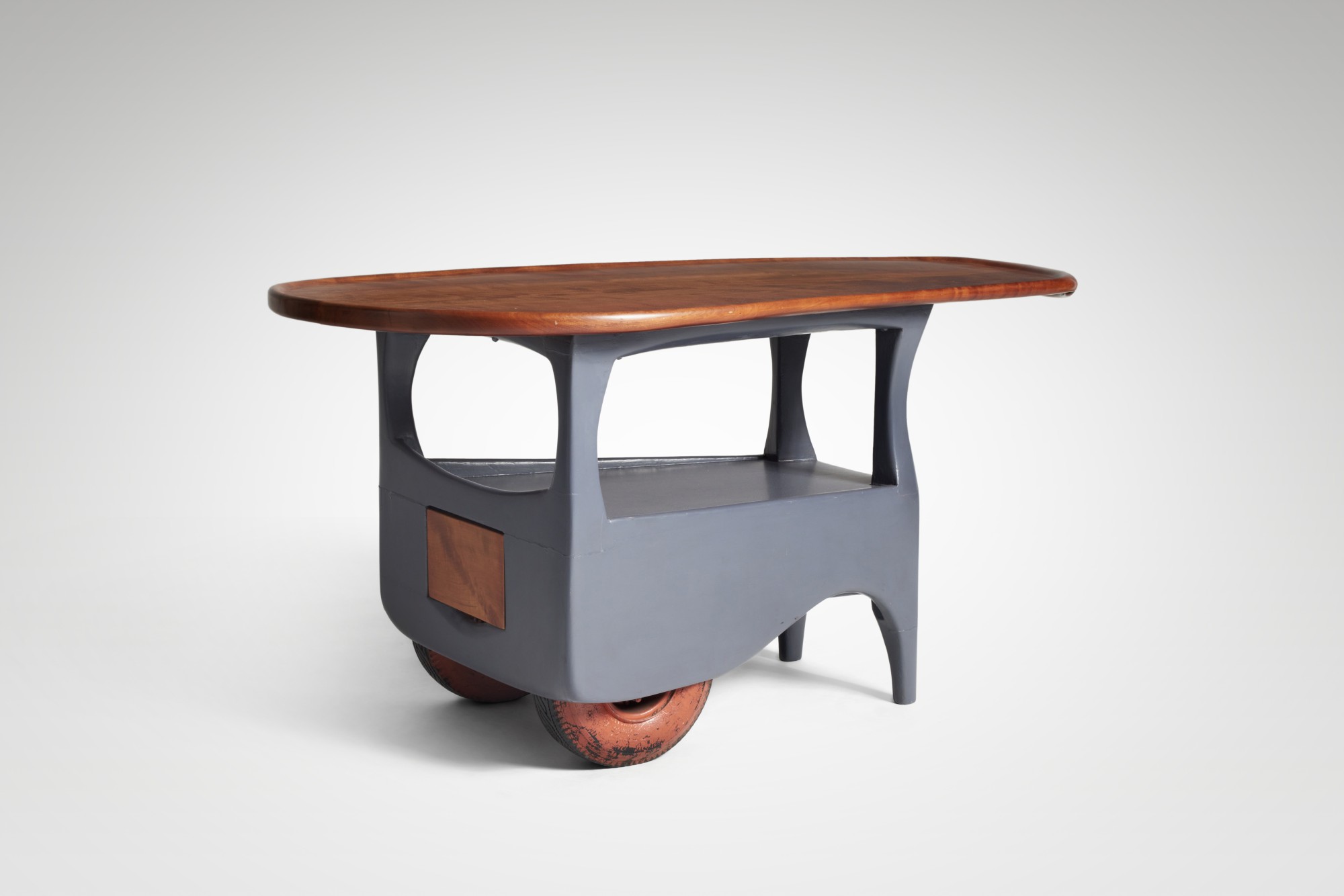
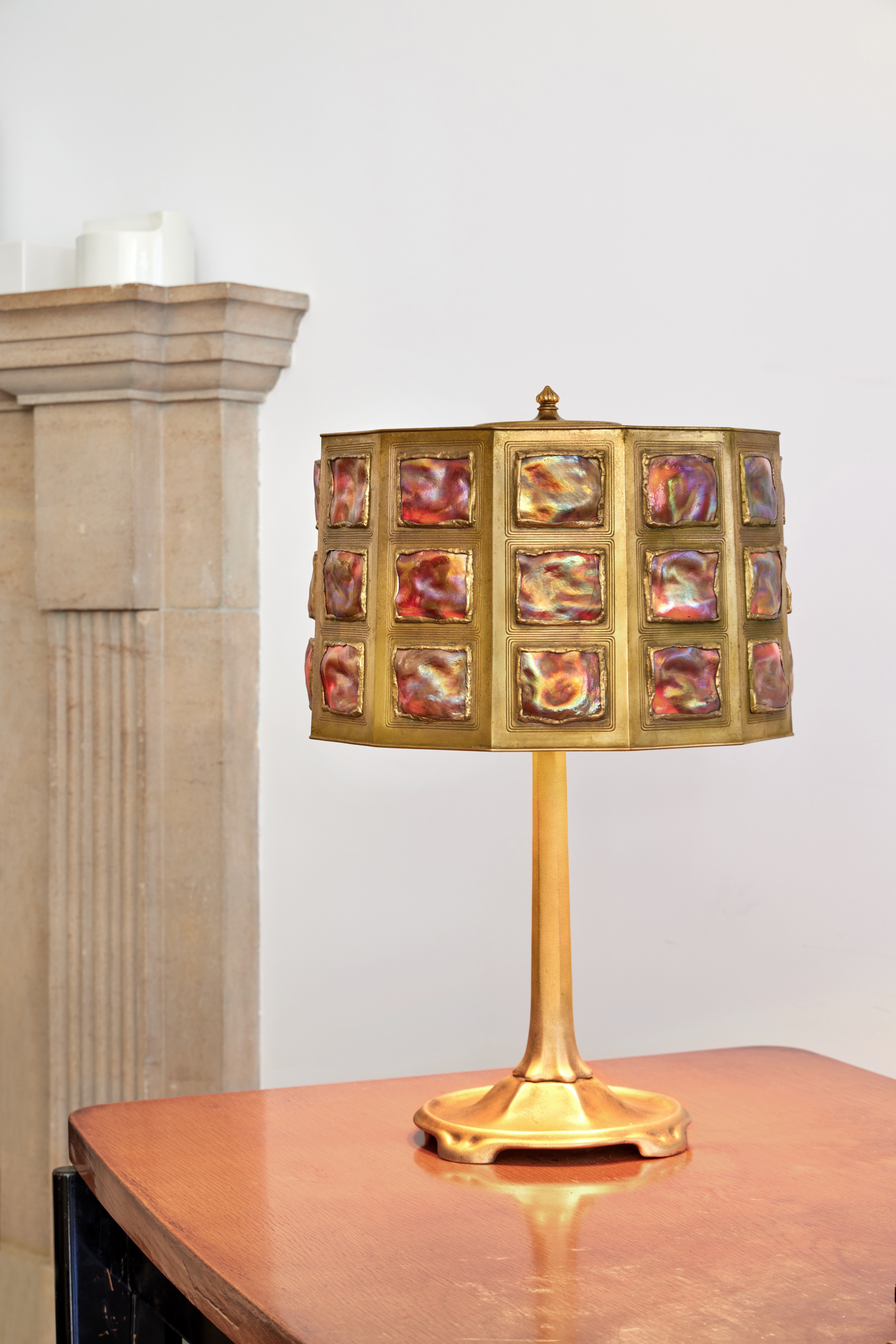
Ward Bennett, another New York figure, pursued a more austere path, one that found beauty in reduction and was deeply admired within the architecture and interior design communities for its intellectual clarity. And the decorative arts house Tiffany Studios, operating at the turn of the twentieth century under Louis Comfort Tiffany, stands as perhaps the most internationally recognized expression of American design ambition, producing leaded glass and bronze objects of extraordinary chromatic and technical complexity. What unites these makers across their considerable differences is a shared conviction that the designed object is a serious form of thought. The materials are not incidental.
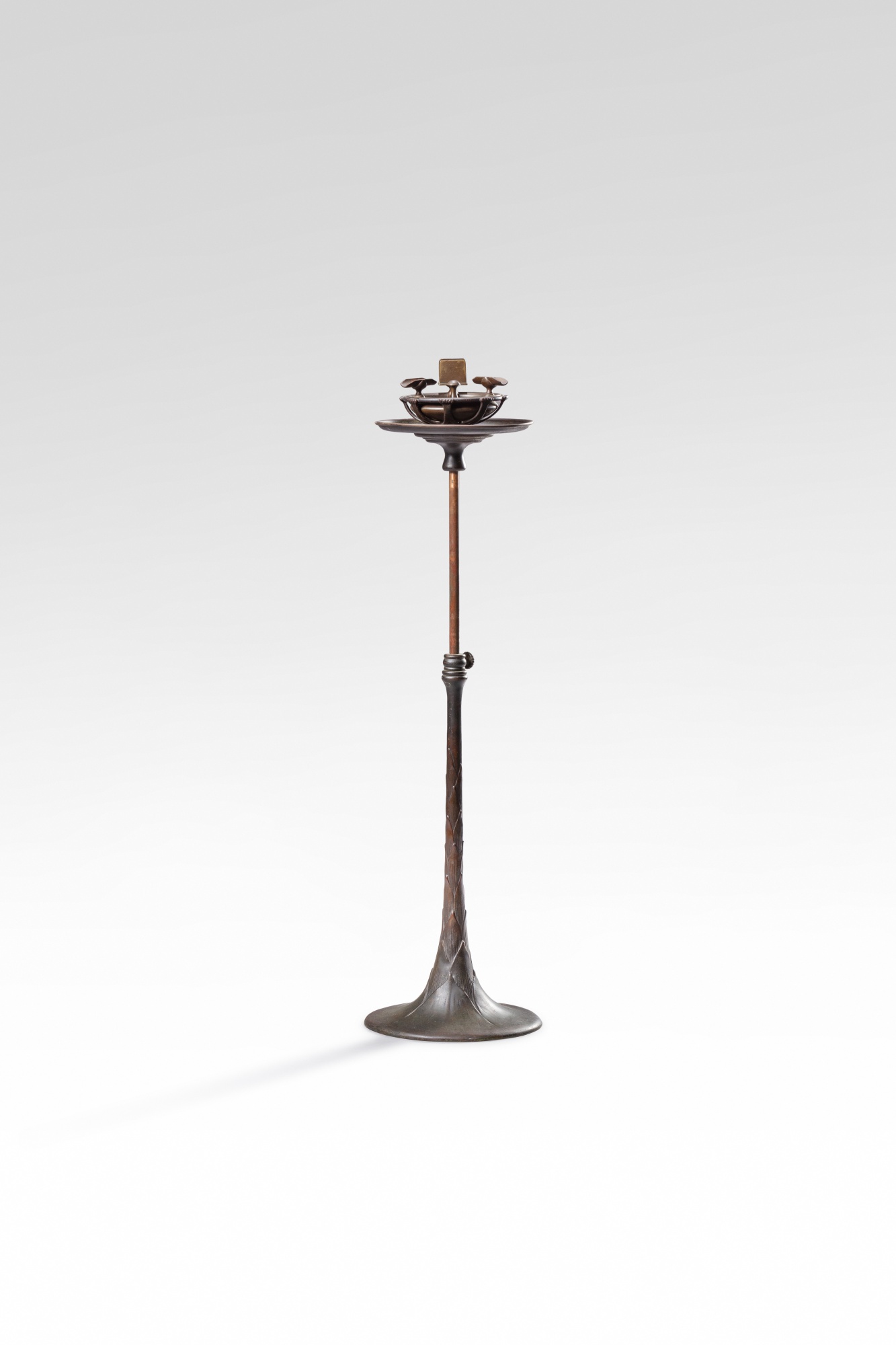
Tiffany Studios
Cendrier sur pied
The way a piece of furniture meets the floor, the way a lamp distributes light into a room, the decision to follow the natural contour of a plank rather than cut it straight, all of these are choices that carry meaning in the same way that a brushstroke or a cast form carries meaning. American design at its best refuses the hierarchy that would place a painting above a table on grounds of cultural prestige alone. For collectors today, this tradition offers something that is genuinely difficult to find in other areas of the market: objects that function as intimate, daily companions while carrying real art historical weight. The best pieces by the makers represented on The Collection have moved through major auction houses and museum retrospectives, and yet they are still objects you can sit in, eat at, read beside.
That combination of intellectual seriousness and lived utility is not common. American design earned it slowly, through generations of makers who believed that attention paid to the making of things was never wasted, and that beauty and use were not opposites but partners in the same long project.