Join The Collection to save, track, and explore works like this.

Pablo Picasso — Cavalier et cheval (Rider and Horse)
Pablo Picasso

Cavalier et cheval (Rider and Horse)

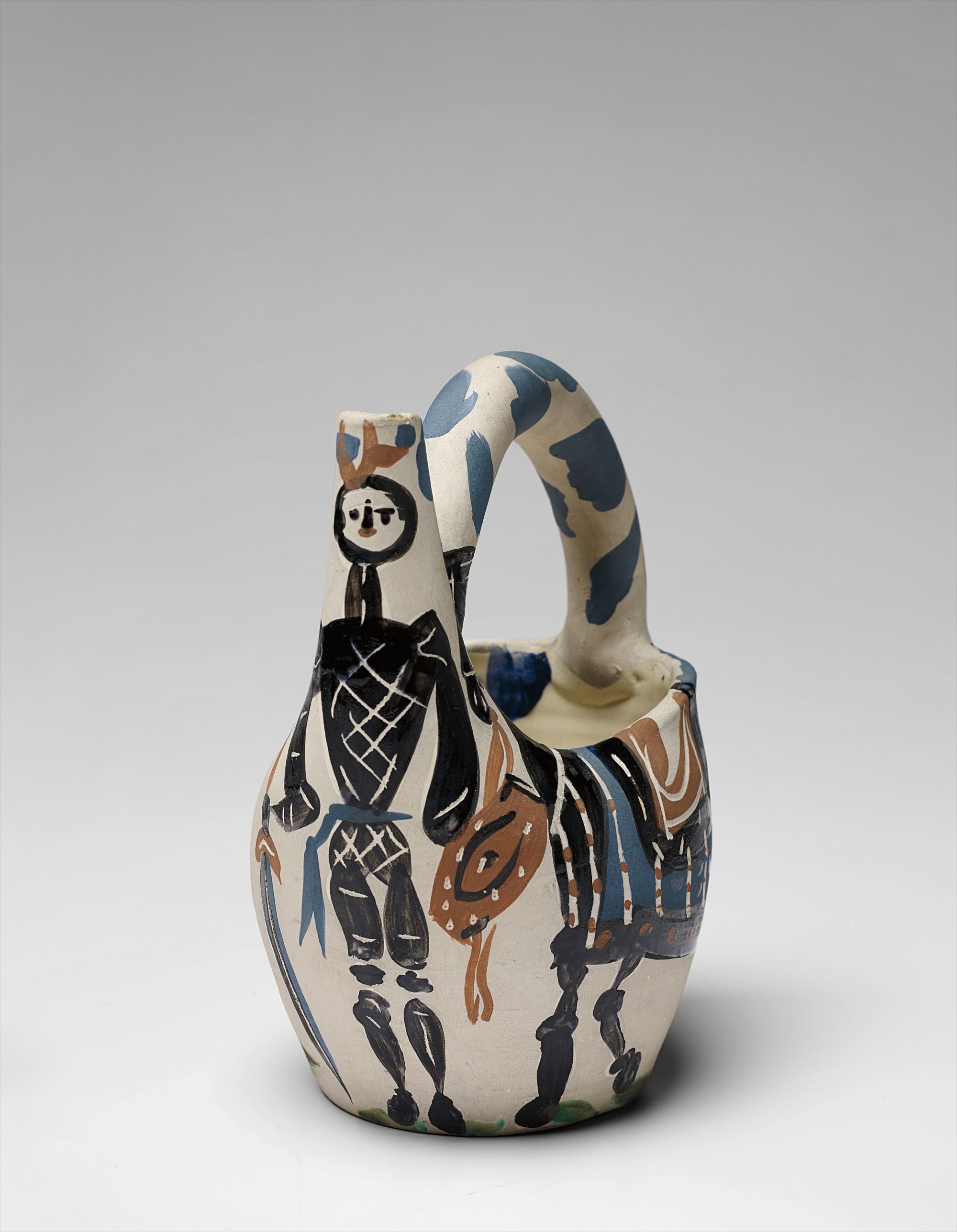
This striking white earthenware pitcher by Pablo Picasso transforms a functional vessel into a dynamic work of art, depicting a rider and horse through the artist's signature bold and expressive style. Created using a combination of painted colours, knife engraving, and partial brushed glaze, Picasso masterfully integrates form and decoration, allowing the curved surface of the pitcher to enhance the movement and energy of the composition. The piece exemplifies Picasso's celebrated exploration of ceramic art, demonstrating his ability to reimagine everyday objects as powerful artistic statements.

Medium
White earthenware turned pitcher painted in colours, with knife engraving and partial brushed glaze,

🔨 Auction Lot

Evening & Day Editions

January 21, 2016
Start the Discussion

Request access to join the discussion

About this work

Pablo Picasso, Cavalier et cheval (Rider and Horse)

This striking white earthenware pitcher by Pablo Picasso transforms a functional vessel into a dynamic work of art, depicting a rider and horse through the artist's signature bold and expressive style. Created using a combination of painted colours, knife engraving, and partial brushed glaze, Picasso masterfully integrates form and decoration, allowing the curved surface of the pitcher to enhance the movement and energy of the composition. The piece exemplifies Picasso's celebrated exploration of ceramic art, demonstrating his ability to reimagine everyday objects as powerful artistic statements.

Medium
White earthenware turned pitcher painted in colours, with knife engraving and partial brushed glaze,
Seen at
Phillips, New York, London, Hong Kong

Related themes

Horse, Animal, Figure, Decorative, Painted, Earthenware, Modern, Rider, Ceramic, Spanish

More works by Pablo Picasso

Collected by

Sebastián In Situ, Richard Caswell, Cleveland Museum of Art, Art Institute of Chicago, Sebastián Naranjo, Alex Capecelatro, Saul Beceiro Novo