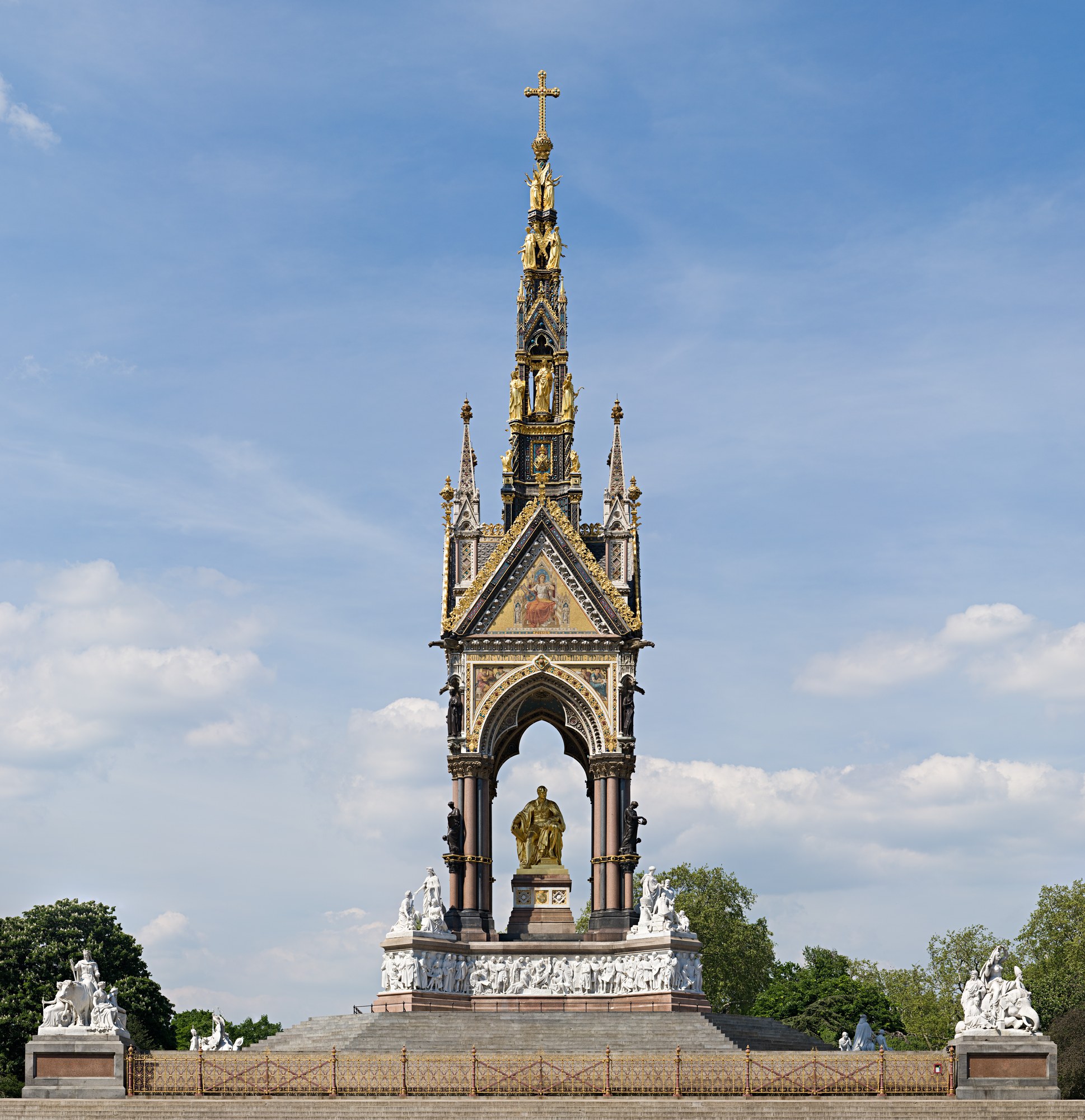
Albert Memorial
1876
This ornate Gothic Revival monument, completed in 1876, stands as one of London's most elaborate public memorials. Designed by sculptors John Henry Foley and Thomas Brock, the structure features a soaring gilded spire crowned with a golden cross and encasing a seated gilt bronze statue within an ornamental canopy. The intricate stonework combines polished granite, red granite, and decorative tiles, while the base displays white marble relief panels depicting figures and allegorical scenes. Flanking the memorial are two white marble sculptural groups representing science and industry. The monument's Victorian Gothic grandeur and meticulous detailing exemplify the era's reverence for monumental commemoration, transforming Kensington Gardens into a shrine celebrating achievement and artistic patronage. Wikimedia Commons (CC BY-SA)
- Medium
- Gilded bronze and stone monument
- Spotted At
- Venue · Kensington Gardens
More by John Henry Foley
Artists in conversation
Augustus Saint-Gaudens
American · b. 1848
Saint-Gaudens created monumental gilded and bronze public commemorative sculptures with elaborate allegorical figuration and neoclassical Gothic detailing, closely mirroring the Albert Memorial's ornate figurative bronze work and civic memorial ambition.
George Gilbert Scott
British · b. 1811
Scott was the principal architect of the Albert Memorial itself and designed numerous Victorian Gothic Revival structures combining gilded spires, polished granite, decorative stonework, and ornamental canopies in the same monumental commemorative tradition.
Thomas Brock
British · b. 1847
Brock completed the Albert Memorial alongside Foley and went on to create similarly grand gilded bronze royal commemorative monuments including the Queen Victoria Memorial, sharing the same Victorian public sculpture language of allegorical marble reliefs and gilded bronze figuration.
Start the Discussion
Request access to join the discussion