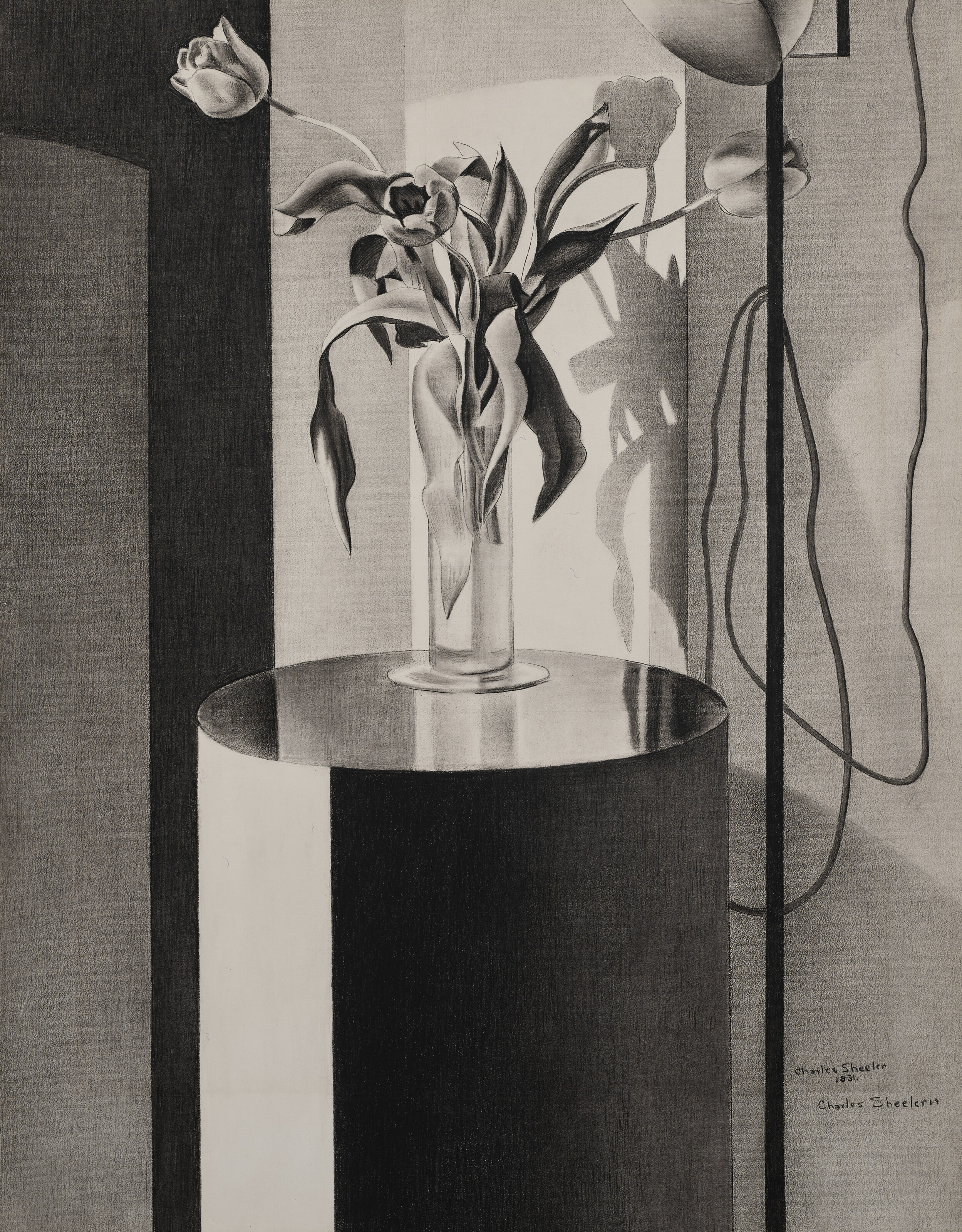
Tulips
A floral still life composition featuring tulips by American modernist Charles Sheeler. The work demonstrates Sheeler's characteristic precise, geometric approach to depicting natural subjects.
- Signed
- Yes
- Spotted At
- Auction House · Christie's
Notes
LITERATURE E. Brace, "Charles Sheeler," Creative Art, vol. XI, October 1932, pp. 97, 103-04. C. Rourke, Charles Sheeler: Artist in the American Tradition, New York, 1938, pp. 127, 157-58, illustrated. M. Friedman, Charles Sheeler, New York, 1975, pp. 91, 93, illustrated. R. Reif, "Auctions: Sheeler work sets a record," New York Times, June 3, 1983, p. C26. H. Schwalb, "A Family Affair: 'Fisher Highlights' uncovers some important Americans cropping up on dining-room walls," October 1985, p. 35. C. Troyen, "The Open Window and the Empty Chair: Charles Sheeler's View of New York," The American Art Journal, vol. XVIII, no. 2, 1986, pp. 27, 31, illustrated. K. Lucic, Charles Sheeler and the Cult of the Machine, Cambridge, Massachusetts, 1991, pp. 133-34, fig. 68, illustrated. M. Rawlinson, Charles Sheeler: Modernism, Precisionism and the Borders of Abstraction, London, 2007, pp. 113, 114. EXHIBITED (Probably) New York, Downtown Gallery, Charles Sheeler: Recent Works, November 18-December 7, 1931, no. 11. (Probably) New York, Downtown Gallery, American Drawings, 1934. Detroit, Michigan, Society of Arts and Crafts, Paintings by Charles Burchfield and Charles Sheeler, January 16-February 2, 1935, n.p., no. 37. New York, Museum of Modern Art, Charles Sheeler: Paintings, Drawings and Photographs, 1939, p. 51, no. 85, illustrated. New York, Hirschl & Adler Galleries, Inc., American Art from the Gallery's Collection, October 4-25, 1980, p. 97, no. 82, illustrated. New York, Hirschl & Adler Galleries, Inc., Realism and Abstraction: Counterpoints in American Drawings, 1900-1940, November 12-December 30, 1983, p. 89, no. 103, illustrated. Pittsburgh, Pennsylvania, Carnegie Institute, Museum of Art, American Drawings and Watercolors in the Museum of Art, Carnegie Institute, May 25-July 21, 1985, pp. 165-66, illustrated. Boston, Massachusetts, Museum of Fine Arts, Charles Sheeler: Paintings, Drawings and Photographs, October 13, 1987-January 3, 1988, pp. 128-29, no. 40, illustrated. Conditions of sale Brought to you by Quincie Dixon Associate Specialist, Head of Sale Check the condition report or get in touch for additional information about this QDIXON@CHRISTIES.COM +1 212 636 2141 VIEW CONDITION REPORT LOT ESSAY Present lot illustrated (detail). Am I a colorist?...If you want to look at it one way, I am not. Values undoubtedly come first with me—those relationships of light and shadow by which form is achieved. Charles Sheeler Atriumph of 20th Century American art, Tulips is representative of Charles Sheeler’s distinctly Modern, Precisionist sensibility, further informed by his passion for photography. The work depicts a view of the artist’s photography studio located at the Beaux-Arts Apartment Hotel in New York City, complete with a photographer’s lamp looming above the three tulip blossoms placed on a cylindrical pedestal. Tulips is an utterly complex composition—its precision magnified by the monochromatic palette—that demonstrates Sheeler’s ability to seamlessly work in a variety of artistic media. The present work was executed in 1931, widely acknowledged as a crucial year in Sheeler’s career when he produced some of his most accomplished works, such as the present example. Among the first in a series of drawings executed in conté crayon that year, Tulips additionally belongs to a group of large-scale works depicting Sheeler’s photography studio. These compositions, including Cactus (1931; Philadelphia Museum of Art, Pennsylvania) and View of New York (1931; Museum of Fine Arts, Boston, Massachusetts), are often interpreted as artistic self-portraits. In contrast to these related oils, however, Sheeler’s use of conté crayon in the present work “enabled [him] to work with warm, sensuous textures and subtle gradations of black and white—qualities which, he said, came closest to the feeling of his photographs. Here, the carefully orchestrated tones create shadows whose presence is as vivid as the actual forms… the realistically rendered tulips and their ghostly shadows on the wall create an energy that belies the ordinariness of Sheeler’s subject.” (C. Troyen, “The Open Window and the Empty Chair: Charles Sheeler's View of New York,” The American Art Journal, vol. XVIII, no. 2, 1986, p. 27) Left: Charles Sheeler, View of New York, 1931. Museum of Fine Arts, Boston, Massachusetts. © 2026 The Lane Collection Right: Charles Sheeler, Cactus, 1931. Philadelphia Museum of Art, Pennsylvania. © Estate of Charles Sheeler Indeed, the restrained palette of the present work demonstrates Sheeler’s mastery of the subtle effects of light. Tulips embodies the artist’s statement: “Am I a colorist?...If you want to look at it one way, I am not. Values undoubtedly come first with me—those relationships of light and shadow by which form is achieved. Color wouldn’t mean very much to me if it didn’t have the structure of values to support it.” (as quoted in M. Friedman, Charles Sheeler, New York, 1975, p. 91) Martin Friedman elaborates, “These cold, mechanical appurtenances of the photography studio exemplify the modernistic, chromed clarity of the 1930s and were ideal subjects for Sheeler’s fastidious rendering process.” (Charles Sheeler, p. 91) An avid photographer himself, Sheeler not only includes tools of the medium in the present work but applies a photographic lens to his treatment of the work as well. According to Carol Troyen and Erica Hirshler, the present work was initially cropped about 1 ½ inches on the bottom following its inclusion in the artist’s 1939 retrospective at the Museum of Modern Art in New York, eliminating the original signature. “The drawing was then signed again, suggesting that the cropping may have been done by the artist himself, who during this period was actively engaged in matting and rematting his own photographs to adjust the proportions of the image...In fact, Sheeler signed the [present] work twice, indicating—as does the fact that the lower signature is incomplete—that he may have contemplated further cropping of the drawing.” (Charles Sheeler: Paintings, Drawings and Photographs, exhibition catalogue, Boston, Massachusetts, 1987, p. 128) These cold, mechanical appurtenances of the photography studio exemplify the modernistic, chromed clarity of the 1930s and were ideal subjects for Sheeler’s fastidious rendering process. Martin Friedman While a depiction of inanimate objects, Tulips is teeming with an eerie sense of life, a presence that is not immediately visible to the viewer. As Carol Troyen and Erica Hirshler observe, the photographer’s lamp itself is disconnected and the stark sources of light illuminating the glossy pedestal come from outside the composition, a source invisible to the viewer (Charles Sheeler: Paintings, Drawings and Photographs, exhibition catalogue, Boston, Massachusetts, 1987, p. 128). Further, by making the dark shadows of the tulips almost as prominent as the blossoms themselves, Sheeler creates a two-fold presence that highlights the juxtaposition of light and dark, the tangible and intangible. Undoubtedly a masterwork of Sheeler’s career, Tulips represents the artist’s passion for photography, as well as his unparalleled attention to detail, line and light. READ MORE OF THE LOT ESSAY The collection In 1981 my husband, Jim, and I began to focus on collecting American Modernist works, having an affinity for this early 20th century movement, much of which paralleled our youth. The range of subjects and styles, and the spirit of American art, 1900-1950, resonated with us and living with these works has been deeply rewarding. Toto Fisher Jim and Toto Fisher, 1980s. Photograph courtesy the Fisher family. Edith ‘Toto’ Fisher and her husband Jim were pillars of the Pittsburgh, Pennsylvania arts community. In addition to thoughtfully assembling an impressive Modern American Art collection of their own, the Fishers dedicated themselves to their local arts institutions, not only as donors, but most importantly as civic leaders inspiring generations to come. Born in Grand Rapids, Michigan, in 1929, Toto graduated from Garland Junior College before beginning her career as a primary school teacher in Massachusetts and later New York City. In 1955, she married Jim Fisher, a native of Pittsburgh and executive at Fisher Scientific Co. (now Thermo Fisher Scientific), which was founded by his father. Described by Jim as “an active outgoing young woman who was caring, gregarious, loving, enormously devoted to others,” Toto quickly embraced her new hometown and became active in local organizations, such as the Phipps Conservatory and Botanical Gardens and Pittsburgh Cultural Trust. An avid fan of the symphony, in 1973 Toto helped to launch a local classical music radio station, WQED-FM. The Andy Warhol Museum simply would not exist were it not for the passion and foresight of Toto and Jim. Patrick Moore, former director of The Andy Warhol Museum Shortly after Andy Warhol died in 1987, the Fishers advocated for Pittsburgh as the best home for the Warhol Museum. As Patrick Moore, the former director of The Andy Warhol Museum and vice president of Carnegie Museums of Pittsburgh, recounted, “The Andy Warhol Museum simply would not exist were it not for the passion and foresight of Toto and Jim. Their relationship with Fred Hughes, Warhol’s former business manager, was central to bringing the project to fruition. And their continued support and advocacy after the museum opened were critical to it being the success it is today.” Left: Georgia O’Keeffe, Red Cannas, circa 1918-20, Carnegie Museum of Art, Bequest of Edith H. and James A. Fisher. © 2025 Georgia O'Keeffe Museum / Artists Rights Society (ARS), New York. Right: Joseph Stella, Song of Barbados, 1938, Carnegie Museum of Art, Bequest of Edith H. and James A. Fisher. The Fishers were particularly dedicated to the Carnegie Museum of Art. Jim was a trustee emeritus and longtime Institute vice president, playing a key role in two capital campaigns. He also helped lead the effort to establish the Carnegie Science Center, now the most visited museum in Western Pennsylvania. Also a Carnegie Institute and Museum trustee, Toto co-founded the museum’s docent program, was president of the Women’s Committee and spearheaded the fundraising publication of the Carnegie Treasures Cookbook of recipes associated with the museum community. In 1975, they funded the commission of a major Louise Nevelson sculpture on the occasion of the opening of the Sarah Scaife wing. In addition, the Edith H. Fisher Fund helped acquire a number of important paintings for the institution, including works by Milton Avery, Burgoyne Diller, Agnes Martin and Robert Ryman. Reginald Marsh, Pennsylvania Mining Town, 1932, Carnegie Museum of Art, Bequest of Edith H. and James A. Fisher As neither Jim nor Toto were raised in homes with fine art, they developed their collecting interests together. Beginning with local artists at Pittsburgh fairs, they explored the Cobra artists from Copenhagen, Brussels and Amsterdam before transitioning to early 20th Century American art. Toto explained, “We realized the [Carnegie] Museum of Art was moving more toward American and contemporary art. We talked to [director] Jack Lane about collecting with the intention to fill voids in the museum’s collection.” Indeed, personal bequests to the Carnegie from the Fishers’ own collection included Georgia O’Keeffe’s important early flower watercolor Red Cannas, Reginald Marsh’s magnificent tempera Pennsylvania Mining Town and Joseph Stella’s wonderful Song of Barbados. The Fisher Look is often lyrical, frequently somewhat surreal, always serious. There is a palpable sense of art history. Harry Schwalb, Pittsburgh, October 1985 The most important uniting factor is the high quality of each work. As Toto explained, “I don’t say I want an O’Keeffe. I want a significant painting by O’Keeffe. The painting, not the name…Exposure to the best lets you recognize the best.” The Fisher collection includes the best of Precisionism, including a stellar industrial painting by Ralston Crawford and a wonderfully intricate drawing by Charles Sheeler of the artist’s photography studio. Important early works by Arthur Dove and Patrick Henry Bruce converse alongside a meditative late-career Marsden Hartley. Throughout, there is an interplay of media: a sculpture by Gaston Lachaise beside paintings in oil and works on paper in charcoal and conté crayon. Toto summarized, “The collection is very eclectic but there is a relationship. There are milestones in it…The art has a sense of timelessness and beauty.” Toto Fisher with Hans Hofmann’s Atelier (Still Life: Table with White Vase). Photograph courtesy the Fisher family. Toto Fisher’s advice to new collectors: You buy the painting, then decide where it’s going in your home. It will find a place. Paintings of comparable quality will get along together even though each is very different. The idea is not to buy a painting by a particular artist but a significant work of art. Christie’s is honored to present The Collection of Toto & Jim Fisher to the next generation of passionate art collectors. READ MORE OF THE COLLECTION
🔨 Auction Lot
Modern American Art
April 16, 2026
Estimate: $600,000 – $800,000
Lot 13
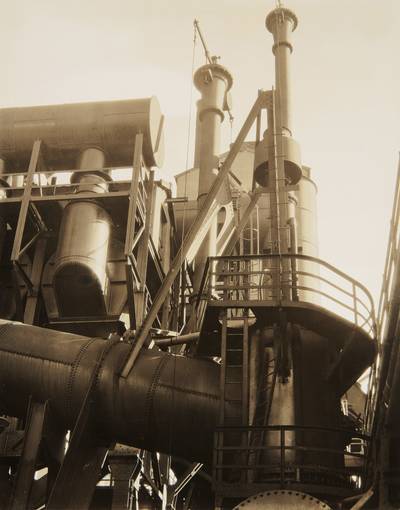
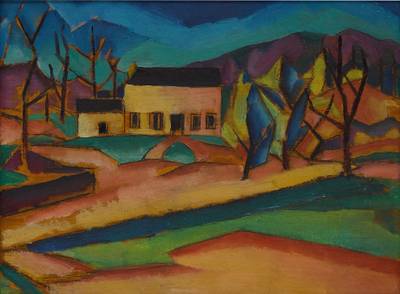
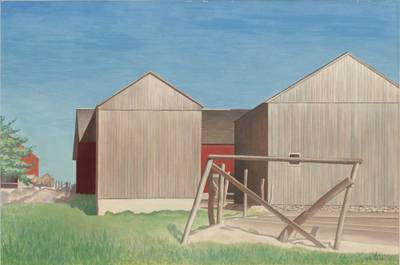
Spotted works by Charles Sheeler
Start the Discussion
Request access to join the discussion