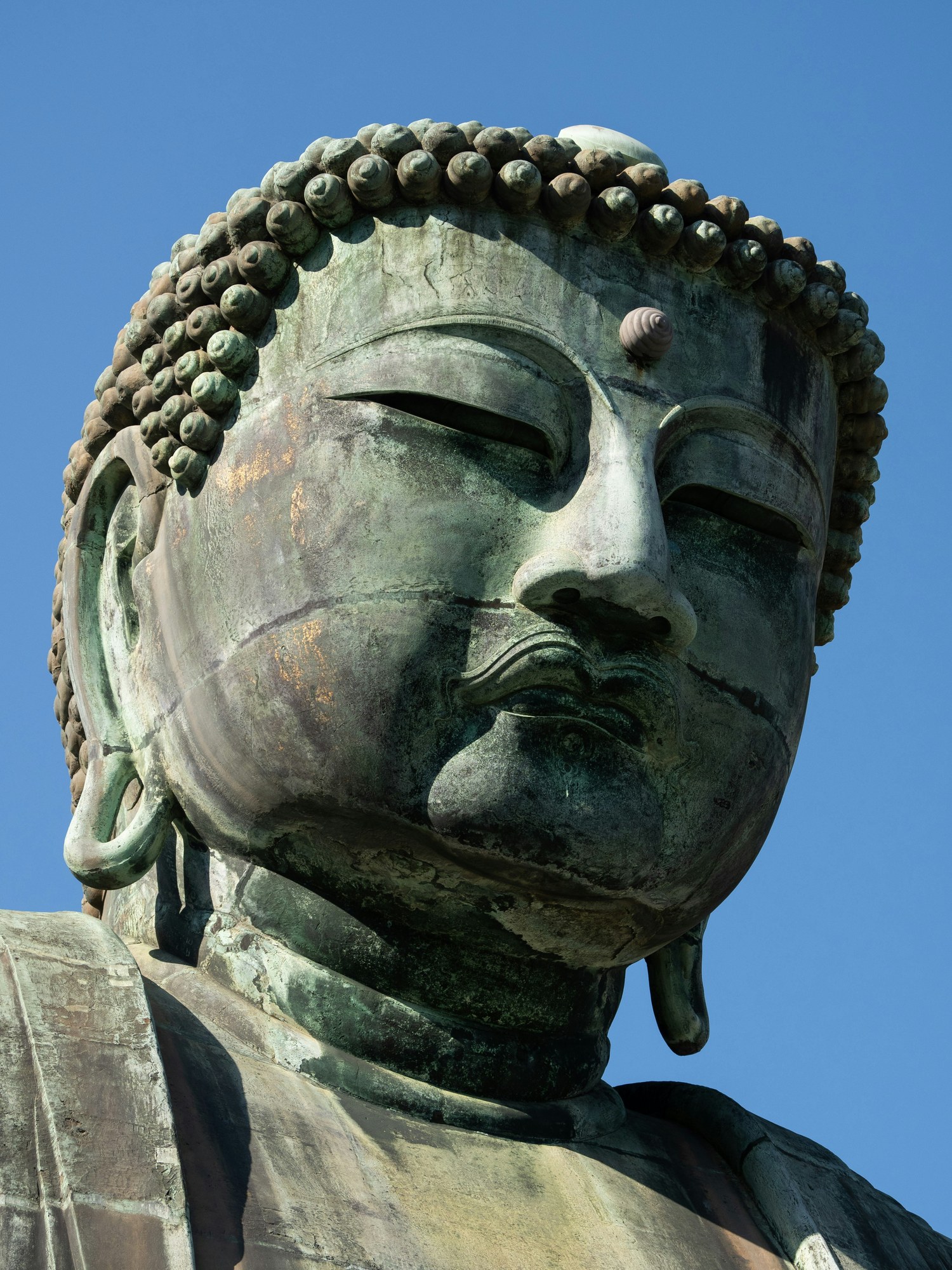
Great Buddha of Kamakura (Kamakura Daibutsu)
1252
Cast in bronze in 1252, this monumental Buddha head represents one of Japan's most iconic religious sculptures, seated at Kōtoku-in temple in Kamakura. Originally part of a complete seated figure within a protective wooden hall, the colossal face now stands open to the sky, its serene downward gaze and finely modeled features worn smooth by centuries of exposure. The sculpture's scale is breathtaking; the head alone measures nearly eight meters in height, while the bronze surface displays characteristic green patina accumulated over seven centuries. Commissioned under the direction of Ono Goroemon, the work exemplifies the technical mastery and spiritual ambition of medieval Japanese Buddhist sculpture, blending classical proportions with an almost portrait-like specificity in its carving. As Japan's second largest bronze Buddha, it endures as a pilgrimage site and testament to the enduring power of monumental religious art. Photo by YANGHONG YU on Unsplash
- Medium
- Bronze sculpture
- Spotted At
- Venue · Kōtoku-in temple
Artists in conversation
Unkei
Japanese · b. 1150
Unkei was the preeminent master of Japanese Buddhist bronze and wood sculpture during the Kamakura period, creating colossal religious figures of comparable spiritual gravitas and meticulous surface modeling to the Great Buddha, including monumental guardian and deity figures for major temples.

Leshan Giant Buddha sculptors (Tang dynasty workshop)
Chinese
The Leshan Giant Buddha represents the same tradition of colossal outdoor seated Buddhist sculpture in East Asia, sharing the monumental scale, serene downward gaze, open air exposure and centuries of weathered stone surface that define the Kamakura Daibutsu.
Kaikei
Japanese · b. 1183
Working alongside Unkei during the Kamakura period, Kaikei produced large scale Buddhist bronze and gilded wood sculptures characterized by the same refined facial serenity, precise casting technique and devotional monumentality seen in the Great Buddha of Kamakura.
Start the Discussion
Request access to join the discussion