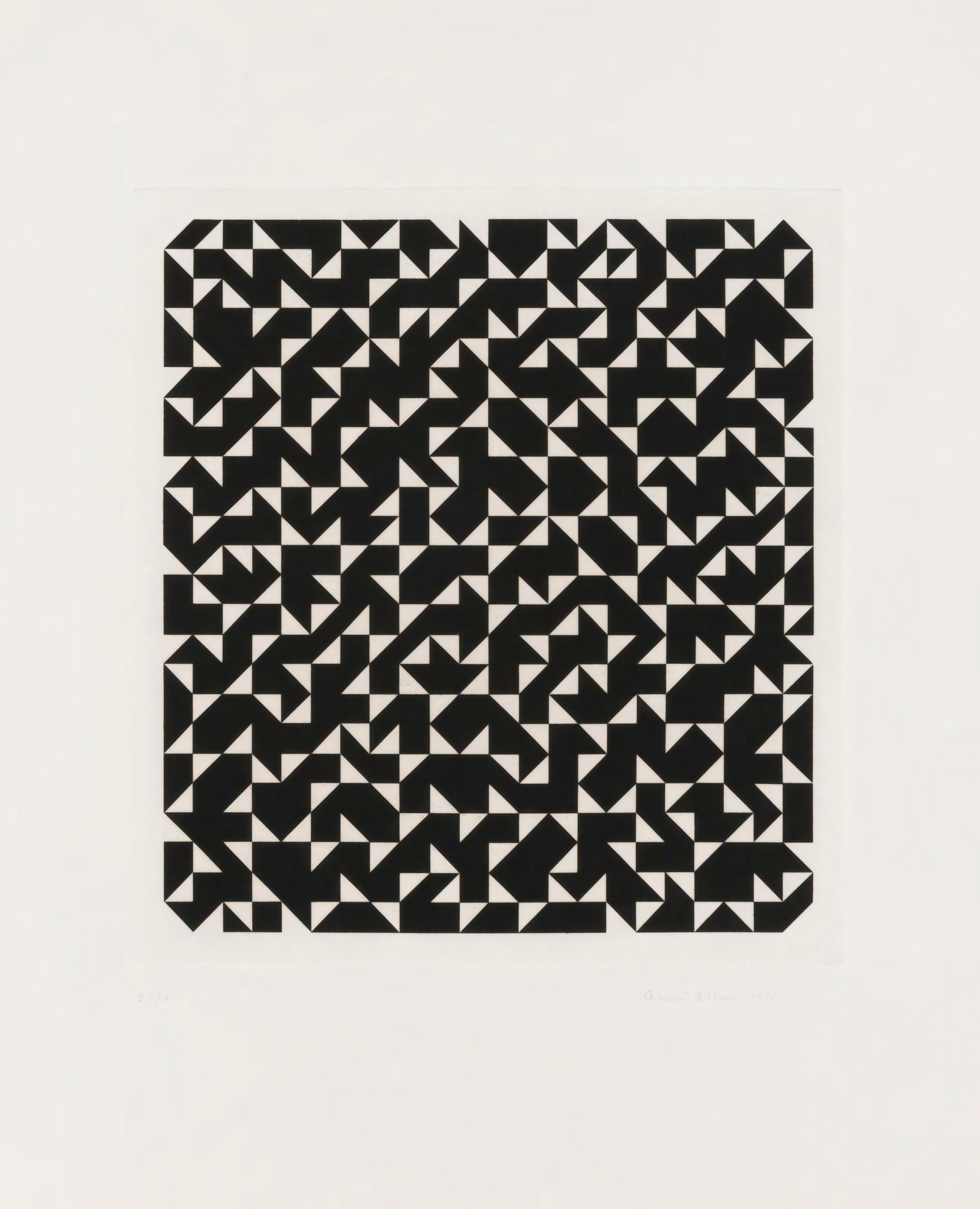
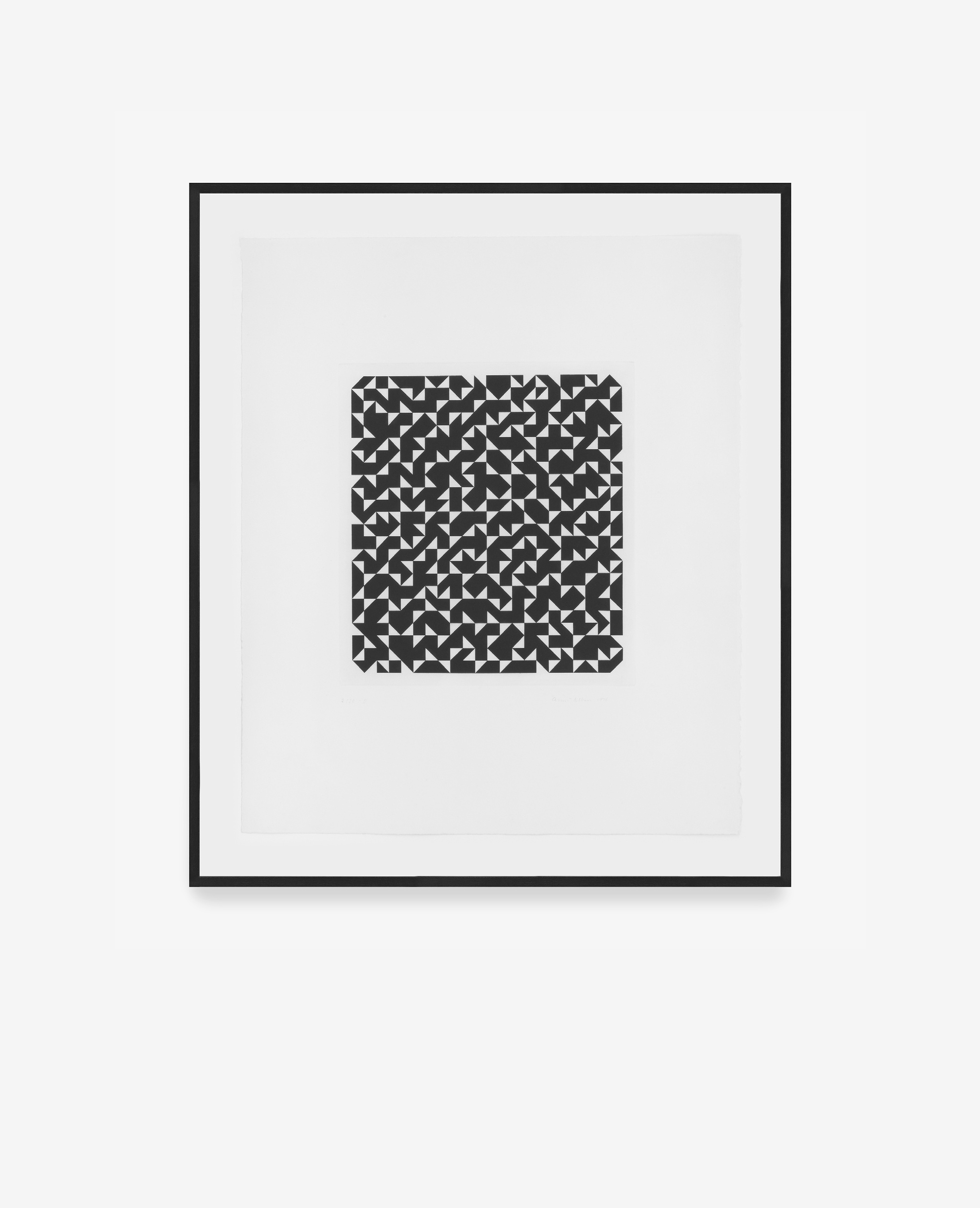
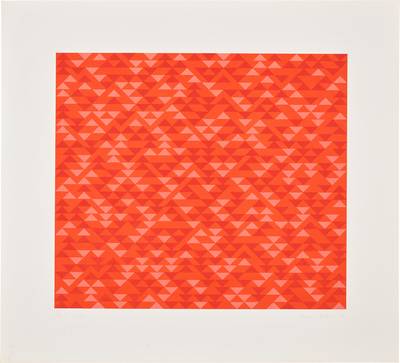
Triangulated Intaglio II
1976
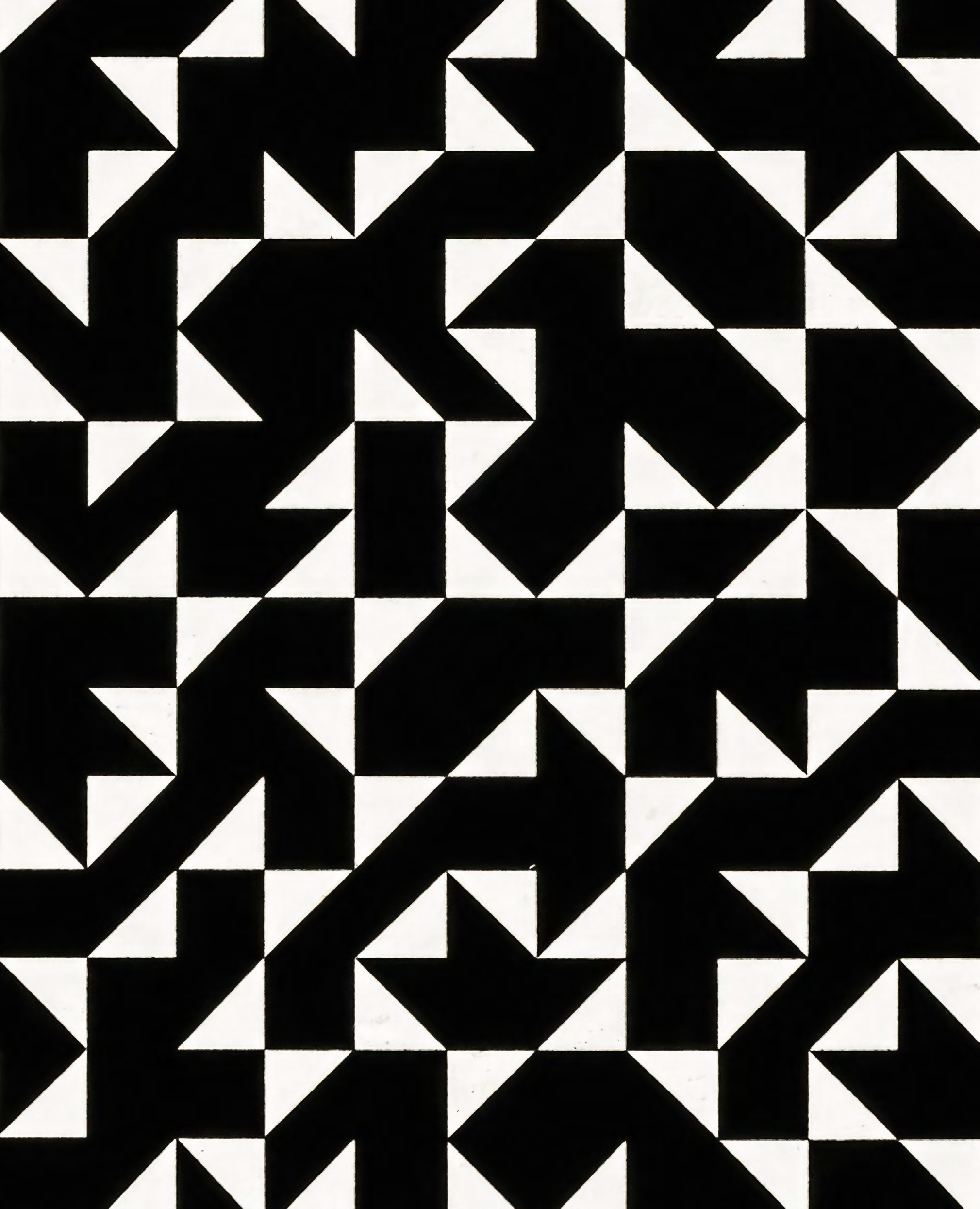
This striking composition demonstrates Anni Albers's mastery of geometric abstraction through a dense field of interlocking black and white triangular forms. The rhythmic tessellation creates a dynamic visual surface that oscillates between figure and ground, challenging the viewer's perception of depth and spatial relationships. Executed as a copper plate etching and aquatint, the work exemplifies the artist's lifelong investigation into the structural principles underlying both textiles and printmaking. The composition's systematic yet complex arrangement reflects Albers's engagement with modernist abstraction and her pioneering exploration of how basic geometric units generate visual complexity and movement. Created during the artist's late career, this work represents a culmination of decades devoted to understanding the interplay between material, pattern, and perception.
- Medium
- Single-color copper plate etching and aquatint on mould-made white Arches Cover
- Sheet
- Signed
- Yes
- Spotted At
- Gallery · Zeit Contemporary Art
Notes
Signed, dated and numbered in pencil; from the edition of 20, plus 9 artist's proofs. Exhibited examples: Hamilton College (1992; 2012-13; 2017-18); New Britain Museum of American Art, 'In Thread and On Paper: Anni Albers in Connecticut' (2020); Syracuse University Art Museum, 'Anni Albers: Work with Materials' (2022). Catalogue raisonné: Brenda Danilowitz and Nicholas Fox Weber, 'The Prints of Anni Albers: A Catalogue Raisonné, 1963-1984' (Bethany, CT: The Josef and Anni Albers Foundation).
For Sale
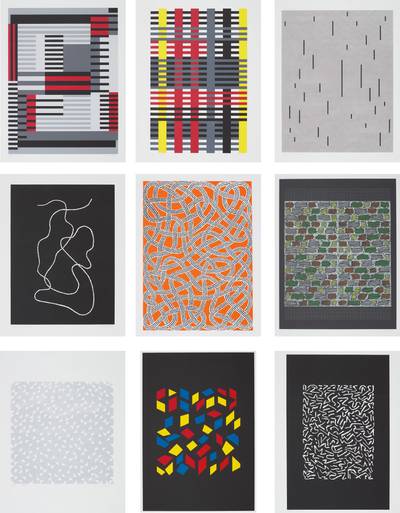
Spotted works by Anni Albers
Artists in conversation
Vera Molnár
Hungarian-French · b. 1924
Molnár created systematic black and white geometric compositions built from triangular and rectangular tessellations that produce the same oscillating figure ground perceptual effects seen in this etching, often exploring how repetition and slight variation generate kinetic visual tension.
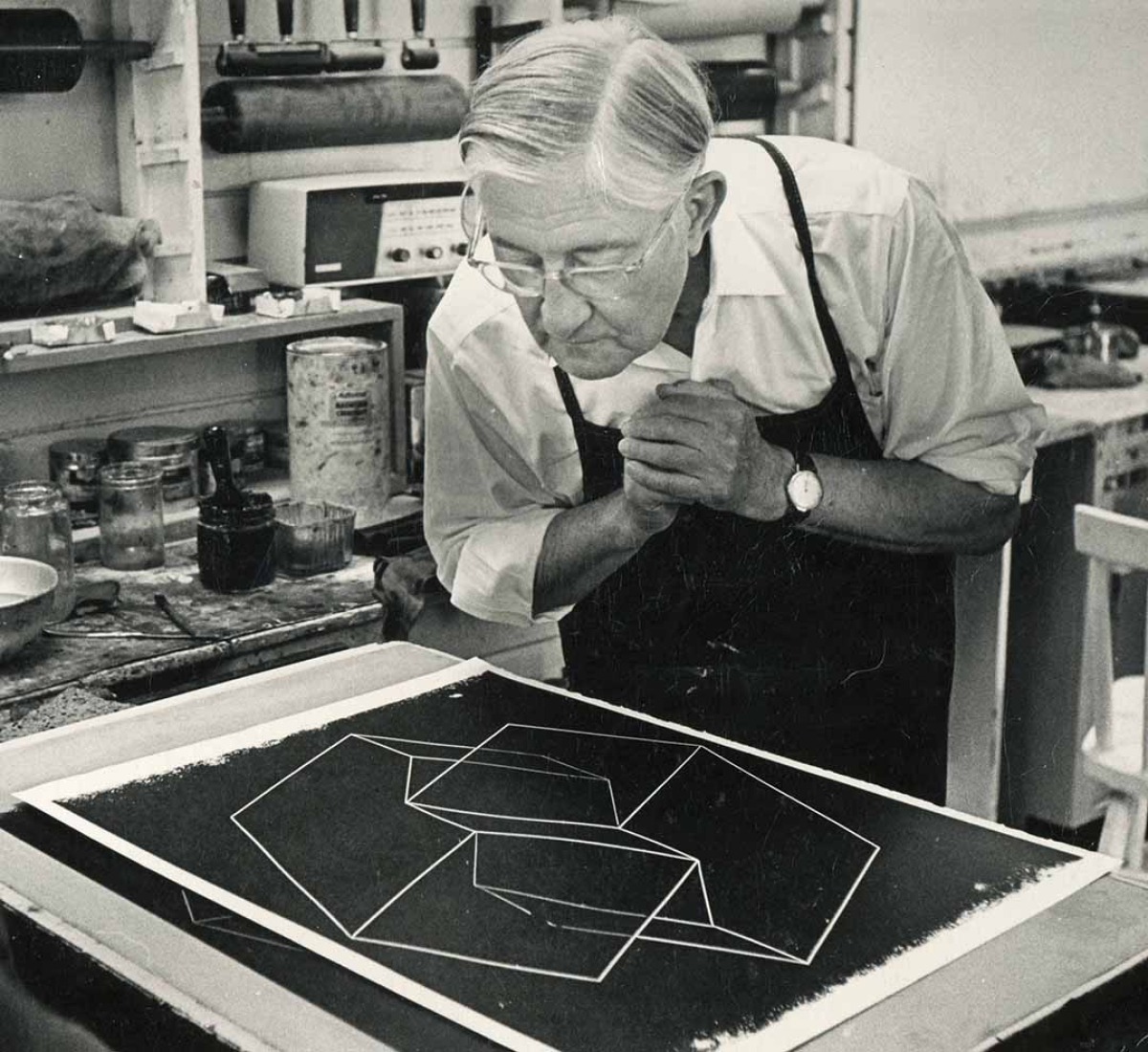
Josef Albers
German-American · b. 1888
Sharing both the Bauhaus constructivist foundation and lifelong investigation into visual perception through geometric abstraction, Josef Albers produced prints and drawings using interlocking geometric forms that similarly challenge spatial relationships and exploit the interplay between systematic structure and optical illusion.
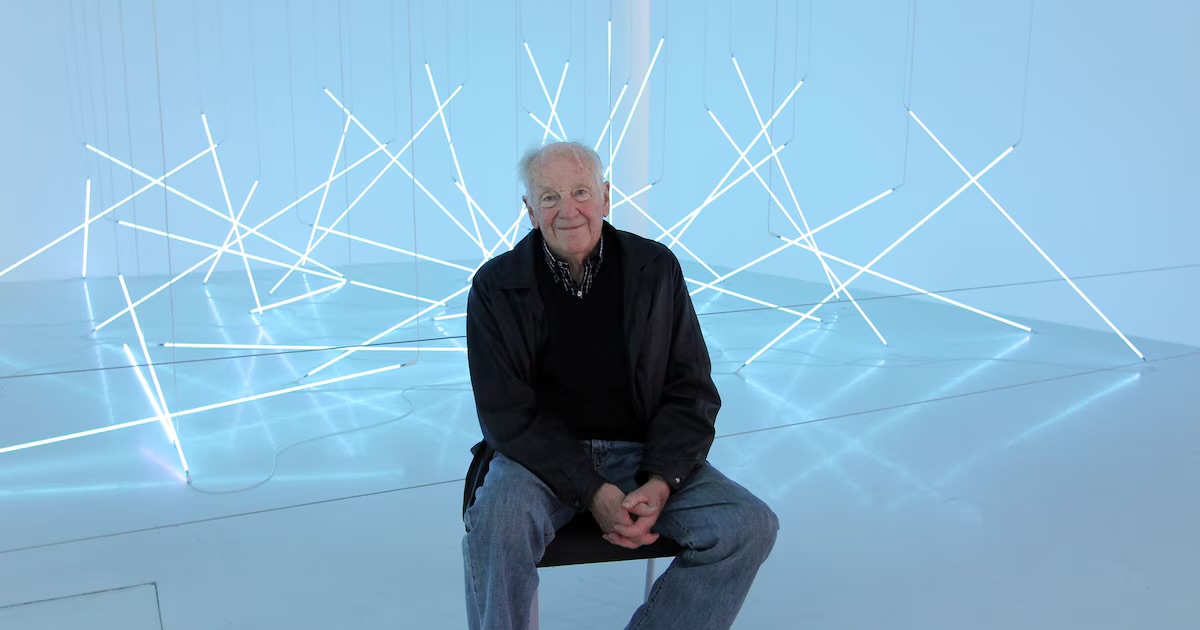
François Morellet
French · b. 1926
Morellet built densely patterned black and white geometric prints and paintings using systematic triangular and linear tessellations that create the same rhythmic high contrast optical vibration and perceptual ambiguity present in this copper plate etching, grounding his work in strict constructivist rules applied to repeated geometric units.
Start the Discussion
Request access to join the discussion