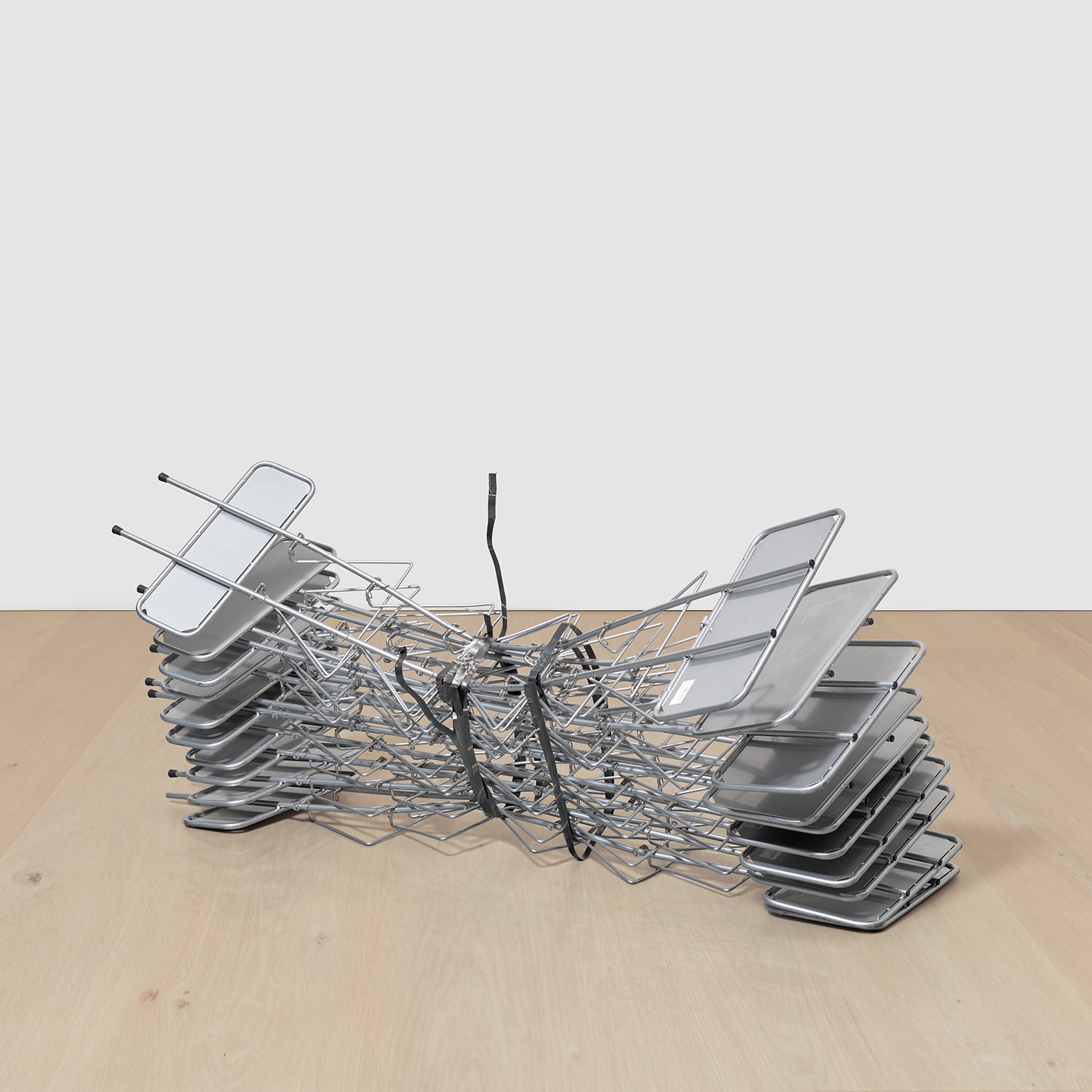
sculpture comprising newspaper racks, metal band and lever strap
2010
Matias Faldbakken's sculpture repurposes everyday functional objects, combining newspaper racks with industrial materials like metal bands and lever straps to create a work that blurs the boundary between found objects and intentional artistic composition. The assemblage reflects the Norwegian artist's interest in how ordinary, utilitarian forms can be reconsidered as aesthetic objects when isolated and reconfigured. By treating vernacular street furniture as sculptural components, Faldbakken engages with the legacy of assemblage art while questioning the distinction between ready made materials and finished artworks.
- Location
- Phillips, Salt Lake City, UT
- Spotted At
- Auction House · PhillipsView on map
🔨 Auction Lot
New Now: Modern & Contemporary Art
April 10, 2025
Lot 123
Artists in conversation
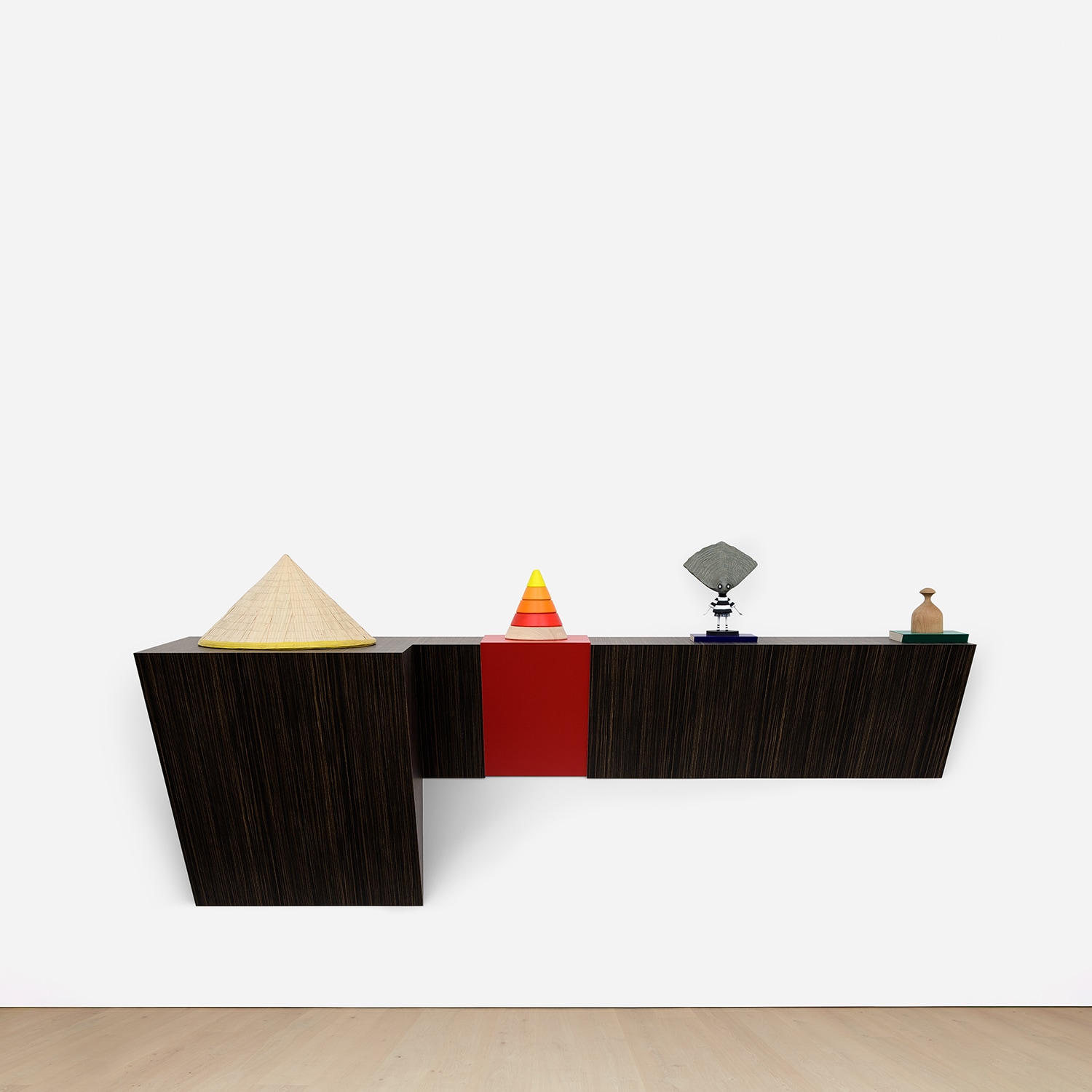
Haim Steinbach
Israeli-American · b. 1944
Steinbach similarly elevates everyday consumer and utilitarian objects by repositioning them as sculptural compositions, using minimal intervention to question the boundary between functional item and art object. His shelf arrangements of found commercial goods share Faldbakken's interest in how context and framing transform vernacular objects into aesthetic statements.
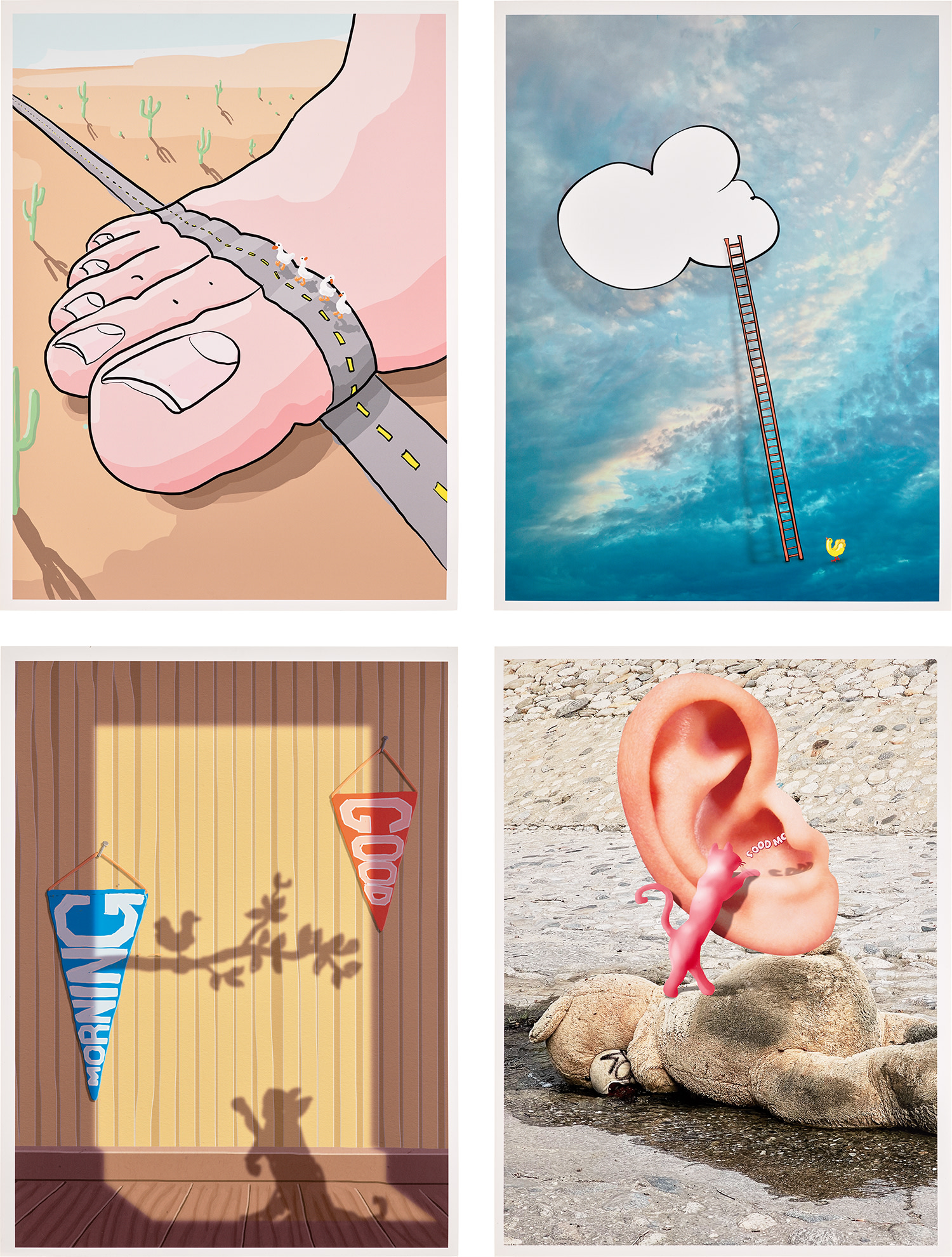
Urs Fischer
Swiss · b. 1973
Fischer frequently incorporates industrial and found materials into assemblage sculptures that deliberately blur distinctions between mundane functionality and intentional artistic form, mirroring Faldbakken's approach. His work shares the same conceptually driven use of everyday objects reconfigured to challenge assumptions about what constitutes sculpture.
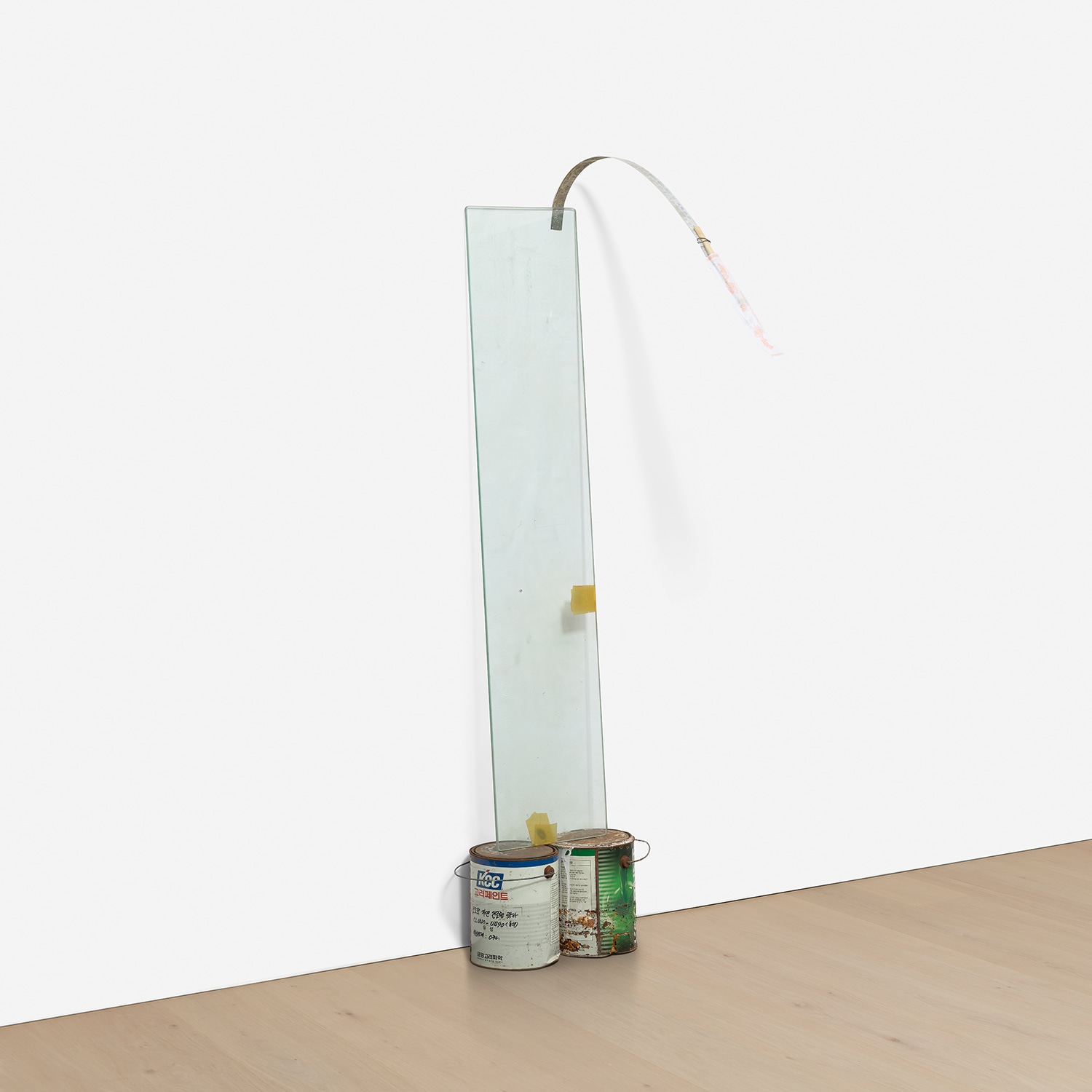
Abraham Cruzvillegas
Mexican · b. 1968
Cruzvillegas builds assemblage sculptures from found utilitarian and industrial materials, binding and strapping components together in ways that closely echo Faldbakken's combination of street furniture with metal bands and fastening hardware. Both artists share a practice of transforming overlooked functional objects into minimalist sculptural propositions through deliberate reconfiguration.
Start the Discussion
Request access to join the discussion