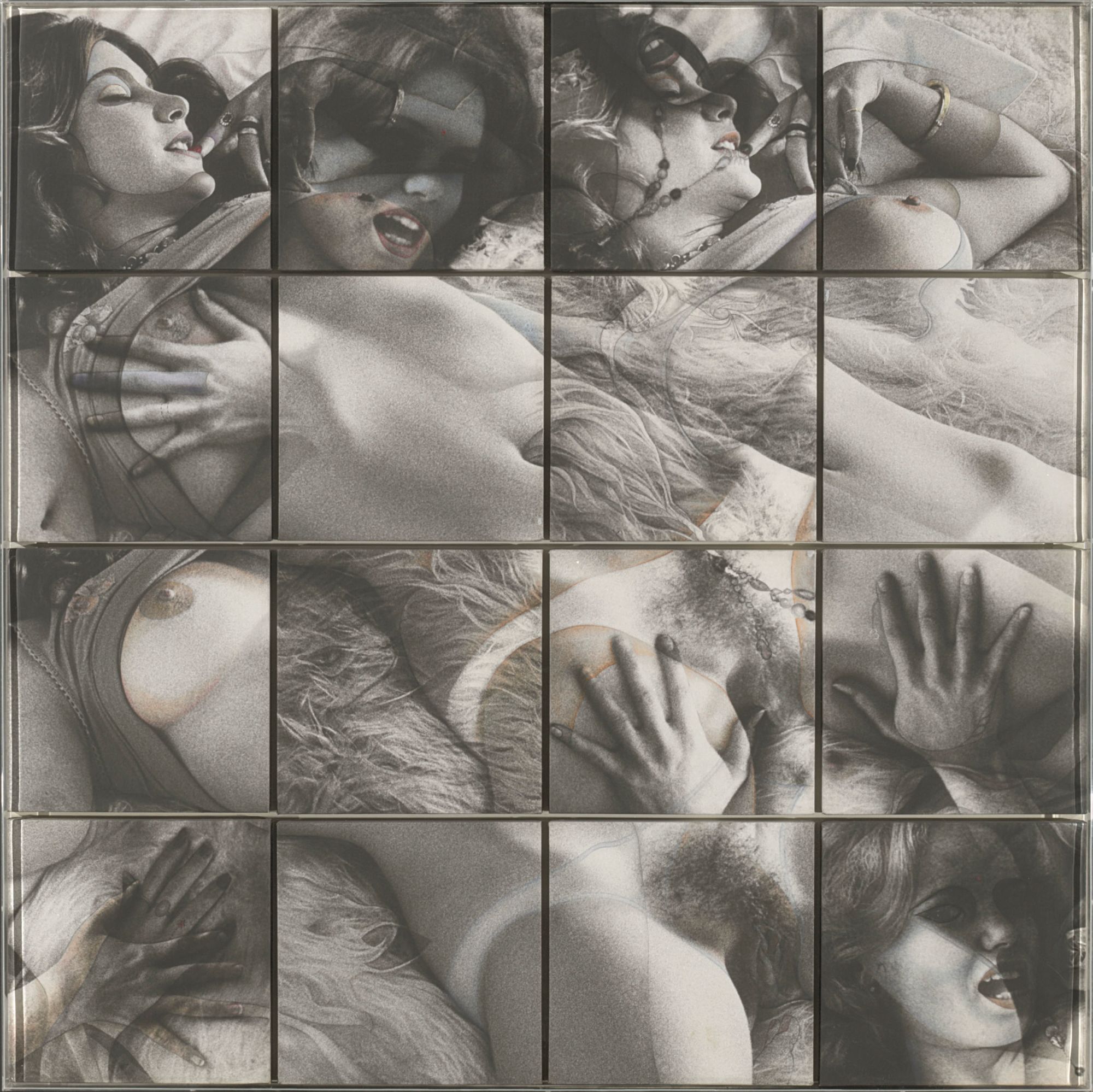
Cliché Vary/Lesbianism
Robert Heinecken's *Cliché Vary/Lesbianism* is a bold and provocative construction of sixteen canvas panels coated with photographic emulsion and embellished with pastel chalk. The work challenges conventional representations of female sexuality by appropriating and manipulating mass-media imagery, layering photographic and drawn elements to create a visually complex, fragmented narrative. Heinecken's signature blending of photography with other media disrupts the boundaries between fine art and popular culture, inviting the viewer to confront deeply ingrained social attitudes and stereotypes.
- Medium
- Unique construction of sixteen canvas panels with photographic emulsion and pastel chalk.
- Location
- Phillips, Salt Lake City, UT
- Spotted At
- Auction House · PhillipsView on map
🔨 Auction Lot
Photographs from the Collection of the Art Institute of Chicago
October 1, 2014
More by Robert Heinecken
Artists in conversation

Barbara Kruger
American · b. 1945
Kruger similarly appropriates mass media imagery and combines photographic elements with bold graphic interventions to challenge representations of gender and sexuality in a conceptually provocative manner. Her fragmented, layered approach to visual communication mirrors Heinecken's strategy of disrupting conventional female imagery through mixed media construction.
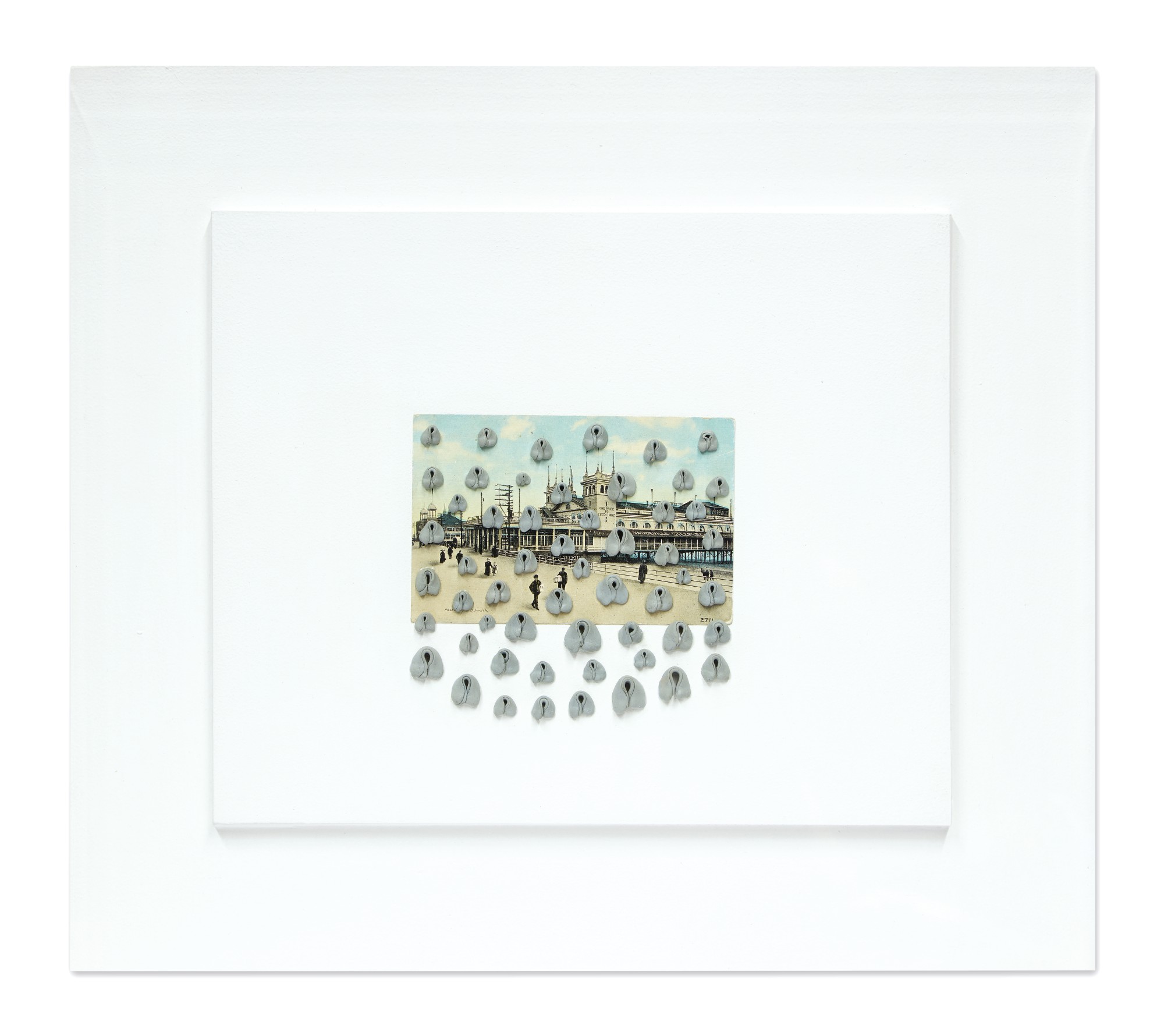
Hannah Wilke
American · b. 1940
Wilke's work directly confronts female sexuality and bodily representation through mixed media constructions that blend photography with sculptural and drawn elements, much like Heinecken's photographic emulsion and pastel chalk technique. Both artists provocatively challenge societal and media driven norms around femininity and desire.

Cindy Sherman
American · b. 1954
Sherman's conceptual photographic practice interrogates mass media stereotypes of female sexuality and identity through constructed and manipulated imagery, closely aligning with Heinecken's appropriation of commercial visual culture. Both artists use the photographic medium as a critical tool to fragment and destabilize conventional representations of femininity.
Start the Discussion
Request access to join the discussion