Wood Engraving
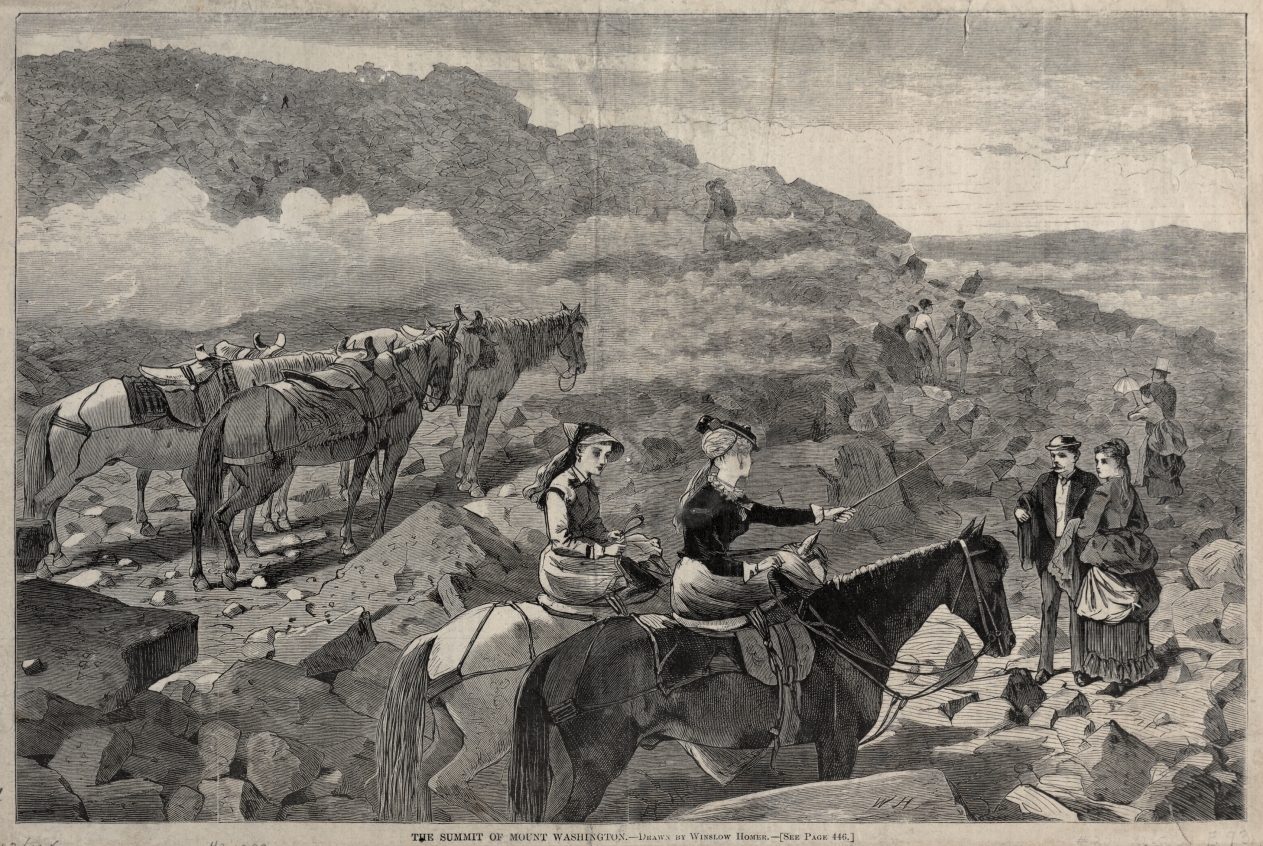
Winslow Homer
The Summit of Mount Washington, 1869
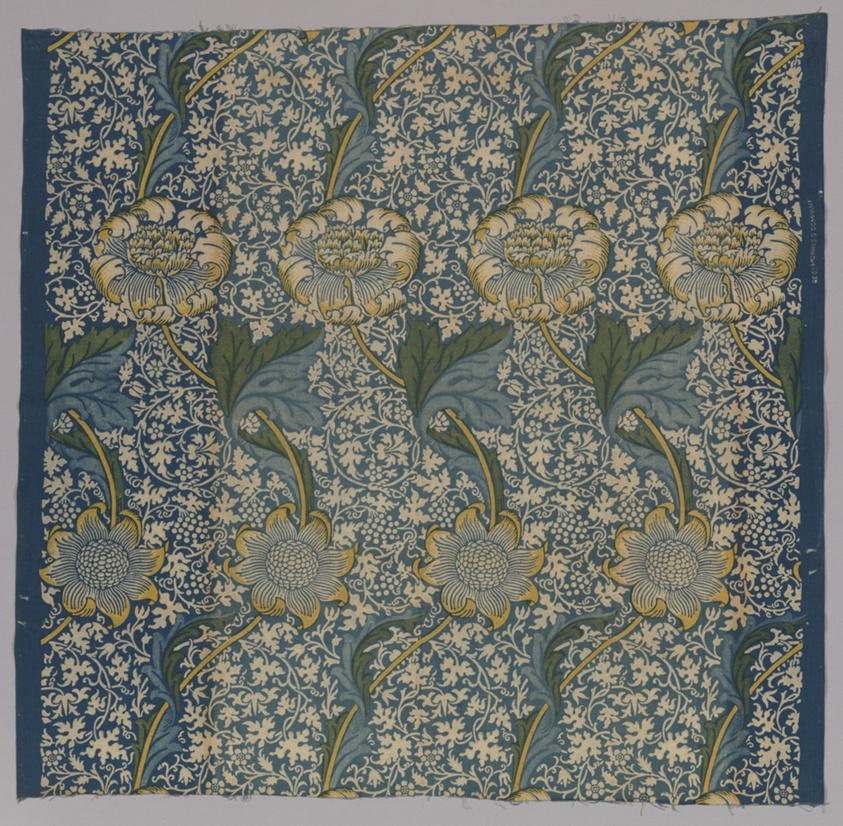
The Sharpest Tool in the Collection
There is something quietly addictive about living with a wood engraving. Unlike painting, which announces itself, or photography, which can feel frictionless, a fine wood engraving rewards sustained looking. The closer you get, the more you see: the barely perceptible grain of the block working against or with the engraver's line, the way white space is not absence but an active, carved decision. Collectors who come to this medium rarely leave it.
They tend instead to go deeper, pulled by the combination of intimate scale, extraordinary technical precision, and a directness of mark that feels almost handwritten even when the image is a crowd scene or a crashing wave. Part of the appeal is also the history these objects carry without making a fuss about it. Wood engravings were the primary means by which images reached mass audiences throughout the nineteenth century, printed in the illustrated papers and journals that shaped public visual culture on both sides of the Atlantic. And yet the individual blocks and the prints pulled from them can feel intensely personal, closer to drawing than to reproduction.
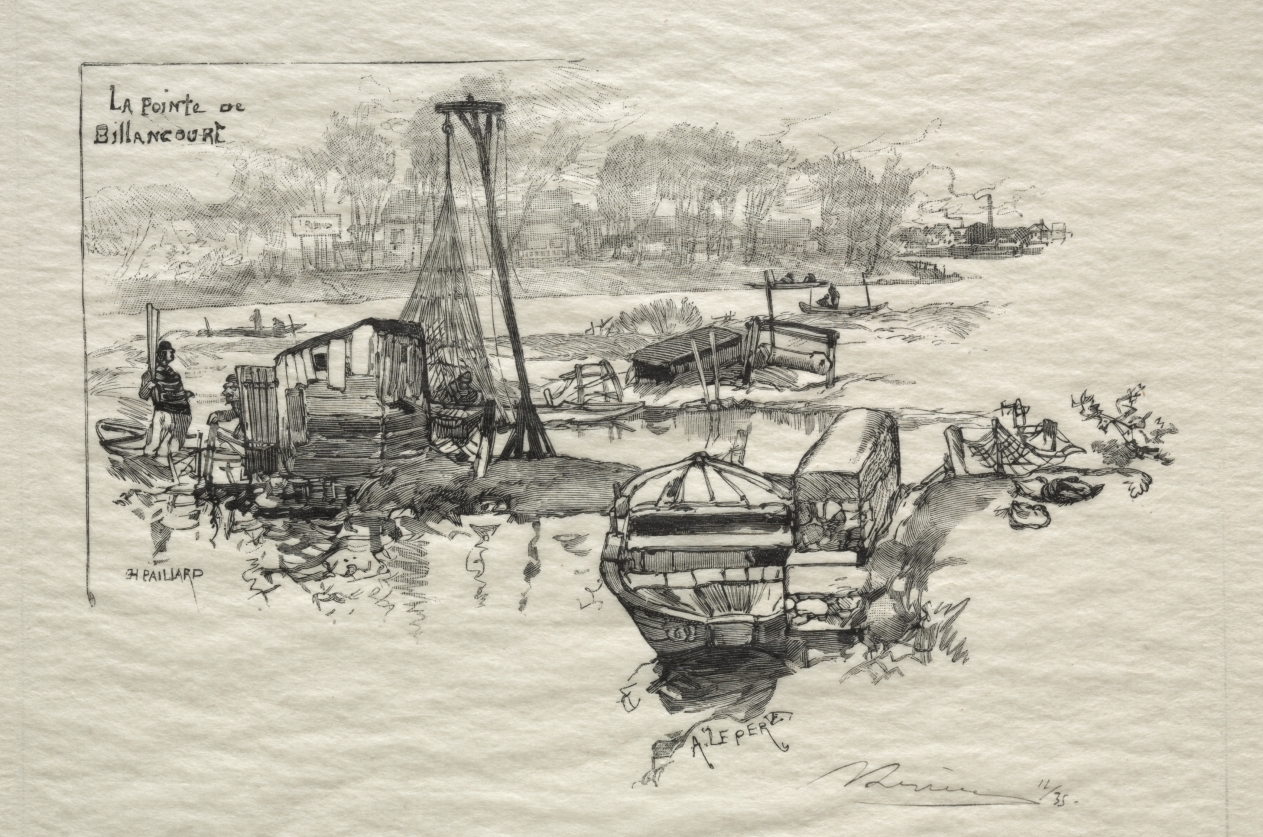
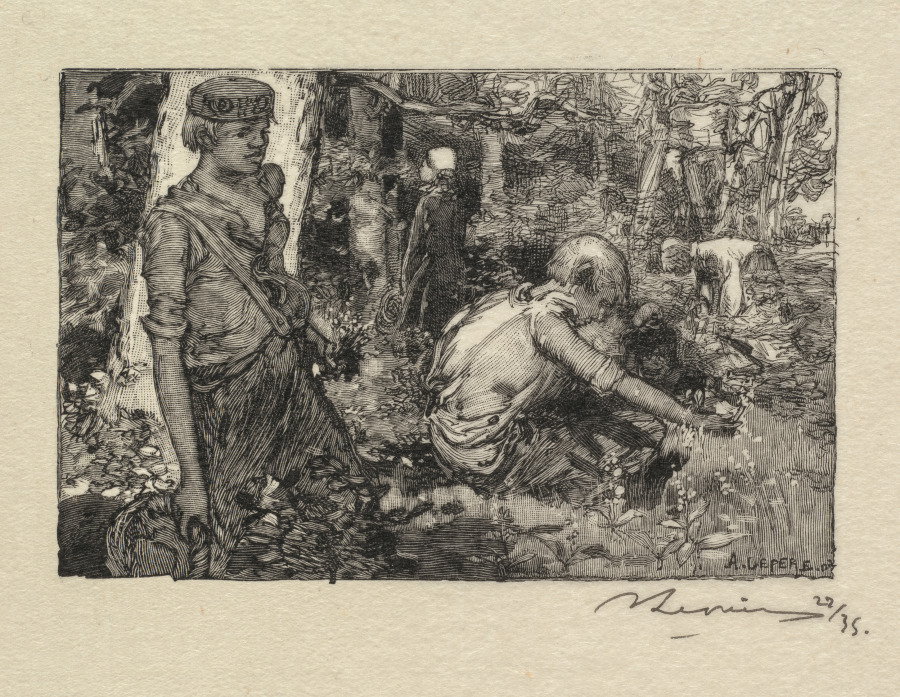
Auguste Louis Lepère
Le Point de Billancourt, 1886
When you acquire a fine impression from this period, you are holding something that existed at the intersection of art and information, craft and commerce. That tension is genuinely interesting to live with. Knowing what separates a good impression from a great one is where the real education begins. The key word is impression, and experienced collectors learn to read it literally.
An early pull from a fresh block will carry crisp, clean lines with strong contrast and a tactile surface quality. As the block wears, lines soften and shadows lose their depth. When assessing a work, look at the finest lines first, the ones in areas of highlight or complex cross hatching. If they are broken, muddy, or blurred at the edges, the block was already fatigued when that impression was taken.
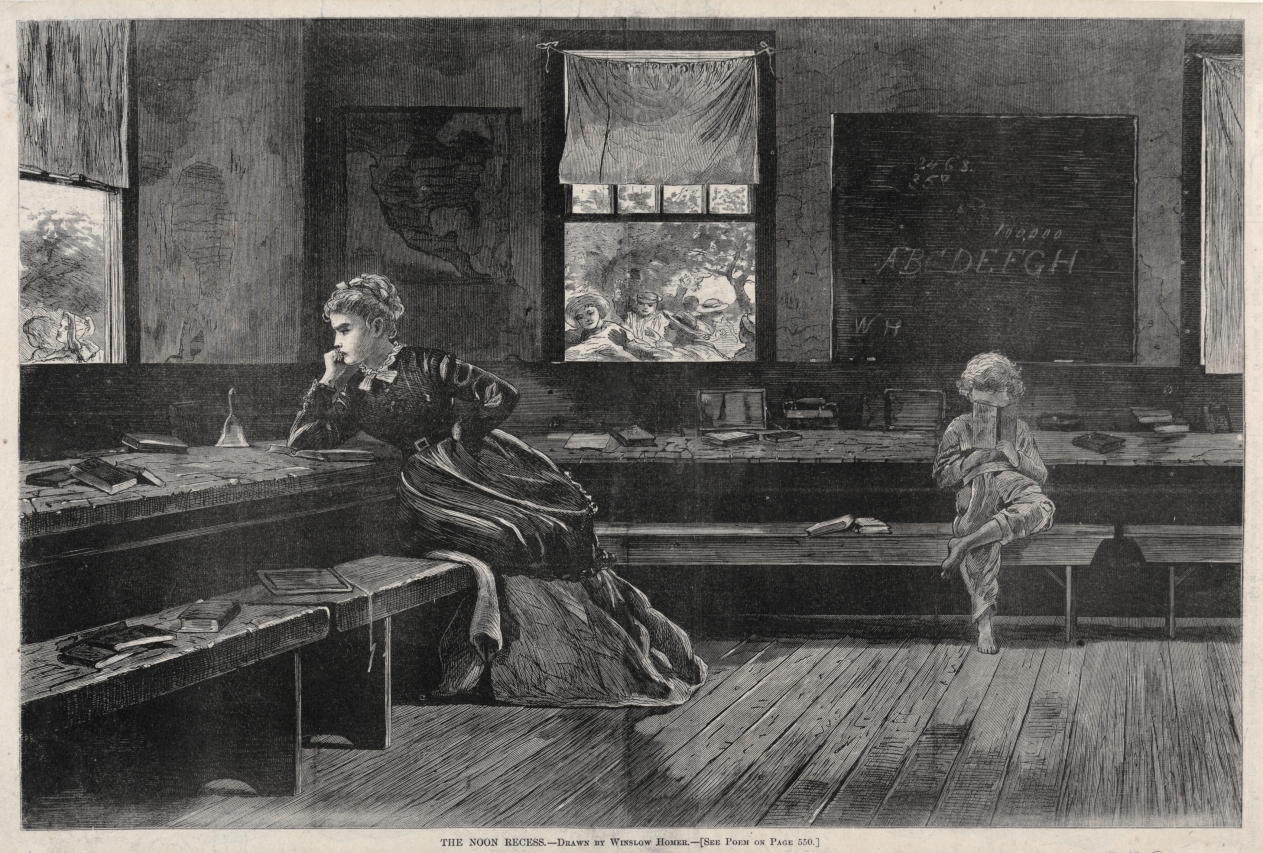
Winslow Homer
The Summit of Mount Washington, 1869
Paper matters enormously too. Original period paper, often with a visible chain line and a warm tone, tells a different story than later reprints on bright modern stock. Provenance, as always, is your friend, but condition and impression quality are the foundation. Winslow Homer is the artist whose name consistently draws collectors into this medium, and for very good reason.
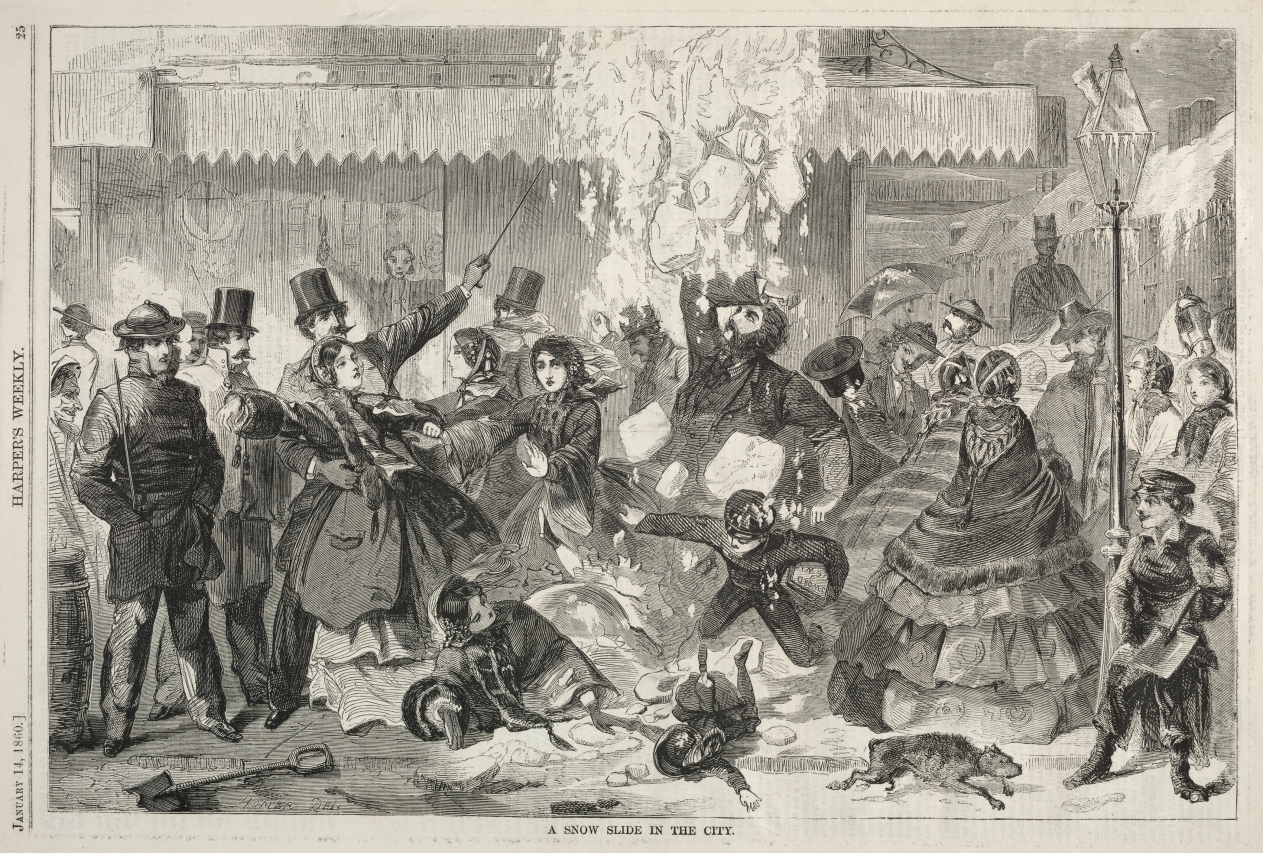
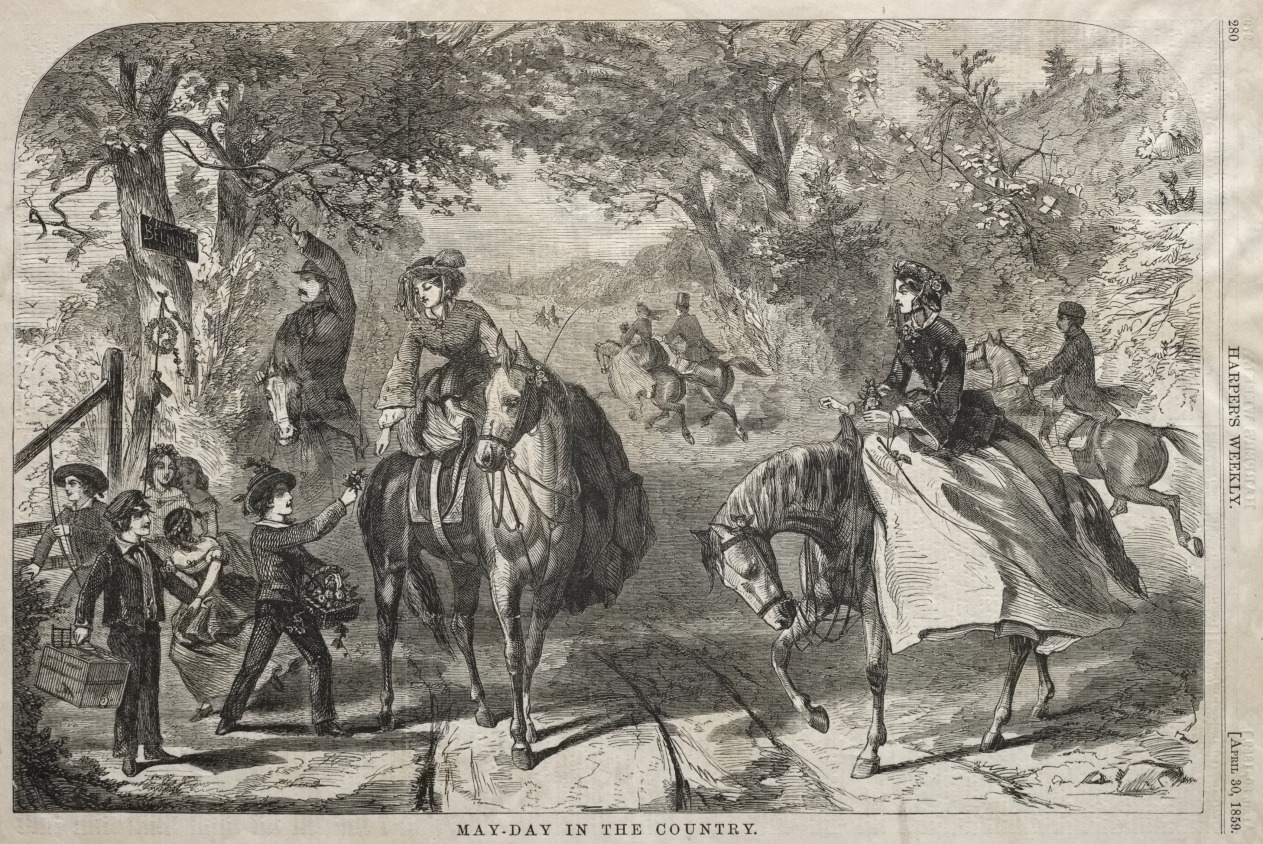
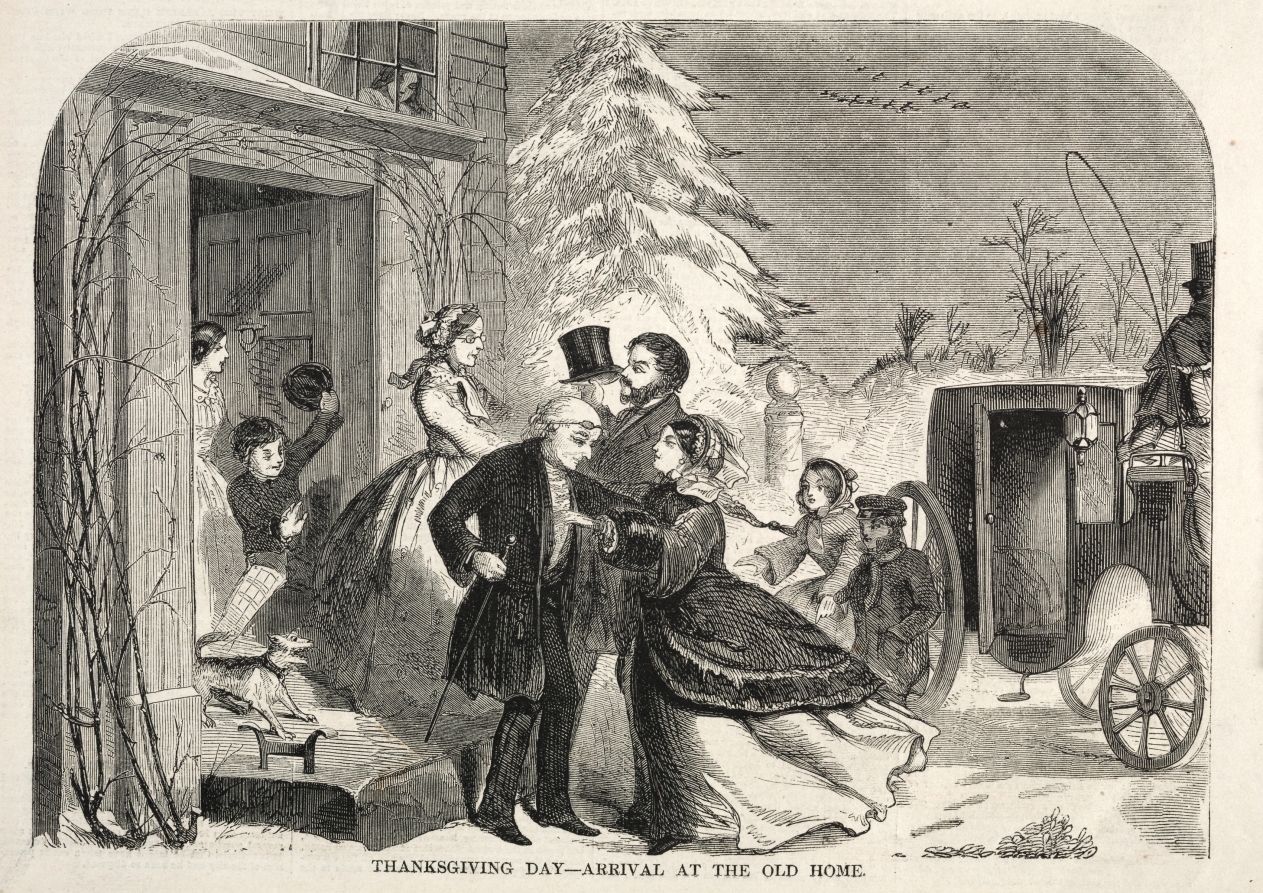
His work for Harper's Weekly during and after the Civil War years represents some of the most psychologically acute image making of the nineteenth century, and the engravings produced after his designs have a compositional authority that holds up in any context. Homer understood the medium so well that he effectively composed for it, thinking in terms of black and white masses rather than translating a painted idea. His works on The Collection represent an exceptional opportunity to engage with an artist whose market in other mediums is largely out of reach for most buyers. The prints offer genuine access to a great American sensibility at a relatively approachable price point.
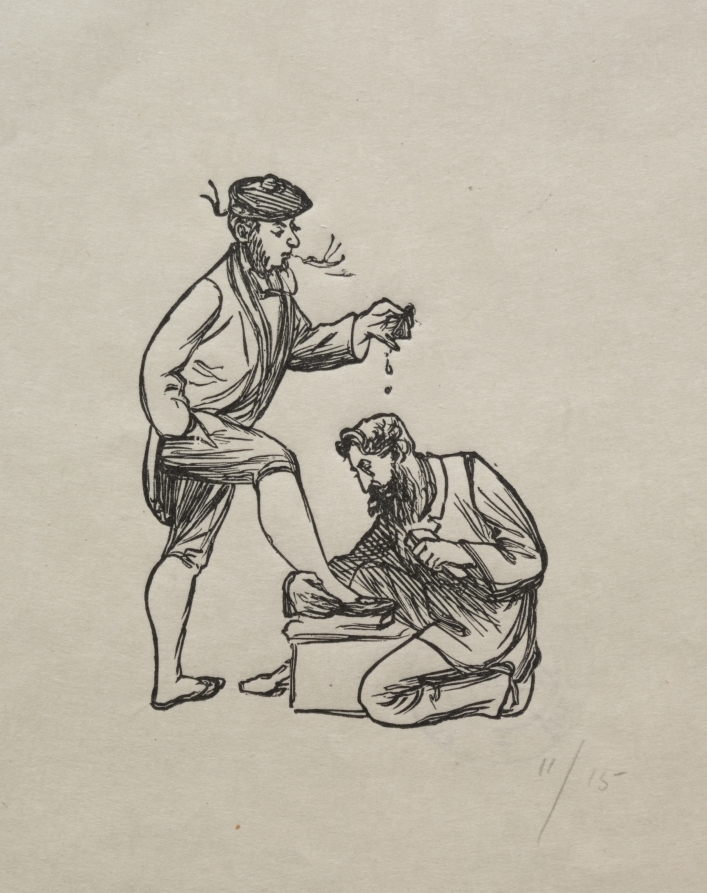
George Louis Palmella Busson Du Maurier
Domestic Philosophy, 1863
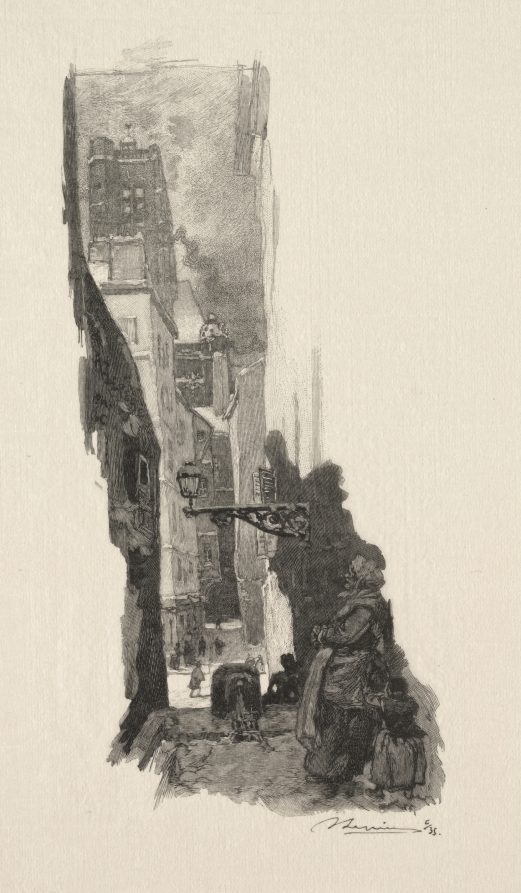
Auguste Louis Lepère occupies a different and genuinely fascinating position. A French artist working at the turn of the twentieth century, Lepère was central to the revival of wood engraving as an artist's medium rather than a purely reproductive one. He cut his own blocks, insisted on the autonomy of the engraver as a creative force, and influenced generations of printmakers on both sides of the channel. His works on The Collection reward close attention for exactly the reason his contemporaries praised him: the line has an energy that feels authored rather than mechanical.
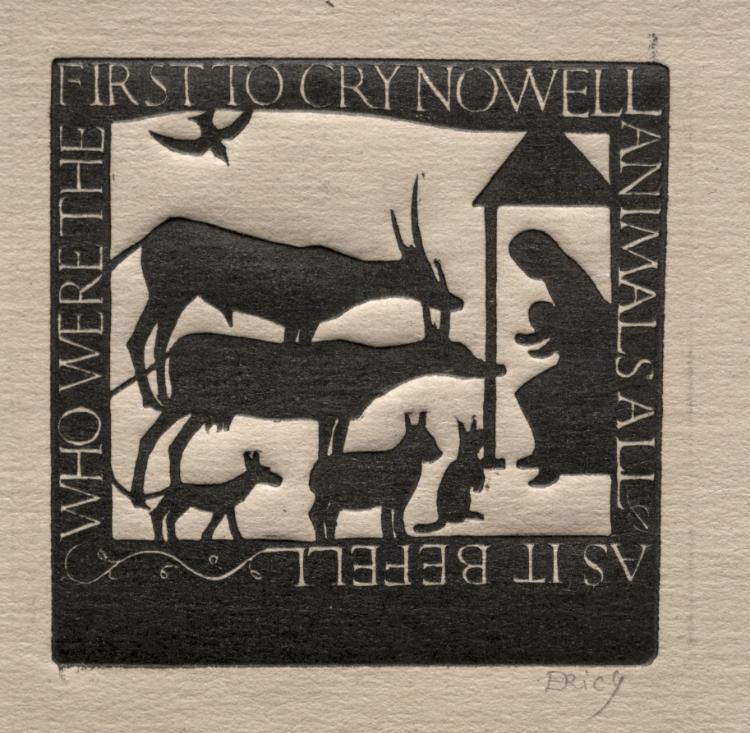
Similarly, Henry Wolf, who came to America and became one of the foremost engravers working in New York in the 1880s and 1890s, produced prints of remarkable sophistication. Wolf won prizes at major international exhibitions and his work after paintings by others demonstrates how interpretation could itself become an act of invention. For collectors interested in the medium's more literary and decorative dimensions, the work associated with the private press movement opens a different set of pleasures. Eric Gill and Lucien Pissarro both moved in circles where the printed page was understood as a total aesthetic object, where image and type were in conversation.
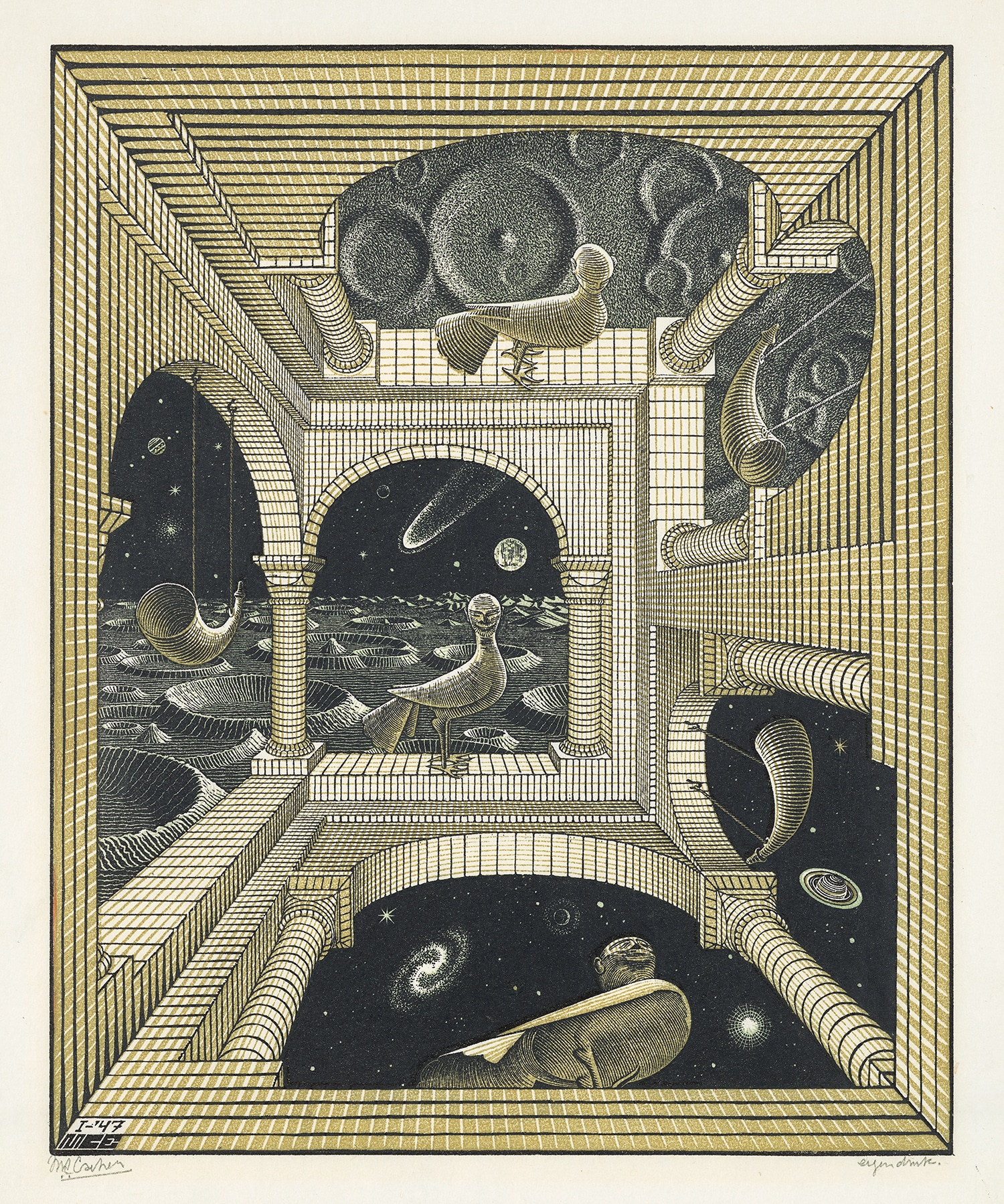
M.C. Escher
Other World (B. 348)
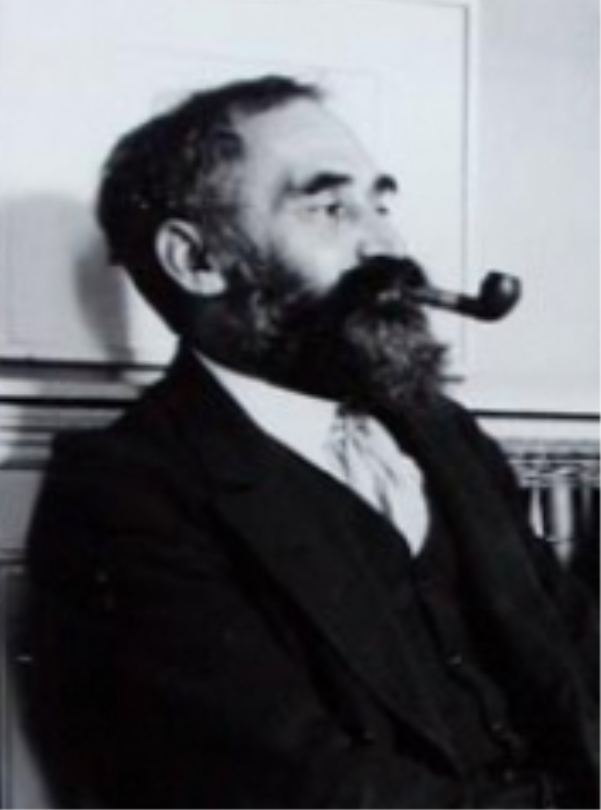
Pissarro's Eragny Press, which he ran with his wife Esther from 1894 onward, produced books of genuine beauty, and individual prints from that world carry a quiet radicalism that still reads clearly today. Charles de Sousy Ricketts, another figure connected to the private press ideal through the Vale Press, is similarly undervalued relative to his importance. These are names that art historians know well but that the broader collecting market has not fully caught up with, which is precisely where opportunity lives. At auction, wood engravings occupy a sweet spot that experienced print collectors understand well.
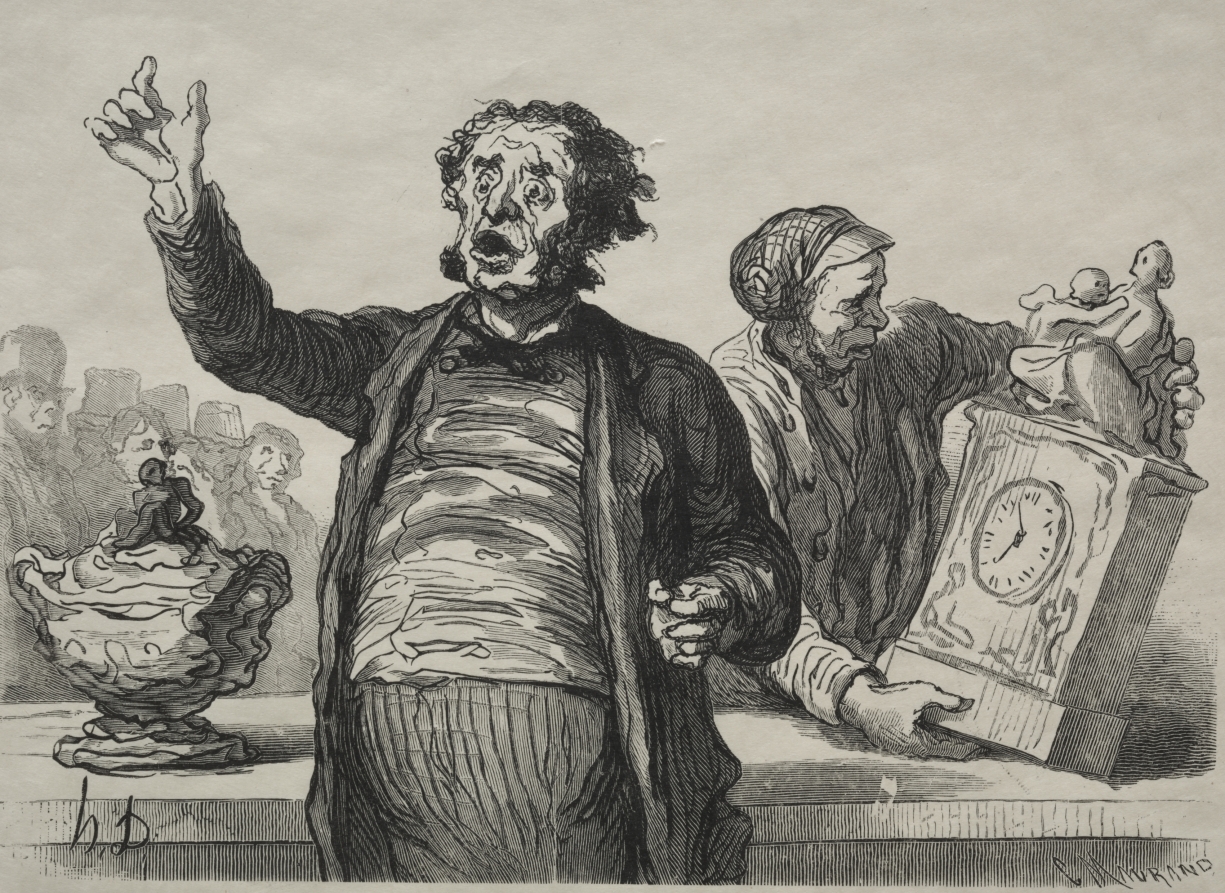
They rarely attract the speculative attention that drives prices on contemporary work to irrational levels, which means that quality comes up at fair prices with some regularity. The strongest results tend to come when exceptional early impressions of documented works appear with clear provenance, particularly for Homer and for the French masters of the illustrated press like Honoré Daumier, whose graphic work bridges caricature and high art in ways that continue to feel modern. Daumier's prints have a consistent floor at auction because his cultural significance is undisputed, making them a relatively stable holding in any print collection. Practically speaking, wood engravings are among the more forgiving works on paper to display and preserve.
They do not require the total darkness that some photographic works demand, but they should be kept out of direct light, which can yellow period paper and fade the rich blacks that make a fine impression sing. Always ask a gallery whether a work is framed behind UV protective glazing and whether the mount is acid free. Ask specifically about edition size where known and whether the impression you are looking at is from the original block or a later restrike. For artist proof impressions or unique artist designed blocks, the premium is generally justified.
The question to ask yourself, and to ask the dealer, is simple: is this the best available version of this image. If the answer is yes, and the price reflects that quality honestly, you are in good hands.