Spot Painting
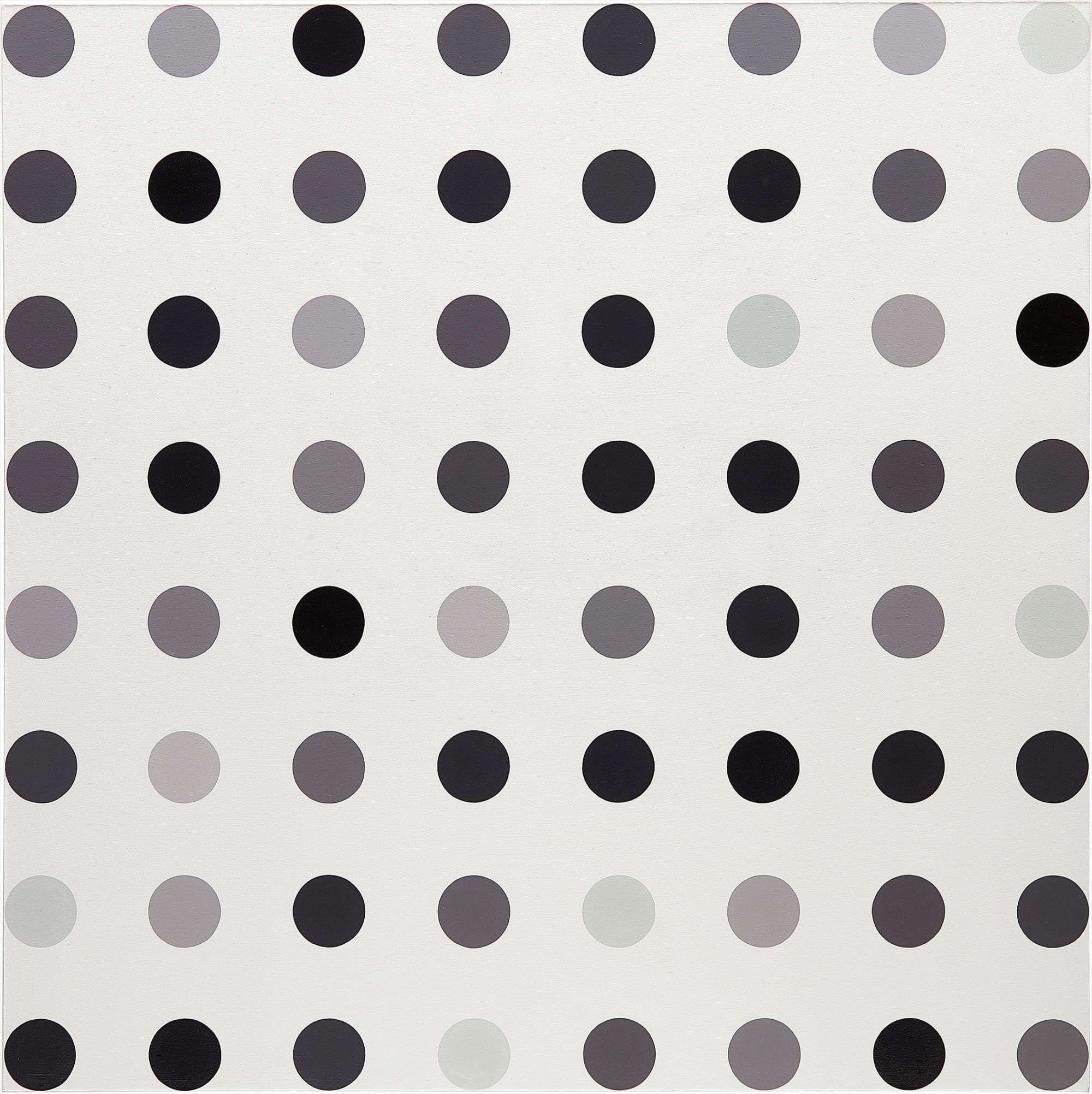
Damien Hirst
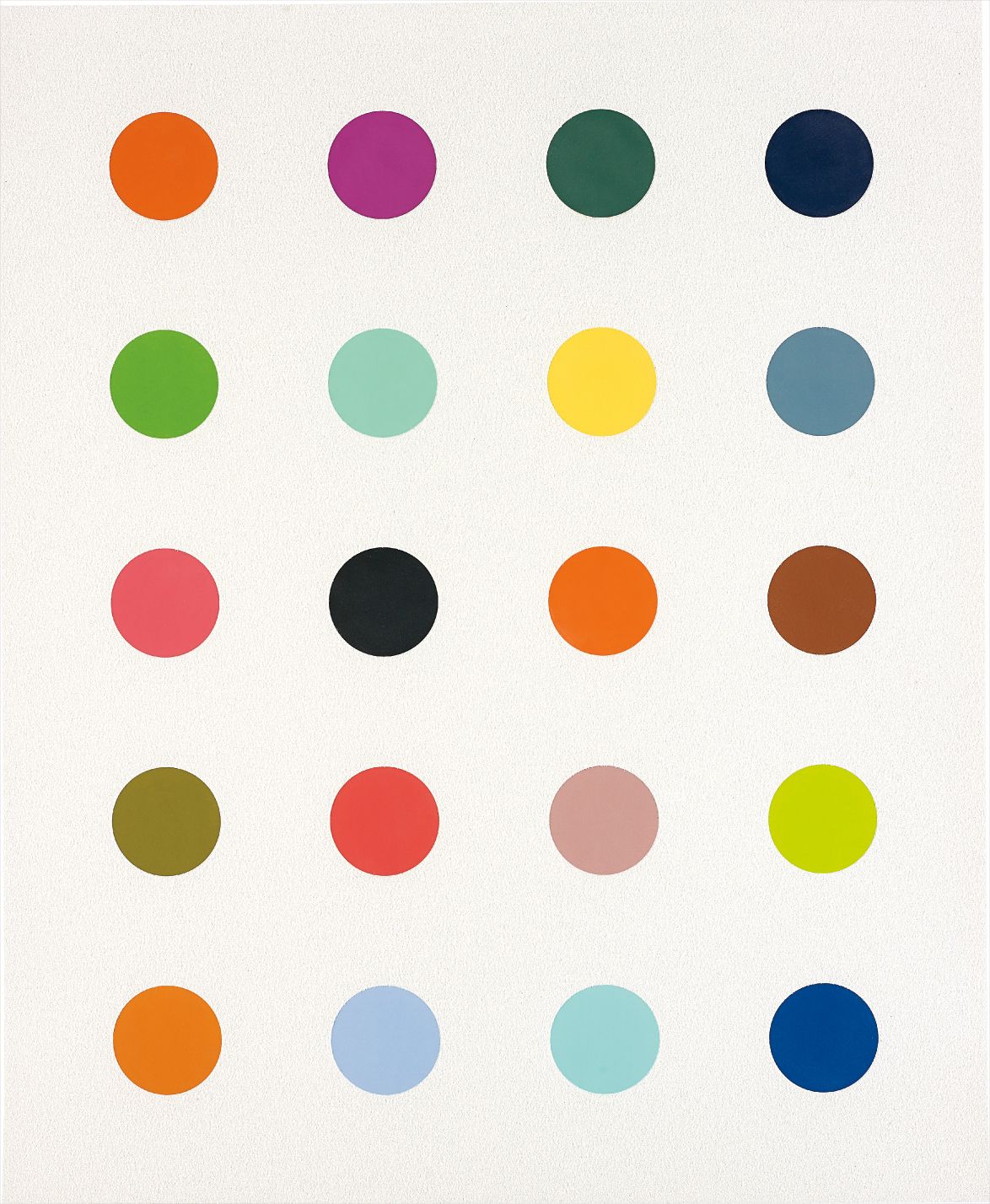
Cyclohexane, 1995
Artists
The Dot That Swallowed the Art World
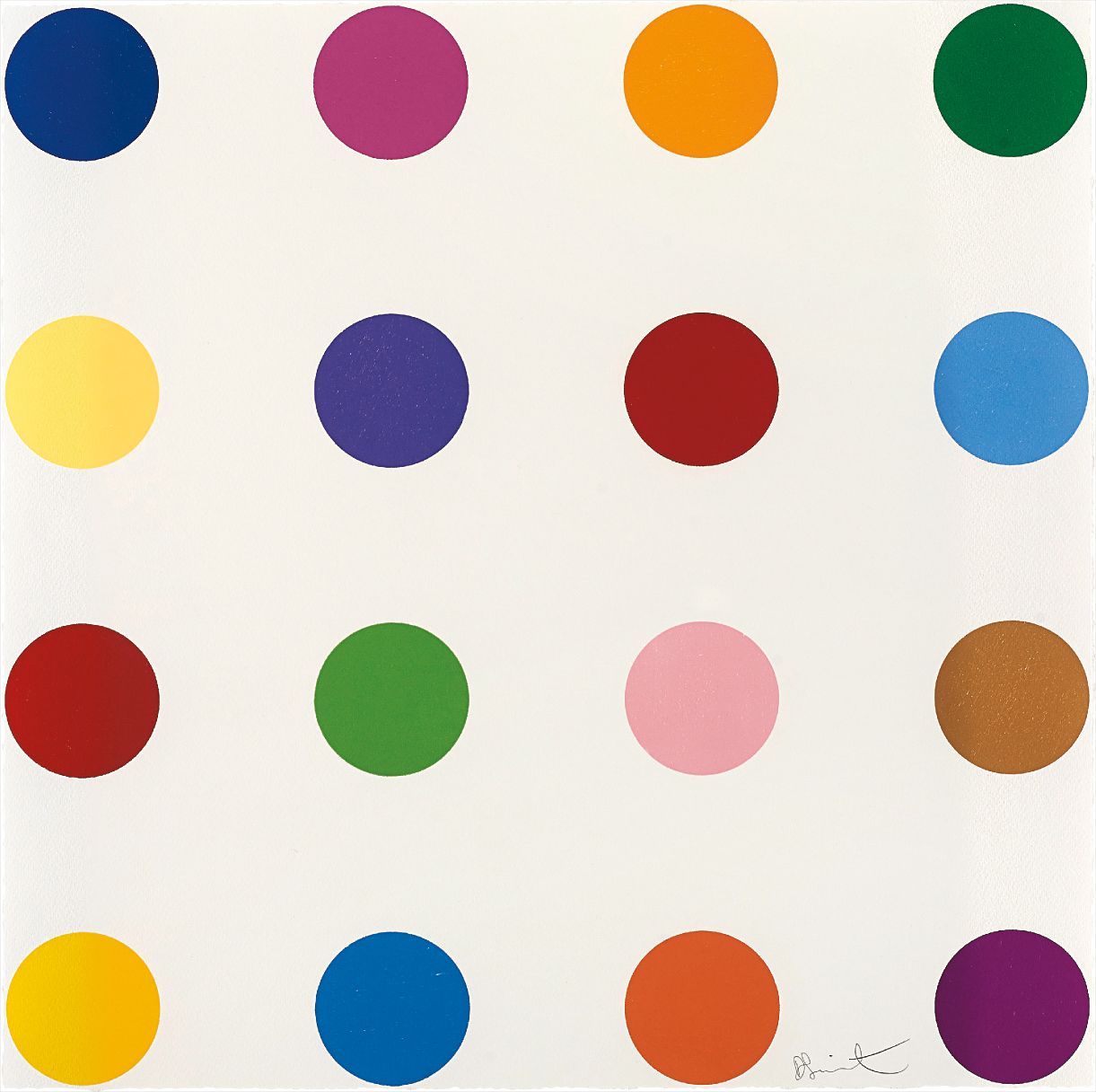
There is something almost cosmically simple about a circle. It has no beginning and no end, no hierarchy, no narrative direction. Place enough of them on a canvas in a grid, fill each one with a different pharmaceutical colour, and you have something that is simultaneously decoration and philosophy, product and provocation. The spot painting sits at one of the most contested intersections in contemporary art, where beauty and concept either collide or dissolve into each other depending on where you stand.
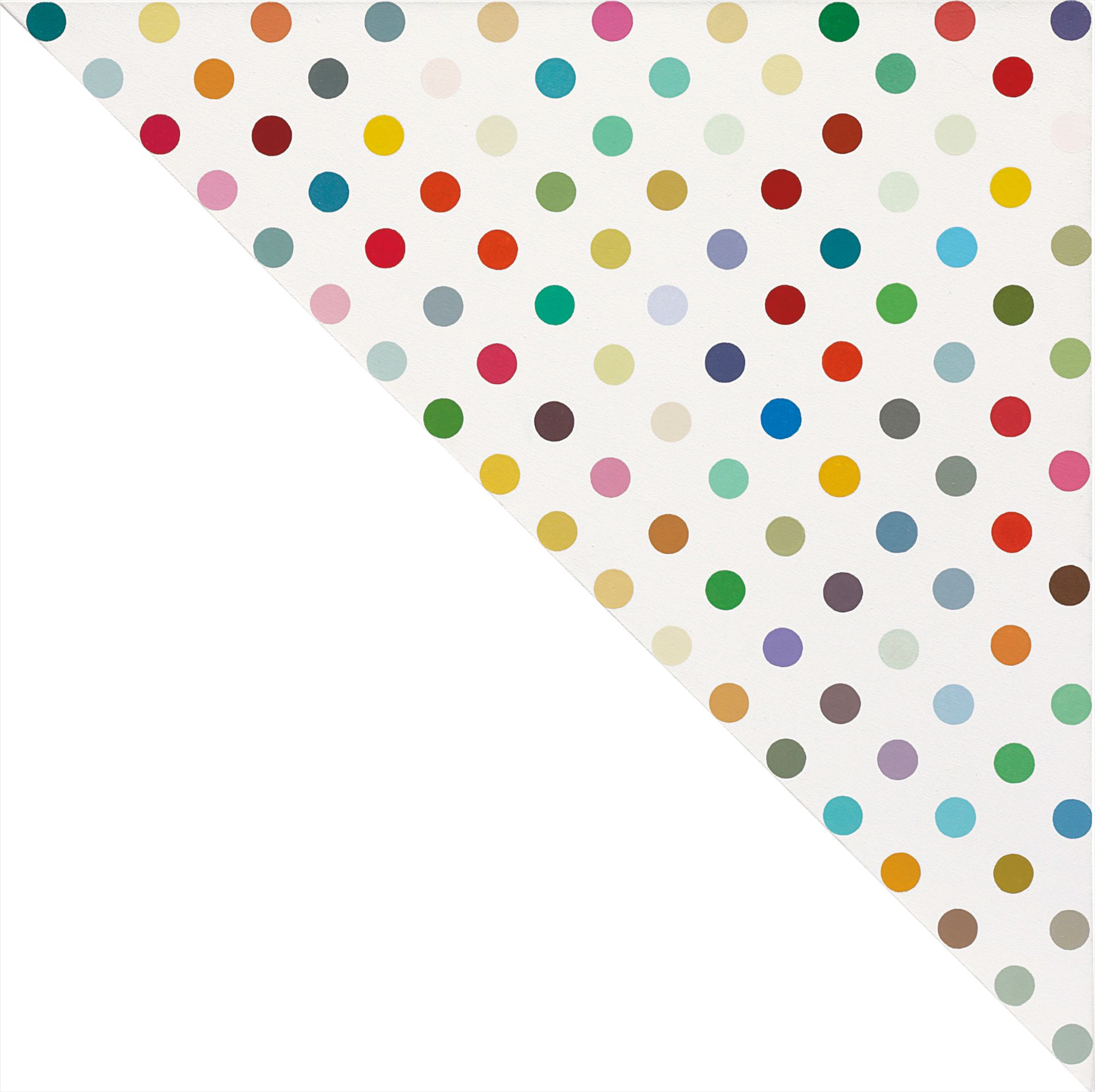
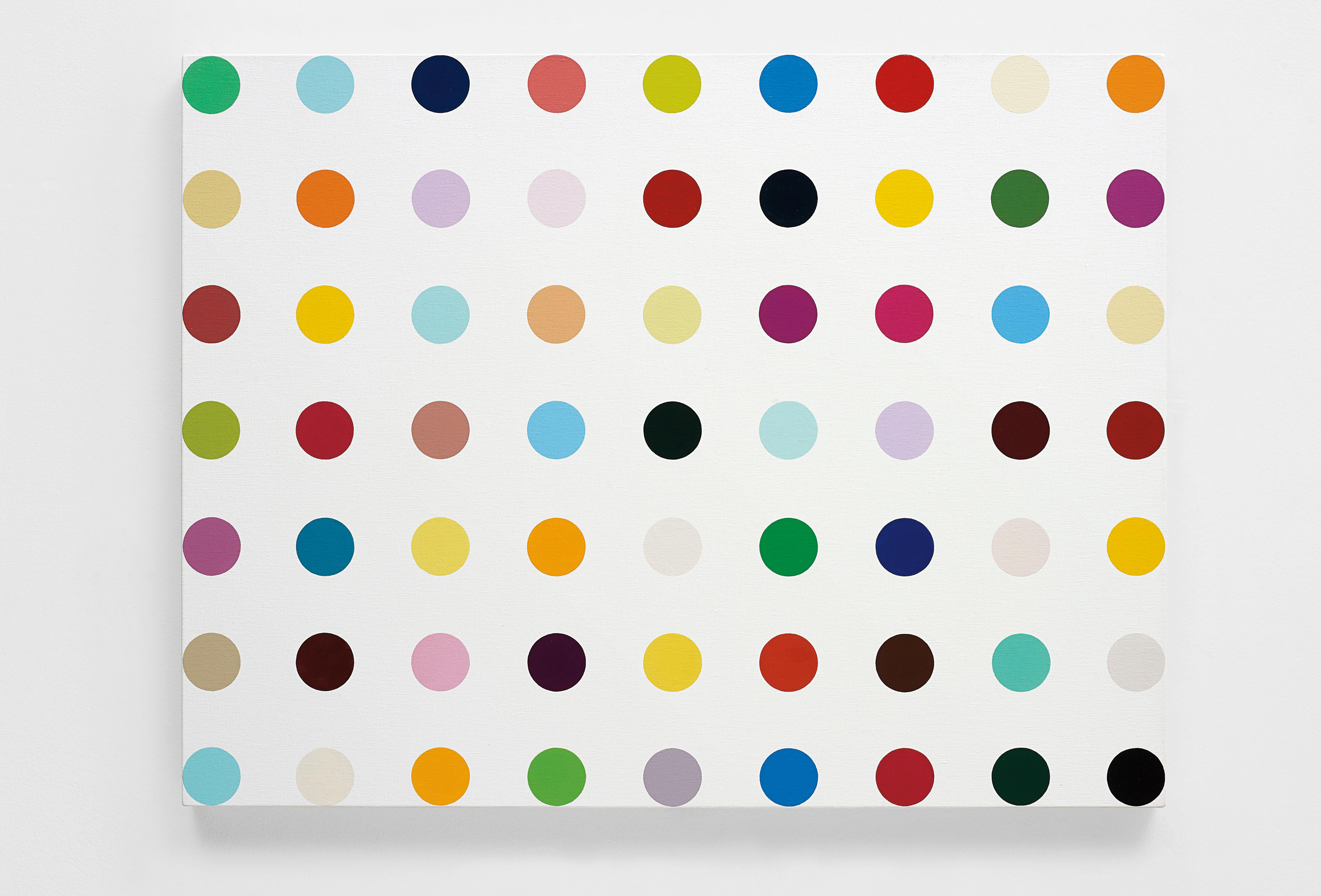
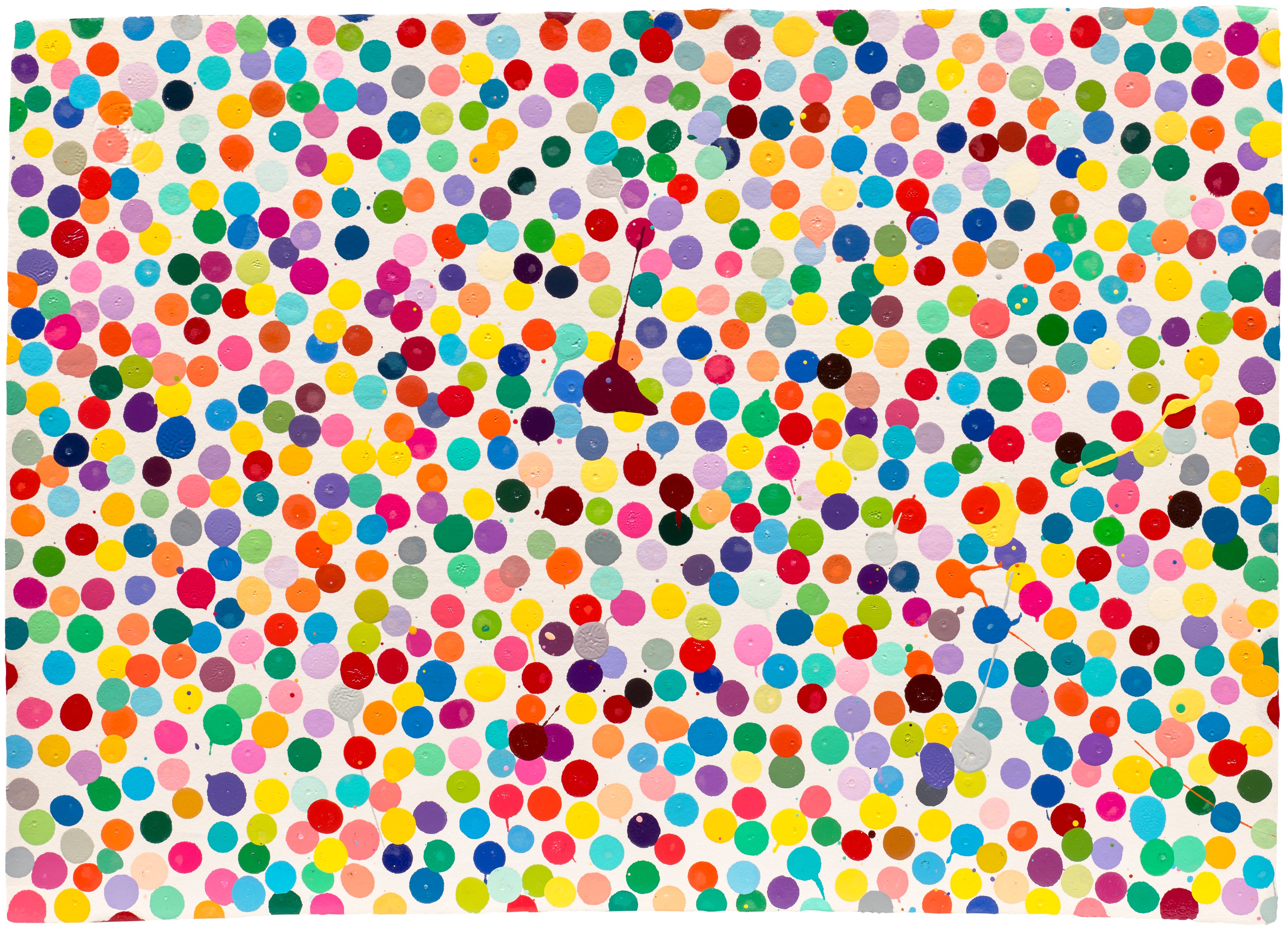
The story of the spot painting as a serious artistic proposition begins, for most people, with Damien Hirst in the late 1980s. A student at Goldsmiths College in London during one of British art's most electrically charged periods, Hirst began producing these works around 1986, initially almost casually, before the format became one of the most recognisable and debated signatures in contemporary art. The first spot paintings were modest in scale and uncertain in ambition, but Hirst quickly understood that the grid format carried enormous conceptual weight. Each spot was isolated from its neighbours, touched nothing, influenced nothing, and yet together they created a kind of visual hum, an experience of colour that was both scientifically detached and sensuously immediate.
Damien Hirst
Cyclohexane, 1995
The 1988 exhibition Freeze, staged by Hirst himself in a disused Port of London Authority building in Surrey Docks, announced the Young British Artists to the world and set the context in which his spot paintings would be received. By the time the Saatchi Gallery began acquiring and exhibiting YBA work in the early 1990s, the spot paintings had become something more than a curiosity. They raised uncomfortable questions about authorship, about the relationship between concept and execution, and about whether a painting needed a painter in any traditional sense. Hirst had been clear from early on that many of the spot paintings were made by studio assistants following his instructions, a decision that placed him deliberately within a lineage of conceptual practice while also exposing him to accusations of cynicism.
The philosophical ancestry of the spot painting reaches back further than Hirst, of course. One cannot look at those orderly grids of colour without thinking of the Bauhaus, of Josef Albers and his lifelong study of how colours behave in proximity to one another. Albers spent decades demonstrating that colour has no fixed identity, that a single hue reads entirely differently depending on what surrounds it, a lesson encoded in his Homage to the Square series begun in 1950. The spot paintings engage with this tradition while refusing its earnestness.
Where Albers was systematic and meditative, Hirst was slick and declarative. The colours in the spot paintings are named after pharmaceutical compounds, a detail that shifts the work from pure formalism into something stranger and more unsettling. There is also a debt to minimalism and to the conceptual strategies that artists like Sol LeWitt pioneered in the 1960s and 1970s. LeWitt's wall drawings, executed by others following written instructions, dismantled the myth of the artist's hand as the locus of meaning and value.
His structures were logical systems, and the experience of the work came from inhabiting those systems rather than from any expressionist gesture. Hirst borrowed this logic but dressed it in the language of desire and commerce. The spot paintings do not ask you to think about systems in the abstract. They ask you to want them, to feel the pull of colour and repetition, and then to wonder what that wanting means.
Hirst's spot paintings exist on The Collection in considerable depth, offering collectors a rare chance to trace the evolution of a format that he has returned to across decades. The works vary in scale, palette density, and context of production, and together they function almost as a research archive of a single, obstinate idea pursued over a career. What becomes clear when looking across multiple examples is how much the experience changes with scale. A small spot painting is intimate and almost playful.
A large one becomes architectural, overwhelming, the colours pressing in from every direction until the grid starts to feel less like order and more like accumulation. The cultural influence of the spot painting extends well beyond Hirst into the broader visual language of contemporary life. The format has been absorbed into graphic design, fashion, and interior culture in ways that are difficult to entirely separate from the art historical object. This is sometimes used as a criticism, a sign that the work was always more decorative than it pretended to be.
But one could equally argue that this absorption is the point, that Hirst was always interested in the blurred boundary between art and commodity, between the gallery and the marketplace. The spot painting does not resist that contamination. It invites it. What remains genuinely interesting about the spot painting today is how it continues to resist resolution.
You cannot finally decide whether it is profound or empty, rigorous or lazy, beautiful or merely appealing. It lives in that suspension, and so does its market value, its critical reputation, and its place in the canon. For collectors, this ambiguity is not a problem to be solved but a condition to be lived with. Owning a spot painting means inhabiting a question about what painting is for, who makes it, and why coloured circles on a white ground can still, after forty years, make you stop and look.