Snow Scene
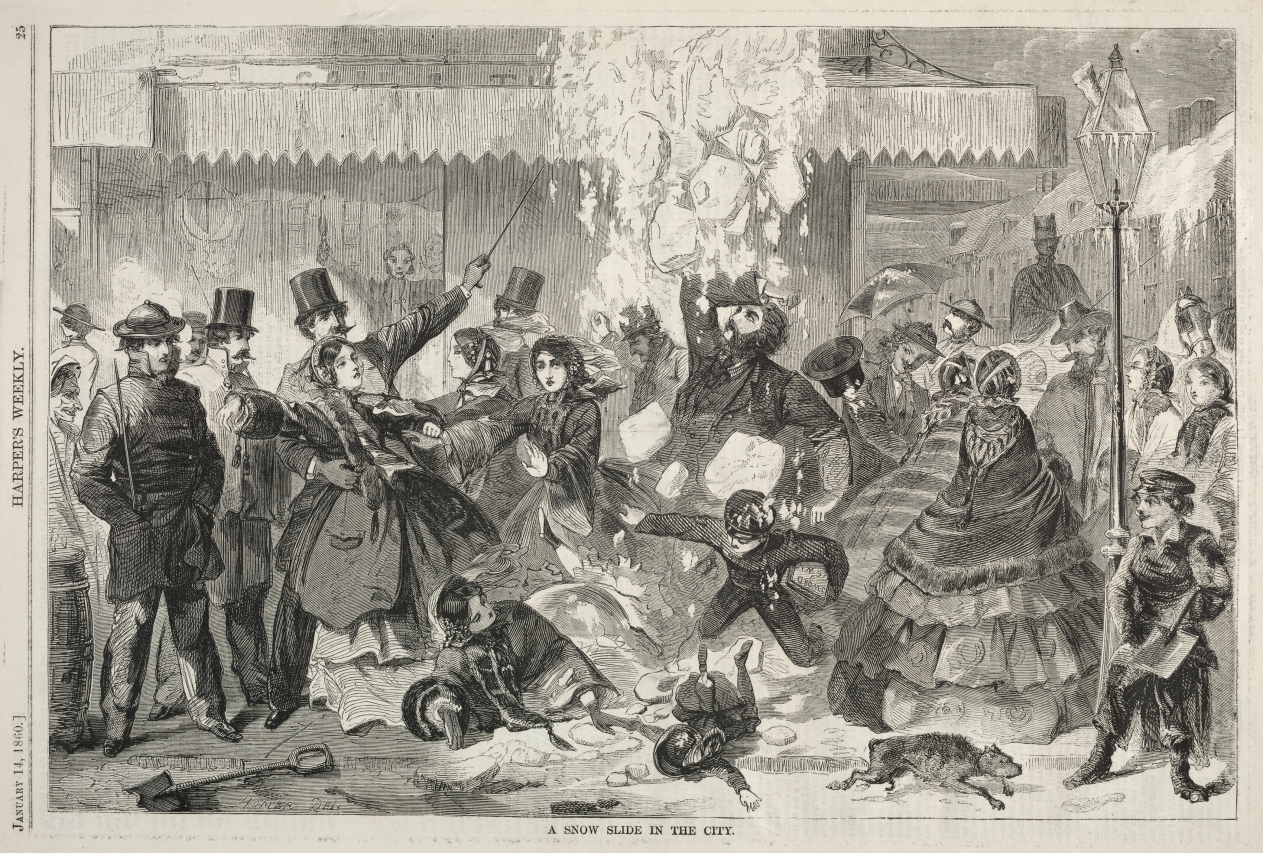
Winslow Homer
A Snow Slide in the City, 1860
The Cold Light That Changes Everything
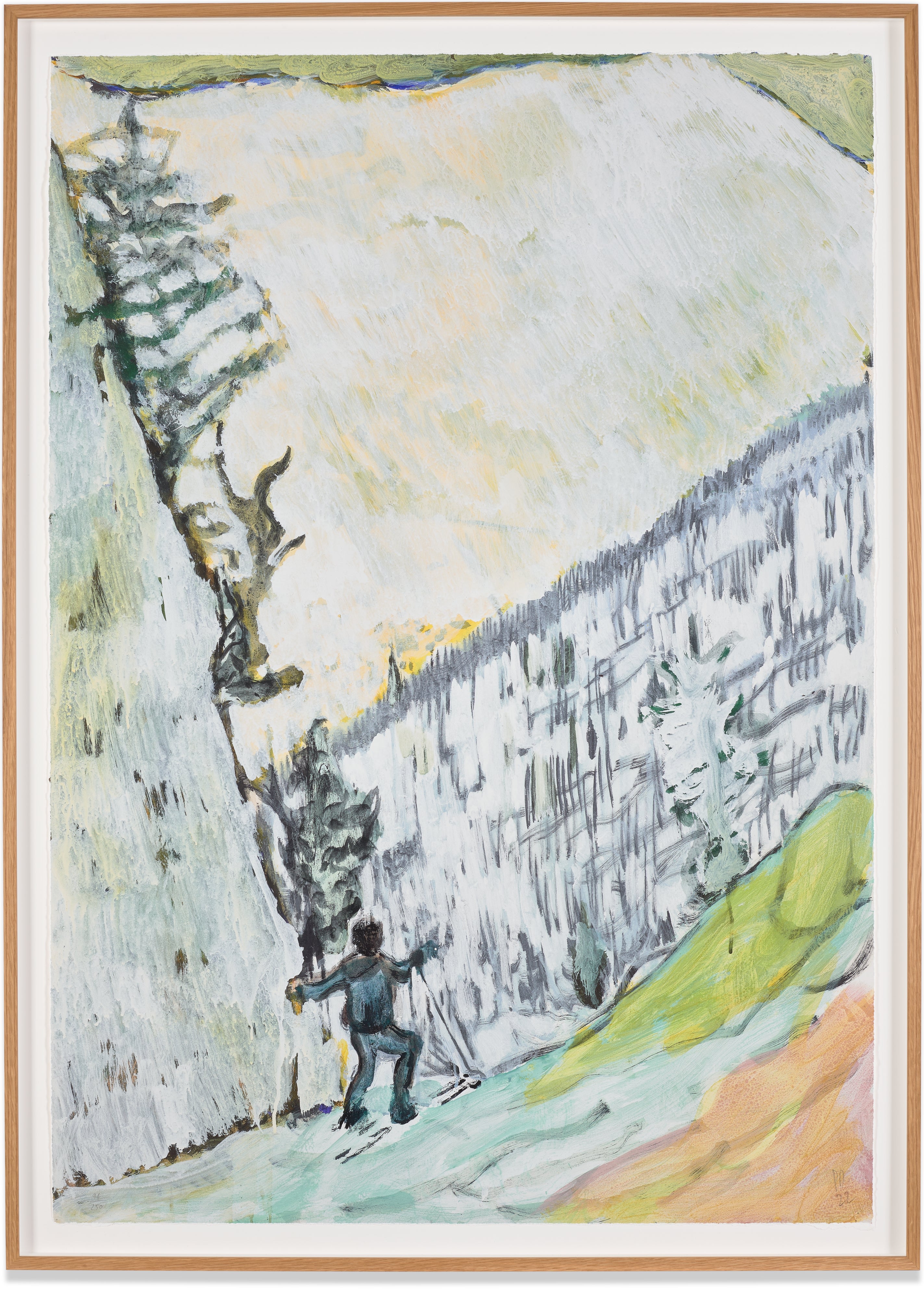
When Peter Doig's 'Pond Life' sold at Christie's London for over seven million pounds in 2015, the art world confirmed what a generation of collectors already sensed: snow, as a subject, as a mood, as a structural problem for painters, had never really gone away. It had simply been waiting for the right moment to reassert itself. That sale was part of a broader reappraisal of landscape painting that accelerated through the 2010s and continues today, driven in part by a cultural hunger for images that feel simultaneously removed from and deeply present to the natural world. Snow scenes, in particular, occupy a peculiar psychological territory.
They promise stillness and deliver unease. The appetite for winter landscape at auction has remained remarkably consistent even as other categories have surged and retreated. Doig commands attention at the very top of the market, and for good reason. His snow paintings are not nostalgic exercises but strange, pressurized images that draw on photography, memory, cinema, and the particular quality of Canadian winter light.
Winslow Homer
A Snow Slide in the City, 1860
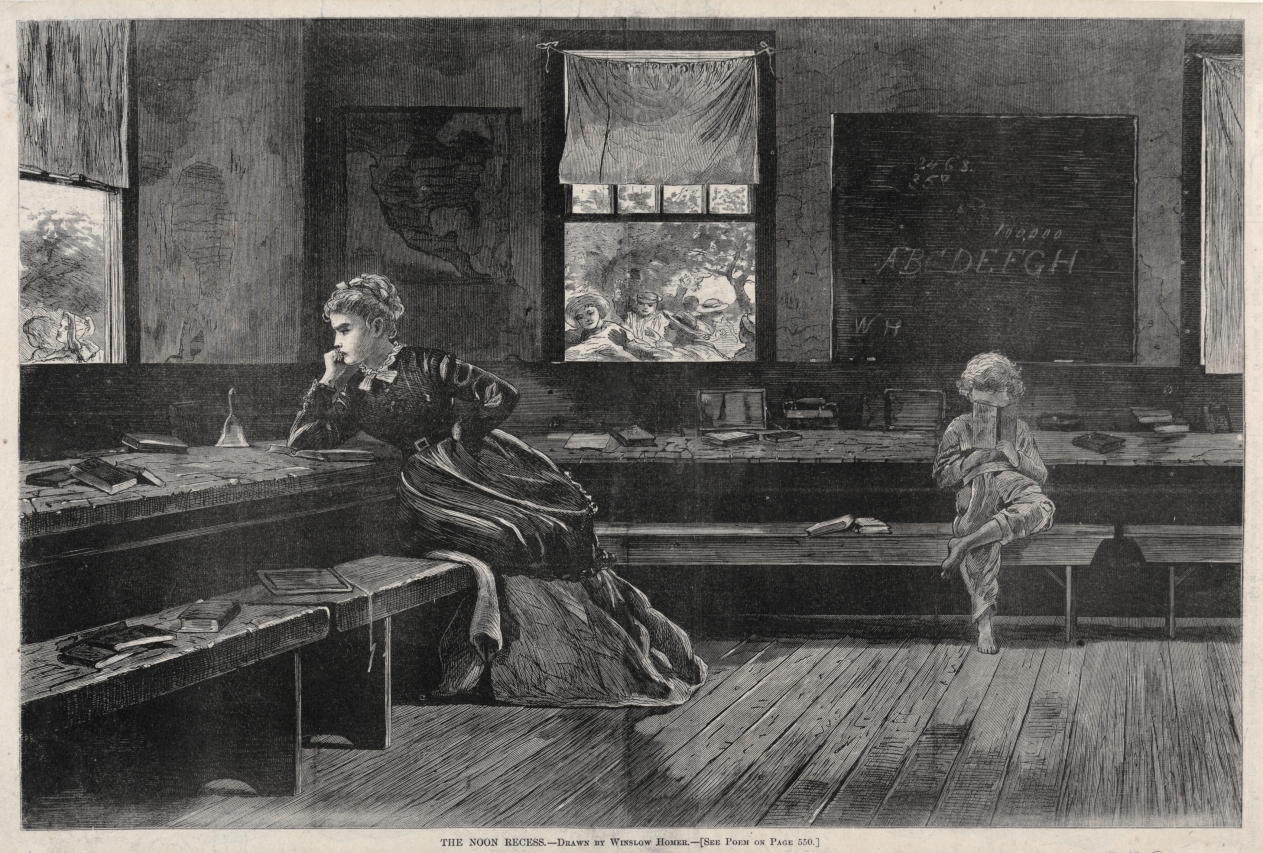
When his work appears at auction, it draws bidders who collect across categories, from postwar abstraction to contemporary figuration, because his pictures feel necessary in a way that transcends genre. The critical establishment caught up with collectors on this point sometime around 2007 and 2008, when his retrospective at Tate Britain toured to the Musee d'Art moderne de la Ville de Paris and essentially settled the question of his importance. Step further back through the history of snow in art and the conversation becomes even richer. Winslow Homer spent decades developing a visual language for American winter, and his late work in particular, made at Prouts Neck in Maine, records snow and cold water with an almost confrontational directness.
Homer's late watercolors and oils appear at Christie's and Sotheby's with reliable frequency, and when major examples come to market they consistently exceed estimates. His reputation has been in a kind of slow upward drift for thirty years, sustained by institutional collecting at the Met, the National Gallery of Art, and the Addison Gallery of American Art, which holds one of the strongest concentrations of his work anywhere. Museums have not lost interest; if anything, the reconsideration of American landscape painting through ecological and environmental lenses has given Homer new urgency. The Japanese tradition of snow imagery represents an entirely separate and equally compelling conversation.
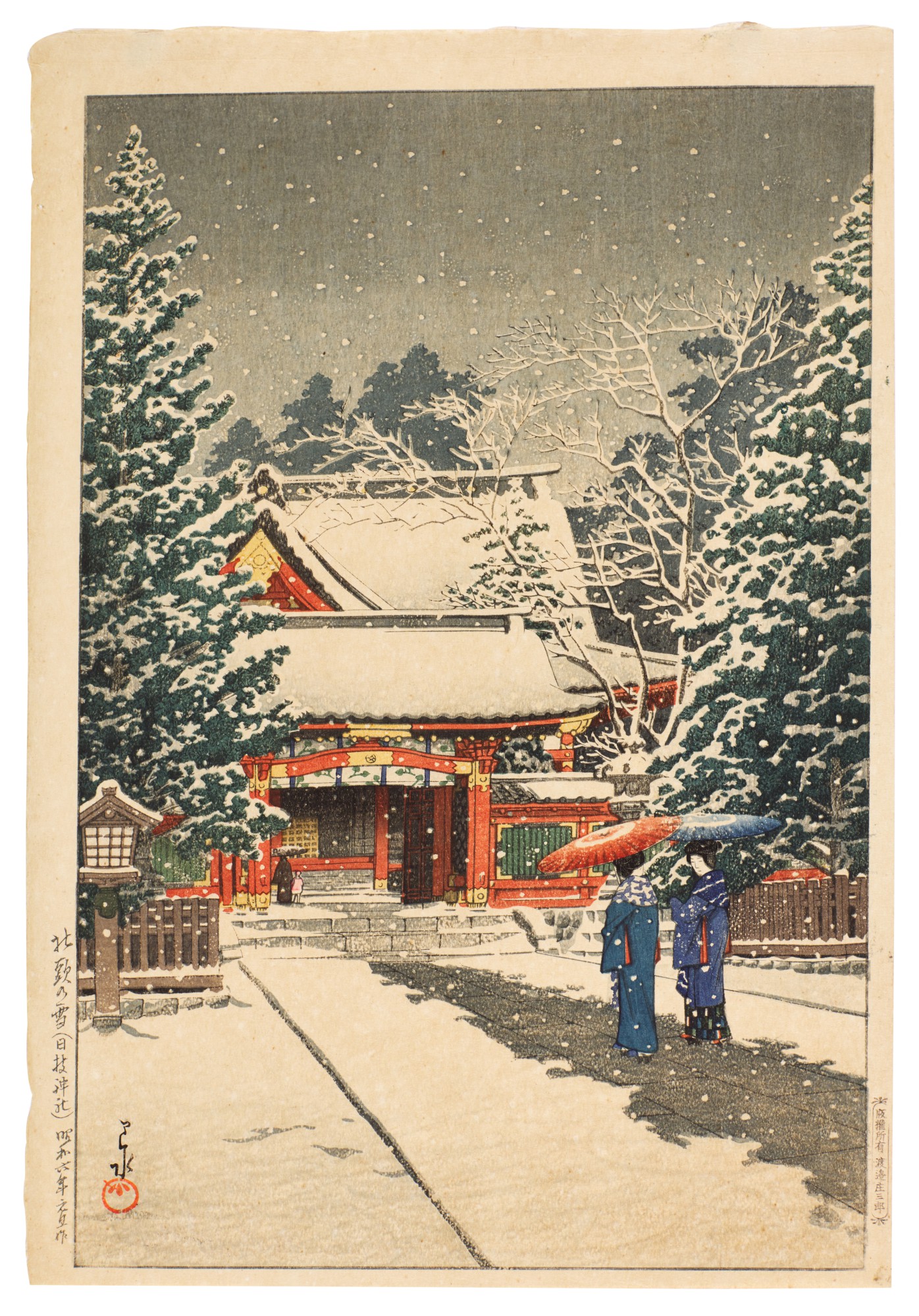
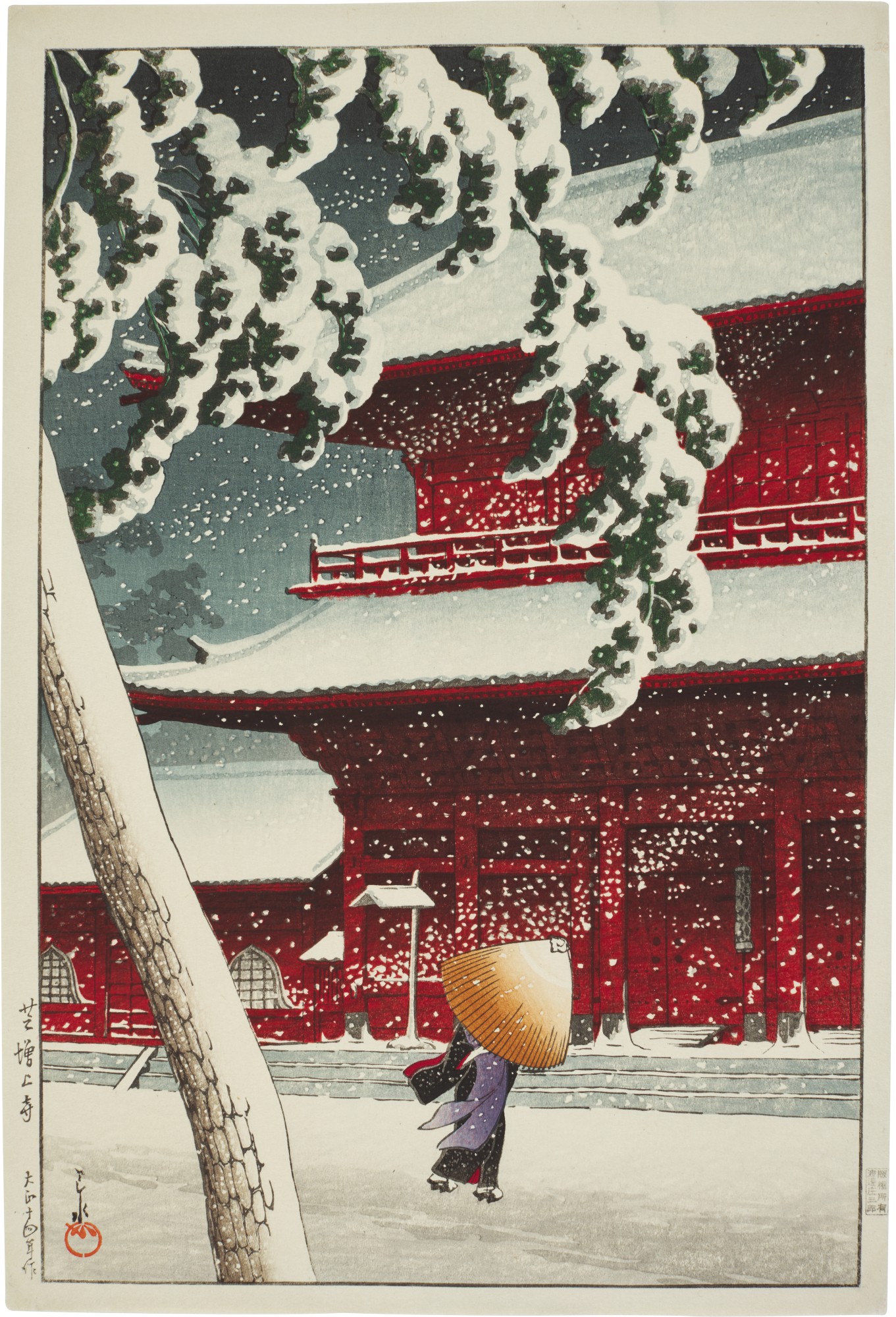
Hasui Kawase
Snow at the Shrine Front (Hie Shrine) (Shato no yuki (Hie jinja)) | Showa period, 20th century
Hasui Kawase, working in the shin hanga tradition of the early twentieth century, produced woodblock prints of winter temples, snowy streets, and hushed mountain paths that operate through radical economy of means. A great Kawase snow print does in four or five colors what a Western painter might spend months laboring to achieve. His market has expanded considerably over the past decade as collectors in the United States and Europe have grown more comfortable moving across cultural traditions, and specialist sales at Bonhams and Scholten Japanese Art have demonstrated that serious money is now chasing serious examples. The 2020 retrospective at the Museum of Fine Arts, Boston brought a wave of new institutional attention and introduced his work to a generation of younger collectors who had not grown up with it.
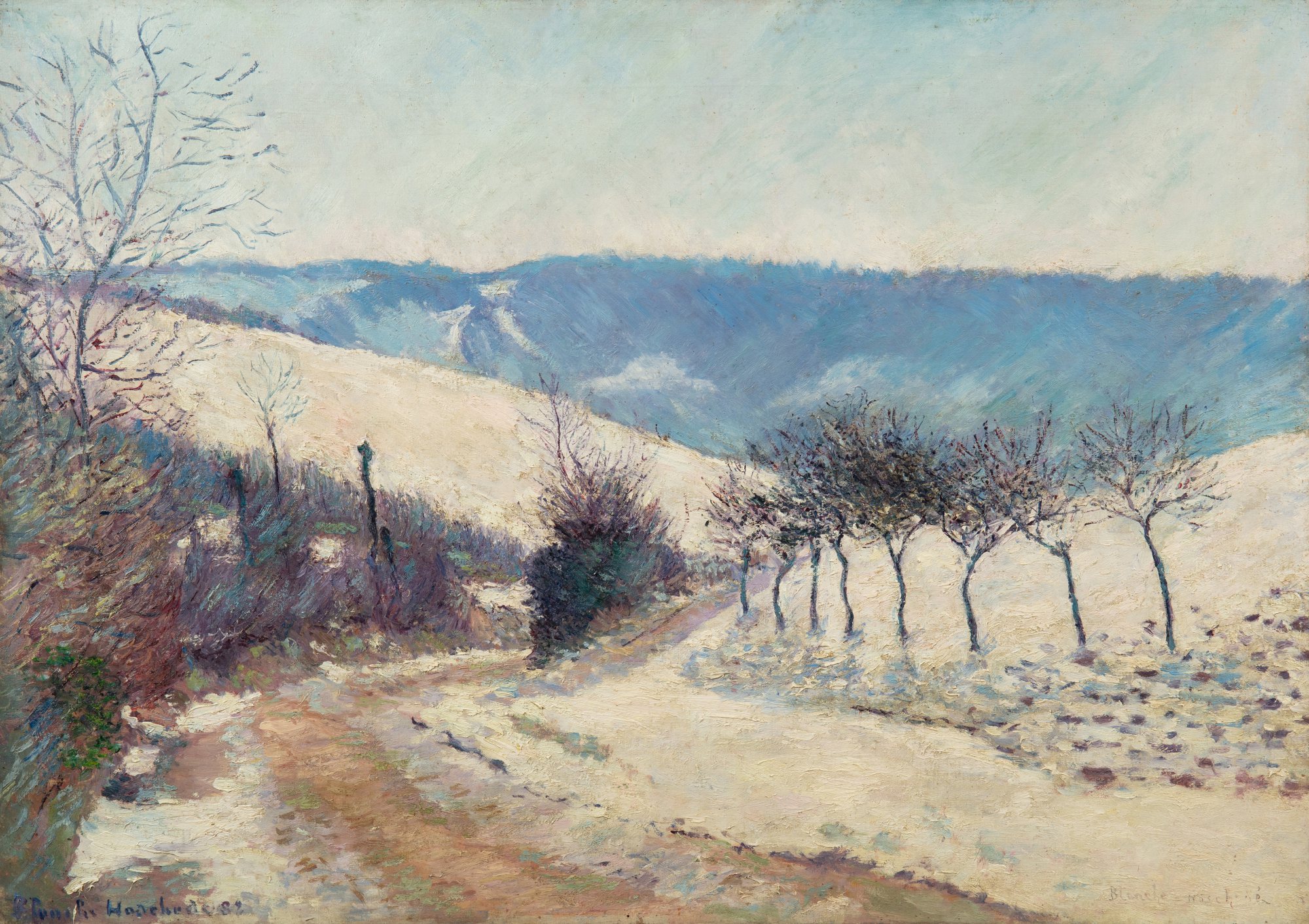
The critical conversation around snow as a subject is being shaped by curators willing to think across period and medium. Shows like the Clark Art Institute's 'Winslow Homer: Making Art, Making History' and broader landscape surveys at the Smithsonian American Art Museum have placed winter imagery within larger arguments about perception, labor, and the relationship between painting and place. Writers including Sanford Schwartz and, more recently, scholars working in ecocriticism have pushed the discourse beyond formalism into questions about what it means to represent cold, to slow looking down, to ask viewers to stand still. Blanche Hoschedé Monet, who worked in the shadow of her famous stepfather but developed a genuinely individual sensibility for landscape, is increasingly cited in this revisionist literature as an example of how the domestic and the atmospheric could intersect in Impressionist practice.
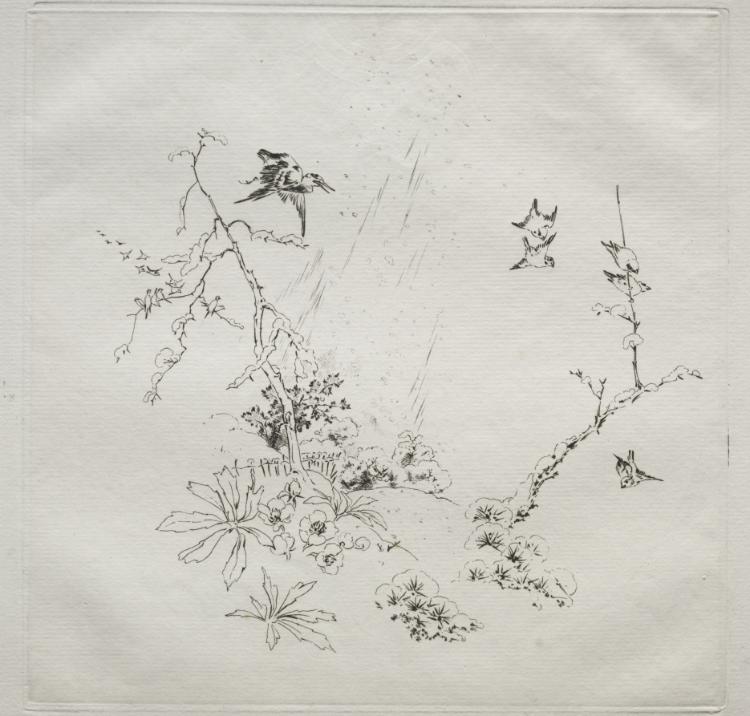
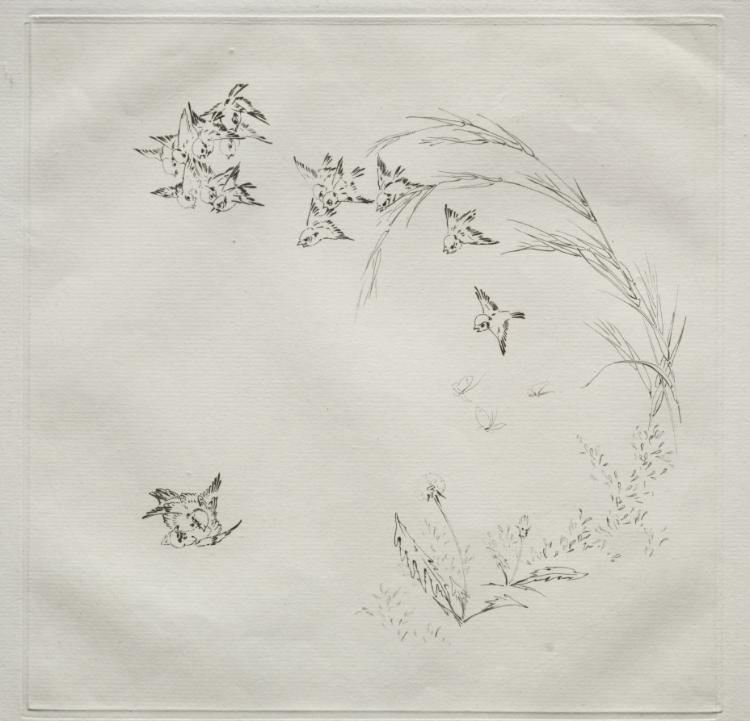
Félix Bracquemond
Parisian Service (Haviland service): Snow (no. 6), 1875
Her reputation is due for a more thorough reassessment than it has received. Félix Bracquemond occupies yet another corner of this conversation. Known primarily as a printmaker and ceramicist, his engagement with the natural world through etching connects the snow scene tradition to questions of reproduction, distribution, and the democratization of image making that the nineteenth century was navigating with such energy. His work is held in depth at the Bibliothèque nationale de France and has been the subject of sustained curatorial attention in France, though English language institutions have been slower to integrate him into their permanent collection narratives.
That is beginning to shift, and collectors paying attention to where curatorial energy is building will find his work genuinely undervalued relative to the quality and historical significance of the strongest examples. What feels alive right now is the convergence of environmental urgency and aesthetic reconsideration. Snow, as a subject, carries weight it did not carry twenty years ago. Glaciers are receding, winters are changing, and images that once felt purely formal or purely nostalgic now arrive with additional freight.
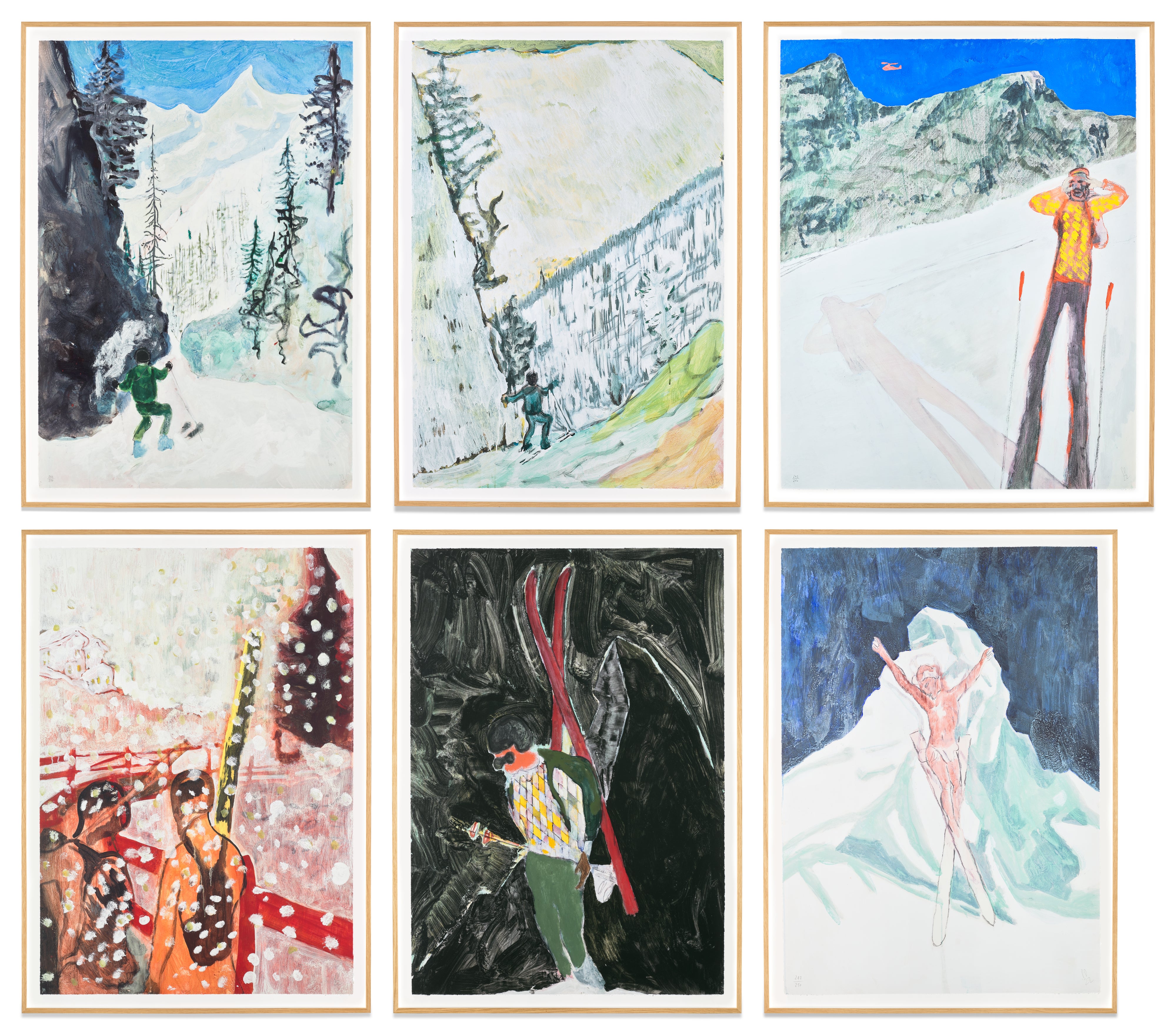
Peter Doig
Zermatt (D1)
Collectors and institutions are responding to this, not by treating art as documentary evidence but by recognizing that the greatest snow paintings have always been about something more than weather: they are about attention, about the particular quality of light that snow produces, about the way a known world becomes briefly strange. The artists represented on The Collection who work within this tradition are connected by that understanding, even across the considerable distances of time, culture, and medium that separate them. The energy in this space is not settling. It is building.
For collectors building a serious collection, snow scenes reward the kind of sustained looking that the best art demands. The market rewards patience and specificity. Knowing the difference between a great Kawase and a good one, between a Homer that truly crackles and one that merely satisfies, is the work of years. But the pleasure of that work, and the long term strength of the category, make the effort entirely worth undertaking.