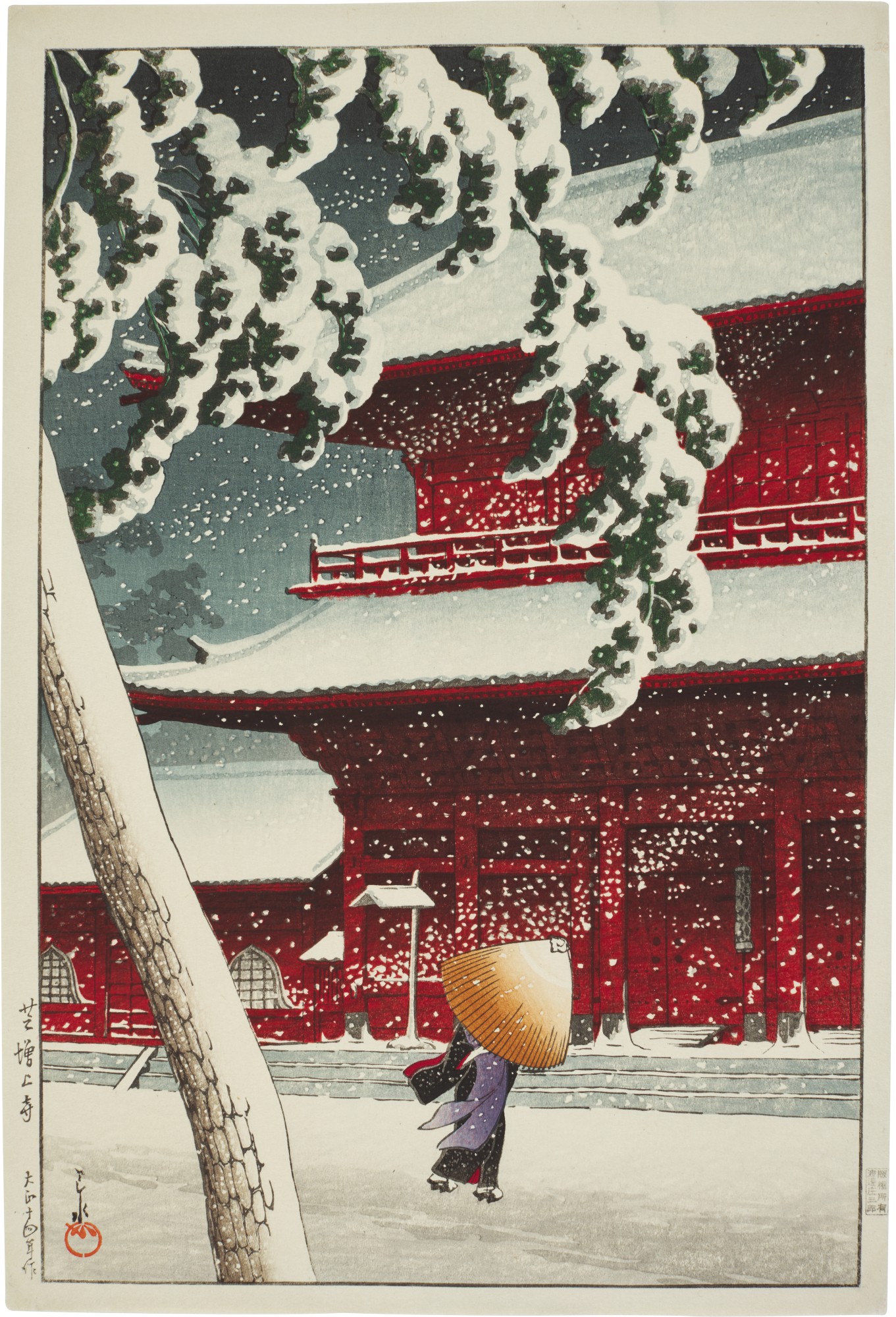
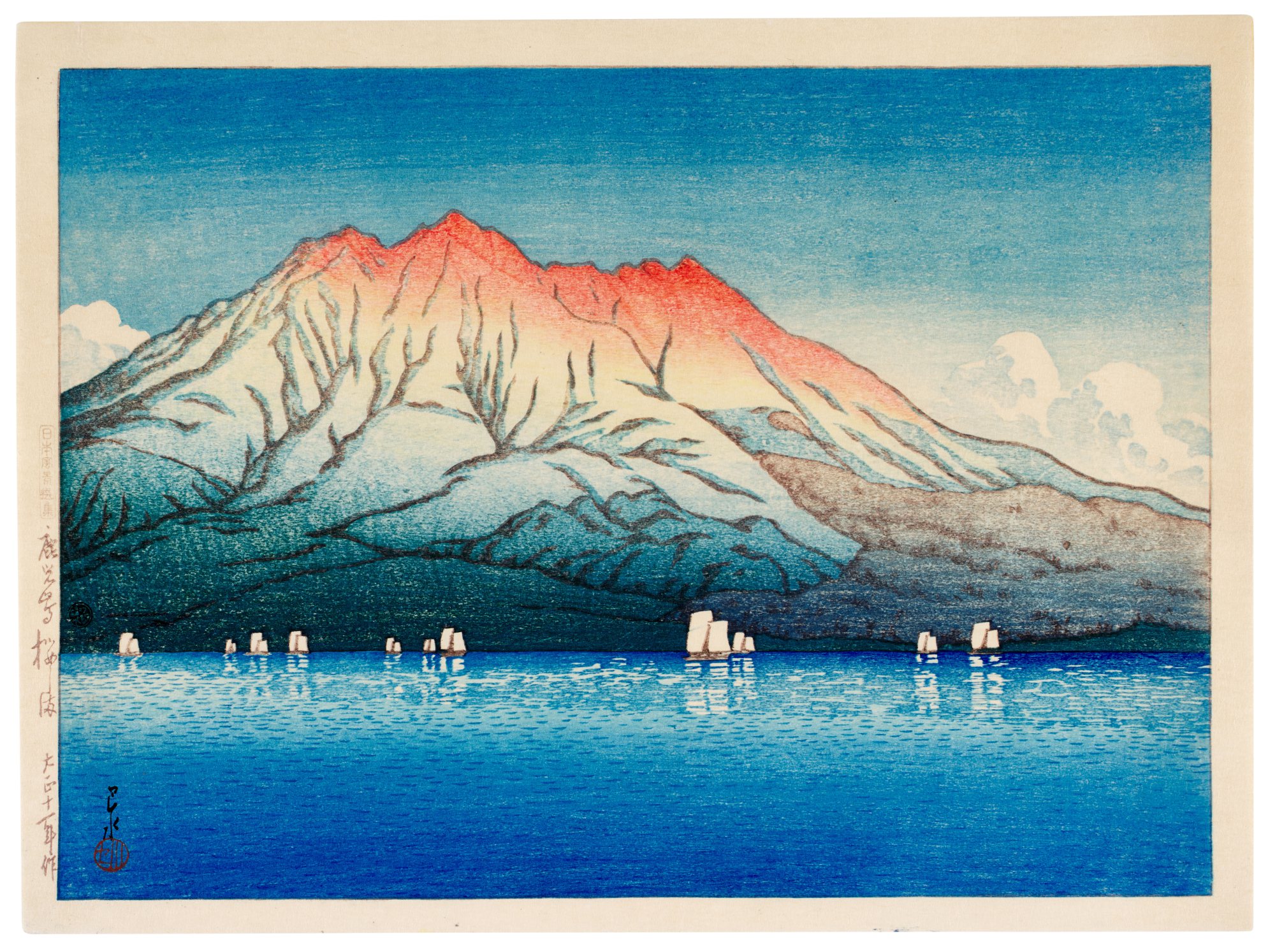
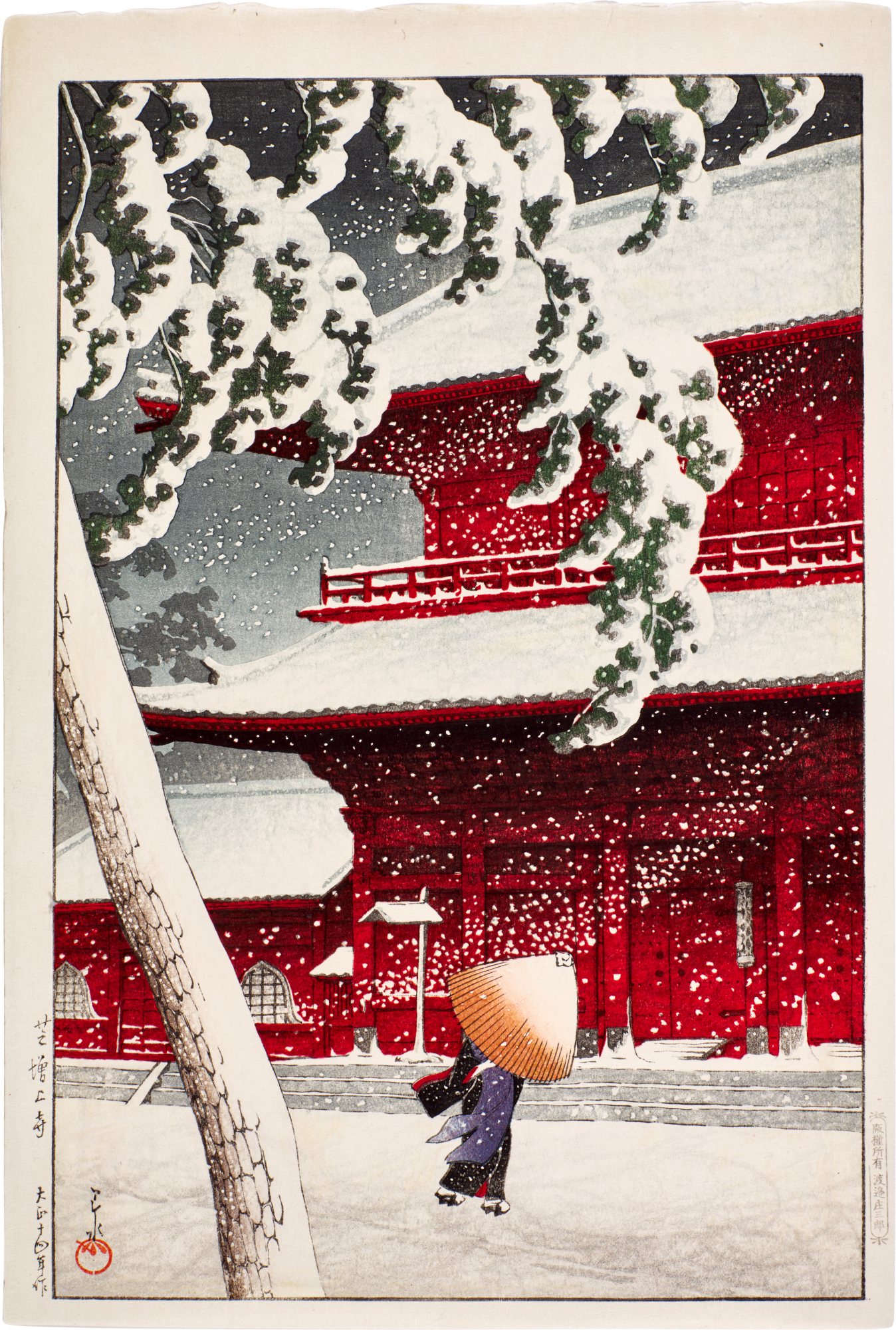
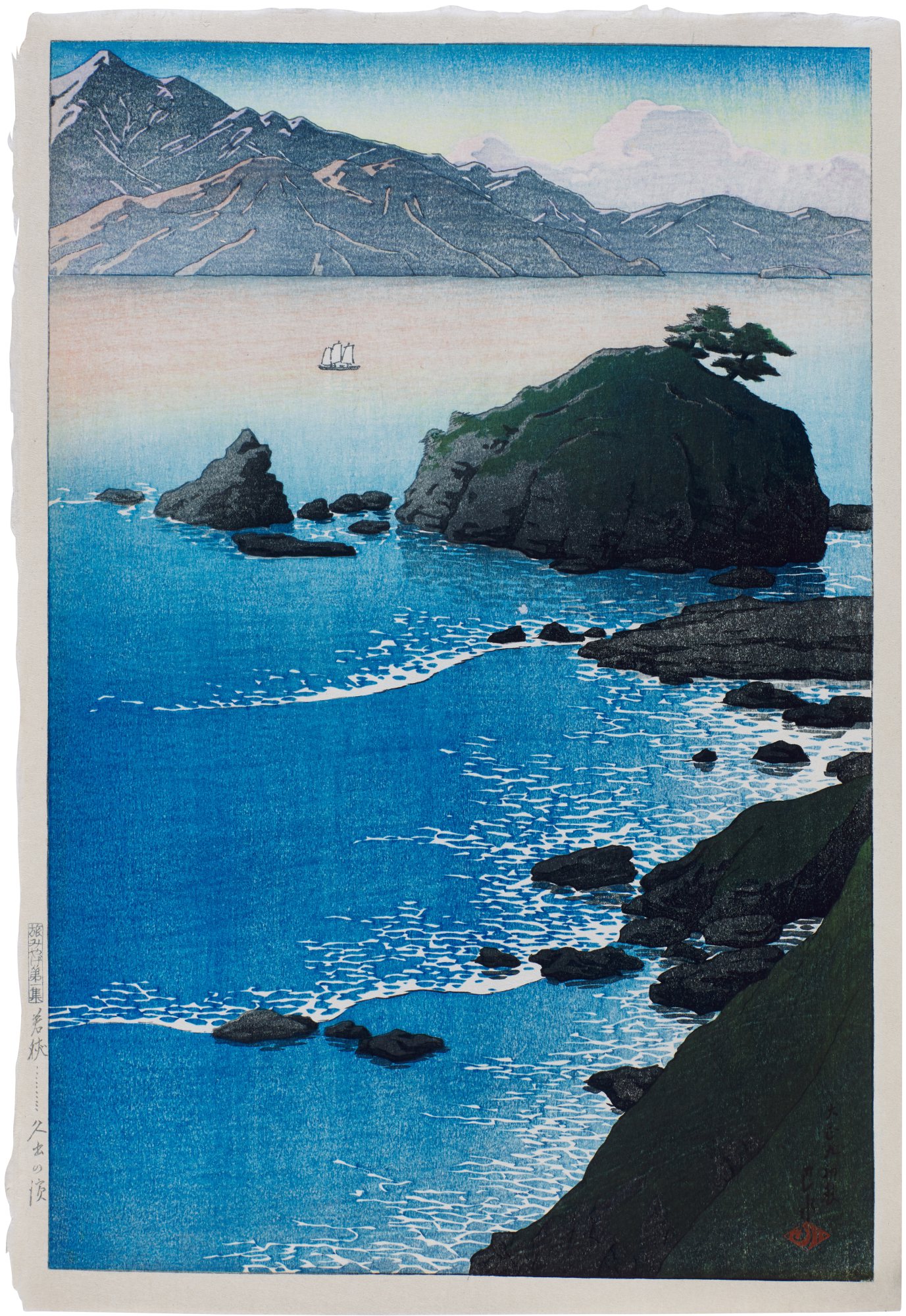
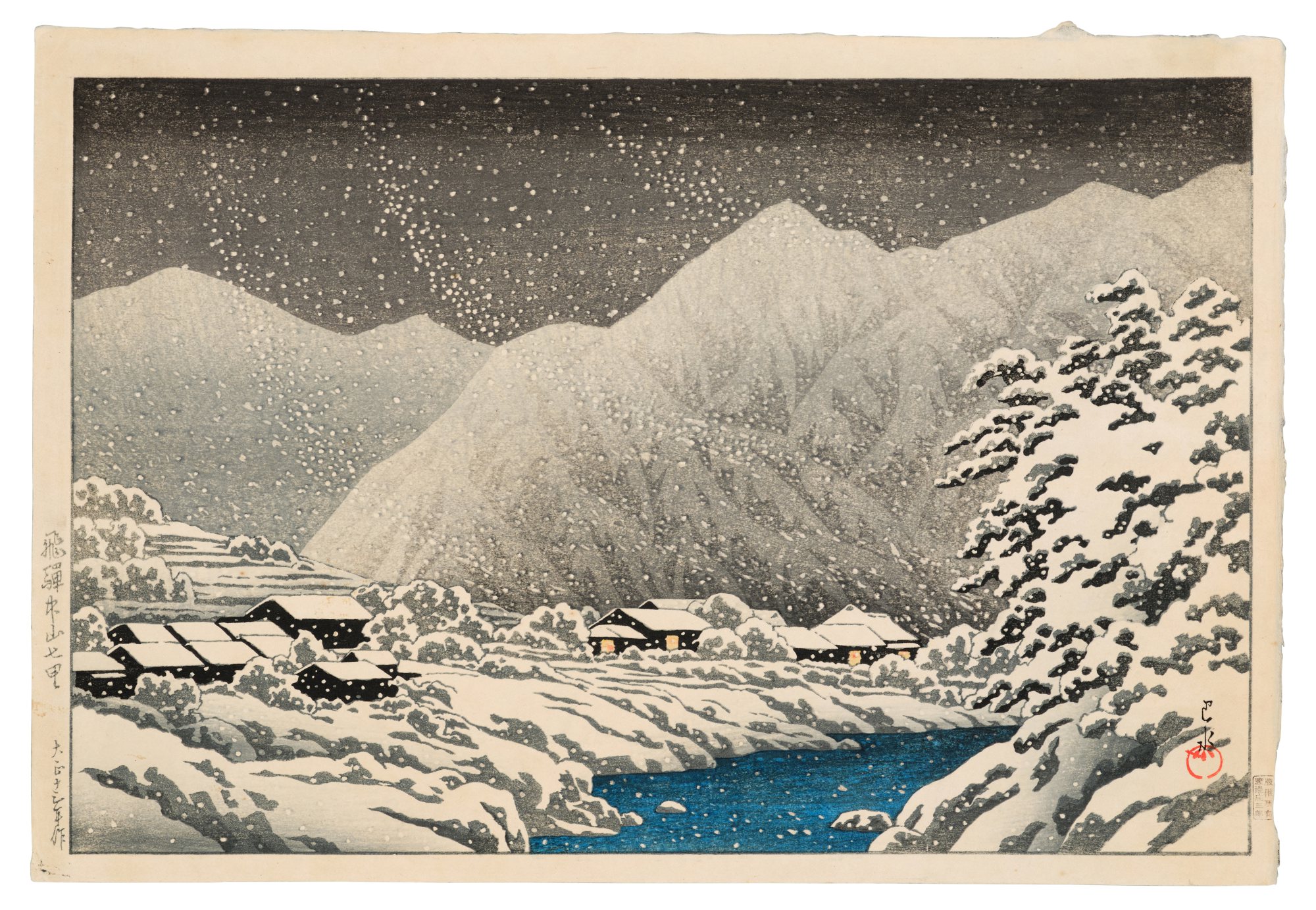
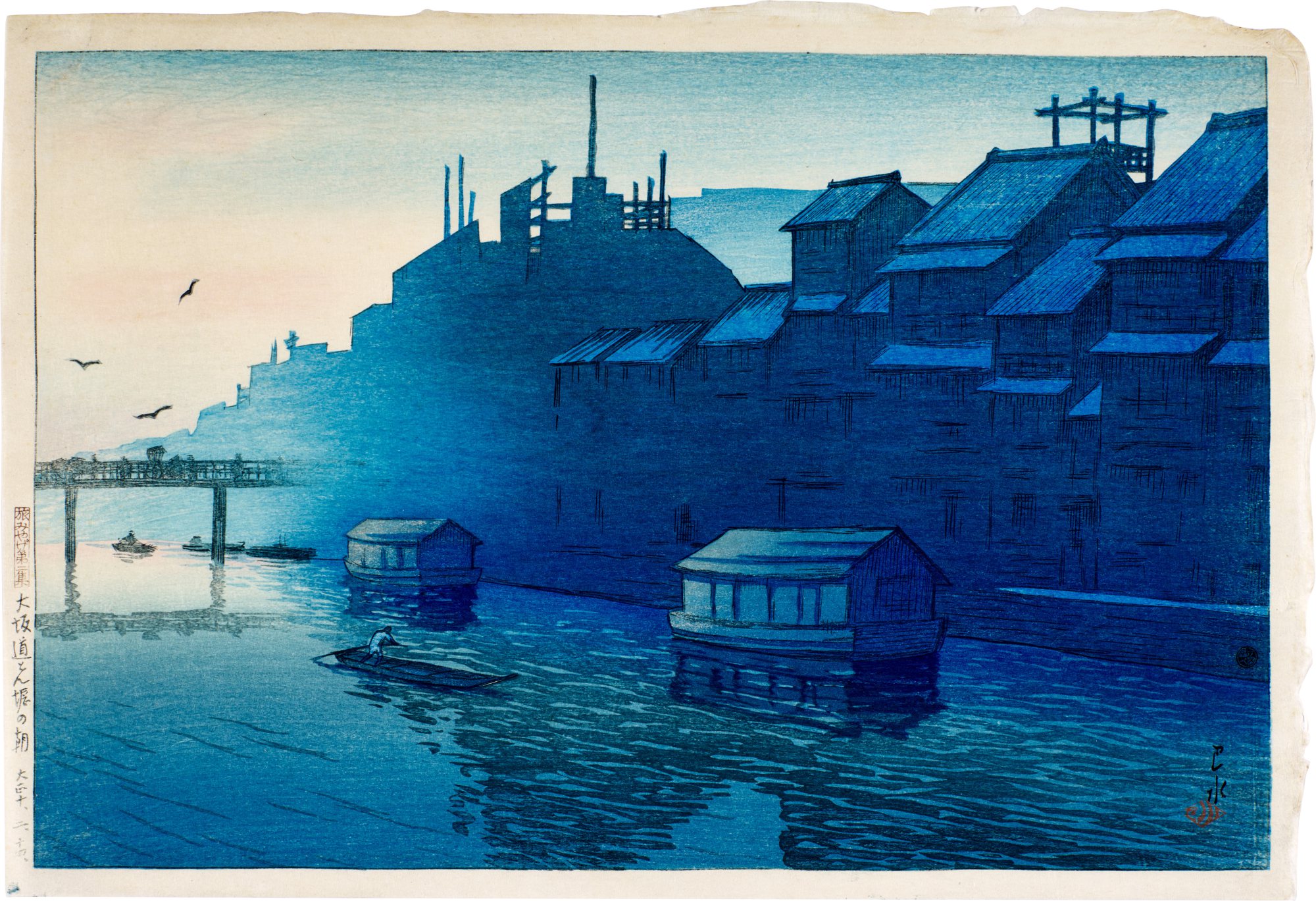
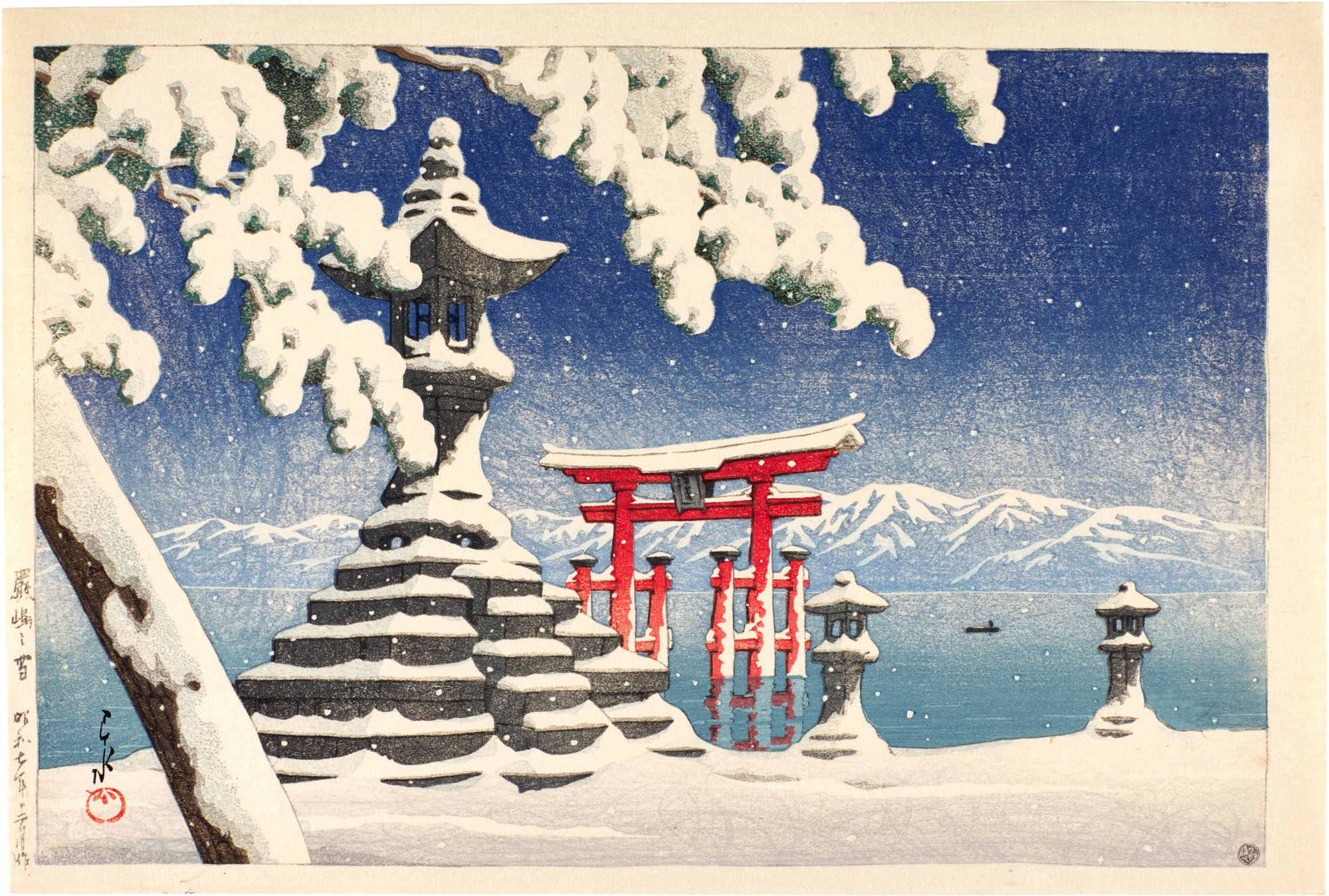
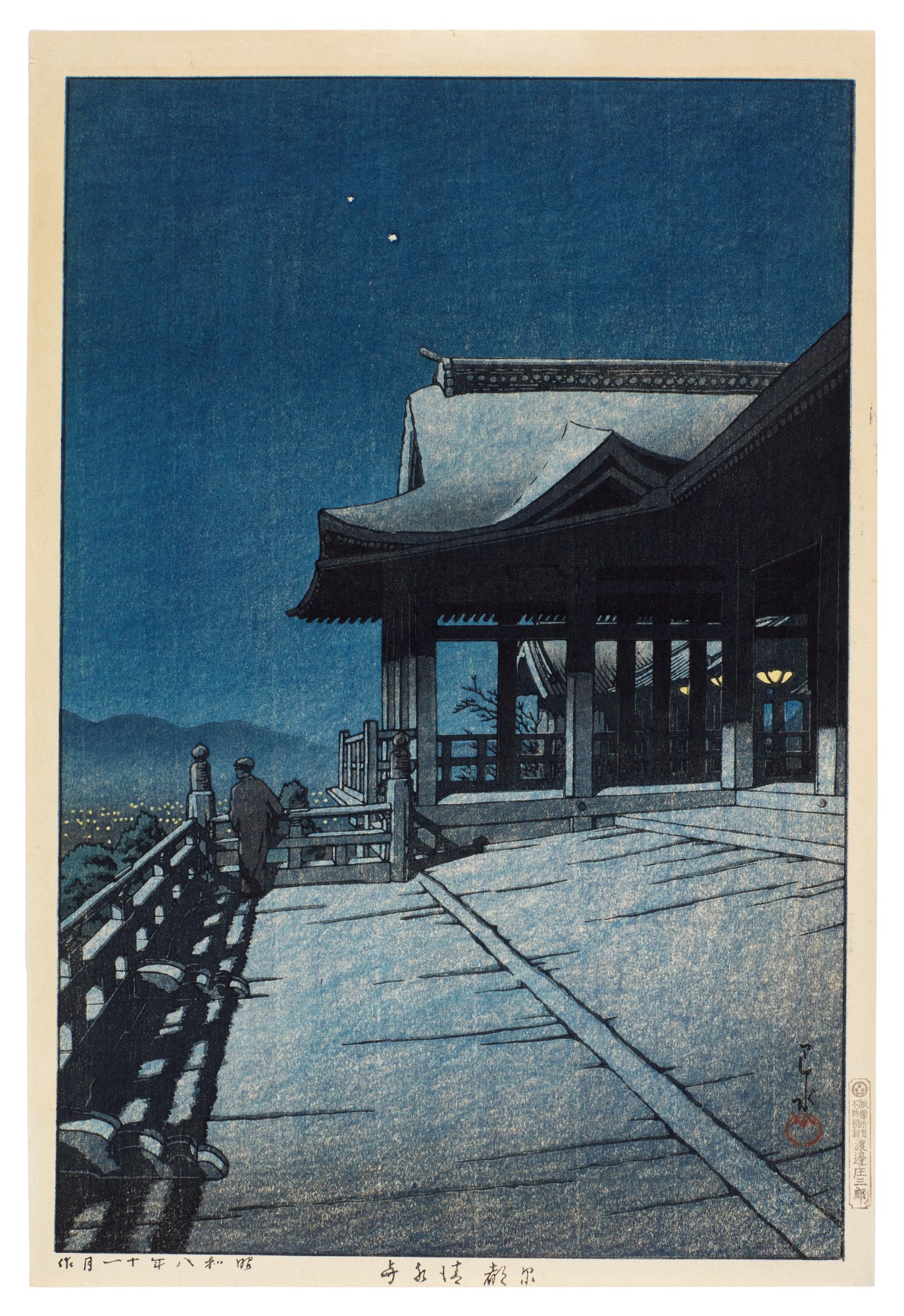
There is a particular quality of silence that descends when you stand before a woodblock print by Kawase Hasui. It is the silence of a temple courtyard after snowfall, of lantern light trembling on the surface of a canal at dusk, of a lone traveler pausing on a mountain road as mist rises from the valley below. In 2023, the Museum of Fine Arts in Boston mounted a significant presentation of shin hanga prints that brought renewed international attention to the movement Hasui helped define, drawing record visitor numbers and inspiring a wave of new scholarship. Meanwhile, at auction houses from Tokyo to New York, Hasui's works have continued to command serious collector interest, with fine impressions consistently achieving results that reflect both the rarity of pristine early printings and a deepening global appreciation for the aesthetic philosophy he embodied across a career spanning more than four decades. Kawase Hasui was born in Tokyo in 1883, in the Nihonbashi district, to a family of merchant background. From an early age he demonstrated a passionate interest in drawing and design, and he pursued formal training in Western painting alongside classical Japanese techniques before his path decisively turned toward the woodblock print. The pivotal relationship of his artistic life began when he came under the mentorship of Watanabe Shozaburo, the visionary publisher who would become the driving force behind the shin hanga movement. Watanabe recognized in the young Hasui a rare sensitivity to landscape and atmosphere, and their partnership, which began around 1918, would prove one of the most fruitful collaborations in the history of Japanese printmaking. The shin hanga movement, which translates loosely as "new prints," emerged in the early twentieth century as a conscious renewal of the ukiyo e woodblock tradition in dialogue with Western Impressionist ideas about light, mood, and individual artistic expression. Where the great Meiji era print workshops had often prioritized commercial production and standardization, shin hanga returned creative authority to the artist while maintaining the collaborative craft of the traditional atelier, involving master carvers and printers working in concert with the designer. Hasui embraced this model with extraordinary energy, traveling extensively throughout Japan from the 1910s onward, filling sketchbooks with observations of temples, coastlines, rivers, mountain passes, and city streets in every season and every weather condition. This commitment to direct observation gave his work a grounded authenticity that set him apart from artists who relied on imagination or compositional convention alone. Hasui's artistic development reached a moment of crisis and renewal in 1923, when the Great Kanto Earthquake devastated Tokyo and destroyed much of Watanabe's stock of printing blocks, along with a significant portion of Hasui's own preparatory materials. Rather than diminishing his output, this catastrophe seemed to deepen his resolve. The subsequent years saw him travel even more widely, venturing to the northern island of Hokkaido, to the southern volcanic landscapes of Kagoshima, and to the ancient cultural centers of Kyoto and Nara, gathering the visual material that would fuel some of his finest mature work. The print known as Sakurajima in Kagoshima, depicting the brooding volcanic island reflected in the still waters of Kinko Bay, exemplifies the grandeur he could summon from the natural landscape of Japan's extremities. It is a composition of remarkable economy and power, the volcano rendered with a solemnity that feels almost devotional. Among his most beloved works, Zojoji Temple in Shiba stands as a touchstone of the entire shin hanga movement. First published in 1925, it presents the great gate of the Edo period temple emerging through a snowstorm, a crimson torii dissolving into white, figures reduced to suggestions of warmth and motion against the cold. The image captures something essentially Japanese in its sensibility: the beauty that exists precisely because it is impermanent, the way a moment of weather can transform a familiar place into something mysterious and new. Morning in Dotonbori, Osaka brings an entirely different register, the neon and lantern reflections of Osaka's great entertainment canal rendered with an almost jazzy modernity that demonstrates Hasui's ability to find poetry in the urban as readily as in the rural. Kiyomizu dera Temple in Kyoto, with its wooden stage projecting over the forested hillside, and the coastal drama of Kude Beach in Wakasa Province reveal the full geographic and emotional range of his vision. For collectors, Hasui's prints present a particularly rewarding field of study and acquisition. The quality of an impression is everything: the earliest printings from Watanabe's workshop, produced with the finest pigments on the highest grade hosho paper, possess a luminosity and depth of color that later reprintings cannot replicate. Collectors and curators speak of the way early Hasui impressions seem to glow from within, particularly in the rendering of snow and water at night, effects achieved through the precise layering of pigment across multiple hand carved blocks. Works from the Taisho period, roughly 1912 to 1926, are especially prized, as are the Showa era prints in which Hasui's mastery of the medium reached its fullest expression. The artist received Japan's highest cultural honor in 1956, when he was designated a Living National Treasure, recognition that confirmed what collectors had long understood: that his contribution to Japanese visual culture was irreplaceable. In the broader context of art history, Hasui occupies a position of unique importance as both a conservator of a centuries old tradition and an innovator who brought that tradition into genuine dialogue with modernity. His closest companions in the shin hanga movement include Hiroshi Yoshida, whose more architectural sensibility and international travels produced a body of work that parallels Hasui's in ambition if not in temperament, and Ito Shinsui, whose figure studies complemented Hasui's landscape focus within the Watanabe publishing house. Further back, the lineage runs through Hiroshige and Hokusai, the great Edo period masters whose landscape prints established the compositional grammar Hasui both inherited and transformed. Western collectors of the early twentieth century, including Frank Lloyd Wright, recognized the formal sophistication of Japanese printmaking and helped build the international market that continues to thrive today. Kawase Hasui died in 1957, having produced well over six hundred designs across his career, a body of work that constitutes an incomparable visual atlas of Japan in the first half of the twentieth century. Many of the places he depicted have changed beyond recognition; some were destroyed in the Second World War; others persist but are surrounded now by urban growth that his prints mercifully exclude. This is part of what gives his work its tender poignancy for contemporary viewers: these are not merely beautiful images but records of a world that existed, observed with a loving and meticulous eye. To own a Hasui print is to hold a piece of that vanished world, to participate in the long chain of appreciation that runs from the Watanabe workshop to the present day. His prints invite not passive admiration but a kind of contemplative companionship, asking the viewer to slow down, look carefully, and find in the particular the universal.