New Realism
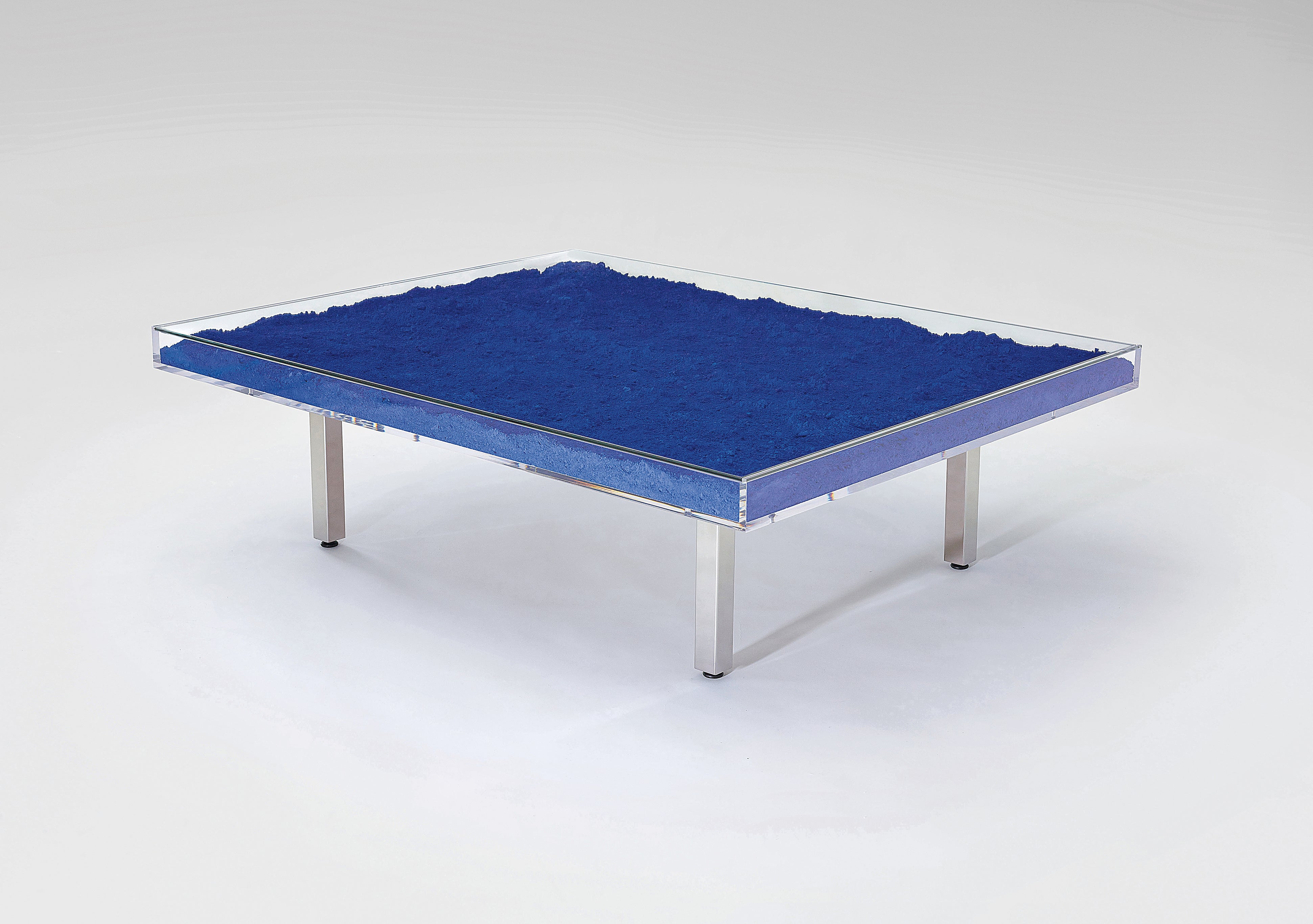
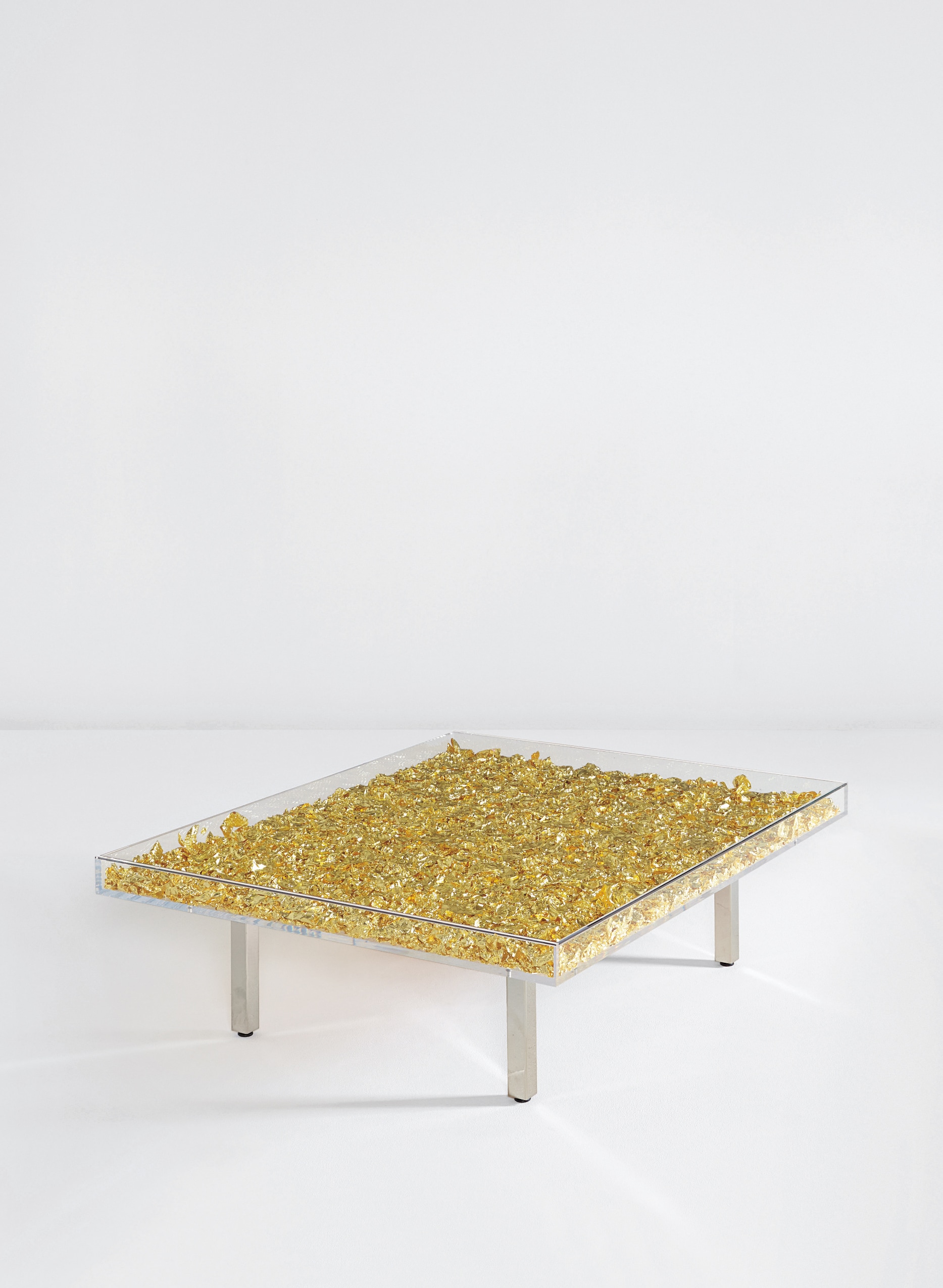
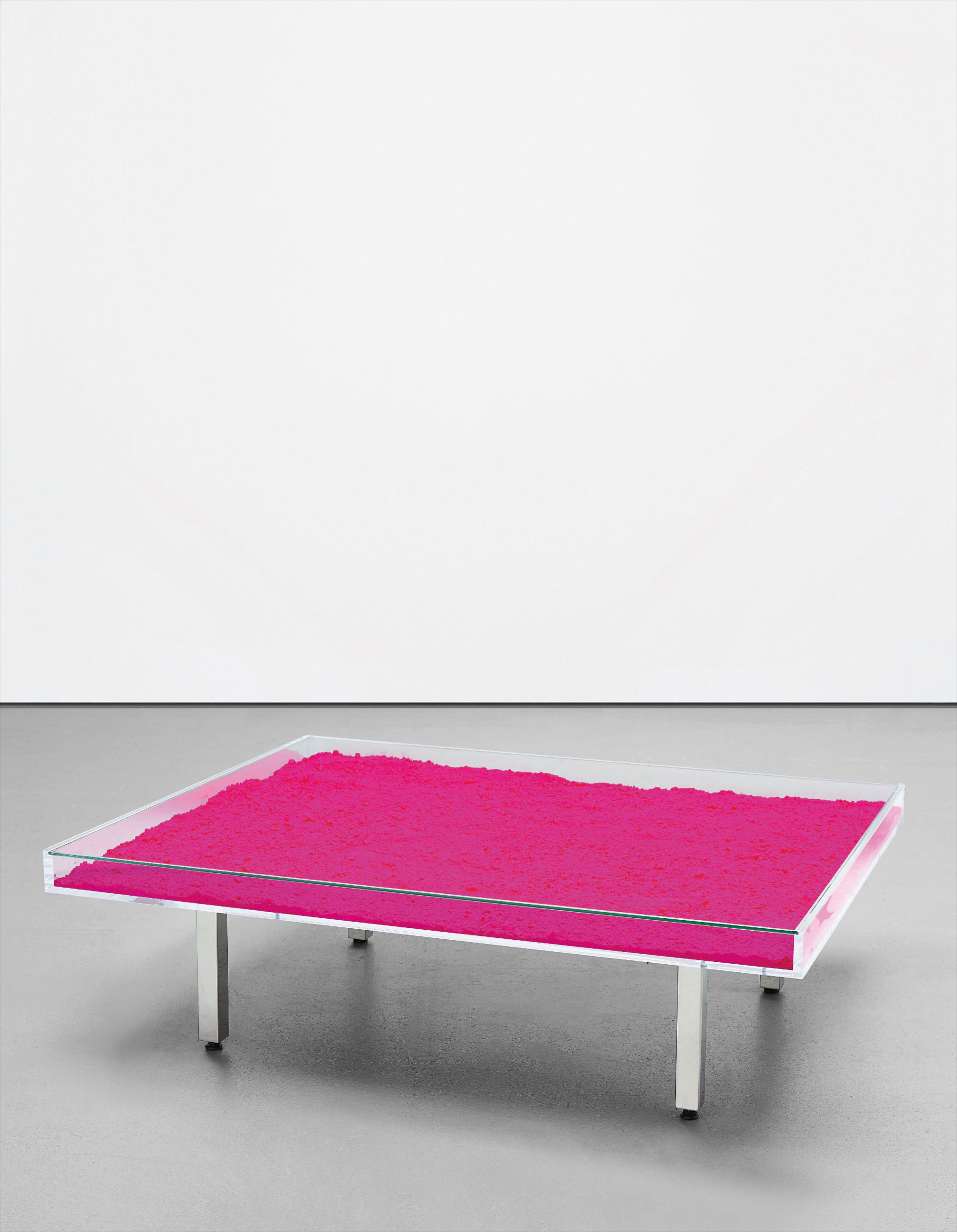
Yves Klein
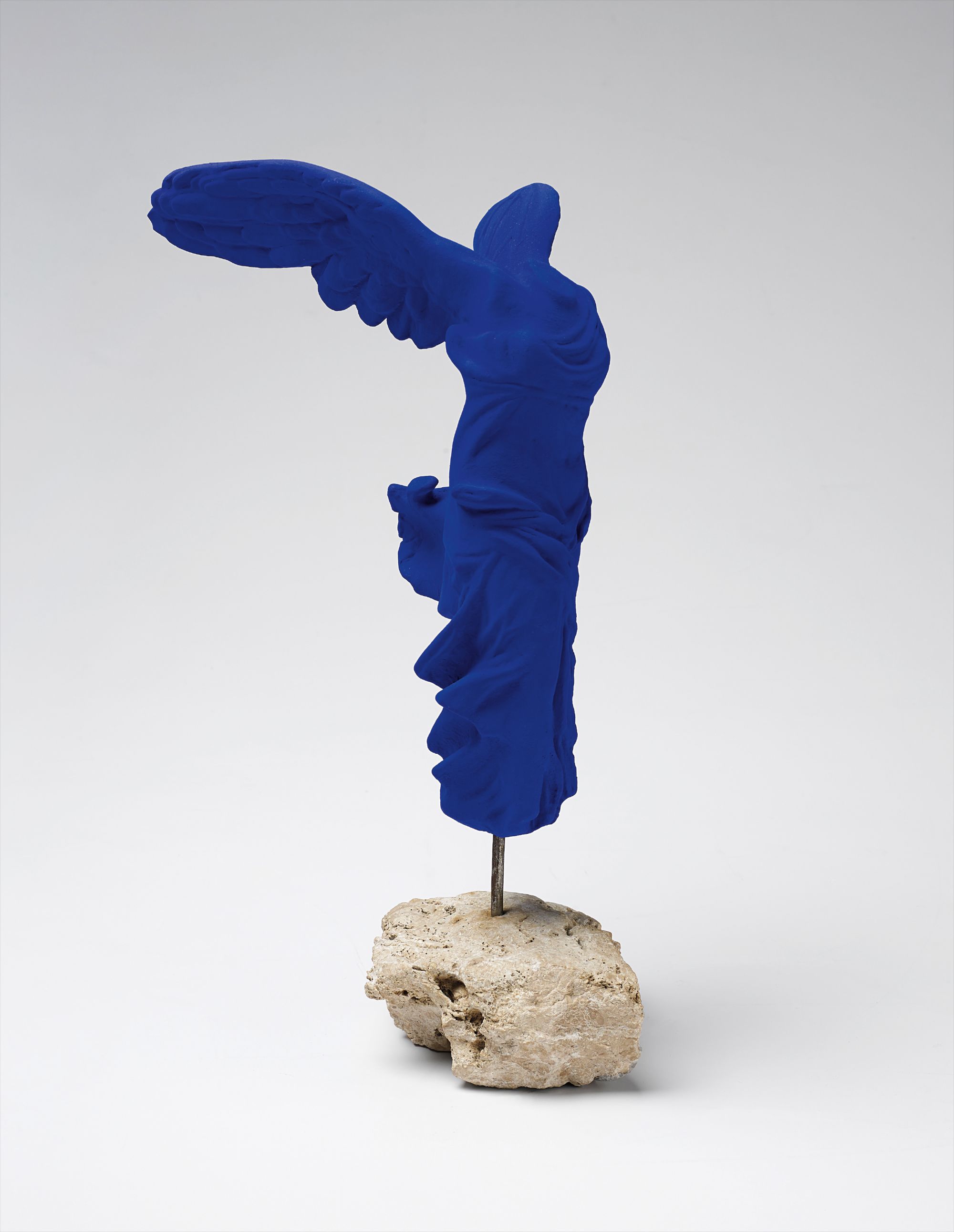
La Victoire de Samothrace, (S 9)
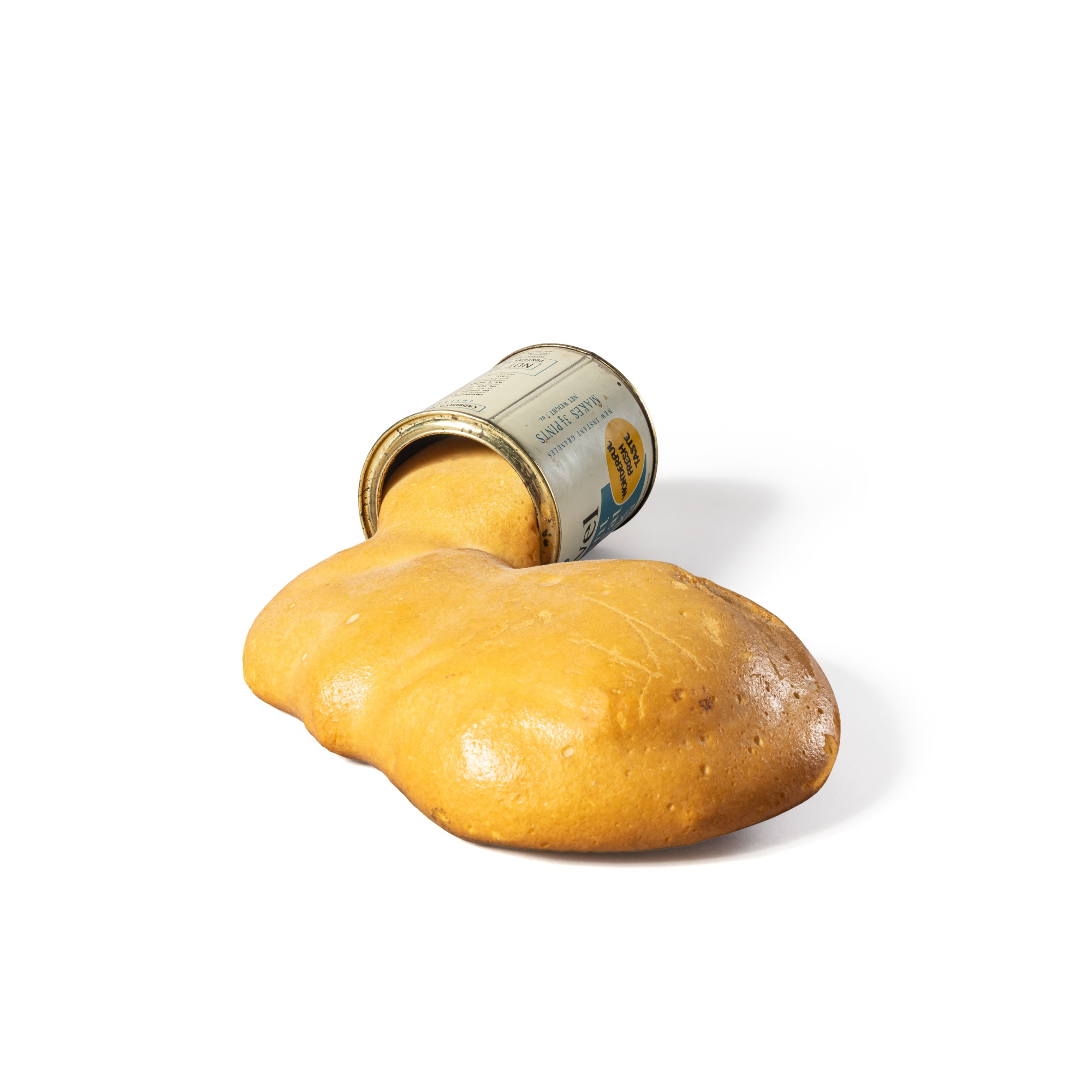
The Radical Act of Seeing Things Whole
When a wrapped object by Christo sold for a staggering sum at Christie's Paris a few seasons ago, the room understood something larger was happening than a single lot changing hands. The result confirmed what collectors in the know had been saying quietly for a while: the artists who gathered around Pierre Restany and signed his 1960 manifesto in the back of Yves Klein's studio had not merely made their mark on a decade. They had set terms for how contemporary art understood the everyday object, the found gesture, and the sovereignty of raw material over refined technique. The Nouveaux Réalistes, as they named themselves, are having a sustained and serious cultural moment, and the market is catching up to what museums figured out some time ago.
The Centre Pompidou has returned to this territory repeatedly in recent years, organizing loan exhibitions and thematic surveys that position the movement not as a historical curiosity but as a living argument. Shows pairing Nouveau Réalisme with Arte Povera and Fluxus have demonstrated how much these interconnected sensibilities still animate contemporary practice. When the Tate Modern staged its deep dive into postwar European abstraction and assemblage, the Nouveaux Réalistes emerged as the connective tissue between American Abstract Expressionism and the process based work that would follow in the late 1960s. Curators increasingly use this movement as a hinge, the pivot point where art stopped celebrating the painted surface and started ransacking the culture around it.
Yves Klein
La Victoire de Samothrace, (S 9)
At auction, Yves Klein commands the conversation with a confidence that has only grown more assured. His monochromes, particularly the International Klein Blue canvases that he essentially patented as a color and a philosophy simultaneously, have achieved prices in the tens of millions at Sotheby's and Christie's over the past decade. The record results for Klein reveal something important about what collectors are actually buying: not just a surface, but a total proposition about the immaterial, about void as presence, about art that refuses to be a window onto something else and insists on being something in itself. When a Klein goes on the block, the room is full of people who understand they are bidding on a worldview.
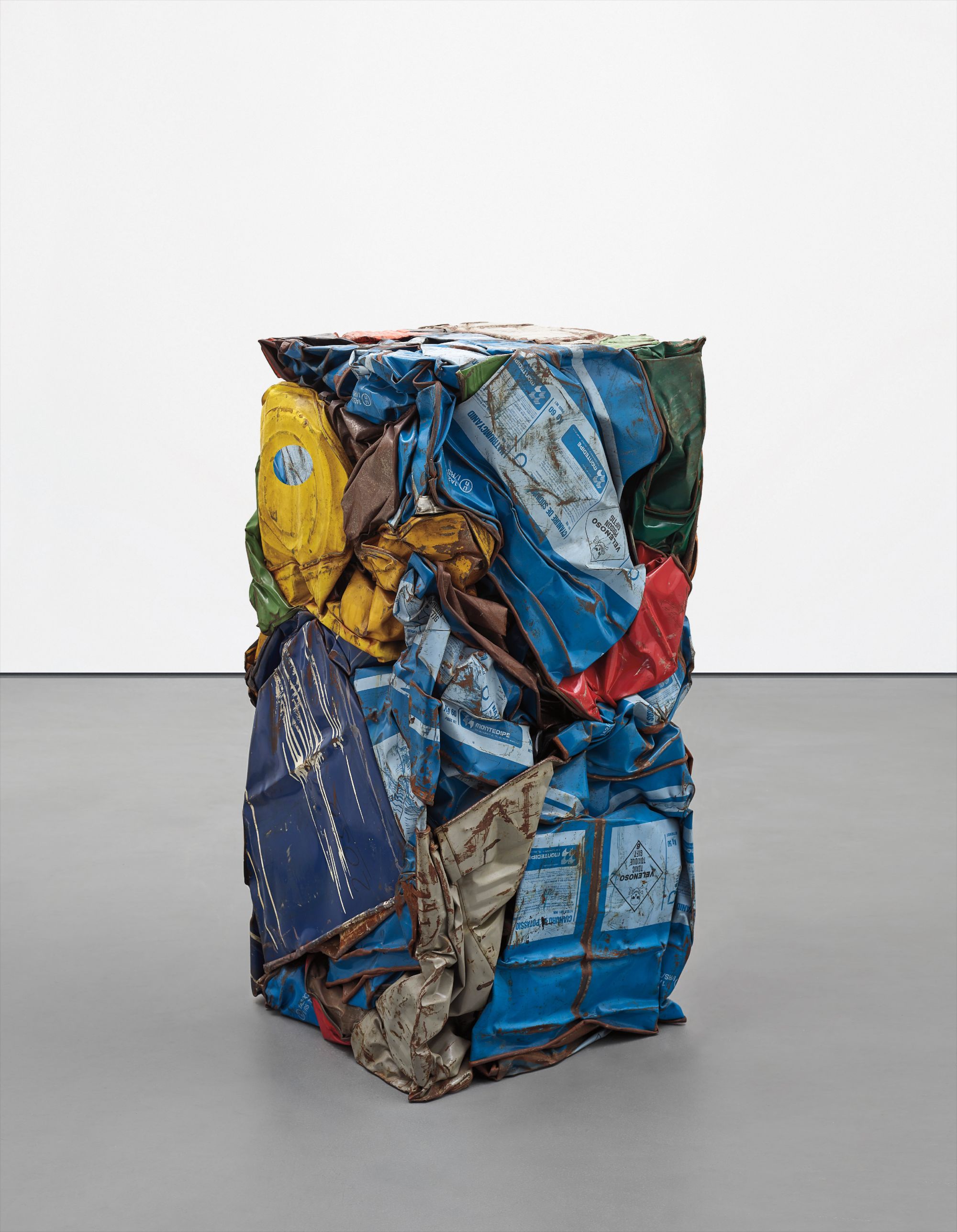
César occupies a different register within the movement, but one that is attracting serious attention from a new generation of collectors. His Compressions, those crushed automobile bodies elevated to sculpture through the sheer authority of the gesture, feel newly relevant in a cultural moment saturated with questions about industrial production, waste, and the aesthetics of collapse. Major works by César have come to auction at Artcurial and at the major international houses with increasing regularity, and the prices reflect a market that has moved beyond nostalgia into genuine conviction. Institutions in the Gulf and in Asia have been particularly active, which signals that César's appeal is not regional or sentimental but genuinely global.
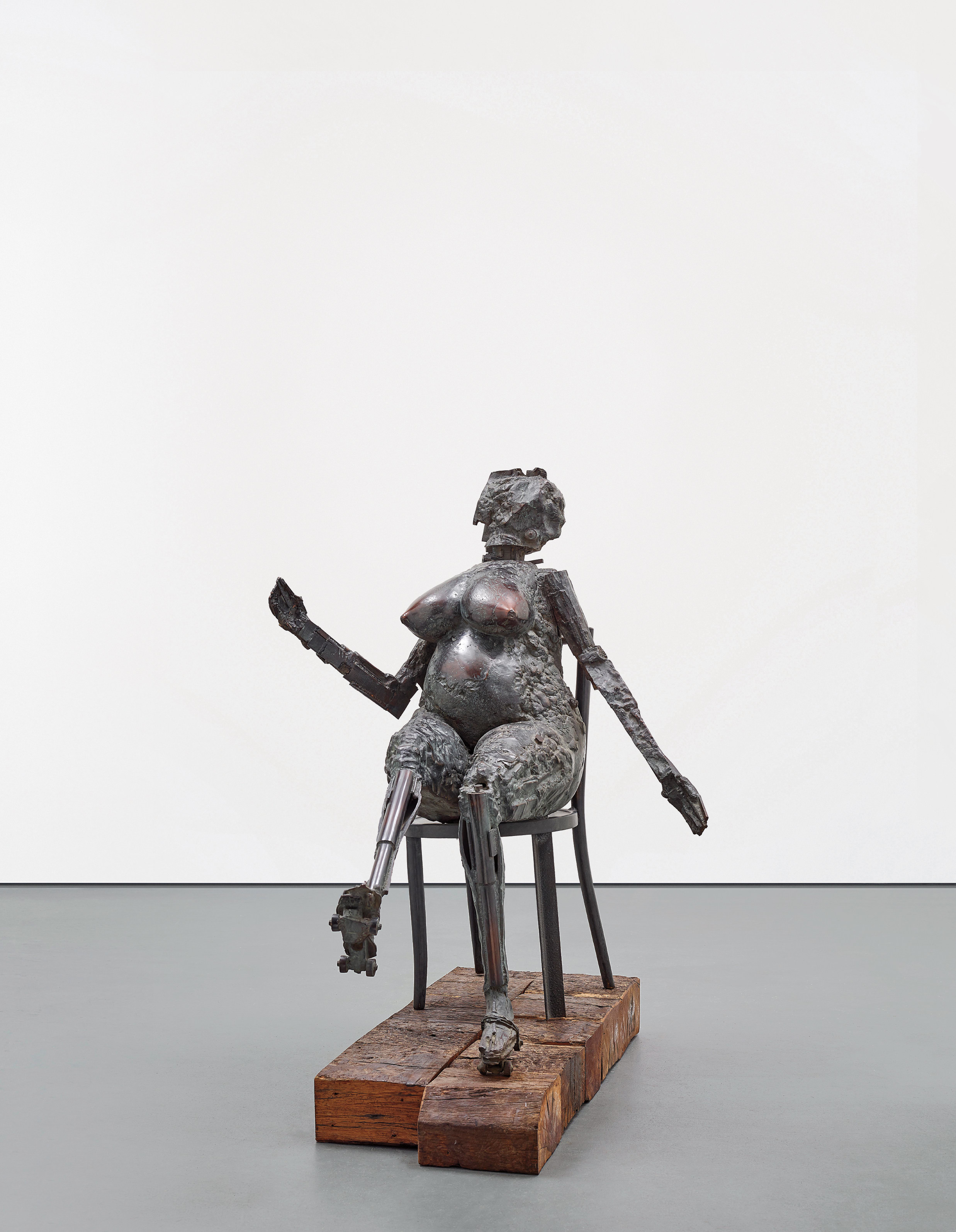
César
Les Roberts d'Evelyne, 1991
The critical conversation around Nouveau Réalisme has been sharpened considerably by a generation of scholars who grew up with the movement already canonized and are now asking harder questions about what it actually meant. Writers in Artforum and Frieze have examined the role of performance and spectacle in Klein's work with particular sophistication, moving past the iconic photographs of the Leap into the Void to consider how Klein staged his entire career as a kind of continuous artwork. The catalogue essays accompanying recent retrospectives have been unusually strong, with contributions from curators at the Musée d'Art Moderne de Paris who have privileged access to archival materials that reframe familiar works. What is emerging is a picture of the movement as far more theoretically ambitious than its early critics allowed.
The American context for Nouveau Réalisme is sometimes overlooked, but it matters enormously for understanding how these ideas traveled. Alfred Leslie, working in New York with a very different set of assumptions, offers a fascinating counterpoint: his turn toward unflinching figuration in the same period that Klein was dissolving the figure entirely speaks to the range of possibilities that postwar artists were navigating. Holding works by Leslie alongside those of the Nouveaux Réalistes, as The Collection allows, reveals the decade of the 1960s as a genuinely contested space rather than a straight line toward any single conclusion. The American and European experiments were in dialogue, sometimes direct and sometimes oblique, and collectors who engage with both traditions come away with a richer sense of what was at stake.
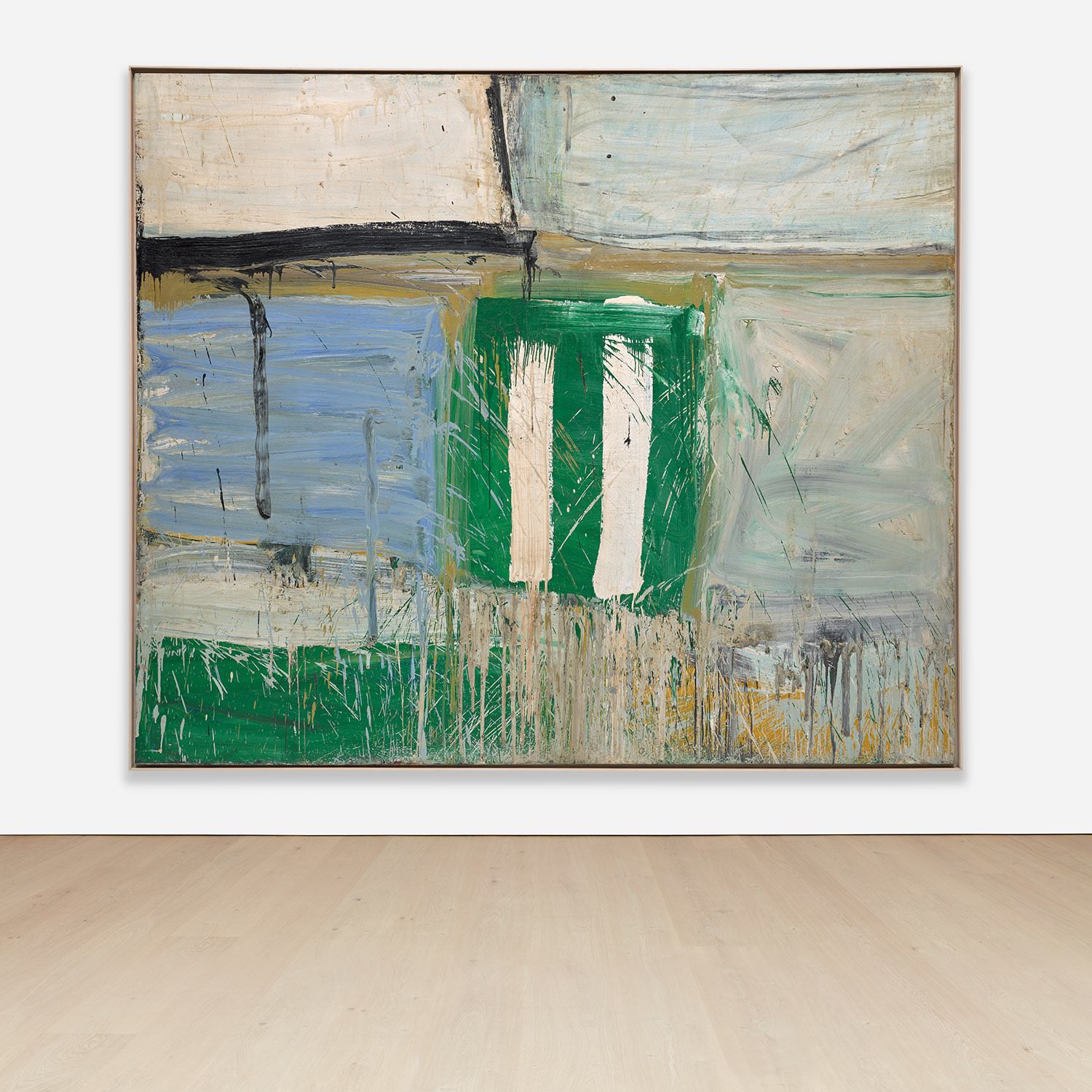
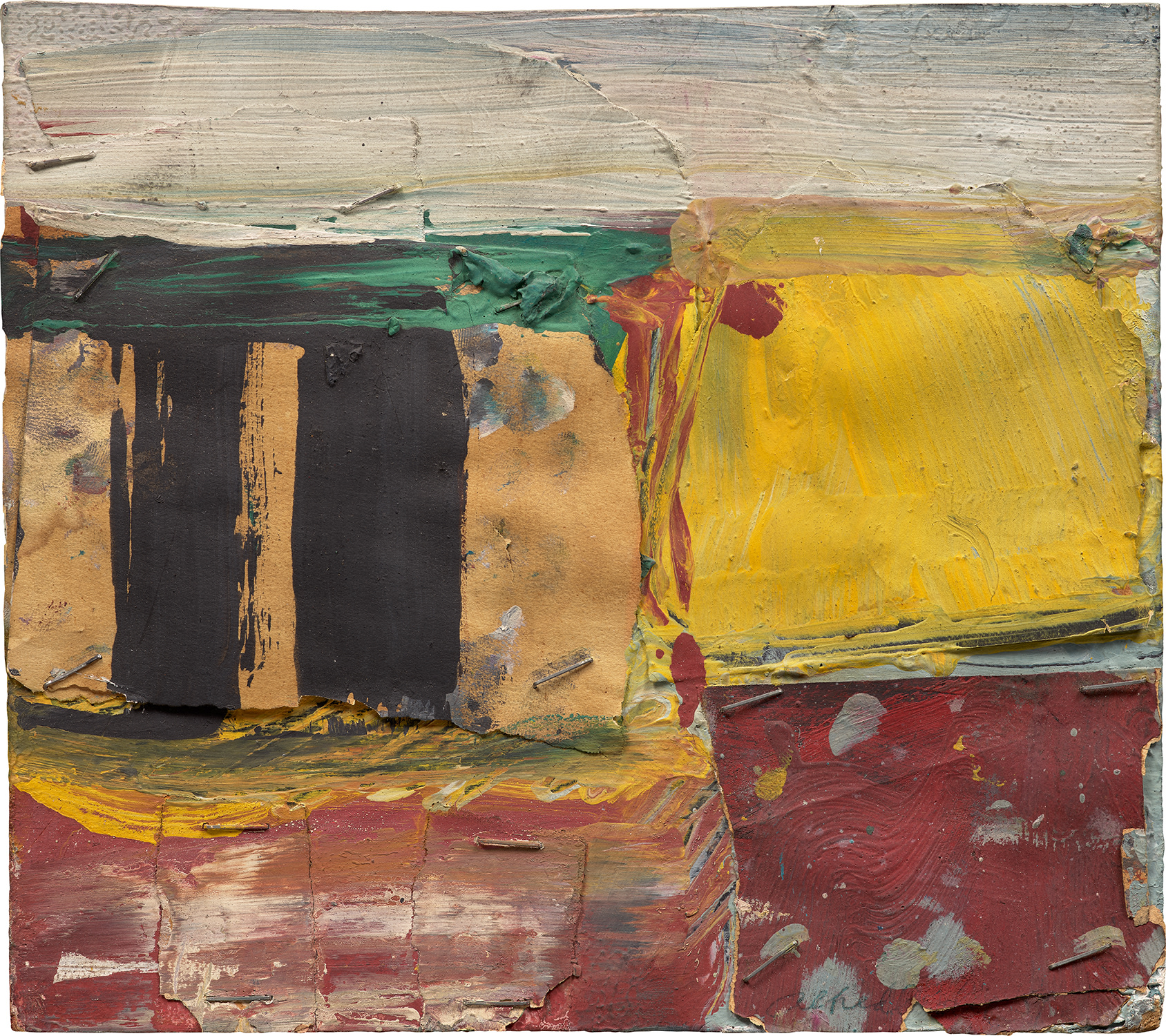
Alfred Leslie
Hipped, 1959
The energy right now feels concentrated around two questions that the market and the museum world are asking simultaneously. The first is institutional: which collecting bodies are willing to commit to major works by Klein and César at a moment when acquisition budgets are under pressure everywhere. The answer, increasingly, is private foundations and the larger platforms of the Middle East, whose encyclopedic ambitions make room for postwar European work that older American museums sometimes treat as settled history. The second question is generational: younger collectors who discovered the movement through design, through fashion, or through the vocabulary of contemporary artists who cite Klein and César as primary influences are now entering the serious auction market for the first time.
Their presence changes the temperature in the room. What no one predicted, and what feels most alive about Nouveau Réalisme right now, is how well the work reads on a screen. The monochromes, the Compressions, the accumulations and imprints that define the movement translate with surprising force to digital presentation, which has introduced them to audiences who have never stood in front of the physical objects. That experience of encounter through a screen, imperfect and incomplete as it is, sends people to galleries and fairs and viewing rooms hungry to understand what the reproduction cannot capture.
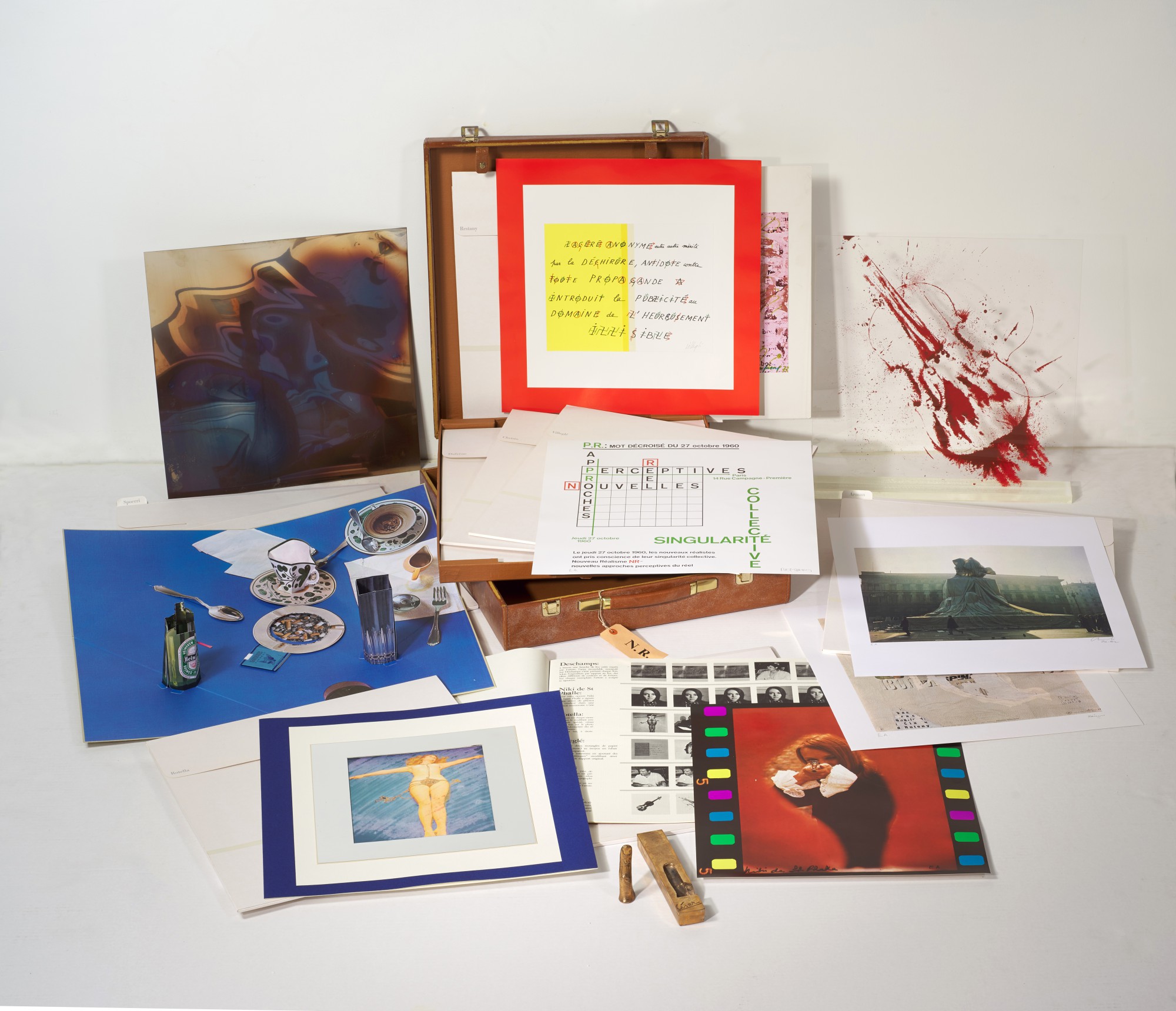
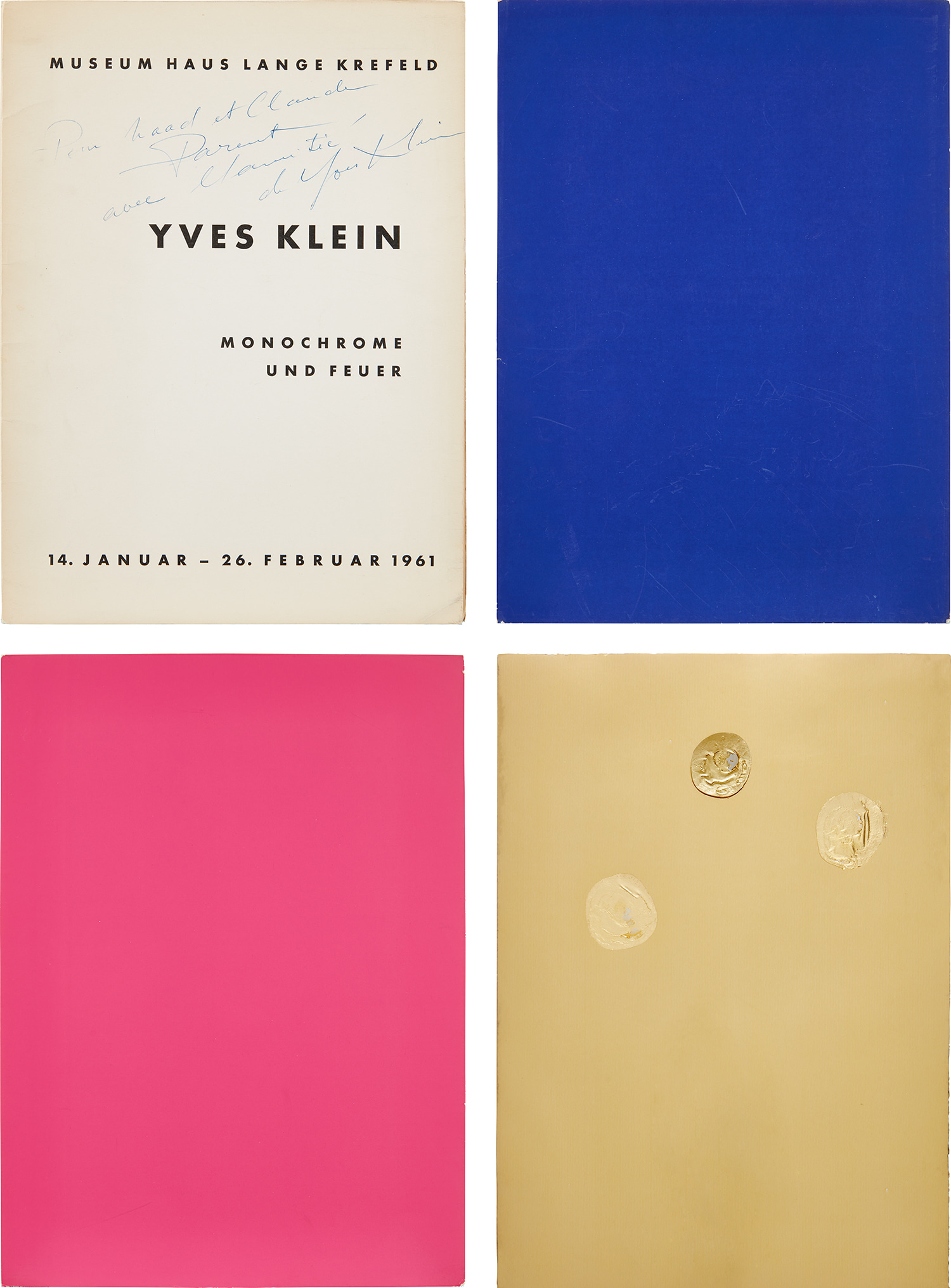
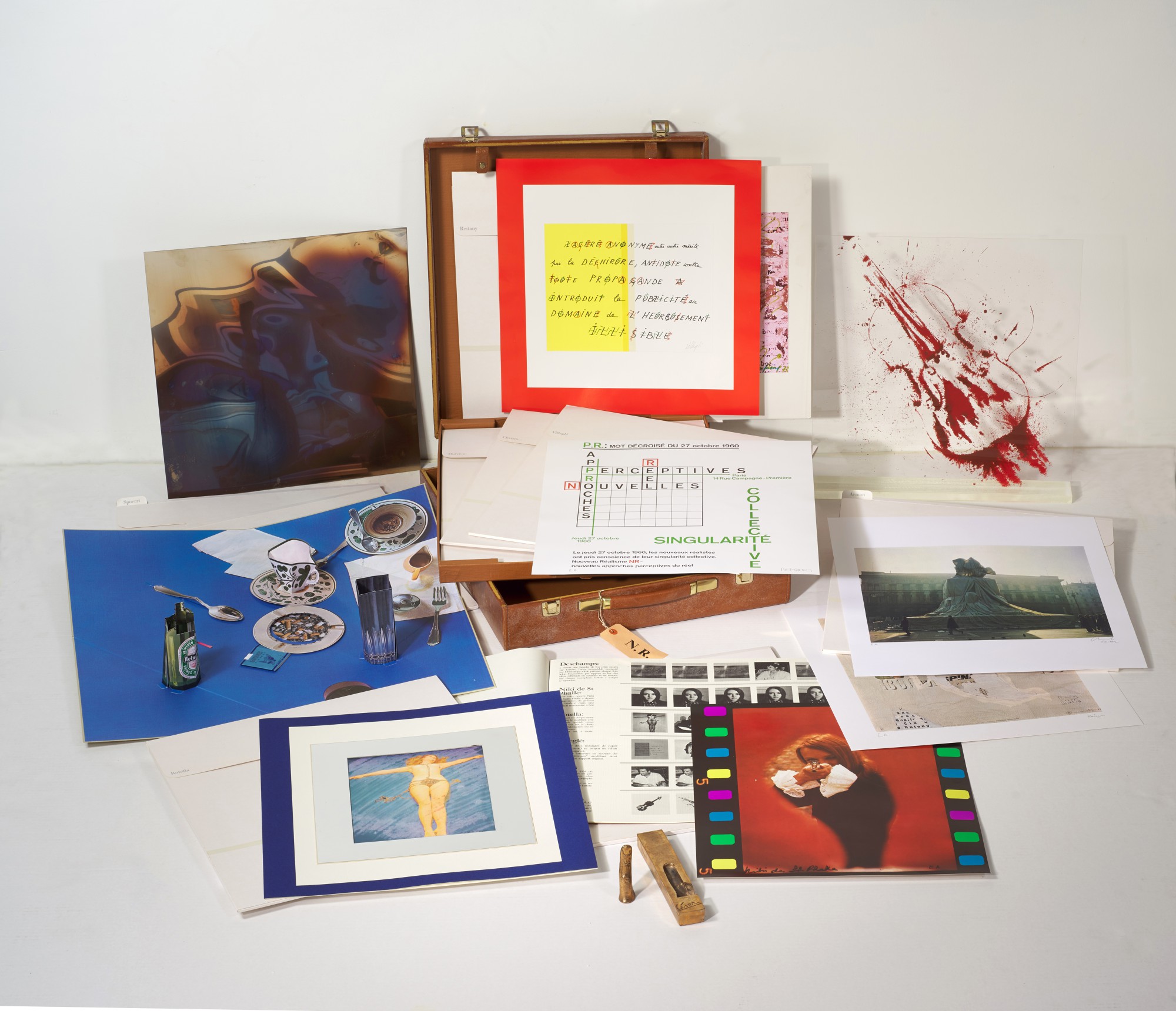
Les Nouveaux Réalistes
La valise des Nouveaux Réalistes , 1973
The works on The Collection are drawing exactly that kind of engaged, appetitive attention. The radical act Restany and his collaborators committed in 1960, insisting that the real world was sufficient material for art, turns out to be a proposition with a very long fuse.