Nature Theme
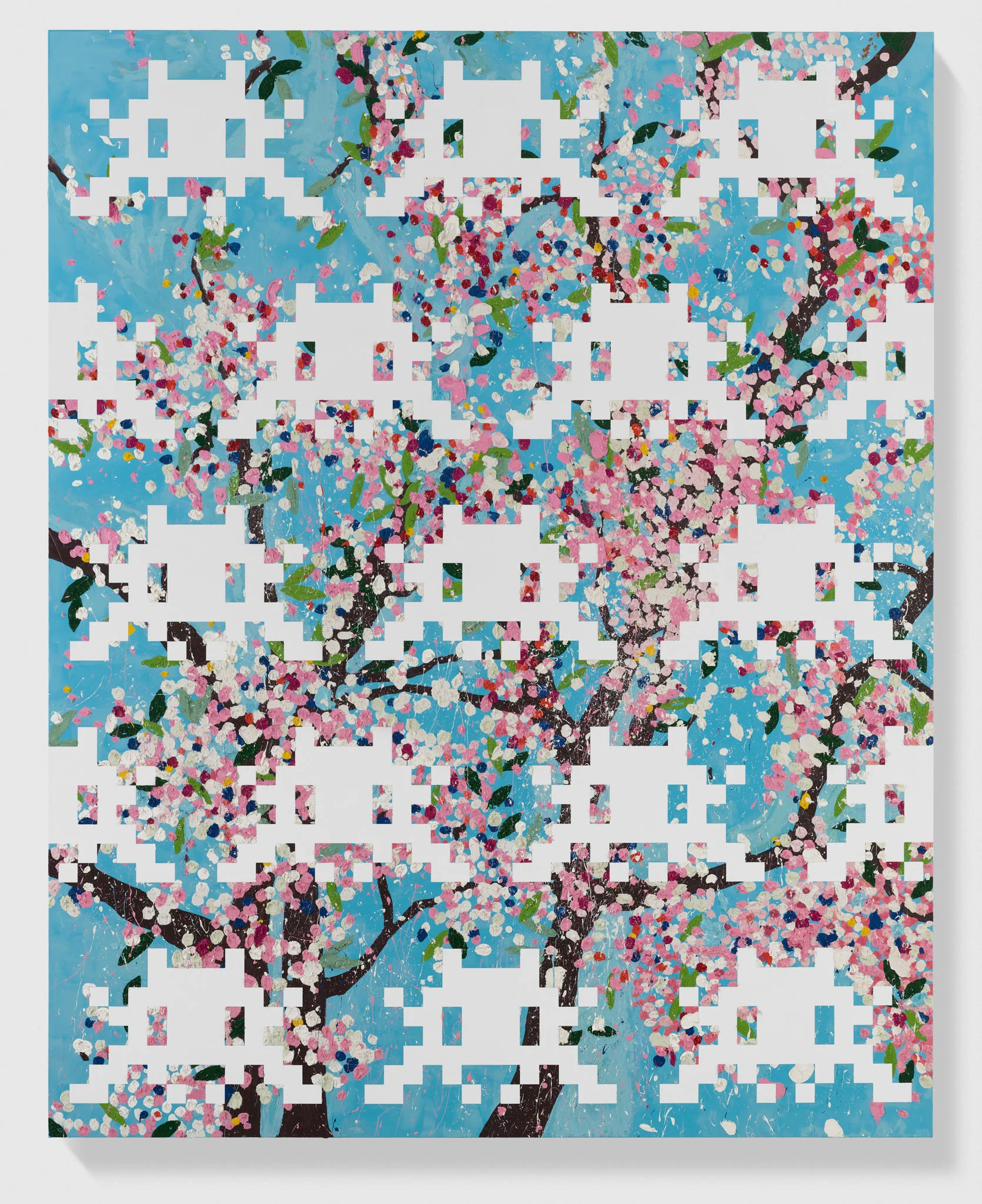
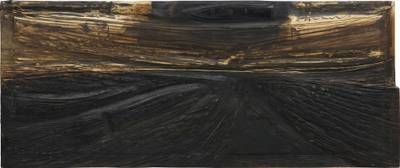
Damien Hirst
Invaded Blossom, 2025
The Wild World Art Cannot Stop Painting
There is something almost embarrassing about how urgently we keep returning to nature. After centuries of landscape painting, after Romanticism spent itself on sublime mountain vistas and tempestuous seas, after photography made the painted meadow seem redundant, after conceptual art declared the natural world beside the point entirely, here we are again. Collectors are acquiring it. Museums are exhibiting it.
Artists across every medium and generation are making work about forests, oceans, flora, fauna, and the slow catastrophe of a planet under pressure. Nature, it turns out, was never a subject we could put down. The history of nature as an artistic theme is, in one sense, the history of Western art itself. From the cave paintings at Lascaux, estimated at roughly 17,000 years old, to the meticulous botanical illustrations commissioned by Dutch trading companies in the seventeenth century, the natural world was the original subject.
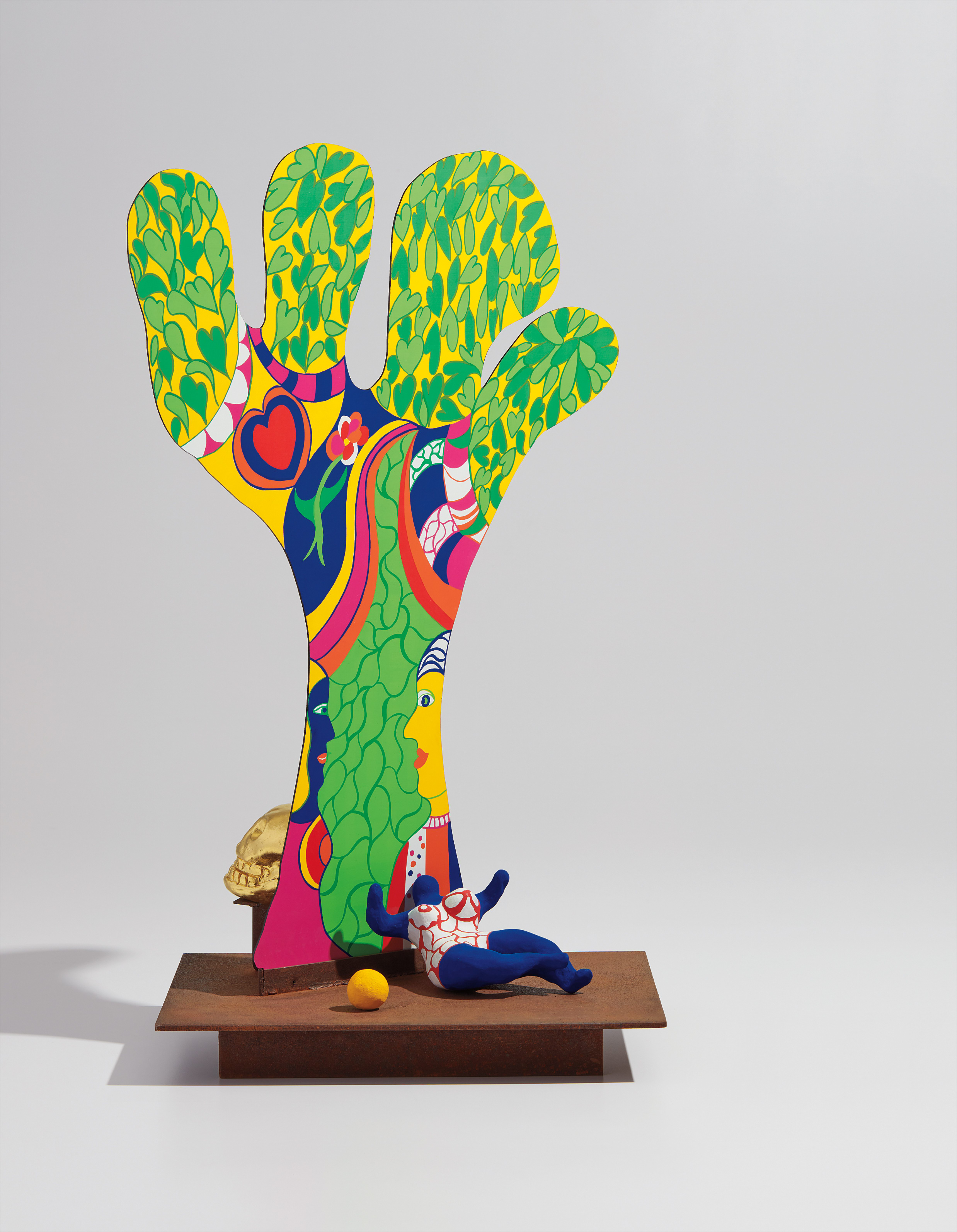
Niki de Saint Phalle
L'arbre de vie (The Tree of Life), from Mémorie de la Liberté suite
The Dutch Golden Age formalized nature into genre: still life arrangements of cut flowers, their petals already beginning to curl at the edges, carried an entire philosophy inside them. Those images were about beauty and mortality together, about the fleeting quality of things that bloom. That conversation never actually ended. It simply changed languages.
The Romantic movement gave nature a different register. Caspar David Friedrich placed solitary figures at the edge of fog covered valleys not to document landscape but to externalize interior states. John Constable was making cloud studies in the 1820s with a scientific rigor that anticipated both meteorology and a certain strain of contemporary ecological art. The Barbizon painters retreated into the Forest of Fontainebleau in the 1830s and 1840s partly in rebellion against academic convention, discovering that direct observation of light on leaves could be radical.
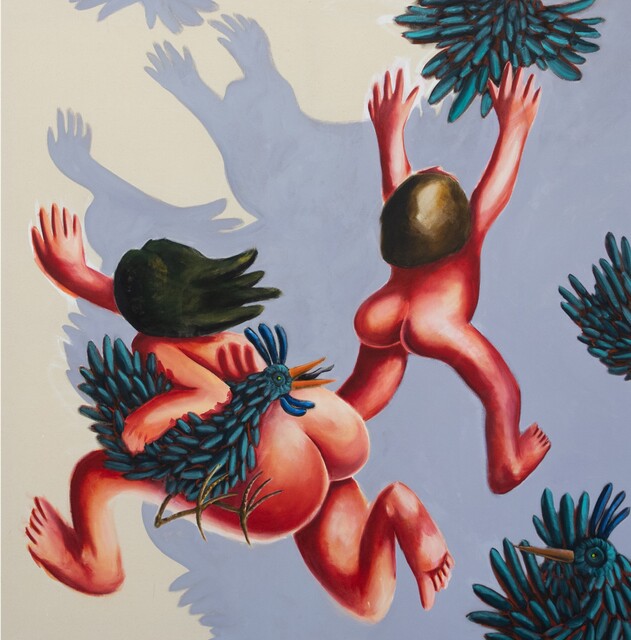
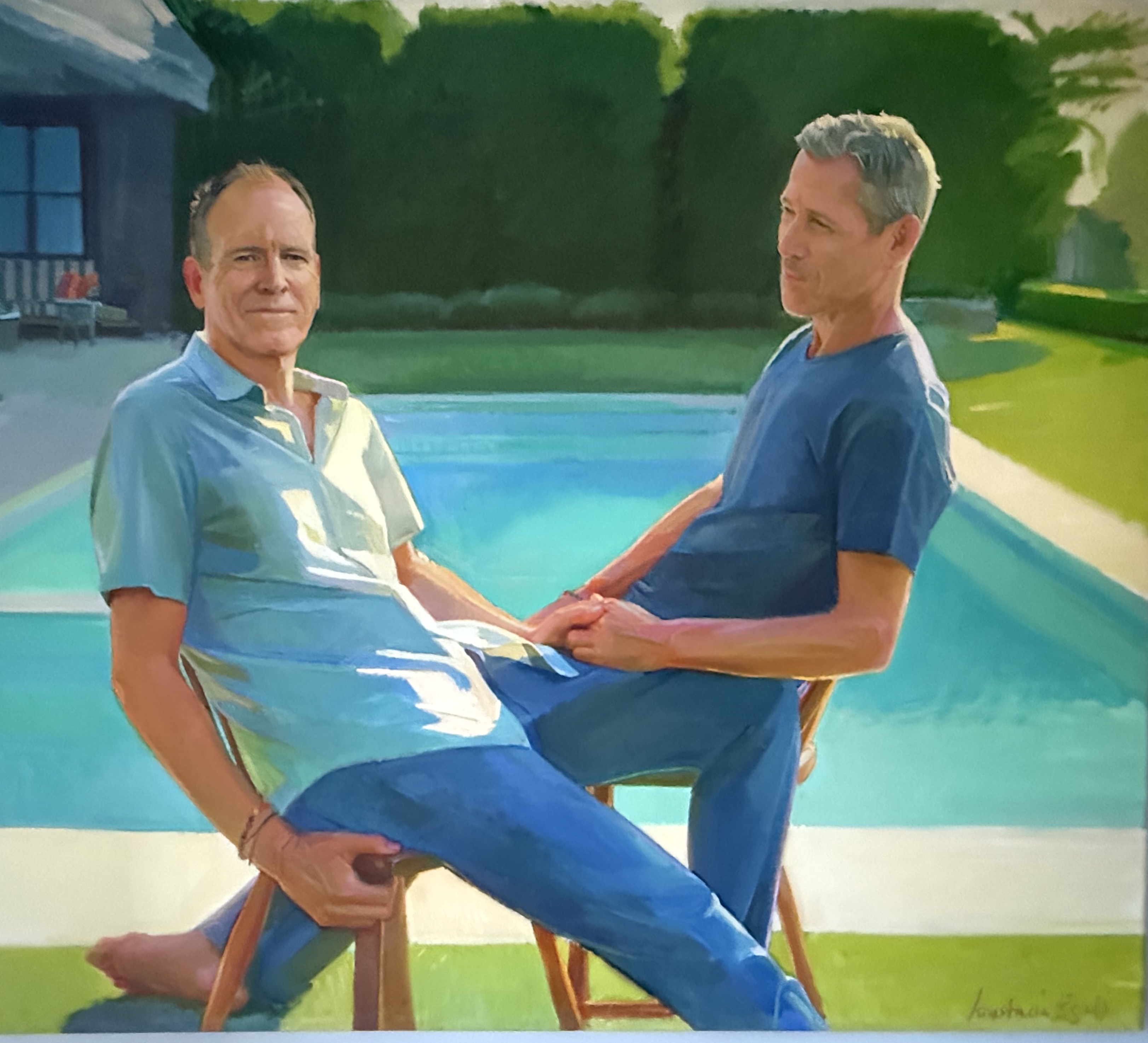
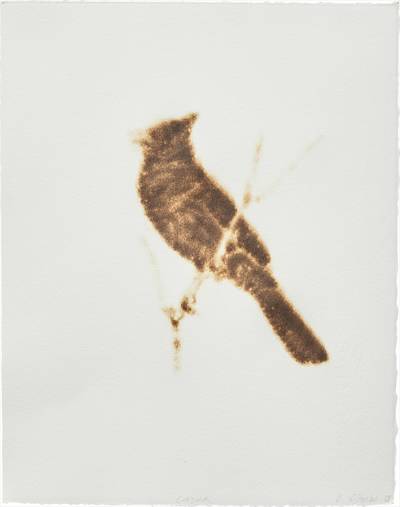
Tamara Malcher
The Day Is Full Of Birds, 2022
By the time the Impressionists arrived, nature was simultaneously a subject and a method, a way of training the eye to see freshly. The twentieth century complicated everything. Modernism largely abandoned direct representation, and nature became something to be abstracted, geometricized, or quoted ironically. And yet the pull remained.
Georgia O'Keeffe turned New Mexican desert into near abstract color fields. Andy Goldsworthy, working decades later, would spend entire days constructing ephemeral sculptures from leaves and ice and stone, leaving no trace except the photograph. Arte Povera in Italy during the late 1960s brought raw, unprocessed materials into the gallery, insisting that moss and earth and twigs were as worthy of contemplation as bronze. Land Art followed, with Robert Smithson's Spiral Jetty of 1970 becoming perhaps the defining image of an era in which the landscape itself became the canvas.
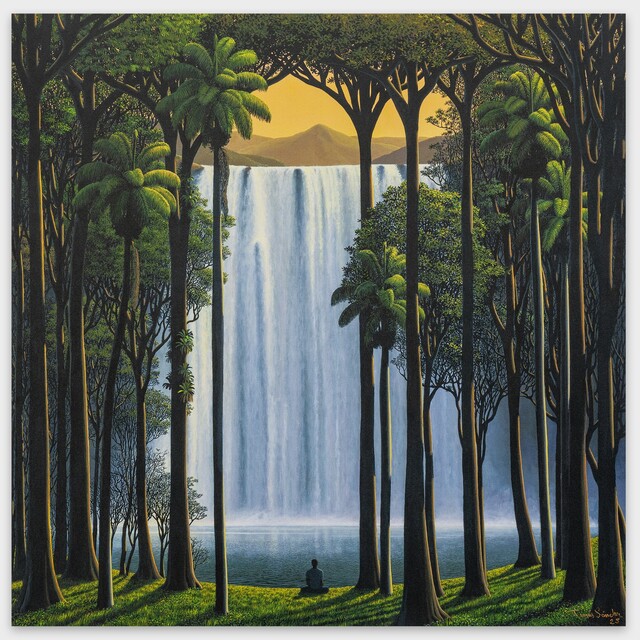
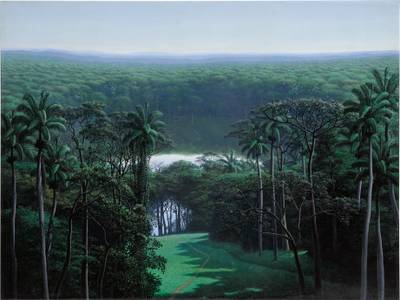
Tomás Sánchez
Cascada Como Icono, 2025
What makes the current moment so rich is that artists are approaching nature not with nostalgia or escapism but with a kind of urgent double vision. They are drawn to its beauty and simultaneously awake to its fragility. Tomás Sánchez, the Cuban painter whose meditative jungle and water landscapes have earned him an almost devotional following, creates scenes of such stillness that they seem to exist outside time, even as their ecological precision places them unmistakably within it. His work belongs to a tradition of spiritual landscape painting but carries a contemporary weight that earlier traditions could not have anticipated.
Ruud van Empel, the Dutch photographer known for his digitally constructed forest children, builds his nature from thousands of separate photographic fragments, producing images that look organically real but are entirely fabricated. The artifice is the point. His forests are dreams of nature rather than records of it. Other artists in the current conversation approach the natural world through very different formal means.
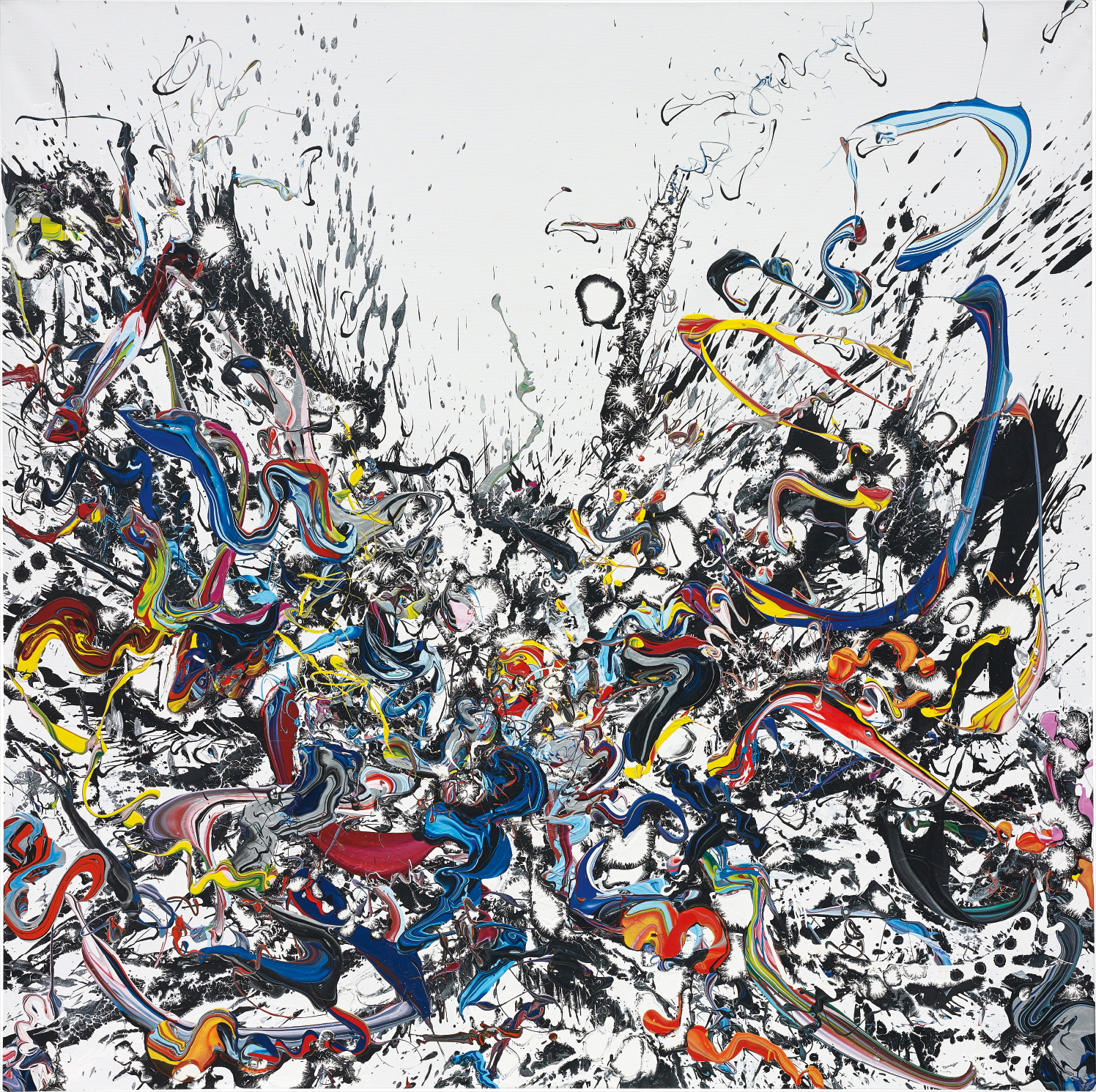
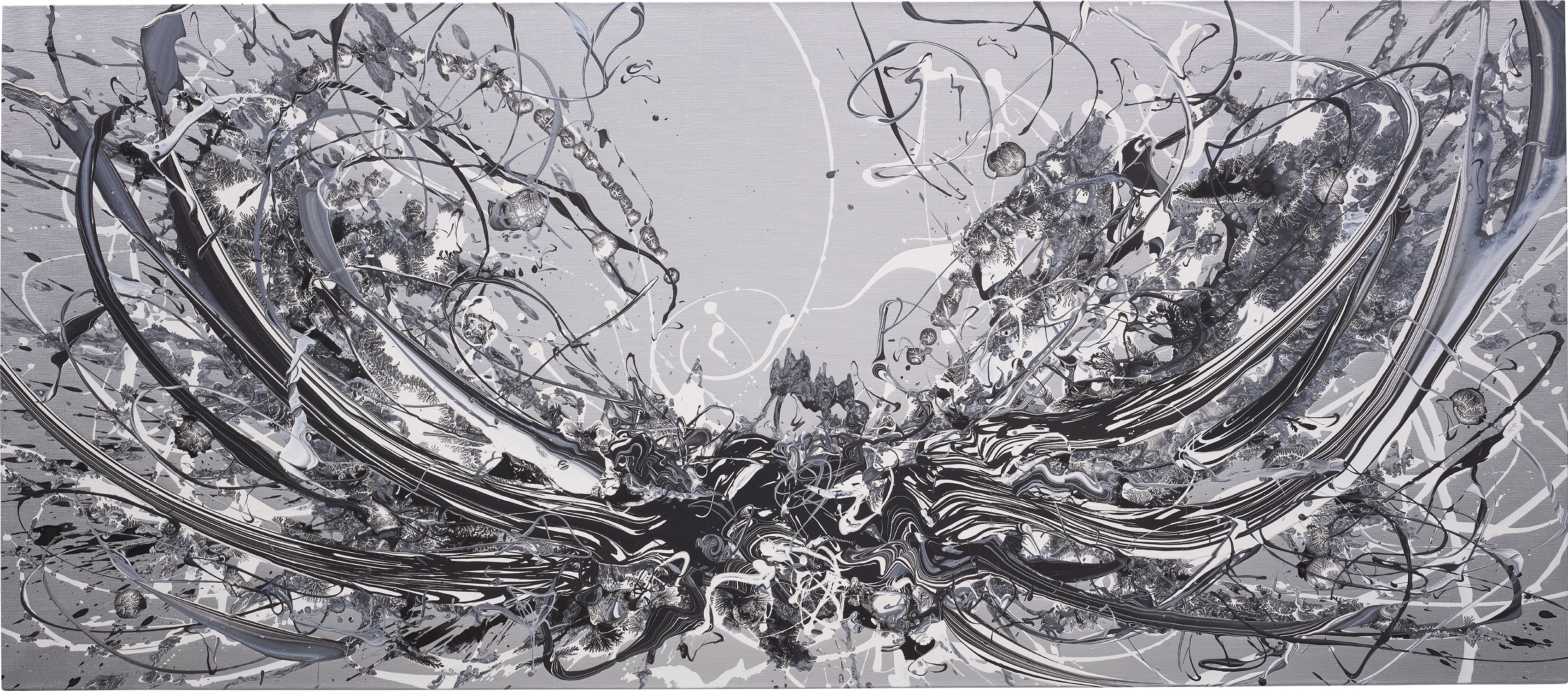
Katrin Fridriks
Mother Nature No. 20, 2010
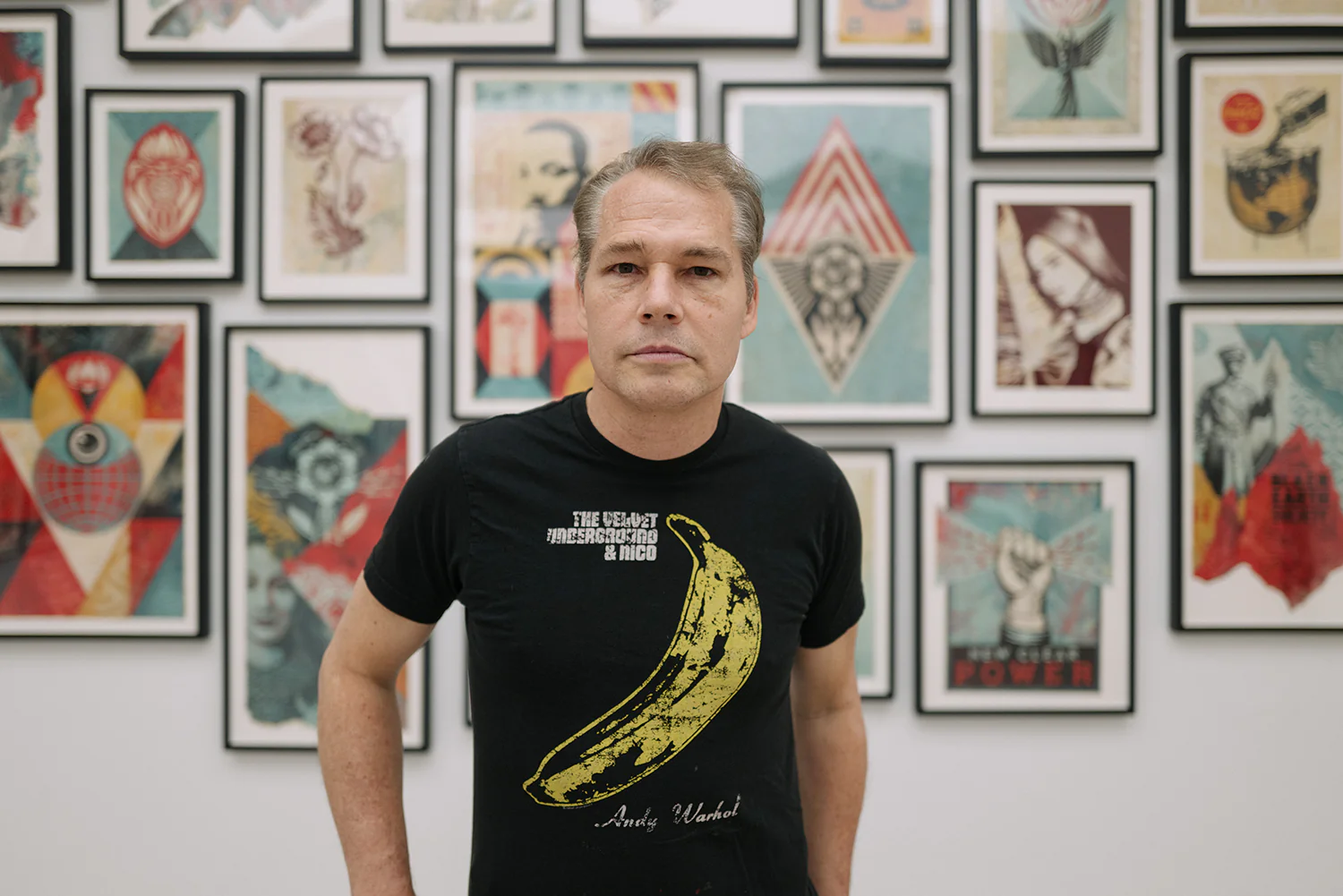
Katrin Fridriks brings a gestural, almost meteorological energy to her work, with sweeping forms that suggest wind patterns and biological systems in motion. Her surfaces feel atmospheric rather than illustrative. Shepard Fairey, better known for his street based iconography, has in certain bodies of work engaged directly with environmental imagery, grafting nature onto the visual language of protest and public address. The effect is to politicize the pastoral, to insist that a flower is not innocent.
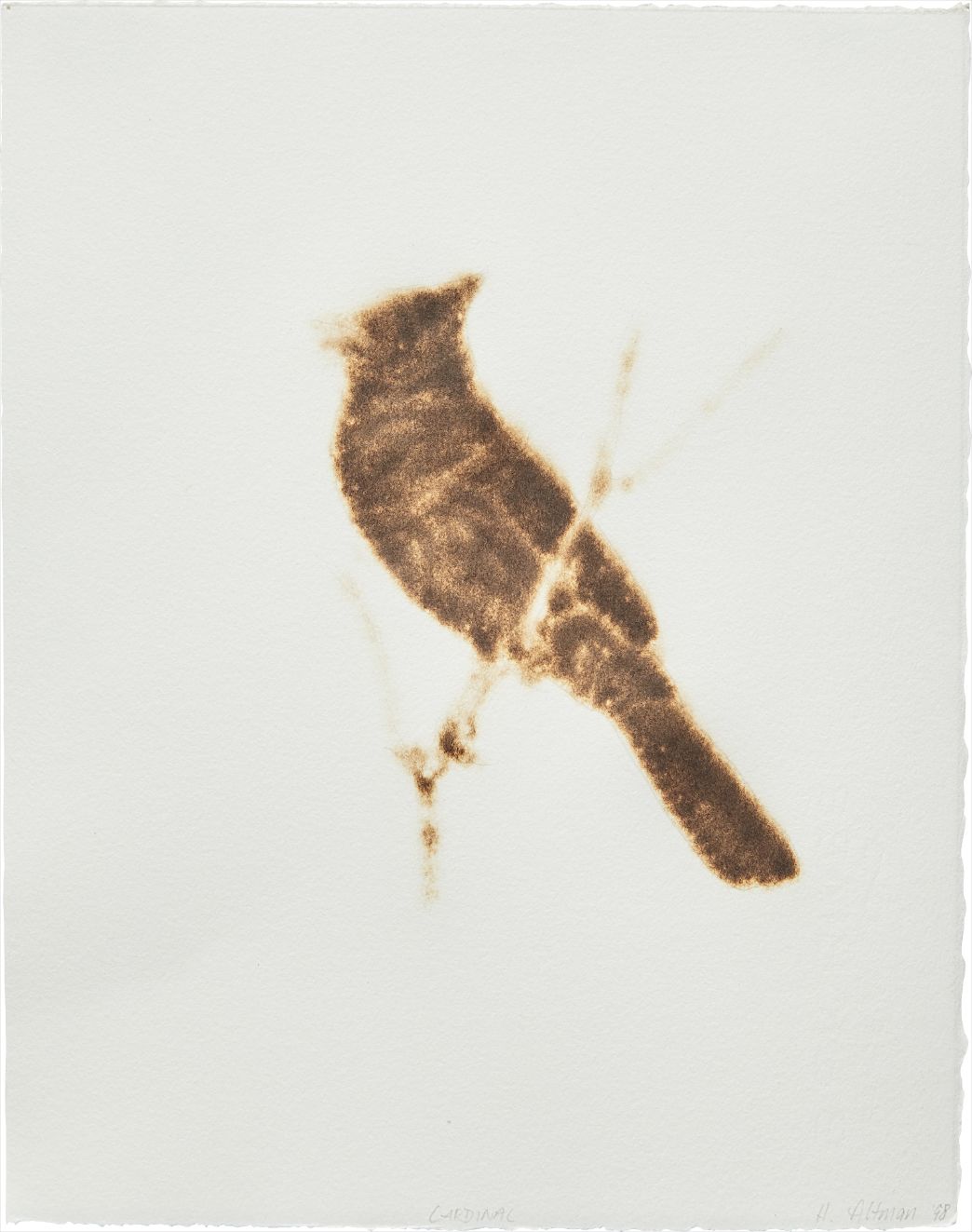
Helen Altman's practice, which has engaged taxidermy, warmth, and animal life with genuine tenderness and dark wit, reminds us that nature in contemporary art is not always green or serene. Sometimes it arrives cold, strange, and a little unsettling. Damien Hirst built a significant part of his early career on the natural world taken literally: butterflies pressed into paint, animals suspended in formaldehyde, the biological fact of life and death made unavoidable. His 1991 work The Physical Impossibility of Death in the Mind of Someone Living placed a tiger shark in a vitrine and asked viewers to sit with something they would normally look away from.
Niki de Saint Phalle, working in an entirely different register, populated public spaces with voluptuous, fantastical creatures drawn from folk traditions and imagined ecosystems, making nature joyful, feminal, and almost mythological. Doug Aitken's expansive, multi channel video installations have explored the relationship between landscape, sound, and human absence, often in remote or industrial settings where nature reasserts itself at the edges of infrastructure. The conceptual frameworks animating nature themed art today are genuinely plural. Some artists work from scientific data, translating ecological research into visual form.
Others move through indigenous cosmologies that never separated the human from the natural in the first place. IWAI and Oleksandr Zhyvotkov, both represented on The Collection, bring distinctly personal and culturally specific sensibilities to nature as subject, evidence that this is a theme capacious enough to hold very different worldviews without contradiction. Tamara Malcher's delicate engagement with organic form adds another voice to that multiplicity. What all of this suggests is that nature as an artistic theme has never really been about nature alone.
It is always also about us: our fears, our longing, our appetite for beauty, and our complicated relationship to a world we depend on but do not fully control. Collectors who are drawn to this work are often responding to something they might not immediately name, a sense that these images carry weight beyond aesthetics, that they are asking something of us. That is not a new feeling. It is, in fact, as old as art itself.