LGBTQ+ Artist

|
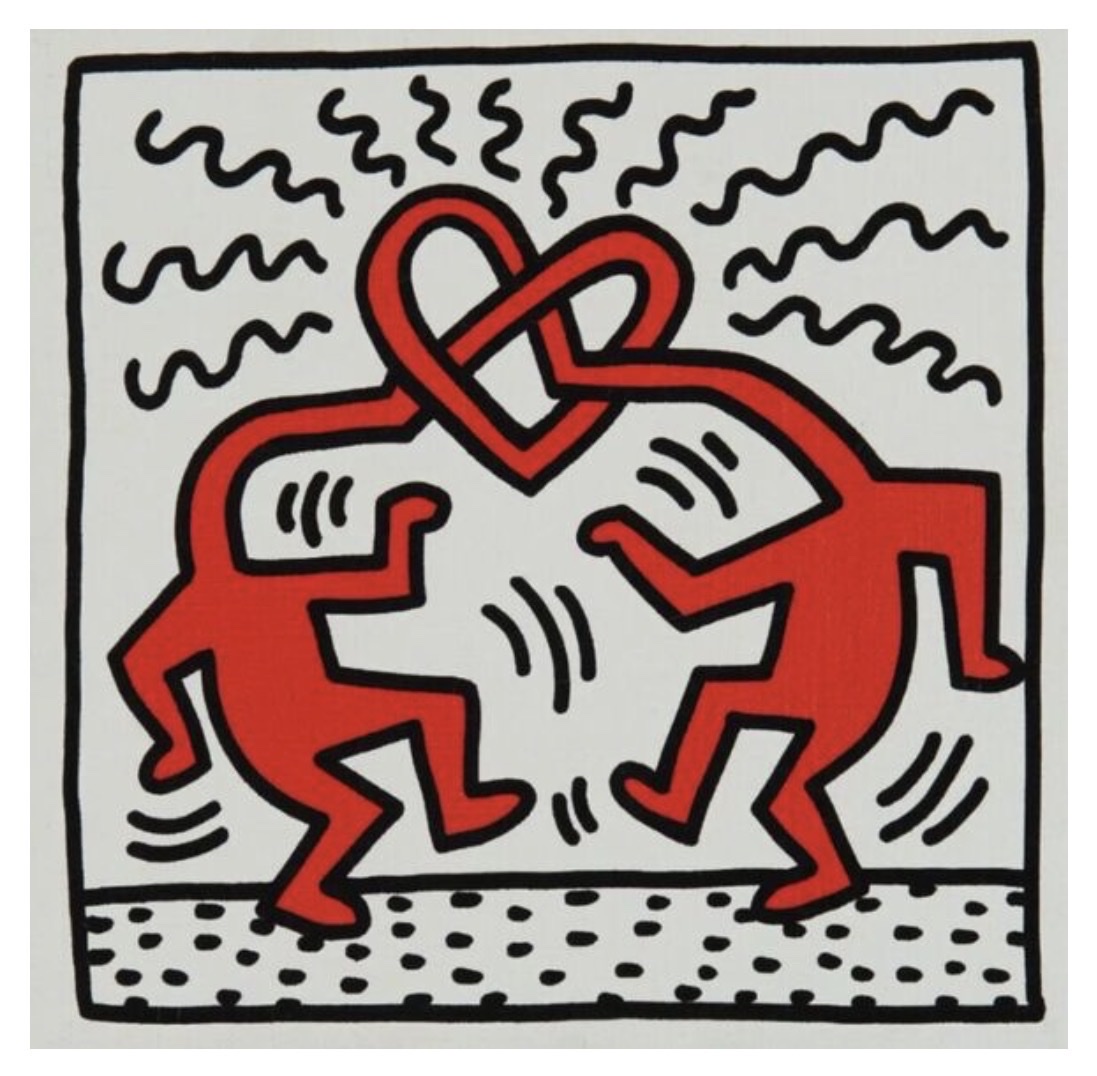
Keith Haring — 7-headed dog (untitled)

Keith Haring

7-headed dog (untitled), 1982

Desire, Defiance, and the Queer Gaze

By the editors at The Collection|April 14, 2026

There is a particular kind of courage required to make art that insists on your own existence. For LGBTQ+ artists across the twentieth century and into our own, the act of creation has rarely been separable from the act of self declaration. To paint a body, to photograph a face, to print a symbol has often meant risking something real. And yet, from that risk, some of the most vital, formally inventive, and emotionally generous art of the modern era has emerged.

The history of queer art does not begin with Stonewall, though 1969 marks a seismic shift in what became possible to say openly. Long before that summer in New York, artists were encoding desire into their work with varying degrees of concealment. The photographs of George Platt Lynes, made throughout the 1930s and 1940s, celebrated the male nude with a classicism that was always charged with something more personal. Claude Cahun, the French surrealist photographer and writer, was constructing radical performances of selfhood in the 1920s and 1930s, documenting a self that refused fixed gender with an unsettling, almost futuristic clarity.

Robert Rauschenberg — Persimmon

Robert Rauschenberg

Persimmon, 1964

These were not artists working at the margins of their time. They were working ahead of it. The postwar period brought new tensions and new freedoms in uneven measure. Robert Rauschenberg and Jasper Johns, partners in life during the 1950s, developed a visual language of layered surfaces and resistant meaning that art historians have spent decades unpacking for its queer subtext.

Francis Bacon was painting the anguished, erotically charged figure studies that would make him one of the most discussed painters of the century, his contorted bodies speaking to an inner life that formal portraiture could never have contained. In 1964, Andy Warhol opened the Factory, and suddenly queer culture was not a subtext. It was the atmosphere itself, the medium through which ideas about celebrity, desire, commodity, and persona moved. David Hockney, arriving in Los Angeles from Bradford in 1964, began painting a California of swimming pools and domestic interiors that seemed, on the surface, to be about sunshine and leisure.

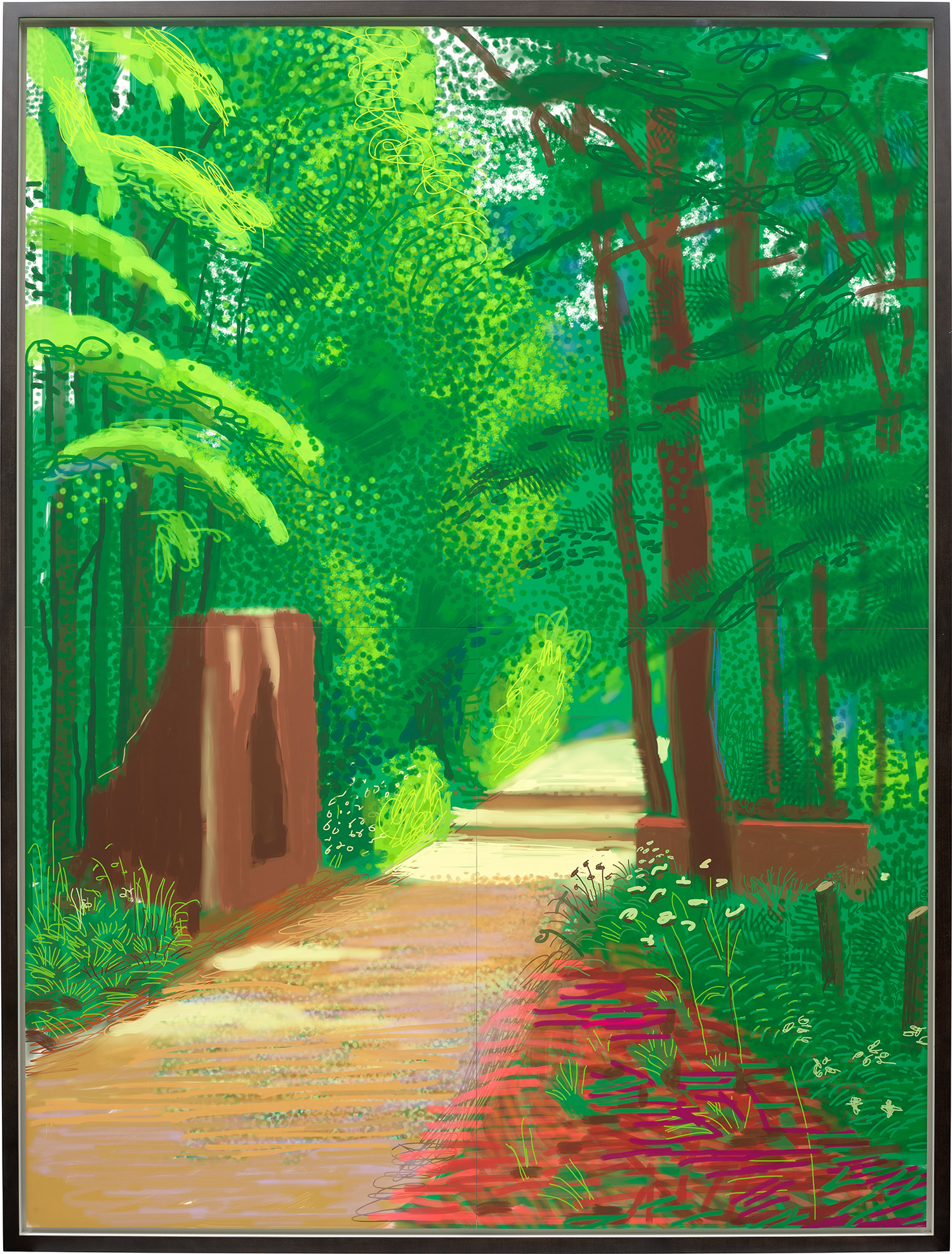
David Hockney — The Arrival of Spring in Woldgate, East Yorkshire in 2011

David Hockney

The Arrival of Spring in Woldgate, East Yorkshire in 2011, 2011

It was also, emphatically, about gay life lived openly and with pleasure, at a moment when that was still a political as much as a personal act. His double portraits of the 1970s, with their psychological precision and cool compositional intelligence, gave queer domesticity a monumental formal treatment it had never previously received in Western painting. Meanwhile Keith Haring was translating the energy of New York street culture and nightlife into a visual vocabulary that spoke across gallery walls and subway platforms with equal force. Haring's work, so often reduced to its graphic accessibility, was also a sustained meditation on community, on the AIDS crisis, and on the urgency of being seen.

The AIDS epidemic reshaped queer art irrevocably. The losses were staggering and the anger they generated became aesthetic fuel. David Wojnarowicz made work that was ferocious, elegiac, and formally hybrid, combining photography, painting, text, and found imagery in ways that articulated grief and rage with equal precision. Robert Mapplethorpe's studio photography, with its severe beauty and its frank treatment of the body, became central to the culture wars of the late 1980s, his 1989 exhibition The Perfect Moment the flashpoint for a national debate about public funding, obscenity, and whose bodies were considered acceptable subjects for art.

Wolfgang Tillmans — Freischwimmer 39

Wolfgang Tillmans

Freischwimmer 39, 2004

The fact that we are still returning to these questions says something about how unresolved they remain. The 1990s and 2000s brought both institutional recognition and an expansion of who the conversation included. Wolfgang Tillmans developed a photographic practice that refused the hierarchy between the personal and the political, between the intimate snapshot and the large scale print. His images of queer life and community, made with a warmth that never slides into sentimentality, feel now like essential documents of a particular cultural moment and also like timeless arguments for attentiveness.

His work, well represented on The Collection, exemplifies the way queer photography has increasingly claimed the full range of photographic ambition. Contemporary artists working today inherit all of this, and they are doing extraordinary things with the inheritance. Louis Fratino paints interiors and figures with a sensuous immediacy and a debt to early modernism, especially to Matisse and Bonnard, that feels both learned and genuinely felt. Salman Toor's small scale narrative paintings conjure queer brown men in social spaces that shimmer with tenderness and precarity at once.

Andrew Brischler — Self Portrait (as The Driver)

Andrew Brischler

Self Portrait (as The Driver), 2024

Doron Langberg builds up paint in layered, physical marks to render intimacy and the body with an almost overwhelming directness. Paul Mpagi Sepuya works in photography to explore the studio itself as a space of desire, collaboration, and looking, complicating the power dynamics of the photographic encounter in ways that feel genuinely new. And Tyler Mitchell, whose landmark 2018 Vogue cover made him the first Black photographer to shoot the magazine's cover in its 126 year history, brings a vision of Black queer joy that insists on tenderness as its own political position. What unites artists as formally and temperamentally different as Annie Sprinkle and Ugo Rondinone, or Mickalene Thomas and Andrew Brischler, is not a shared aesthetic but a shared understanding that identity is not incidental to the work.

It is generative, structural, the thing that makes certain questions feel urgent and certain formal solutions feel necessary. To collect in this space is to engage with some of the most searching, formally alive, and historically significant art of the last hundred years. It is also to participate in an ongoing conversation about visibility, representation, and what it means to look at another person and truly see them. That conversation is not over.

On the evidence of the artists working now, it is nowhere near its end.

Get the App