Landscape Setting
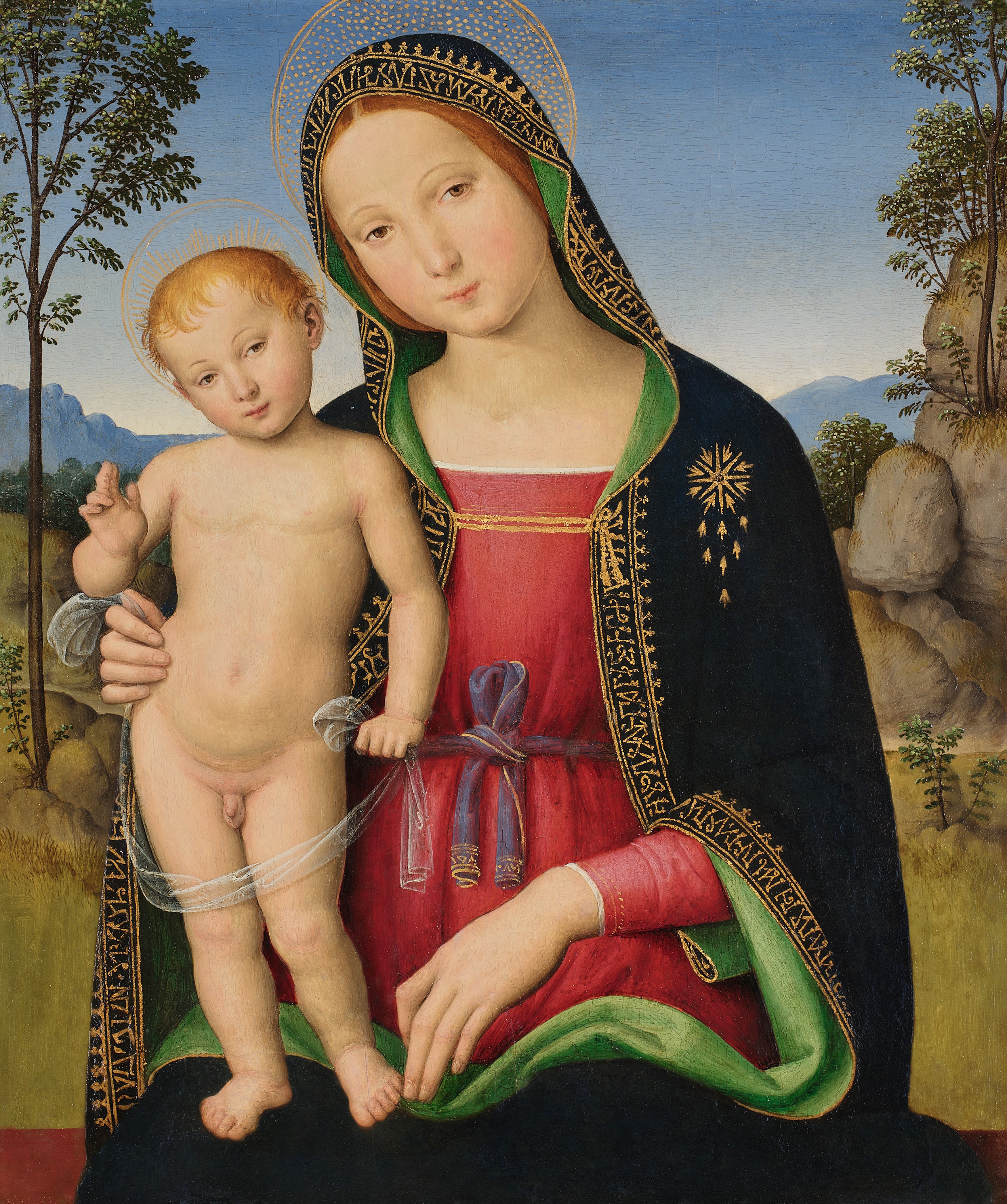
Giovanni di Pietro, called Spagna
Madonna and Child in a Verdant Landscape

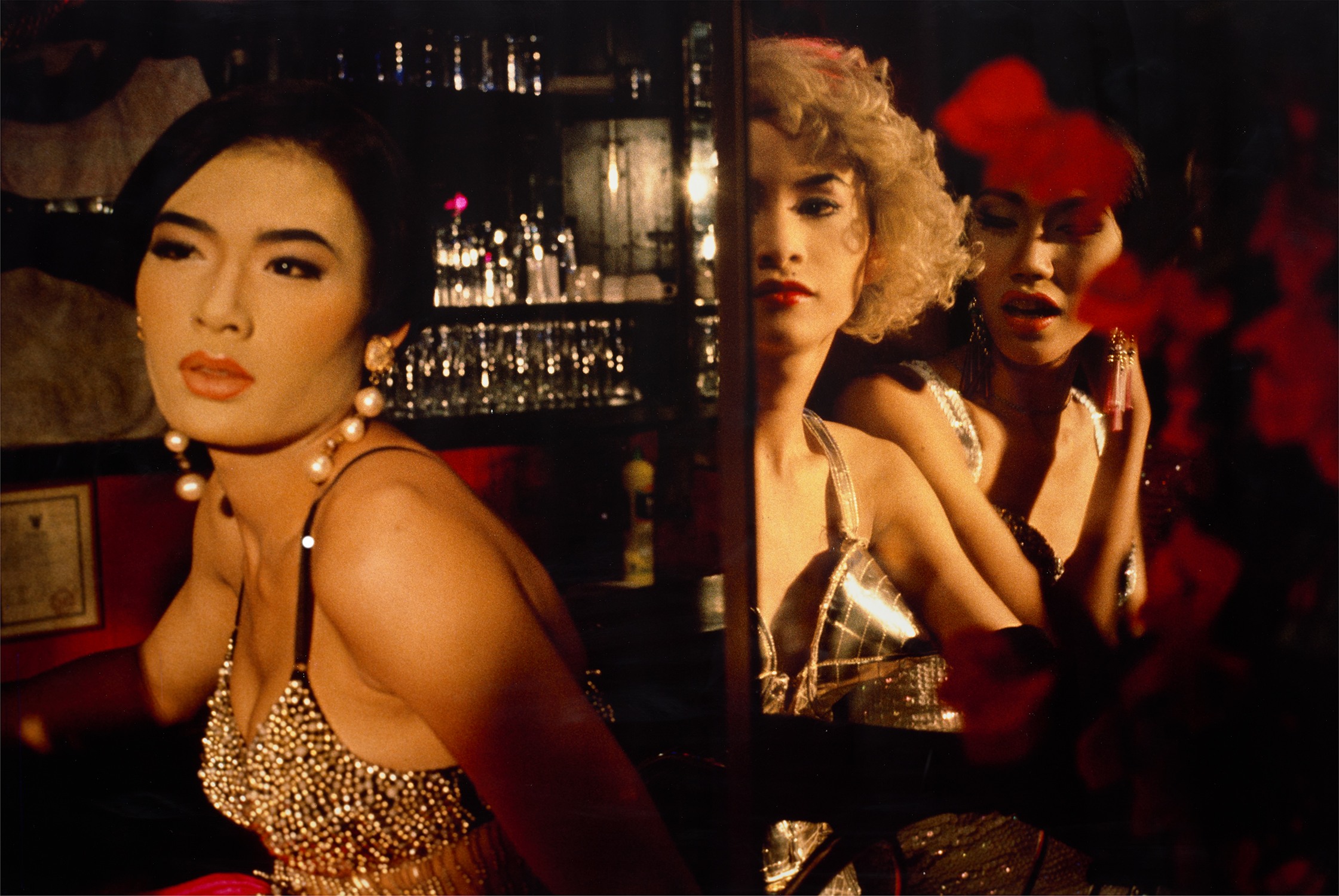
The Land Was Always Looking Back
There is a moment in front of certain landscape paintings when the ground seems to breathe. The horizon pulls at something instinctive, something older than taste or critical vocabulary. Landscape as a subject in Western art has never really been about nature at all. It has always been about the human need to locate ourselves in relation to something larger, wilder, and less predictable than the world we have built around us.
That tension, between the orderly gaze and the unruly terrain, is what makes landscape painting one of the most durable and endlessly contested categories in the history of art. For much of Western art history, landscape was considered a minor genre. The great academies of the seventeenth and eighteenth centuries ranked subjects in a strict hierarchy, with religious and mythological scenes at the pinnacle and landscape somewhere near the bottom, above only still life. And yet painters kept returning to it, often smuggling the outdoor world into works that were nominally about something else.
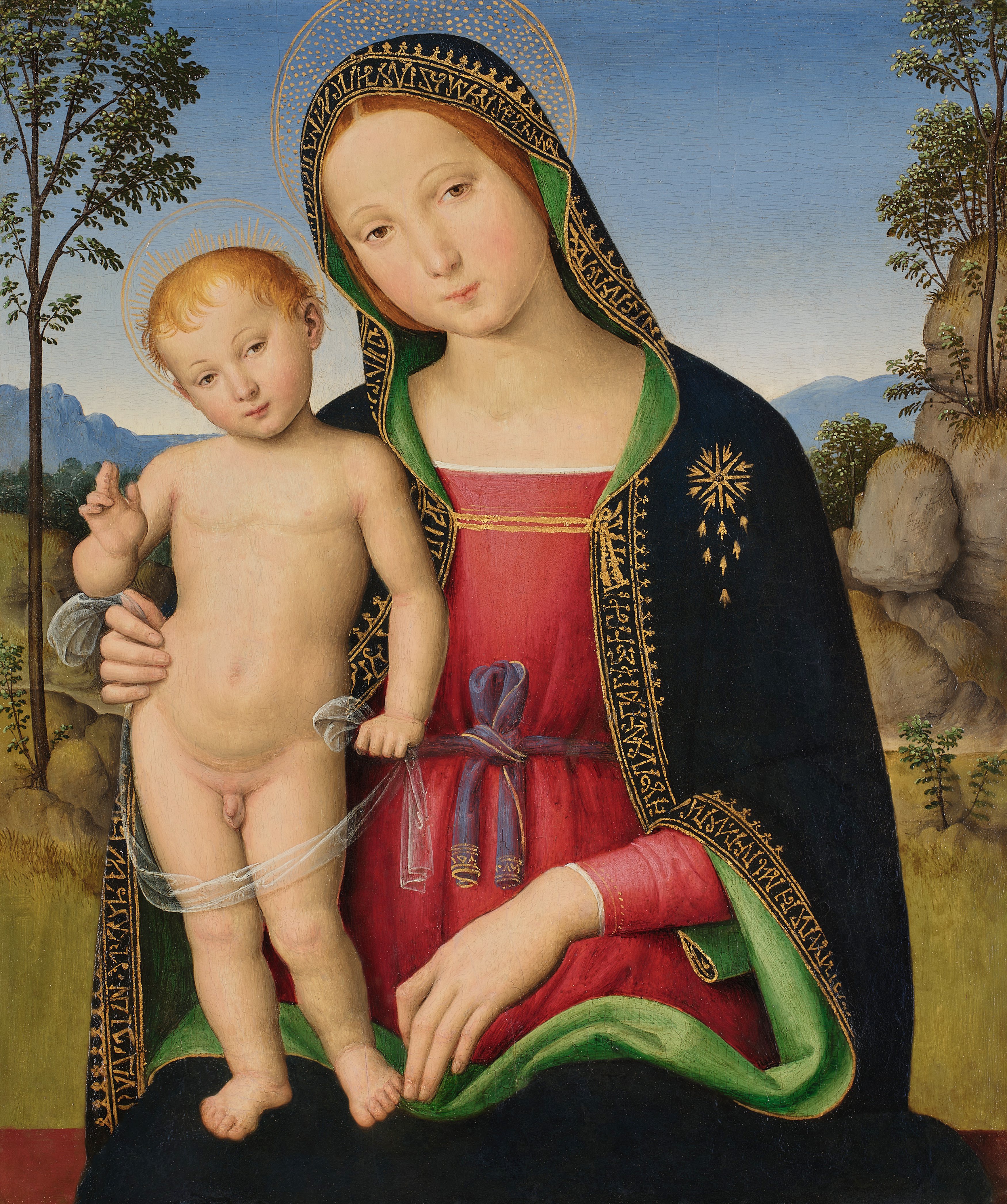
Giovanni di Pietro, called Spagna
Madonna and Child in a Verdant Landscape
When Giovanni di Pietro, called Spagna, painted his devotional panels in early sixteenth century Umbria, the rolling hills and luminous skies behind his sacred figures were not mere backdrop. They carried theological weight, evoking an Edenic stillness, a world held in a kind of grace. The landscape in such works was not observed so much as imagined into theological coherence. The shift that transformed landscape into a subject worthy of sustained attention happened gradually and then all at once.
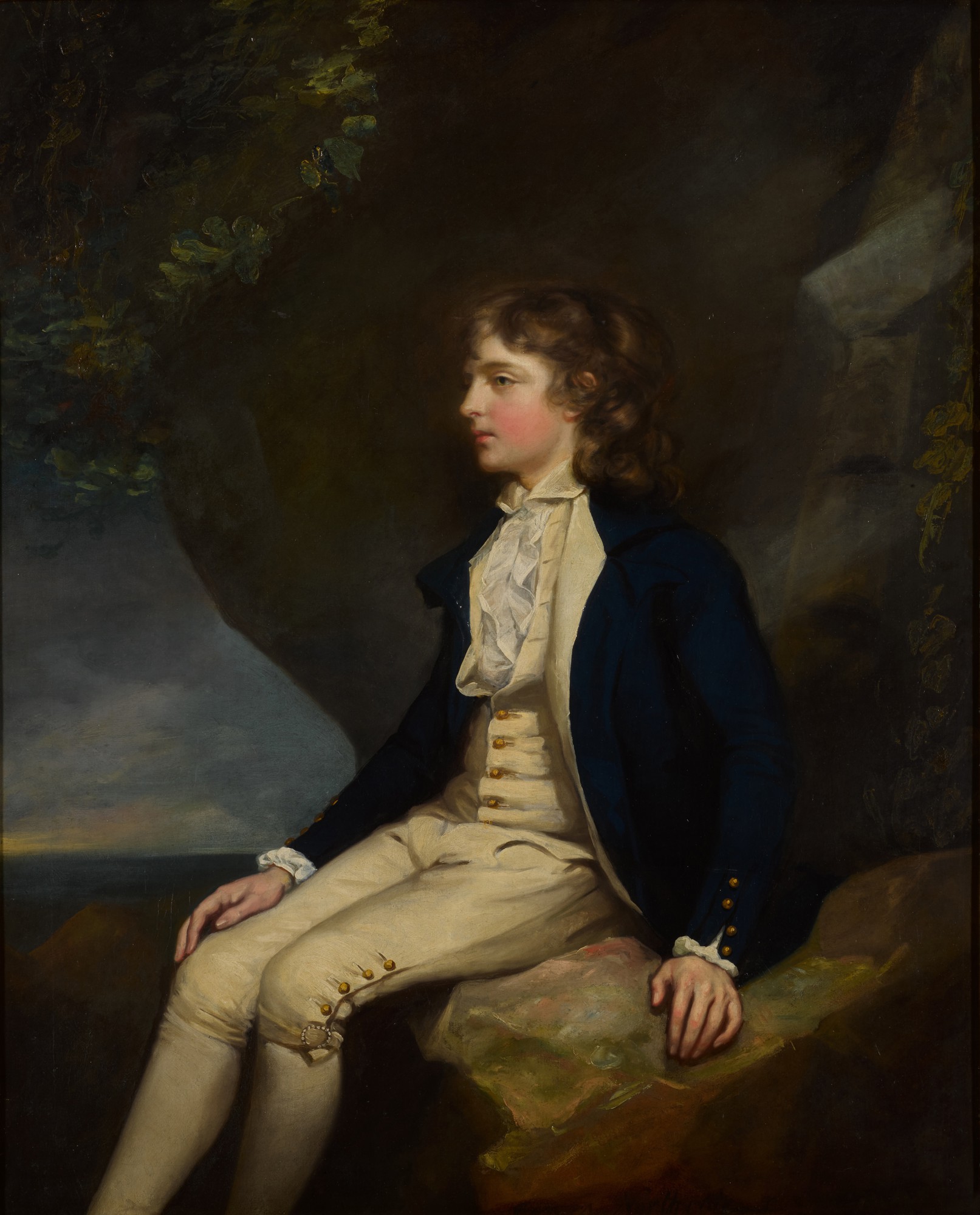
By the seventeenth century, Dutch painters were producing breathtaking studies of flat light on flat land, finding the infinite in the ordinary. A century later, the English school pushed the form toward turbulence and feeling. James Northcote, the painter and portraitist who trained under Joshua Reynolds and was elected to the Royal Academy in 1787, worked in an era when the British art world was beginning to take seriously the expressive possibilities of the natural world. The Romantic movement had not yet fully arrived, but its emotional logic was already stirring in how painters framed their subjects, allowing weather and terrain to carry psychological freight.
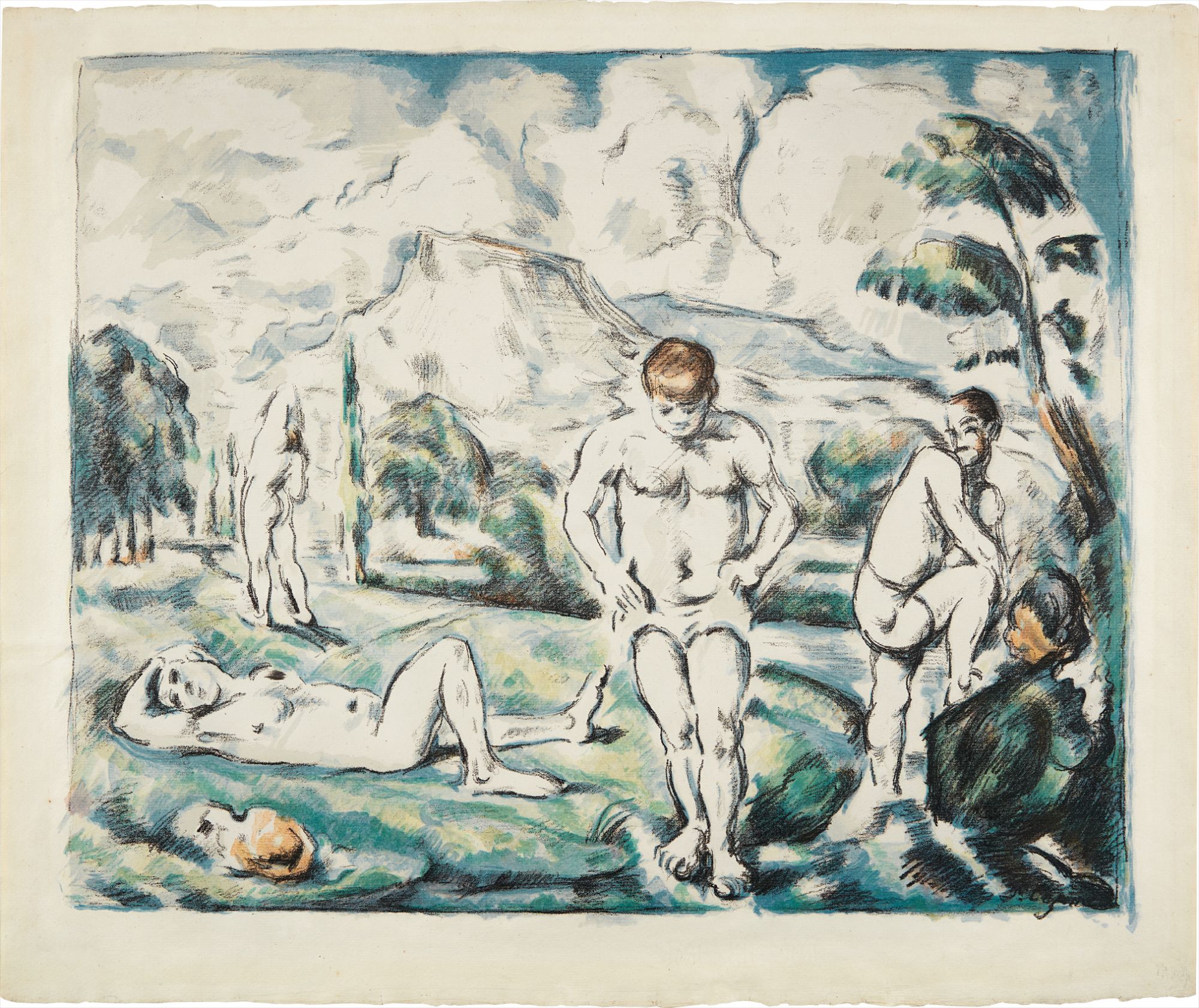
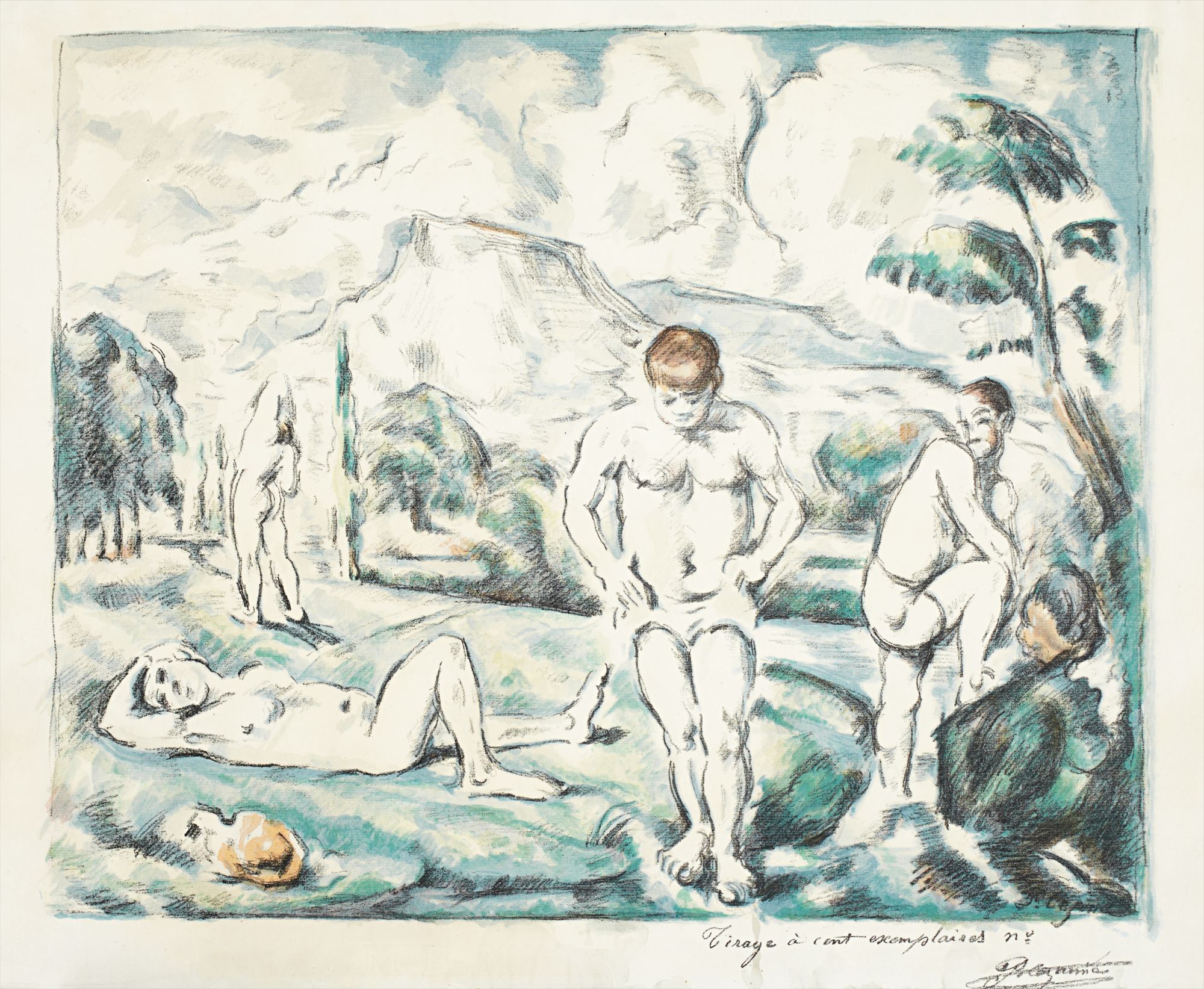
Paul Cézanne
Les baigneurs (grande planche) (The Large Bathers)
The great rupture came in the nineteenth century, when the Impressionists insisted that light itself was the subject and that a painter's task was to catch time as it moved across a surface. Paul Cézanne changed everything again. Working in the landscape around Aix en Provence through the 1880s and into the early 1900s, he dismantled the single viewpoint that had governed painting since the Renaissance. His Mont Sainte Victoire series, painted obsessively across decades, treated the mountain not as a fixed object to be rendered faithfully but as something to be understood through sustained looking, through time.
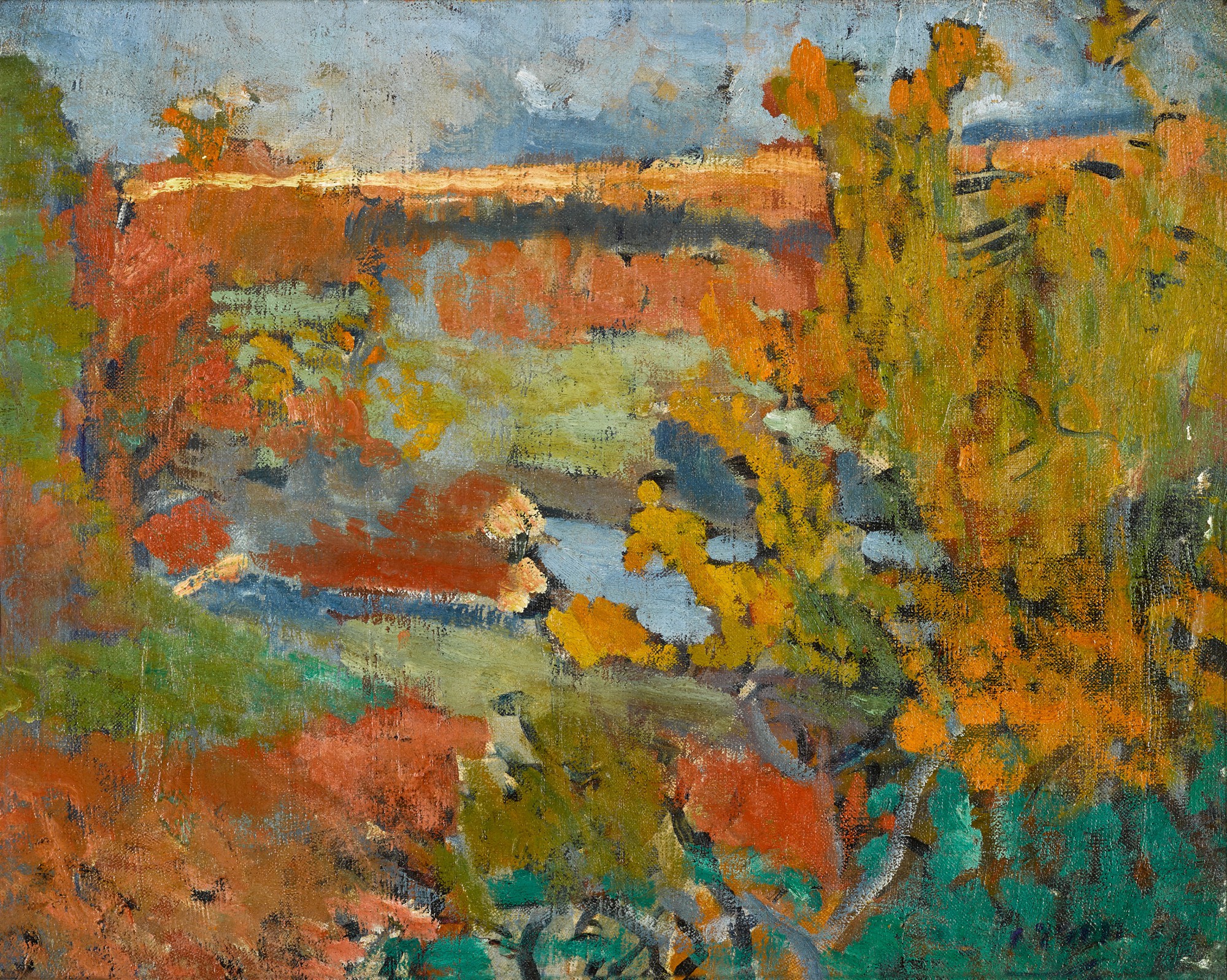
For Cézanne, the landscape was a problem to be solved, and the solution kept changing. His structural approach, in which planes of color build form without relying on line, became the intellectual bedrock of twentieth century painting. André Derain, who was part of the Fauvist circle in the early 1900s, carried some of that structural energy into a different kind of intensity. The Fauves used color with a freedom that scandalized critics at the 1905 Salon d'Automne, where Louis Vauxcelles famously coined the term in response to works that seemed to set the room ablaze.
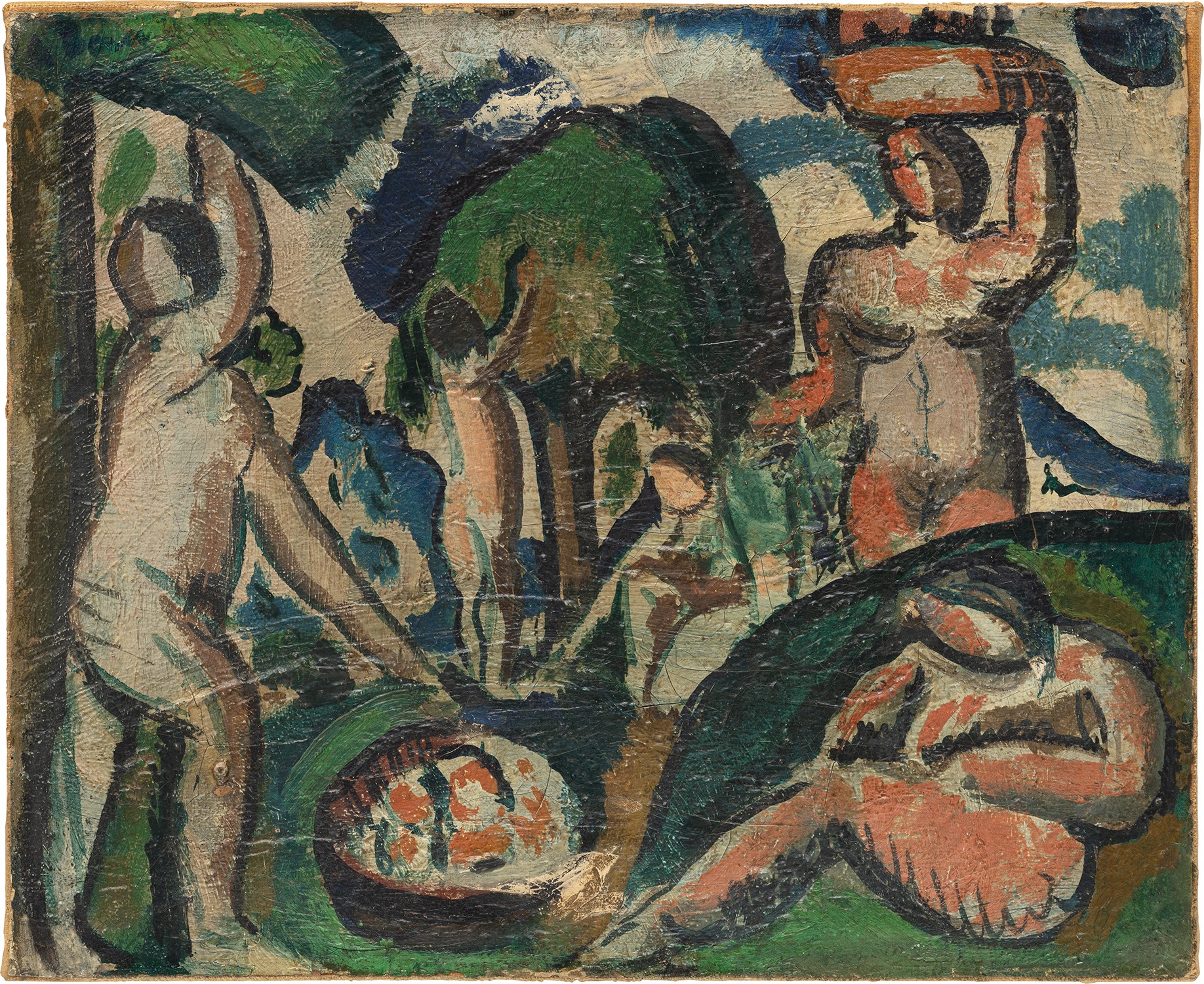
André Derain
Nus dans un paysage, 1908
Derain's landscapes, whether painted along the Thames or in the south of France, used non naturalistic color to reframe what landscape could communicate emotionally. The trees are not green because trees are green. They are green, or red, or orange, because that is what the painter felt when he looked. This seemed radical in 1905.
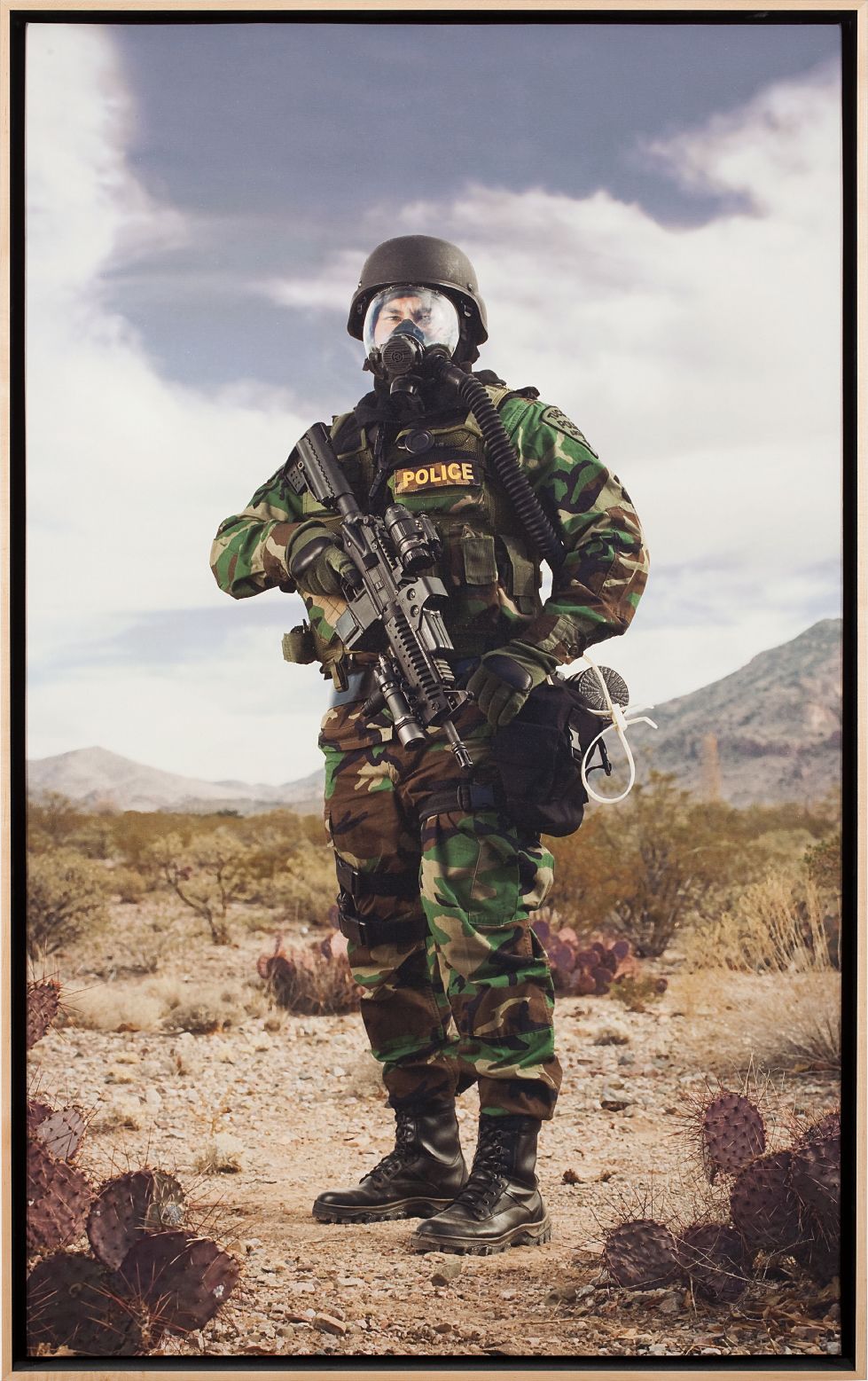
It still seems radical now, if you let yourself sit with it long enough. In the twentieth century, landscape became more contested as artists grappled with industrialization, environmental damage, and the politics of land ownership and access. The pristine natural setting was increasingly understood as a myth, a construction serving particular cultural interests. Paul Shambroom's photographic practice confronts precisely this kind of myth, turning his lens on places where power is exercised and normalized, where the landscape of civic or military life reveals something uncomfortable about how we organize ourselves in space.
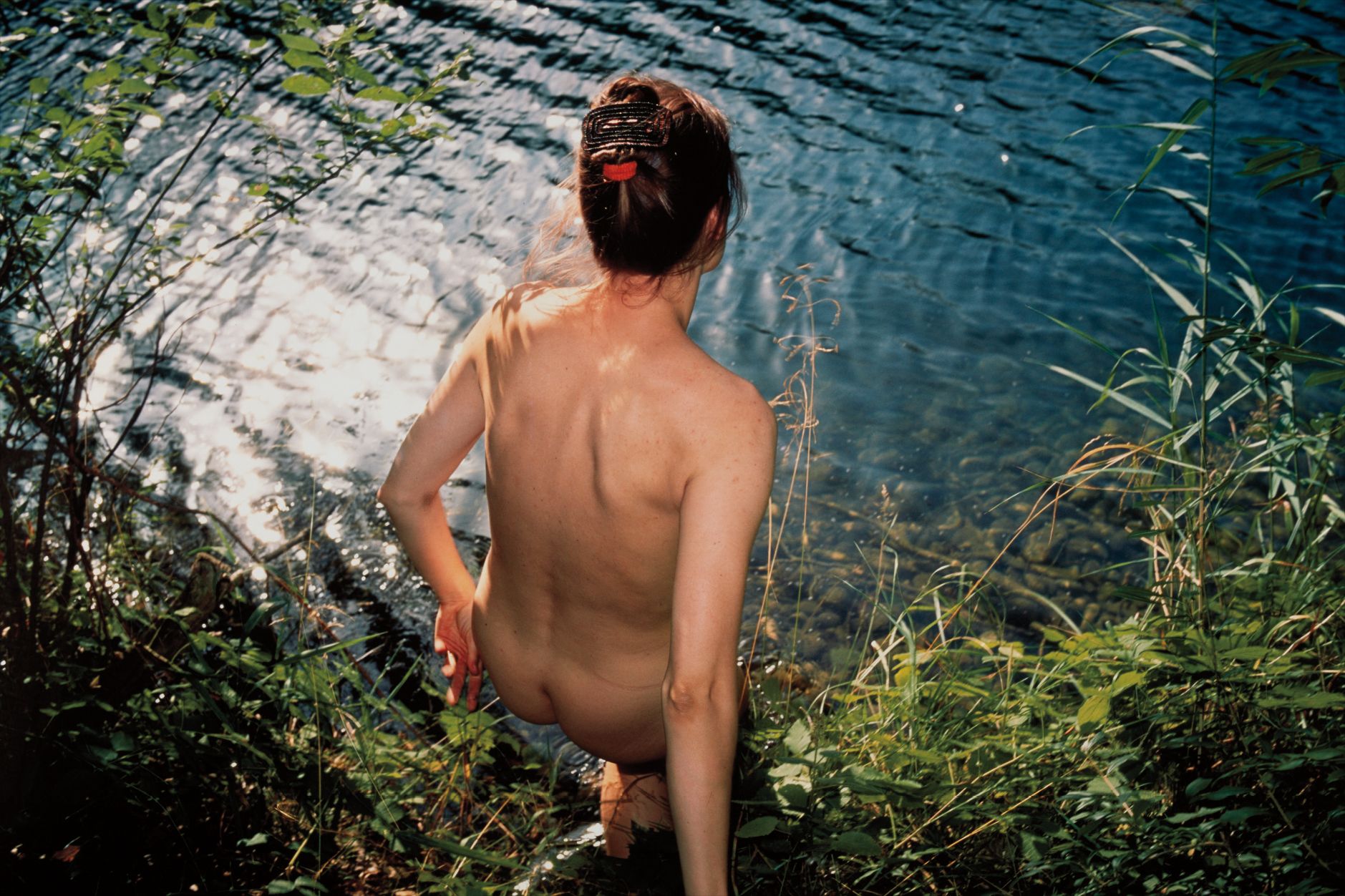
Nan Goldin
Geno by the lake, Bavaria
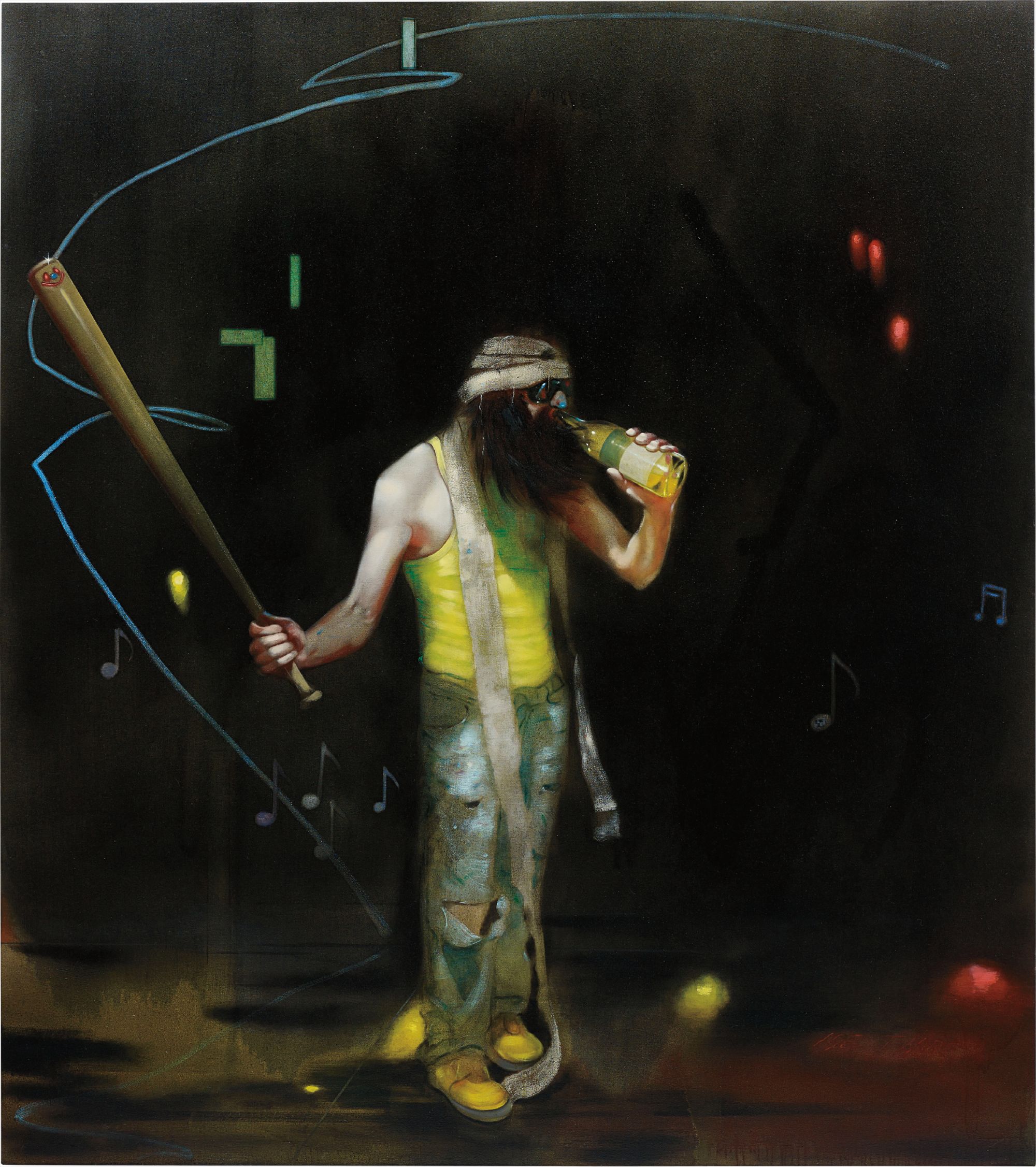
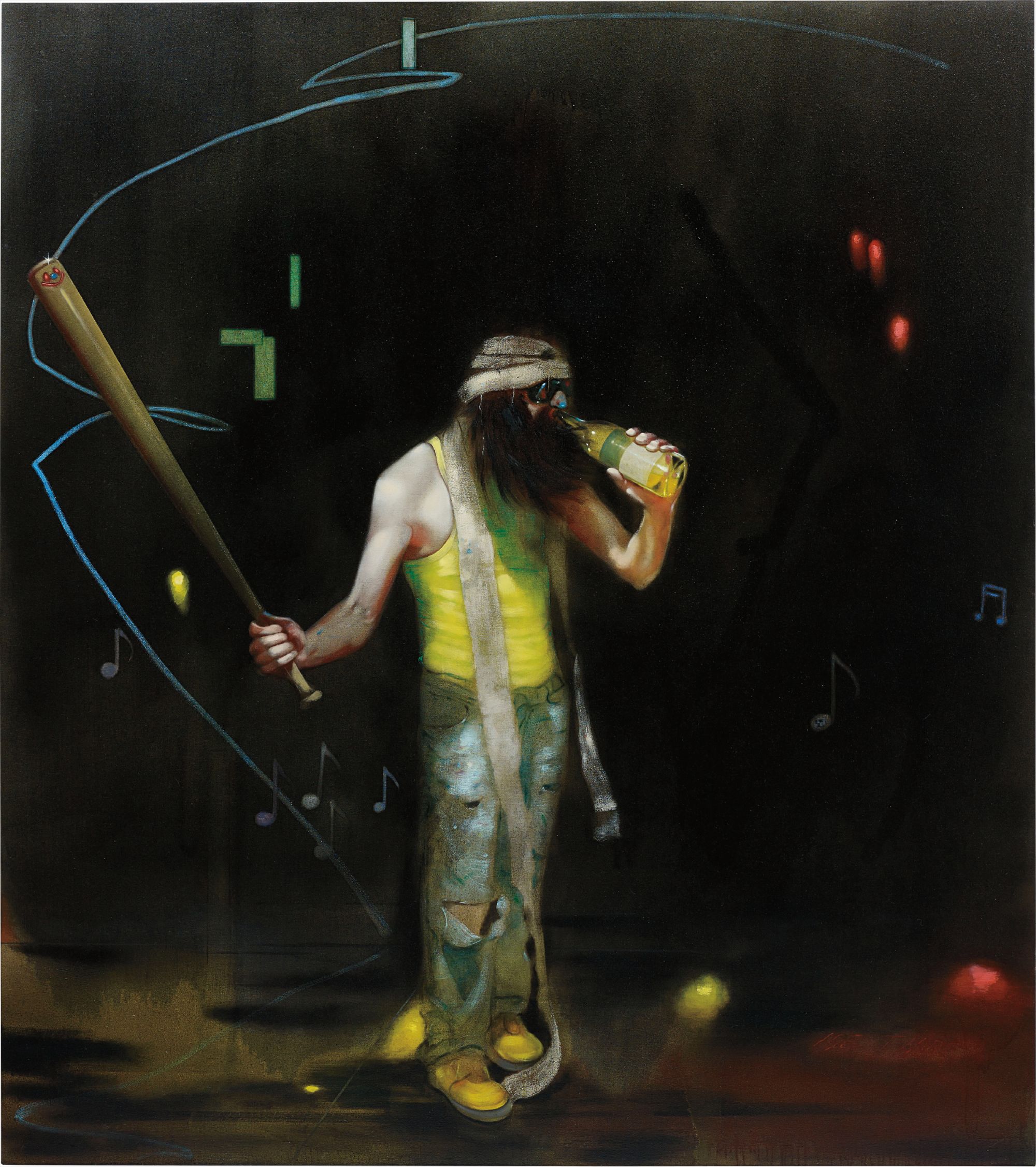
His work reminds us that every landscape is someone's property, someone's ideology, and someone's version of home. Nan Goldin, whose practice is rooted in intimate portraiture and deeply personal documentation, has also worked in ways that locate the human body within specific environments, making the setting inseparable from the emotional and social conditions it contains. The room, the street, the particular quality of late night light in a particular city: these are landscapes too, and Goldin's ability to make us feel the texture of a place alongside the texture of a life has expanded what we mean when we talk about setting in art. Nigel Cooke, the British painter working today, brings a similar expansiveness to his large scale canvases, where imagined or collaged landscapes become stages for dark comedy and cultural anxiety, full of ruined vegetation and figures in various states of collapse or wonder.
What all these artists share, despite the vast distances of time and method between them, is a conviction that where we are matters to who we are. The landscape setting is never passive. It is a form of argument about history, about beauty, about what we have done to the world and what the world has done to us. The collector who returns repeatedly to landscape works is often following something personal, a memory of a particular light, a particular place, a feeling of being held by terrain larger than oneself.
That instinct is worth trusting. It has produced some of the greatest works in the history of art, and it continues to do so in ways that are stranger, more urgent, and more politically awake than the genre's genteel reputation might suggest. The works gathered on The Collection under this category reward that kind of attentive, committed looking. They trace a story that is still being told, by painters and photographers and artists who have decided that the world out there, in all its complexity and beauty and damage, is still worth pointing at.