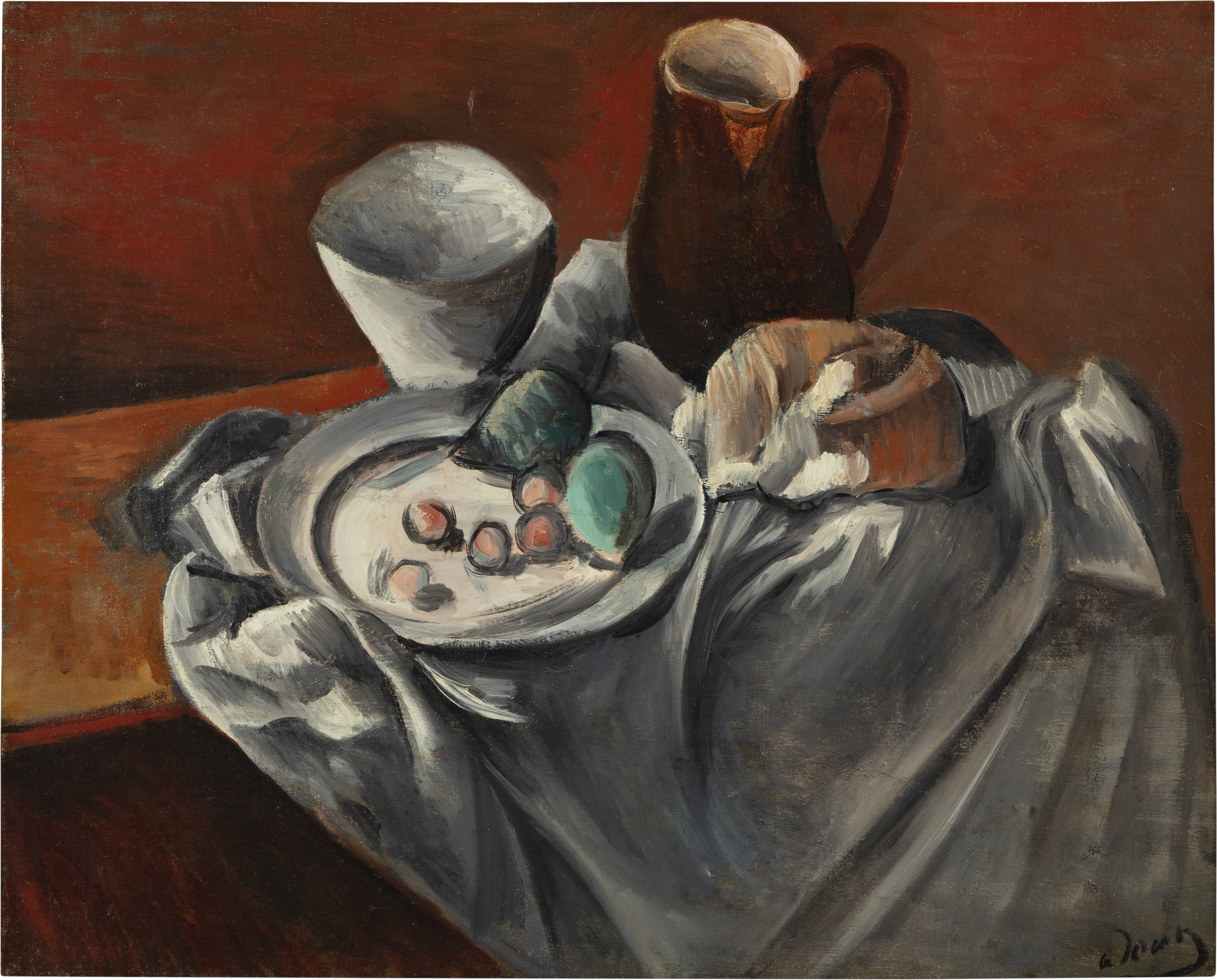
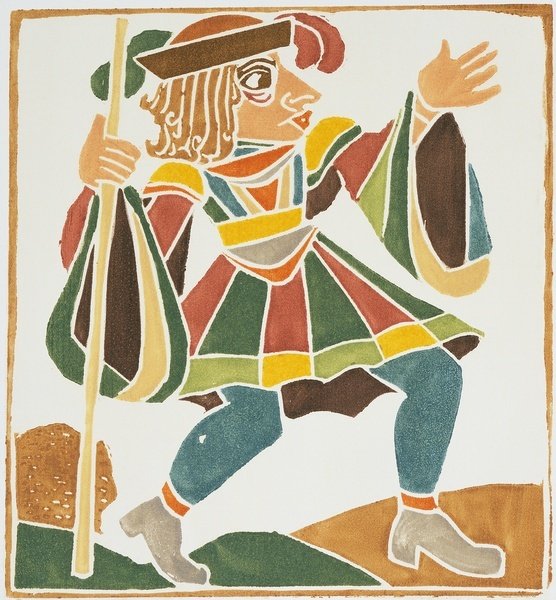
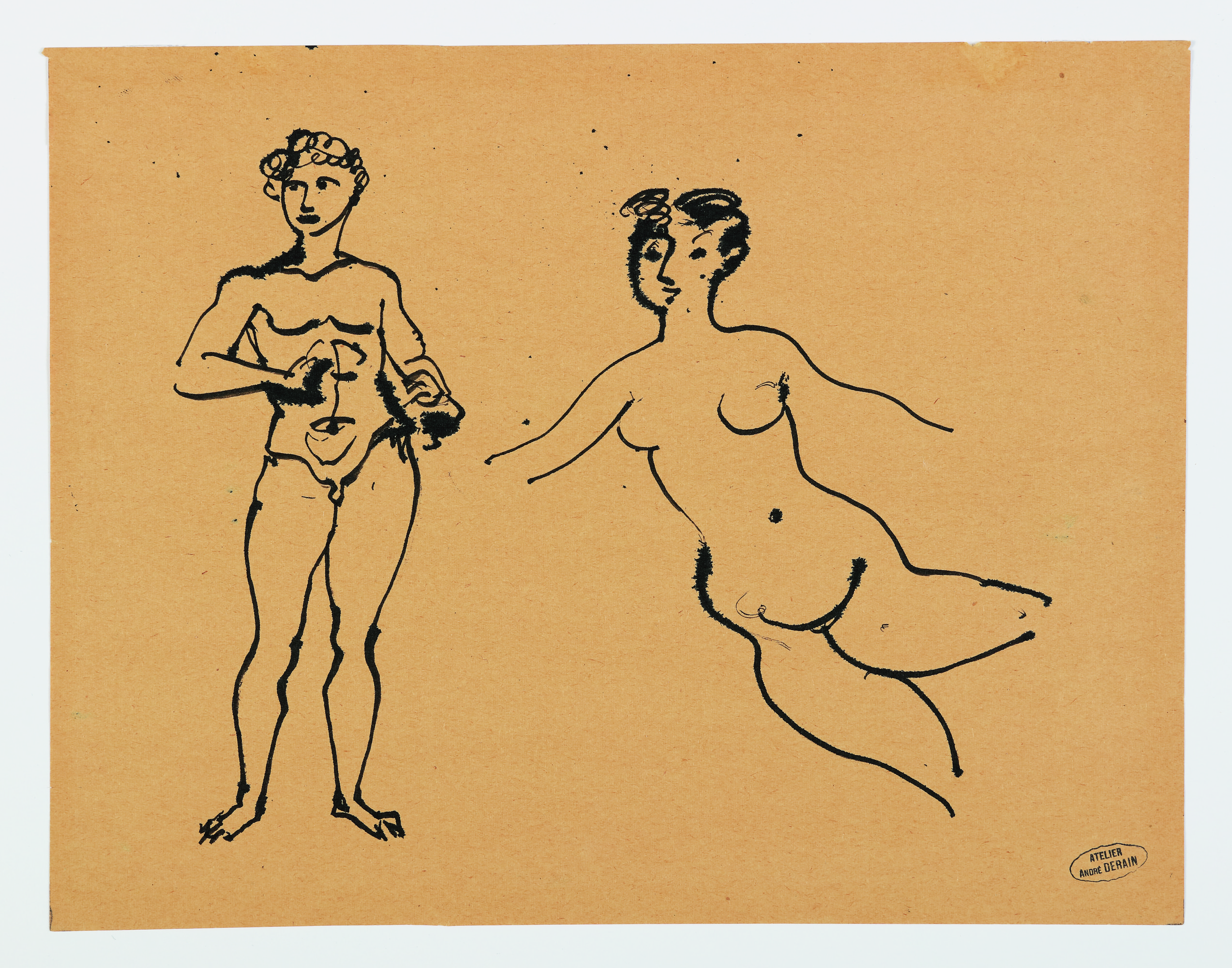
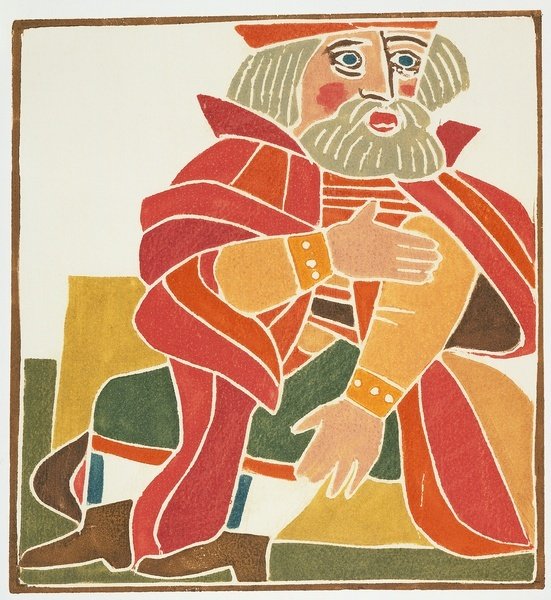
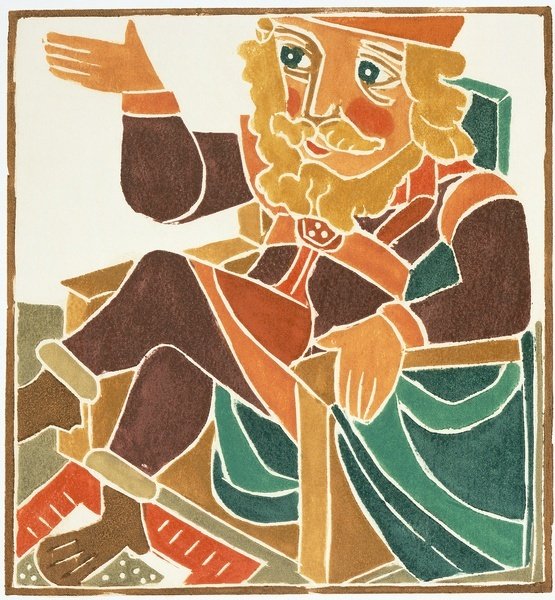
In the spring of 2021, the Musée d'Art Moderne de Paris mounted a landmark retrospective that drew fresh attention to one of the twentieth century's most consequential and perpetually underestimated figures. André Derain, long celebrated in the inner circles of serious collecting but never quite granted the full cultural canonization his work demands, emerged from that exhibition with renewed urgency. Scholars, curators, and collectors alike were reminded that this was the painter who, alongside Henri Matisse and Maurice de Vlaminck, tore open the very grammar of Western painting and replaced it with something raw, ecstatic, and entirely new. Derain was born in 1880 in Chatou, a riverside town just west of Paris where the Seine curves gently through a landscape that would appear again and again in his early canvases. Chatou was already a place of creative ferment, beloved by the Impressionists, and growing up in its particular golden light gave Derain an instinctive feel for color as atmosphere and sensation rather than mere description. He enrolled at the Académie Carrière in Paris at the turn of the century, and it was there that fate arranged an introduction that would reshape modern art. Matisse and Vlaminck both crossed his path during these formative years, and the chemistry between the three of them generated an artistic friendship that became one of the great catalysts of modernism. The summer of 1905 was the crucible moment. Derain traveled with Matisse to the small Mediterranean fishing village of Collioure in the south of France, and what emerged from those blazing weeks was the foundation of Fauvism. The two painters worked side by side, pushing each other toward an ever more radical freedom from the naturalistic color that had governed European painting for centuries. When Derain submitted his Collioure paintings to the Salon d'Automne in Paris that October, the critic Louis Vauxcelles famously described the room as a cage of wild beasts, coining the term les fauves. Derain was at the very center of this revolution, and his work from this period radiates the particular joy of an artist who has just discovered there are no rules. Between 1905 and 1907, Derain produced a body of work that remains among the most visually arresting of the entire twentieth century. His London paintings, completed during visits in 1905 and 1906 at the invitation of the dealer Ambroise Vollard, applied the Fauvist palette to the Thames and its bridges with results that are simultaneously playful and deeply serious. Works like his depictions of Charing Cross Bridge and Westminster Bridge translated the grey, mist wrapped city into an explosion of orange, violet, and acid green, as if the fog itself had been set alight. During this period he was also in close conversation with Pablo Picasso and Georges Braque, and his engagement with Cézanne's structural lessons helped push him toward a more architecturally resolved Cubist inflection in certain compositions of 1907 and 1908. A survey of the works available through The Collection illustrates the remarkable range of Derain's practice across five decades. The oil on canvas titled Paysage aux environs de Chatou from 1904 offers an extraordinary window into the precise moment before full Fauvist liberation, where color is already straining against the canvas with barely contained energy. Personnages dans un paysage from 1905 shows the watercolor medium pushed to its most luminous, figures dissolving into and emerging from a chromatic field of extraordinary warmth. The later Buste d'arlequin from 1924 reveals the more classical, monumental Derain that emerged after the First World War, a painter deeply in dialogue with the old masters and with the ancient Mediterranean world, without any sacrifice of personal authority. His sculptural works, including the bronze Tête d'homme souriant and Le beau masque both from 1938, confirm that his three dimensional practice was never an afterthought but a sustained and serious investigation into form. From a collecting perspective, Derain occupies a position that sophisticated advisors have long regarded as one of the more compelling propositions in the blue chip segment of the modern art market. His peak Fauvist works, when they appear at auction, consistently achieve prices in the millions, with major canvases from the Collioure and London series commanding the most serious attention from institutional bidders and private collectors alike. His classical period works from the 1920s and 1930s, once unfairly dismissed as a retreat from the avant garde, have undergone significant critical and market reappraisal over the past two decades. Collectors who look beyond the canonical Fauvist moment often find the deepest rewards in these later works, which display a painterly intelligence of the highest order and remain relatively accessible compared to the early masterpieces. Derain's position in art history is best understood as a great connector. He was the bridge between Impressionism and Fauvism, between Fauvism and Cubism, and between the avant garde ruptures of the early century and the longer tradition of European figuration. Artists who share his chromatic ambition and his commitment to the painted figure include his lifelong friend Vlaminck, the Spanish master Juan Gris, and Raoul Dufy, whose own Fauvist period owes a clear debt to Derain's early example. His dialogue with Picasso during the revolutionary years before the First World War was one of mutual fascination and productive rivalry, and understanding Derain is essential to understanding how the most creative decade in modern art actually functioned as a living conversation among equals. Derain lived until 1954, and the full arc of his career from the incandescent early years through the classicism of the interwar period and into his quietly authoritative late works represents one of the richest individual journeys in modern painting. He deserves to be encountered not simply as the man who helped invent Fauvism, though that alone would secure his place permanently in the story of art, but as a painter of extraordinary sustained ambition who never stopped looking, never stopped questioning, and never stopped believing in the transformative power of color on canvas. To own a work by Derain is to hold a piece of that belief.