IPad Painting
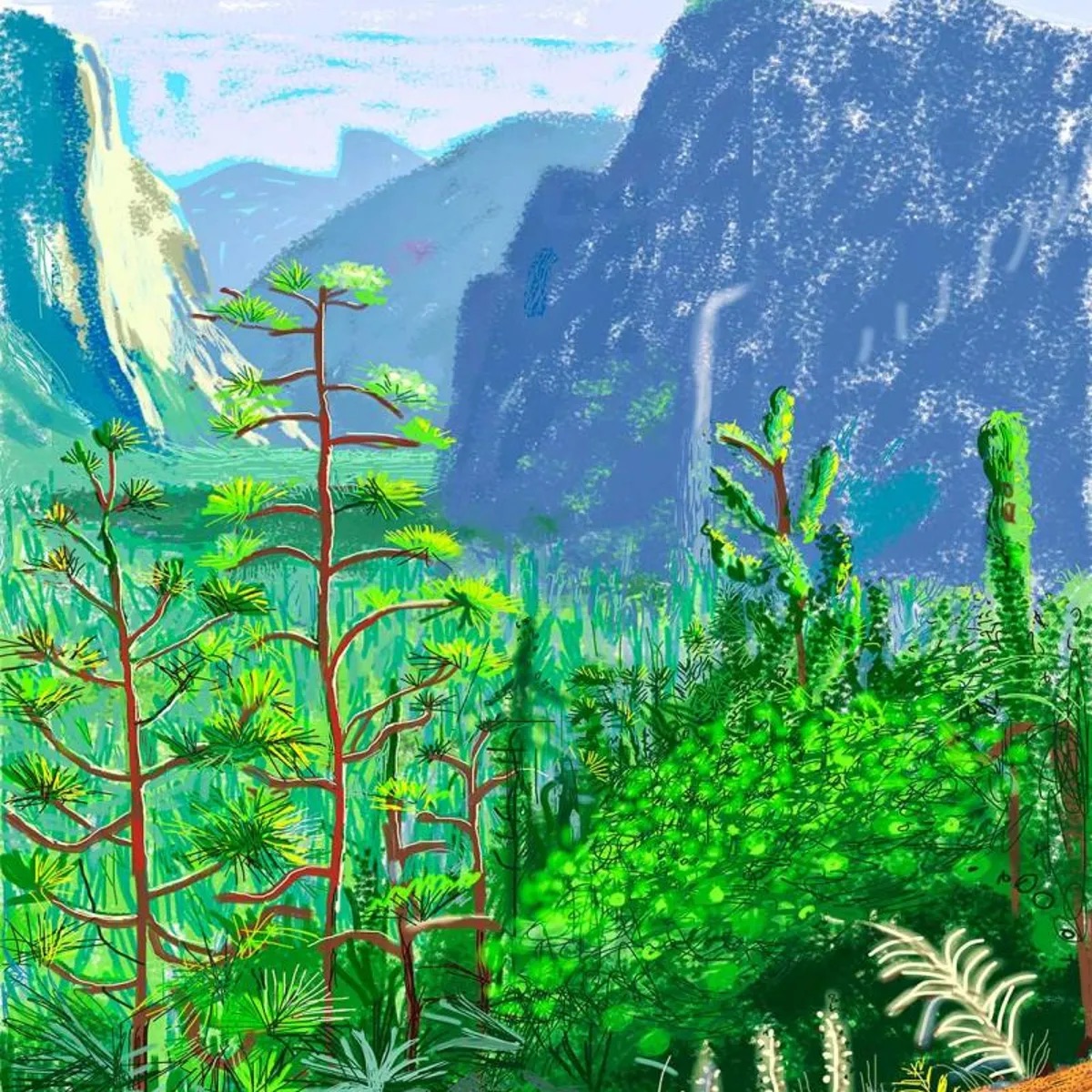
David Hockney
Untitled, 2006
Artists
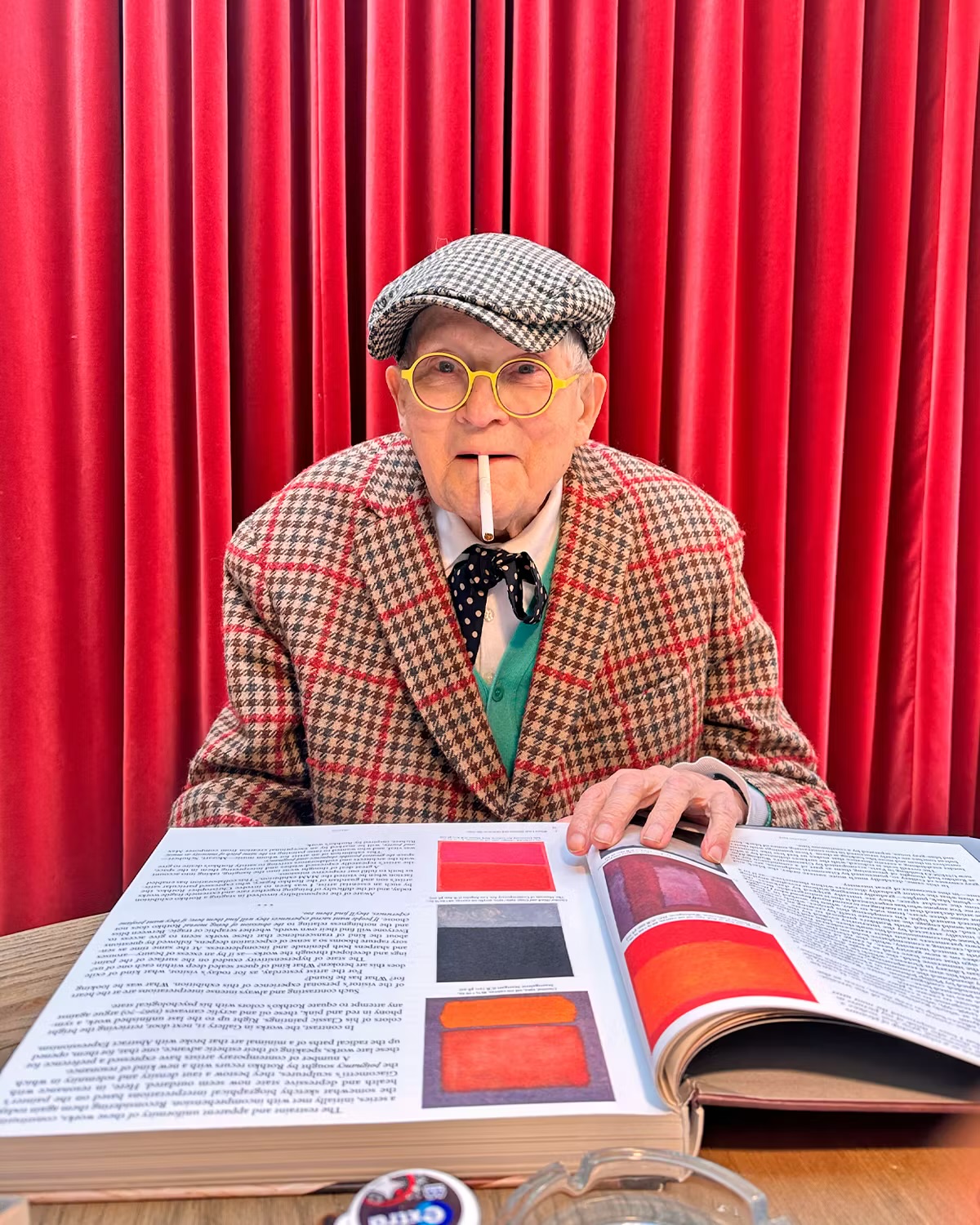
The Screen Is the New Canvas
There is a moment, watching someone paint on an iPad in a sun drenched field or a cramped studio apartment, when the old argument about what counts as real art simply collapses under its own weight. The gesture is unmistakably painterly. The decisions being made, about color, pressure, line, rhythm, are the same decisions artists have been making for centuries. Only the surface has changed.
And yet that change, from linen to glass, from bristle to fingertip, has opened up something genuinely new in the history of mark making. The story of digital painting did not begin with the iPad. It stretches back to the early 1980s, when artists and computer scientists began experimenting with software that could simulate the behavior of pigment on screen. The program MacPaint, released in 1984 alongside the original Macintosh, introduced a generation of curious minds to the idea that a computer could be a drawing tool.
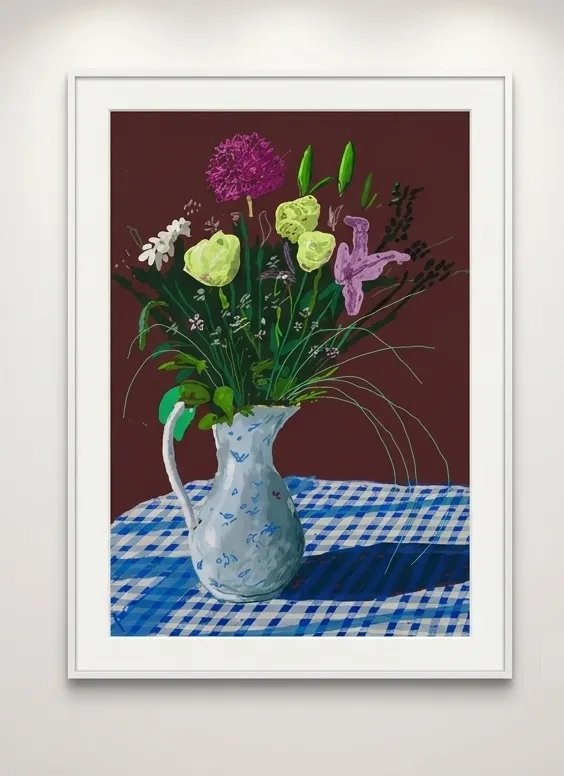
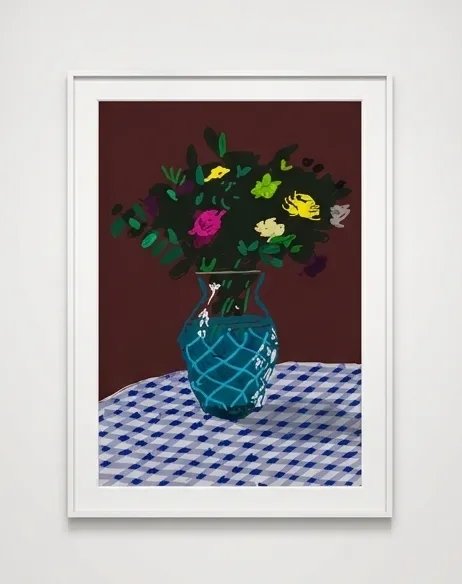
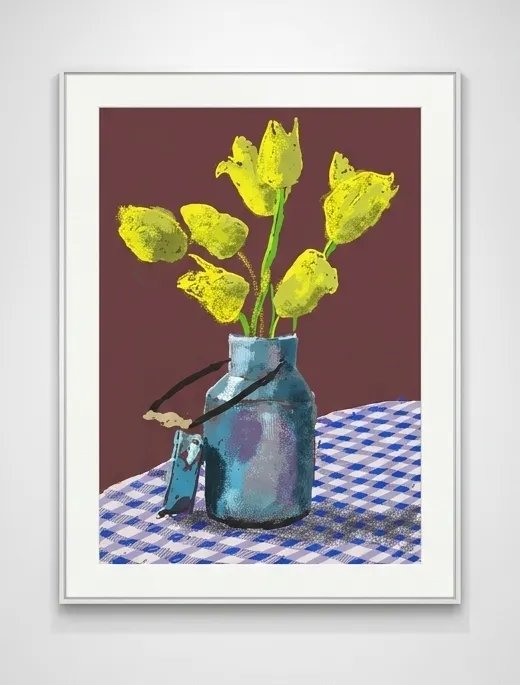
David Hockney
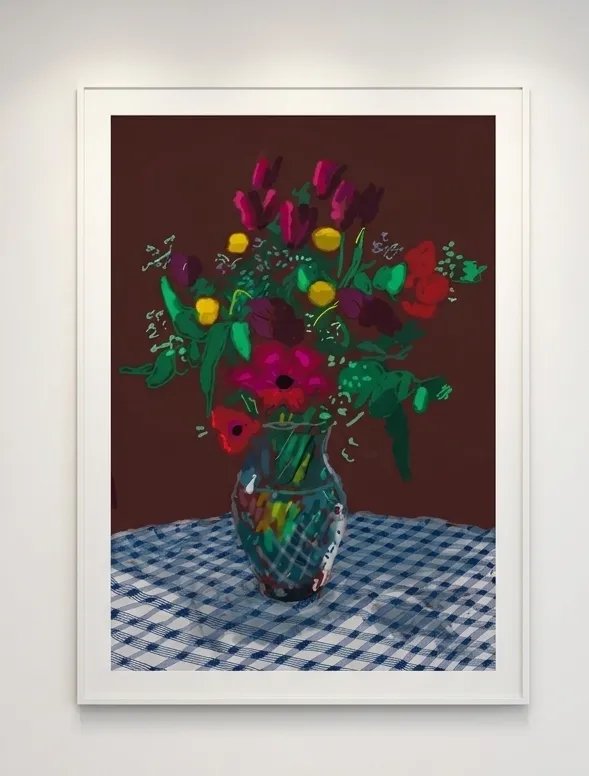
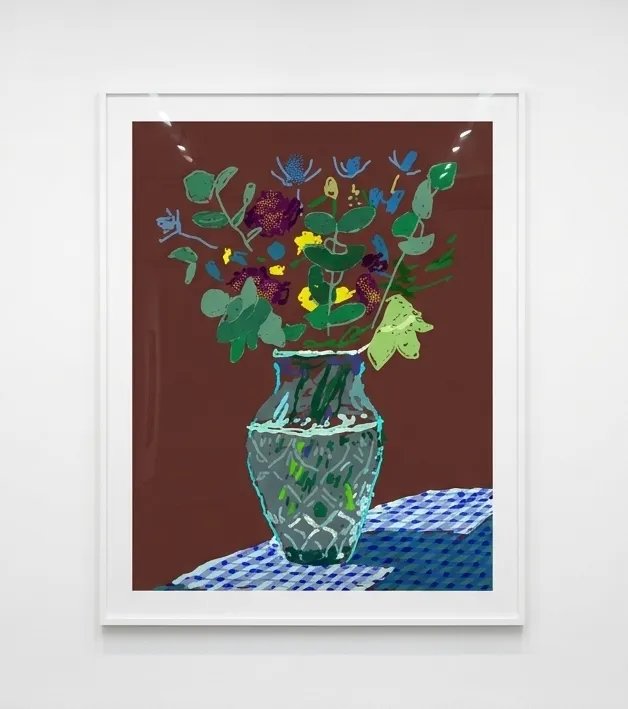
20th February, Jug with Flowers, 2021
Around the same time, Harold Cohen was developing AARON, an autonomous painting program that generated original imagery and was exhibited at the Tate Gallery in London in 1983. These early experiments were fascinating but clunky, tethered to a mouse and a monitor, and the results rarely captured the spontaneity that painting demands. The arrival of pressure sensitive graphics tablets in the 1990s moved things forward considerably. Wacom, the Japanese manufacturer, had already been producing tablets since 1984, but it was the refinement of stylus technology through the following decade that began attracting serious painters to digital tools.
Programs like Photoshop and later Painter allowed artists to simulate the behavior of oil, watercolor, and gouache with increasing sophistication. A small but committed community of artists began to take the medium seriously, even as the broader art world remained politely skeptical, associating digital work with graphic design or commercial illustration rather than fine art practice. Everything shifted in April 2010, when Apple released the first iPad. The device collapsed the distance between intention and mark in a way nothing had managed before.
The directness of touching the glass surface, of drawing with a finger and feeling the immediate response of the image, was closer to actual painting than any previous digital tool. Within weeks, artists were exploring what the device could do. App developers raced to meet the demand, and Brushes, one of the earliest and most elegant painting applications, became a quiet phenomenon. It was with this app that David Hockney began his extraordinary engagement with the medium, an engagement that would eventually force the entire art world to take iPad painting seriously.
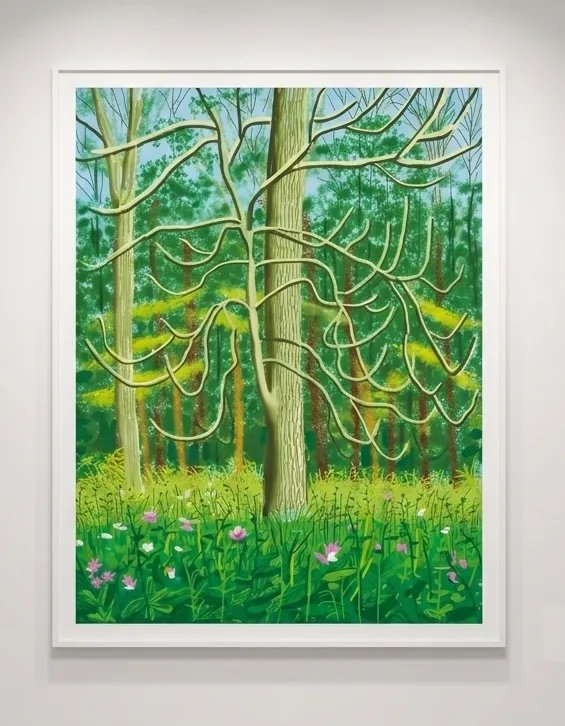
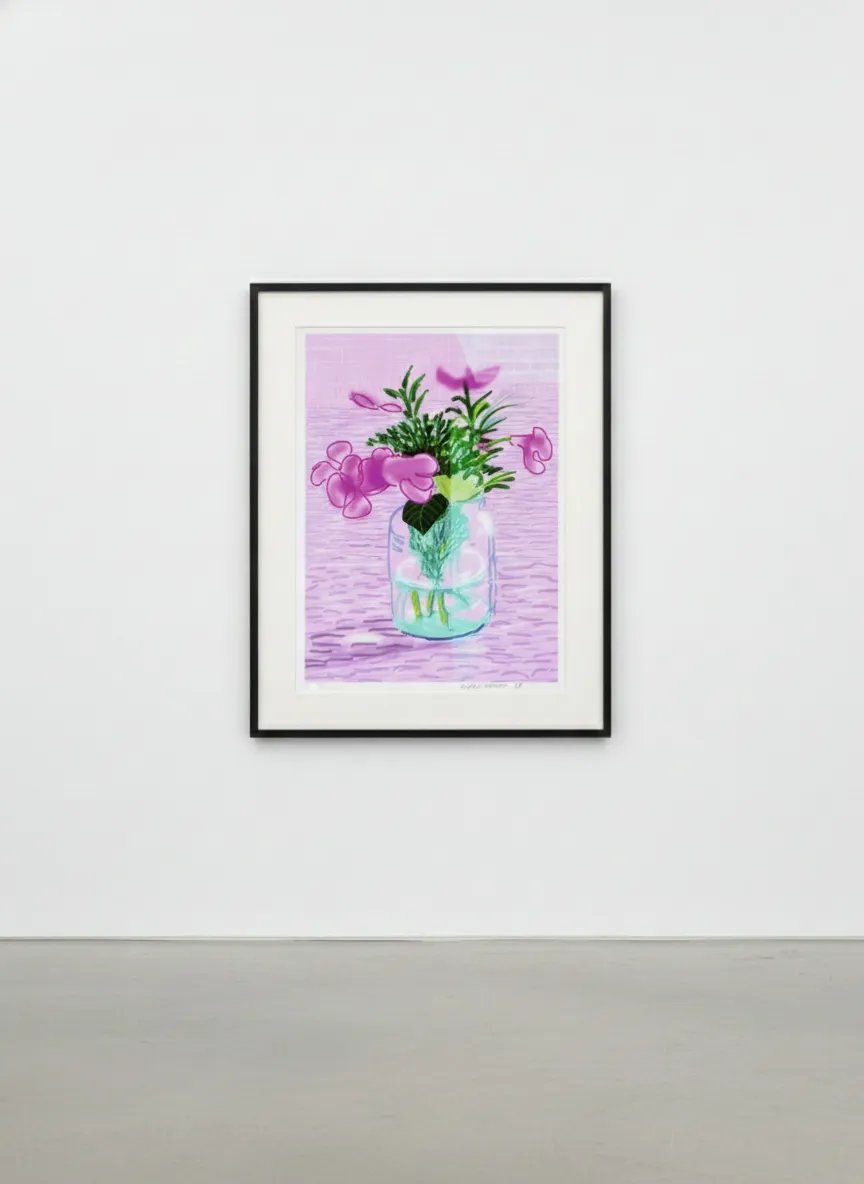
Hockney, already one of the most celebrated painters alive, took to the iPad with the enthusiasm of someone who had been waiting for exactly this tool. He began sending friends and family small digital paintings in the early morning hours, images of flowers, landscapes, and Yorkshire dawns, created on his phone and then his iPad with a directness and warmth that recalled his earliest drawings. By 2010 and 2011, he was working on the iPad prolifically, and in 2012 a major exhibition at the Royal Academy in London, titled A Bigger Picture, included large scale prints of his iPad works alongside traditional paintings. The show was a critical and popular success, and it effectively legitimized the medium in the eyes of many who had dismissed it.
His work on The Collection offers a sustained view of an artist for whom the iPad was not a novelty but a genuine extension of his lifelong inquiry into perception and light. What makes iPad painting distinctive as a practice is not simply the tool but the conceptual freedom it enables. There is no drying time, no stretching of canvas, no toxic solvents, and no fear of ruining something irreplaceable. This freedom changes the psychology of mark making.
Artists report that they take risks on the iPad that they might hesitate to take on a physical surface. The undo function, so often cited dismissively by critics, is in practice no different from the scraping back of oil paint or the lifting of a watercolor wash. Every medium has its methods of revision. What the iPad offers is revision without trace, and with that comes a different relationship to experimentation.
The cultural significance of iPad painting extends well beyond any single artist or work. It democratized the act of painting in a way that is still being felt. A teenager in a city without access to art supplies or studio space can now develop a serious painting practice on a device that fits in a bag. At the same time, it raised urgent questions about materiality, originality, and the art market.
If a painting exists only as a file, who owns it. How is it sold, framed, collected. These questions have no clean answers, and the ongoing conversation around NFTs and digital ownership has added further complexity without quite resolving anything. Today, iPad painting occupies a genuinely interesting position in contemporary art.
It is neither fringe nor fully mainstream, and that productive tension has attracted artists of real ambition. The medium continues to evolve alongside the hardware and software that support it, with the Apple Pencil introducing pressure and tilt sensitivity that brings the experience closer than ever to working with a physical brush. Museums have collected iPad works, auction houses have sold them, and critics who once rolled their eyes have begun writing seriously about what the best of this work achieves. The conversation is no longer about whether it counts as painting.
It is about which painters are doing it best, and what they are saying with this strange, luminous, intimate new surface.