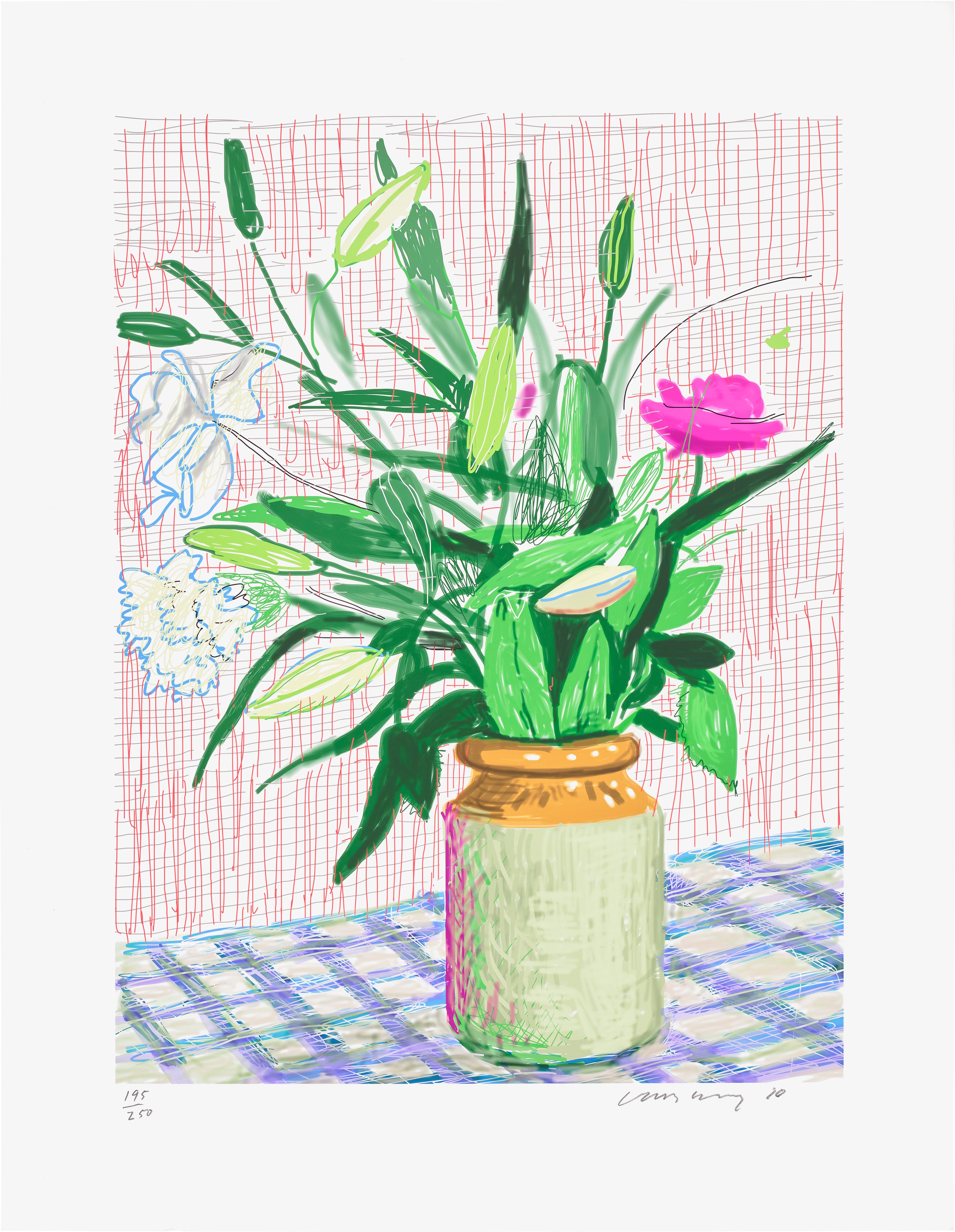
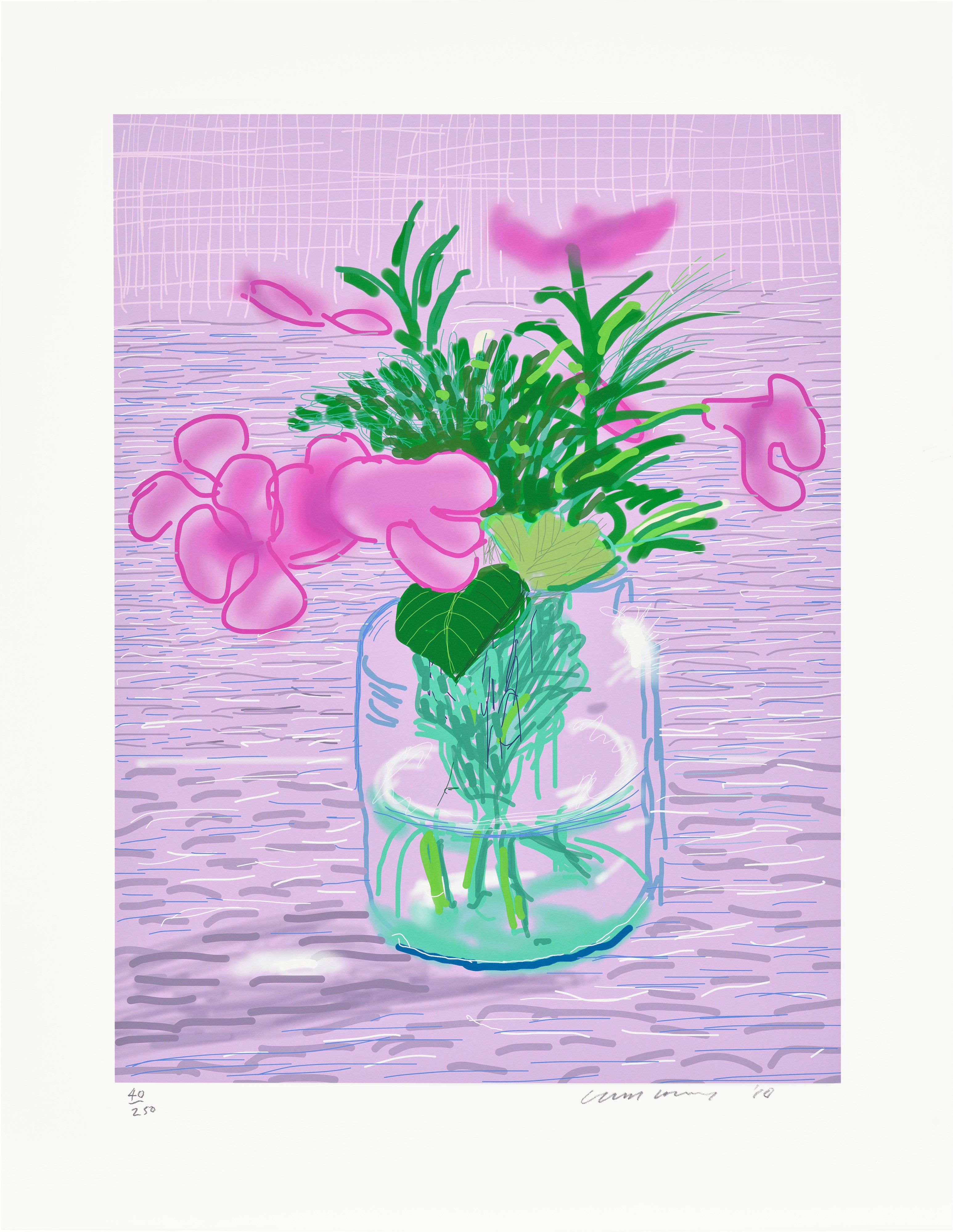
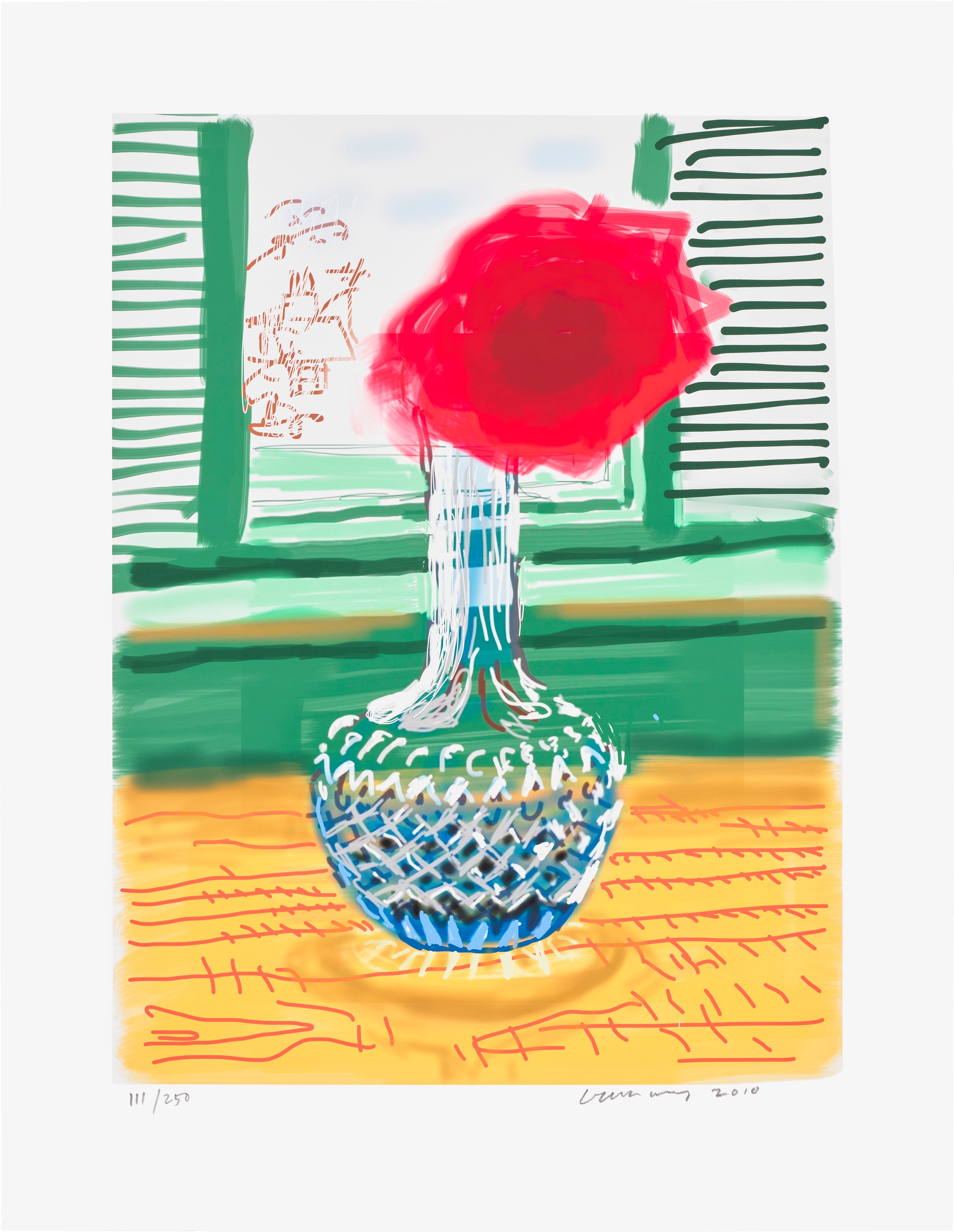
IPad Drawing
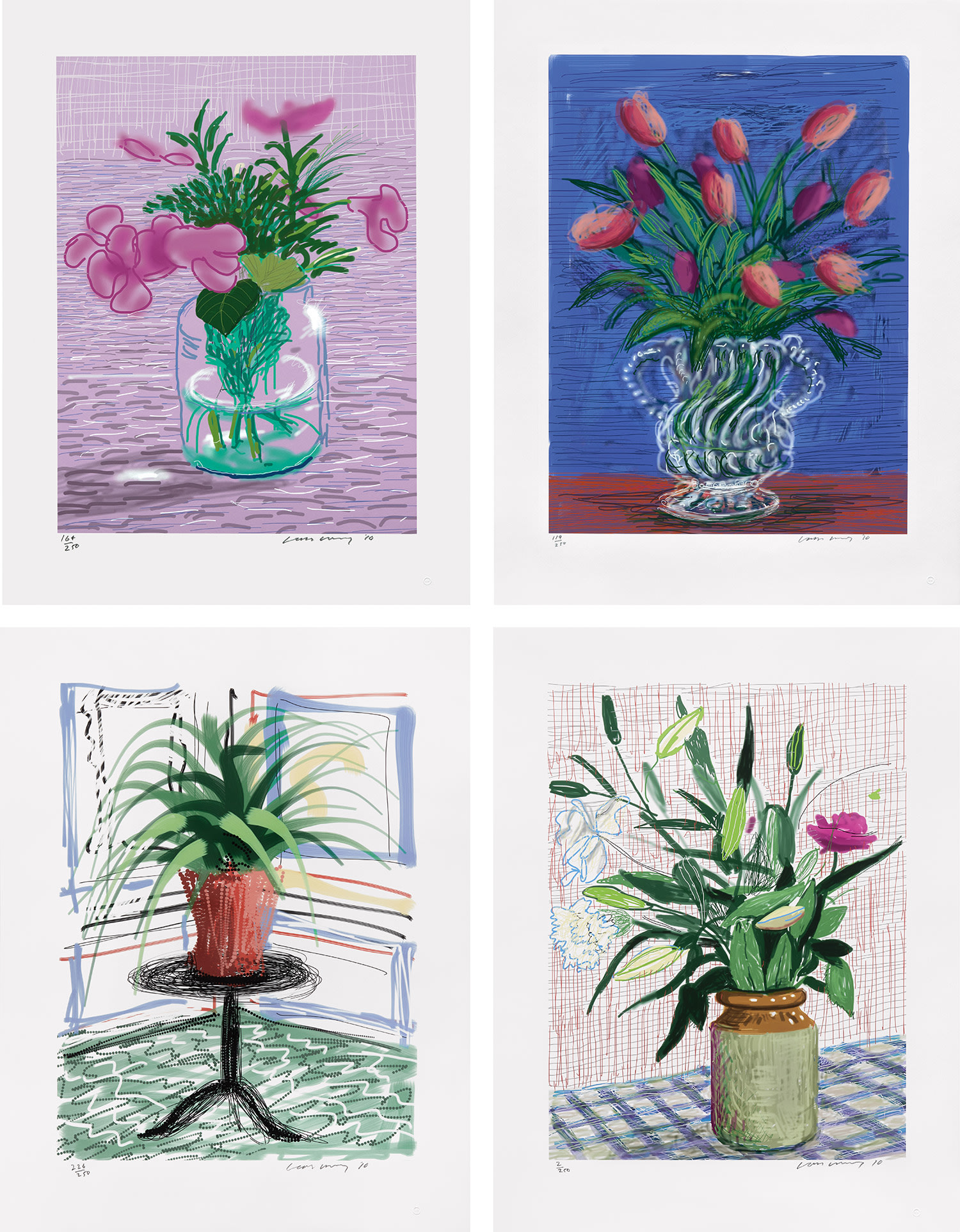
David Hockney
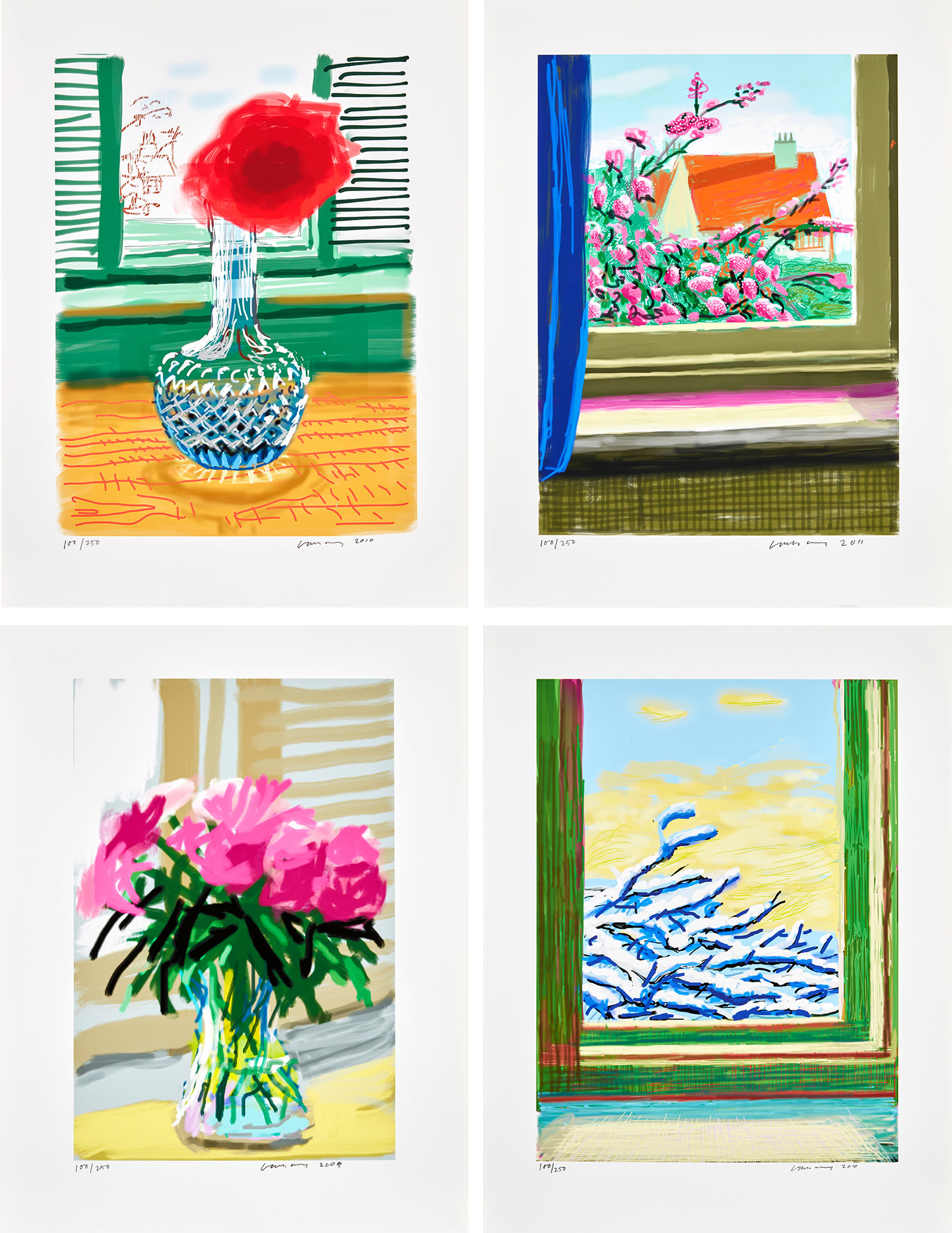
A Bigger Book, Art Edition A, B, C, and D
Artists
The Screen as Canvas: Collecting iPad Art
There is something quietly radical about a painting that begins as light. Collectors who have spent time with iPad drawings describe a particular quality of presence, an immediacy that feels different from works made through accumulation of physical material. The line arrives fully formed, the color is exactly what the artist intended, and the finished work carries none of the hesitation marks that oil or watercolor might betray. For collectors attuned to process, that directness is deeply compelling.
What draws serious collectors to iPad drawing is partly the intimacy of the medium. These are works made alone, often quickly, in response to a moment or a light condition or a fleeting thought. David Hockney, who began working with the iPhone around 2008 and moved to the iPad shortly after, has spoken extensively about the pleasure of drawing in bed at dawn, capturing the Yorkshire morning before it shifted. That sense of lived experience translated without friction into image is something you feel when you live with these works.
David Hockney
A Bigger Book, Art Edition A, B, C, and D
They are candid in a way that larger studio productions sometimes are not. Knowing what separates a good iPad work from a great one requires looking past the novelty of the medium. The strongest works demonstrate that the artist understands the tool rather than being seduced by it. iPad drawing software offers effects that can mimic impasto, watercolor, charcoal, and pastel, and lesser works often betray themselves through an overreliance on those simulations.
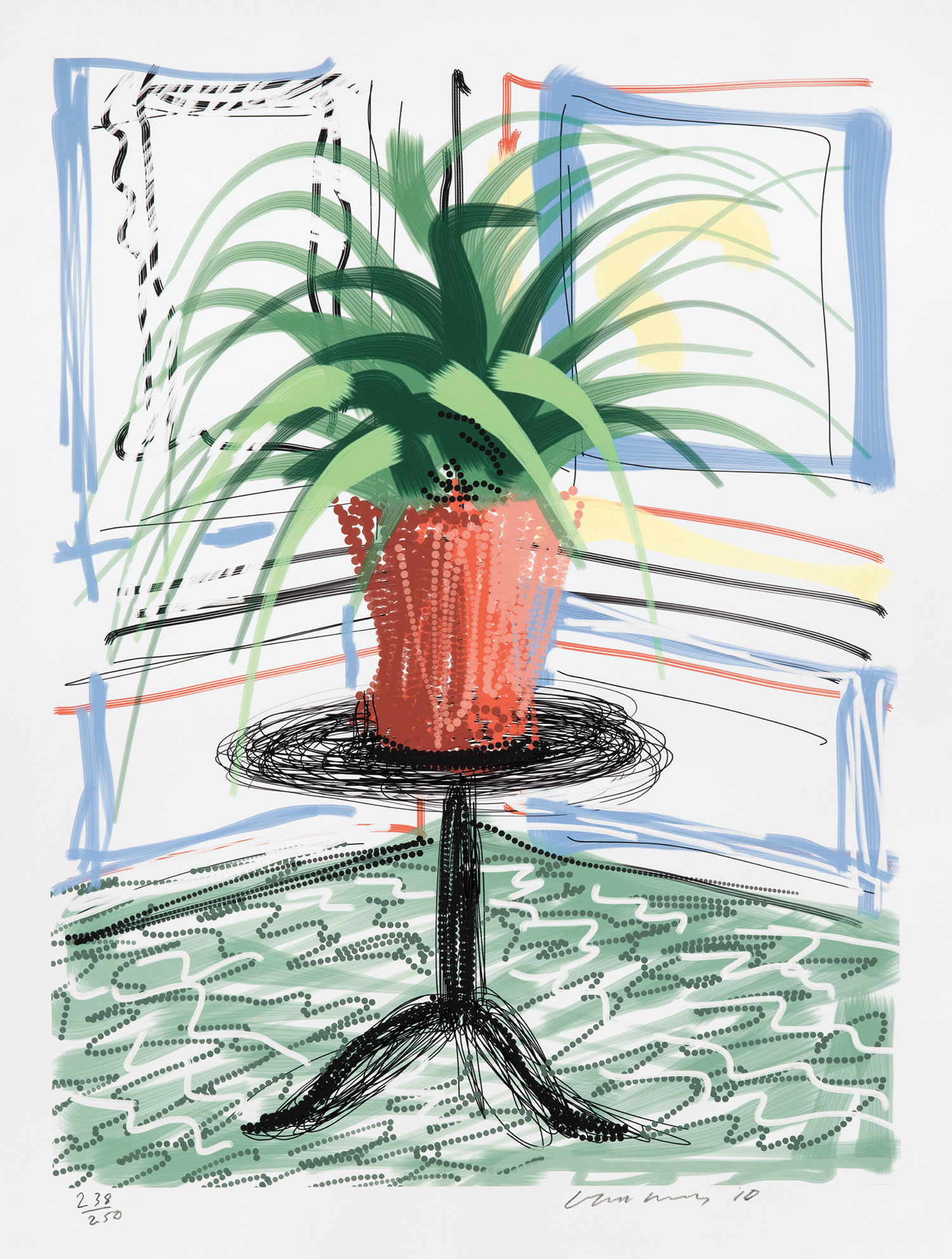
What to look for instead is an artist who has developed a genuinely native visual language, one that could only exist in this medium. Hockney's iPad works are a useful benchmark here. His understanding of flat color, compressed space, and the relationship between drawing and observation translates into something that feels inevitable rather than experimental. Composition and tonal intelligence matter as much here as in any other medium.
A collector should ask whether the work holds up at the scale it is printed or displayed, whether the color relationships feel considered rather than accidental, and whether there is a coherent sensibility across a body of work rather than just a single successful image. Edition structure is also worth scrutinizing closely. Many iPad works are released as limited edition prints, and the edition size, paper quality, and printing method vary enormously. Archival pigment prints on high quality rag paper, with small edition sizes and certificates of authenticity signed by the artist, represent a meaningfully different proposition than open edition digital prints.
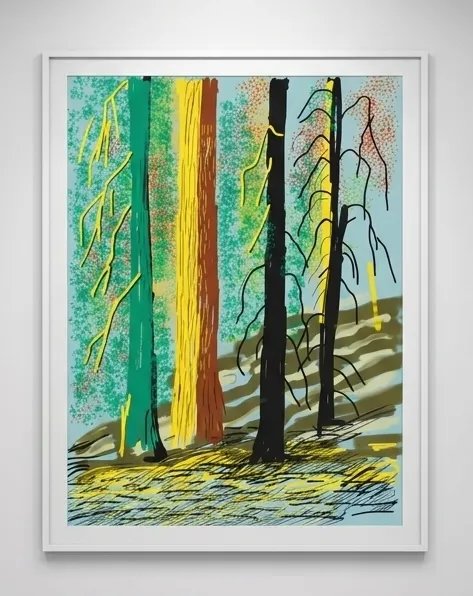
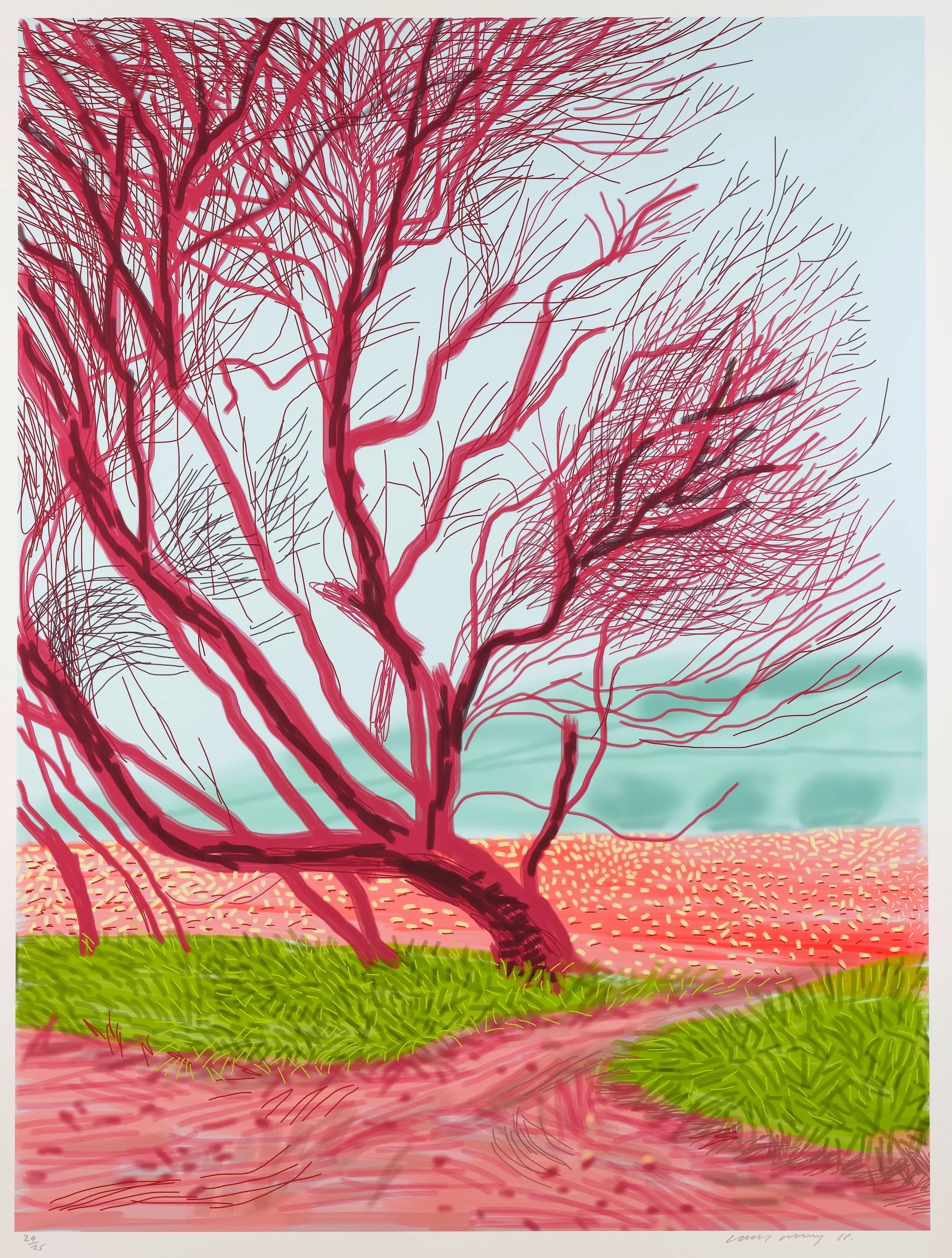
David Hockney remains the central figure for collectors approaching this space, and his iPad works are among the most compelling arguments for the medium's legitimacy. His series of Yorkshire landscape drawings, many of which were exhibited at the Royal Academy in the 2012 exhibition A Bigger Picture, demonstrated that the iPad could sustain extended observation and serious pictorial ambition. Works from that period and the subsequent years are well represented on The Collection and offer collectors an opportunity to engage with a significant chapter in late Hockney. The secondary market for Hockney iPad works has been active, with editions in good condition from documented series performing reliably at auction.
Christie's and Phillips have both handled Hockney digital works in recent years, and the results suggest that edition size and exhibition provenance are the primary drivers of value. Beyond Hockney, there is a genuinely interesting group of younger artists who came of age with the iPad as a primary tool rather than an adopted one. These artists are worth watching. Some work in figuration, some in abstraction, and the best of them are developing visual approaches that would be difficult or impossible to achieve in any other medium.
The collecting opportunity here is real because critical recognition has lagged behind artistic achievement. Works that feel historically significant in ten years are likely being made right now, and the price points for emerging iPad artists remain accessible in a way that historical material in other mediums no longer is. Practical considerations for collectors are worth addressing directly. Because iPad works exist first as files, there is an important question of what exactly you are acquiring.
For works sold as unique pieces, you should confirm that the artist has destroyed or permanently locked the original file so that no further outputs can be produced. For editions, understand the total edition size including artist proofs, and ask whether any prior exhibition copies exist outside the numbered edition. These questions are standard in photography collecting and apply equally here. A reputable gallery should be able to answer them without hesitation.
Display requires thought. iPad works printed on aluminum or backlit through lightbox display can carry a very different feeling than the same image on paper. Neither is inherently superior, but the choice should be deliberate and ideally made in dialogue with the artist's intention. Works on paper should be framed with UV protective glazing, kept away from direct sunlight, and stored in stable humidity conditions.
The ink stability of archival pigment prints is well documented and comparable to traditional photography, so condition concerns over time are manageable with basic care. What tends to affect value more than physical condition is clarity of provenance and documentation, so retain all certificates, correspondence, and purchase records from the outset. The longer arc of this medium's place in art history is still being written, which is precisely what makes collecting in this space interesting right now. The works that will matter are being sorted out by serious collectors, curators, and advisors in real time.
Hockney's sustained engagement with the iPad has done more than any critical essay to establish the medium's credibility, and the collectors who recognised that early have been rewarded both intellectually and financially. The question worth sitting with now is which other artists are using this tool with comparable seriousness, and whether their work is something you want to wake up to.