Homoerotic Art
Tom of Finland
Eleven works: (i-xi), 1959

Desire, Power, and the Gaze Collected
There is something particular about living with art that holds desire at its center. Collectors who come to homoerotic art often describe the same experience: a confrontation with the body that refuses to be passive, images that return your gaze rather than submit to it. This is not decorative work. It asks something of the room it inhabits and of the person standing in front of it.
That quality, the sense that the work has its own authority and will not be easily dismissed, is precisely what draws serious collectors here and keeps them coming back. The category itself resists tidy boundaries, which is part of what makes it so rich. Works range from the classical and allegorical to the frankly explicit, from fine art photography to illustration traditions that carry their own distinct histories. What unites the best of it is an insistence on the male body as a subject worthy of aesthetic attention, longing, and formal rigor, rather than as a footnote or a provocation.
Herb Ritts
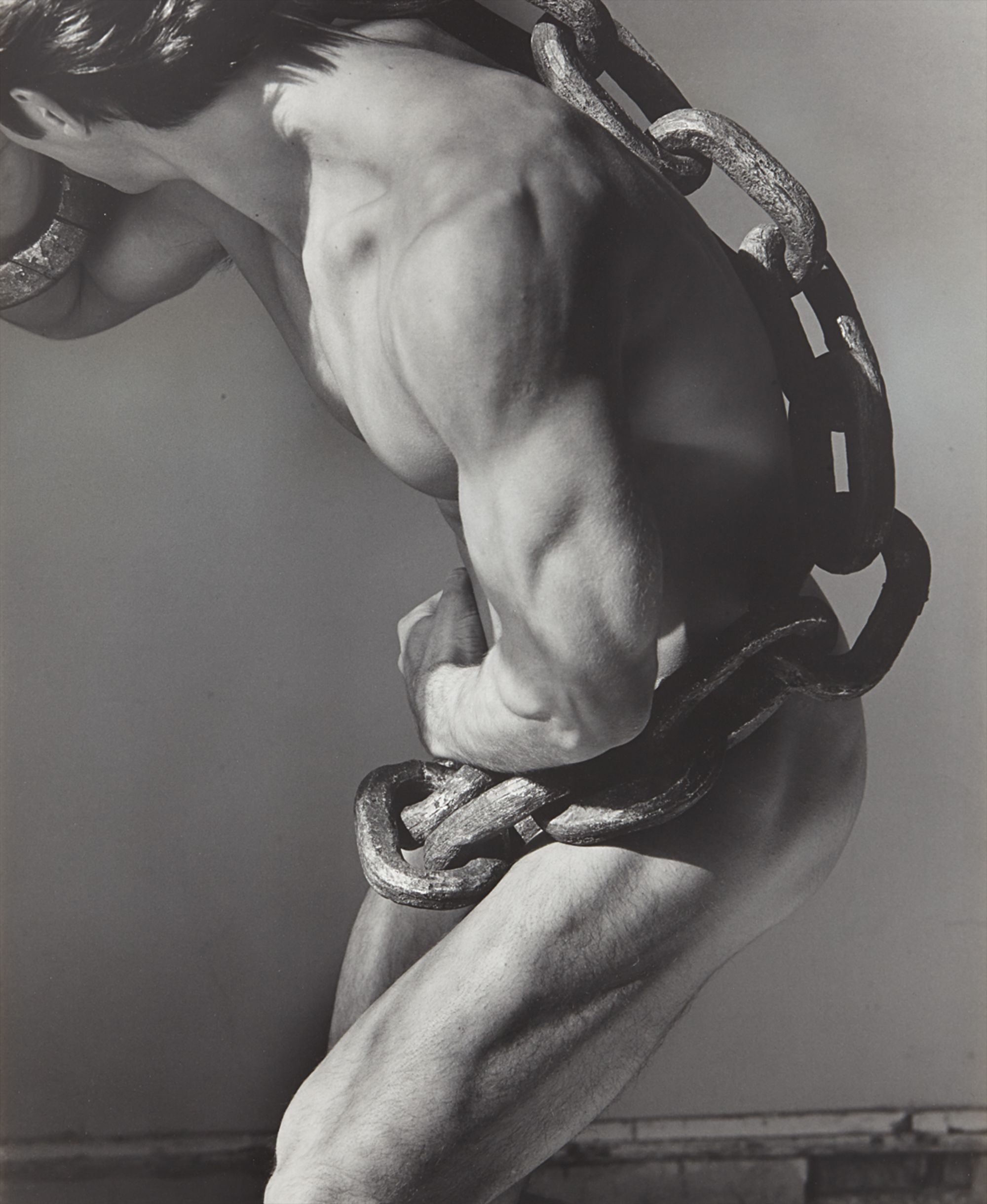
Man with chain, Los Angeles
Collectors who understand that distinction are the ones building the most compelling holdings in this space. When it comes to separating good work from great work, the question is almost always one of intentionality and formal resolution. The strongest pieces in this category are not simply images of desire; they are images where desire and formal mastery arrive at the same moment. Look for works where the composition does real work, where light and shadow are doing something beyond description, where the artist has made choices that feel inevitable rather than arbitrary.
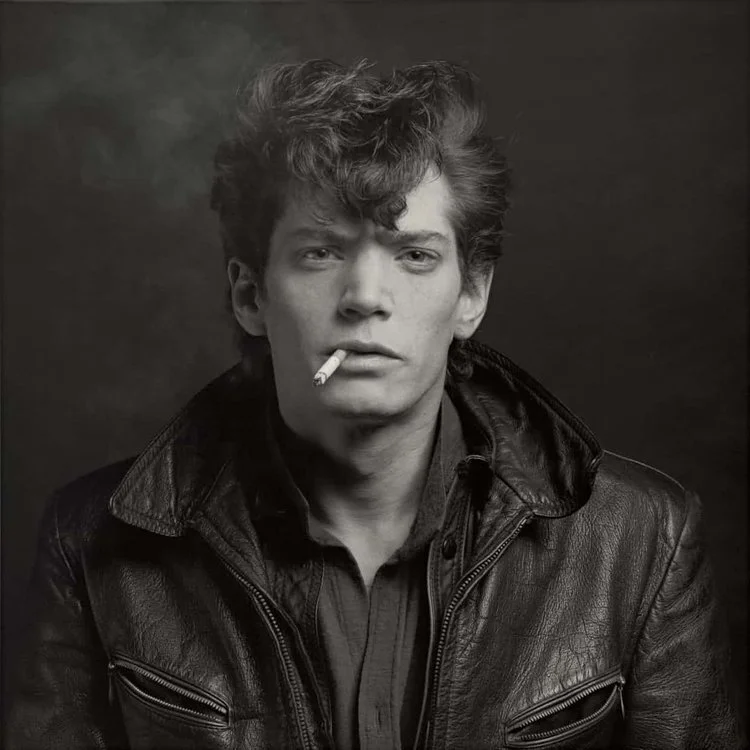
In photography particularly, the difference between a competent nude and a transformative image often comes down to the relationship between vulnerability and control. Great work in this space holds both simultaneously. Robert Mapplethorpe is the anchor of any serious conversation about collecting in this area. His black and white photographs from the late 1970s and through the 1980s achieve something that very few artists working in any medium manage: they make the erotic and the classical indistinguishable from each other.
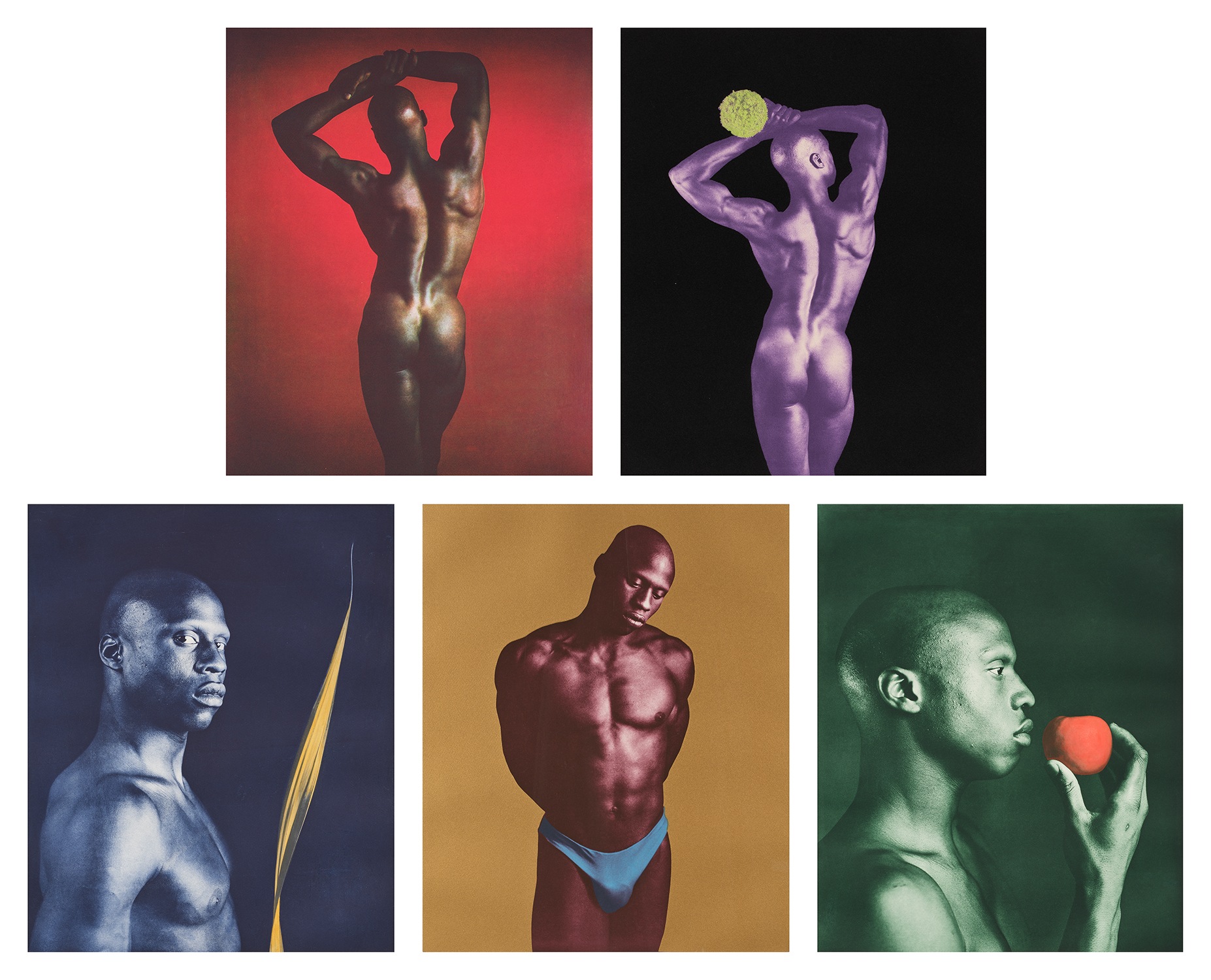
Robert Mapplethorpe
Ken Moody Portfolio
His work treats the body with the same formal attention he brought to flowers or to portraiture, and that equivalence is itself a kind of argument. Mapplethorpe's prints are well represented on The Collection, and they remain among the most historically significant and market stable works available to collectors today. Editions matter enormously here. Estate prints and prints made during the artist's lifetime carry very different values, and any serious buyer should understand the provenance and edition details thoroughly before proceeding.
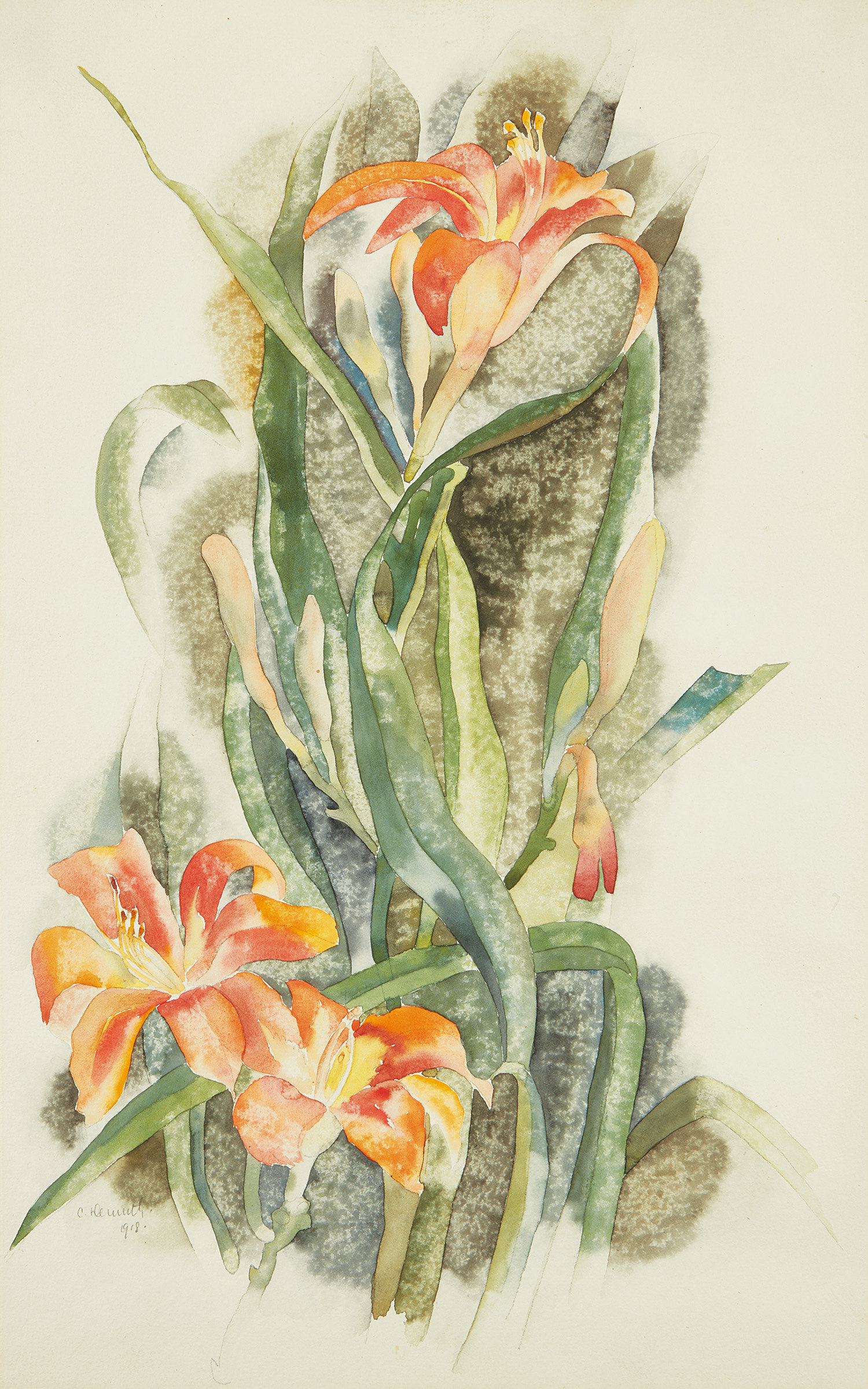
Herb Ritts occupies a related but distinct position. Where Mapplethorpe was confrontational and still, Ritts brought a sculptural warmth to his figures, an influence of classical Mediterranean aesthetics filtered through California light. His celebrity portraiture is broadly known, but his more intimate figure studies reward careful attention and represent a stronger long term collecting opportunity. Also worth considering is the work of Charles Demuth, whose early twentieth century watercolors depicting male bathers and figures in Turkish bath settings are remarkable precisely because of the historical context in which they were made.
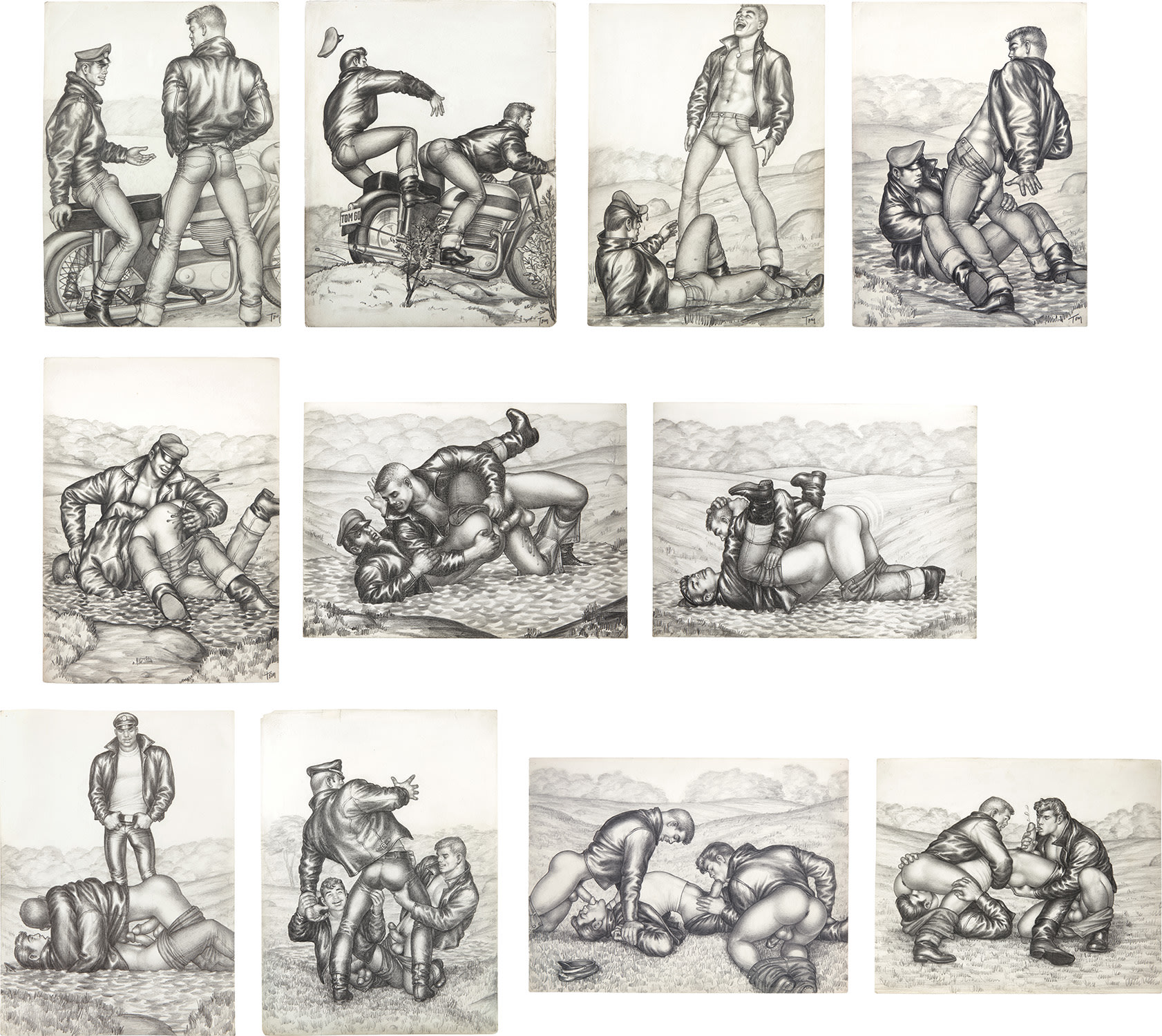
Tom of Finland
Eleven works: (i-xi), 1959
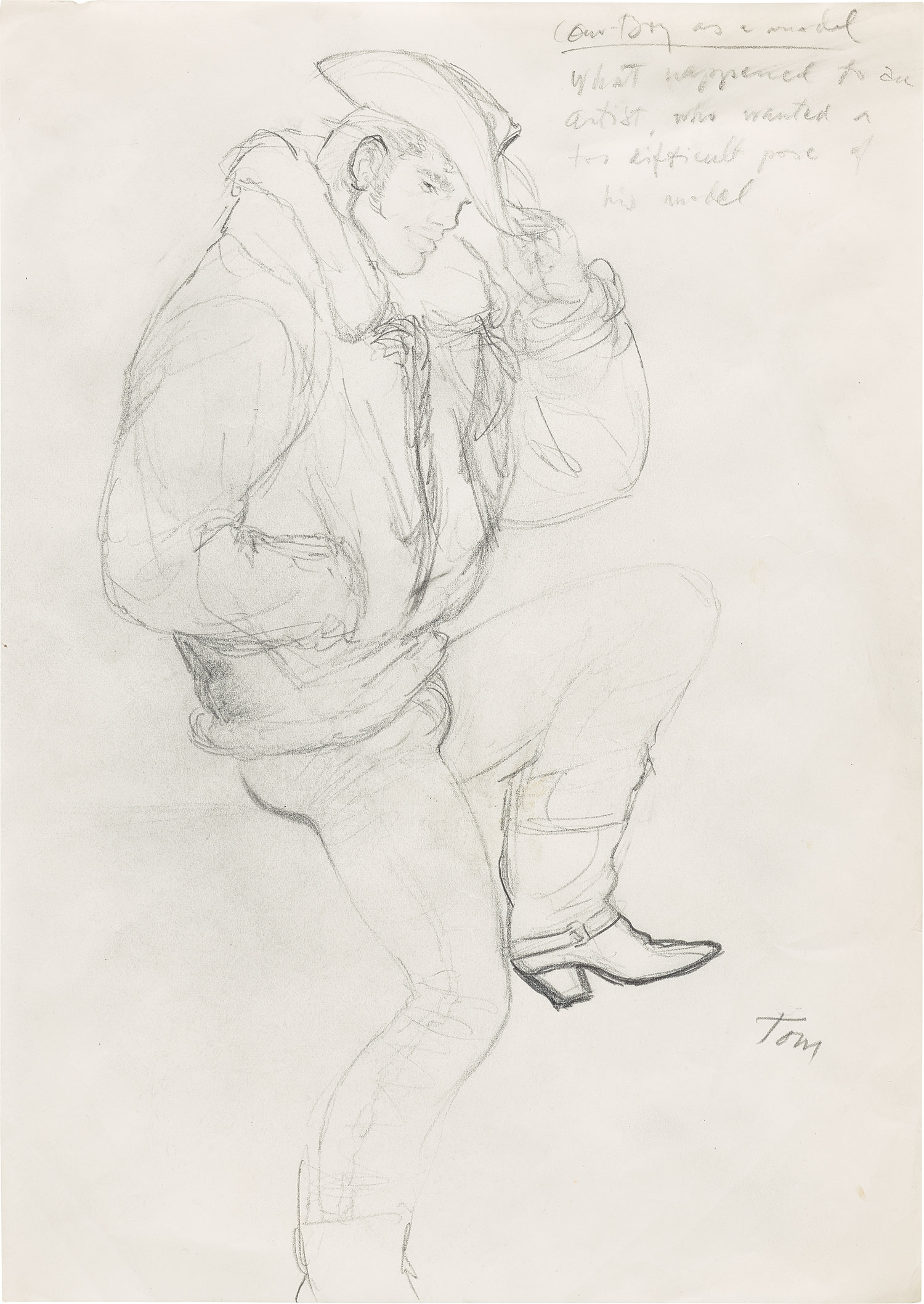
Demuth encoded desire into works that appeared almost incidentally figurative, and that layer of historical necessity gives them a depth that purely contemporary work sometimes lacks. Tom of Finland stands in a category almost entirely his own. Touko Laaksonen, who worked under that name from the late 1950s onward, created an iconography of male desire so distinctive and so thoroughly realized that it crossed from subcultural artifact into fine art canon entirely on its own terms. His drawings, with their exaggerated musculature and unapologetic celebration of gay male sexuality, were genuinely radical documents when they first circulated.
Today they are recognized as foundational works in the history of queer visual culture, and the Tom of Finland Foundation has done serious work to maintain archival integrity and edition standards. Works on The Collection represent an opportunity to engage with an artist whose market has matured significantly over the past decade without losing its energy. For collectors looking toward emerging opportunities, the space is genuinely active right now. A younger generation of artists, many working at the intersection of figuration and personal mythology, are producing work that engages with homoerotic traditions while expanding their visual language.
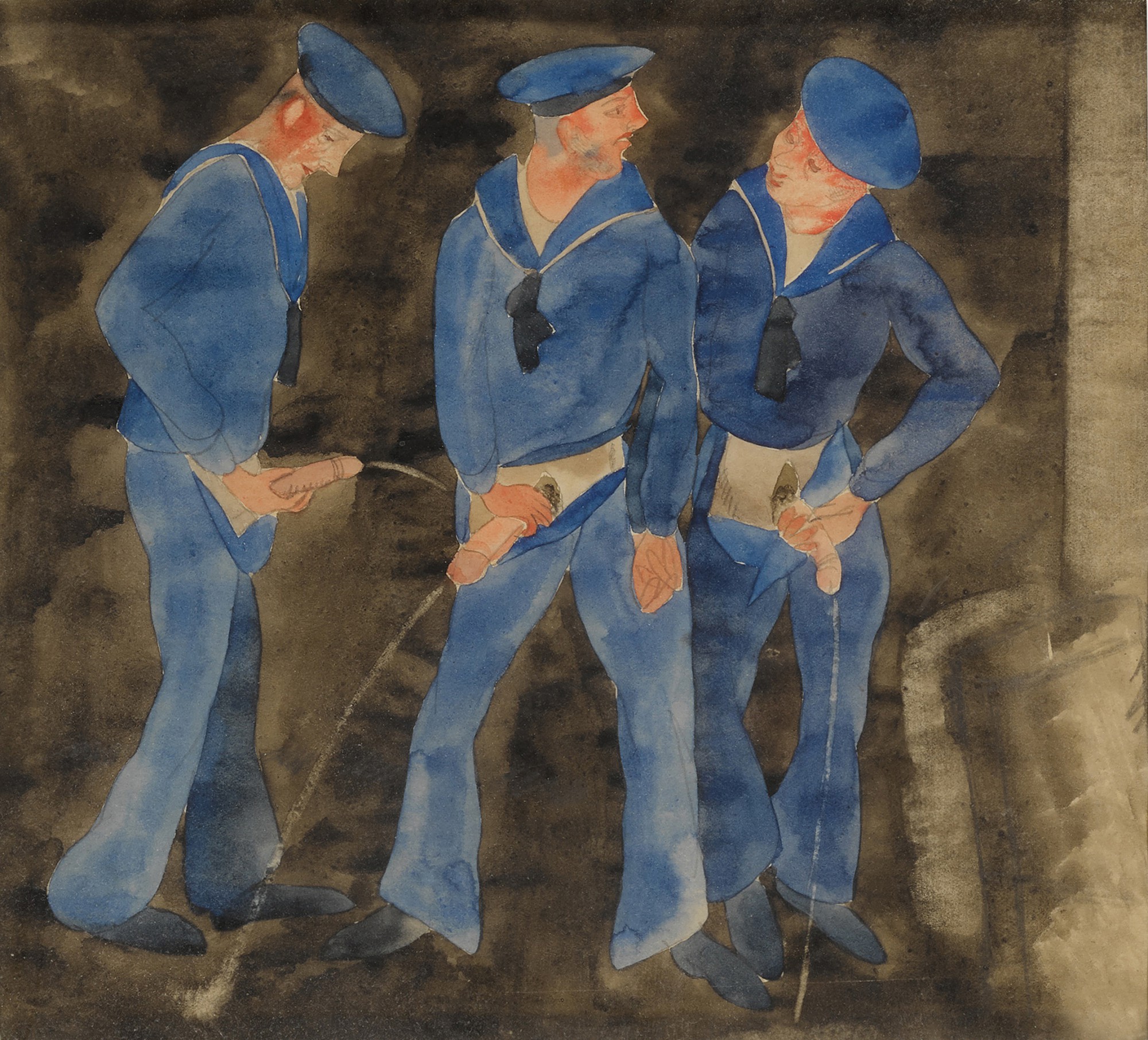
Charles Demuth
Three Sailors Urinating, 1930
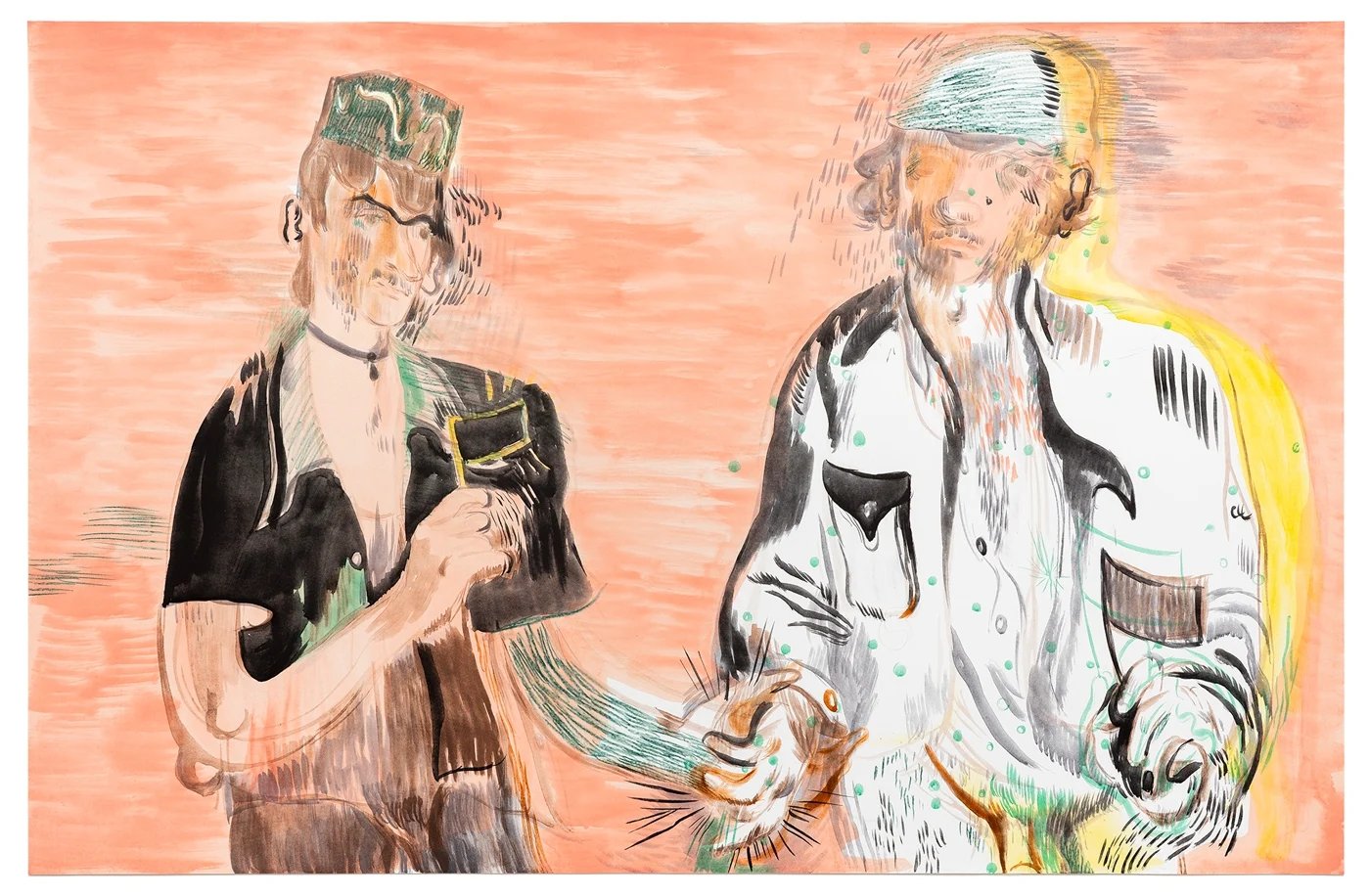
Artists like Salman Toor, whose intimate interior scenes depict queer South Asian men with tenderness and psychological complexity, have moved quickly through the gallery system and into institutional collections. Paul Sepuya, whose studio photographs use mirrors and fragmentation to complicate the relationship between photographer and subject, is another figure worth serious attention. These are artists whose auction results are beginning to reflect what the gallery market understood several years ago. At auction, the category has performed with notable consistency for works by historically established artists.
Mapplethorpe prints have held and in many cases exceeded presale estimates through cycles that saw other photographic markets soften. Tom of Finland works have seen meaningful price growth particularly at specialist sales and in markets where queer cultural history has received renewed institutional interest. Condition is a genuine concern across the board. Works on paper are particularly sensitive to light exposure, and many pieces in this category spent decades in conditions that were not archivally sound, for reasons that had everything to do with shame and nothing to do with aesthetics.
When acquiring works on paper, insist on condition reports that specifically address foxing, fading, and any previous framing history. Practically speaking, the conversations worth having with a gallery or dealer in this space are about edition verification, exhibition history, and institutional provenance. A work that has been shown publicly, particularly in a museum or major gallery context, carries a different kind of art historical weight than one that has passed quietly through private hands. Display considerations are real but not prohibitive.
These works do not require segregation or apology. They require the same thoughtful lighting and viewing conditions as any serious figurative work. The collector who approaches this category with the same rigor they bring to any other area of their practice will find it enormously rewarding, aesthetically and over time, as a matter of market.