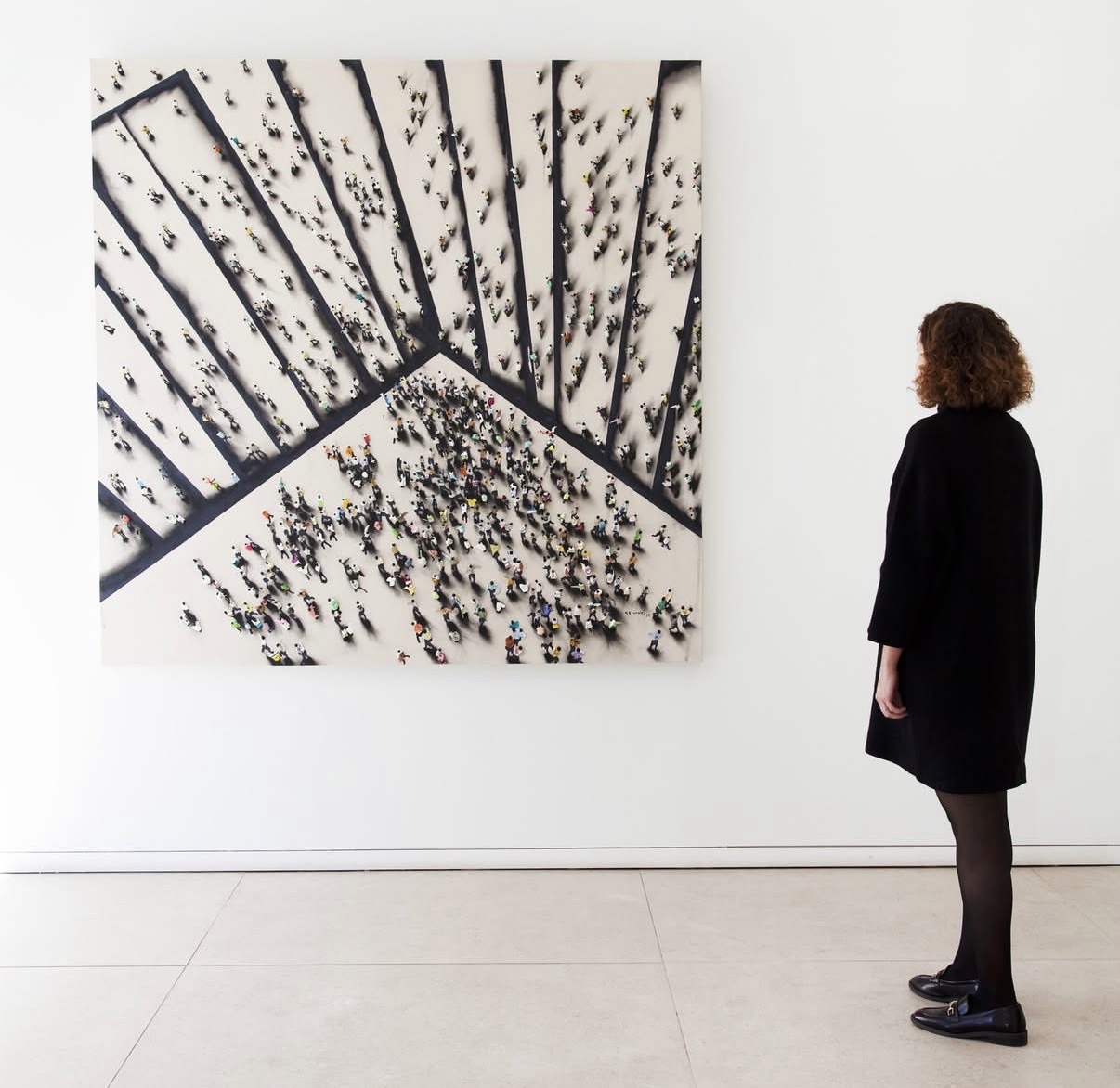
Goldfish
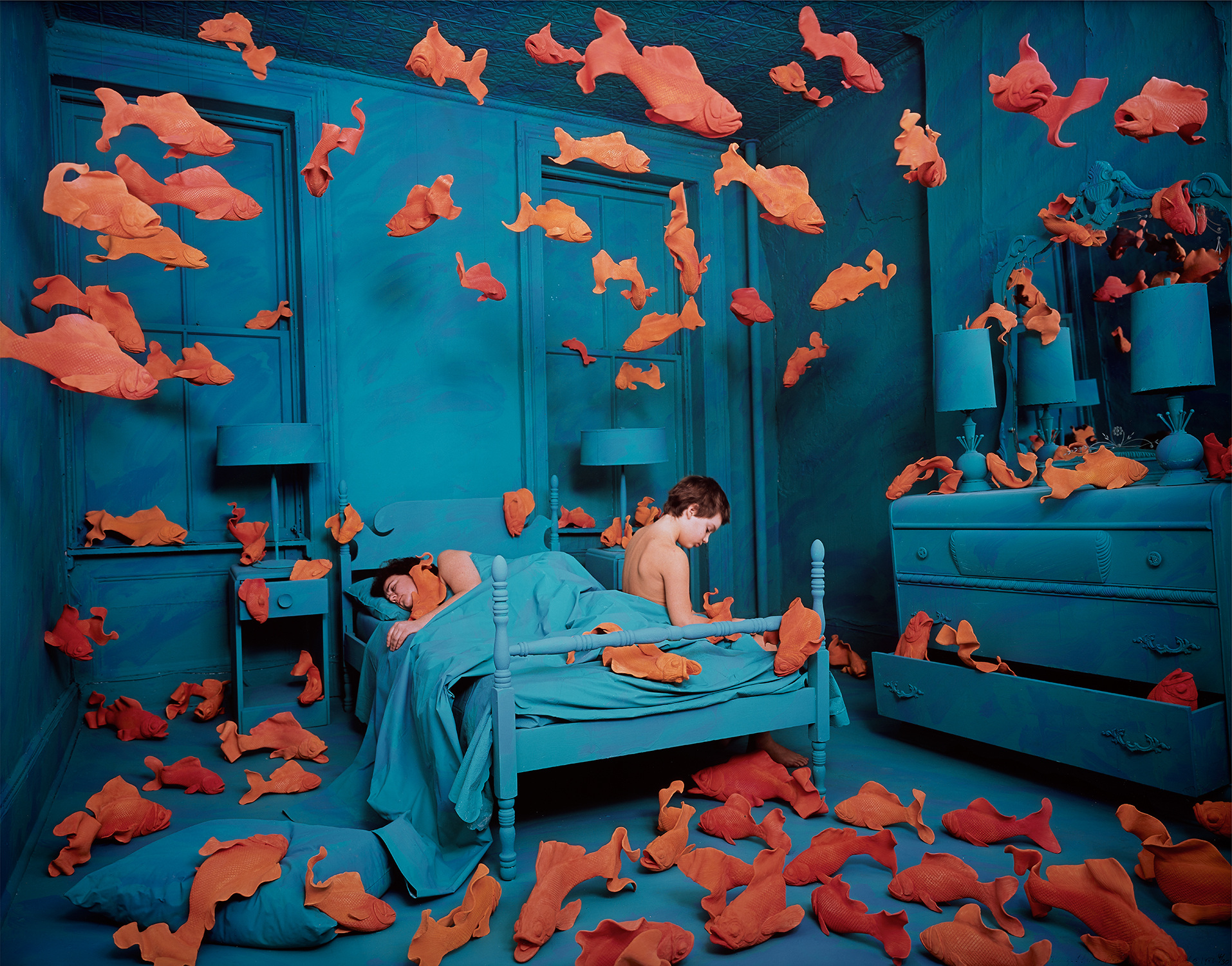
Sandy Skoglund
'revenge Of The Goldfish'
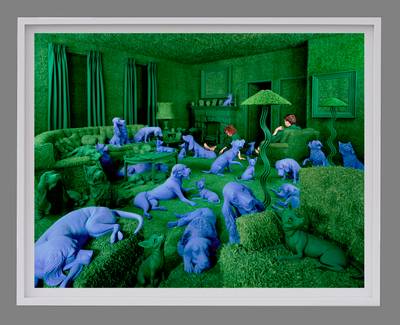
The Goldfish Is Having Its Moment
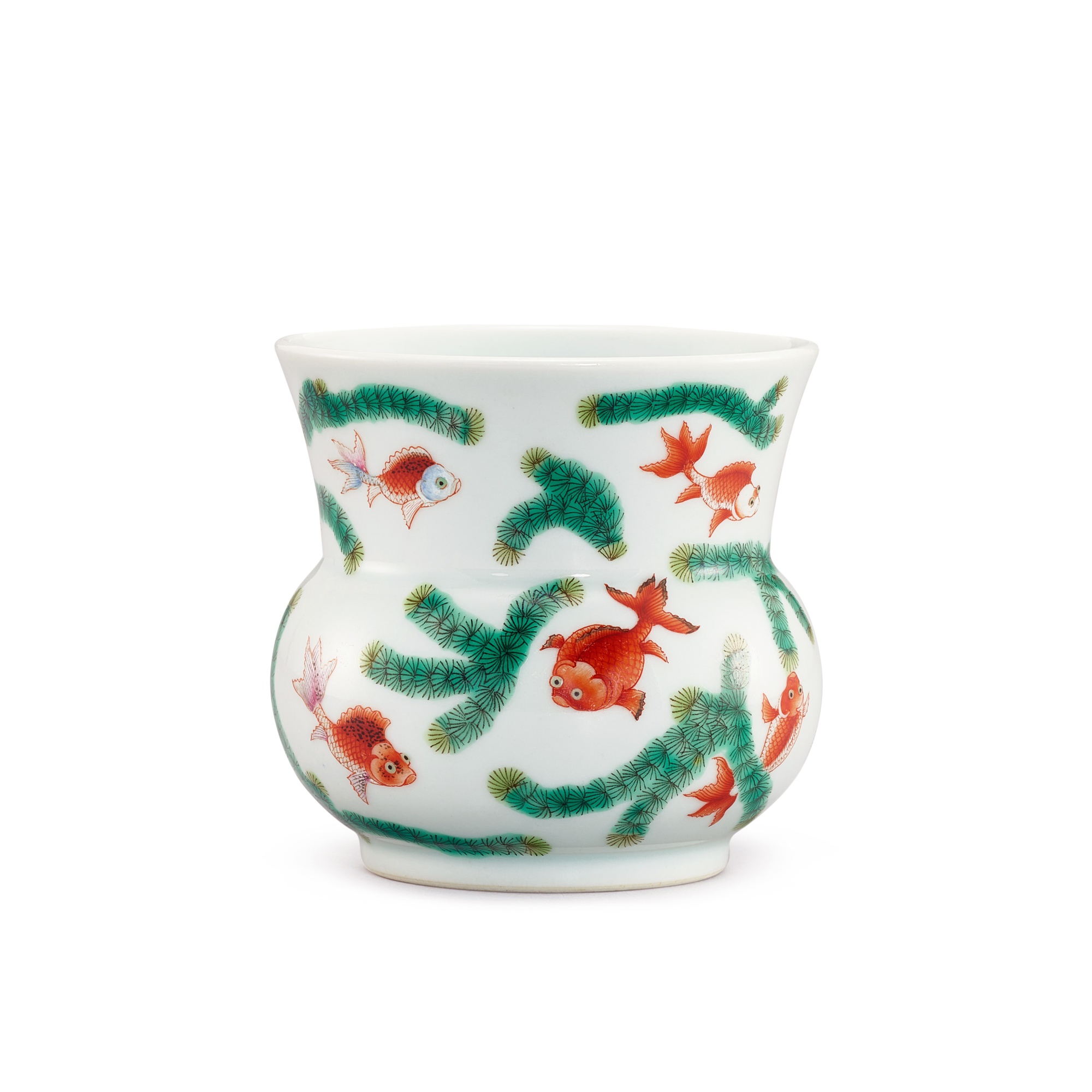
When a famille rose zhadou decorated with swimming goldfish sold at auction in recent years for a figure well into six figures, it confirmed what serious collectors of Chinese imperial porcelain had long understood: the goldfish motif is not decorative filler. It carries meaning, it carries market weight, and right now it carries an unusual cultural charge that cuts across categories from contemporary photography to Qing dynasty ceramics to Japanese lacquerware. That kind of cross disciplinary resonance is rare, and it tells you something important about why collectors and institutions are paying close attention. The goldfish has been a symbol of abundance and good fortune in East Asian visual culture for centuries, but its presence in the Western art world has often been filtered through a kind of exoticizing lens that flattened its complexity.
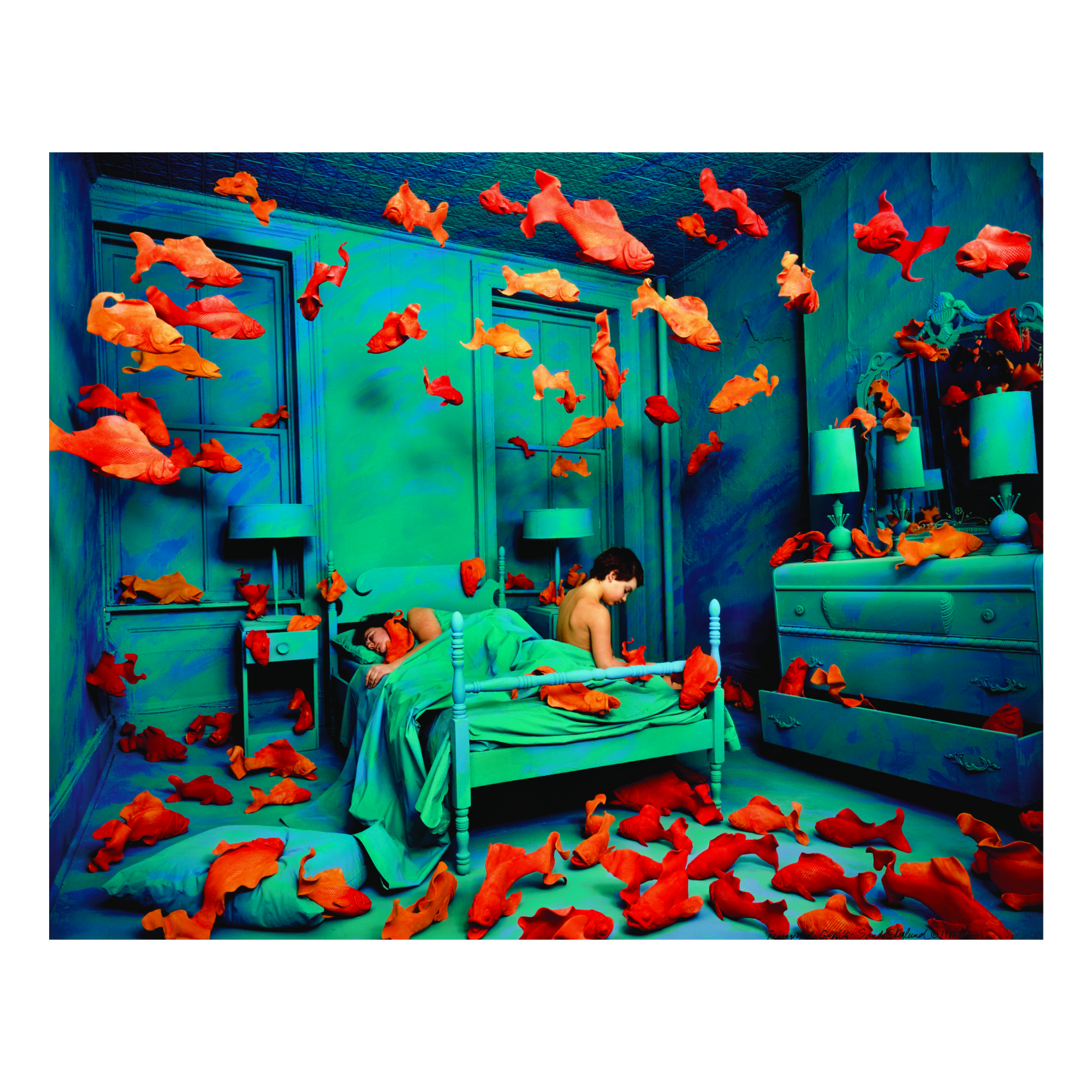
What feels different about the current moment is that curators and collectors are approaching goldfish imagery with a sharper critical awareness, one that asks harder questions about domestication, desire, and the strange beauty of things we keep confined. The conversation has grown more interesting, in other words, not just more expensive. Sandy Skoglund is perhaps the most recognizable Western artist working with goldfish as a primary subject, and her work commands serious attention both critically and commercially. Her 1981 installation and photograph Revenge of the Goldfish remains one of the most reproduced and discussed images in late twentieth century American art, a surrealist domestic tableau in which dozens of ceramic orange fish appear to float through a blue tinged bedroom.
Sandy Skoglund
'revenge Of The Goldfish'
The work is now in important institutional collections and appears regularly in survey exhibitions of postmodern photography. Skoglund's practice sits at the intersection of installation, photography, and tableau construction, and the goldfish works in particular have attracted renewed interest as curators revisit the 1980s as a period of radical formal experimentation. Her presence on The Collection reflects that sustained critical standing. The Chinese ceramics market offers a different but equally instructive window into the goldfish's staying power.
Famille rose goldfish vessels, particularly those from the Yongzheng and Qianlong periods, have performed consistently at the major Hong Kong and London sales. The zhadou form, a small cylindrical spittoon vessel, might seem a modest category, but when decorated with the fine enamel fish work associated with imperial workshops, it becomes a vehicle for extraordinary technical achievement. Christie's and Sotheby's have both seen strong results in this category over the past decade, with collectors from mainland China, Taiwan, and Southeast Asia driving prices upward and bringing competitive energy to what had previously been a more sedate corner of the Chinese works of art market. A well documented famille rose goldfish zhadou is exactly the kind of object that serious collections in this category should not overlook.
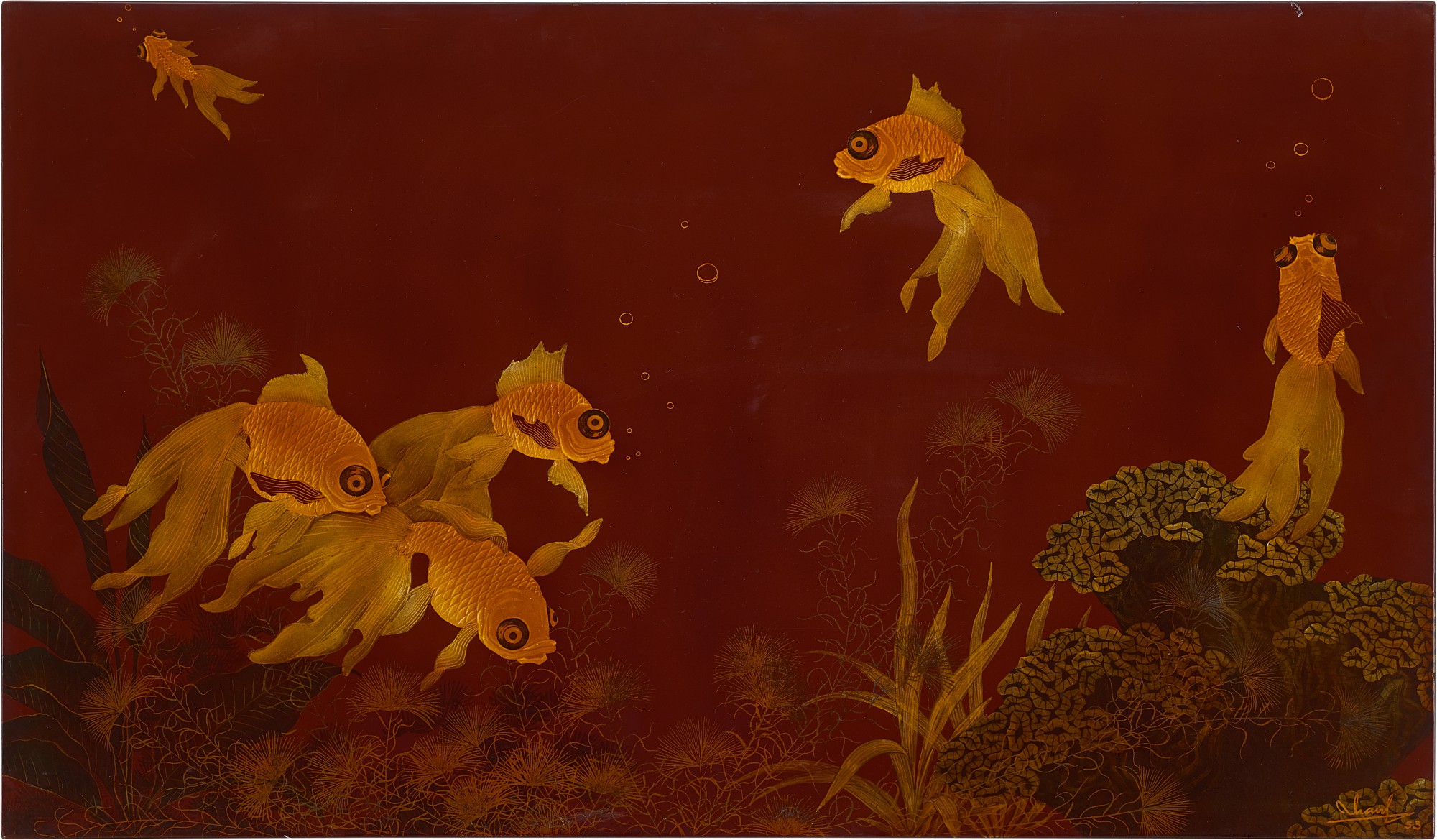
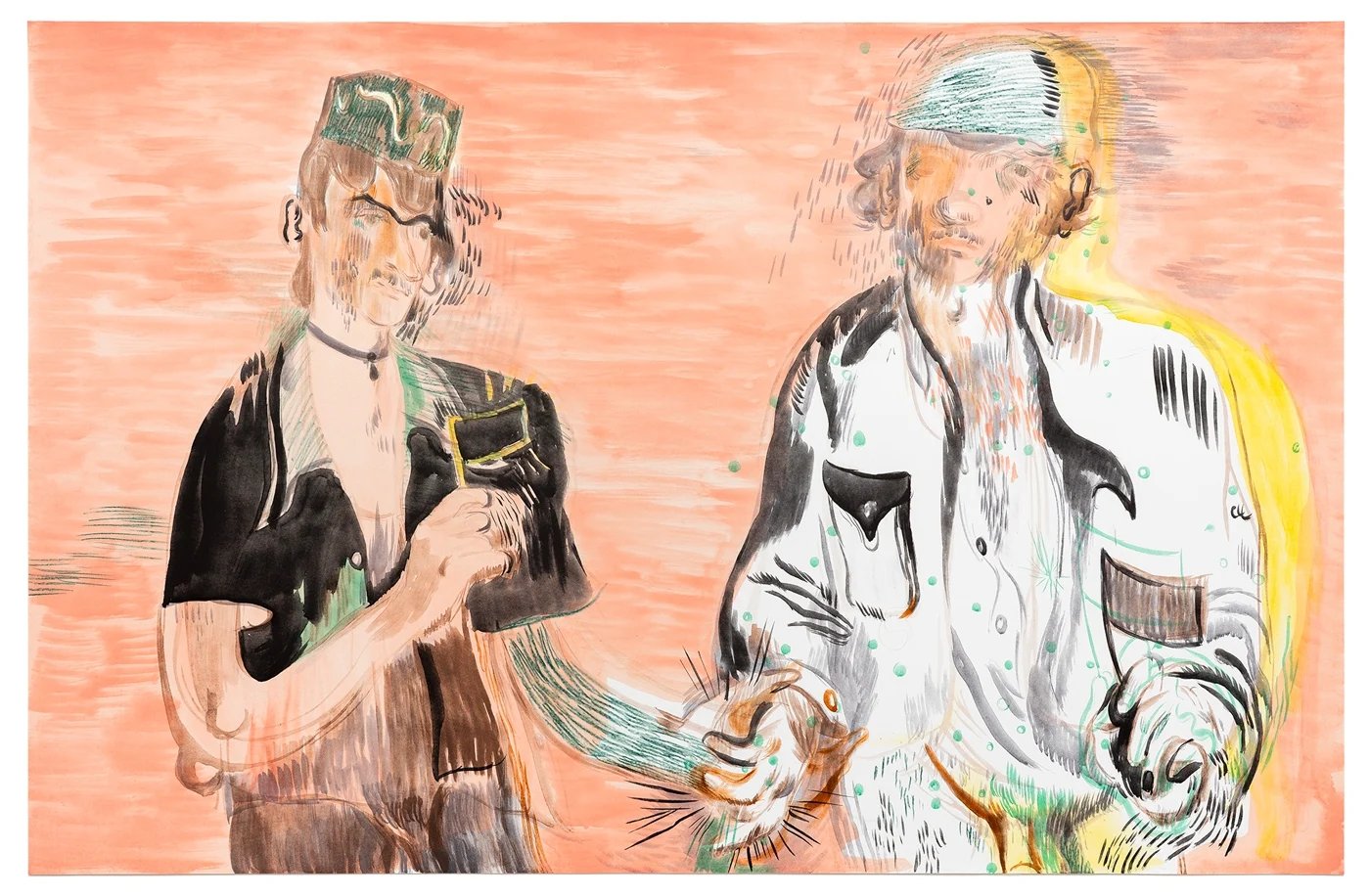
Truong Van Thanh
Goldfish 金魚
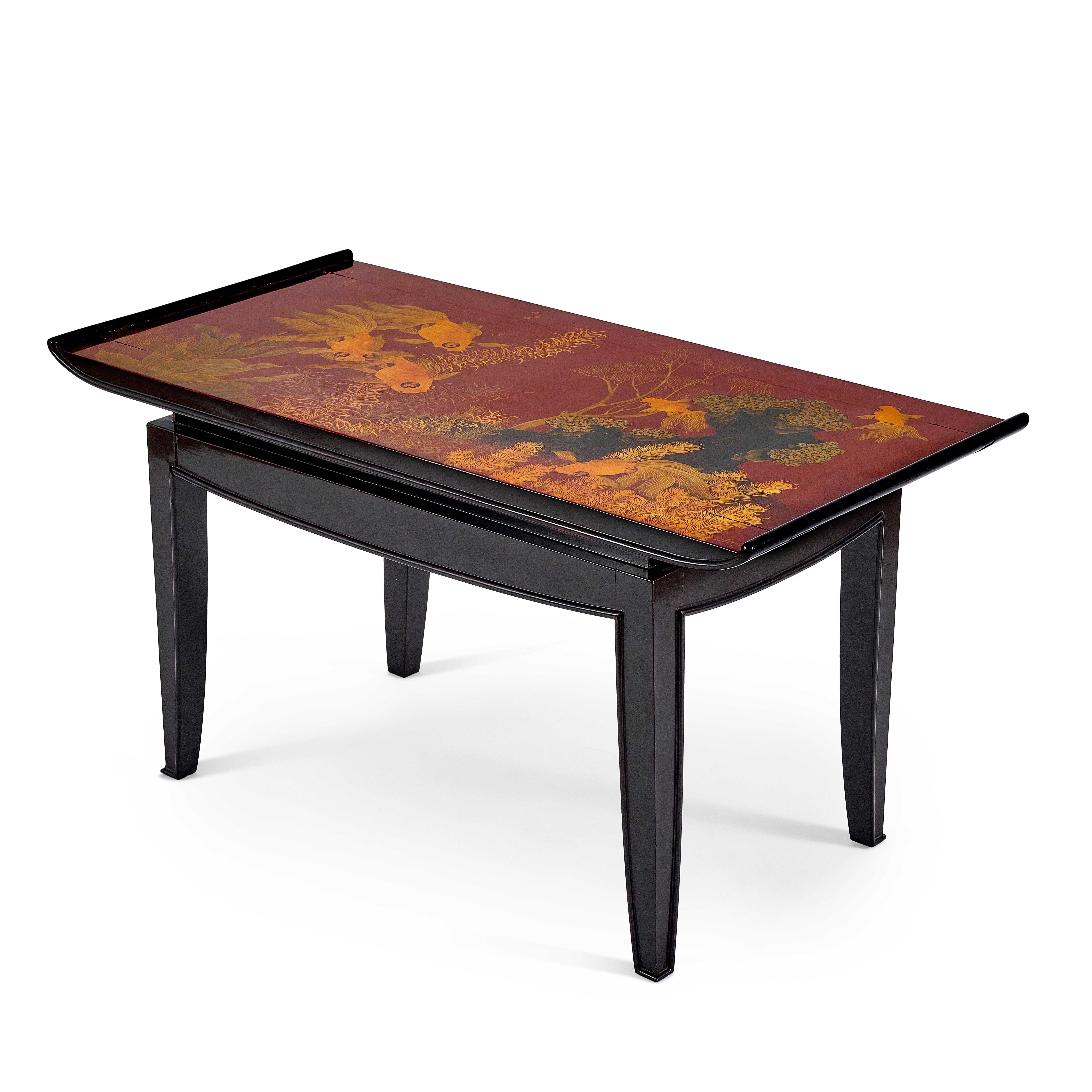
The Japanese lacquerware tradition offers yet another entry point. A Zohiko suiban, a shallow water basin used in the practice of suiseki or water stone display, represents the intersection of craft, philosophy, and natural form that defines the best of Kyoto lacquer work. Zohiko, one of the oldest and most prestigious lacquer houses in Japan, has been producing work of museum quality for centuries, and their suiban pieces appear in collections ranging from the Tokyo National Museum to private European holdings assembled in the early twentieth century. The suiban form connects to goldfish culture through the practice of displaying prized fish in shallow vessels as a meditative aesthetic pursuit, a tradition that flourished in Edo period Japan and left a deep imprint on how the Japanese visual imagination frames the relationship between water, life, and contained beauty.
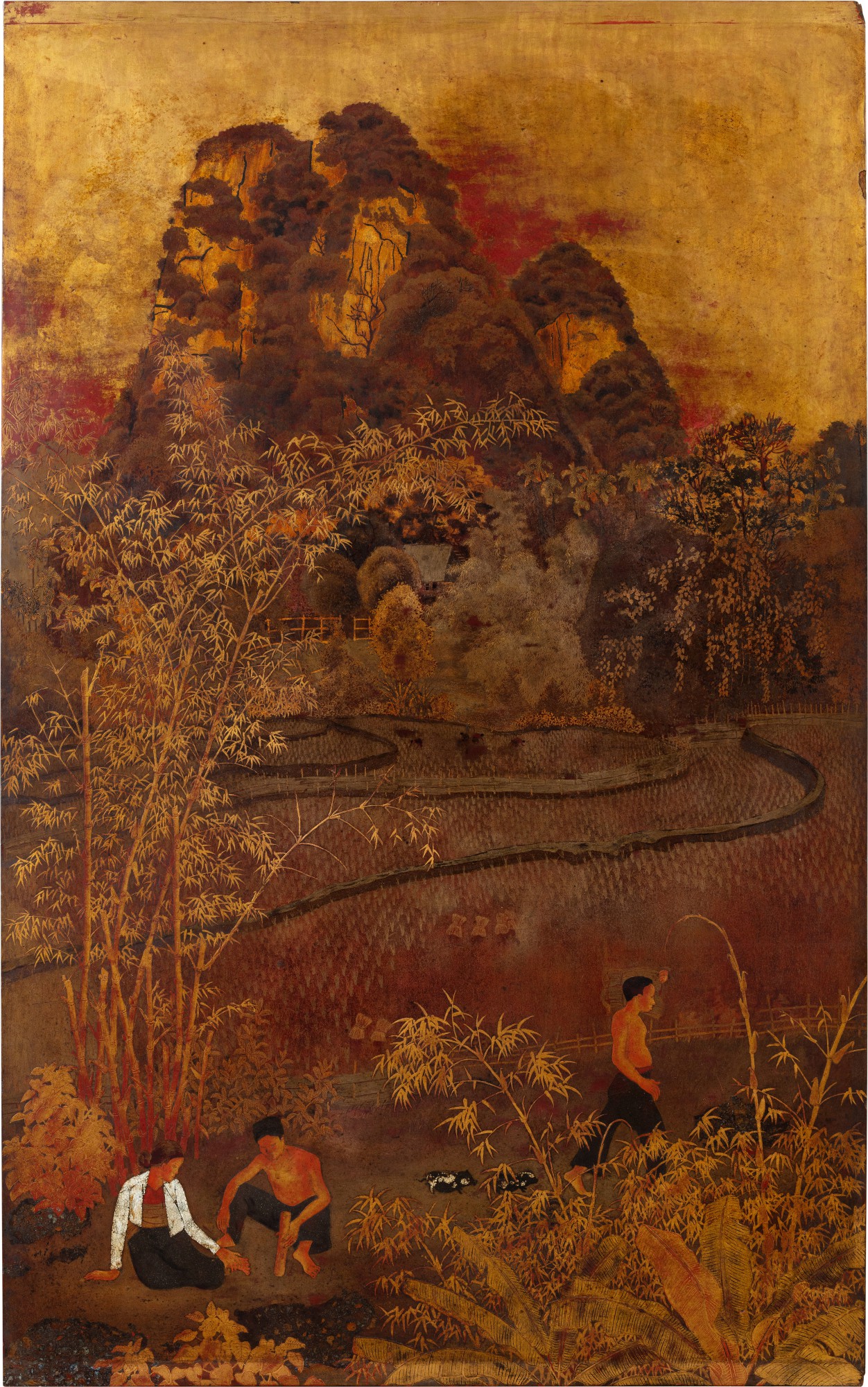
In Vietnam, the goldfish carries its own distinct iconographic weight, and the work associated with the Hanoi College of Fine Arts brings that tradition into conversation with modernist training and socialist realist influence. Vietnamese fine art from the mid to late twentieth century has attracted growing institutional and collector interest, with auction houses in Singapore and Hong Kong increasingly featuring works from this period. Truong Van Thanh is among the artists whose practice has benefited from this renewed attention, as the international art world catches up with a generation of Vietnamese painters whose formation at institutions like the Hanoi College of Fine Arts gave them a distinctive visual vocabulary that does not map neatly onto Western art historical categories. The goldfish in this context is not simply a decorative motif but something closer to a cultural touchstone, familiar and strange at once.
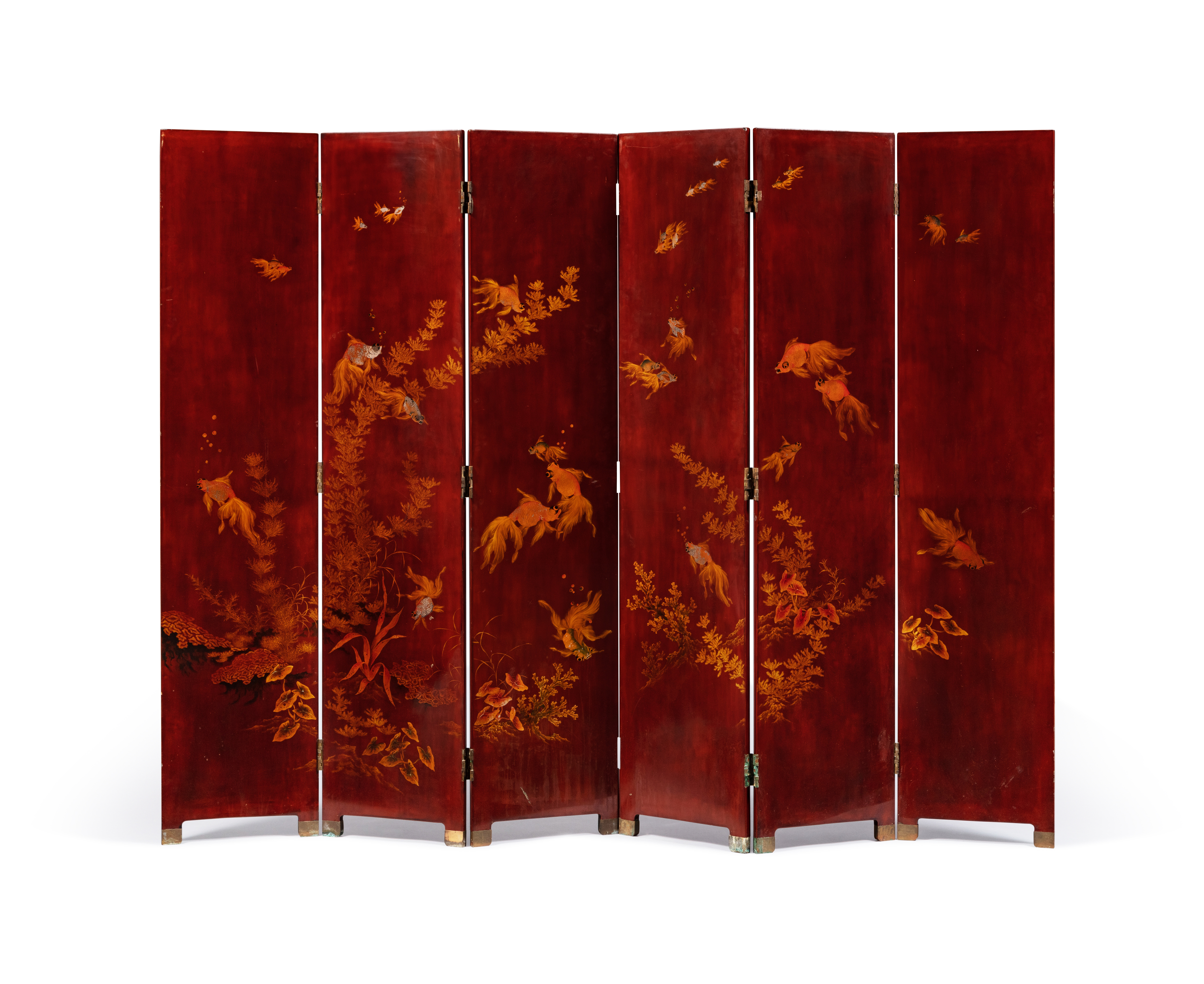
The Hanoi College of Fine Arts
河內美術學院 , 紅漆地金玉滿堂六扇屏風, 1950
The critical conversation shaping this area is being driven by a handful of key voices. Writers associated with publications like Orientations and the Journal of the Walters Art Museum have done important work on the iconography of the goldfish in East Asian material culture. On the contemporary side, critics writing for Artforum and Frieze have returned repeatedly to Skoglund's work as a touchstone for thinking about staged photography and the uncanny domestic. Curators at institutions including the Metropolitan Museum of Art, the Victoria and Albert Museum, and the Palace Museum in Beijing have all mounted or contributed to shows that place goldfish imagery within broader arguments about ornament, nature, and imperial taste.
What feels genuinely alive right now is the way collectors are beginning to connect works across these categories rather than siloing them by period or geography. A collector who owns a Qing period goldfish vessel and a Skoglund photograph is not making an eccentric combination. They are making an argument about the persistence of a particular human fascination, the impulse to capture living color within a bounded space and call it beauty. That argument is becoming more legible, and as it does, the market for serious works in this category across all periods and media will continue to reward those paying attention.
![A Zohiko lacquered wood suiban [water basin] — Meiji - Taisho period, late 19th - early 20th century](https://rtwaymdozgnhgluydsys.supabase.co/storage/v1/object/public/artwork-images/auction-lots/L21224-20211022-lot132.jpg)
A Zohiko lacquered wood suiban [water basin]
Meiji - Taisho period, late 19th - early 20th century
The surprises ahead are likely to come from Vietnamese and Southeast Asian material, where auction infrastructure is maturing and Western collectors are still learning the vocabulary. Getting there early, as always, is the thing.