Empowerment
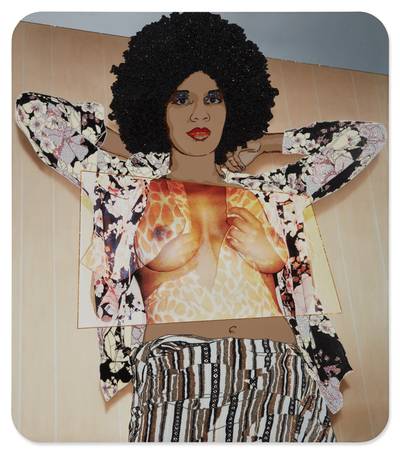
Mickalene Thomas
Portrait of Qusuquzah, 2008


The Portrait Reclaims Its Power Right Now
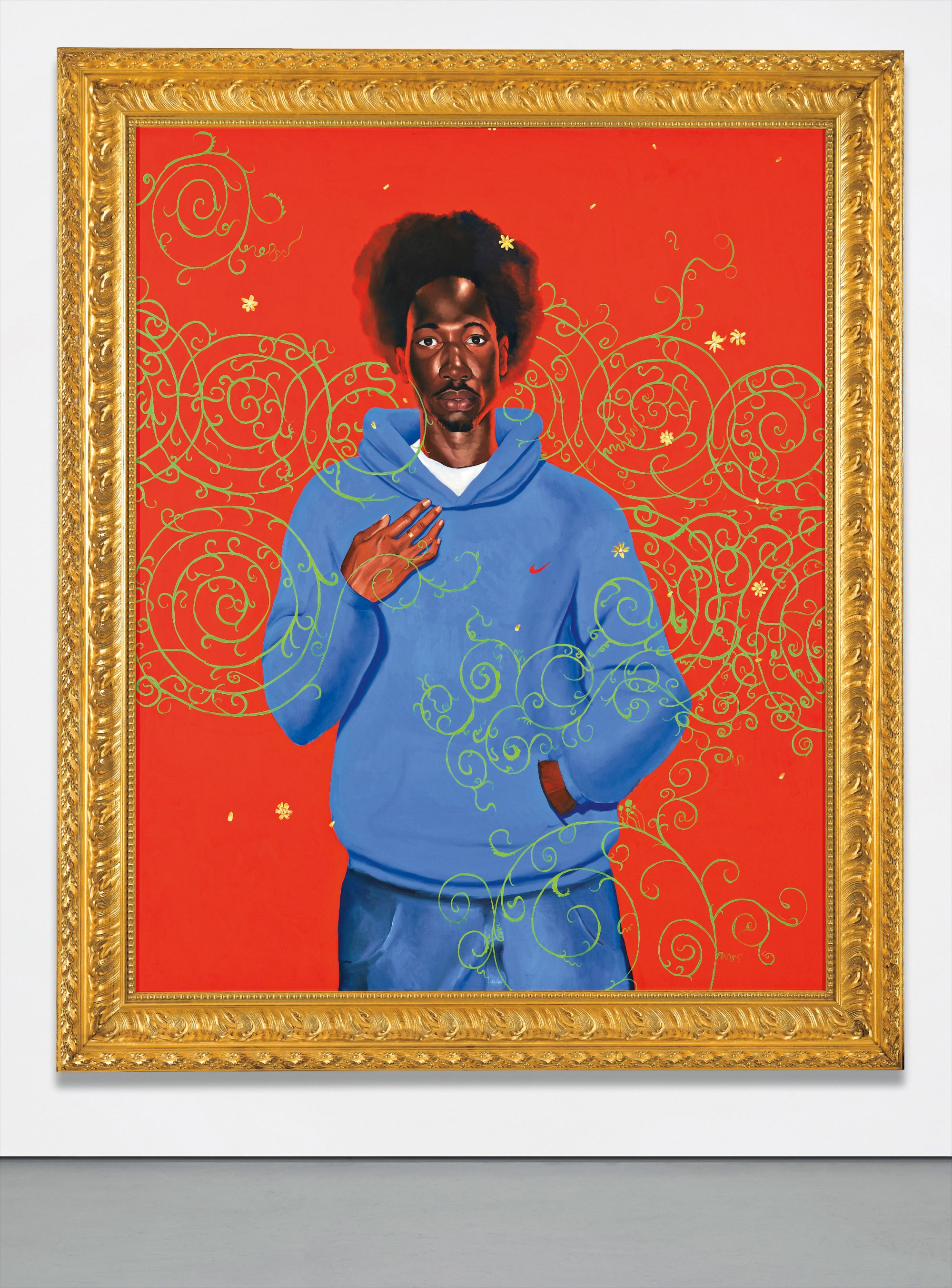
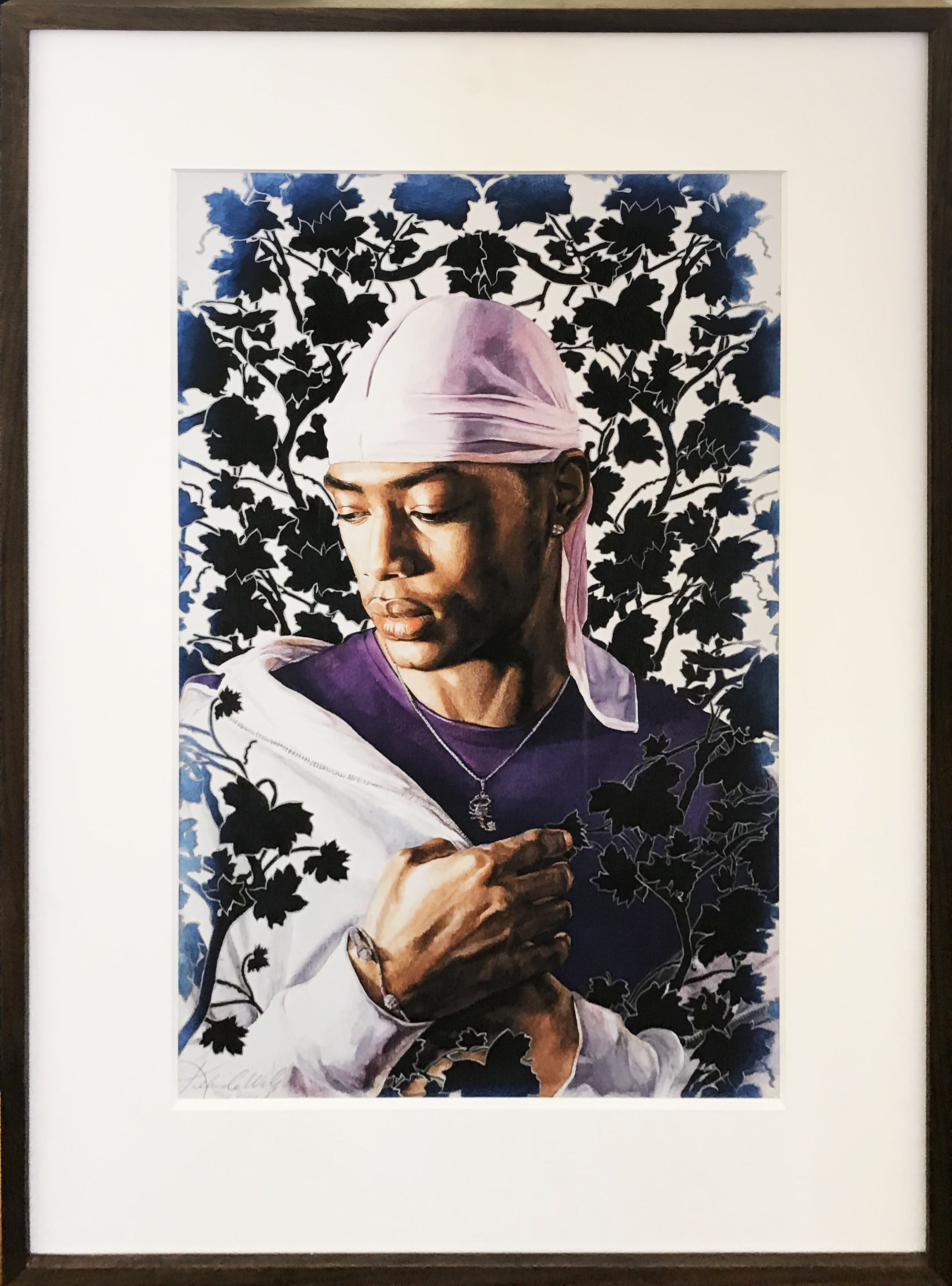
When Kehinde Wiley's "Portrait of a Young Gentleman" sold at Christie's for well above its high estimate, the room understood something had shifted permanently. This was not a market anomaly. It was confirmation that figurative work centering Black subjects, rendered with a confidence and grandeur historically reserved for European aristocracy, had moved from critical conversation into the kind of institutional and collector validation that changes careers and rewrites canons. The moment crystallized what many curators had been arguing for years: empowerment as a visual language is not a trend.
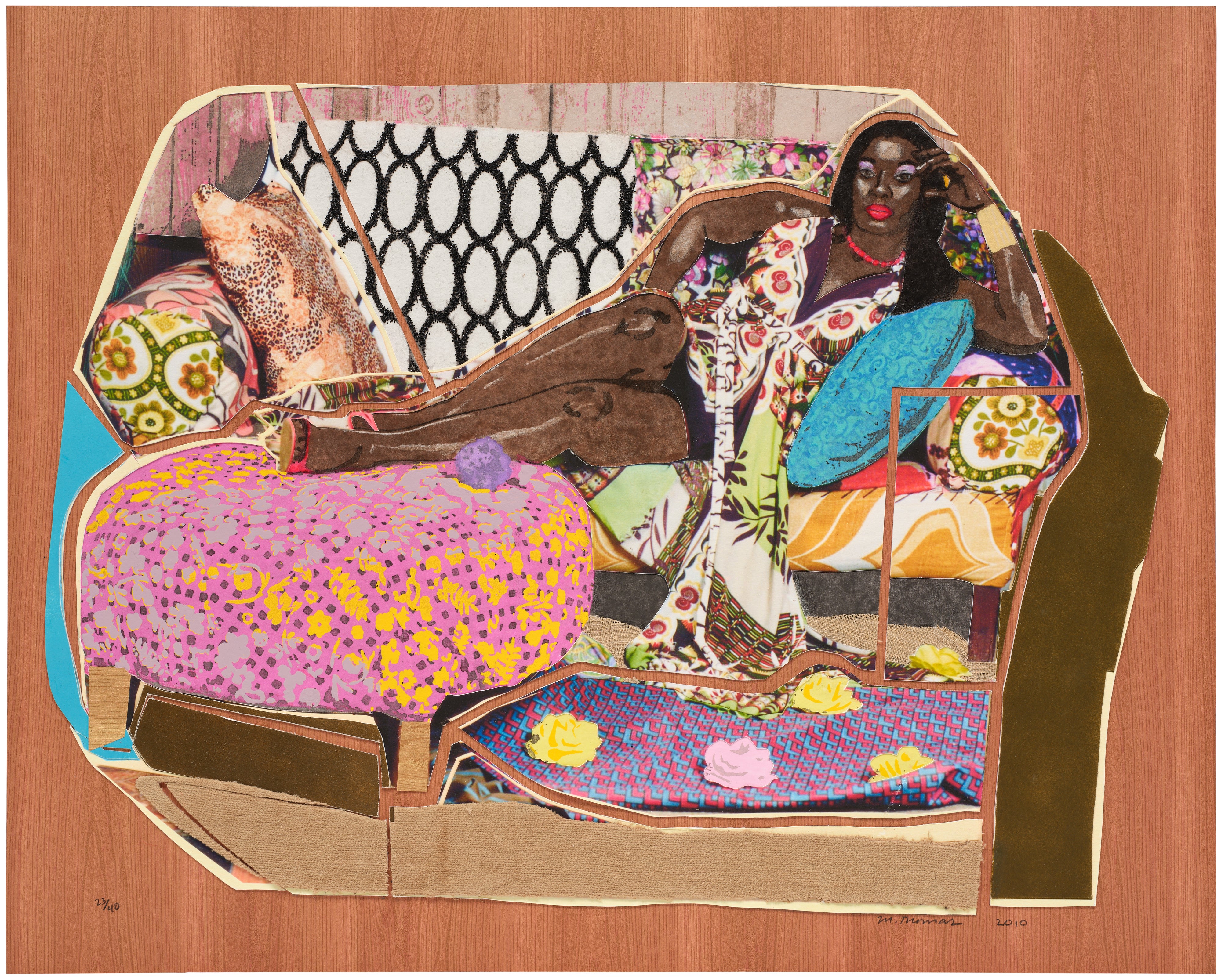
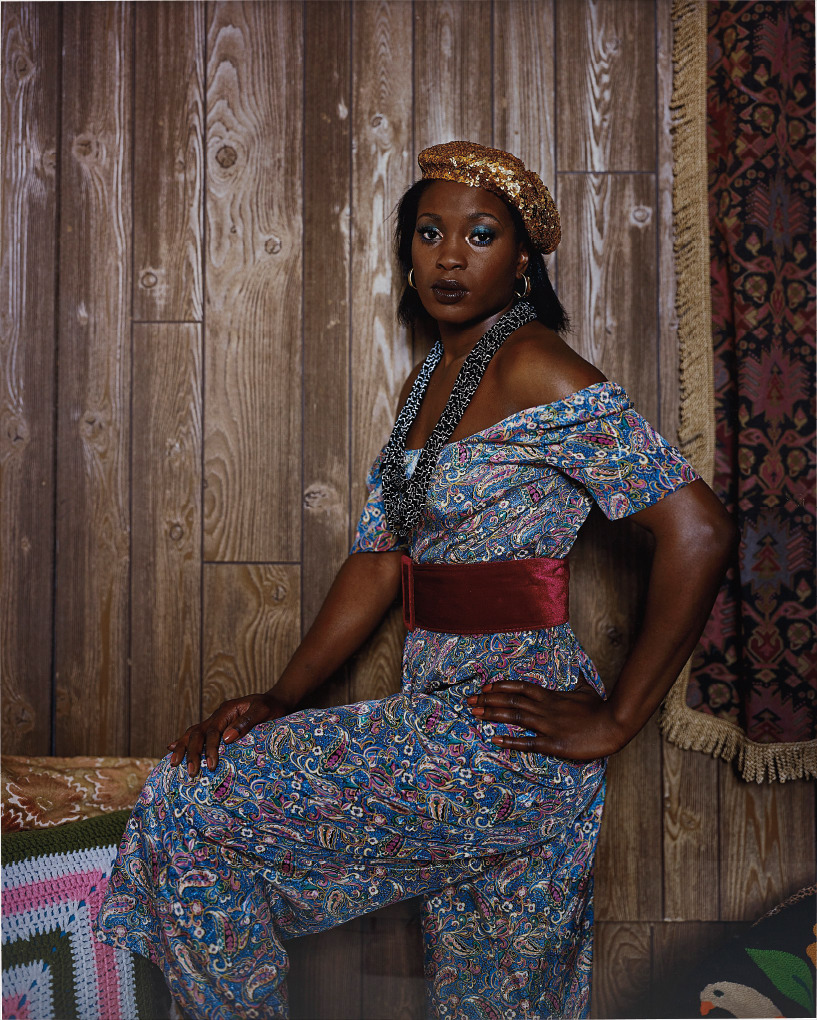
It is a reckoning. The past decade has produced a remarkable concentration of exhibitions that put this reckoning on full display. Mickalene Thomas's 2012 retrospective at the Perez Art Museum Miami, and her subsequent survey shows at institutions including the Groninger Museum and the Brooklyn Museum, established her as one of the defining voices of this generation. Her interiors populated with Black women in full leisure and authority, rhinestone surfaces catching light like armor, are among the most discussed works in contemporary portraiture.
Mickalene Thomas
Portrait of Qusuquzah, 2008
They argue, without apology, that to depict a Black woman at rest and in command is itself a radical act. Collectors who understood that argument early have been rewarded both intellectually and financially. Kehinde Wiley's market trajectory tells its own story. The 2018 unveiling of his official portrait of President Barack Obama for the Smithsonian's National Portrait Gallery was a cultural earthquake.
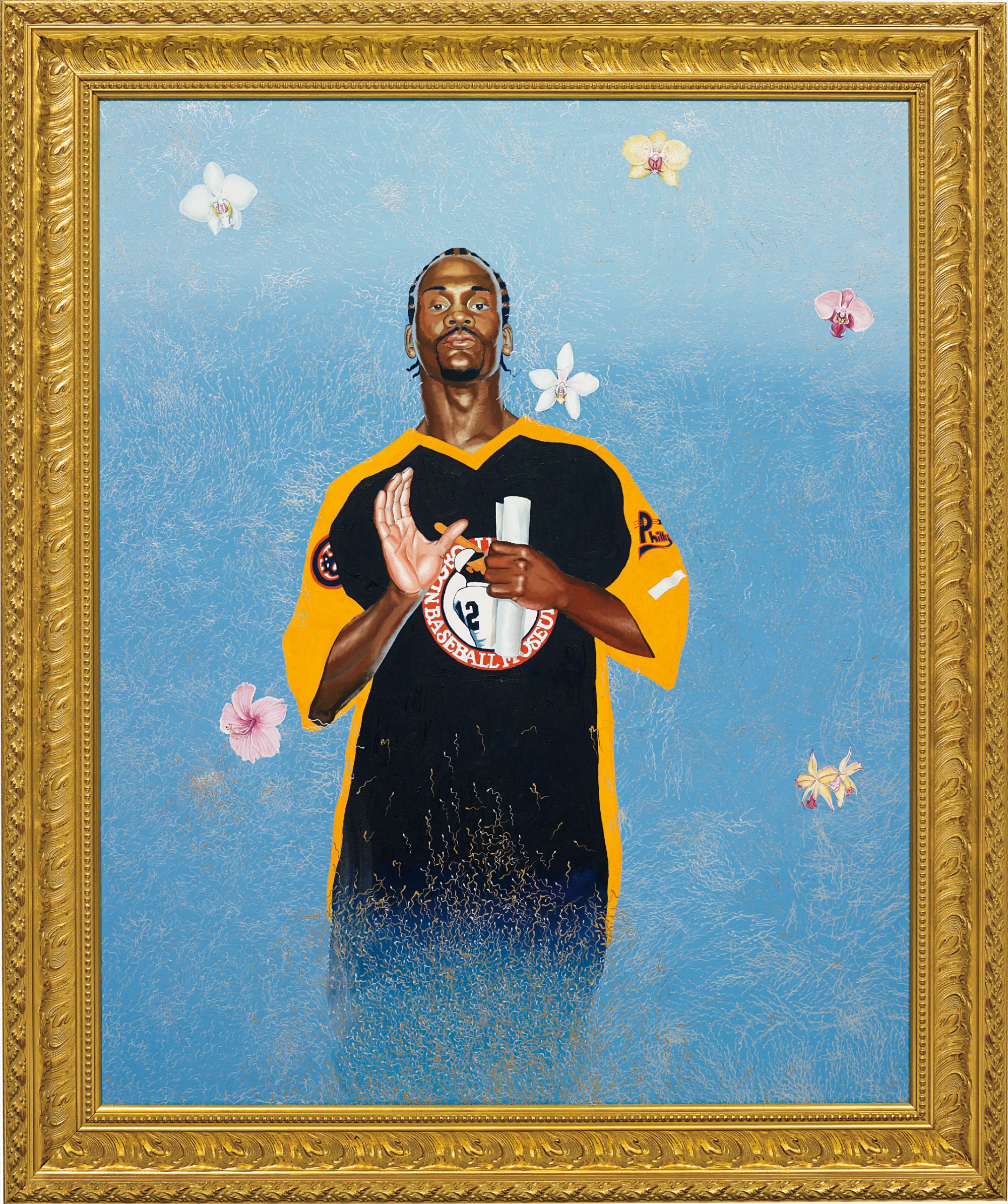
Overnight, a work destined for a federal institution brought his visual strategy into every conversation about American identity and representation. Auction prices for his paintings had already been climbing steadily through the 2010s, but after that commission, secondary market demand accelerated. His canvases regularly achieve results in the hundreds of thousands and occasionally beyond, with collectors spanning private hands, corporate collections, and major museums competing for available works. On The Collection, his presence speaks to exactly the kind of blue chip confidence that serious buyers are seeking.
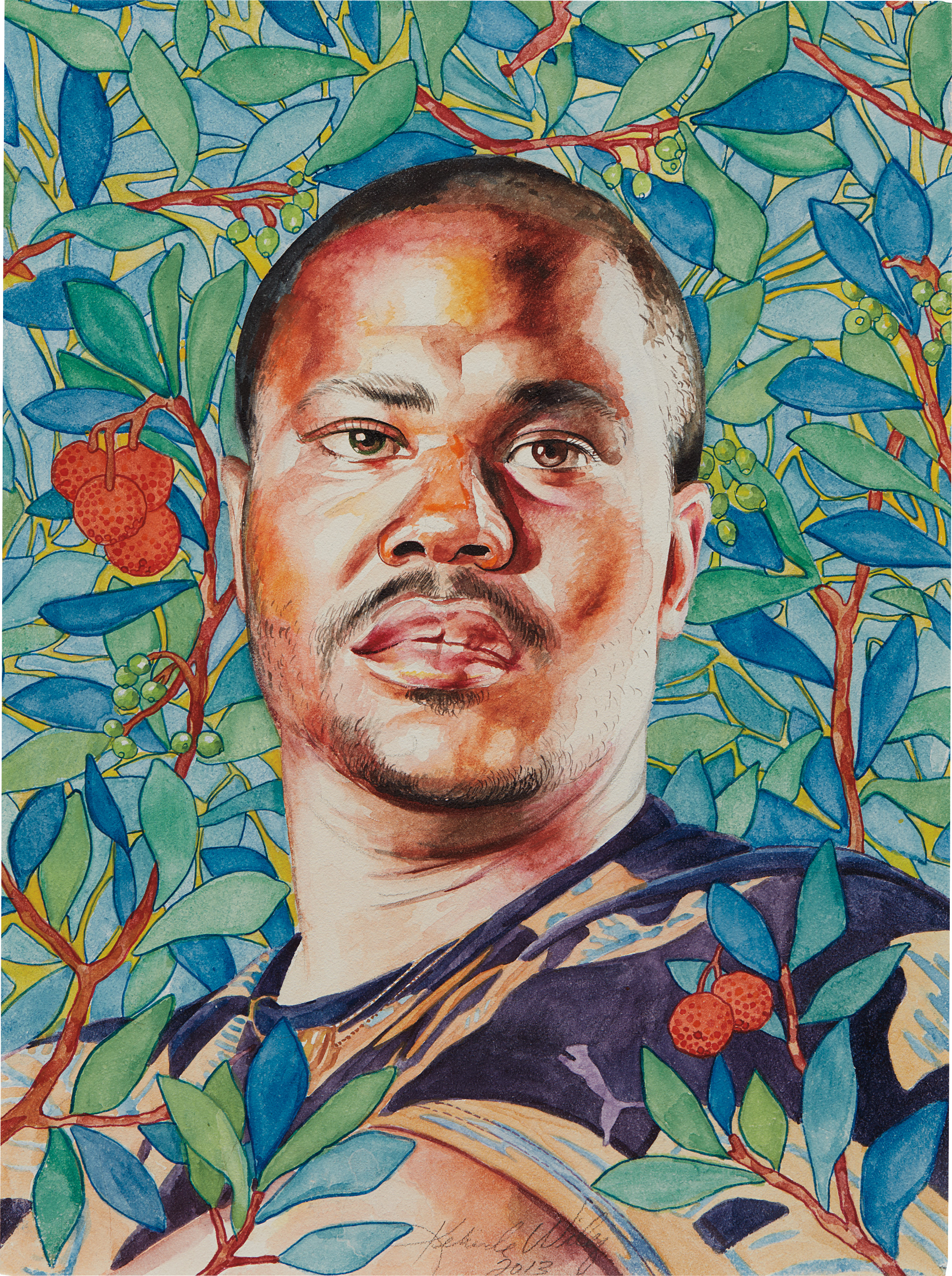
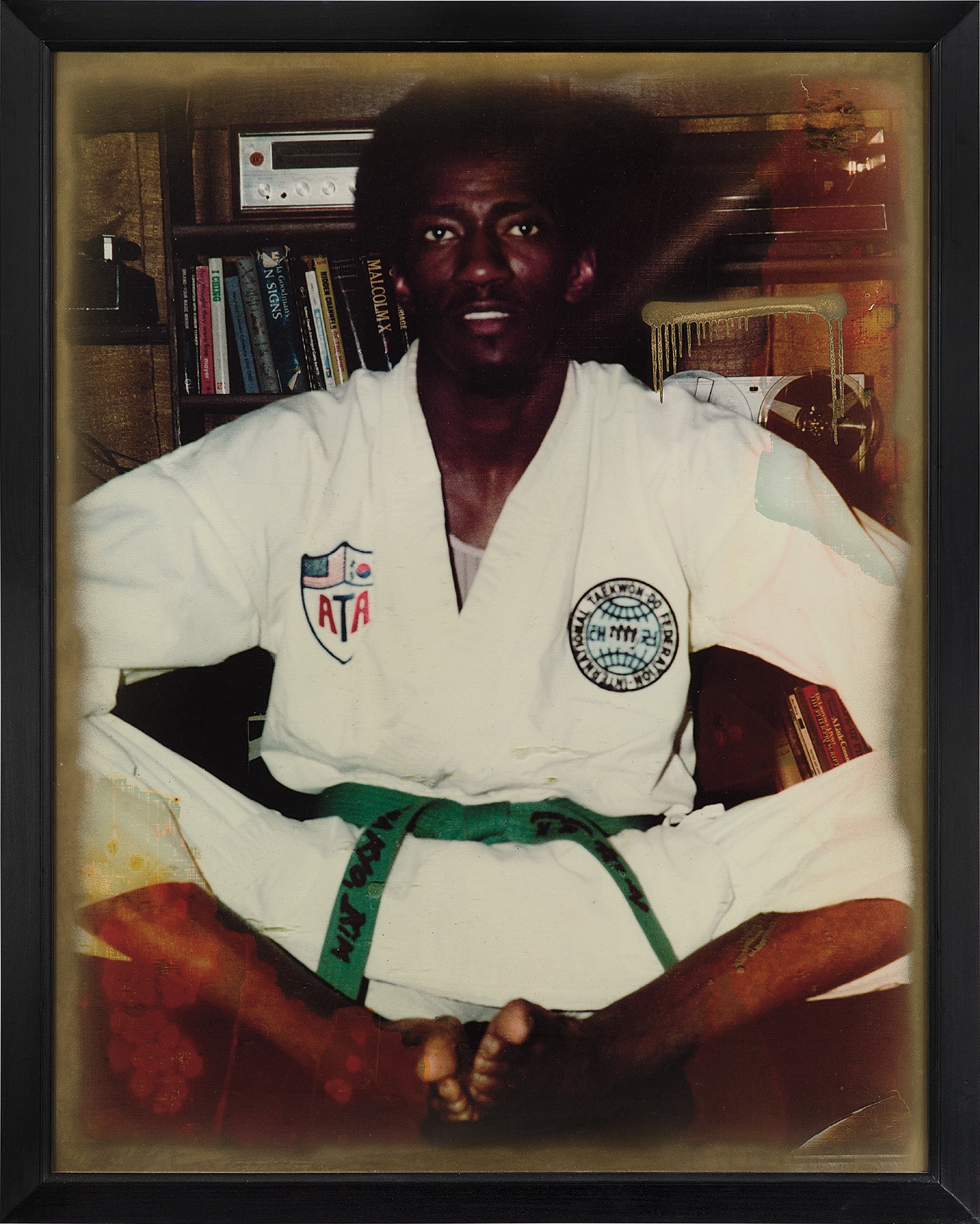
Kehinde Wiley
Portrait of Rahsaan Gandy, 2013
Mickalene Thomas occupies a different register of the same conversation. Her works carry a tactile intensity that photographs incompletely and rewards extended looking in person. That quality has made her a particular favorite among collectors who think generationally, people acquiring for meaning as much as for market position. The Studio Museum in Harlem, the San Francisco Museum of Modern Art, and the Los Angeles County Museum of Art all hold her work.
When institutions of that weight collect an artist with consistency, it signals something durable rather than fashionable. The market has responded accordingly, with her works appearing at Christie's, Sotheby's, and Phillips with increasing regularity and results that confirm sustained appetite. Hank Willis Thomas brings a different inflection to the empowerment conversation, one rooted in the mechanics of image making itself. His long running interrogation of advertising, sports culture, and the commodification of Black bodies turns the vocabulary of commercial imagery back on itself.
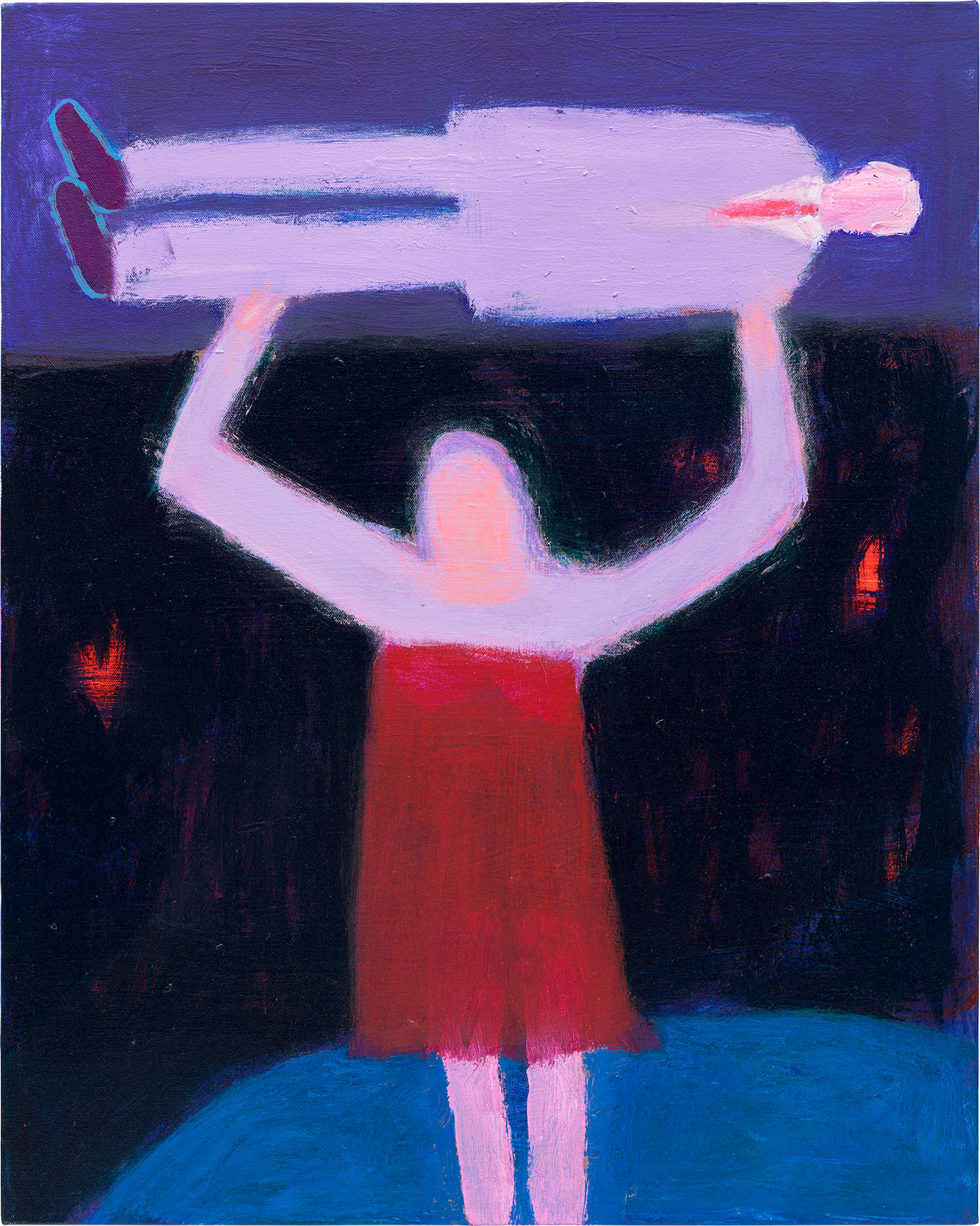
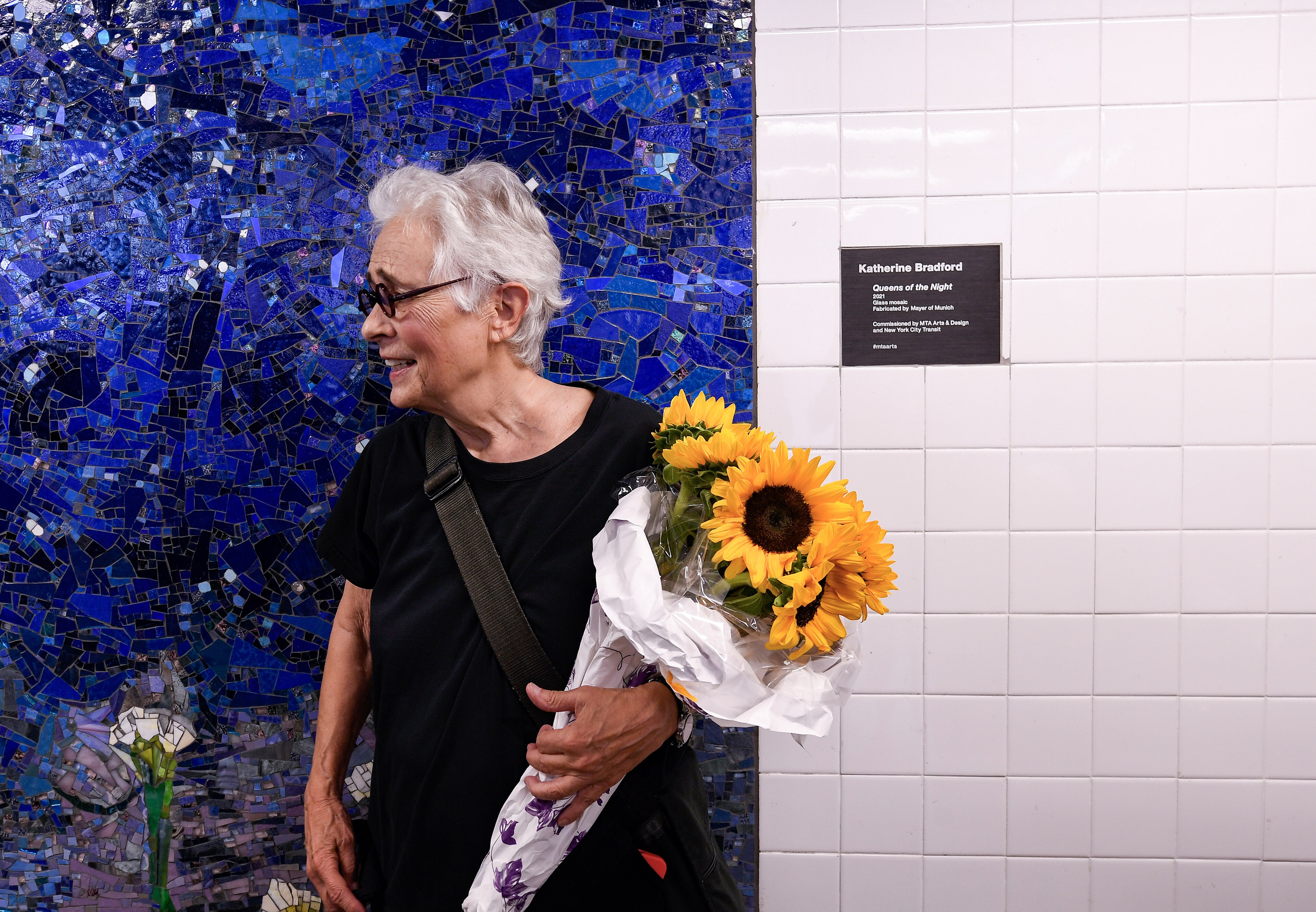
Katherine Bradford
Strong Woman, 2018
His 2017 exhibition at Jack Shainman Gallery and subsequent appearances at international art fairs positioned him as a critical thinker as much as an image maker, and institutions from the Guggenheim to the Museum of Fine Arts Houston have taken notice. For collectors drawn to work that operates on both an emotional and an intellectual register simultaneously, his practice offers something rare: beauty that argues with itself. Katherine Bradford and Edgar Plans, each represented on The Collection, bring distinct energies to the broader question of what empowerment looks like as a visual proposition. Bradford's monumental swimmers, figures moving through luminous color fields with a kind of elemental freedom, carry a quiet insistence that feels entirely her own.
Her critical reputation has grown significantly in recent years, with reviewers in publications from Artforum to The Brooklyn Rail noting the way her work transforms the body into something liberated from gravity and expectation. Plans, working from a different sensibility entirely, uses his bear motif to explore innocence, resilience, and the persistence of a certain emotional hopefulness, qualities that resonate with collectors navigating an unsettled world. The critical scaffolding around this category has been built carefully and by specific voices worth paying attention to. Thelma Golden, Director and Chief Curator of the Studio Museum in Harlem, whose concept of post black art opened important theoretical space in the early 2000s, remains a touchstone.
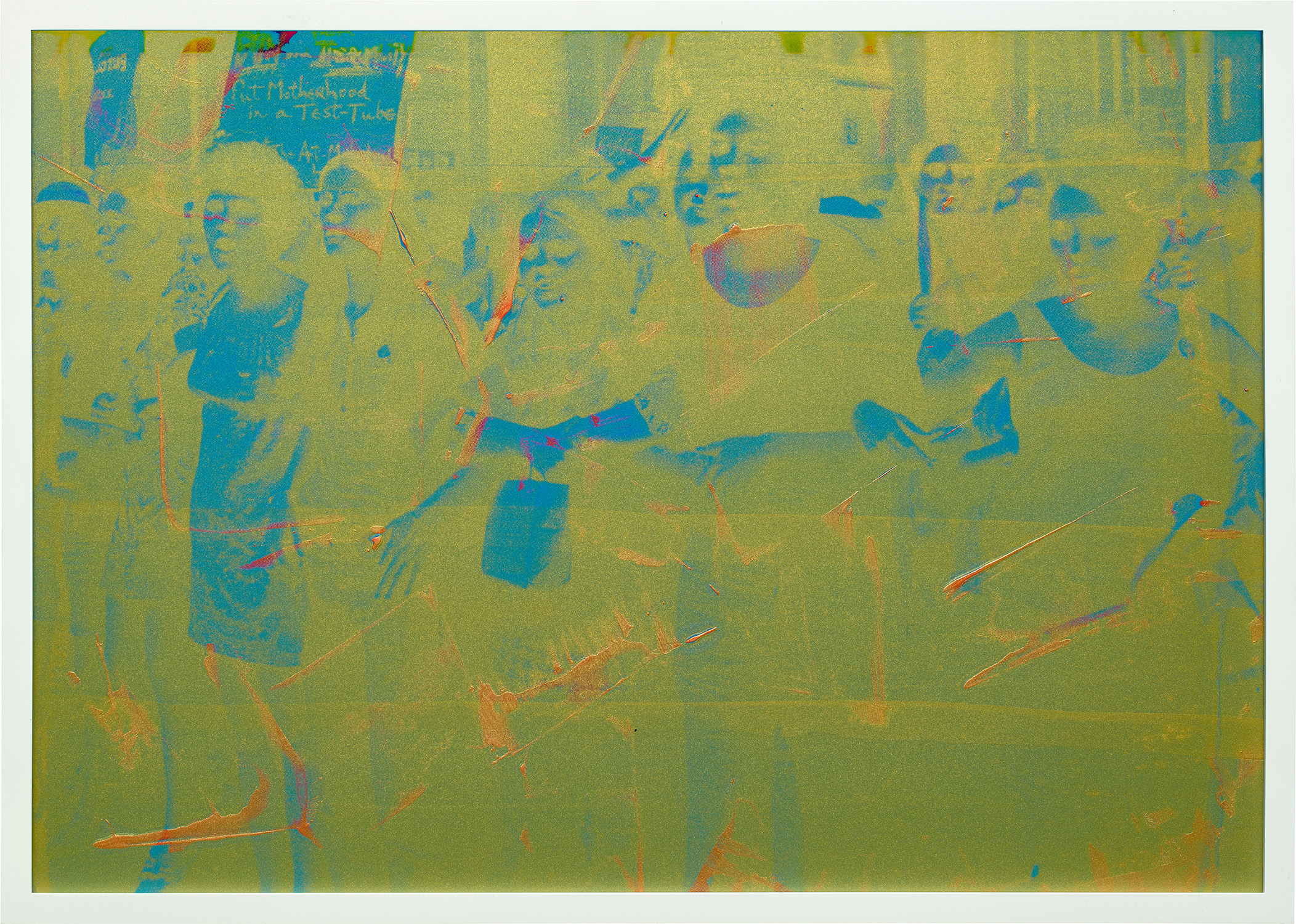
Hank Willis Thomas
She’s Beautiful When She’s Angry
Curator Adrienne Edwards, now at the Whitney Museum of American Art, has shaped how institutions approach the intersection of identity and material practice. Writers including Siddhartha Mitter and Antwaun Sargent have brought the conversation into broader cultural media, ensuring that what might once have been siloed as identity politics is now understood as central to the history of contemporary art. These curatorial and critical voices set the terms that the market then follows. What feels alive right now is the expansion of this conversation beyond painting and into photography, textile, and immersive installation, formats that bring new collectors into contact with these ideas and force established collectors to reconsider their categories.
What feels settled is the blue chip status of the leading figures: the debate about whether this work belongs in major institutional collections has been resolved definitively. The surprise that is still arriving is generational. A cohort of artists in their thirties are producing work in this lineage that has not yet been fully priced or fully theorized, and the collectors paying attention to studio visits and small gallery shows right now are positioning themselves for the kind of early acquisition stories that get told for decades. The empowerment portrait is not arriving.
It has arrived. The more interesting question now is where it goes next.