Embossed Print
Louise Bourgeois
Eight in Bed

Pressure, Relief, and the Art of Touch
There is something almost primal about the appeal of an embossed print. Before you have even read the edition number or checked the artist's signature, your hand wants to reach out and trace the raised surface, to feel the image as much as see it. This quality of physical presence is rare in works on paper, and it is precisely what draws a certain kind of collector to this medium again and again. Living with an embossed print means living with a work that changes as the light shifts across it, that rewards a slow morning look in different ways than an afternoon glance.
The object insists on itself in a room. The category sits at a fascinating intersection of printmaking discipline and sculptural thinking. Unlike a lithograph or etching that communicates entirely through ink, an embossed print can carry meaning through relief alone, through the pressure of a die or plate pushed into dampened paper to create form from nothing but texture and shadow. Some works combine embossing with ink or aquatint, layering visual and tactile information in ways that feel genuinely complex.
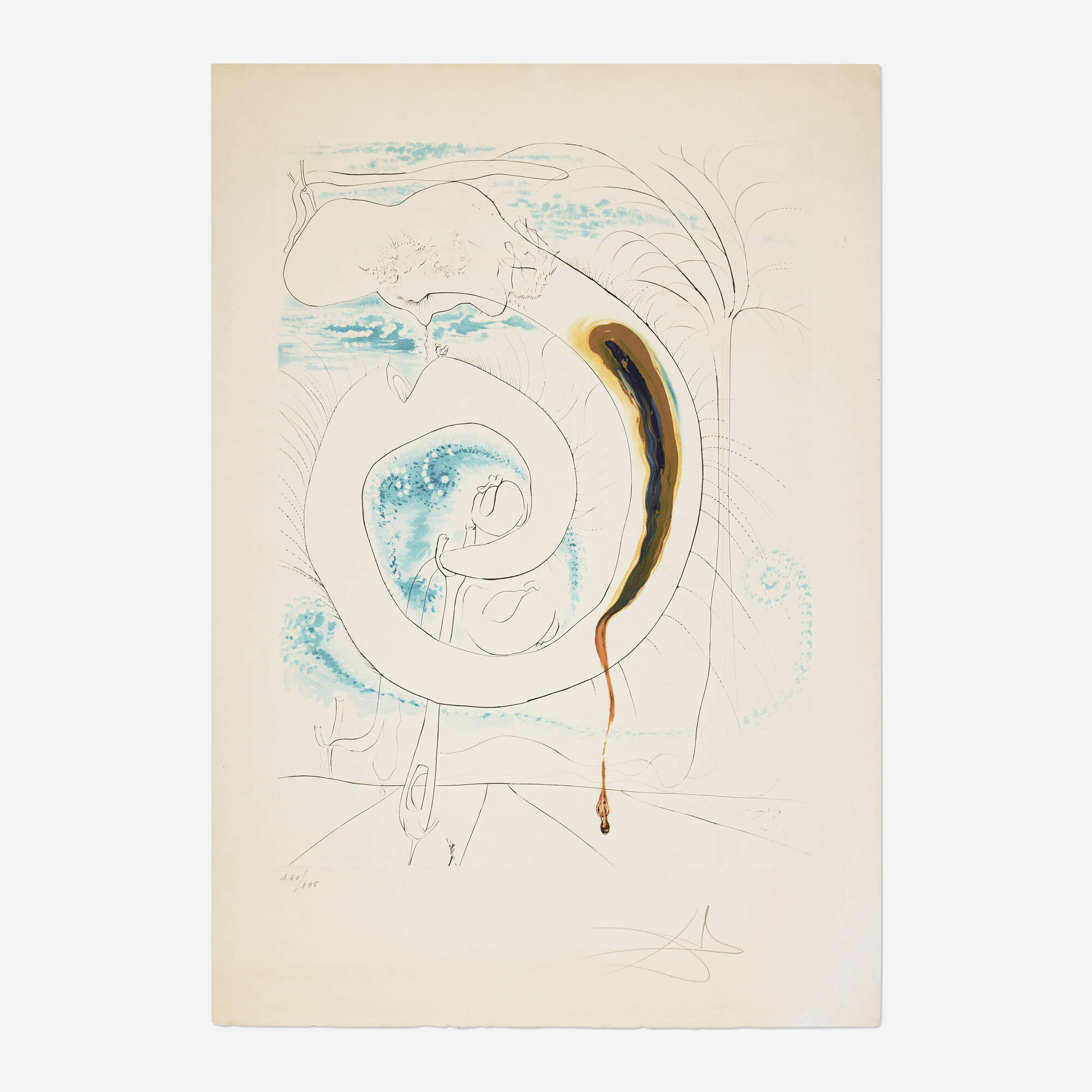
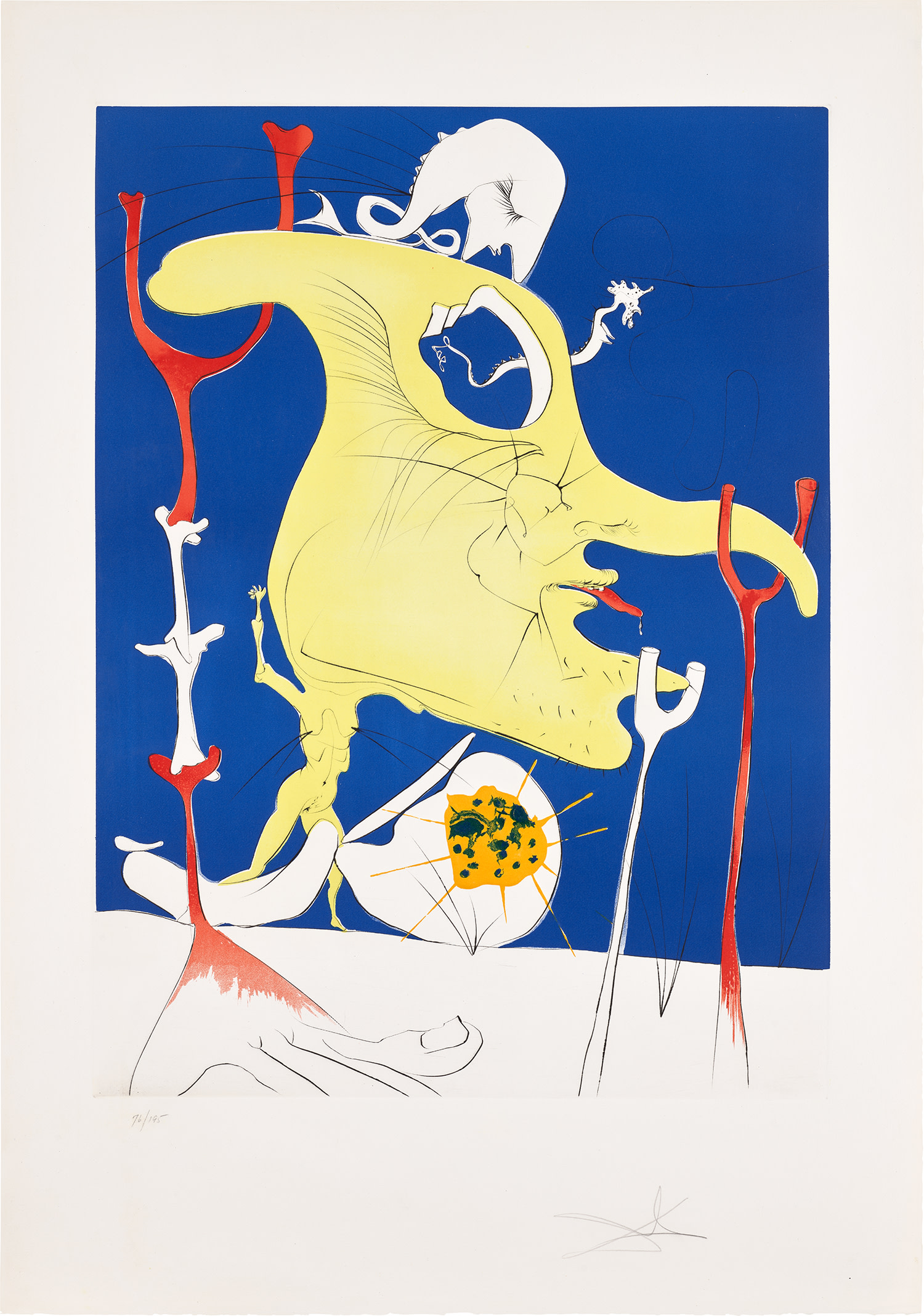
Salvador Dalí
Le cercle viscéral du cosmos (from the La Conquête du cosmos I portfolio), 1974
Others work in pure blind embossing, where the image exists only as topography, visible only because of how light falls across the surface. This restraint, when it works, is extraordinary. What separates a good embossed print from a truly great one comes down to a handful of qualities that are worth examining carefully before any purchase. Registration matters enormously.
If the work combines embossed elements with inked passages, those layers need to align with precision, and any slippage between them suggests either a rushed production process or damage over time. The depth and consistency of the relief itself tells you a great deal about how seriously the artist and their printmaking collaborators approached the edition. Shallow, timid embossing tends to flatten under glass and loses its presence entirely. Deep, confident relief holds its three dimensionality and continues to reward close looking decades later.
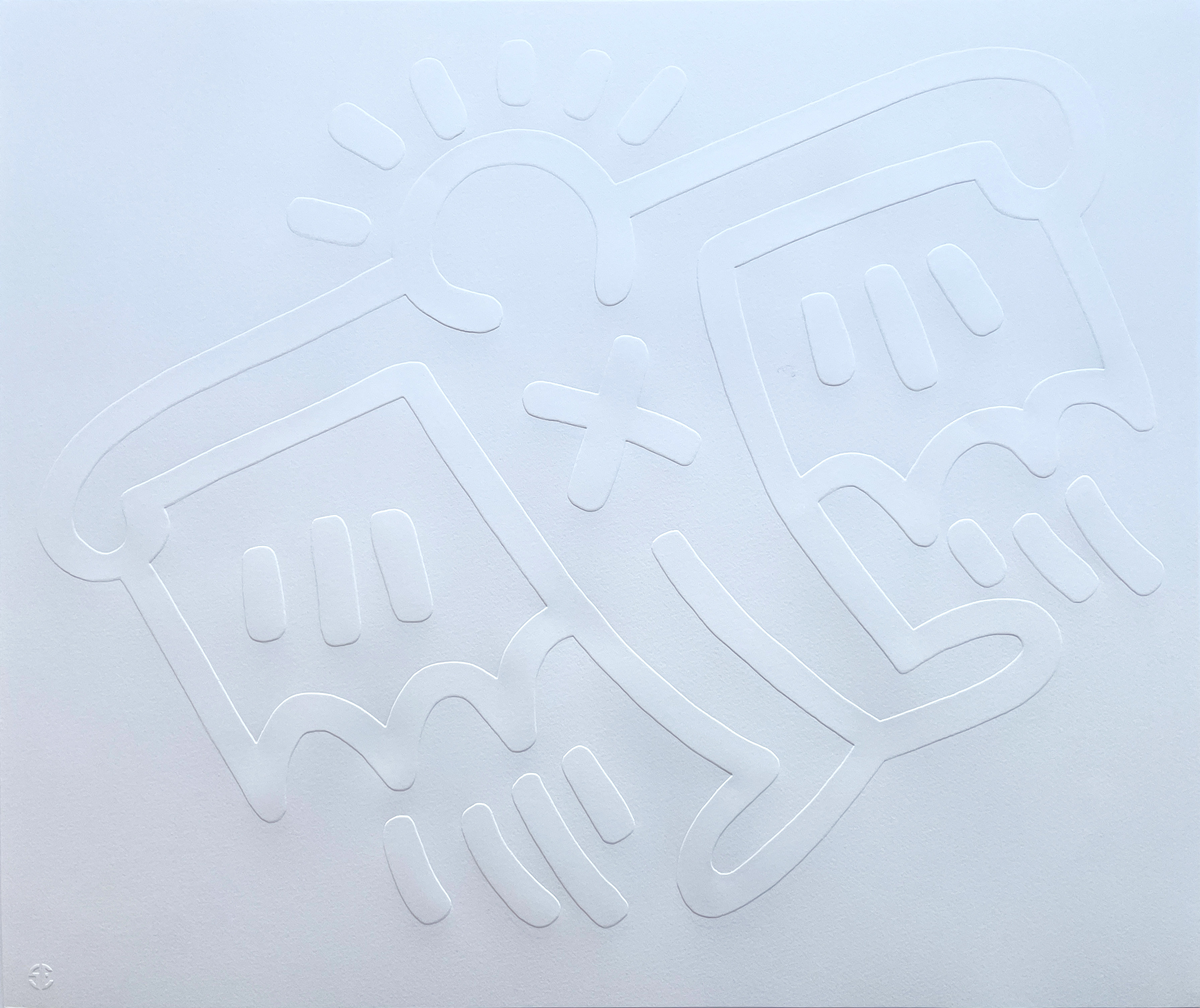
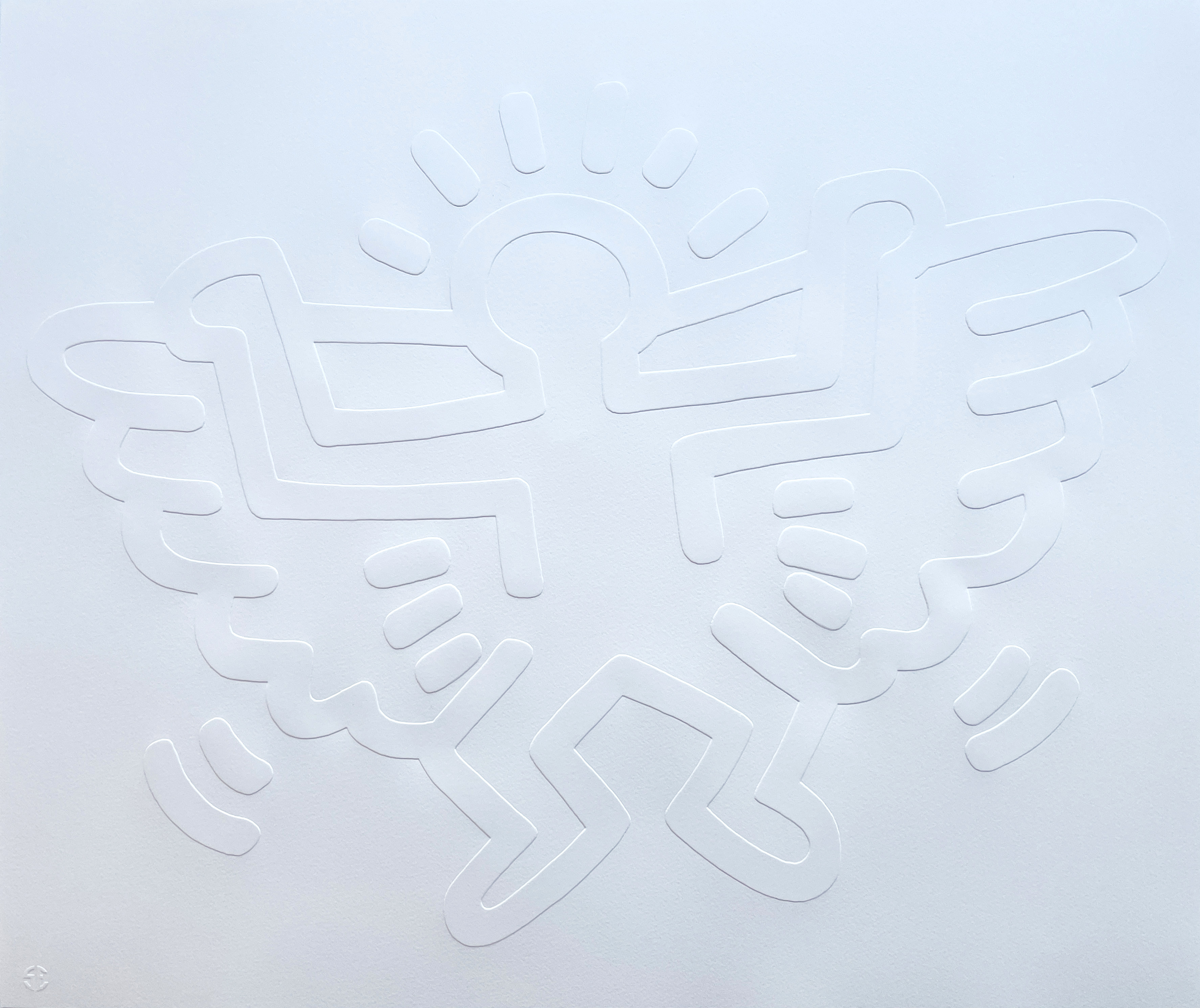
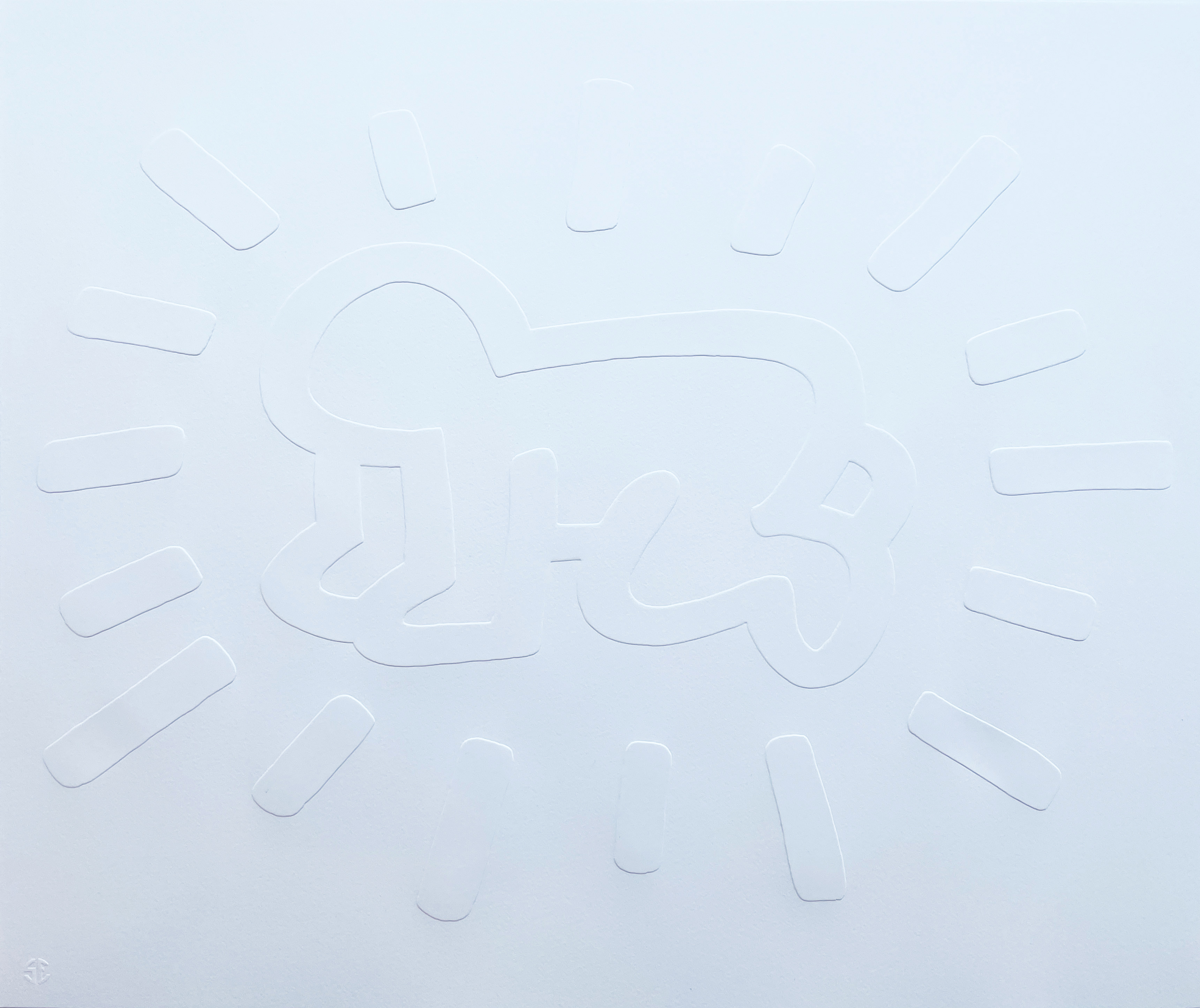
Keith Haring
White Icons (D) - X-Man , 1990
Paper quality is equally important. Thick, rag content papers like those produced by hand at workshops such as Tyler Graphics or Gemini G.E.L.
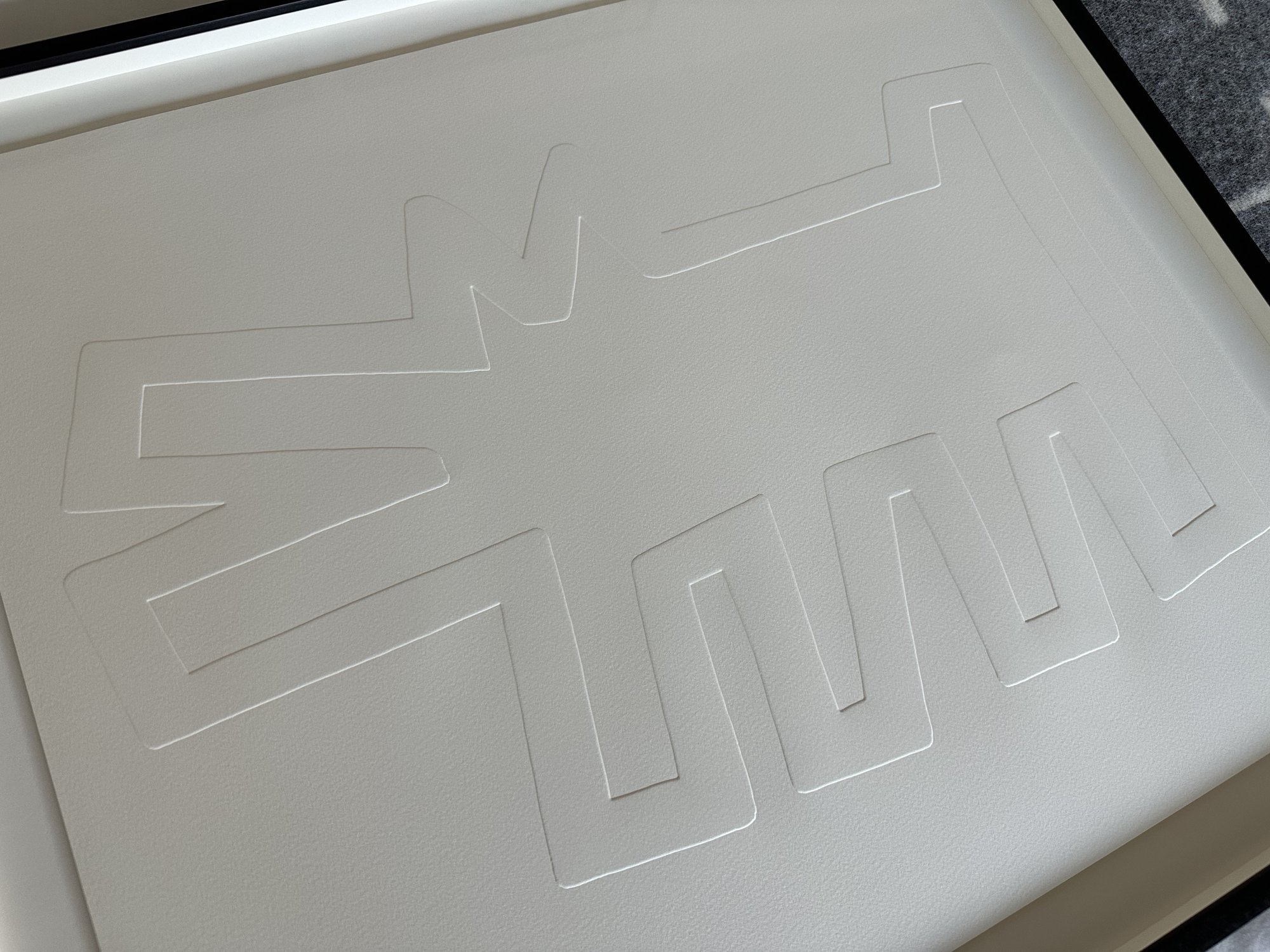
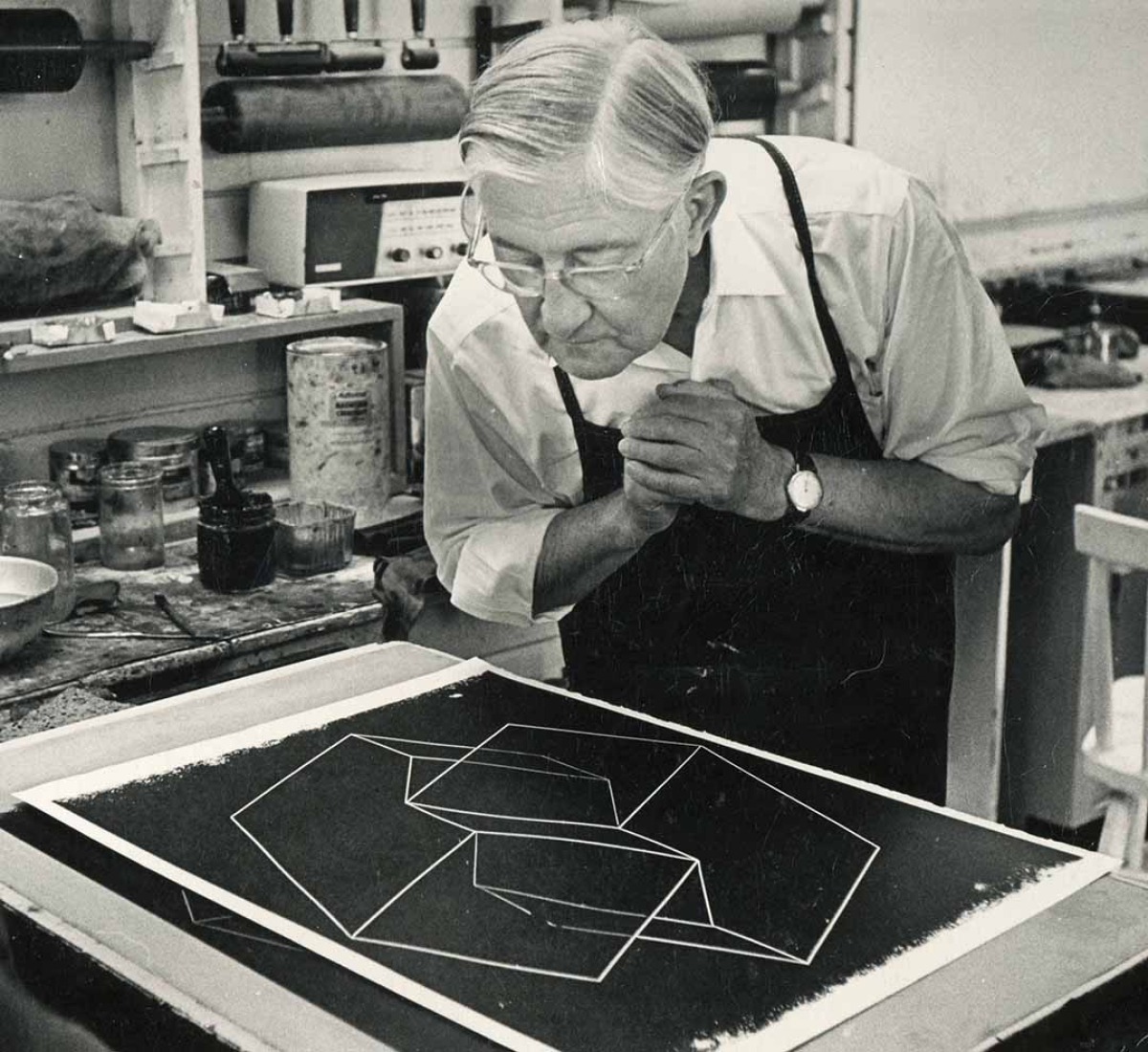
accept embossing without cracking or tearing and age with far more stability than lesser stocks. When thinking about which artists represent genuine strength in this area, it is worth starting with the artists who approached embossing not as a novelty but as a genuine extension of their studio practice. Josef Albers, whose investigations into color and perception defined so much of postwar art, brought similar rigor to his work in print. His printmaking collaborations produced works where even subtle surface variation carried conceptual weight, because his entire practice was about training the eye to see differences that the casual viewer might miss.
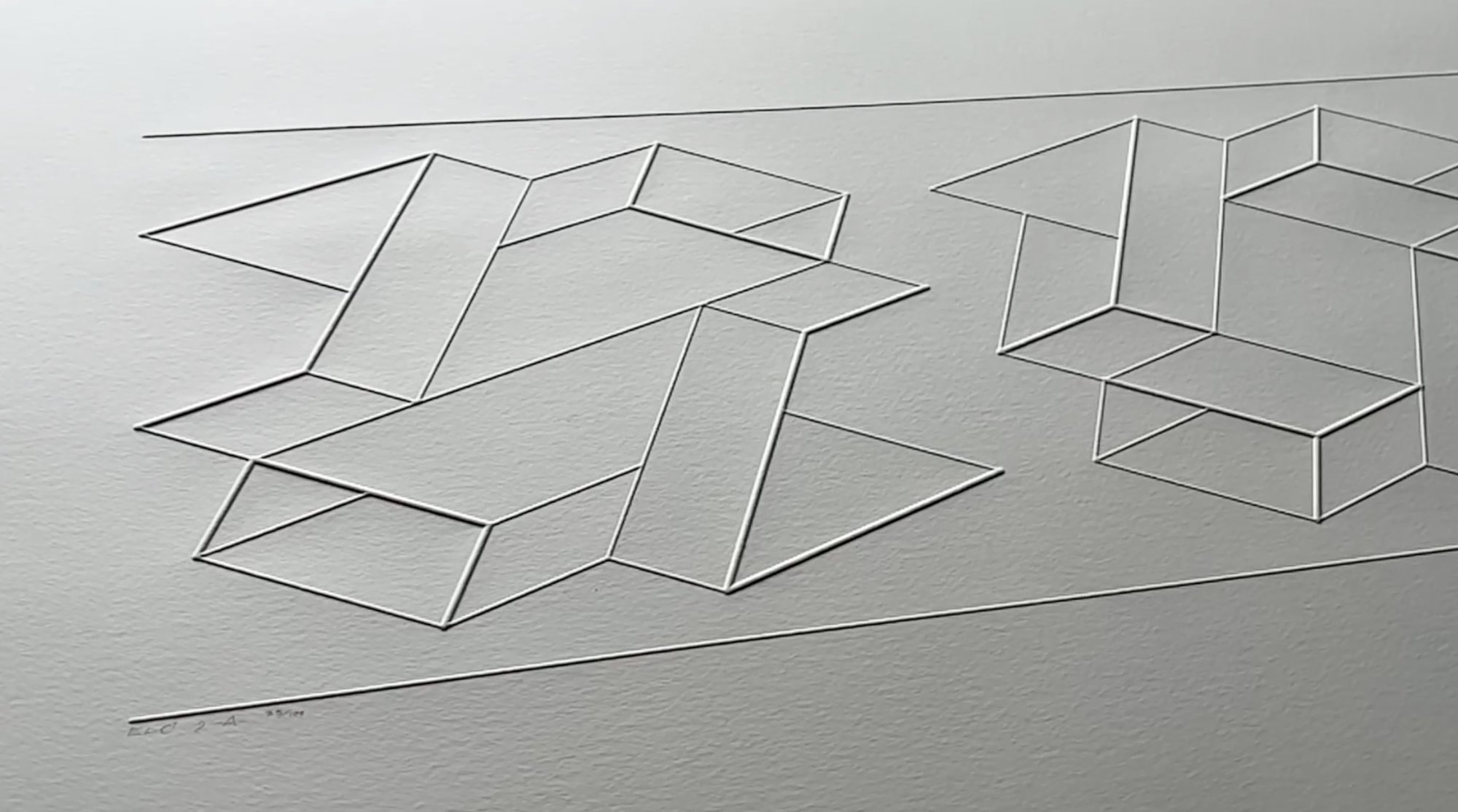
Josef Albers
Embossed Linear Constructions (ELC) 1-C, 1969
An Albers print that incorporates embossed elements rewards the same slow looking his paintings demand. Keith Haring worked extensively with print workshops throughout the 1980s, and the graphic clarity of his line translates into embossed formats with real energy. The raised contour of a Haring figure carries an almost cartoon vitality that suits the medium, and because he was so prolific and so widely collected during his lifetime, there is a reasonable supply on the secondary market for collectors entering the space. Salvador Dalí, whose relationship with printmaking was famously complicated by questions of authorization and posthumous editions, nonetheless produced embossed works of genuine ambition during periods when he was closely involved with the process.
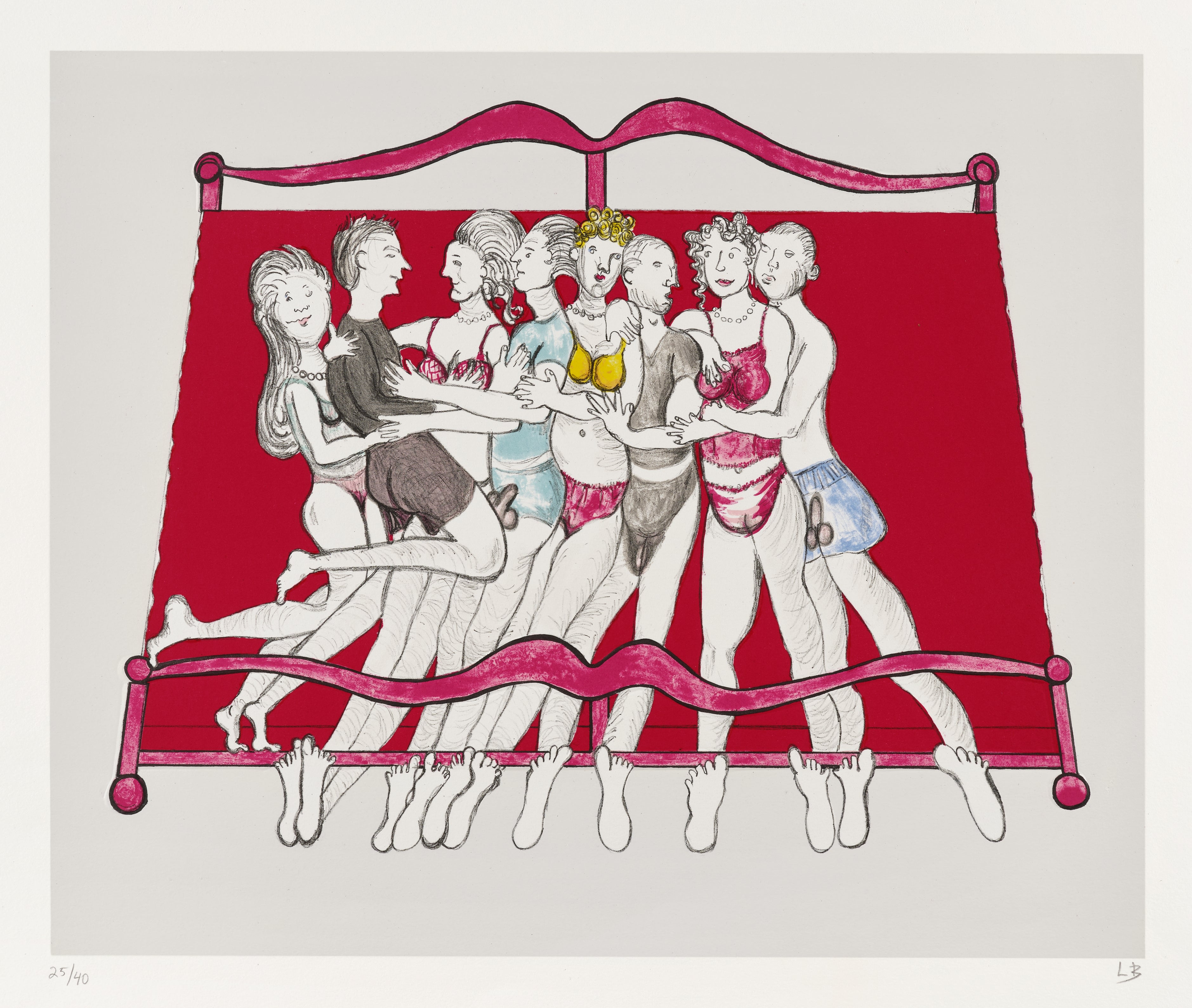
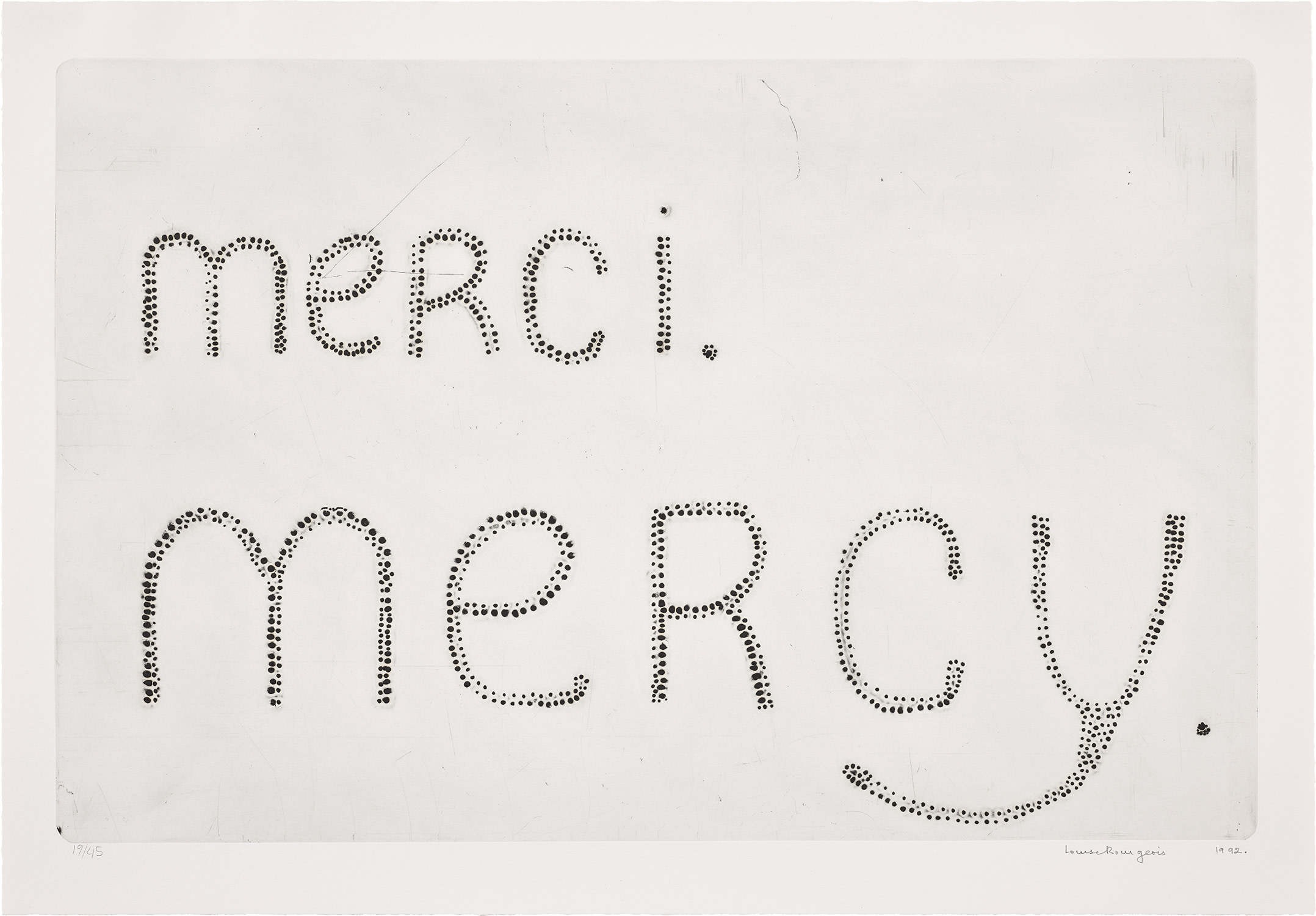
Collectors should approach Dalí prints with due diligence and strong provenance, but the best examples remain visually arresting. Louise Bourgeois, whose printmaking practice deepened significantly in the final decades of her life, used the physical properties of paper and surface in ways that feel almost psychological. Her embossed works carry the same body consciousness that runs through all her sculpture. For collectors with an eye toward what is building rather than what has already arrived, there are printmakers working today who are pushing embossing in genuinely new directions.
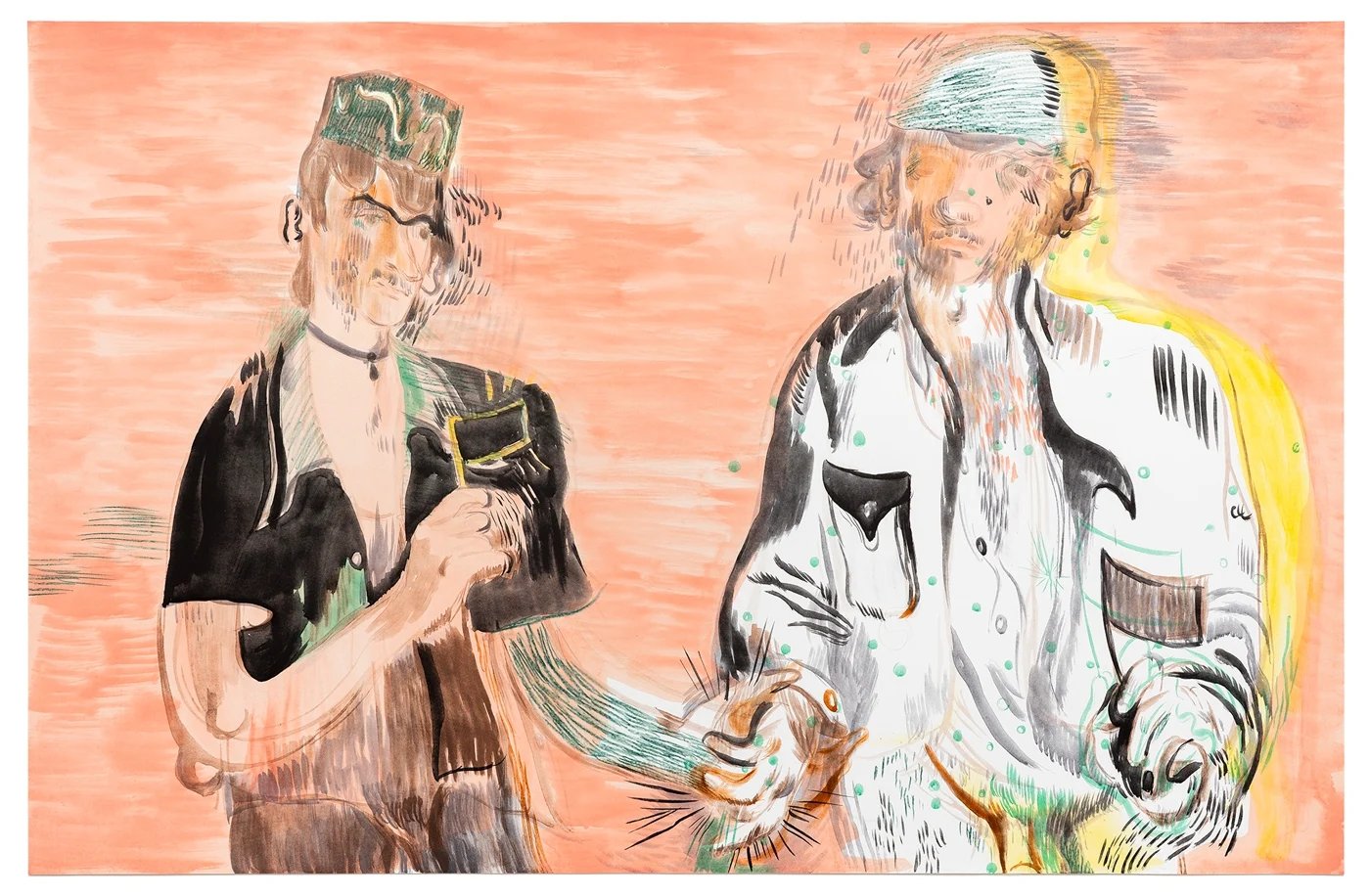
Louise Bourgeois
Eight in Bed
Artists coming out of residencies at places like Tamarind Institute or the Edinburgh Printmakers are treating embossing not as a finishing touch but as a primary language. A number of younger artists working at the intersection of textile history and papermaking are producing works where embossed surface patterns reference cloth, weaving, and domestic labor in ways that feel very much of this cultural moment. These works are still accessible at prices that make them compelling entry points, and the best of them are being acquired by institutional collections, which tends to be a meaningful signal. At auction, embossed prints by well documented artists with clean provenance and strong workshop credentials have performed steadily rather than spectacularly.
They tend to attract serious collectors rather than speculative buyers, which means the market for them is relatively stable and resistant to the kind of sharp corrections that can hit more fashionable categories. Haring prints in good condition with solid documentation continue to find buyers across the major houses. Works on paper by Bourgeois have seen sustained upward movement over the past decade as institutional interest in her practice has grown and the supply of quality pieces has tightened. Practically speaking, embossed prints present some specific considerations that are worth raising directly with any gallery or dealer before committing to a purchase.
Ask for the full edition and printing details, including the name of the workshop and the year of printing, not just the year of the original conception. Ask whether the work has ever been framed, and if so, whether it was glazed with UV filtering glass, since light damage can flatten and yellow the paper in ways that are difficult to reverse. Storage and display should avoid humidity extremes, which can cause the raised surfaces to relax over time and lose definition. When choosing between a unique work and an editioned print, consider that the best embossed editions were produced with the same care given to unique works, and the edition number itself carries less weight than the quality of the impression and the integrity of the paper.
A low edition number in a poorly managed series is worth far less than a thoughtfully produced impression from a larger run. Trust the object. With embossed prints, your hands will often tell you what your eyes need a moment to confirm.