Cloisonné Enamel
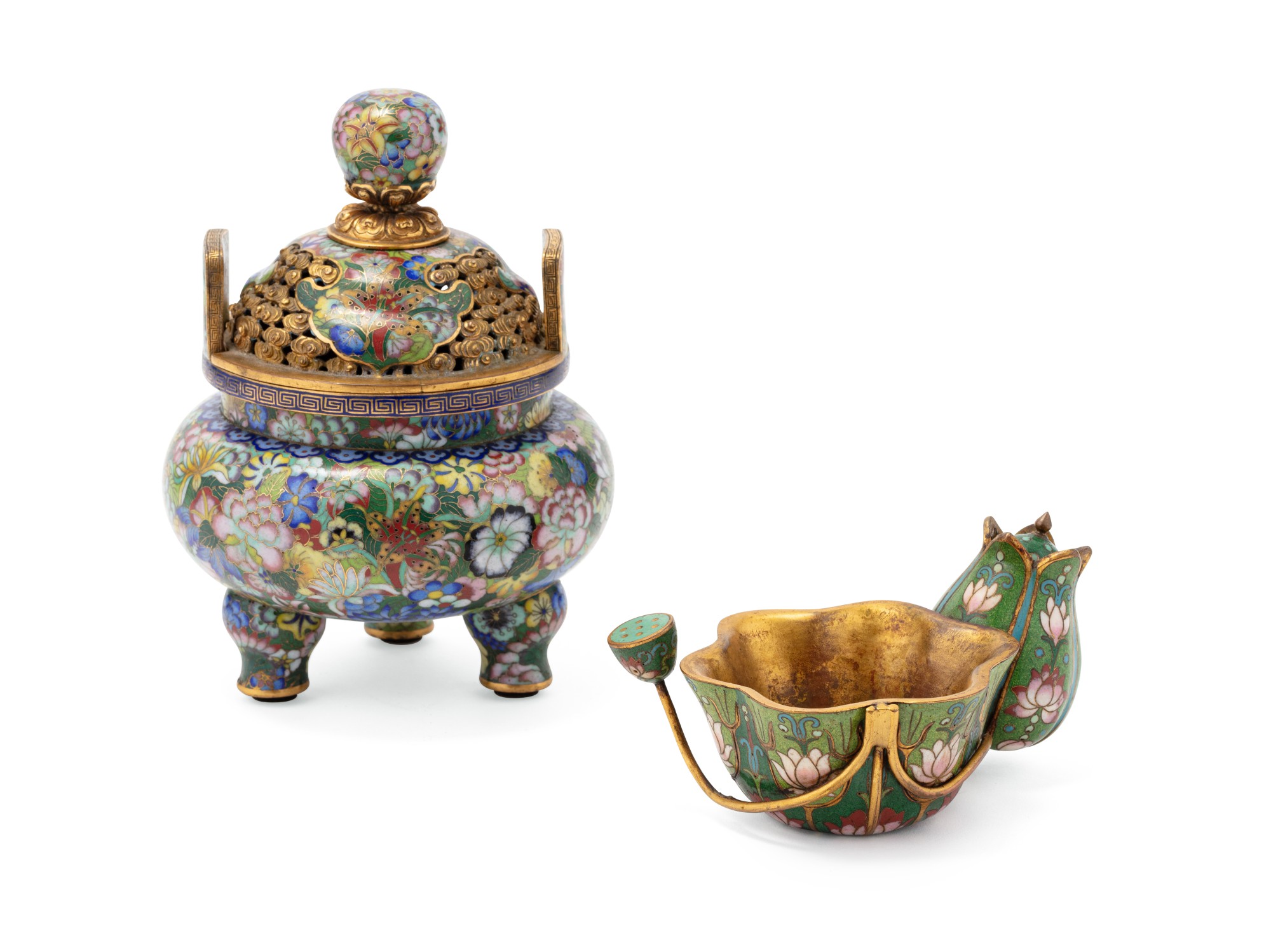
Unknown (Historical)
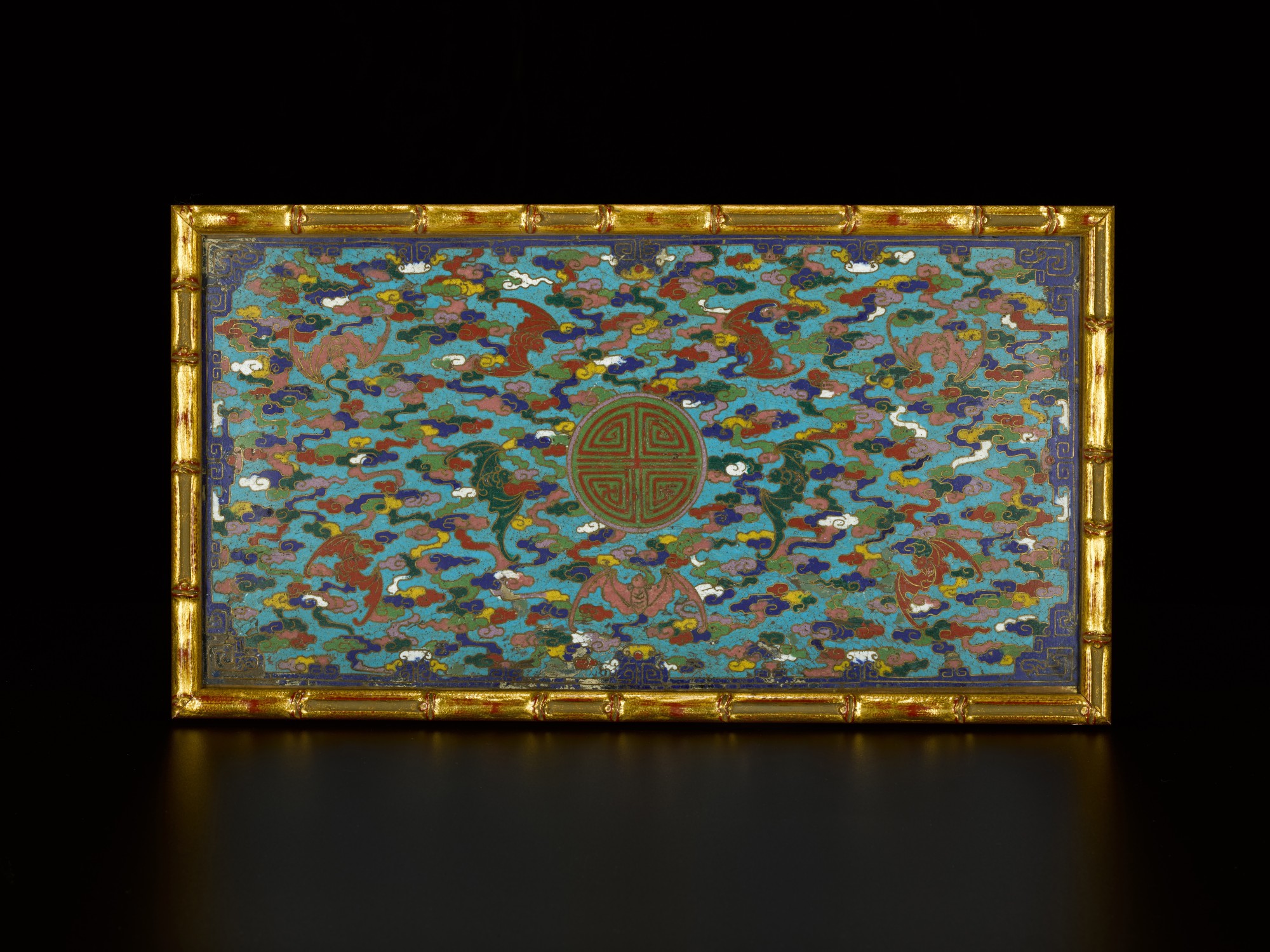
清十九世紀 掐絲琺瑯熏爐及蓮花式洗一組兩件
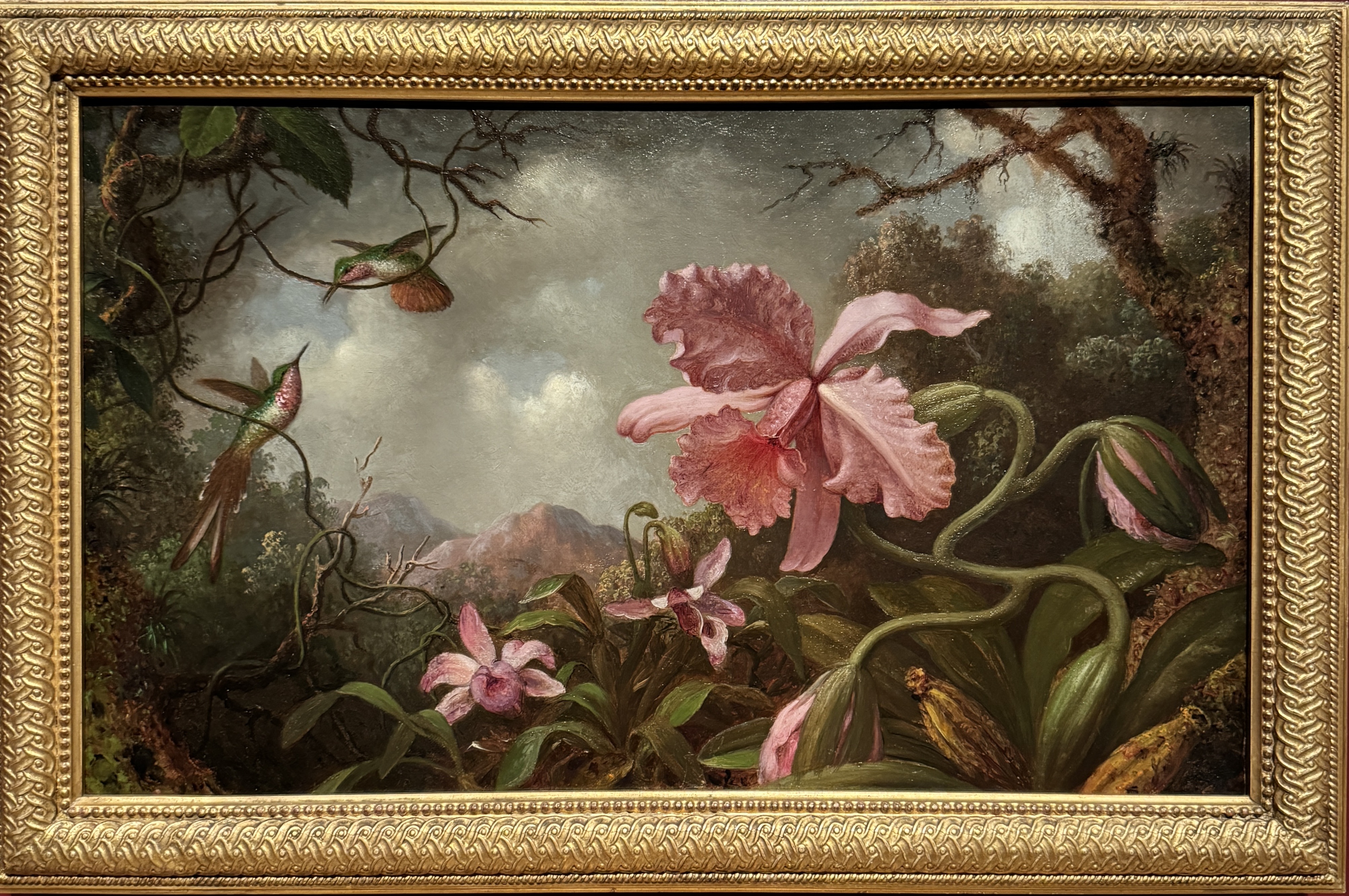
![Two cloisonné enamel kogo [incense boxes]](https://rtwaymdozgnhgluydsys.supabase.co/storage/v1/object/public/artist-images/artists/aa57ac89-1e84-4be4-b640-b0e0ab44d58e-1776972141.jpg)
Fire, Wire, and a Thousand Years of Color
There are very few art forms where the making of the thing is as astonishing as the thing itself. Cloisonné enamel is one of them. To watch a craftsman bend fine metal wire into the outlines of a dragon, then pack each tiny compartment with powdered glass before committing the whole to a kiln, is to understand immediately why collectors across centuries and across cultures have been so thoroughly seduced. The result, when it works, has a luminosity that paint cannot replicate and a precision that fabric cannot achieve.
It is color made permanent, drawing made architectural. The technique is ancient in the truest sense. Its earliest documented appearances trace back to the ancient Near East and to Cyprus around the thirteenth century BCE, where craftsmen used wire or metal strips to contain enamel paste on jewelry and small ceremonial objects. The word cloisonné itself comes from the French cloison, meaning partition or compartment, though the French encountered the technique centuries after it had already traveled across Byzantium, Persia, and eventually into the imperial workshops of China.
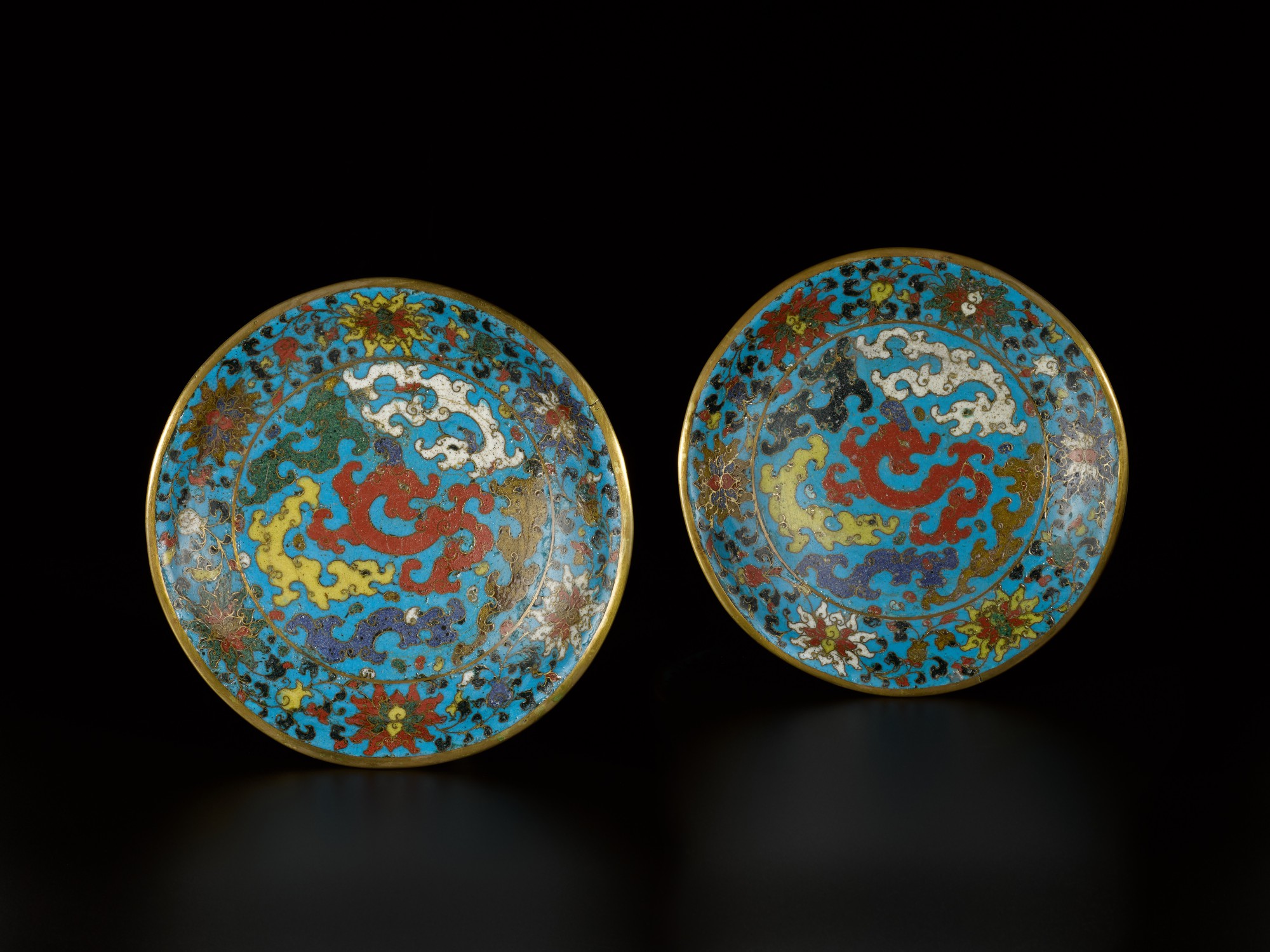
Unknown
明十七世紀 掐絲琺瑯龍紋盤一對
Byzantine enamel work of the ninth and tenth centuries represents one of the great early peaks of the form, with gold cloisonné icons and reliquaries produced for the Orthodox Church achieving a spiritual intensity that still arrests you in museum galleries today. China transformed the medium into something monumental. Cloisonné enamel arrived in China during the Yuan dynasty, likely via trade routes from the Islamic world, and by the Xuande period of the Ming dynasty in the early fifteenth century it had become an imperial preoccupation. The Qianlong Emperor, who reigned from 1736 to 1795, elevated the craft to perhaps its most theatrical expression, commissioning objects of staggering scale and technical ambition.
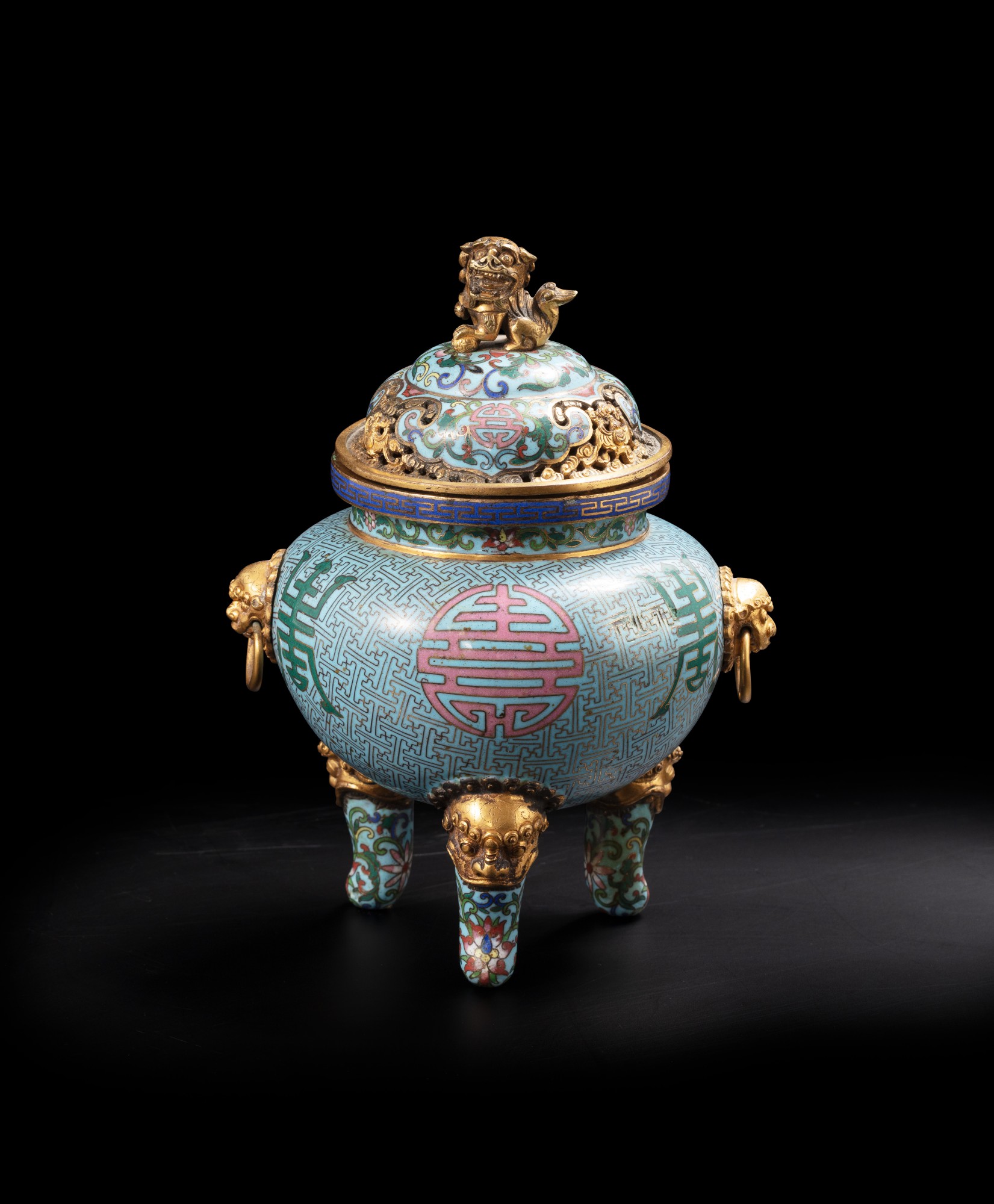
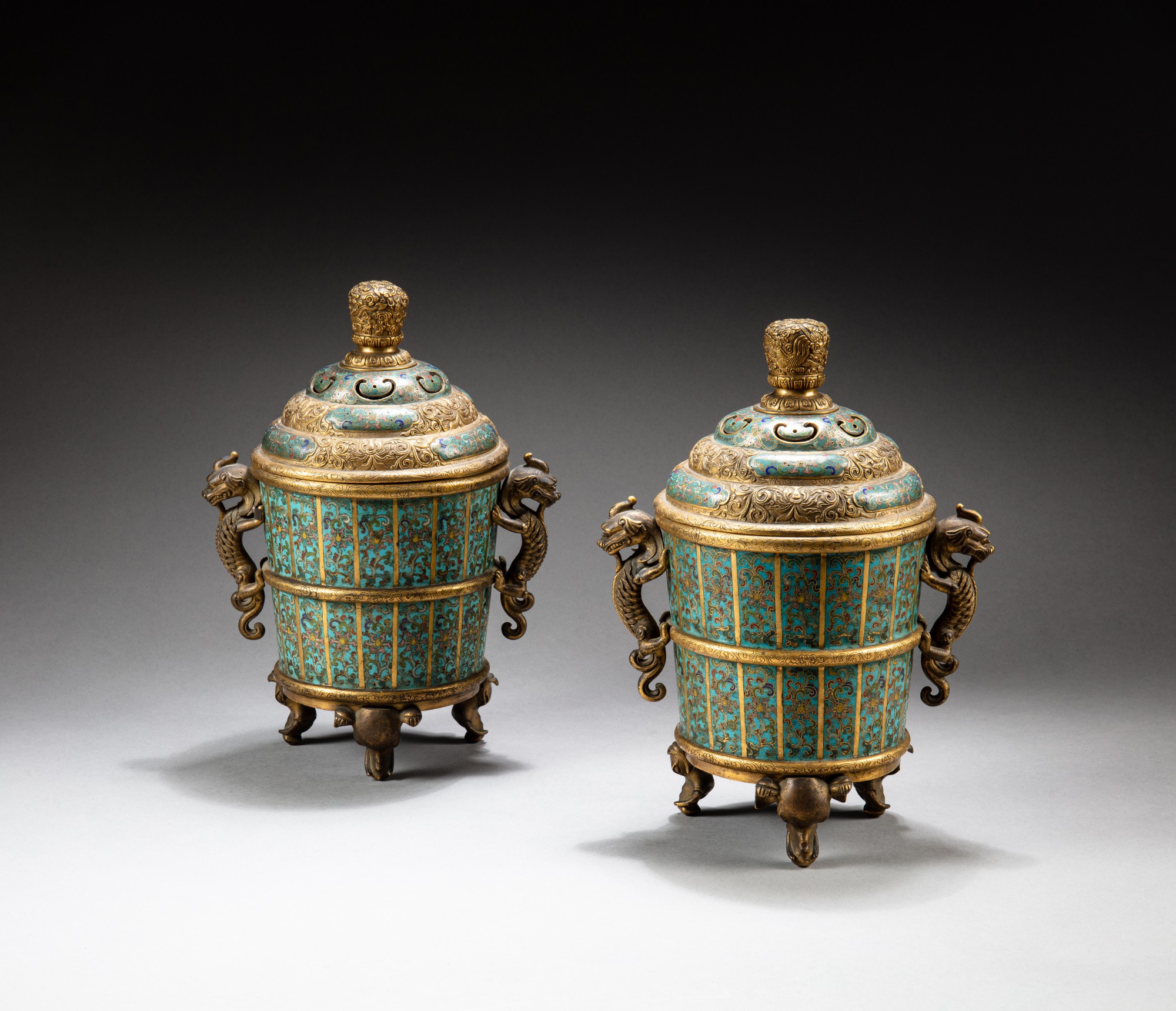
The monumental cloisonné enamel kui dragon tripod incense burners that appear among the works on The Collection sit squarely in this tradition, as do the exceptional gilt bronze and cloisonné enamel caparisoned elephant and the rare pair of cloisonné enamel horses attributed to the Qing dynasty. These were not decorative accessories. They were demonstrations of imperial power, theological seriousness, and the kind of patient labor that only a fully organized court workshop could sustain. The technical process itself is worth dwelling on because it explains so much about why the objects look the way they do.
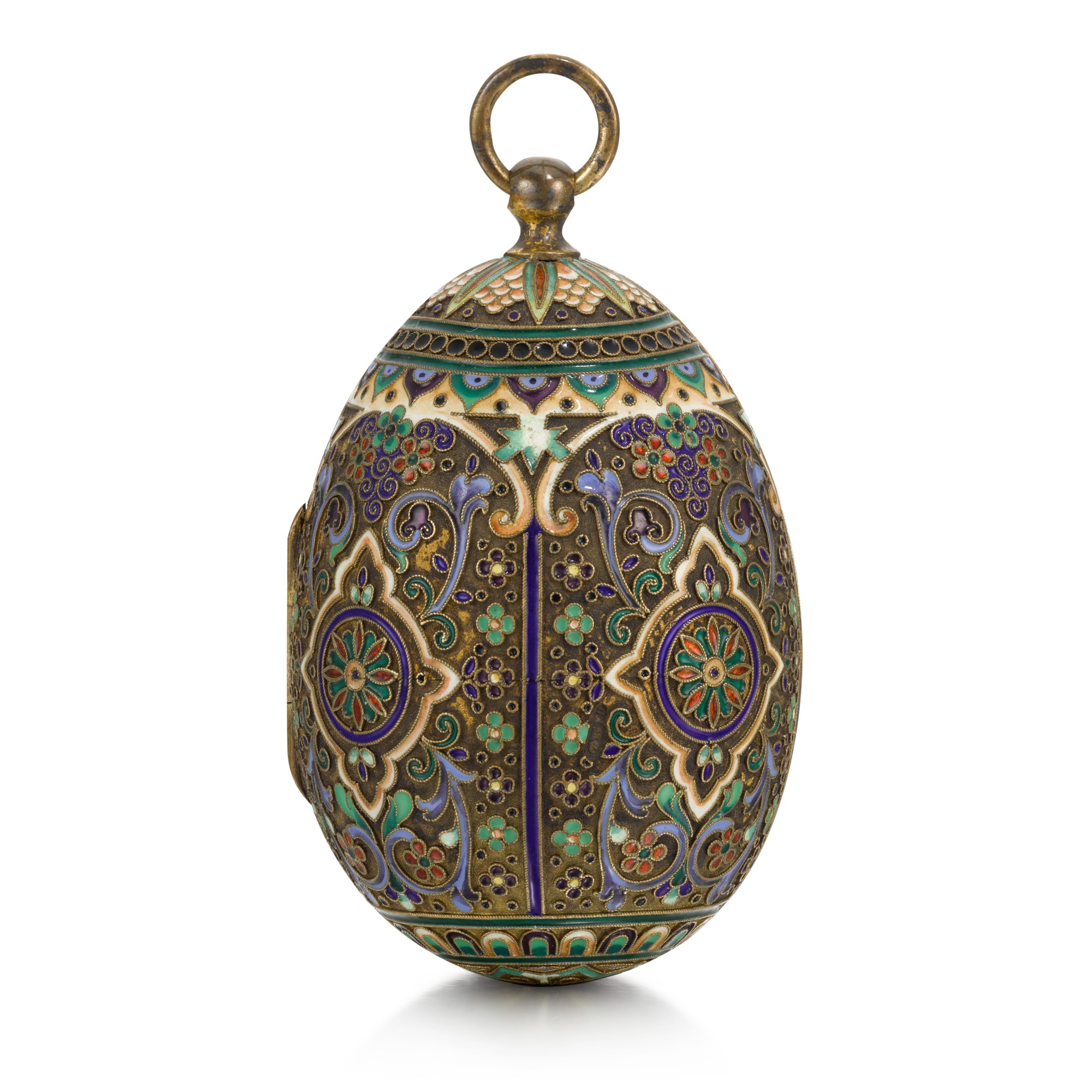
An egg-shaped silver-gilt and cloisonné enamel pendant icon, 11th Artel, Moscow, 1908-1917
An egg-shaped silver-gilt and cloisonné enamel pendant icon, 11th Artel, Moscow, 1908-1917
The craftsman begins with a metal body, typically copper or bronze, and solders thin strips of flattened wire to the surface to create the cloisons, the compartments that will hold the enamel. Each compartment is then filled by hand with enamel paste made from ground glass mixed with metallic oxides that produce specific colors when fired: cobalt for blue, copper for green, iron for red. The piece goes into the kiln multiple times, and after each firing the enamel sinks and must be refilled until it is level with the wire walls. Finally, the surface is polished and often gilded.
A single large vase might require months of labor and dozens of individual firings. The cloisonné enamel moon flask and the various slender and hexagonal vases represented on The Collection each carry within them this accumulated time, this quiet insistence on repetition and refinement. Russia brought its own sensibility to the form in the nineteenth and early twentieth centuries, fusing the Byzantine inheritance with a new appetite for nationalist ornament and luxury craft. The workshops of Moscow produced some of the most visually exuberant cloisonné objects ever made.
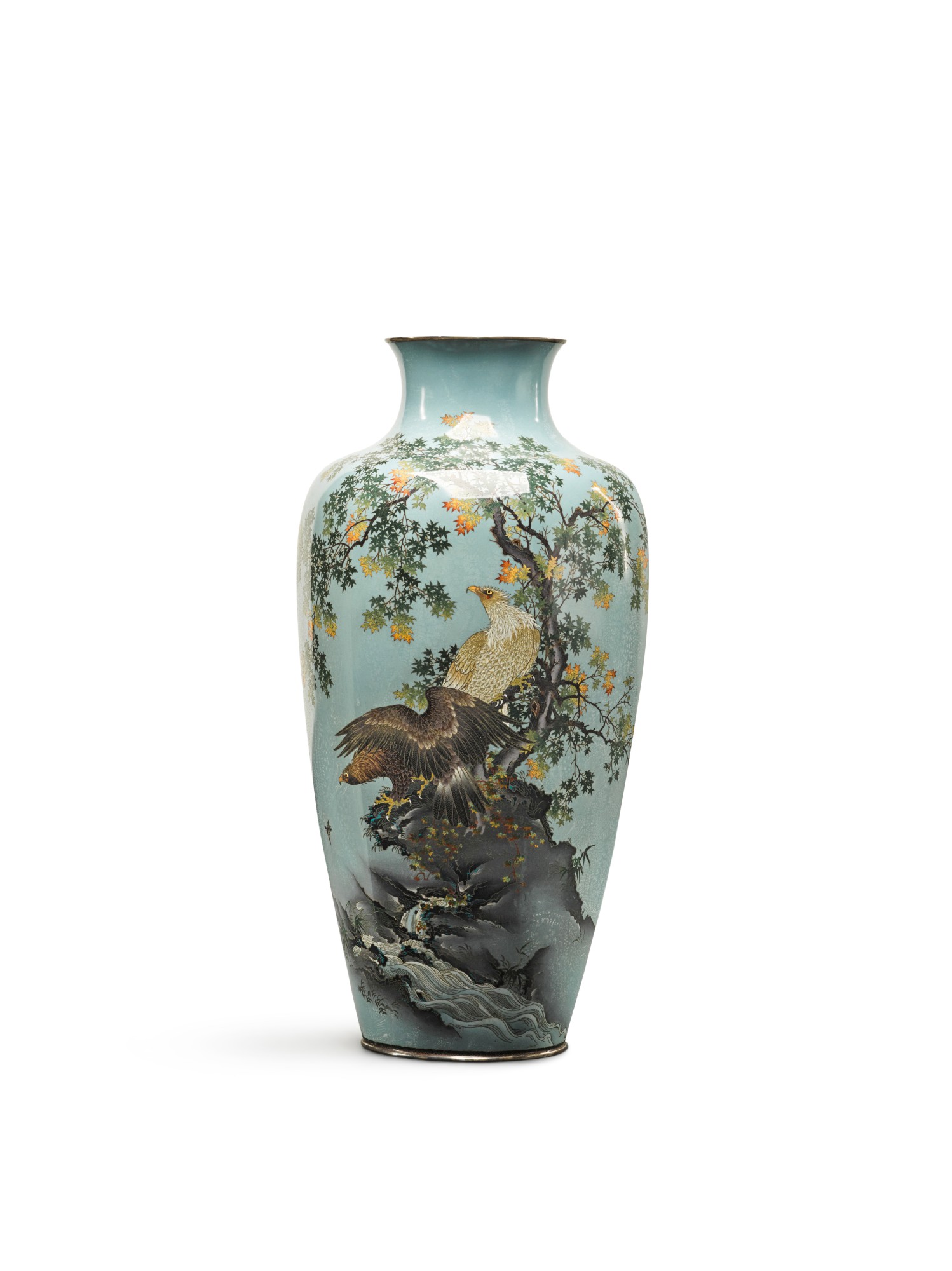
A large hexagonal cloisonne enamel vase
Signed Ota | Meiji period, late 19th century
Pavel Ovchinnikov, whose six piece silver gilt and cloisonné enamel tea service and gem set silver filigree icon of the Holy Face both appear on The Collection, was one of the dominant figures of this era, holding a warrant as a supplier to the Imperial Russian court and winning prizes at international exhibitions including the 1867 Paris Exposition Universelle. Feodor Rückert, working as a silversmith and enamelist associated with Fabergé, developed a style dense with folk motifs and shimmering color fields, and his flatware set for Fabergé in the original case, held on The Collection, is among the most covetable examples of his work. The 11th Artel and other Moscow workshops of the 1908 to 1917 period produced silver gilt pendant icons and kovshes of remarkable intimacy, objects made for private devotion and gifting rather than imperial display. Japan arrived at cloisonné from a different direction entirely.
Drawing on Chinese foundations but working within the aesthetic constraints of the Meiji period from 1868 onward, Japanese workshops developed a technical sophistication that arguably surpassed anything produced before or since. Namikawa Sosuke and Namikawa Yasuyuki, unrelated despite sharing a name, were the two great masters, and they pushed the medium toward painterly effects, creating enamel surfaces that could render the gradations of a cloudy sky or the soft blur of chrysanthemum petals. The cloisonné enamel and soft metal inlaid silver and shakudo vase on The Collection speaks to this Japanese tradition, where the meeting of different metals and enamel creates a surface of unusual tonal complexity. What keeps cloisonné enamel compelling for contemporary collectors is precisely this tension between industrial patience and intimate expression.
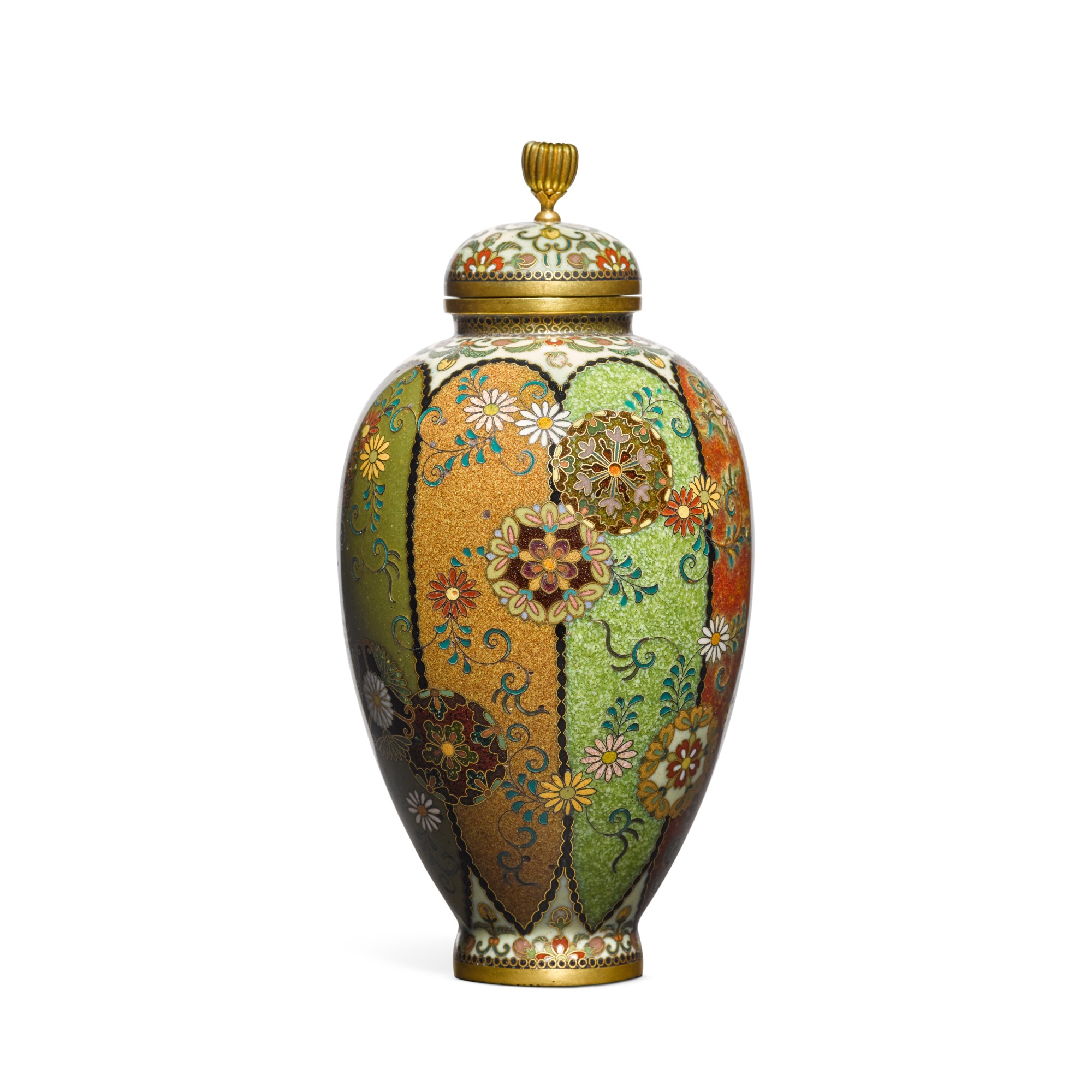
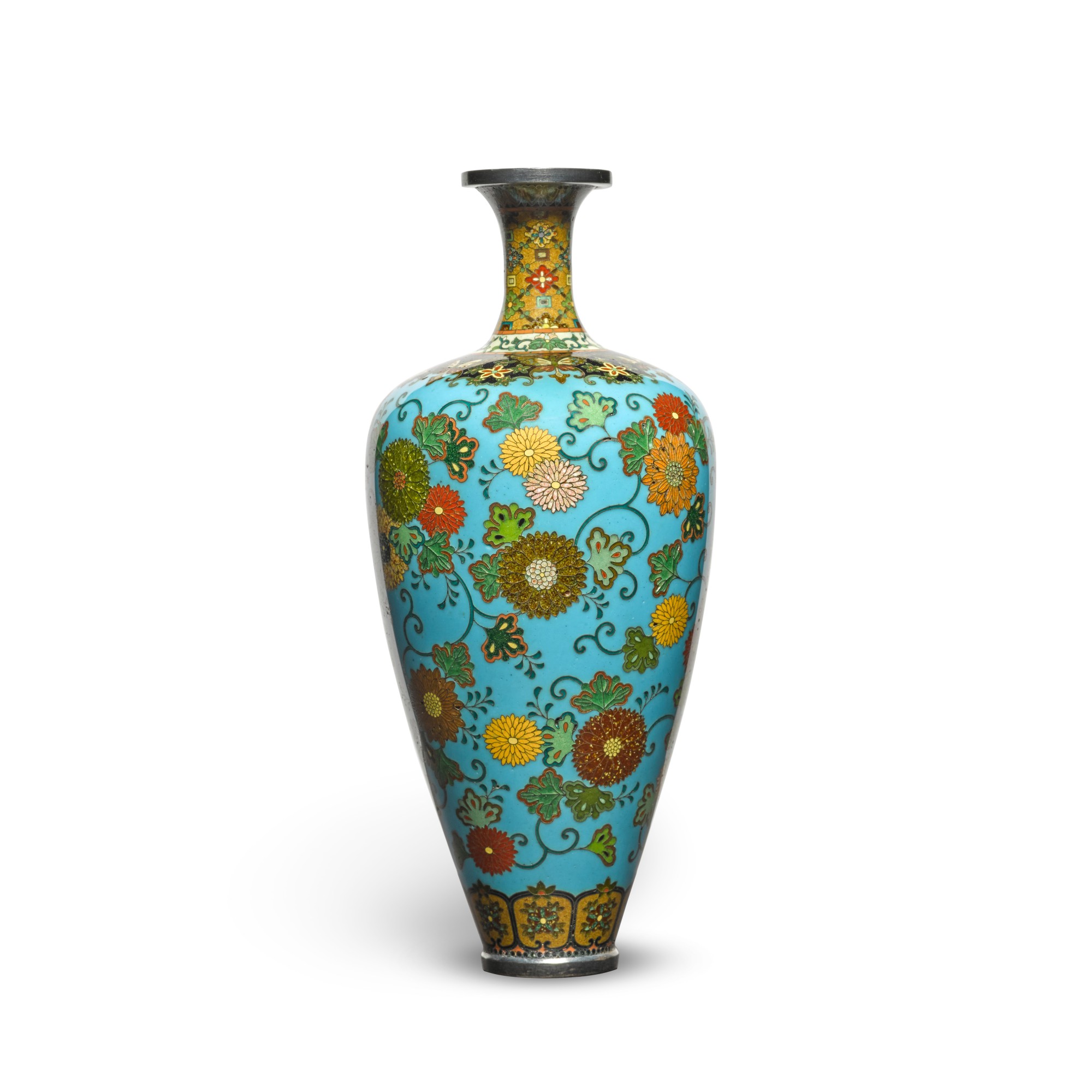
A cloisonné enamel vase with cover
A cloisonné enamel vase with cover Signed on the silver tablet Kyoto Namikawa (workshop of Namikawa Yasuyuki, 1845-1927) Meiji period, late 19th century
These objects are not unique in the way a painting is unique, yet no two are identical either. The kiln introduces its own variables. The hand that bends the wire carries its own hesitations and fluencies. In a market that has increasingly valued process alongside product, cloisonné offers a particularly visible record of making.
The works gathered on The Collection span more than five centuries and at least three great traditions, and together they make a persuasive case that this is not a minor or merely decorative art. It is one of the more demanding things human hands have ever attempted to do.