Blue And White Porcelain
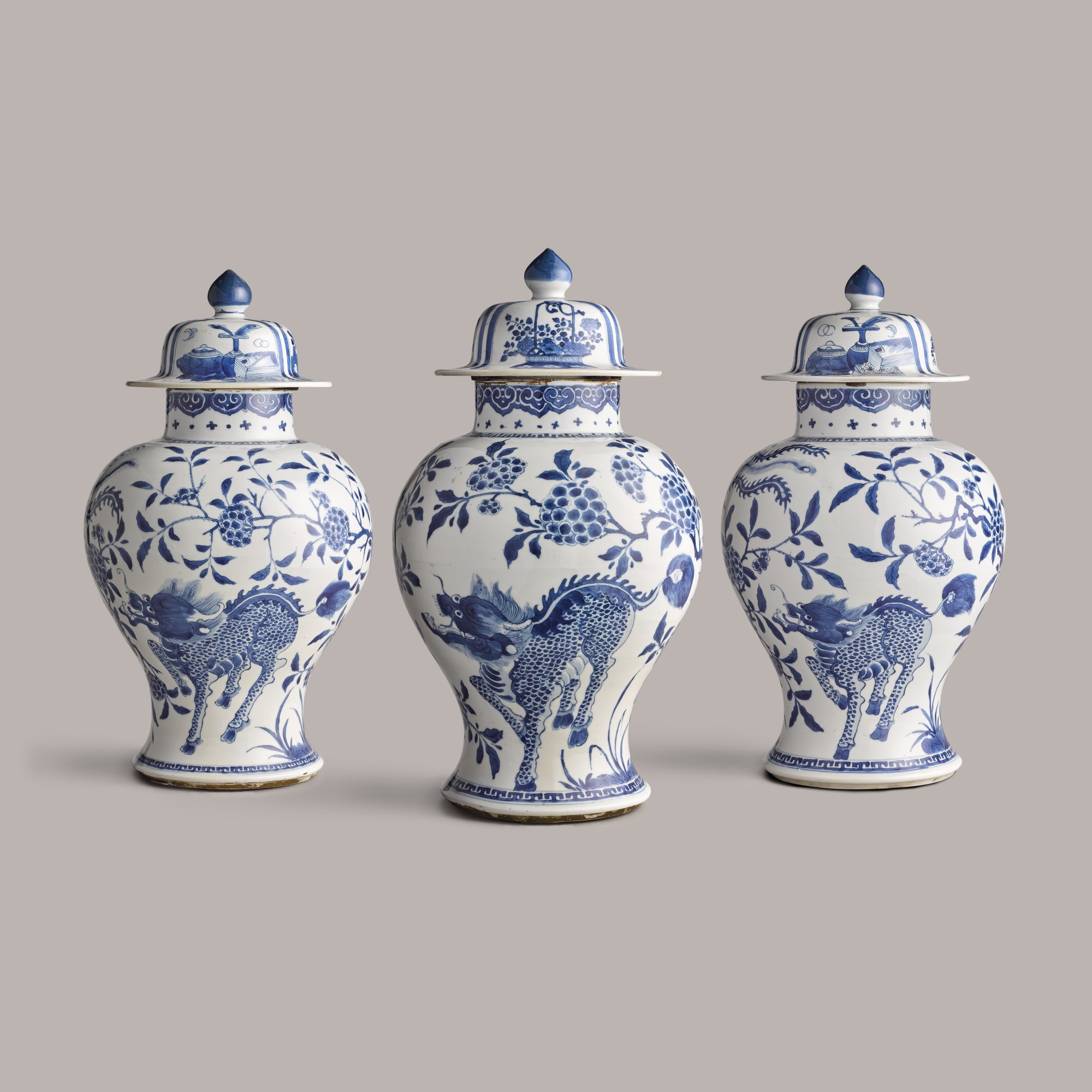
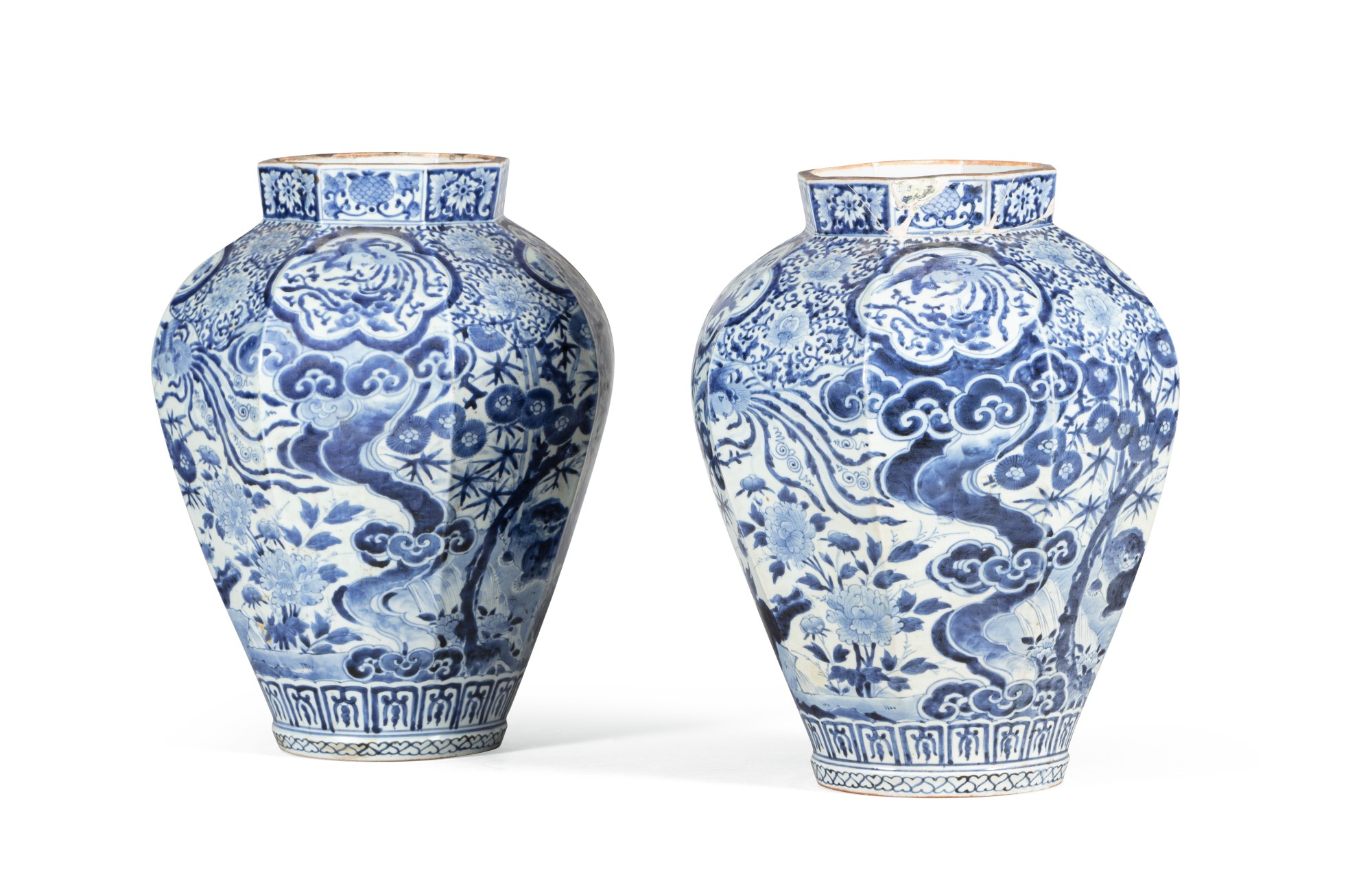
Three blue and white baluster vases and covers
清康熙 青花瑞獸圖大蓋罐一組三件
```json
{ "headline": "The Endless Blue: Porcelain That Collectors Never Tire Of", "body": "There is something almost unreasonable about the hold that blue and white porcelain exerts over collectors. It is not merely aesthetic, though the aesthetic case is overwhelming. It is something closer to a conversation across centuries, the sense that the cobalt buried in a brushpot or a lotus bowl was laid down by a hand that understood exactly what it meant to make something last. Collectors who come to this area tend to stay, and they will tell you that the pieces change depending on the light, the season, the mood of the room.
That is not sentimentality. That is what good porcelain actually does.", "Now, what separates a good work from a great one is worth discussing plainly, because the category is enormous and the range of quality is wider than almost any other area of the decorative arts. The best blue and white pieces share certain qualities: a crispness in the cobalt that suggests the painter worked with total confidence, a glaze that sits neither too thick nor too thin, and a compositional intelligence that holds together whether you are looking at the piece from across a room or with a loupe in hand.
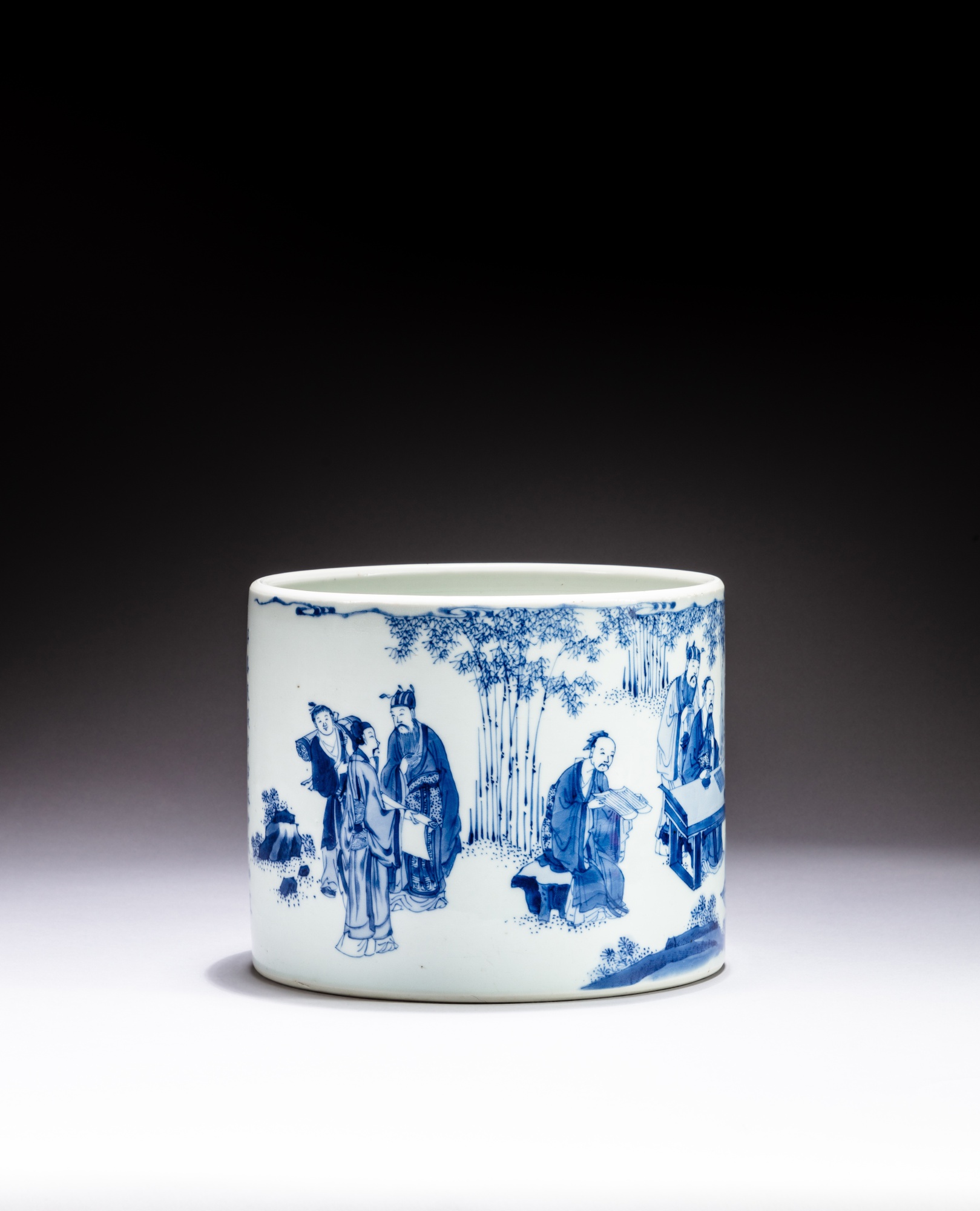
Unknown
清康熙壬辰年 青花人物故事圖詩文筆筒
A finely decorated blue and white warrior sleeve vase, for instance, rewards exactly this kind of patient looking. The warrior scenes that populate these pieces are not merely decorative. They carry a narrative compression that speaks to the sophistication of their makers and the expectations of their original audiences.", "Scholars bowls represent another benchmark worth understanding.
The scholarly motifs, rocks, prunus, bamboo, the paraphernalia of the cultivated mind, were not chosen arbitrarily. They signaled something about the owner as much as the maker, and the finest examples carry that intentionality into every brushstroke. When you encounter a blue and white scholars bowl in good condition with a strong, unsmudged reign mark and a well potted form, you are looking at a piece that serious collectors recognize immediately. The difference between a competent example and an exceptional one often comes down to the quality of that underglaze blue, whether it has that luminous, slightly heaped and piled quality that the best Xuande and Chenghua period pieces are celebrated for, or whether it sits flat and inert on the surface.
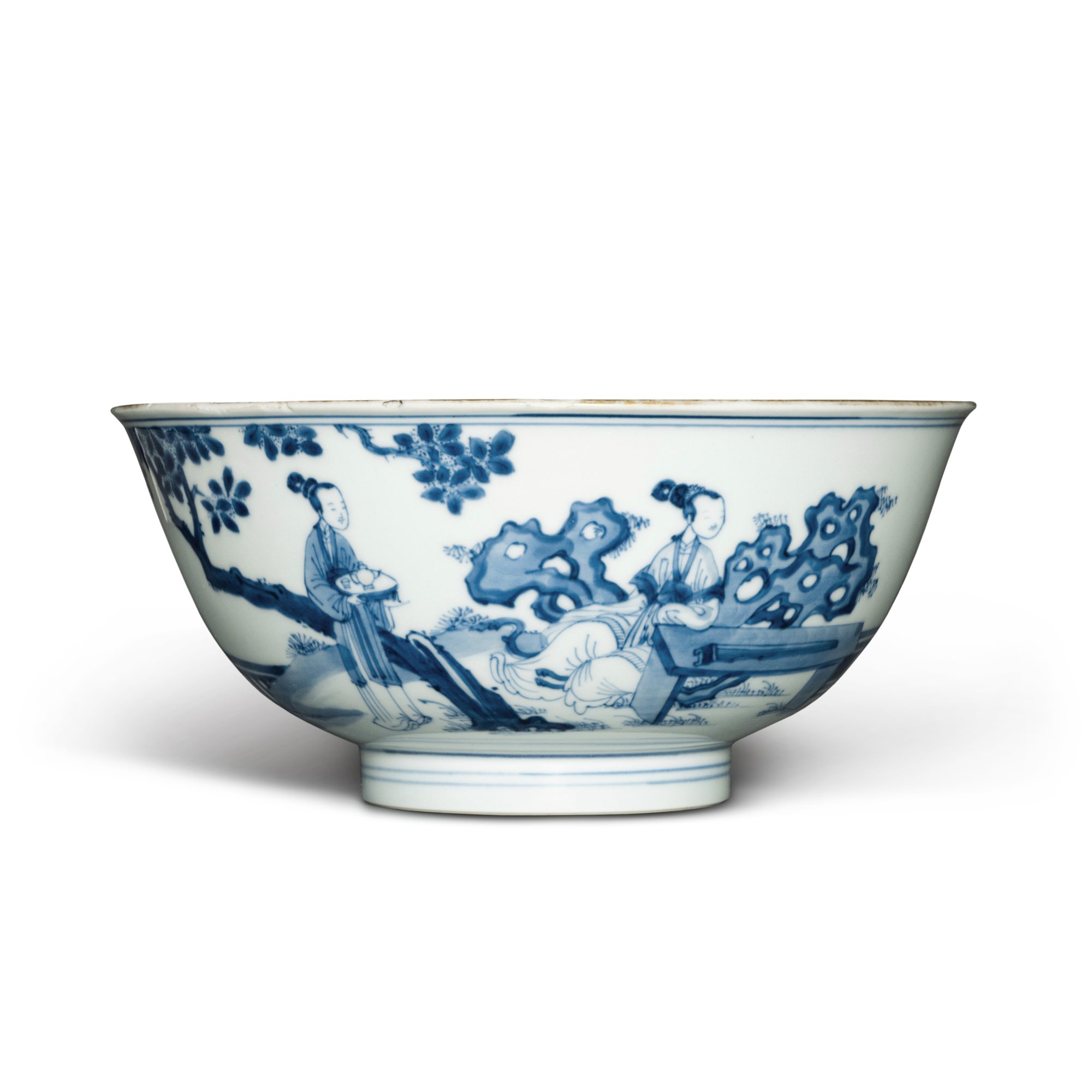
A blue and white 'figural' bowl
清康熙 青花人物故事圖盌
", "Within the works represented on The Collection, the range is instructive. Kraak porcelain, those export wares made primarily for the European and Southeast Asian markets from the late sixteenth century onward, offers a particularly interesting entry point for collectors who want pieces with documented provenance trails and strong cross market appeal. Three blue and white porcelain Kraak vessels represent this tradition well: the paneled decoration, the distinctive border registers, the slightly sandy texture of the base. These are pieces that have been collected by European aristocrats, Dutch merchants, and contemporary enthusiasts alike, and that layered collecting history adds to their resonance.
Similarly, the kendi, those spouted vessels made for ritual use across maritime Southeast Asia, appear in the collection in silver mounted form, which speaks to the long tradition of European collectors embellishing these pieces upon their arrival in the West. That kind of material biography matters at auction.", "On the secondary market, blue and white porcelain has demonstrated a durability that more fashionable categories often cannot match. The top end of the market, dominated by imperial wares with impeccable provenance, regularly achieves results at the major Hong Kong and London salerooms that justify the attention of serious capital.
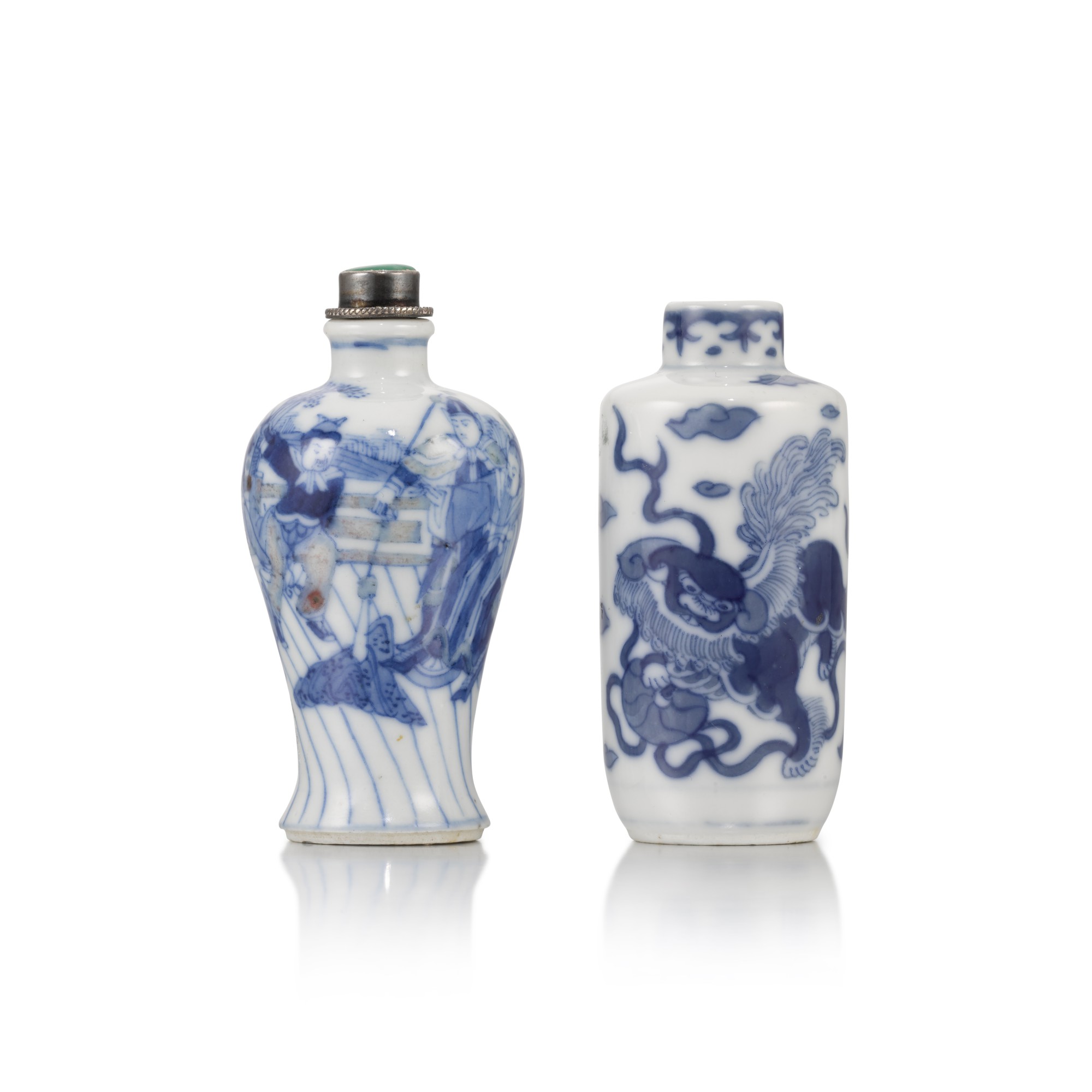
Two blue and white porcelain snuff bottles
清十九世紀 青花鼻烟壺一組兩件
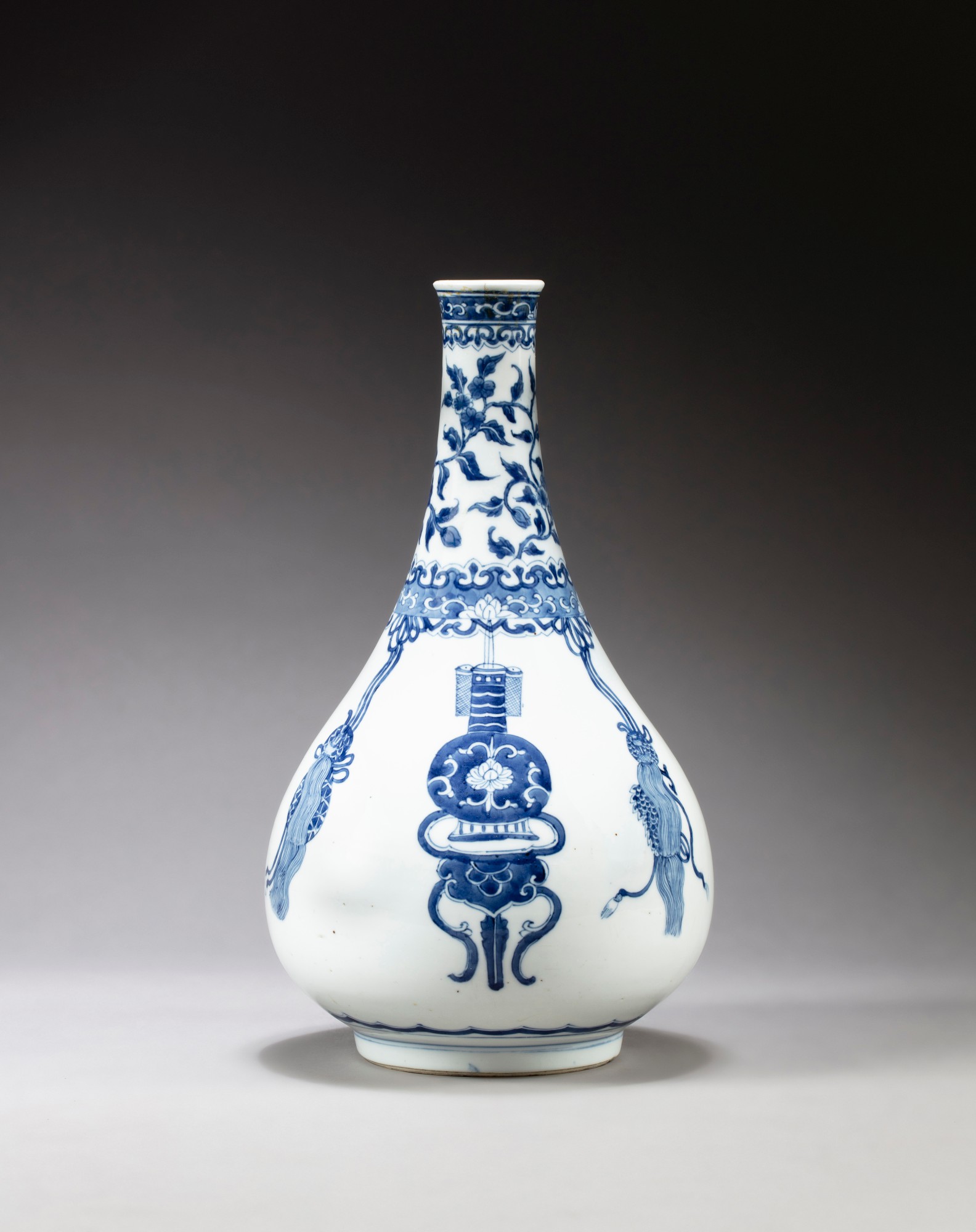
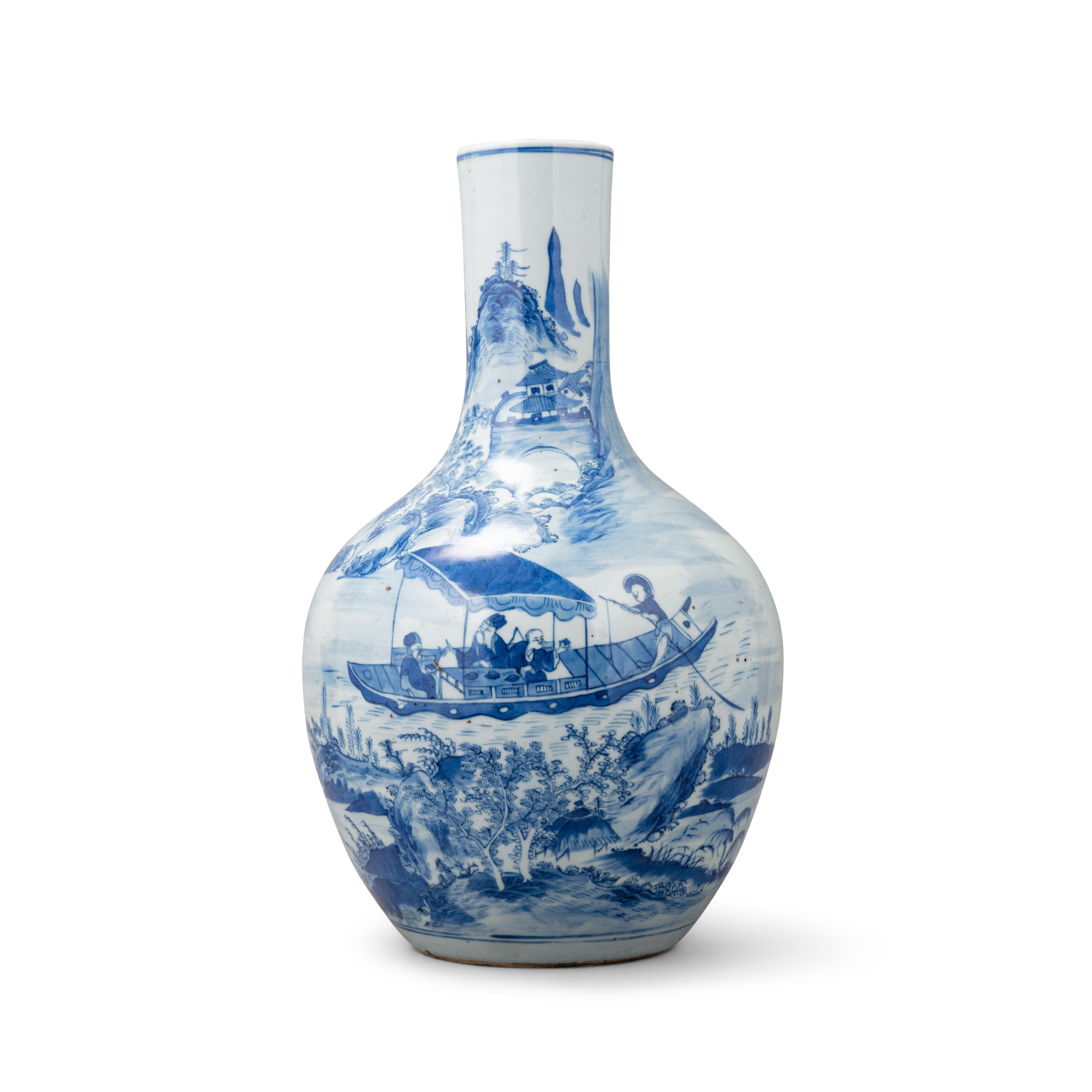
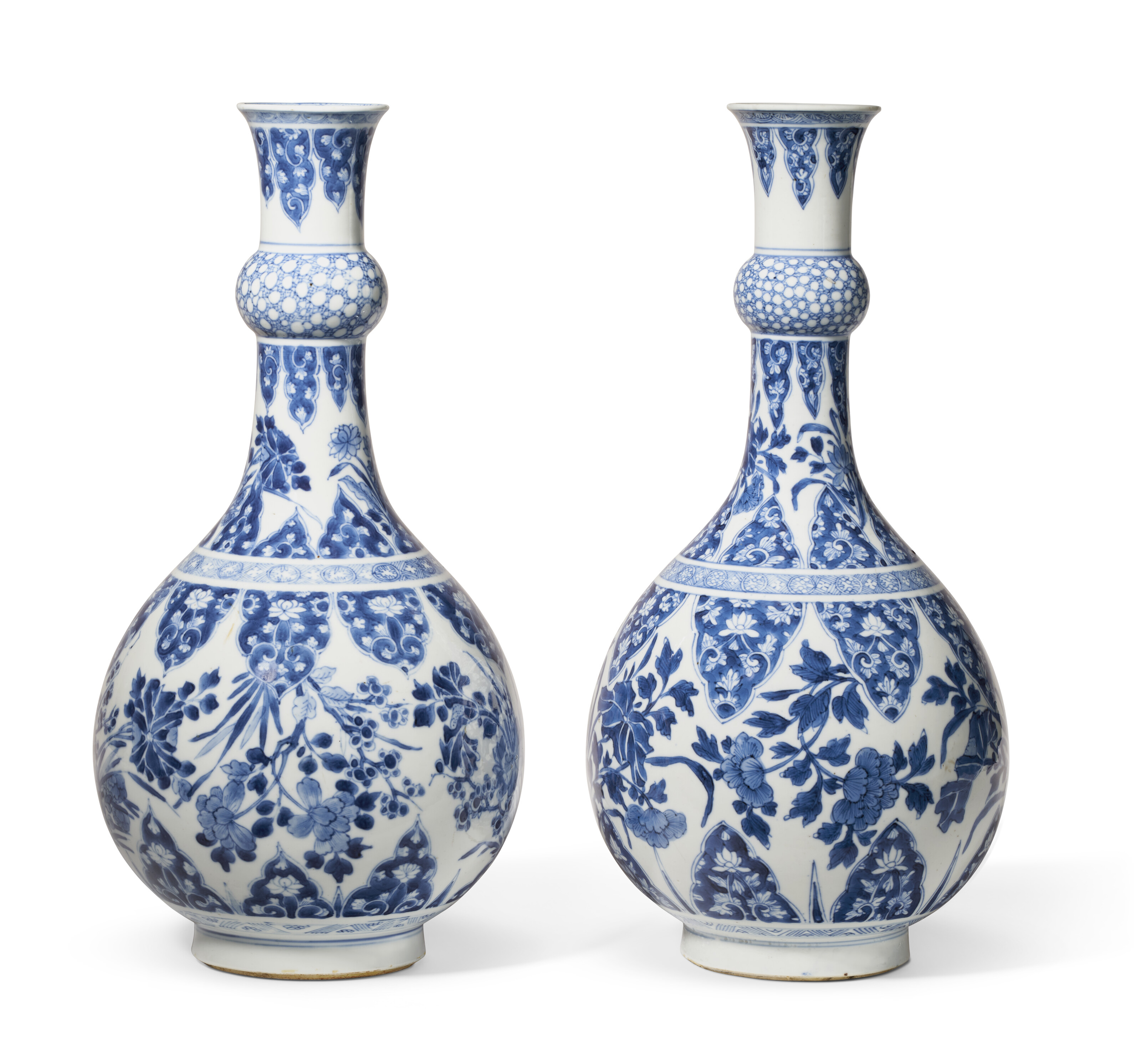
But the more interesting story for most collectors is in the middle market, where pieces like a well painted small blue and white vase or a blue and white bottle vase with strong decorative quality and honest condition can be acquired at prices that still feel reasonable relative to comparable works in painting or sculpture. The Ming style ewer is a good example of a form that carries historical prestige without necessarily commanding imperial period prices, and for collectors who want to live with something that has genuine weight and presence, these pieces offer real value.", "The question of condition deserves more candor than it usually receives. Blue and white porcelain is hard and durable, but it is not invulnerable, and the market is unforgiving of certain kinds of damage.
Rim chips, even minor ones, will suppress a price substantially. Cracks, even stabilized ones, are a serious consideration. What collectors should ask a gallery or auction specialist is not simply whether a piece is in good condition, but where any restoration has been carried out and whether it is visible under ultraviolet light. Reputable dealers will tell you this without being asked, and any hesitation on that point is itself information.
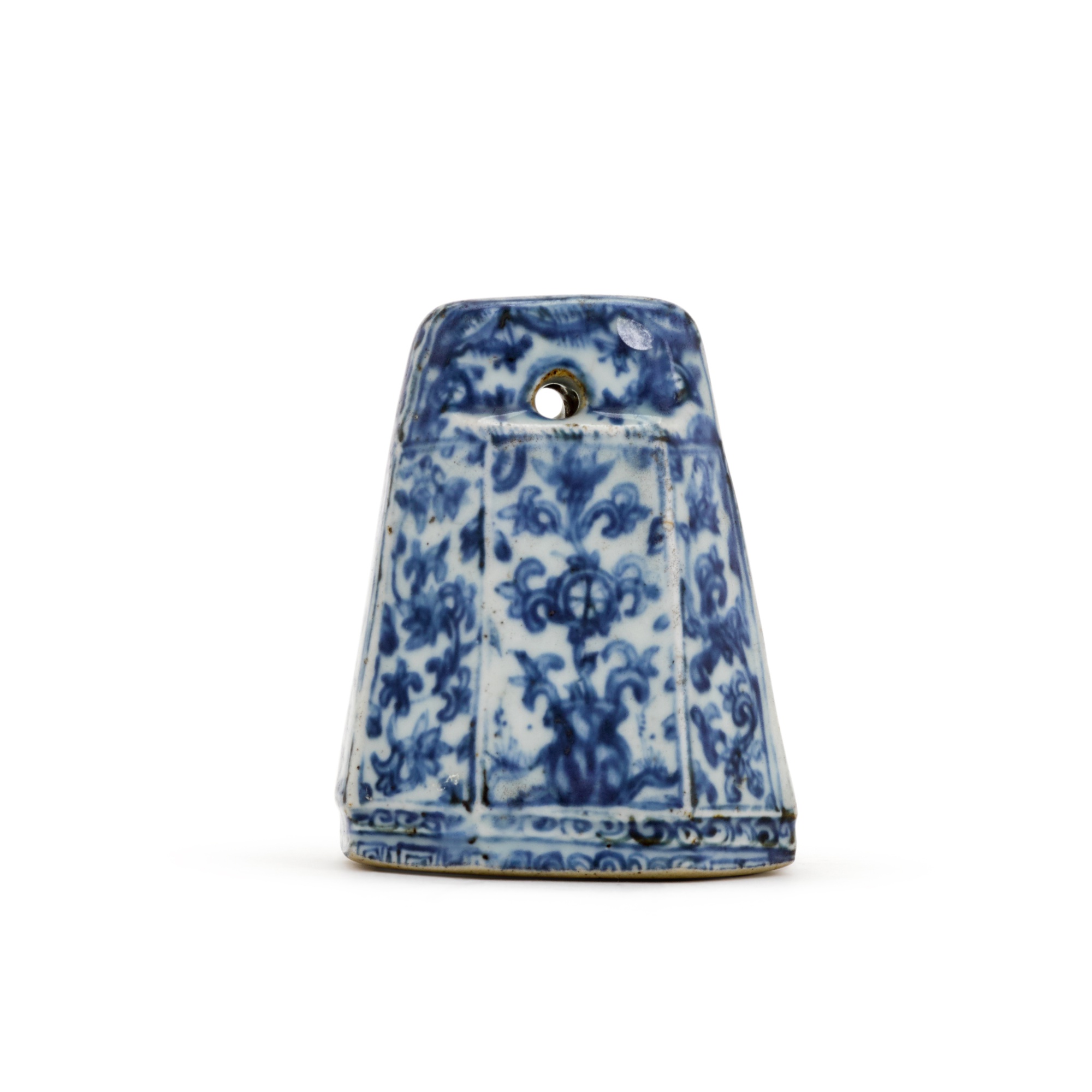
A rare blue and white weight,
A rare blue and white weight, Mark of Jiajing, dated Jiazi year, corresponding to 1564
Display considerations are simpler: these pieces want natural light and breathing room. A blue and white brushpot on a crowded shelf is a missed opportunity. Given space, the cobalt will shift from deep navy to something closer to violet in late afternoon sun, and that is worth planning for.", "For collectors watching the emerging end of the market, the real opportunity lies in understanding which categories have been undervalued relative to their art historical significance.
Snuff bottles, for instance, including the blue and white porcelain snuff bottles represented in this collection, have long been treated as a subset category by generalist collectors, but specialists know that the finest examples are miniature masterpieces of controlled decoration and technical virtuosity. The forms are demanding precisely because there is so little room for error at that scale. Similarly, pieces described as Swatow ware, those broadly painted export porcelains associated with kilns in Fujian province, have attracted renewed scholarly attention in recent years, and a blue and white Swatow dragon jar with genuine character can still be found at prices that reflect old prejudices rather than current understanding. The collectors who move on that now will be the ones who look prescient in a decade.
", "The practical advice that experienced collectors offer, and that rarely appears in catalogue essays, is simply to handle as many pieces as possible before you buy. Blue and white porcelain has a weight and a resonance in the hand that photographs cannot communicate. The potting tells you things about the period and the quality of the workshop that even the most detailed condition report will not. Ask to handle the piece.
Ask about the provenance. Ask whether there is any documentation connecting it to earlier collections or sales. And then trust what the object tells you when it is in your hands. The best pieces in this category have been telling collectors the same thing for five hundred years.