AIDS Crisis
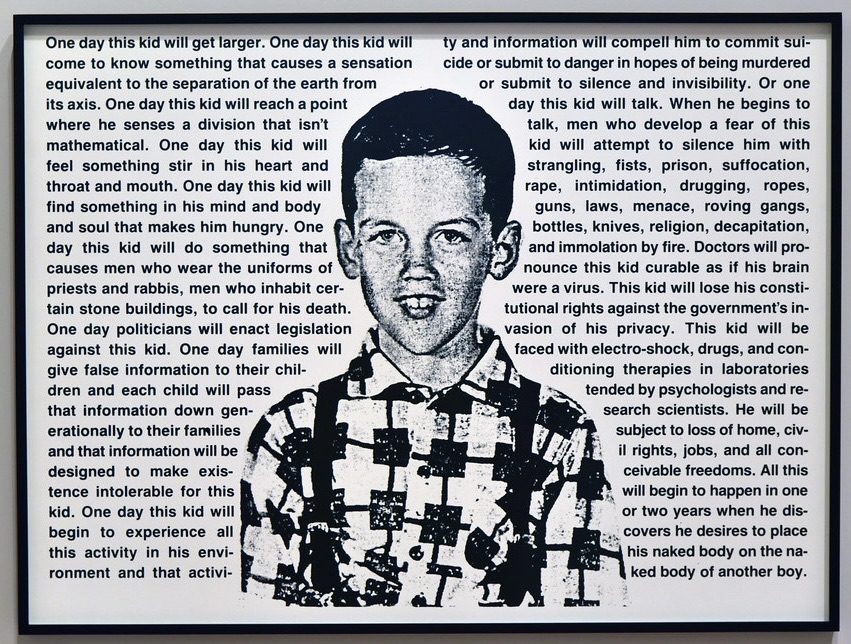
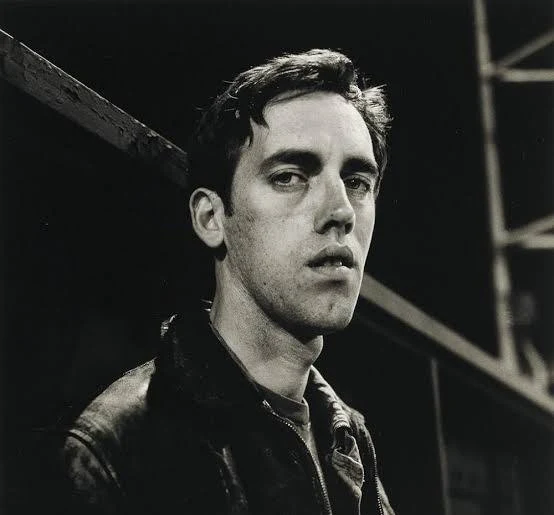
David Wojnarowicz
Untitled (One Day This Kid...), 1990
When Art Became a Matter of Life
There are moments in history when art stops being optional. When the stakes become so high, the silence so unbearable, that making work is no longer about aesthetics or markets or critical theory but about survival itself. The AIDS crisis was one of those moments, and the art it generated remains among the most morally urgent, visually radical, and emotionally devastating bodies of work the twentieth century produced. To look at it now is to feel the full weight of what was lost and what was fought for.
The epidemic officially entered public consciousness in the United States in June 1981, when the Centers for Disease Control published its first report on a cluster of unusual pneumonia cases in Los Angeles. By the mid 1980s, whole communities were unraveling. New York's downtown art scene, already a world unto itself, was being decimated. Galleries lost artists.
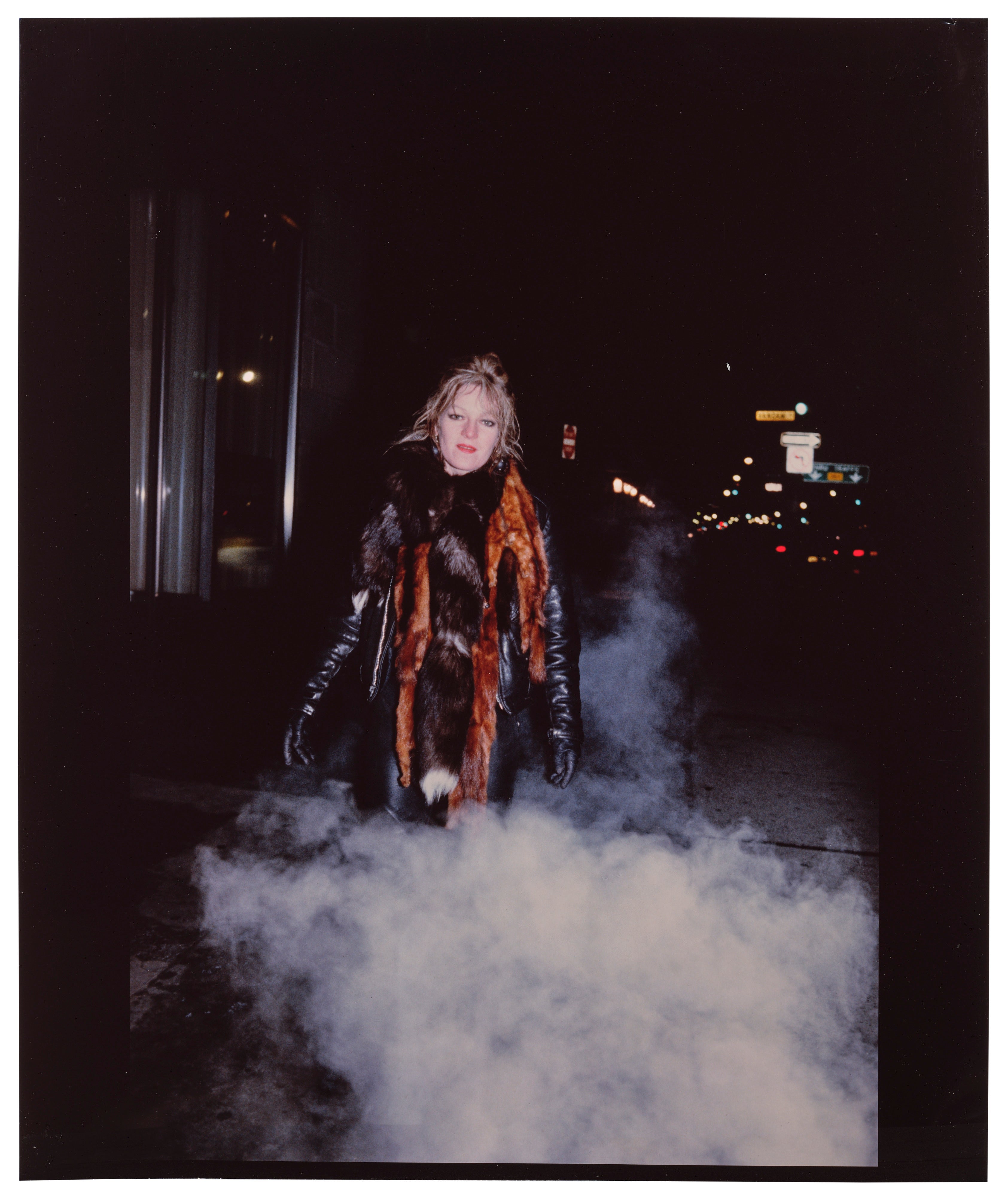
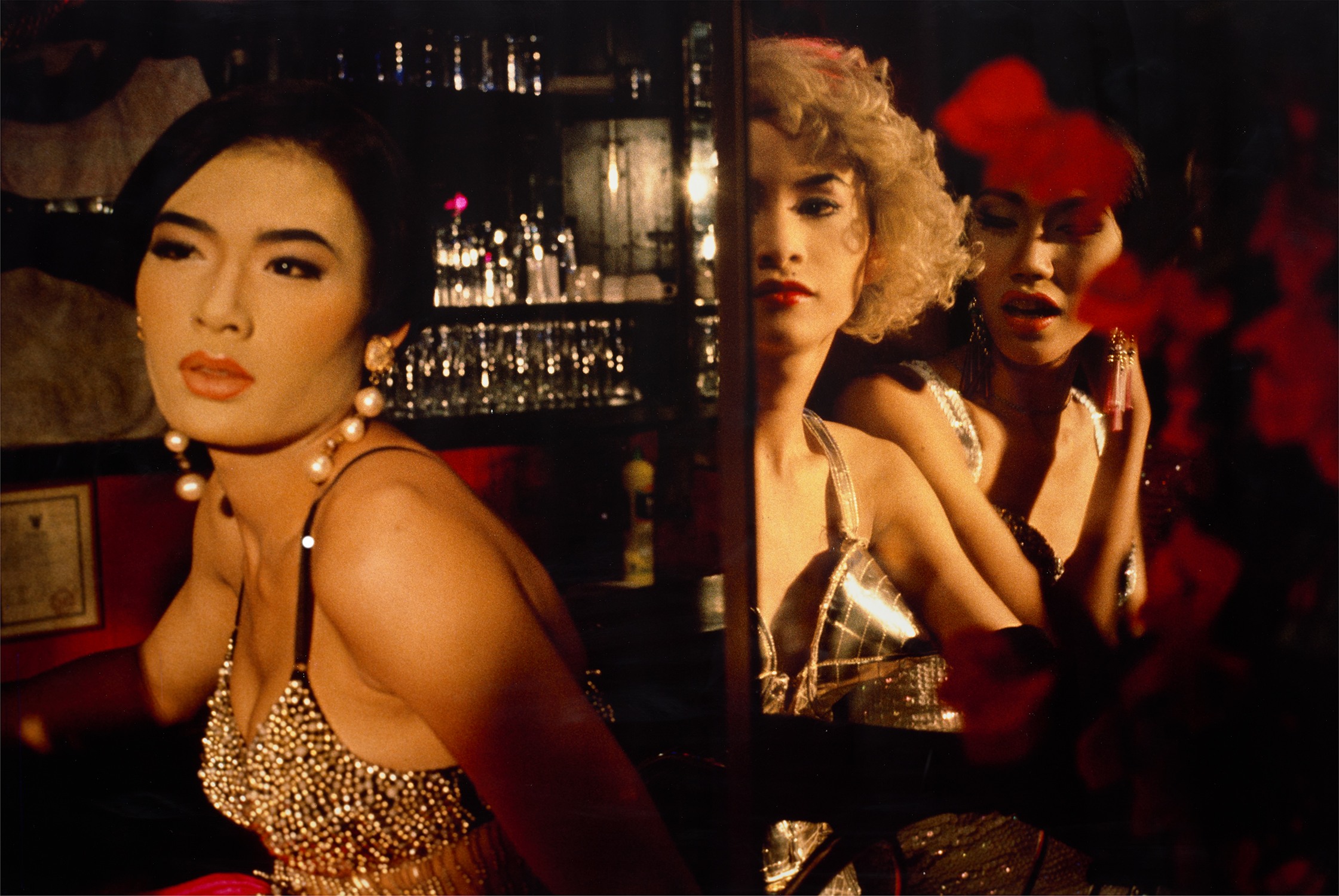
Nan Goldin
Cookie in the NY Inferno, from 1989: A Portfolio Honoring Artists Lost to AIDS
Artists lost lovers, collaborators, entire social worlds. The government's response was catastrophically slow, and the cultural establishment was largely indifferent. Into that void, artists moved with purpose and fury. The work that emerged from this moment did not fit neatly into existing categories.
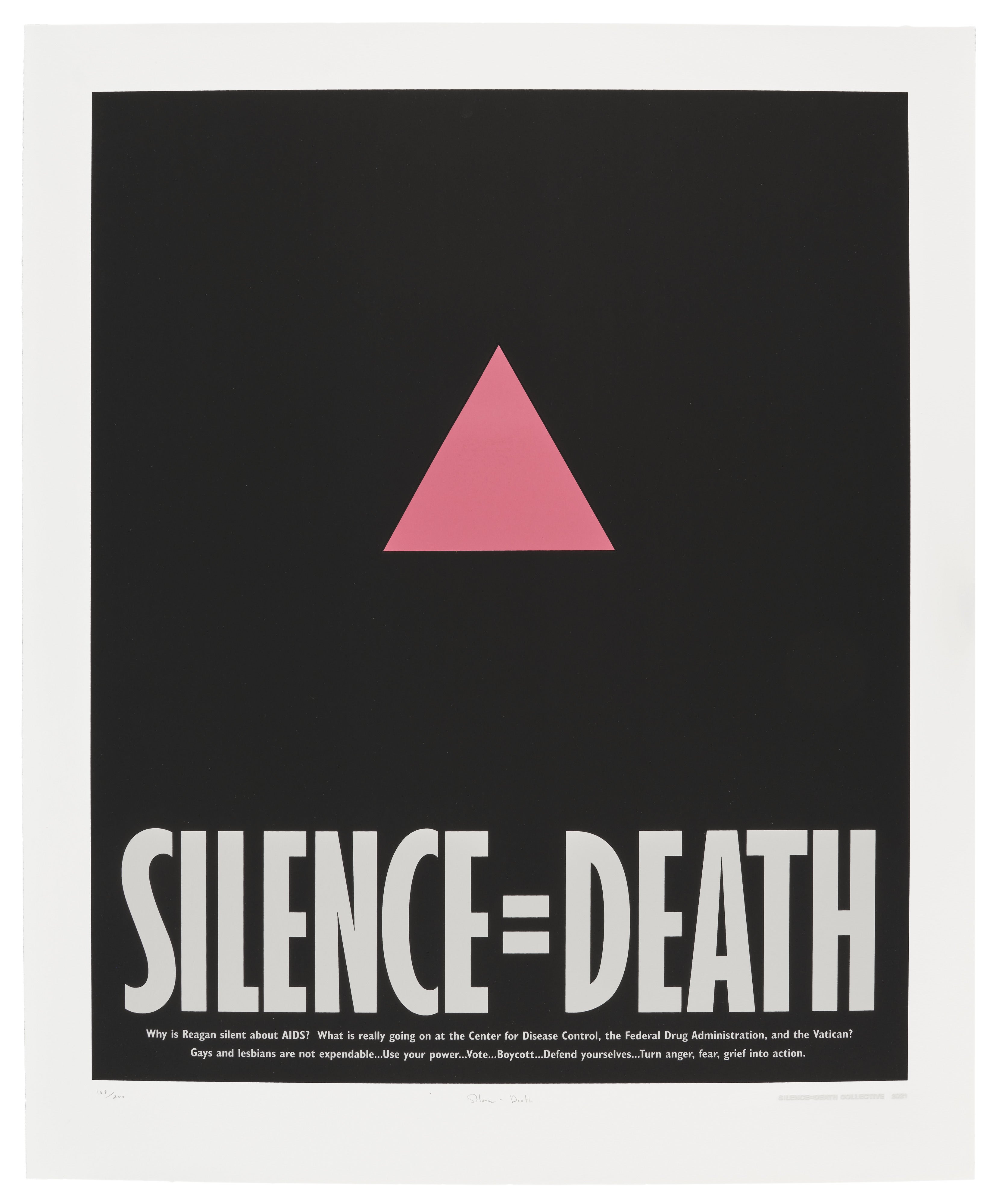
It drew from activism, documentary photography, street art, printmaking, and performance. It was angry and tender in the same breath. The Silence=Death Project, formed in New York in 1986 by a collective of six gay activists, produced one of the most iconic graphic works of the era. The pink triangle on a black field, accompanied by the equation that gave the group its name, became a rallying cry that moved seamlessly between the street and the gallery.
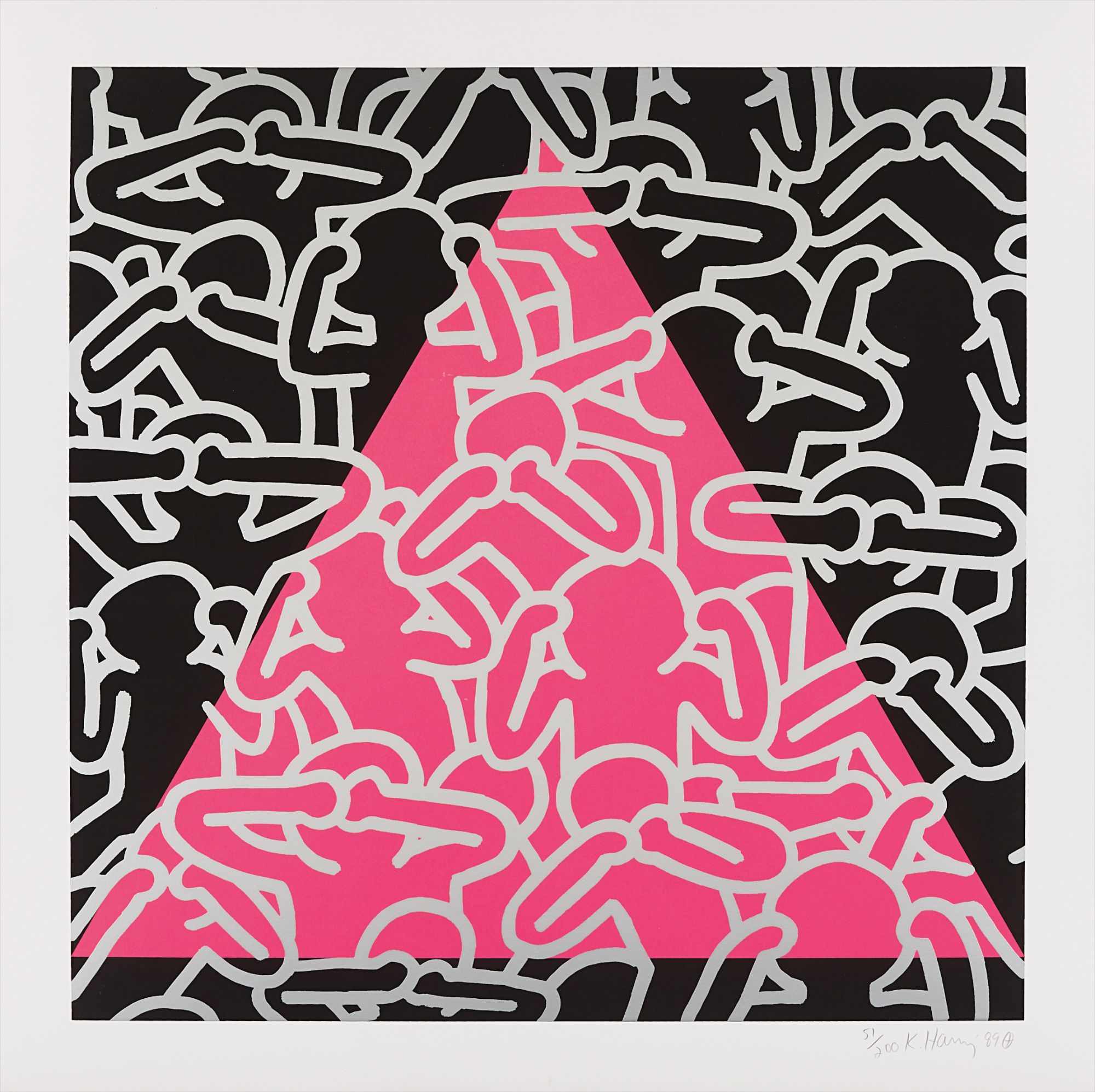
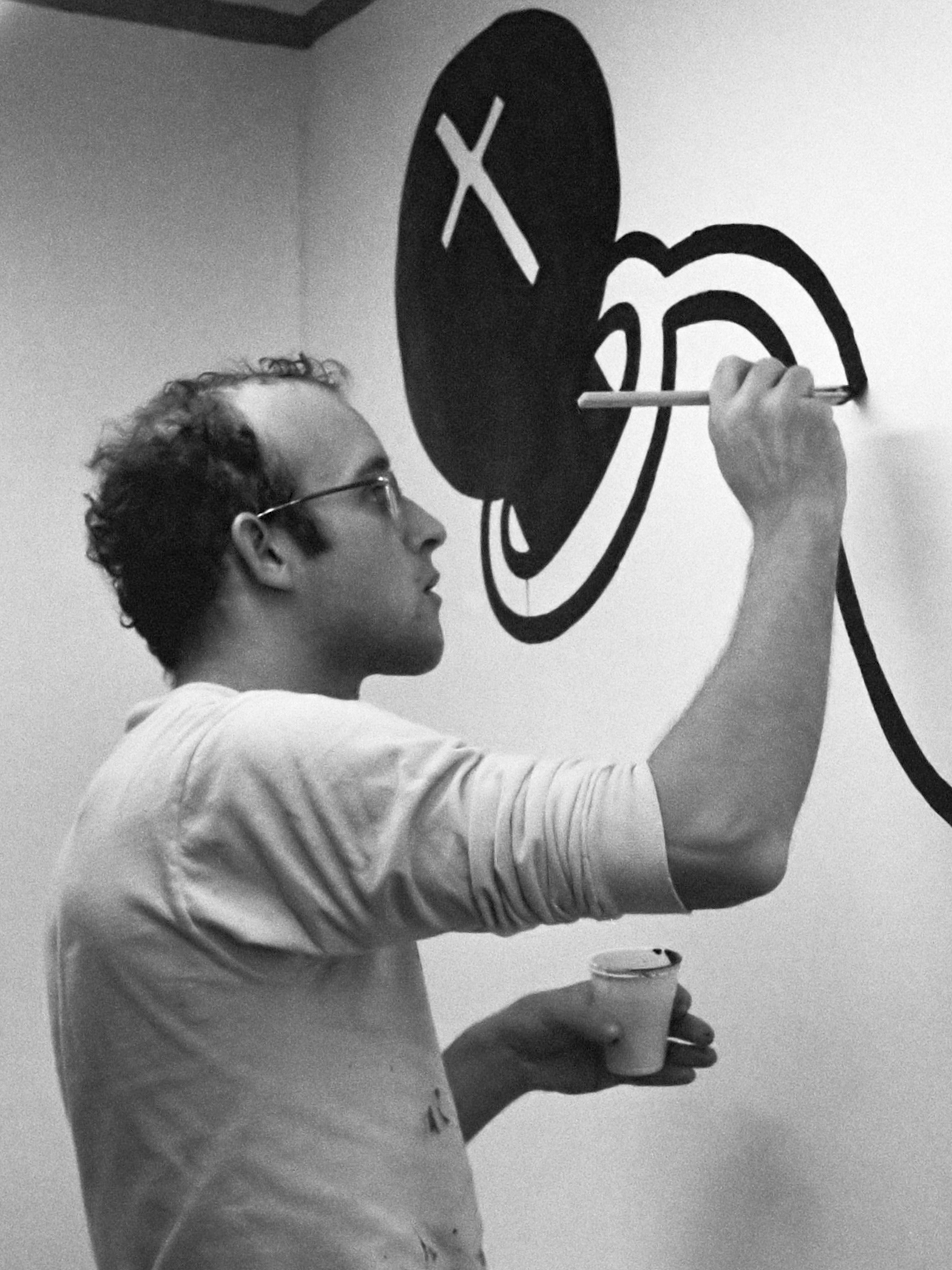
Keith Haring
Silence = Death
The Silence=Death Collective understood that visual language could be a weapon, and they used it accordingly. That work is represented on The Collection, and it retains an almost visceral charge even now. Keith Haring channeled similar urgency through a visual vocabulary that was deceptively accessible. His figures, bold and cartoonish in outline, carried messages about sex, death, power, and solidarity that were anything but simple.
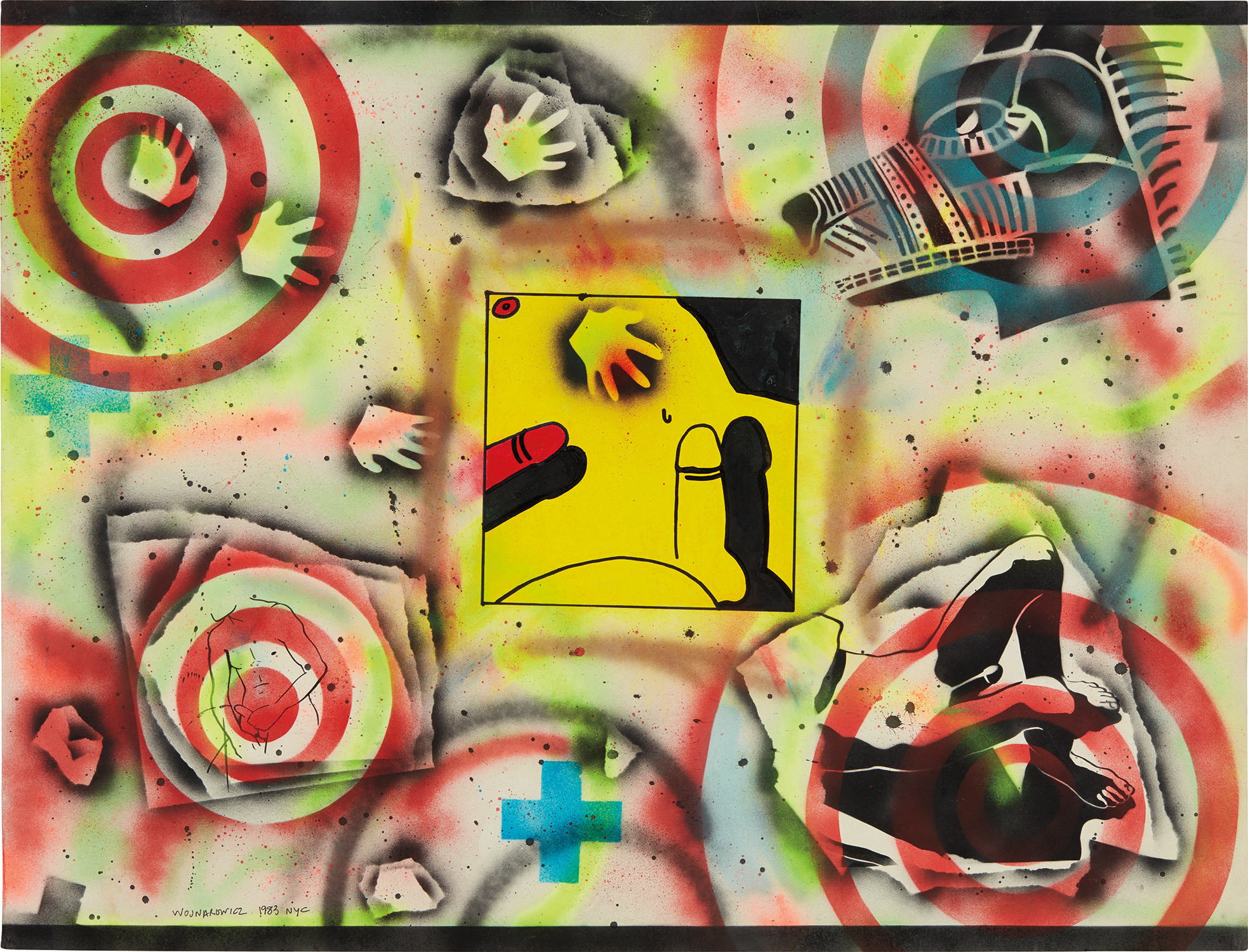
Haring was diagnosed with AIDS in 1988 and established the Keith Haring Foundation the following year, dedicating his remaining energy and resources to AIDS education and advocacy. His work was everywhere in New York in the 1980s, on subway stations and storefronts and gallery walls, and its ubiquity was itself a kind of political act. The piece on The Collection speaks to that period with a directness that has not dimmed. David Wojnarowicz is perhaps the artist whose work most completely embodies the interior experience of the crisis.
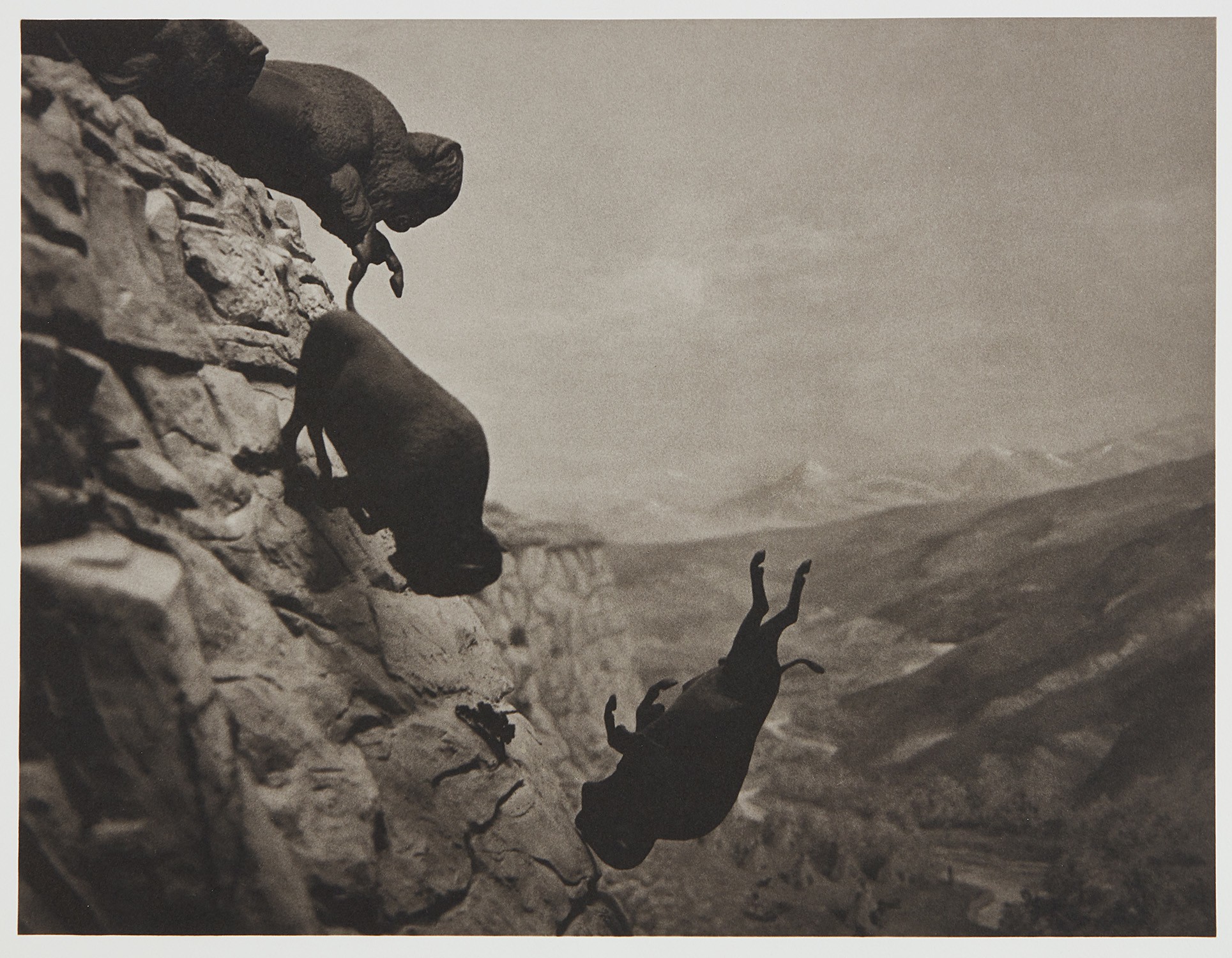
David Wojnarowicz
1988/1994
A writer, painter, photographer, and filmmaker who grew up in extraordinary hardship and found his voice in the East Village scene of the early 1980s, Wojnarowicz made art that was autobiographical without being confessional, political without being didactic. His layered paintings and photographs combined text, found imagery, and raw emotional exposure in ways that felt genuinely new. His 1989 essay and corresponding work responding to the death of his mentor and lover Peter Hujar remains one of the most devastating documents of the era. Wojnarowicz died in 1992 at the age of 37, and the works of his represented on The Collection offer a sustained encounter with a mind that refused to look away from anything.
Nan Goldin came to the crisis from a different angle but no less intimately. Her project from the late 1970s onward had always been about documenting her chosen family, the communities of artists, drag queens, lovers, and outsiders who populated her world. As AIDS moved through those communities, her camera stayed close. The work she made through the late 1980s and into the 1990s transformed grief into a form of bearing witness that remains without parallel in photography.
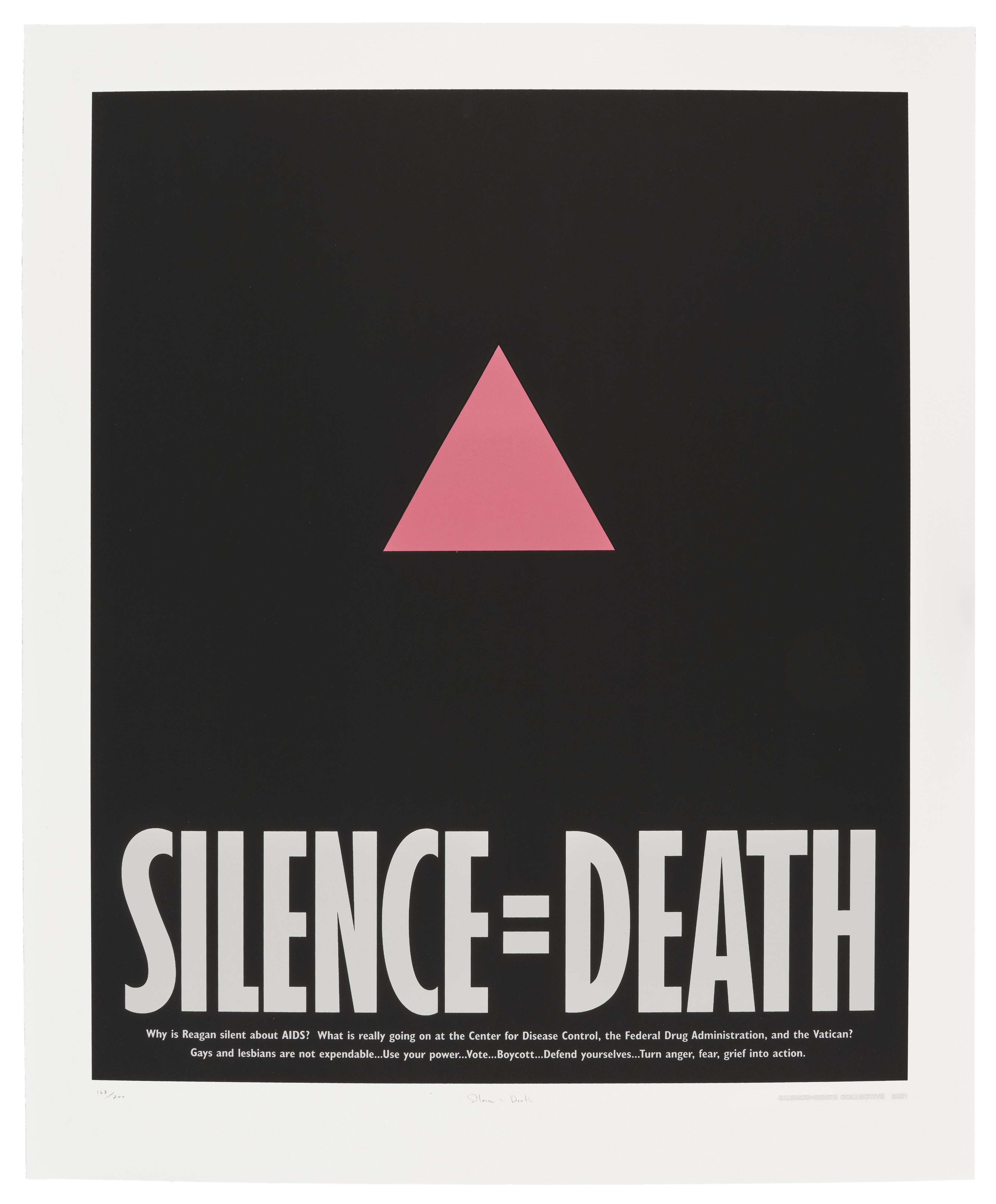
Silence=Death Collective
Silence=Death
Her work on The Collection belongs to a practice that always understood photography as an act of love. What united these artists, despite the enormous differences in their styles and methods, was a commitment to visibility. Visibility of the dying, of the grieving, of the angry, of those whose lives the mainstream would have preferred to overlook entirely. The conceptual framework underlying so much of this work was the idea that to be seen is to matter, and that to make someone seen is a political act.
This was art in direct conversation with power, with public health institutions, with media indifference, with the Reagan administration's refusal to even name the disease until 1987. The institutional art world was slow to fully reckon with this work. The 1989 controversy around the exhibition Witnesses Against Our Vanishing, organized by Nan Goldin at Artists Space in New York, was a turning point. The National Endowment for the Arts initially threatened to withdraw its funding over the political content of the accompanying catalog.
The ensuing battle over censorship, public funding, and what counts as legitimate subject matter for art became a defining moment in the culture wars of that decade. That the work survived those battles, that it entered museum collections and became central to art historical curricula, feels now like a small but hard won form of justice. The legacy of AIDS crisis art reaches into the present in ways both direct and diffuse. The visual language of activist graphics pioneered by groups like the Silence=Death Collective informed decades of subsequent political art and design.
Artists working today around questions of bodily autonomy, public health, state violence, and community survival draw consciously from this tradition. The wave of renewed attention that came with the 2018 retrospective of David Wojnarowicz's work at the Whitney Museum introduced his practice to a new generation and made clear that nothing in it had dated. To collect this work is to take on a responsibility. These are not merely beautiful or historically significant objects.
They are arguments, testimonies, acts of resistance made by people who understood that they might not survive to see the world they were fighting for. Engaging with them seriously, placing them in collections where they can continue to be encountered and felt, is one way of honoring what they were made to do.